Colombia
Departamento del Cesar, Colombia — Towns & Travel Guide
Cesar is the accordion heart of northern Colombia, a hot inland valley of cattle plains and vallenato between two great mountain walls.
Hotel links are affiliate links: booking through them may earn us a commission, at no extra cost to you. It never affects how places are ranked. How this works


Towns & cities in Departamento del Cesar
One town here has its own guide — it links to where to stay.
 Colombia
Valledupar
Valledupar sits between the Sierra Nevada de Santa Marta and the Serranía del Perijá, capital of Cesar and birthplace of Vallenato music.Where to stay →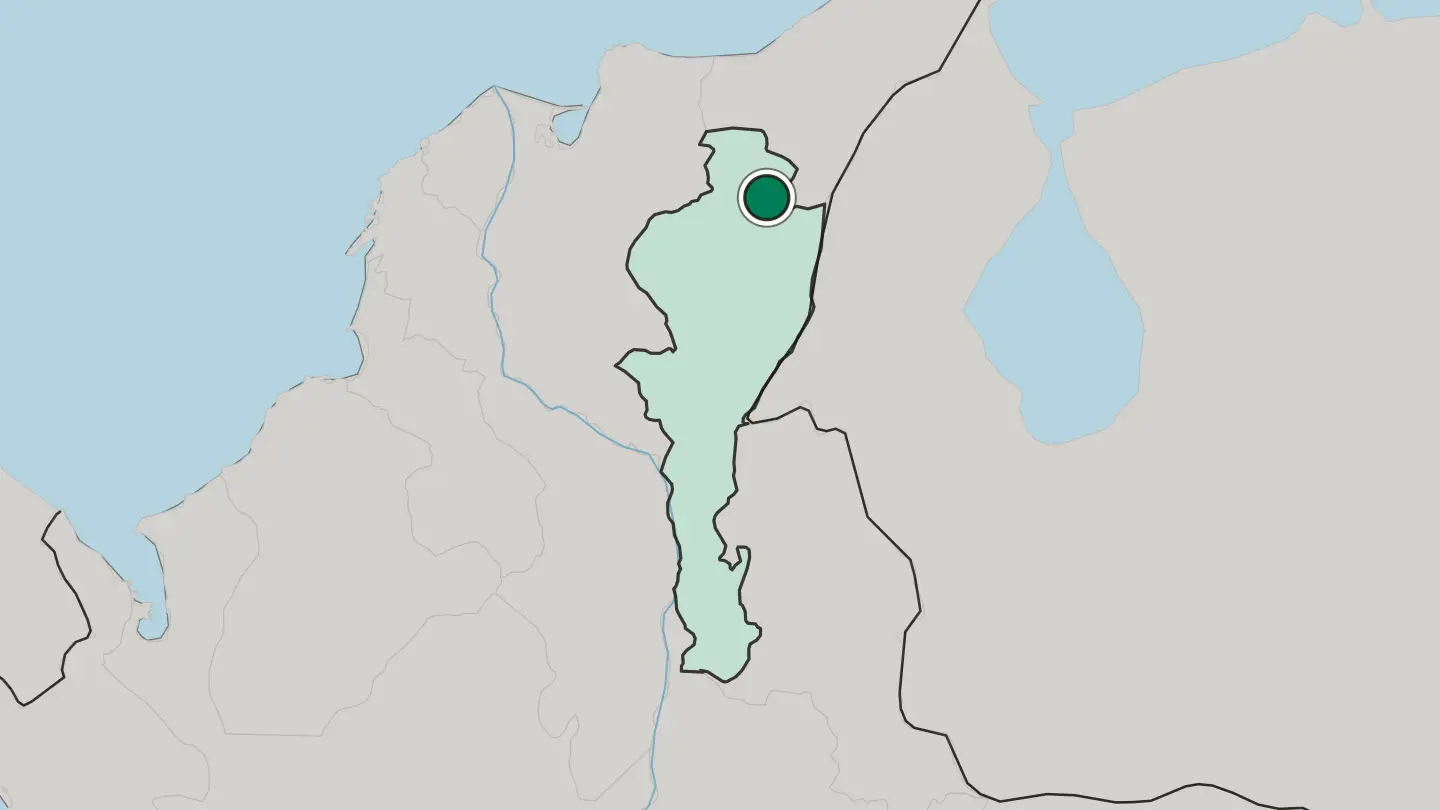
Hotel links are affiliate links: booking through them may earn us a commission, at no extra cost to you. It never affects how places are ranked. How this works
About Departamento del Cesar
Cesar is the birthplace of vallenato.
What is Departamento del Cesar known for?
The accordion-driven music was born on these plains, and every April the Festival de la Leyenda Vallenata draws players to Valledupar, the department capital, to compete on caja, guacharaca and accordion. Beyond the music, this is ranching and coal country, a broad valley of cattle and open savanna hemmed by mountains on both sides. The Sierra Nevada de Santa Marta rises to the northwest and the Serranía del Perijá walls off Venezuela to the east.
Where is Departamento del Cesar?
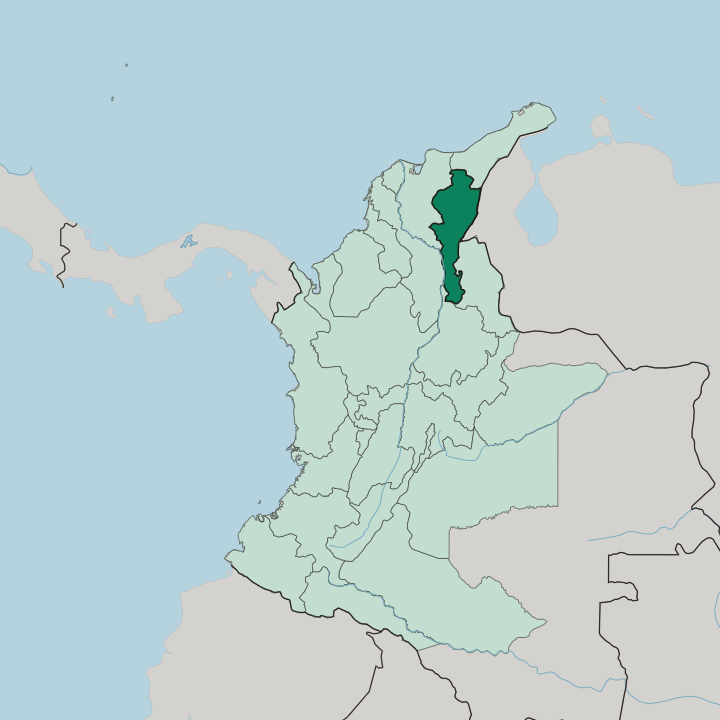
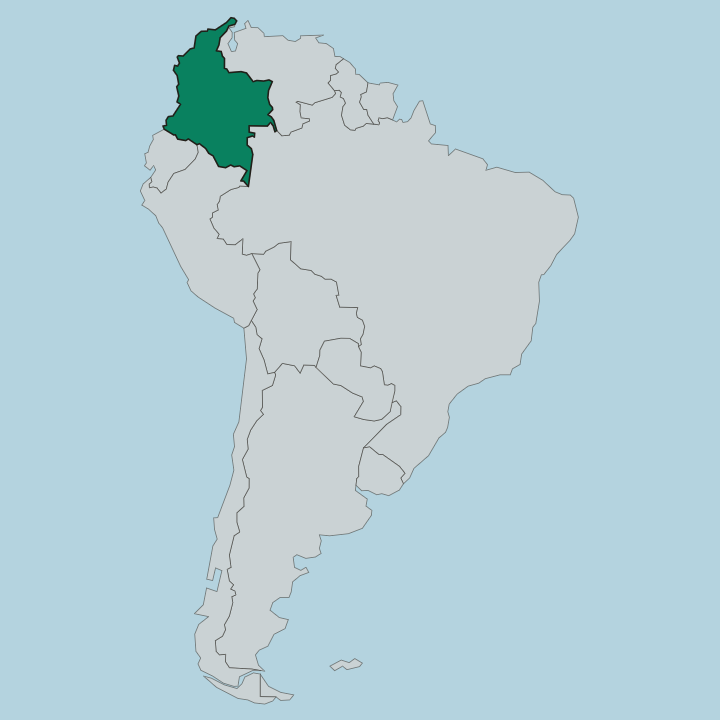
Cesar fills a long inland valley in northern Colombia, and it is the one department of the Caribbean region with no coast of its own. It has no sea. Instead the land is squeezed between two mountain systems that give the department its shape.
The Sierra Nevada de Santa Marta rises to the northwest, a snow-capped massif whose southern face belongs to Cesar, while the Serranía del Perijá runs down the eastern edge and forms the border with Venezuela. Between them lies the broad, flat trough that most of the department occupies, a little more than half of it level plain and the rest climbing into those two ranges. Water ties the valley together.
The Cesar River gathers off the Sierra Nevada and runs south down the middle of the department, feeding the Ciénaga de Zapatosa before emptying into the Magdalena River. That marsh, spread around the town of Chimichagua, is the largest freshwater wetland in the country, swelling and shrinking with the seasons. The Magdalena itself marks the department's southwestern boundary.
To the north lies La Guajira; Magdalena and Bolívar sit to the west, and the Santanderes to the south. Nearly every edge is either mountain or river.
What is Departamento del Cesar like?
Cesar sounds like an accordion. Vallenato was born on these plains, a genre that braids Indigenous, African and Spanish strands into songs carried by the accordion, the caja drum and the scraped guacharaca. UNESCO lists it as intangible cultural heritage.
The music is not a museum piece here; it is played at parties, in plazas and on long bus rides, and its four rhythms are argued over the way other places argue about football. Valledupar is where all of this comes to a head. Every April the Festival de la Leyenda Vallenata takes over the capital, a contest founded in 1968 by the composer Rafael Escalona alongside the writer Consuelo Araújo and the politician Alfonso López Michelsen, who became the department's first governor.
Accordion players compete by age and rank, and a Reina Vallenata is crowned. Away from the festival the rhythm of life is rural and unhurried. This is a land of cattle ranchers and river fishermen, of hot afternoons spent in the shade, where a good song and a cold drink count for a great deal.
What is the history of Departamento del Cesar?
Long before the Spanish came, the valley belonged to Indigenous peoples, the Euparis around what is now Valledupar and the Chimila among them. Spanish settlers founded Valle de Upar in 1550, and the town spent centuries as a cattle outpost of the wider Caribbean province. Independence stirred early: in 1810 the townsfolk rose against the crown, and in 1813 María Concepción Loperena proclaimed Valledupar free and sent horses to Simón Bolívar.
The modern department is young. Cesar was carved out as a separate department only in 1967, with Valledupar as its capital and Alfonso López Michelsen as its first governor.
What is the climate of Departamento del Cesar?
Cesar is hot. The valley floor has a tropical wet-and-dry climate, warm the year round, with a dry stretch from roughly December to March and heavier rains in between. Valledupar sits on the drier, semi-arid side of that pattern, shielded by the bulk of the Sierra Nevada de Santa Marta at its back.
Climb into the Serranía del Perijá or the Sierra Nevada and the air cools quickly, so the eastern ridges and the high northwest run far cooler than the sun-baked plain. Down in the valley the heat rarely lets up.
How do you get to Departamento del Cesar?
Most travellers fly into Valledupar. The capital's Alfonso López Pumarejo Airport takes domestic flights from Bogotá and the coast, and it is the quickest way in. By road, Cesar threads between the Caribbean lowlands and the Andes, so buses run north to Santa Marta and the coast and south through Aguachica toward Bucaramanga and the interior.
There is no coastline and no sea route. Once you are in the valley, the highway down the middle links Valledupar with the southern towns.
Common questions
What is the best area to stay in Departamento del Cesar?
Valledupar: vallenato and the Sierra Nevada foothills. Aguachica: a southern highway stopover.
Good for
More regions in Colombia
- Distrito Capital de Bogotá
- Departamento de Antioquia
- Departamento del Valle del Cauca
- Departamento de Cundinamarca
- Departamento del Atlántico
- Departamento de Santander
- Departamento de Bolívar
- Departamento de Córdoba
- Departamento de Nariño
- Departamento de Norte de Santander
- Departamento del Cauca
- Departamento del Magdalena
Updated September 2026