Germany · Bavaria · Passau
Haidenhof, Passau — Area Guide & Where to Stay
Haidenhof is a district of Passau named after the Schloss Haidenhof and its predecessor, and a commune in its own right between 1855 and 1908.
Hotel links are affiliate links: booking through them may earn us a commission, at no extra cost to you. It never affects how places are ranked. How this works


Where to stay in Haidenhof
The practical side of choosing where to sleep.
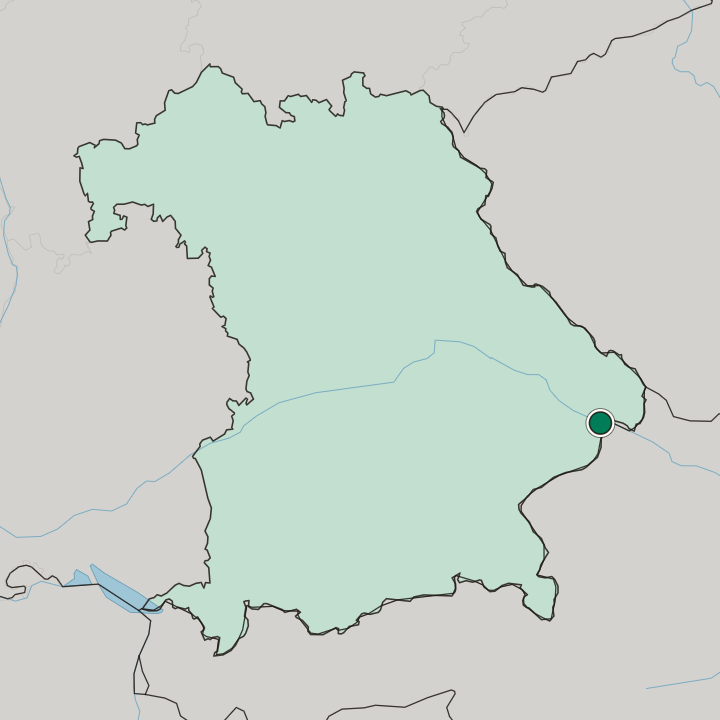
Passau's centre is three kilometres east. Haidenhof reaches from the Ludwigsplatz between the Danube and the Inn out to Auerbach, Waldesruh and Kelberg, and the Neuburger Straße divides it into a northern and a southern half. The university is here.
Its buildings went up from 1982 between the St Nikola monastery and the hospital, which moved to Apfelkoch in 1929. Kohlbruck has the leisure ground.
Things to do in and around Passau
Ranked by global recognition; descriptions from Wikidata (CC0).
Churches & Religious Sites
3- St. Anton (Passau) Heritage
- St. Peter Heritage
- Maierhof Passau Heritage
Castles & Historic Sites
1- Passau (Samian Ware Discovery Site)
Landmarks & Notable Places
3- Ehemaliges Bauernhaus Heritage
- Wohnhaus Heritage
- Fernmeldeturm Passau-Haidenhof
worth knowingacross 3 categories in and around Passau
About Haidenhof
What are the main landmarks in Haidenhof?
Schloss Haidenhof began as a small country house. Vigil Graf von Thun, a Passau cathedral canon, built it in 1685, and in 1790 the canon Leopold Freiherr von Hanxleden turned it into the hunting lodge that stands there now. A parish church went up elsewhere.
St Anton was built between 1908 and 1910, but a long tug of war put it not in the village of Haidenhof but at Unterwindschnur, which already belonged to Passau. Barracks became a fairground. The Ritter von Scheuring barracks in Kohlbruck served the Bundeswehr from 1963 to 1993, the city bought the site in 1994, and the Messepark, the ice arena and the Dreiländerhalle opened there between 2003 and 2004.
A landscape protection area came first, in 1997.
What is the history of Haidenhof?
The Waldgütleramt Haidenhof was a Hofmark of the Passau prince-bishopric. It lay between the Hofmark St Nikola and the county of Neuburg, mostly forest with a few scattered hamlets, and it took in Apfelkoch, Badstube, Feldsperg, Haidenhof, Kaindlmühle, Jesuitenhof, Kelberg, Kohlbruck, Mollnhof, Vorholz and Oberwindschnur. It was the smallest office the bishopric had.
Its rank came from border politics rather than from any economic weight. A farm gave the district its name. The holding belonged to a Wolf Hayll in 1614, and Hayllhof became Haynhof and then Haidenhof.
Secularisation moved it twice. Both this area and the Obmannschaft Niederhaitzing north of it came to the commune of St Nikola in 1809, and in 1855 they were split off again to form the new commune of Haidenhof of 1227 hectares. Passau took it in 1909.
A trial vote on 3 March 1899 went forty to one for incorporation, the commune assembly of 6 August 1899 voted a hundred and seventeen to eight, and the interior ministry ordered it on 9 November 1908 with effect from the first day of 1909.
Where is Haidenhof?
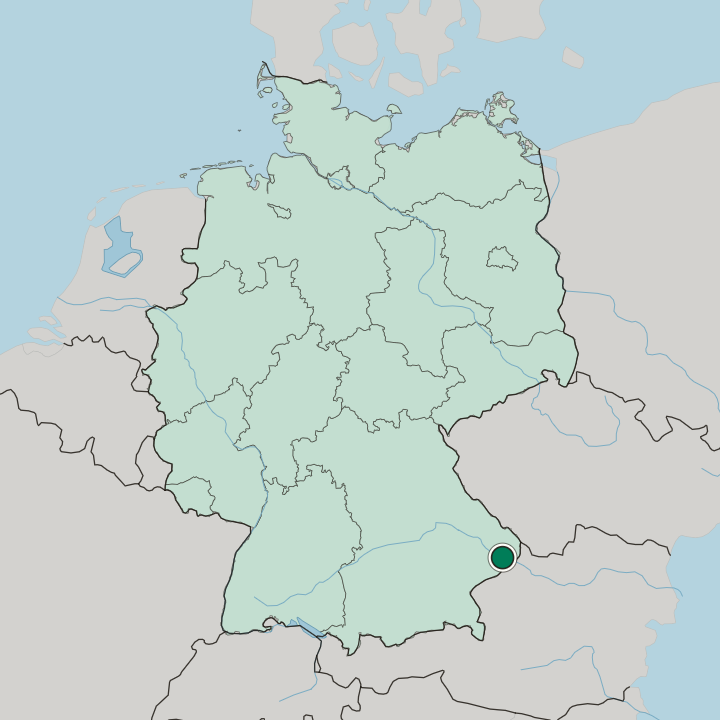
Haidenhof runs west from the Ludwigsplatz in Passau between the Danube and the Inn to Auerbach, Waldesruh and Kelberg, split by the Neuburger Straße into Haidenhof Nord and Haidenhof Süd.
Good for
More areas in Passau
Updated October 2026