Germany
Bavaria, Germany — Towns & Travel Guide
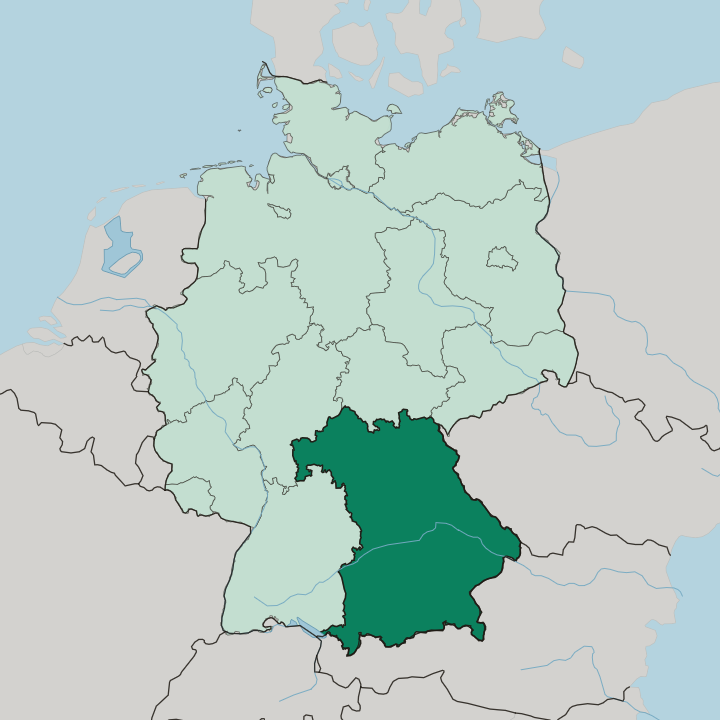
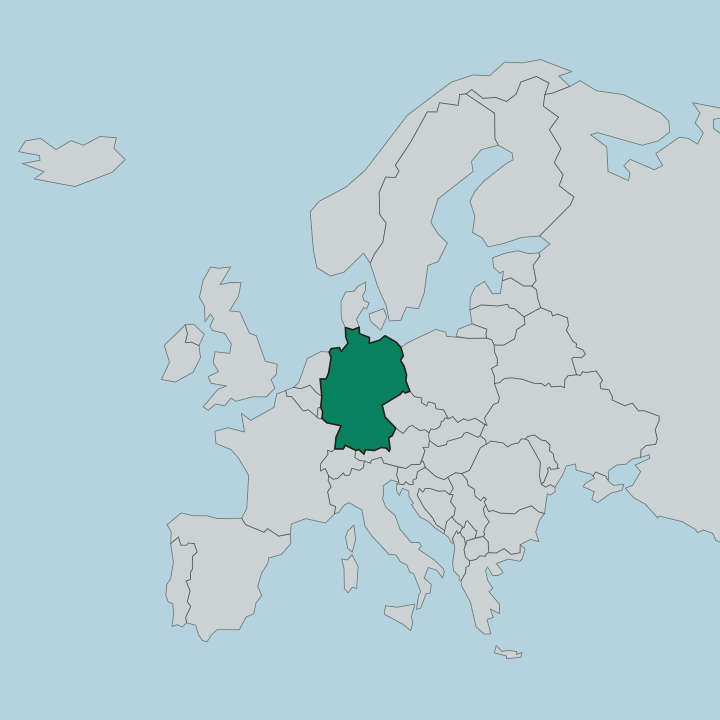
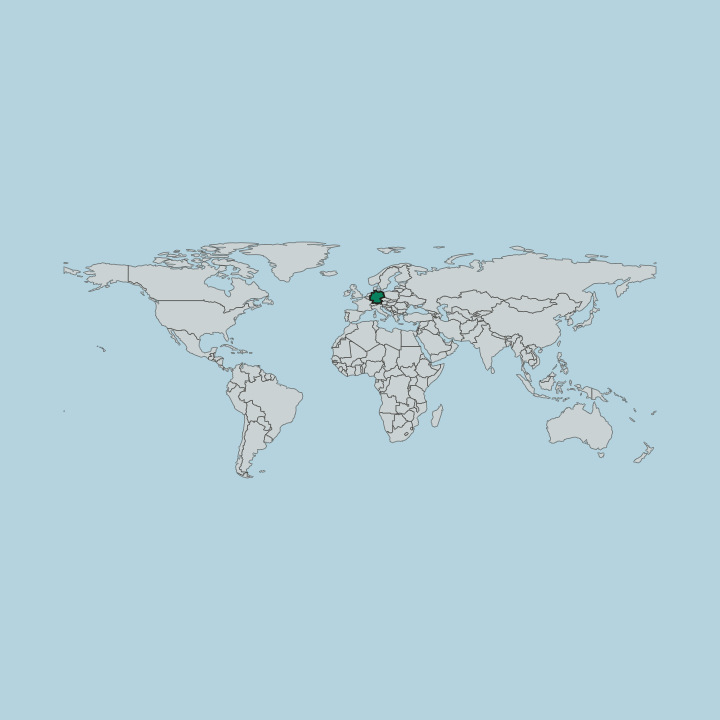
Bavaria is Germany's largest state by area, spread across the country's south-east from the Danube to the Alps and the Munich plateau.
Hotel links are affiliate links: booking through them may earn us a commission, at no extra cost to you. It never affects how places are ranked. How this works


Towns & cities in Bavaria
Pick a town or city — each links to where to stay.

 Germany
Munich
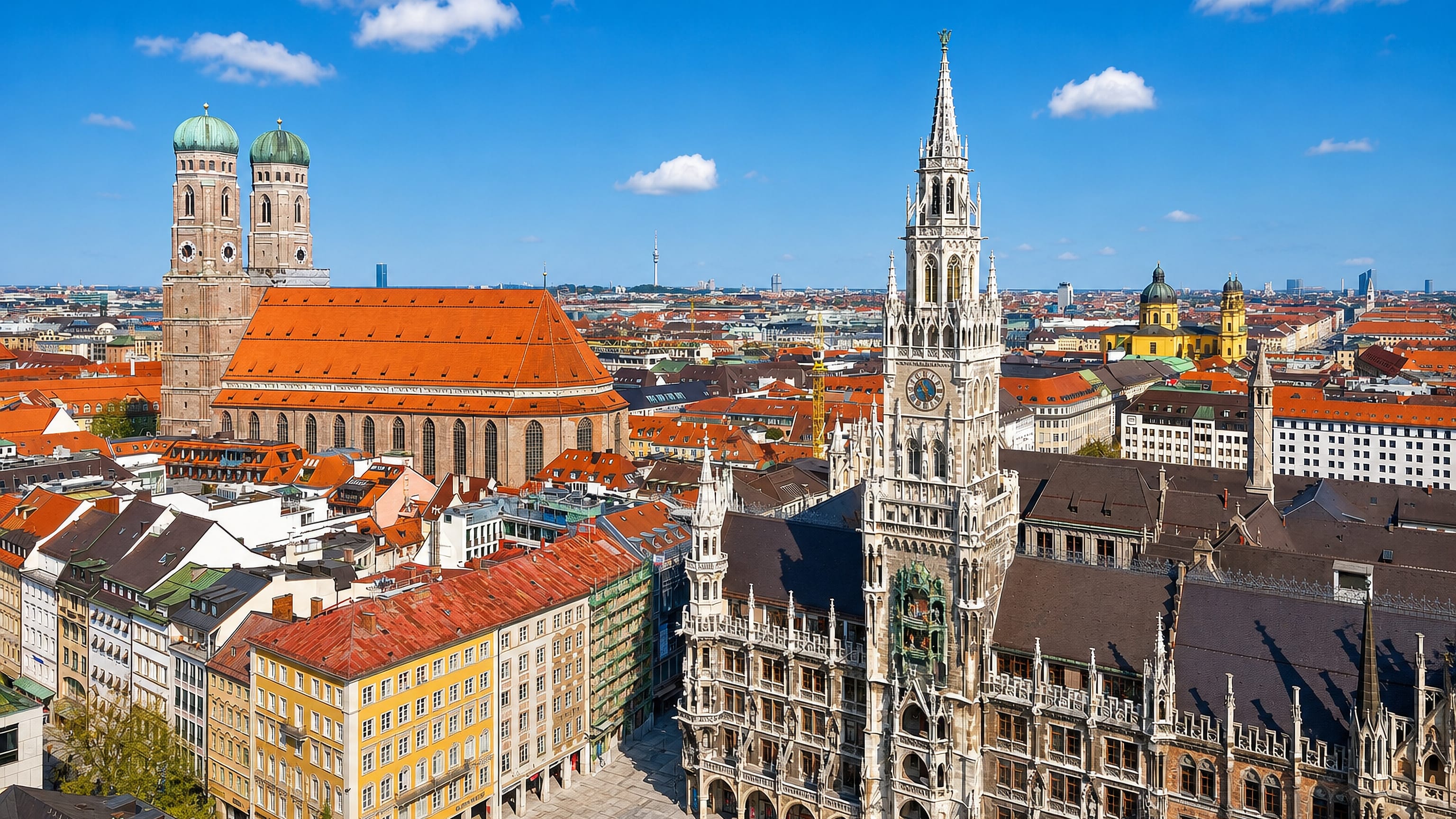
The Isar cuts through Munich, the capital of Bavaria, a city north of the Alps founded in 1158 and known for the Alte Pinakothek.Where to stay →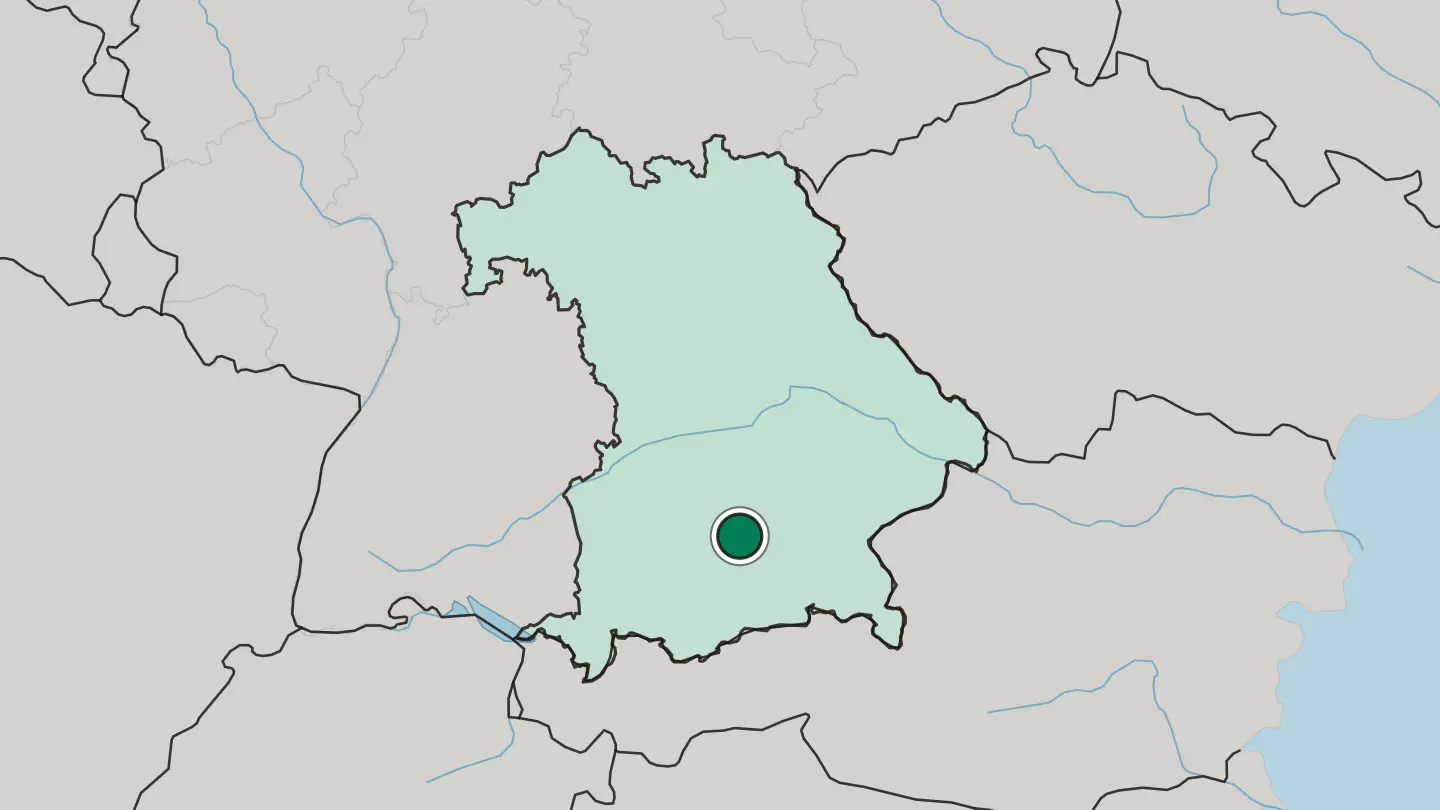
 Germany
Nuremberg
Walls and towers still ring the old town of Nuremberg, the largest city in Franconia, on the Pegnitz in Bavaria and known for Nuremberg Castle.Where to stay →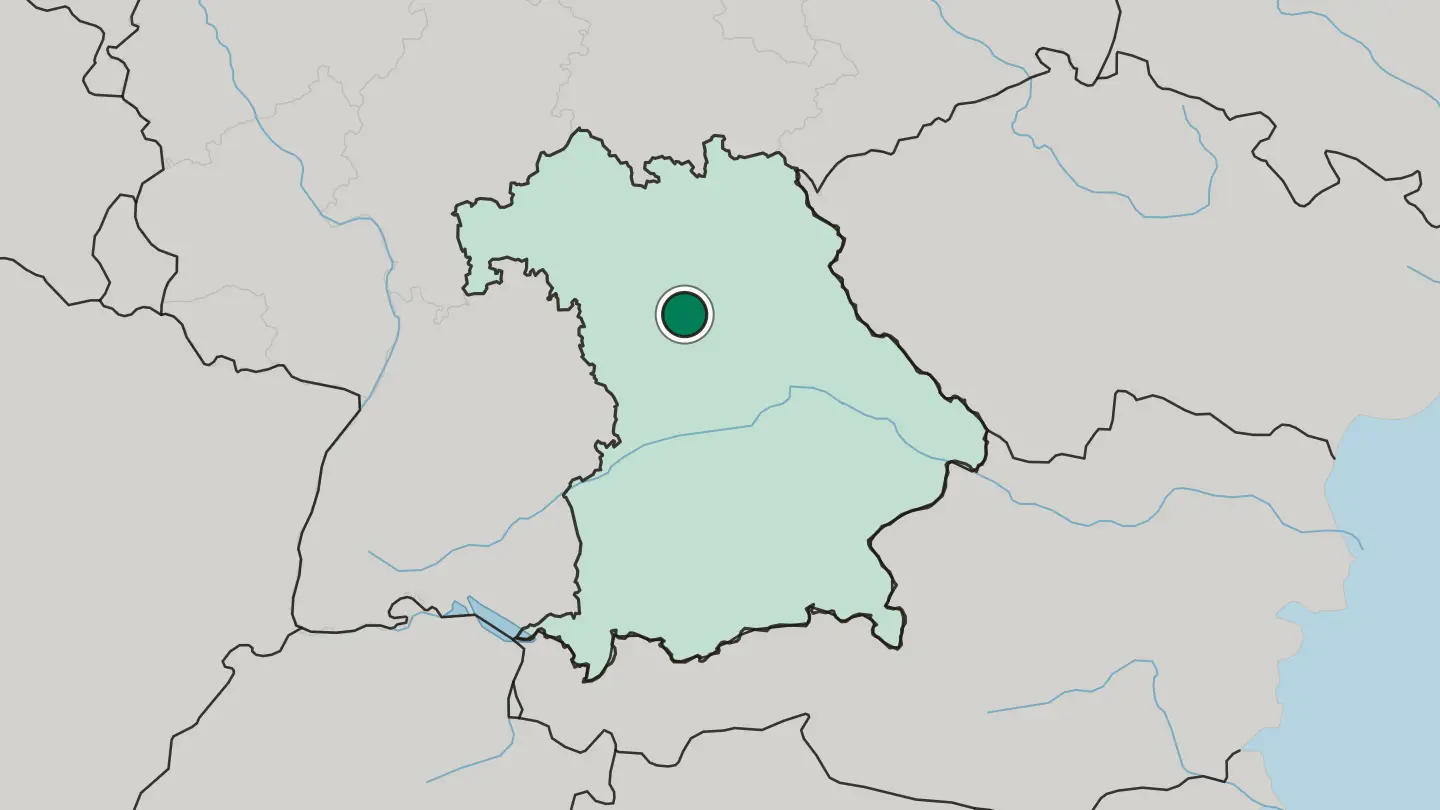
 Germany
Augsburg
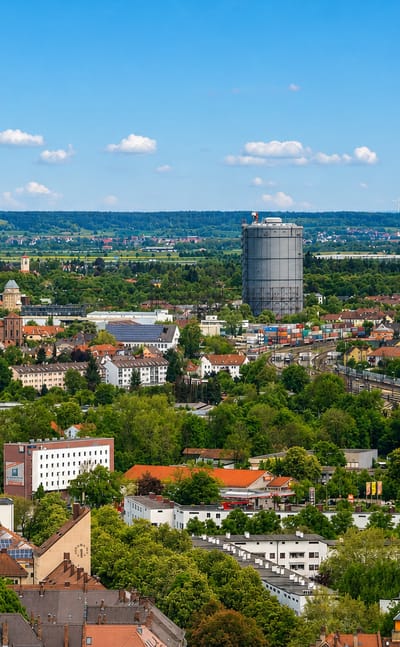
The Perlachturm rises over Augsburg, one of the oldest cities in Bavaria, seat of Swabia, known for its Altstadt and the Fugger und Welser Erlebnismuseum.Where to stay →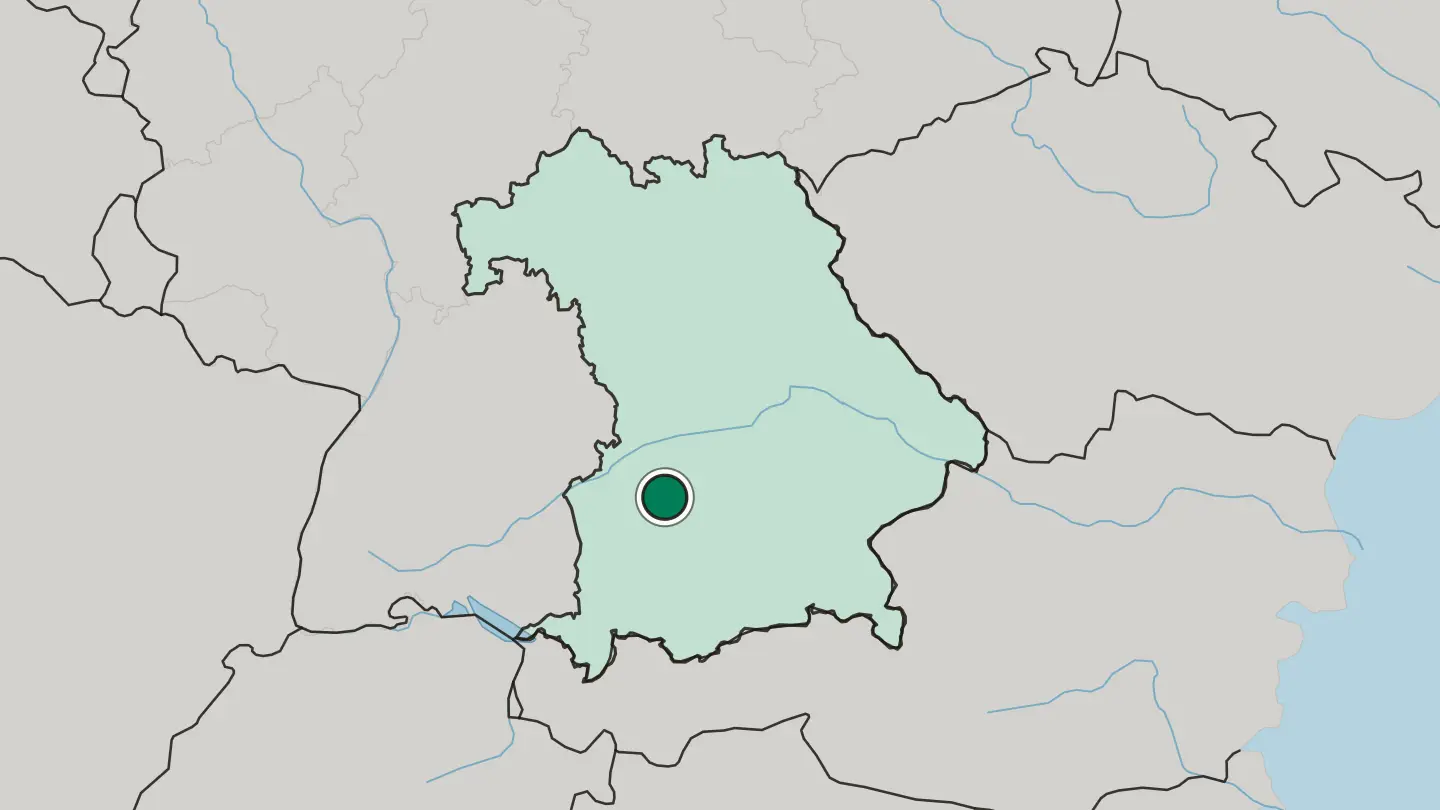
 Germany
Regensburg
Regensburg is a Roman-founded Danube city, capital of the Upper Palatinate, its patrician towers and narrow alleys listed as World Heritage.Where to stay →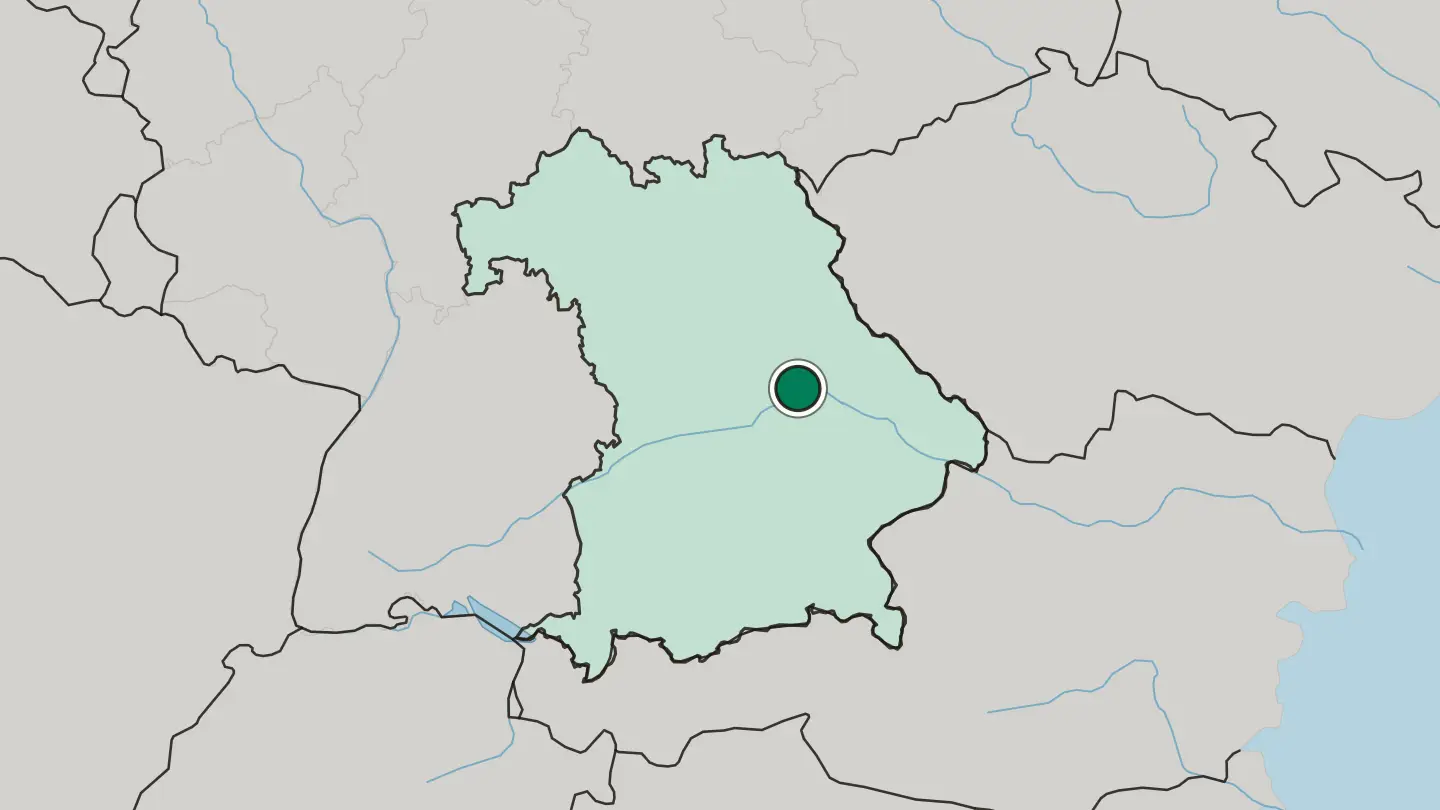
 Germany
Würzburg
Würzburg is the seat of Lower Franconia on the Main, where the Würzburg Residence and Würzburg Cathedral stand a few streets apart.Where to stay →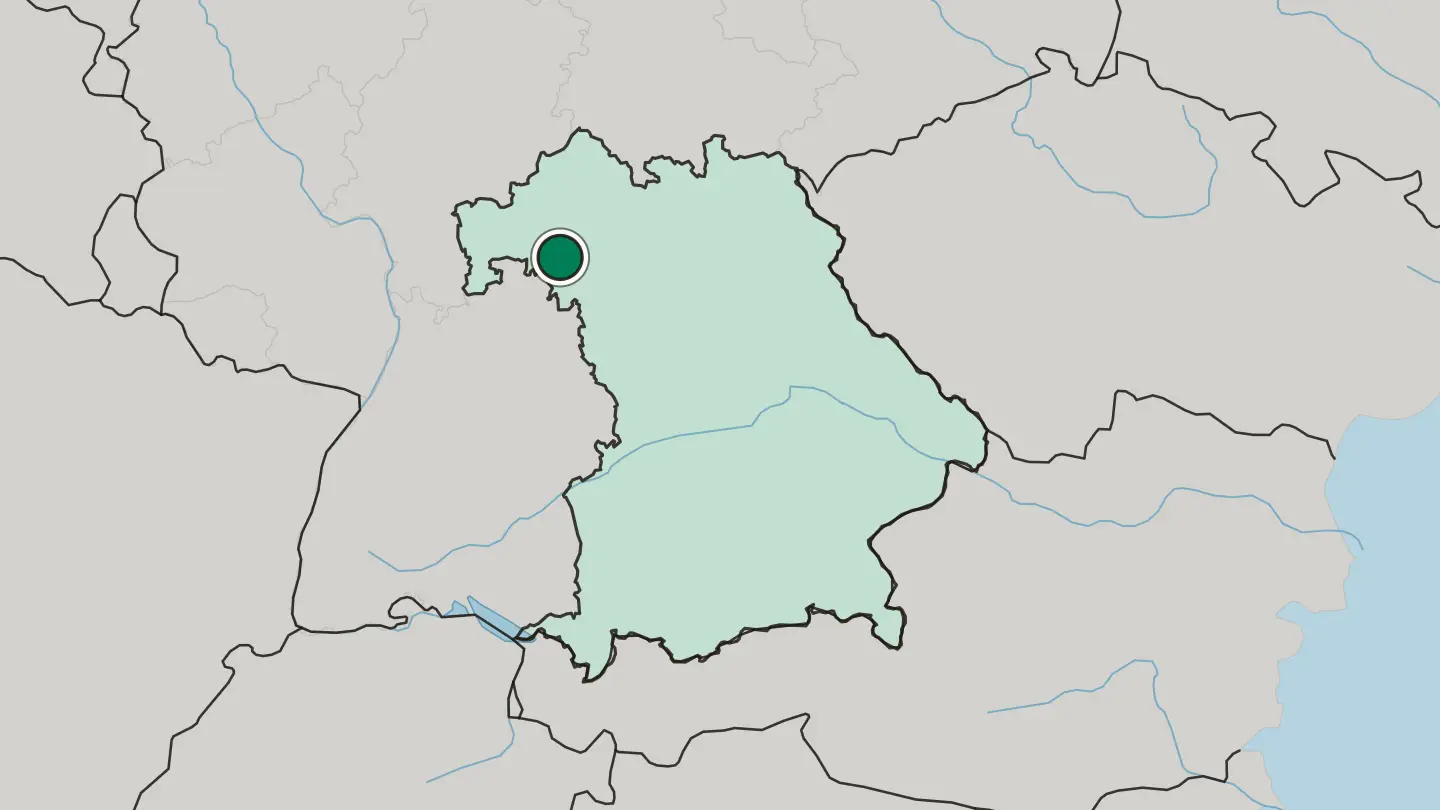
 Germany
Fürth
Fürth is a Middle Franconian city grown into Nuremberg, spared the air raids that hit its neighbour, and lined with small museums.Where to stay →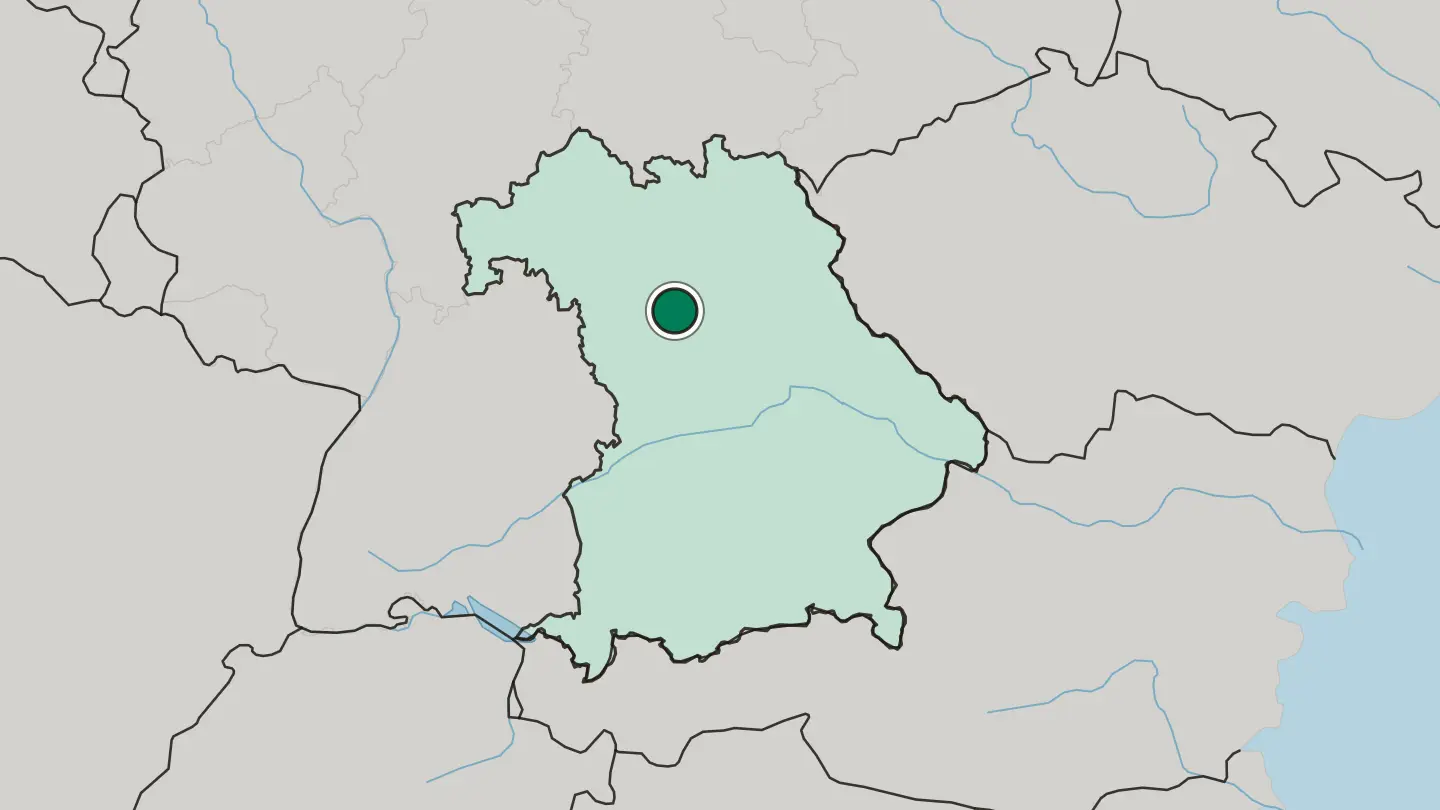
 Germany
Ingolstadt
Ingolstadt is a walled city on the Danube in Upper Bavaria, where the Reinheitsgebot was proclaimed in 1516 and where Audi builds its cars.Where to stay →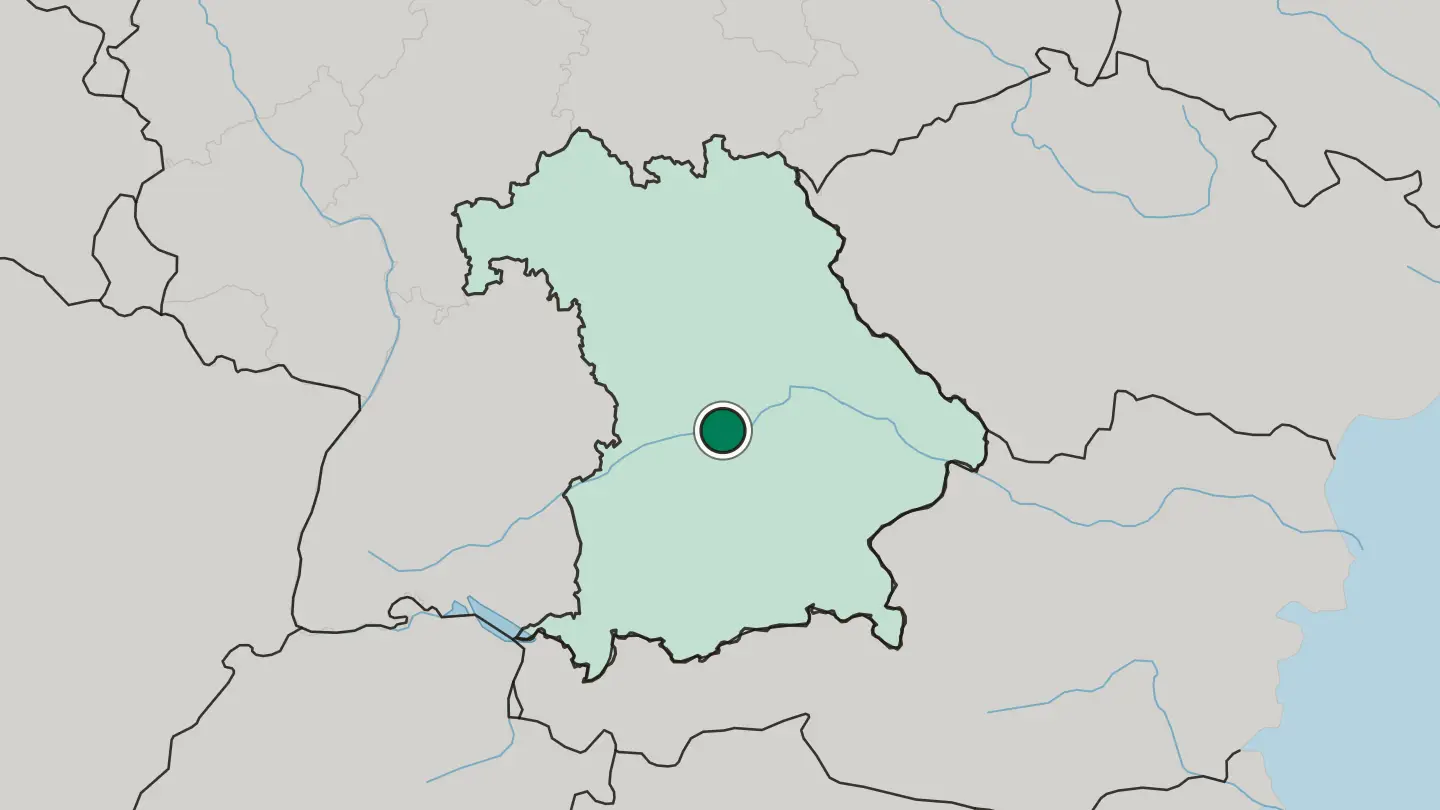
 Germany
Erlangen
Erlangen is a Middle Franconian city in Bavaria, grown from a Huguenot refuge into a town of the Friedrich-Alexander University and Siemens.Where to stay →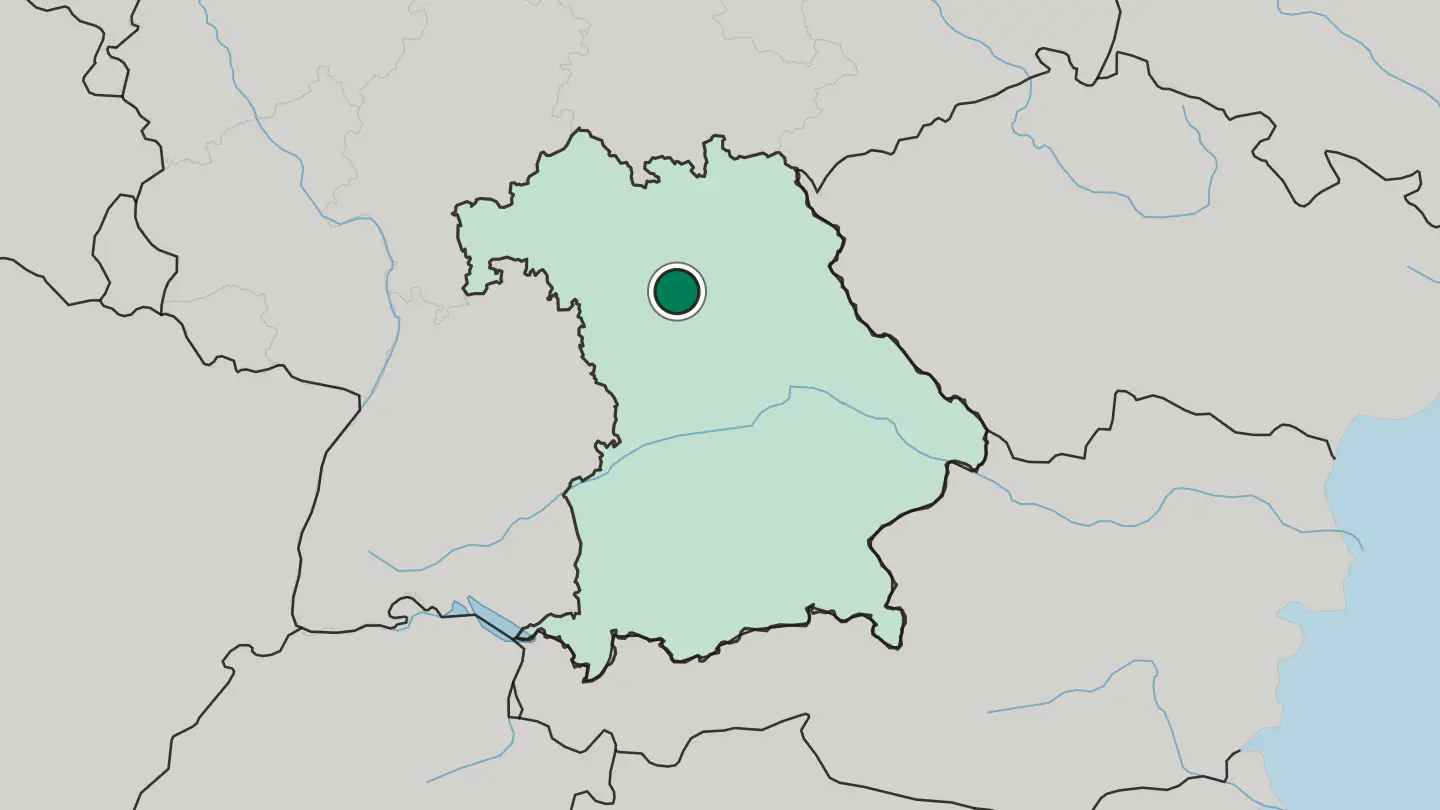
All towns & cities (17)
 Germany
Bayreuth
Bayreuth is the capital of Upper Franconia, a baroque town on the Red Main in the valley between the Franconian Jura and the Fichtel Mountains.Where to stay →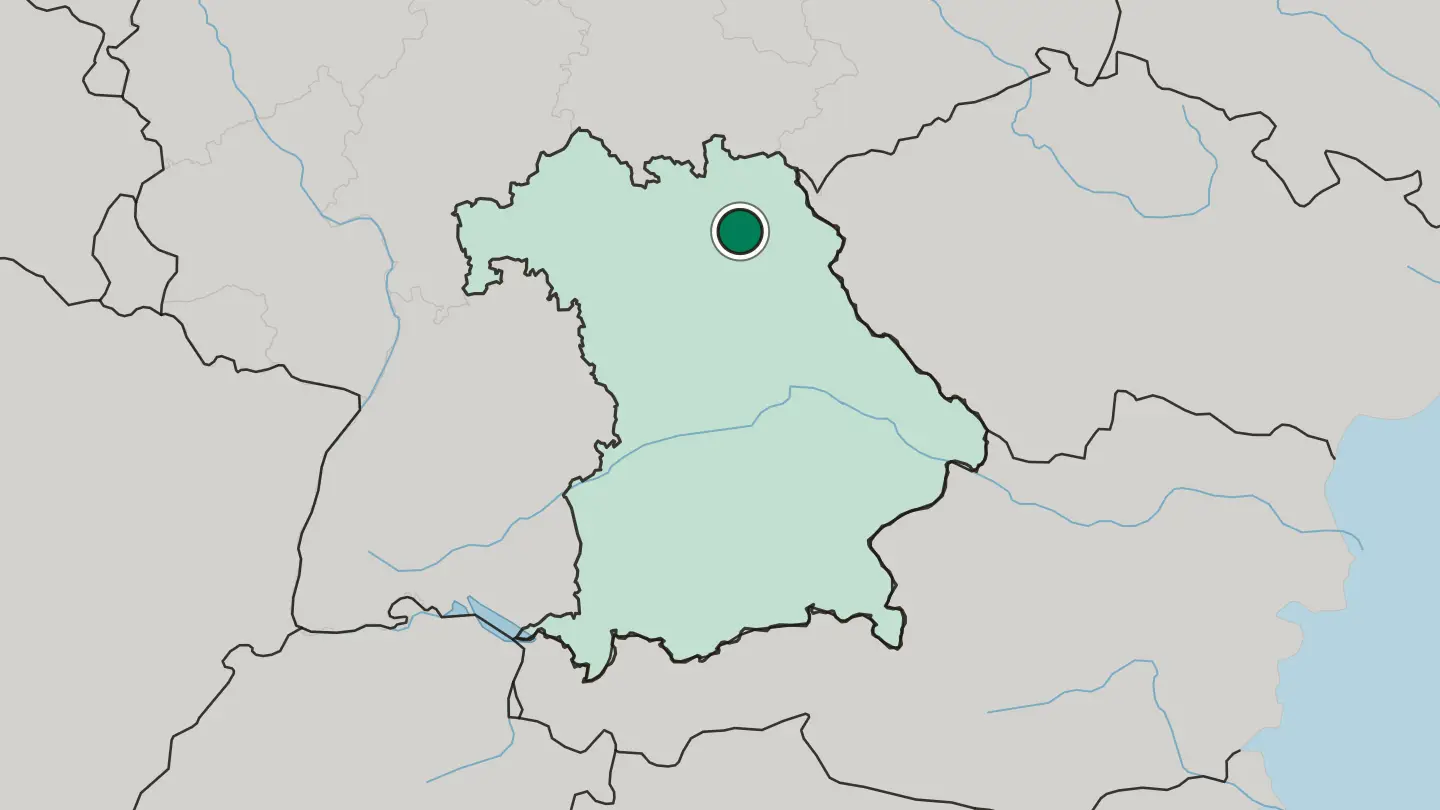
 Germany
Landshut
Landshut is a ducal Bavarian town founded in 1204, its old core packed with church towers, chapels and the walls of Trausnitz Castle.Where to stay →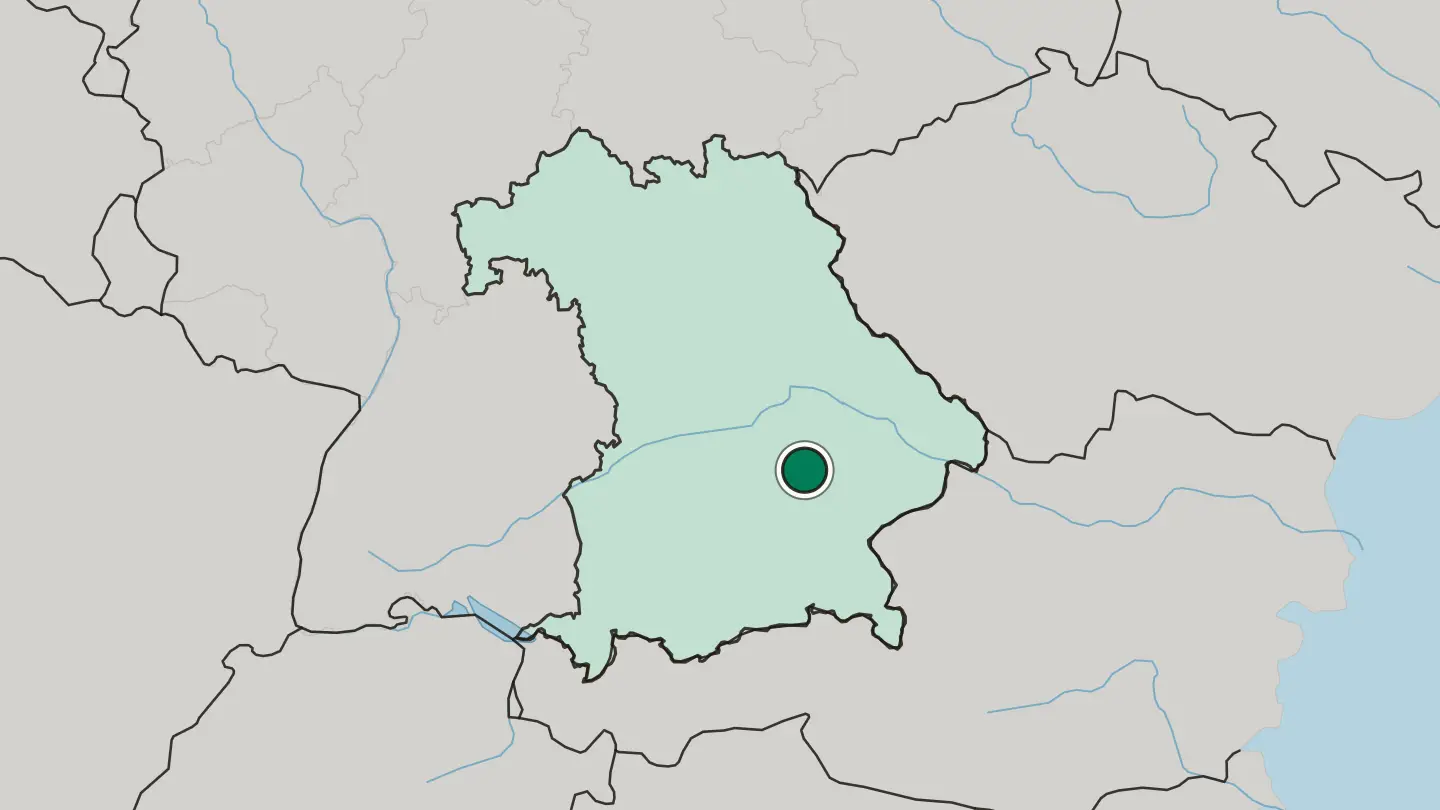
 Germany
Bamberg
Bamberg is an Upper Franconian town on the Regnitz, its whole old centre a UNESCO World Heritage Site of medieval lanes and baroque fronts.Where to stay →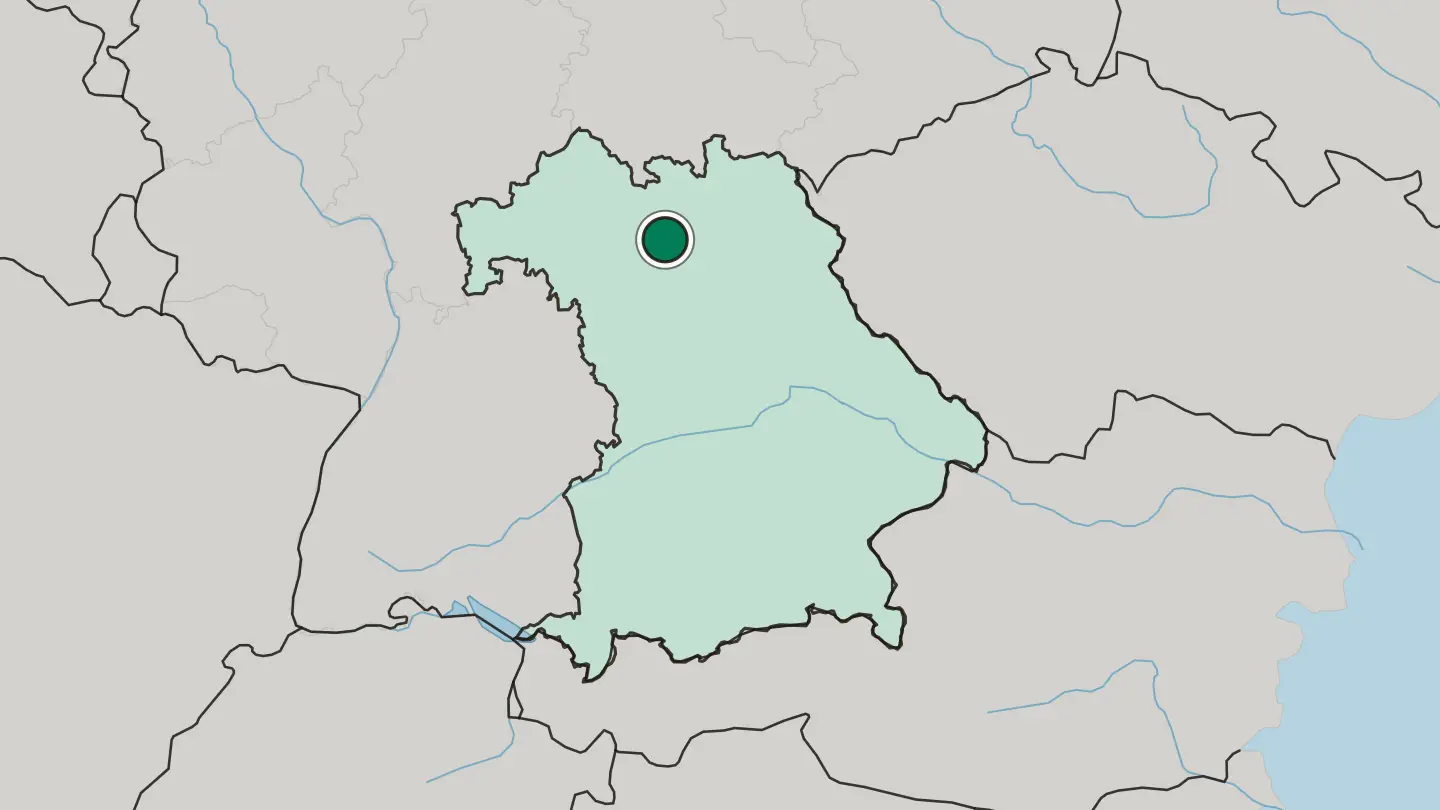
 Germany
Aschaffenburg
Aschaffenburg is the largest city of the Bavarian Lower Main region, a Lower Franconian town built around Schloss Johannisburg and its museums.Where to stay →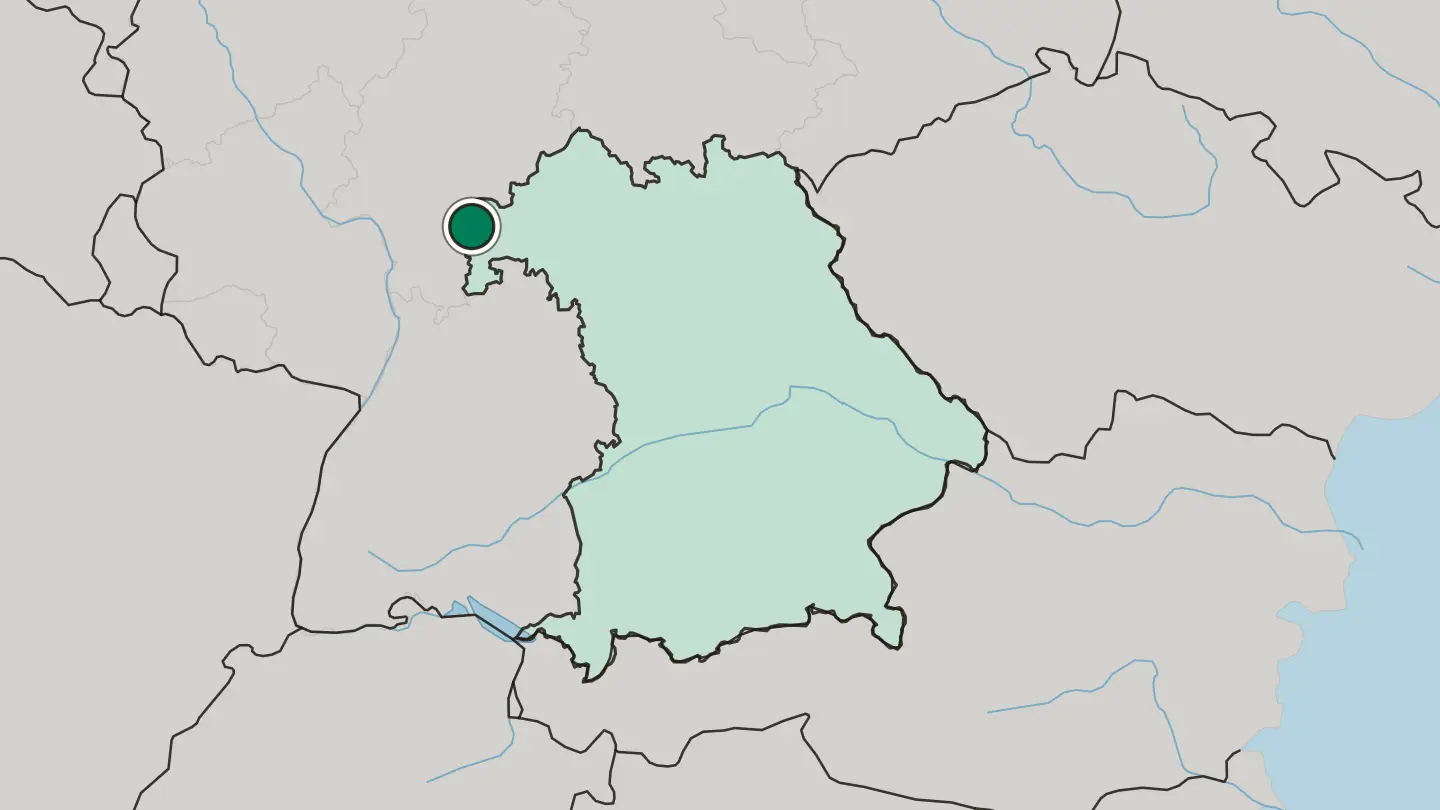
 Germany
Rosenheim
Rosenheim is a Bavarian city built around Ludwigsplatz and Max-Joseph-Platz, with Rosenheim Town Hall and Burg Rosenheim among its landmarks.Where to stay →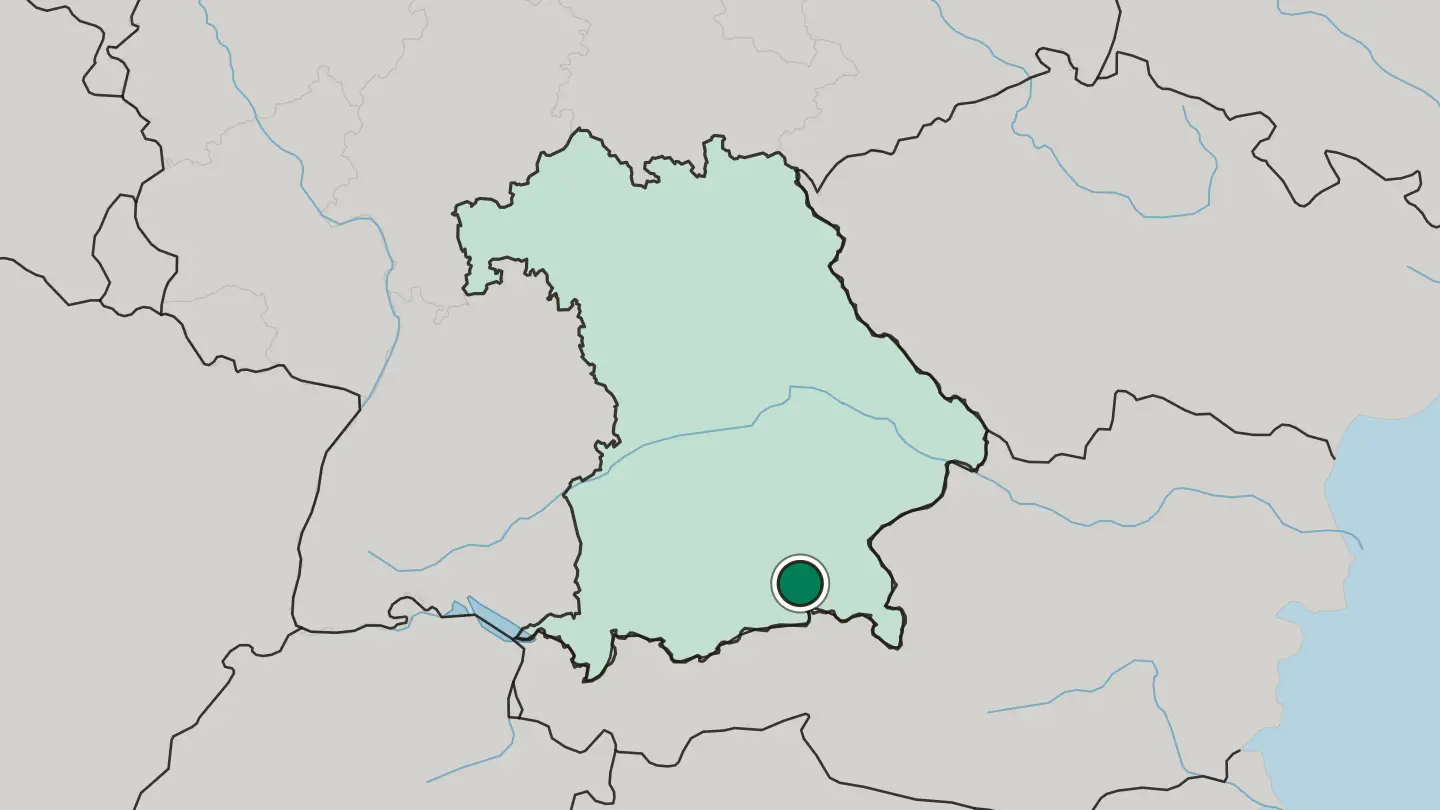
 Germany
Schweinfurt
Schweinfurt is a city of Lower Franconia on the Main, founded in 1254, with the Museum Georg Schäfer and the Kunsthalle Schweinfurt at its centre.Where to stay →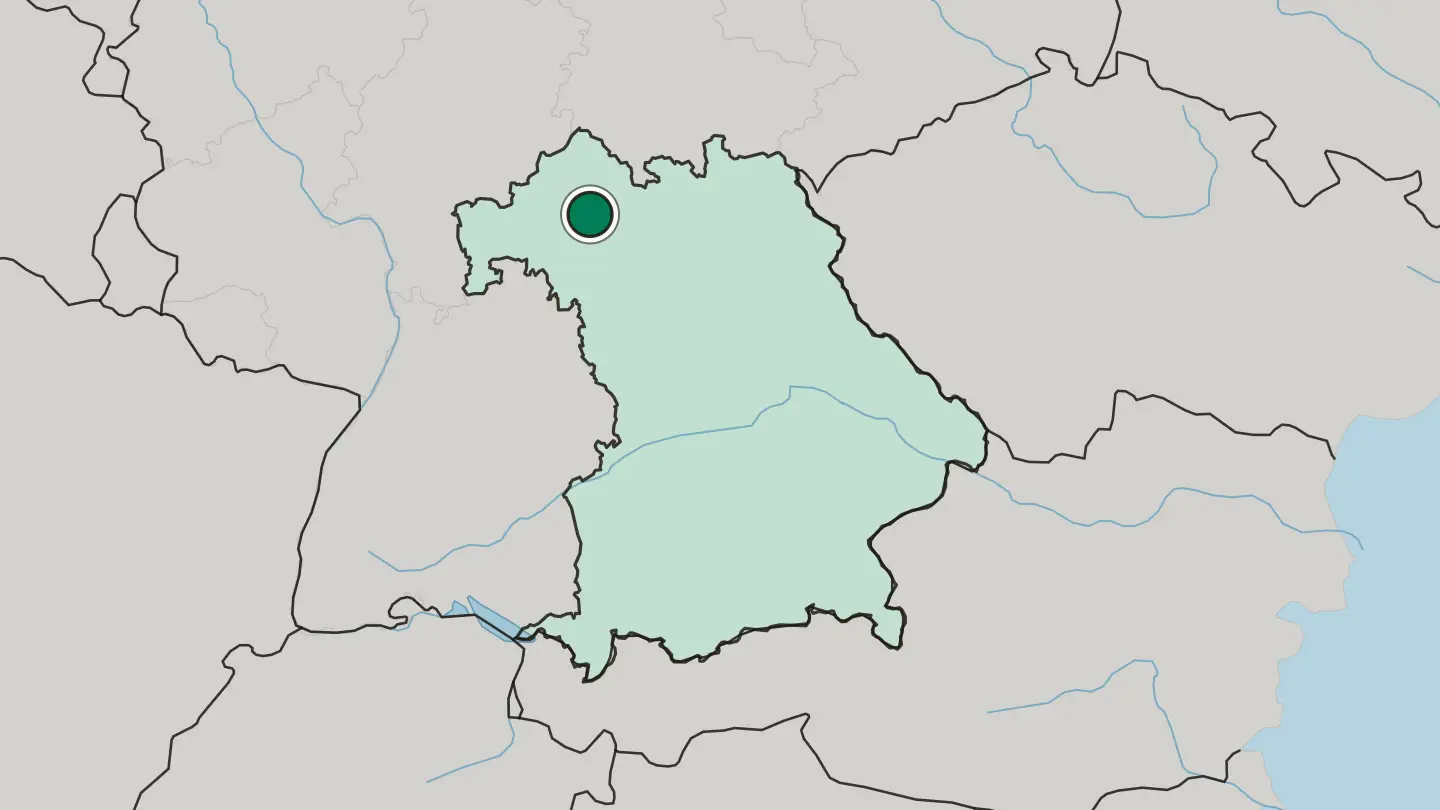
 Germany
Neu-Ulm
Neu-Ulm is a town of 1869 in Bavarian Swabia, facing Ulm across the Danube and running its own district from the newer bank.Where to stay →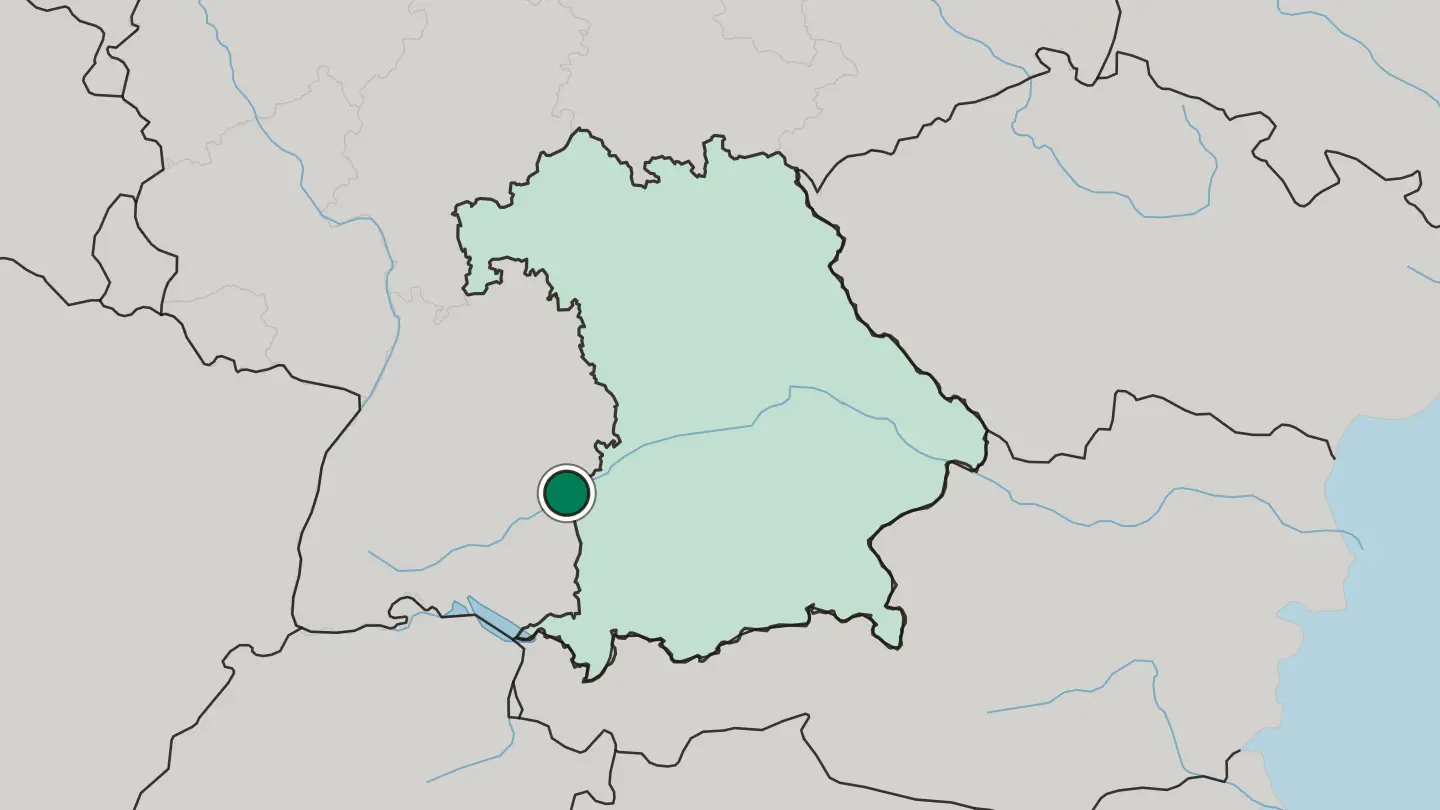
 Germany
Passau
Passau is the Dreiflüssestadt of Lower Bavaria, a cathedral city near the Austrian border where the Inn and the Ilz meet the Danube.Where to stay →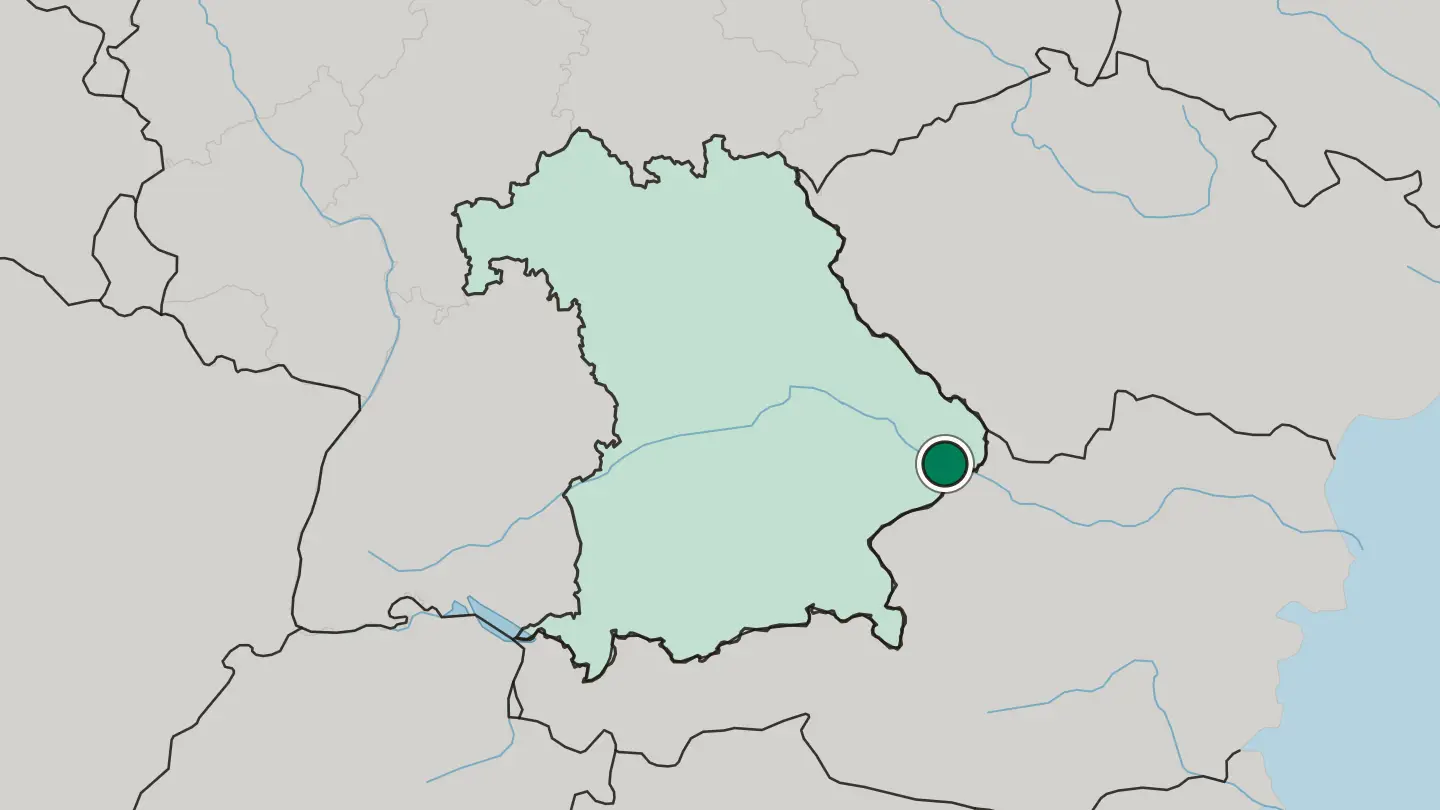 Germany
Kirchheim bei München
Kirchheim bei München is a Bavarian municipality 14 km from central Munich, home to the Bajuwarenhof Kirchheim open-air museum of early medieval farm life.Where to stay →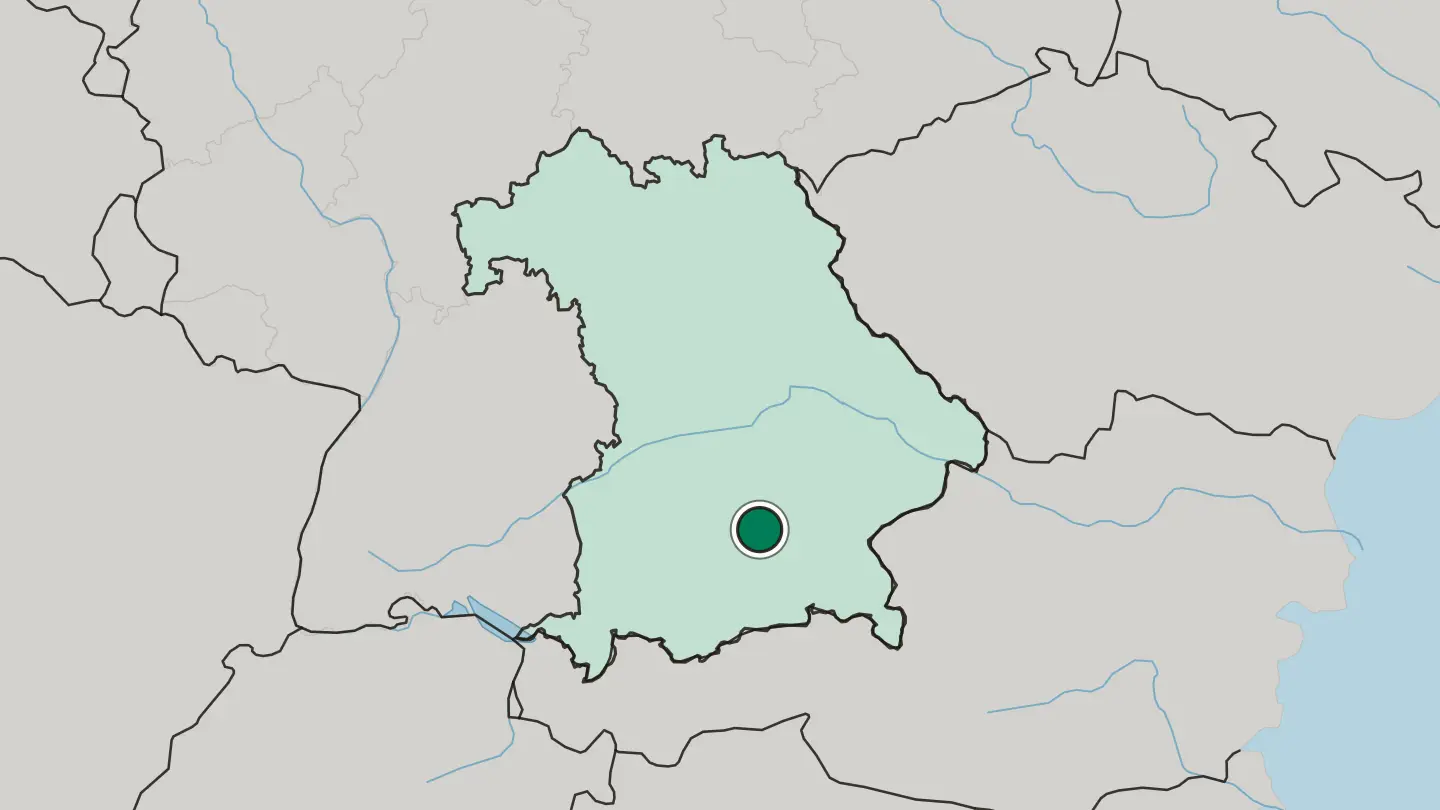
Hotel links are affiliate links: booking through them may earn us a commission, at no extra cost to you. It never affects how places are ranked. How this works
About Bavaria
What is Bavaria known for?
Bavaria is Germany's south-eastern corner and its largest state by land. Munich anchors it. The capital fills a plateau south of the Danube, and beyond that plateau the Bavarian Alps rise toward the Zugspitze, the highest point in Germany.
North of the river the land opens into Franconia, threaded by the Main and dotted with old towns like Nuremberg and Würzburg. Oktoberfest, beer gardens, and King Ludwig's castle at Neuschwanstein carry the region's name far past the Alps.
Where is Bavaria?
Bavaria fills the south-east of Germany, the largest of the country's states by land area. The Danube cuts the state roughly in two. It runs west to east across the middle, past Regensburg at its northernmost bend and on toward Passau, where three rivers meet at the Austrian border.
Munich sits on the rolling plateau south of the river, and south of the capital again the ground climbs to the Bavarian Alps along the frontier with Austria. There the Zugspitze reaches 2,962 metres, the highest point in all of Germany. North of the Danube the land is different.
Franconia opens out, drained by the Main and the Regnitz and rimmed by low wooded ranges. Along the eastern edge, against the Czech border, the Bavarian Forest runs in a long dark ridge of hills. Würzburg and Nuremberg stand in the north.
Augsburg lies to the west in the old Swabian country. Beyond the state's own edges sit its neighbours: Baden-Württemberg to the west, Hesse and Thuringia to the north-west and north, Saxony to the north-east, and Austria and the Czech Republic across the mountains. Two of those borders are foreign.
Bavaria is the one German state that fronts two other countries at once.
What is Bavaria like?
Bavaria is officially the Free State of Bavaria, the Freistaat. Catholic tradition runs through it. Baroque churches and roadside shrines fill the countryside, and the church calendar still shapes the year in the villages of Old Bavaria.
Yet the state is not one culture but three stitched together. Old Bavaria around Munich, Franconia in the north around Nuremberg and Würzburg, and Swabia in the west around Augsburg each keep their own dialect, cooking, and pride, and a Franconian will correct you if you call the north Bavarian in the narrow sense. Beer is the common thread.
Munich brews the beer that fills the tents of Oktoberfest each autumn, the largest folk festival on earth, and beer gardens under chestnut trees are a fixture from the capital to the smallest market town. The Alpine south adds its own picture. Painted house fronts, dirndl and Lederhosen worn without irony, and King Ludwig's castle at Neuschwanstein rising over the foothills.
German is the official language, spoken in dialects that shift sharply from valley to valley. It is a proud culture, and it wears that pride openly.
What is the history of Bavaria?
Bavaria carries a long history. The stem duchy of the Bavarians took shape in the 6th century, on land the Romans had once held, and the name traces to the Baiovarii who settled it. The Wittelsbach family ruled from the Middle Ages onward, and in 1806, under Napoleon's remaking of the map, the duchy was raised to the Kingdom of Bavaria under Maximilian I. That kingdom joined the German Empire in 1871 while keeping its own crown.
Revolution ended the monarchy in 1918, and a new constitution in 1919 made Bavaria the Free State it still calls itself, the Freistaat Bayern.
What is the climate of Bavaria?
Bavaria runs to a continental climate, colder in winter and warmer in summer than much of western Germany. Altitude decides a lot of it. The Alps and the higher plateaus around Munich hold hard frost and deep snow for months, while the sheltered Lower Main valley in the north-west stays the mildest corner of the state and ripens Franconian vineyards.
A dry Alpine wind, the Föhn, can clear the Munich sky and pull the mountains startlingly close. Rain falls heaviest against the southern peaks.
How do you get to Bavaria?
Most visitors fly into Munich, whose airport is the busiest in the state and the main gateway for the south. Rail handles the onward legs. Fast rail links Munich and Nuremberg to the rest of Germany and south across the Alps to Austria, and the Danube corridor carries the line east through Regensburg toward Passau and Vienna.
Drivers reach Bavaria on the autobahn network that fans out from Munich. From the Alpine passes it is a short run over the border from Austria or the Czech Republic.
Common questions
What is the best area to stay in Bavaria?
Munich: an easy introduction to Bavaria. Nuremberg: northern Bavaria and the Main country. The Bavarian Alps: the mountains at the door. Regensburg: the Danube and Roman-rooted streets.
Good for
More regions in Germany
Updated October 2026