
Germany · Bremen
Where to Stay in Bremen
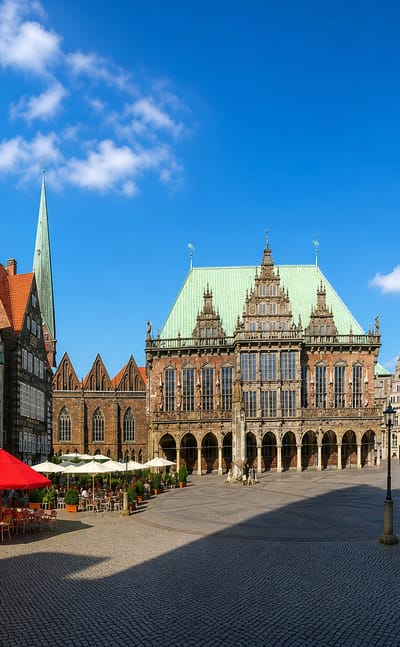
Brick gables front the River Weser at Bremen, a Hanseatic port and city-state of Germany, known for the Kunsthalle Bremen and its cathedral, St. Petri Dom.
Hotel links are affiliate links: booking through them may earn us a commission, at no extra cost to you. It never affects how places are ranked. How this works


Where to stay in Bremen
Where you base yourself shapes the visit — here's the character of each area.
 BremenGermany
Schwachhausen
Schwachhausen is a Stadtteil of Bremen in the Stadtbezirk Ost, adjoining the Innenstadt on the north, built up mostly in detached villas and Bremer Häuser.Schwachhausen →BremenGermanyWalle
Walle is a Stadtteil of Bremen in the Stadtbezirk West, on the right bank of the Weser immediately west of the city centre.Walle → BremenGermany
Burglesum
Burglesum is a district of Bremen built around Knoops Park, the Lesmona country houses and the old churches of Grambke and Moorlose.Burglesum → BremenGermany
Vegesack
Vegesack is a northern district of Bremen built around the Vegesacker Hafen, with the Overbeck-Museum and Stadtkirche Vegesack close by.Vegesack →Hotel links are affiliate links: booking through them may earn us a commission, at no extra cost to you. It never affects how places are ranked. How this works
Things to do in Bremen
Ranked by global recognition; descriptions from Wikidata (CC0).
Museums & Galleries
7- Übersee-Museum Bremen Heritage
- Paula Modersohn-Becker Museum Heritage
- Focke's wind tunnel Heritage
- Speicher XI Heritage
- Ludwig Roselius Museum Heritage
Show 2 more →
- Gerhard Marcks House Heritage
- Spicarium Heritage
Churches & Religious Sites
8- Church of Our Lady (Bremen) Heritage
- Saint Martin's Church, Bremen Heritage
- St. Angarii-Kirche (Bremen, Germany) Heritage
- St. Stephani Heritage
- St Catherine's Monastery Heritage
Show 3 more →
- St. Remberti Heritage
- Moorlose Kirche Heritage
- St.-Martini-Kirche (Bremen-Lesum) Heritage
Castles & Historic Sites
3- Antikolonialdenkmal Heritage
- Benquestein Heritage
- Franz Ernst Schütte-Denkmal Heritage
Nature & Outdoors
2- Knoops Park Heritage
- Haus Lesmona Heritage
Landmarks & Notable Places
4- Wasserturm auf dem Werder Heritage
- Wilhelm Wagenfeld House Heritage
- Overbeck-Museum Heritage
- Villa Schotteck Heritage
worth knowingacross 5 categories in Bremen
About Bremen
What is Bremen known for?
Bremen is known as a Hanseatic port on the River Weser, a two-city-state that also takes in the outport of Bremerhaven downstream. The trading past shows in its art and its warehouses. Its museums draw the widest reputation, from the Kunsthalle Bremen to the Übersee-Museum Bremen with its overseas collections, and the Paula Modersohn-Becker Museum, built for one of the region's own painters.
Along the old harbour the brick bulk of Speicher XI still marks the working waterfront.
What are the main landmarks in Bremen?
Bremen gathers its landmarks around the River Weser and the old cathedral quarter. St. Petri Dom rises over the market square with its two towers, and the older Church of Our Lady stands close by. Bremen counts several museums among its draws.
The Kunsthalle Bremen holds the city's picture collection, the Übersee-Museum Bremen its overseas and natural-history rooms, and the Weserburg its modern art on the river island of Teerhof. Down the Weser the brick warehouse of Speicher XI and the riverside St. Stephani anchor the working waterfront.
What is the history of Bremen?
Bremen grew as a Hanseatic trading city on the River Weser, and the river made it. A missionary see was seated here in the early medieval centuries, and the cathedral of St. Petri Dom carries that founding church down to the present. Trade followed the faith.
As a member of the Hanseatic League, the city built its wealth on the shipping that ran down the Weser to the open sea, and the merchant class won it the standing of a free city that answered to no local duke. That independence outlasted the League itself. When the river silted too far for the largest ships, Bremen founded the outport of Bremerhaven downstream to keep its ocean trade alive, and the two towns have shared one city-state ever since.
The old harbour left its mark in brick. Warehouses like Speicher XI along the Weser recall the era when coffee, cotton, and tobacco moved through the quays, and the Übersee-Museum Bremen was raised to hold what the overseas trade brought home. The churches of the medieval town, among them the Church of Our Lady and St. Stephani, still trace the streets of the merchant city.
Bremen remains a city-state of Germany, one of the smallest yet oldest self-governing communities in the country.
Where is Bremen?
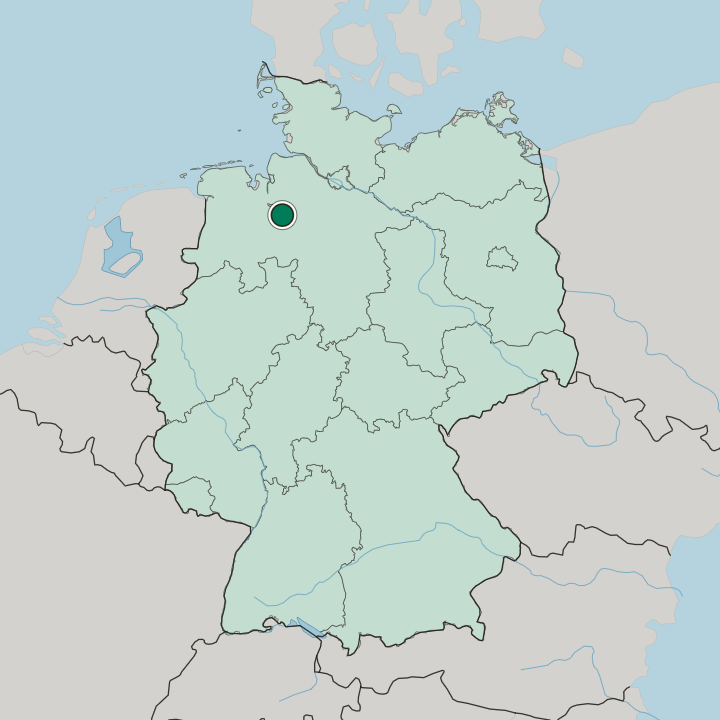
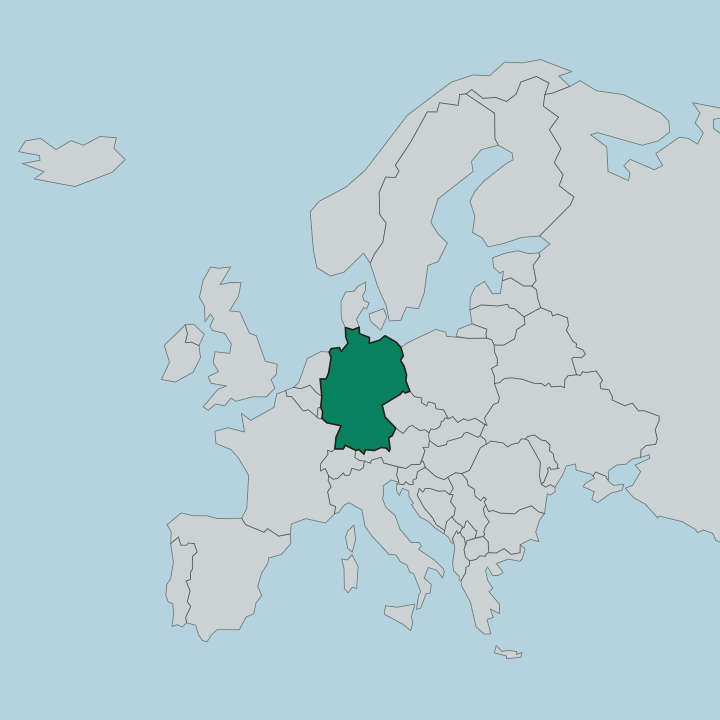
Bremen lies along the River Weser in northern Germany, a lowland port set back from the North Sea coast. The river splits the city into a north-bank old town and the south-bank Neustadt, with the slim island of Teerhof caught between them. Flat marsh and reclaimed land surround it.
Downstream the Weser widens toward its estuary, where the outport of Bremerhaven completes the two-part city-state, while Hamburg lies to the east across the north German plain. The land here sits barely above the tideline, and dikes hold the river to its channel.
What is the climate of Bremen?
Bremen has a mild maritime climate, softened by its position on the River Weser near the North Sea. Winters stay cool and grey rather than harsh, with rain more common than deep frost, and the estuary air keeps the sharpest cold at bay. Summers are warm and changeable.
Cloud, shower, and sudden sun trade places over the lowland in a single afternoon, and the wind off the sea rarely lets the heat build for long. Rain falls across the whole year, feeding the marsh and river that frame the city.
How do you get to Bremen?
Bremen sits on the main rail and road lines of northern Germany, easy to reach from Hamburg and the wider region by train, car, or air. Bremen Airport lies close in. A short tram ride carries arrivals from the runway to the old town on the River Weser, and fast trains stop at the central station between.
Long-distance services run east to Hamburg and south into the rest of the country, while regional lines follow the Weser down to the outport of Bremerhaven. Motorways ring the city and cross the river, and the tram network stitches both banks together for the last stretch in.
Good for
Another city in Bremen
Updated October 2026