Germany · Nordrhein-Westfalen · Iserlohn
Oestrich, Iserlohn — Area Guide & Where to Stay
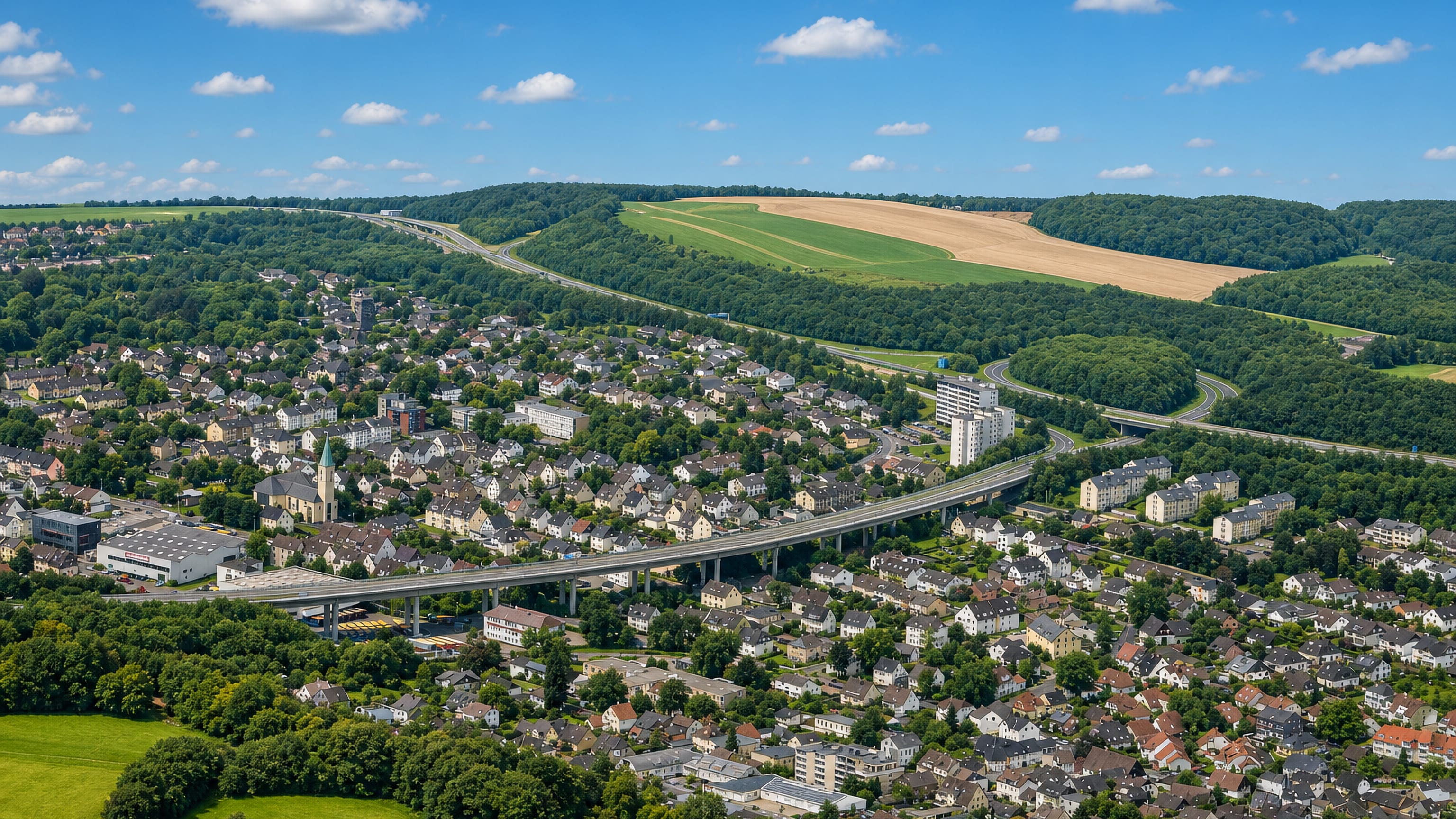
Oestrich is a Stadtteil of Iserlohn in the northwest of the Sauerland, first recorded as Cometia Osteric between 1220 and 1250.
Hotel links are affiliate links: booking through them may earn us a commission, at no extra cost to you. It never affects how places are ranked. How this works


Where to stay in Oestrich
The practical side of choosing where to sleep.
It divides into an upper and a lower village. The Unterdorf runs west to east from the Flemebach at the Letmathe boundary to the Schleddestraße and An der Stennert, and the Oberdorf continues from there to the Dröschede boundary at the Kuhlenstück and the power line. The A46 closes the north.
Grürmannsheide adjoins beyond it, and the southern line toward Untergrüne runs between the Willi-Vieler-Stadion and the Letmathe to Iserlohn railway. Iserlohn proper is a short run east.
Things to do in and around Iserlohn
Ranked by global recognition; descriptions from Wikidata (CC0).
Museums & Galleries
1- Deutsches Höhlenmuseum
Churches & Religious Sites
3- Evangelische Kirchengemeinde Oestrich Heritage
- Friedenskirche Heritage
- Neuapostolische Kirche
Castles & Historic Sites
2- Dechen Cave Heritage
- Burgberg Heritage
worth knowingacross 3 categories in and around Iserlohn
About Oestrich
What are the main landmarks in Oestrich?
The Burgberg is the oldest ground. A rampart on it dates at least to post-Carolingian times, and a heritage researcher's suggestion that it is older or was a cult site cannot be proved from archaeology or written sources. Late antique gold came from its foot.
A neck ring and arm rings of the 4th century were found below the rock called Pater und Nonne. Seven limes stand at a cemetery gate. Legend has survivors of the plague of 1636 planting them in thanks at the entrance to the Am Lindenplatz burial ground.
What is the history of Oestrich?
People were in this country long before the name. Numerous Stone Age find spots at Grürmannsheide, on the Burgberg and in the caves of the Grüner Tal and Lennetal, among them the now destroyed Martinshöhle, point to settlement more than forty thousand years ago. The first record is a court roll.
Oestrich appears as Cometia Osteric, the free court of Oestrich, in the Große Vogteirolle of the Stift Essen kept by the count of Isenberg-Altena, a document dated to between 1220 and 1250. Its name says where it is. Oestrich can be read as the settlement lying to the east.
Position helped and hurt it. The little farming village sat near the crossing of two imperial roads and prospered on that, but was repeatedly thrown back by war and disease. Plague nearly ended it in 1636.
Only seven people in Oestrich survived the epidemic that year during the Thirty Years War, and the seven limes at the Lindenplatz cemetery gate are said to be their thanks.
Where is Oestrich?
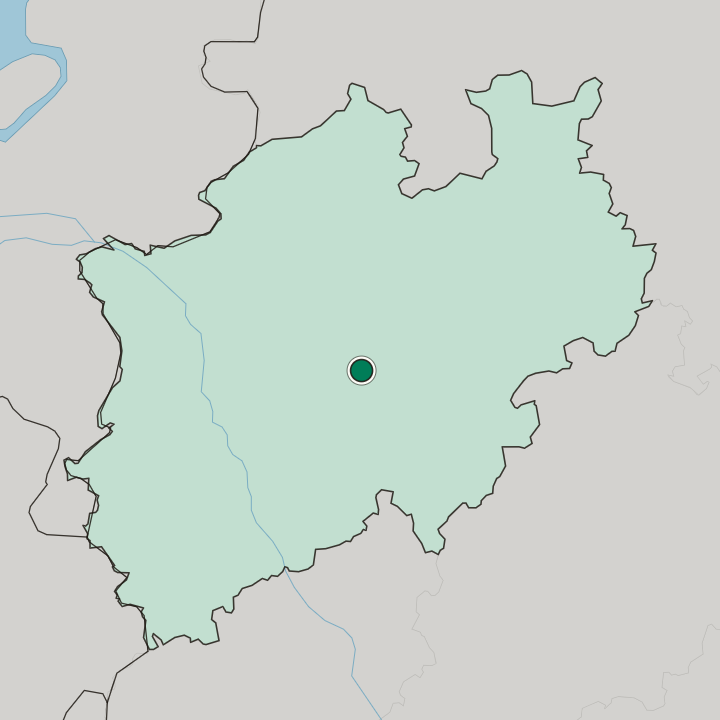
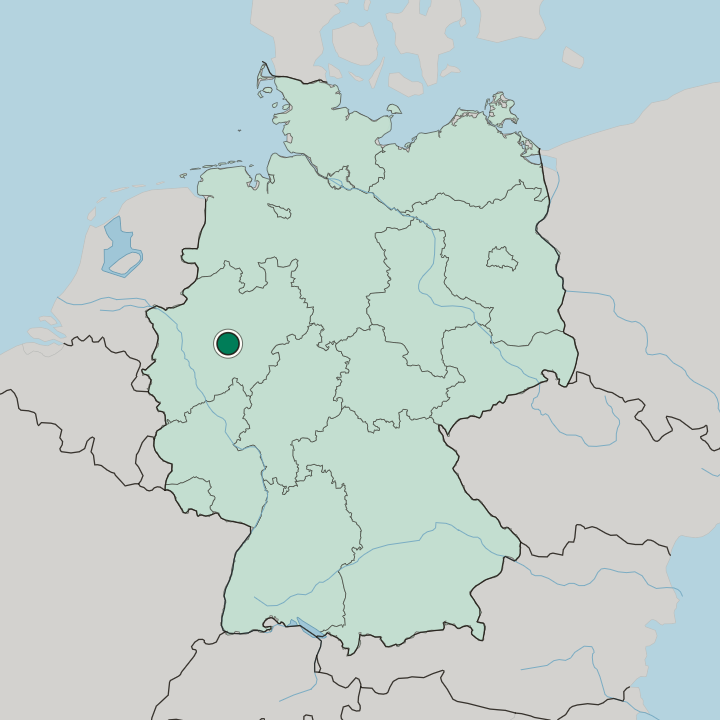
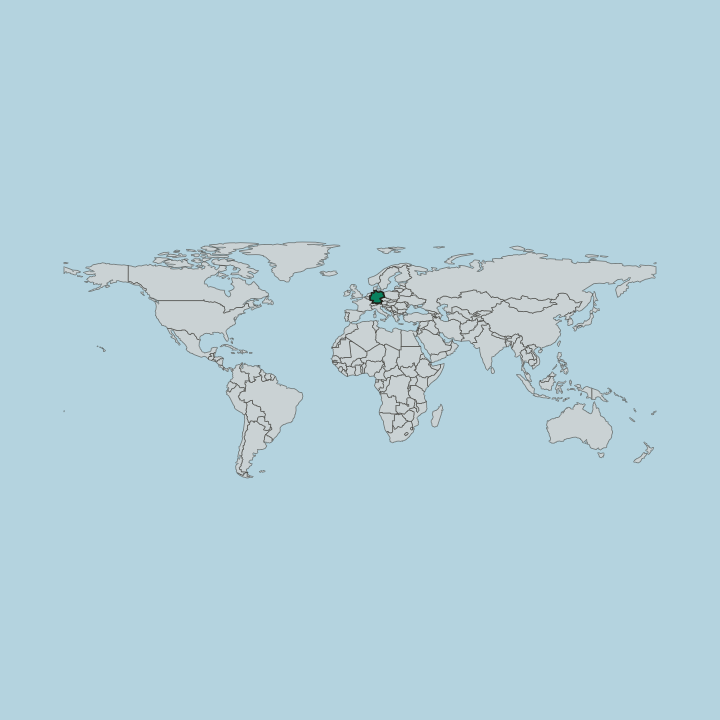
Oestrich lies in the northwest of the Sauerland within Iserlohn in the Märkischer Kreis, bounded north by the A46 and Grürmannsheide, west by the Flemebach at Letmathe, east by Dröschede and south by Untergrüne.
Good for
Another area in Iserlohn
Updated October 2026