Germany
Nordrhein-Westfalen, Germany — Towns & Travel Guide
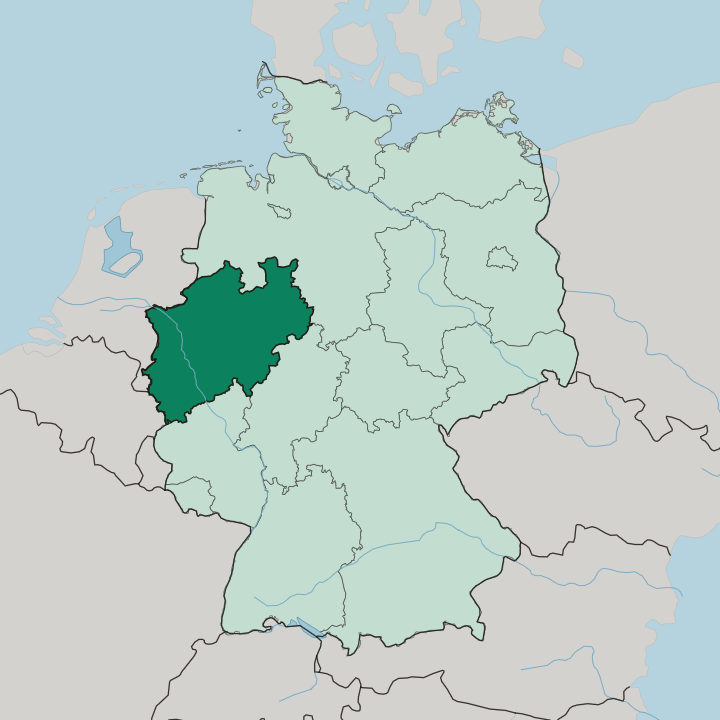
Nordrhein-Westfalen is a landlocked German state on the river Rhine, joining Nordrhein and Westfalen around the Ruhr Valley and the Teutoburg Forest.
Hotel links are affiliate links: booking through them may earn us a commission, at no extra cost to you. It never affects how places are ranked. How this works


Towns & cities in Nordrhein-Westfalen
Pick a town or city — each links to where to stay.
 Germany
Köln
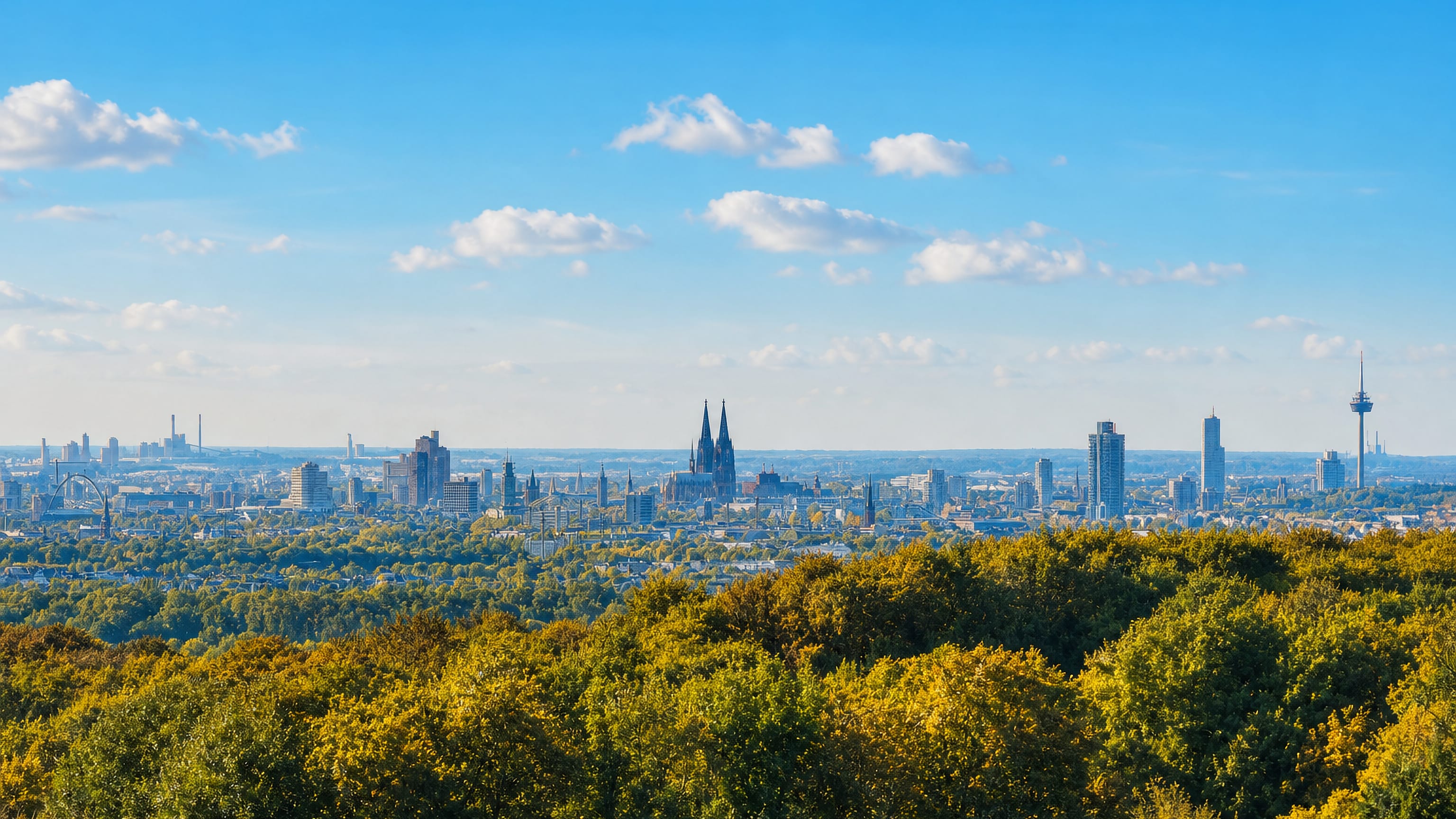
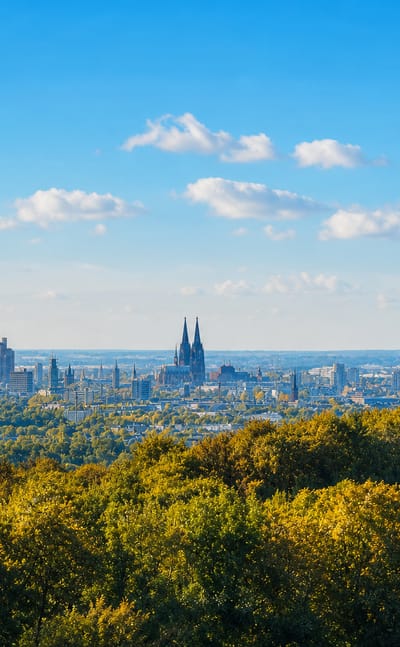
Köln stands on the left bank of the Rhine beneath the spires of Cologne Cathedral, the largest city of Nordrhein-Westfalen.Where to stay →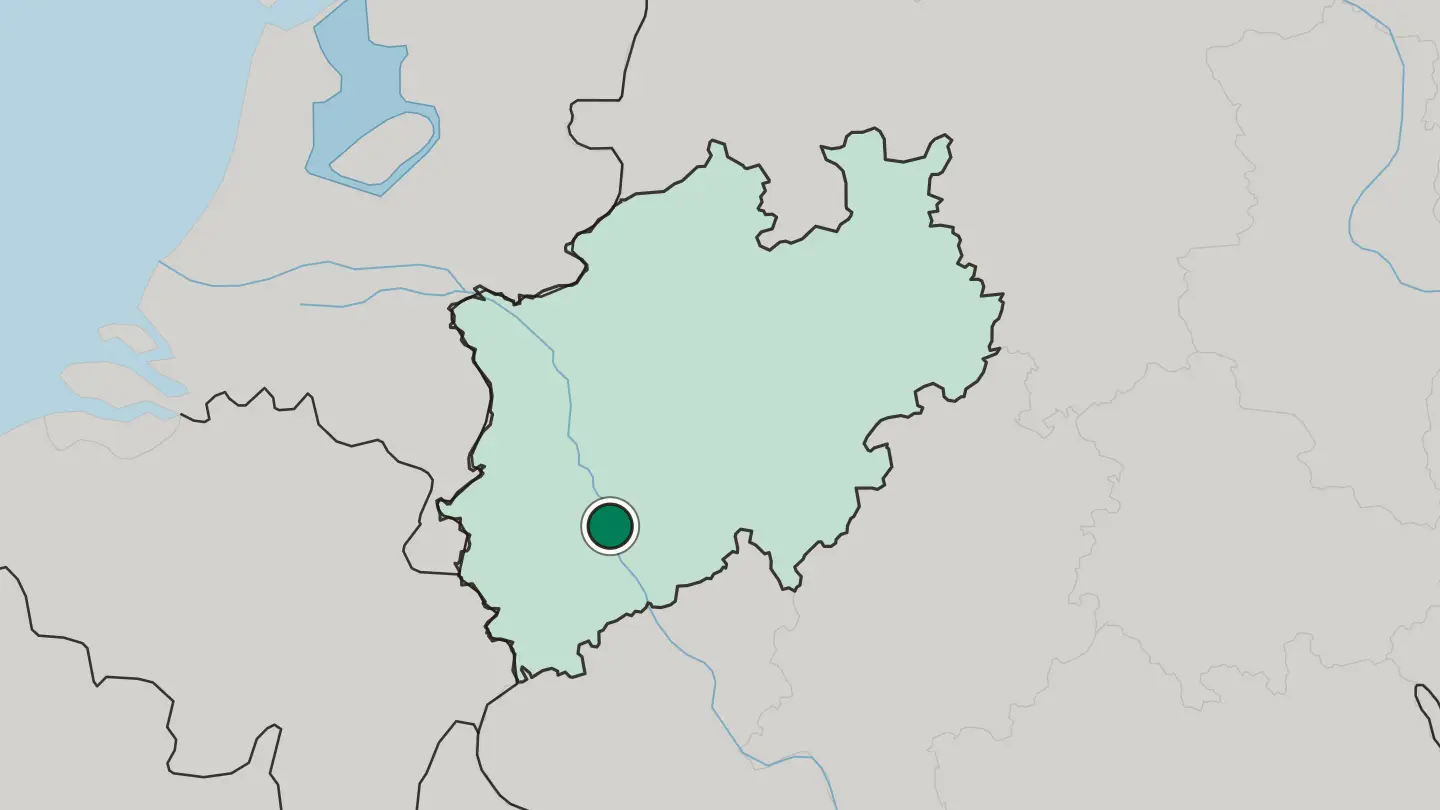
 Germany
Düsseldorf
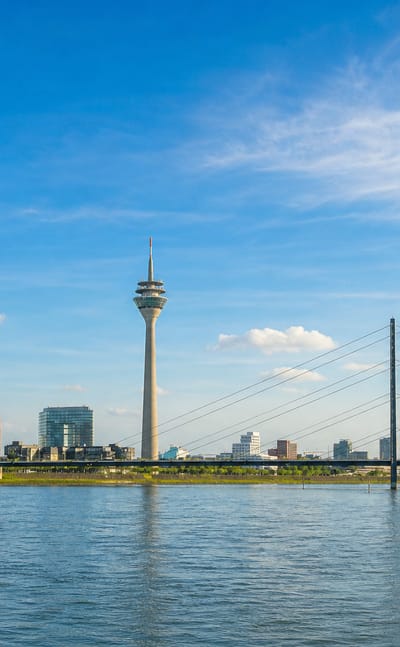
Düsseldorf lines the River Rhine in western Germany, the capital of North Rhine-Westphalia, known for its Altstadt and the twisted spire of St. Lambertus.Where to stay →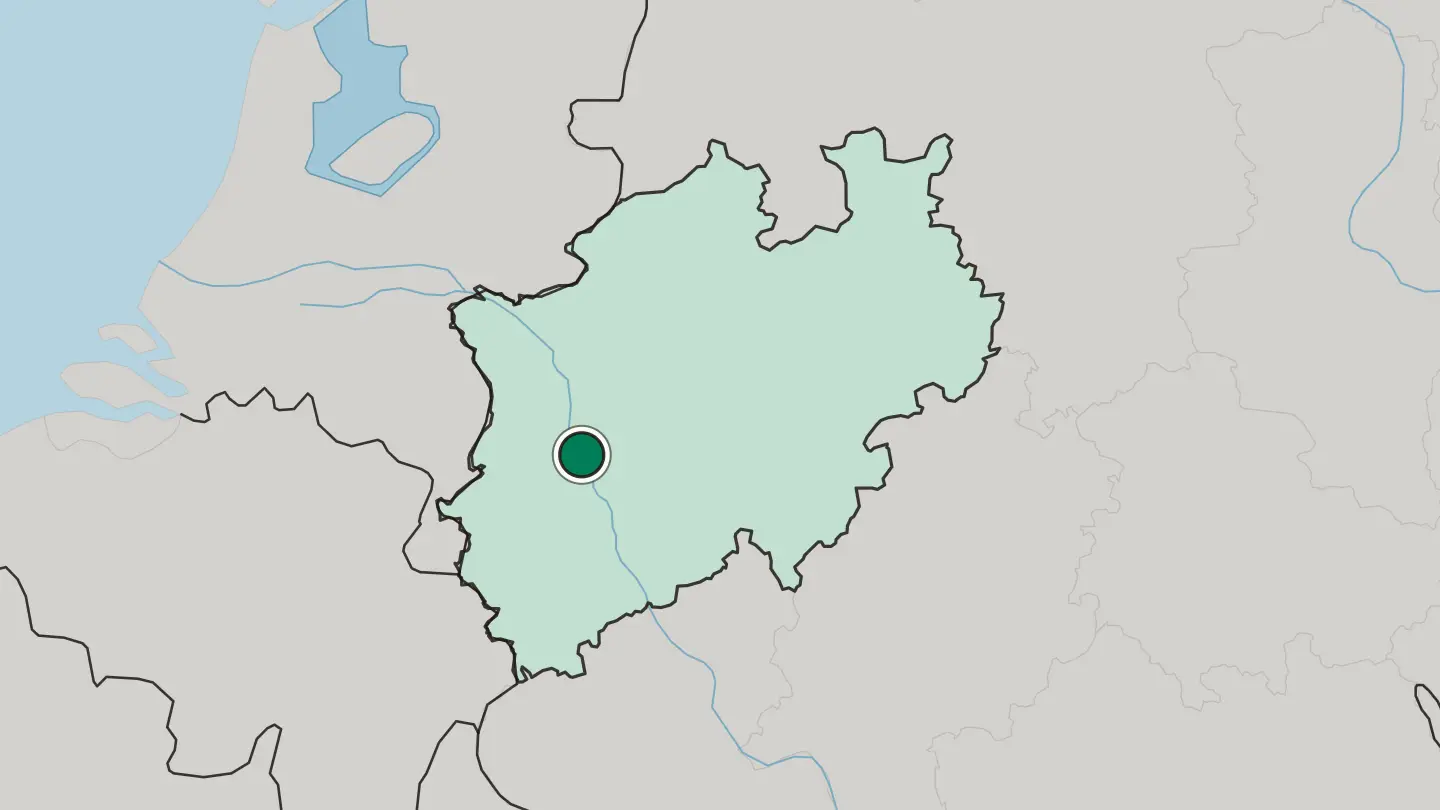
 Germany
Essen
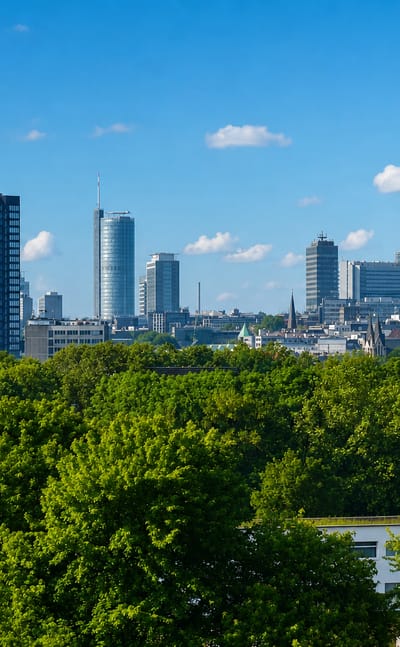
Essen stands at the heart of the Ruhr in North Rhine-Westphalia, a former coal-and-steel city built around Essen Minster and the Krupp works.Where to stay →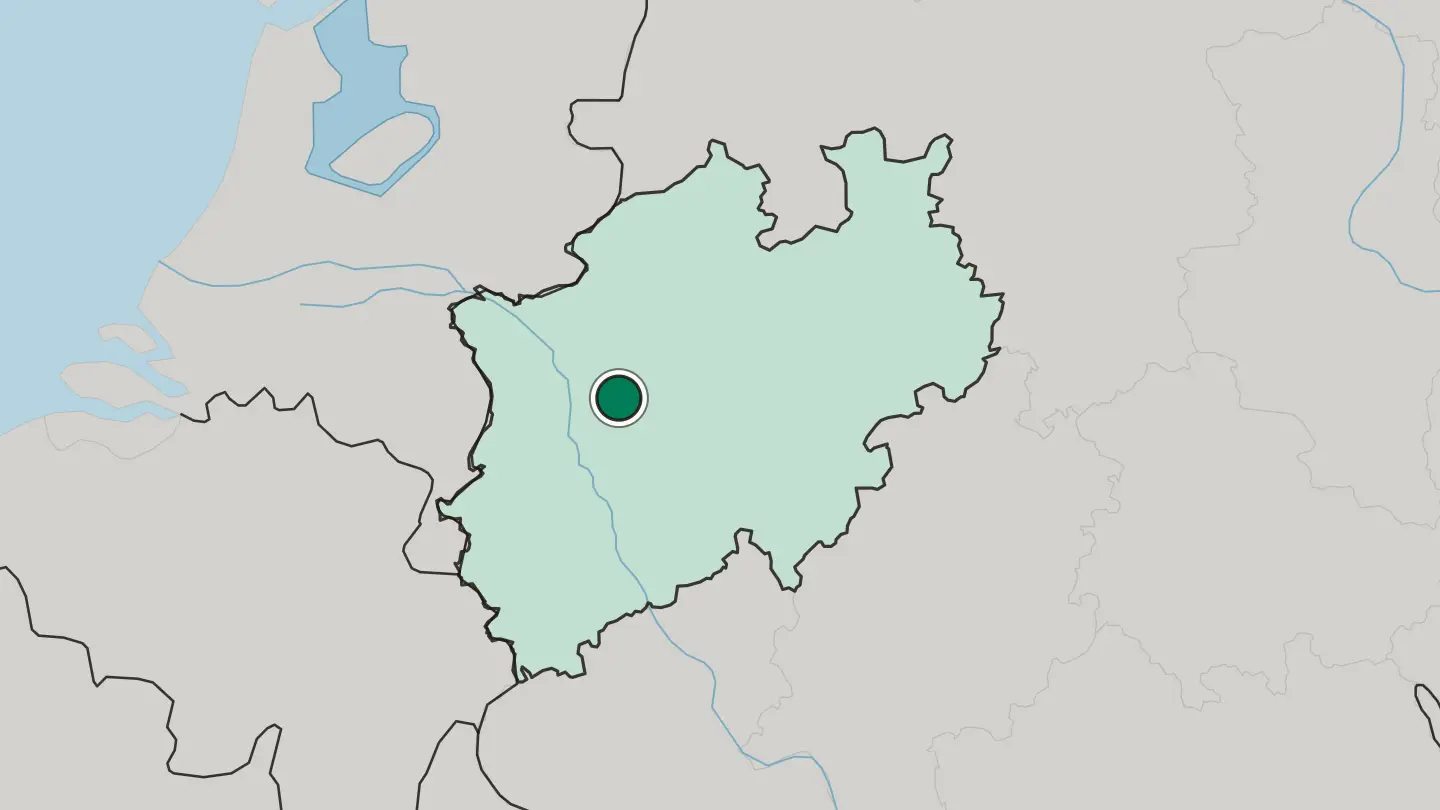
 Germany
Dortmund
Dortmund, founded in 882, is the largest city of the Ruhr, with the German Football Museum and the Florianturm among its landmarks.Where to stay →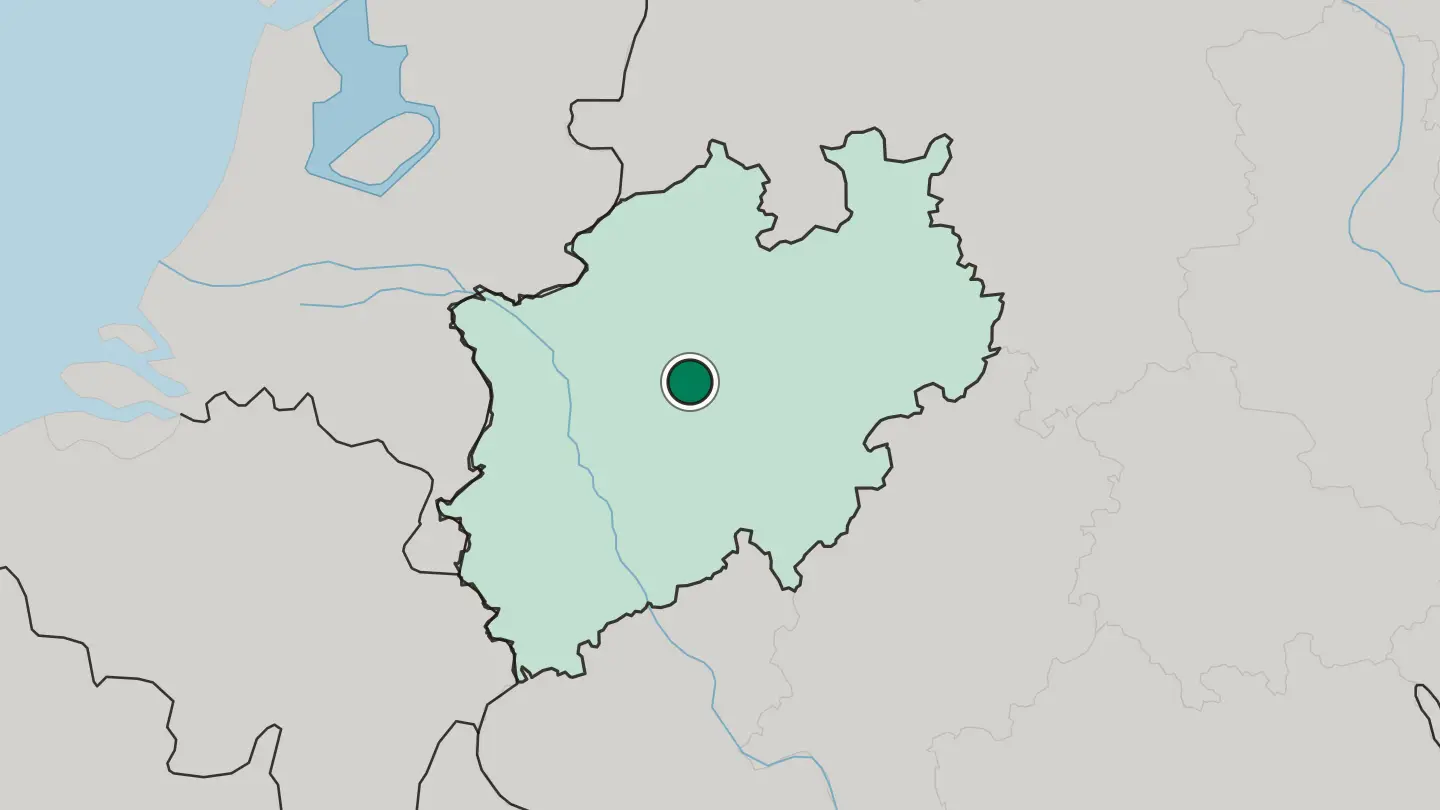
 Germany
Duisburg
Duisburg stands where the Ruhr meets the Rhine, an independent city built around the Port of Duisburg and the sculpture of the Lehmbruck Museum.Where to stay →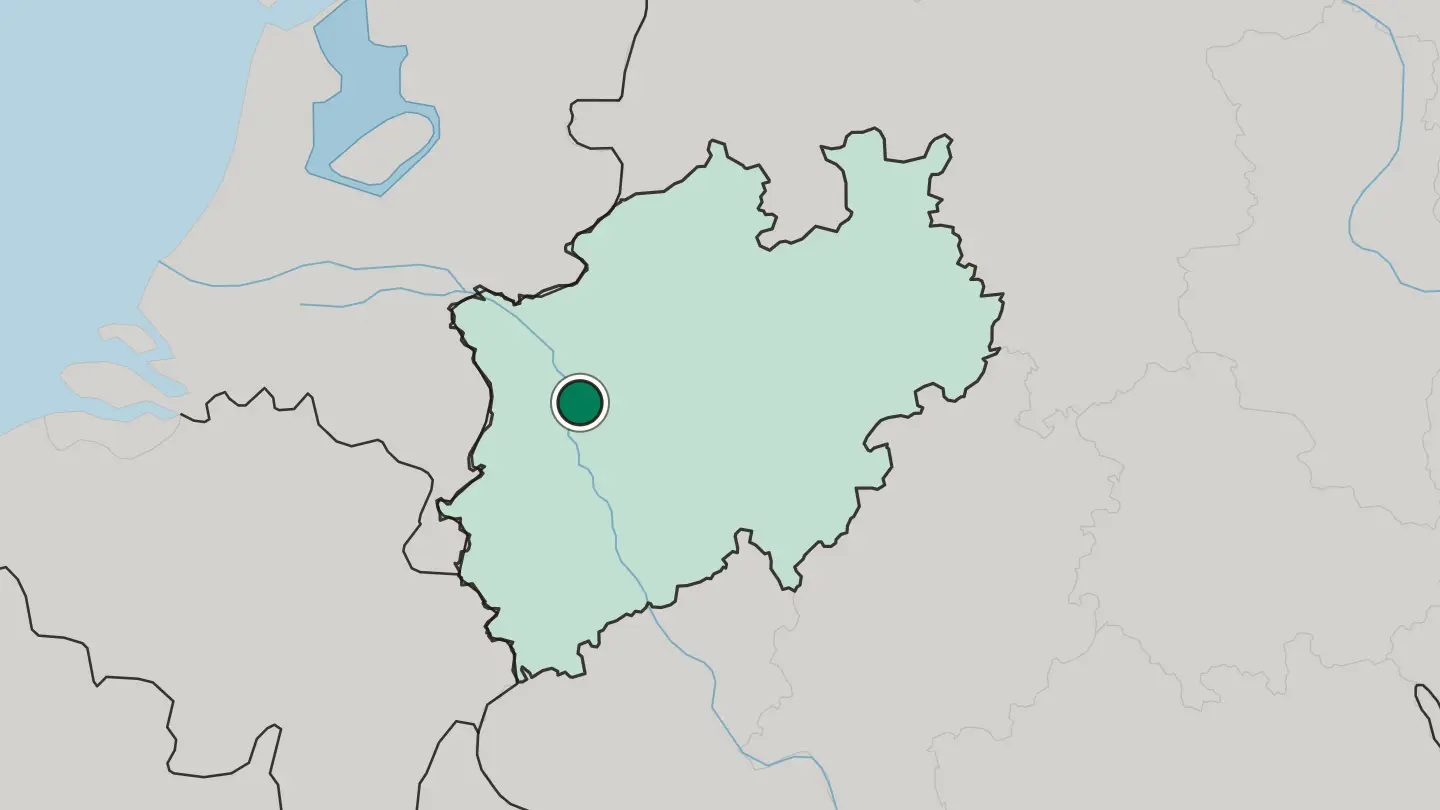 Germany
Bochum
Bochum is a Ruhr city in Nordrhein-Westfalen, a former mining town on the Ruhr Heights known for the German Mining Museum and its university.Where to stay →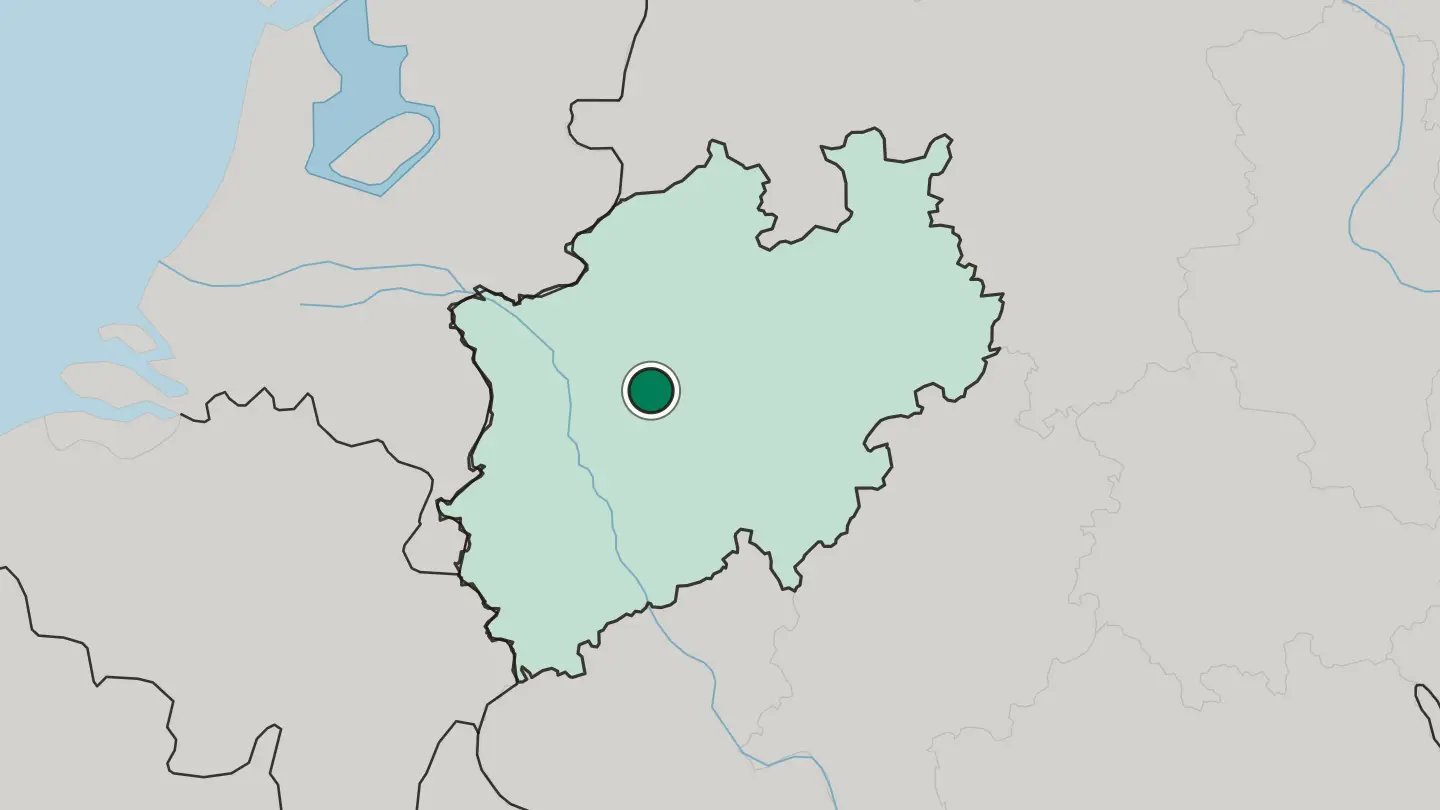 Germany
Wuppertal
Wuppertal hangs the Schwebebahn above its valley, the oldest monorail anywhere, in a Bergisches Land city assembled from five towns in 1929.Where to stay →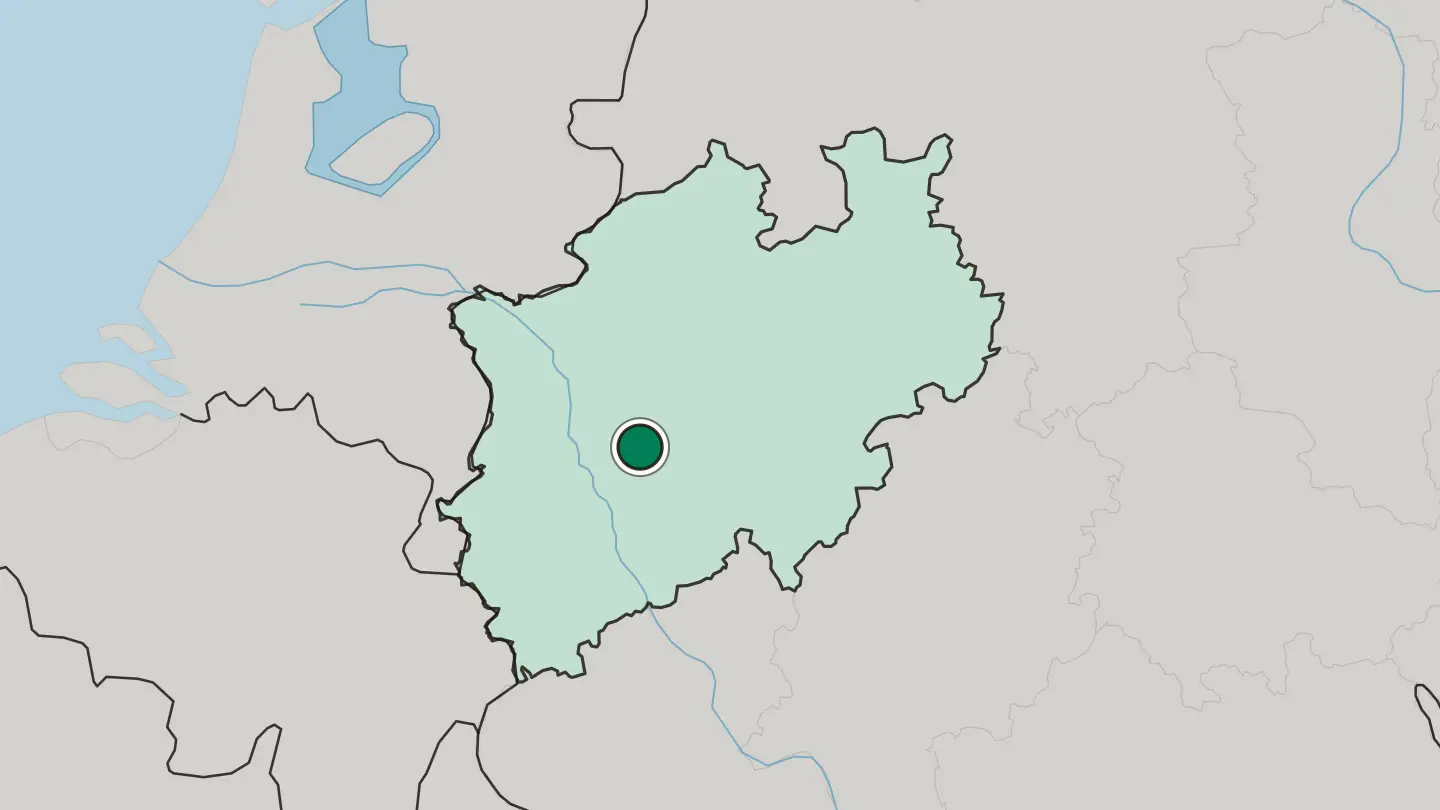
 Germany
Bonn
The Rhine runs past the old town at Bonn, a federal city in North Rhine-Westphalia known for Bonn Minster and the Beethoven House.Where to stay →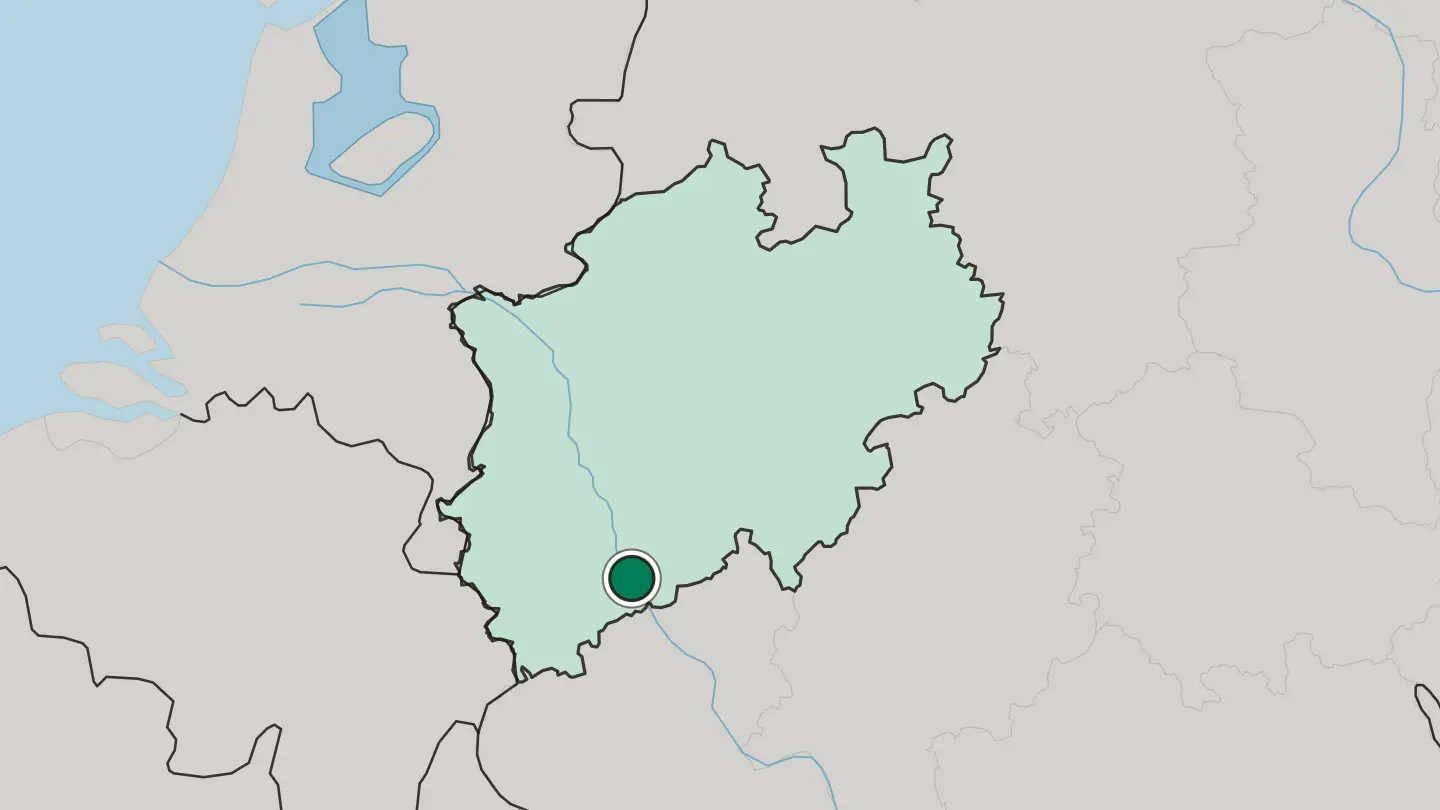
All towns & cities (74)
 Germany
Münster
Historic capital of Westphalia and a signing place of the 1648 peace, Münster ranges from the St.-Paulus-Dom to the Mühlenhof Open-Air Museum.Where to stay →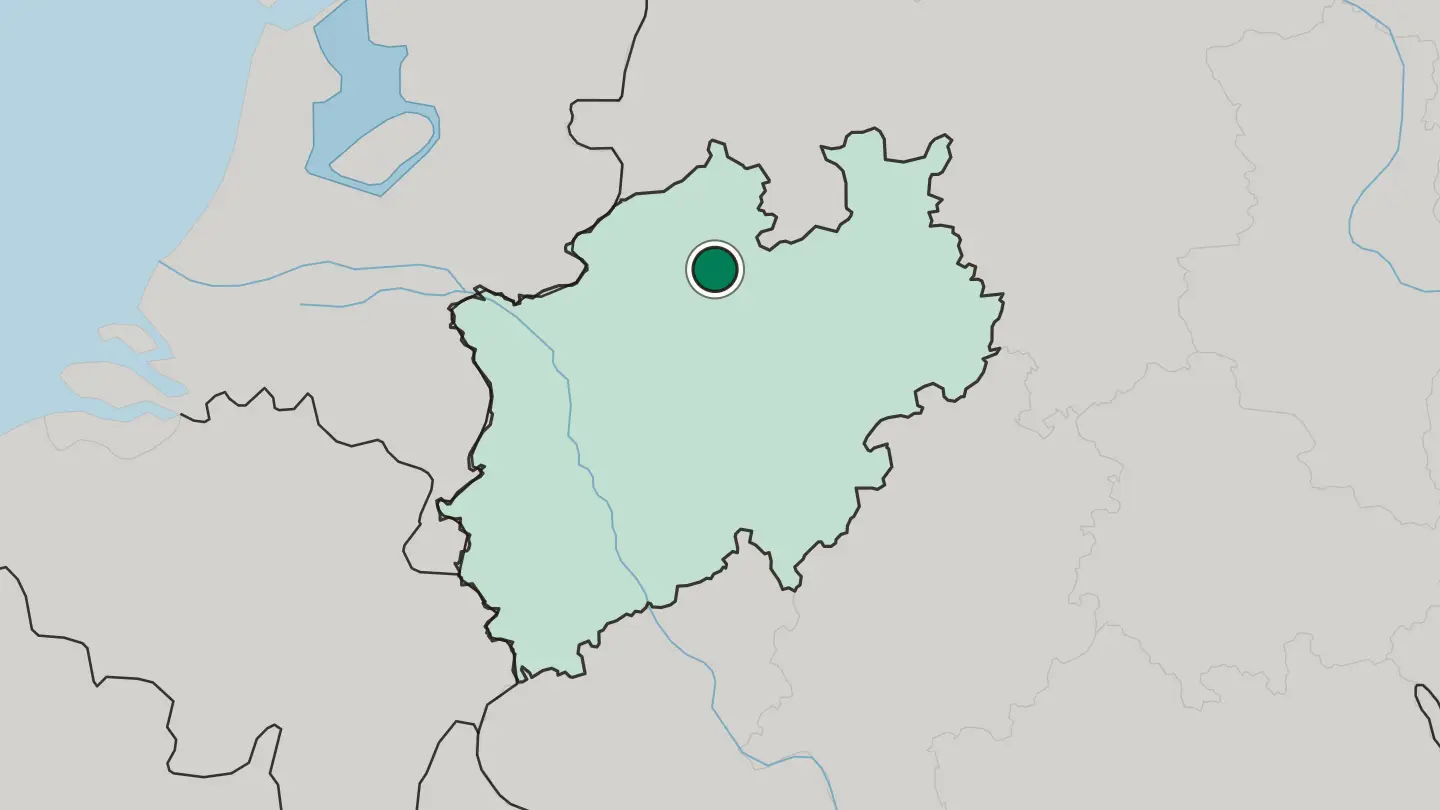
 Germany
Gelsenkirchen
Gelsenkirchen stands on the Emscher at the centre of the Ruhr area, an industrial city known for Schalke 04, the ZOOM Erlebniswelt and reused works.Where to stay →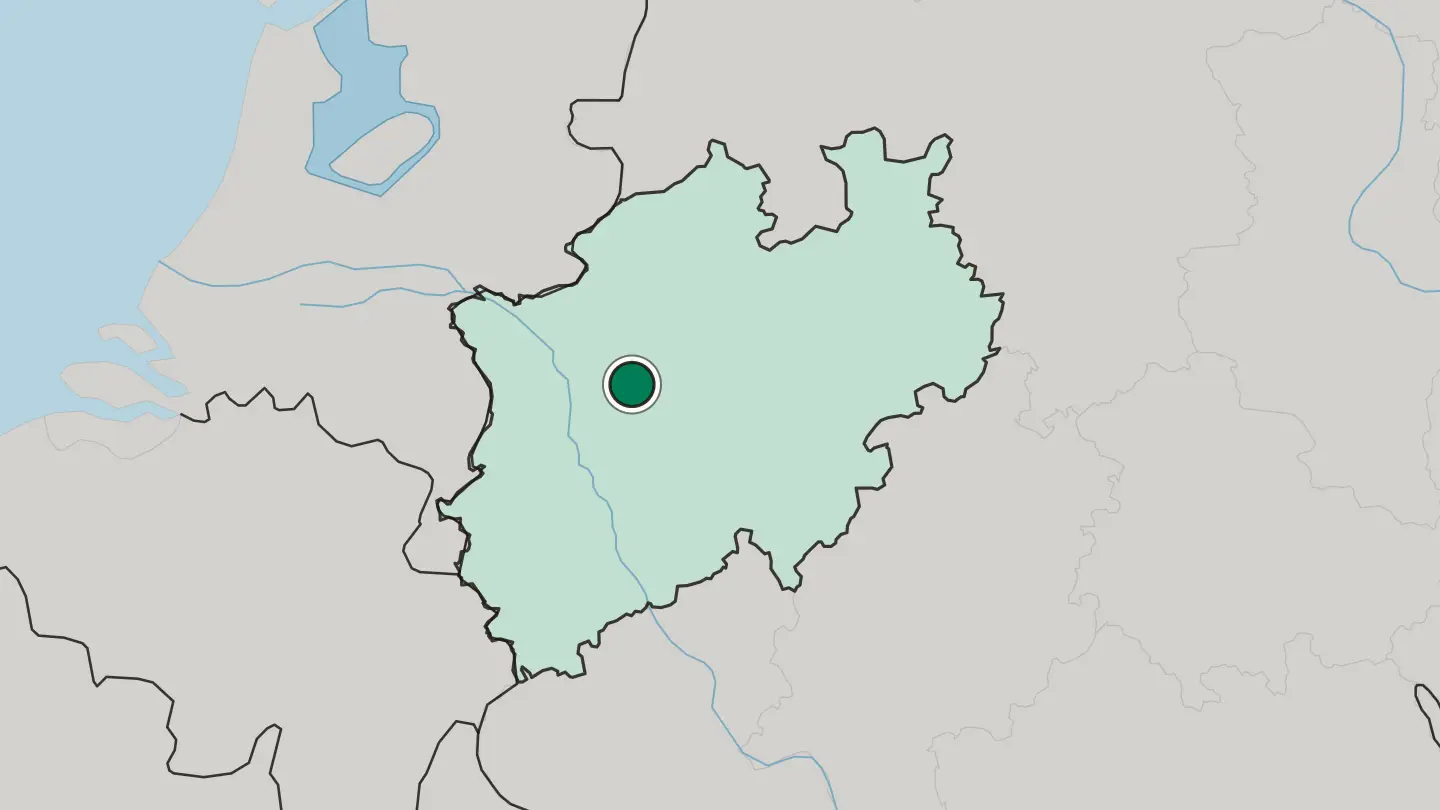
 Germany
Aachen
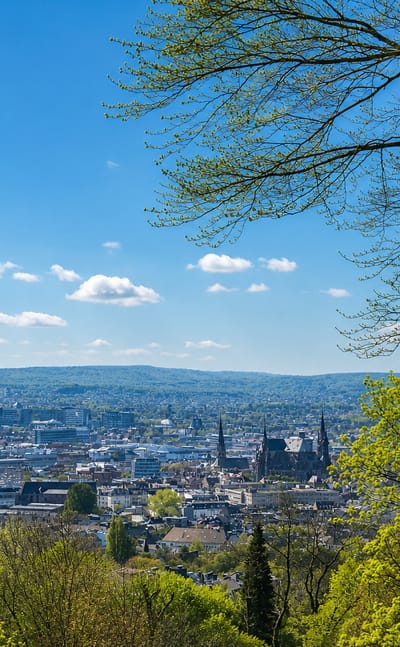
Aachen gathers around Aachen Cathedral at the corner where Germany, Belgium, and the Netherlands meet, a spa city in Nordrhein-Westfalen.Where to stay →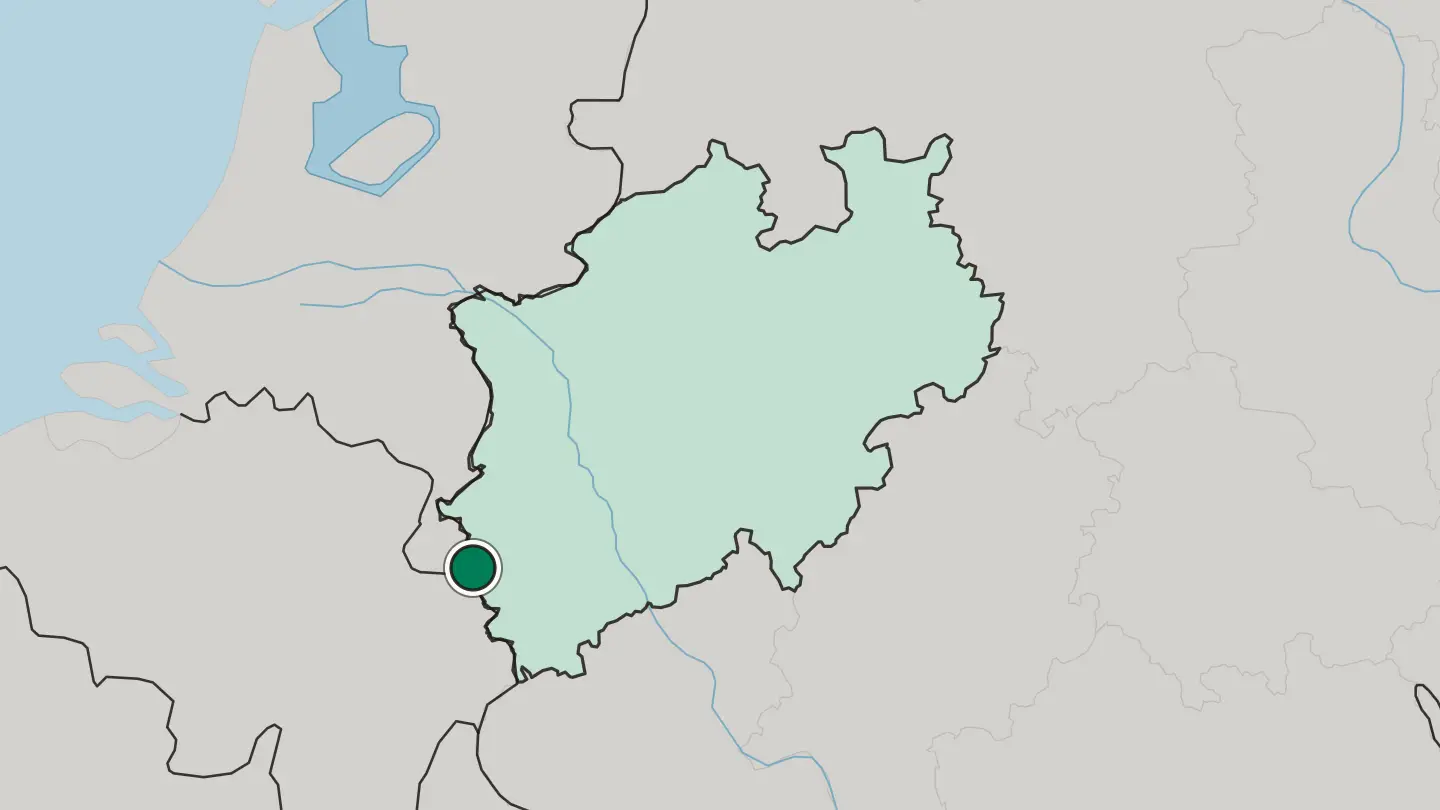 Germany
Mönchengladbach
Mönchengladbach lies west of the Rhine between Düsseldorf and the Dutch border, its named sites led by the Abteiberg Museum and the SparkassenPark.Where to stay →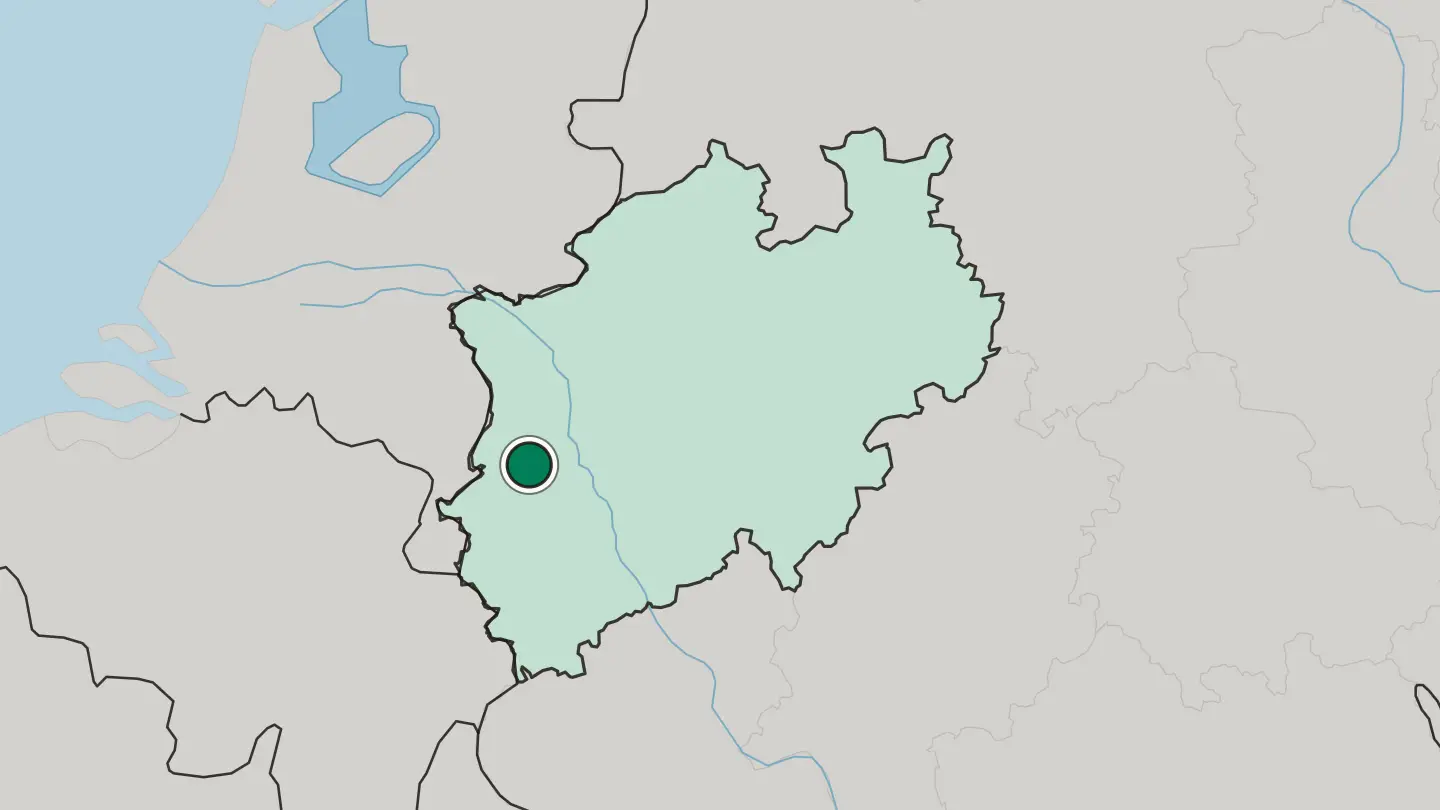
 Germany
Krefeld
Krefeld is a city of Nordrhein-Westfalen built around the Kunstmuseen Krefeld, a zoo, and church quarters that were villages of their own.Where to stay →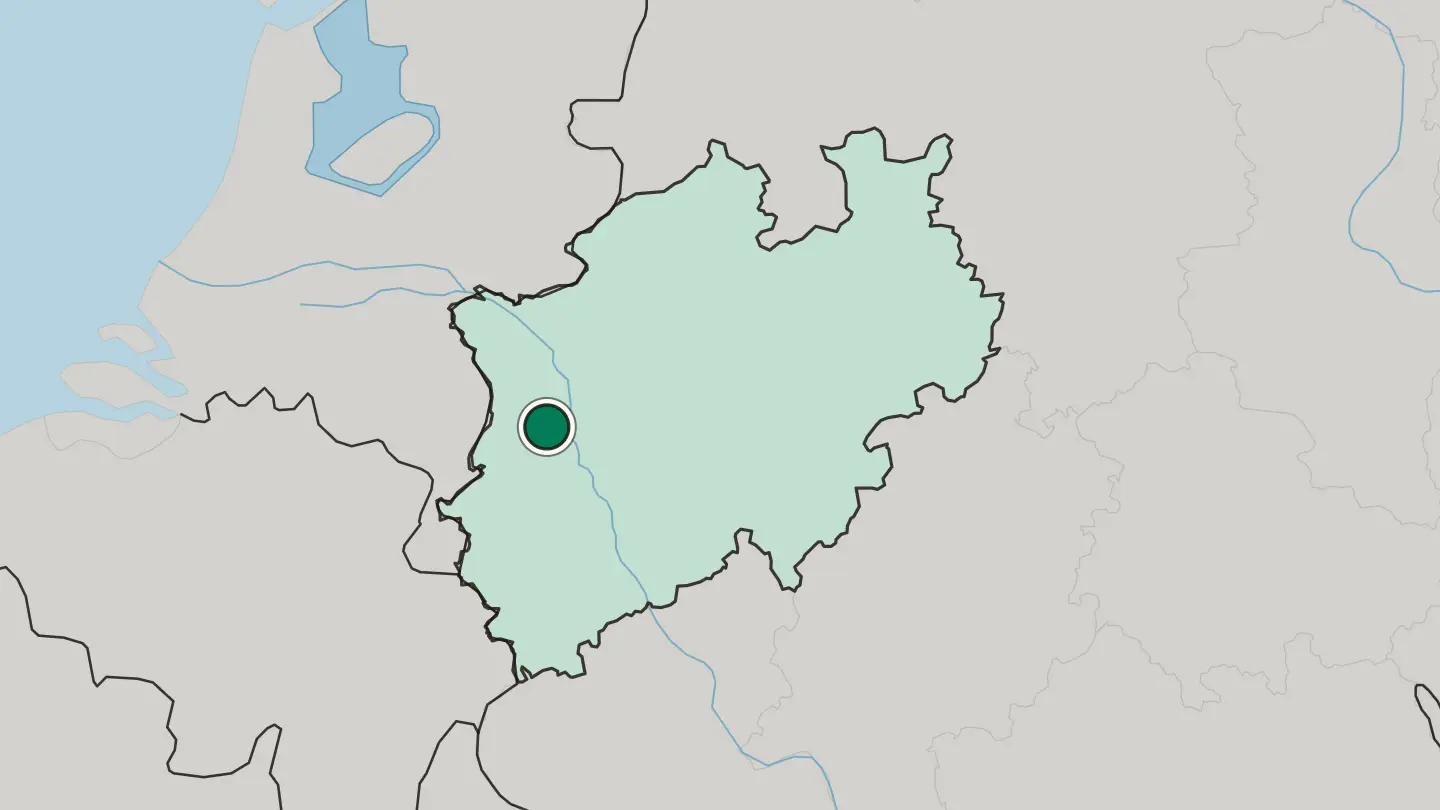
 Germany
Oberhausen
Oberhausen, founded in 1862, turned its industry into museums and put its gasometer on the European Route of Industrial Heritage.Where to stay →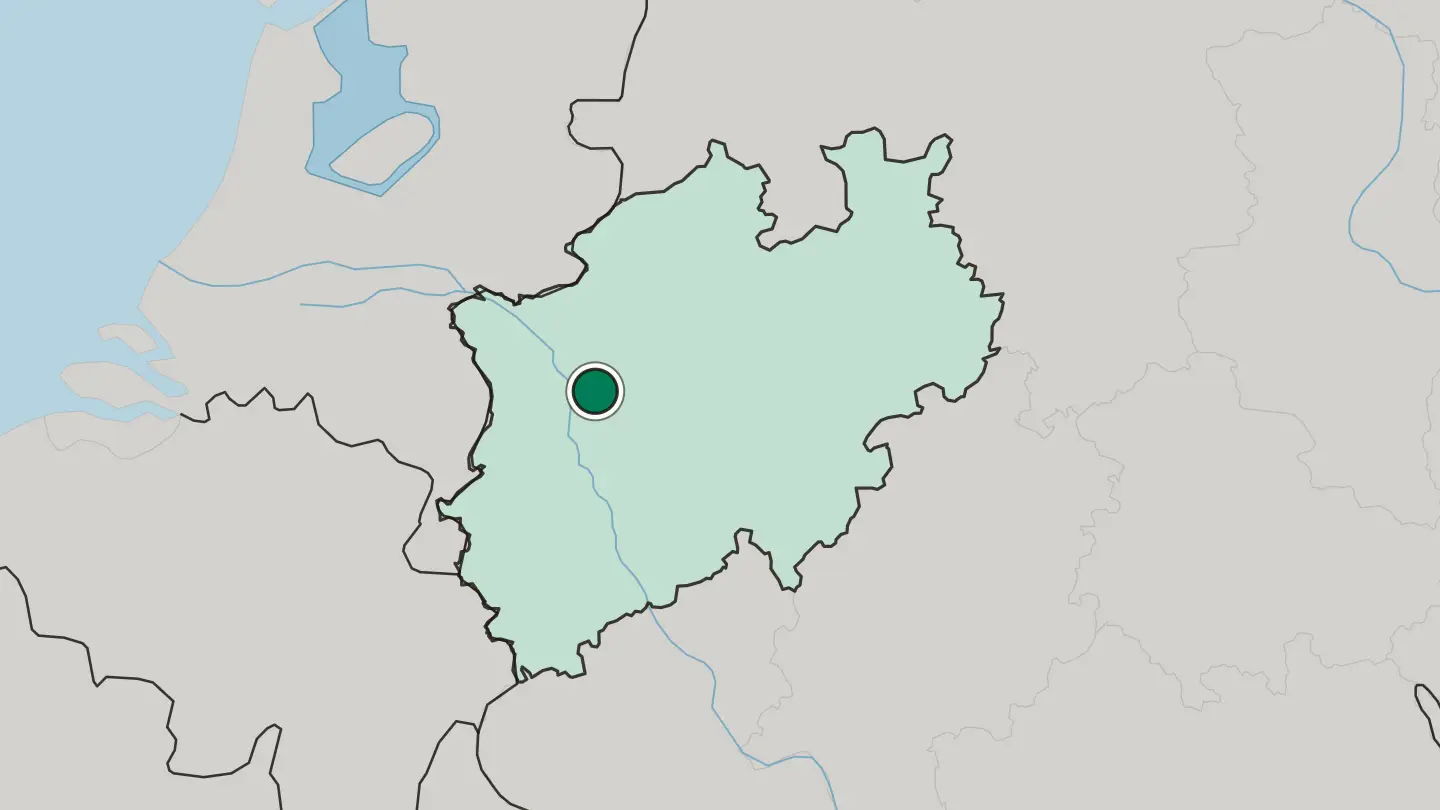
 Germany
Hagen
Hagen stands where the Lenne and the Volme meet the Ruhr, on the southeastern edge of the Ruhr area, with the Sauerland rising to the south.Where to stay →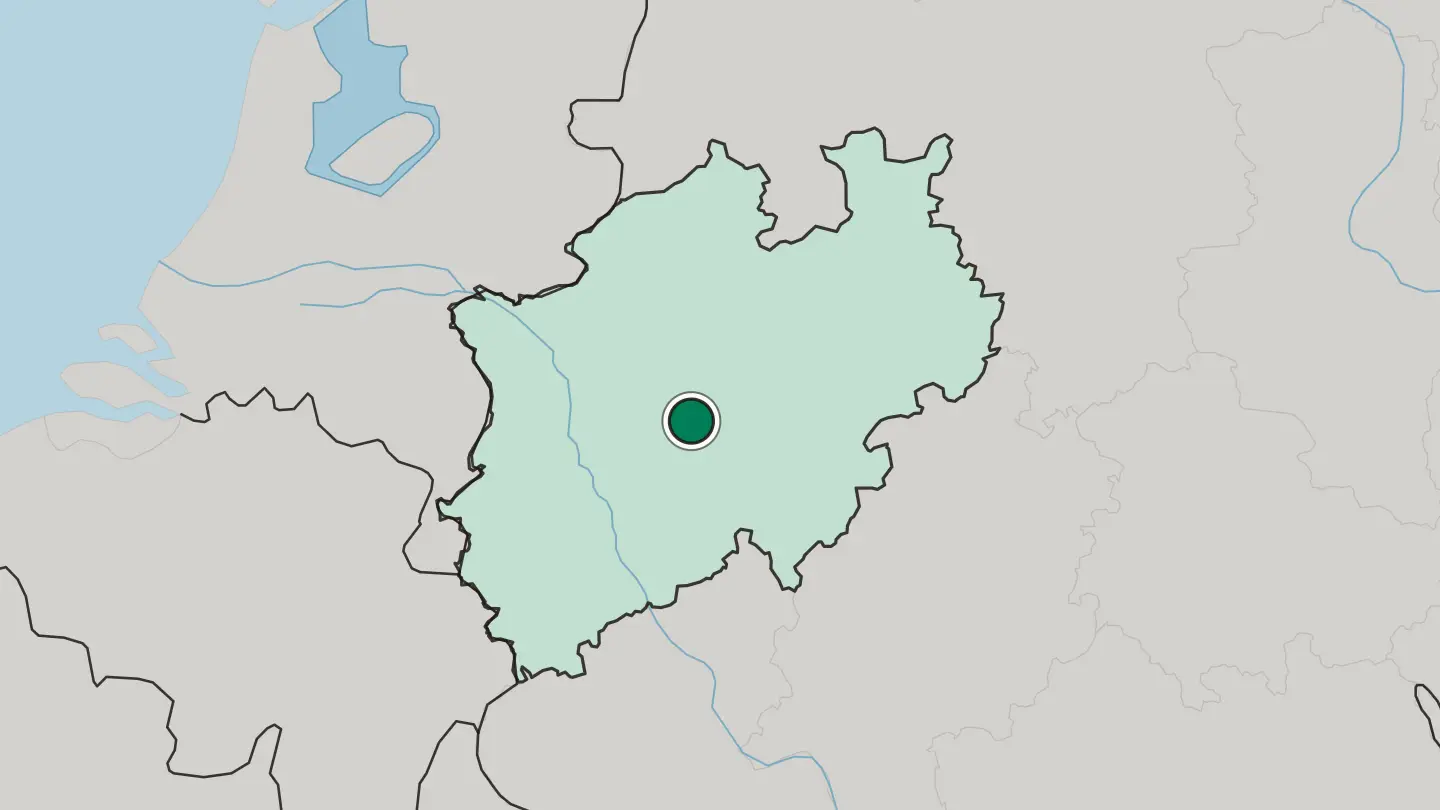
 Germany
Hamm
Hamm sits at the northeastern end of the Ruhr area, a rail city whose station, Gustav-Lübcke-Museum and Tierpark Hamm shape most visits.Where to stay →
 Germany
Herne
Herne lies in the Ruhr area directly between Bochum and Gelsenkirchen, where Schloss Strünkede and its park hold the older ground.Where to stay →
 Germany
Solingen
Solingen was first recorded in 1067. Its knife and sword makers gave the city a name that travelled far past the Bergisches Land.Where to stay →
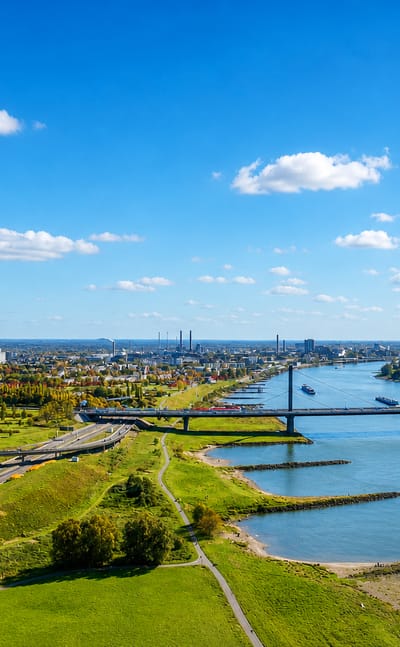 Germany
Leverkusen
Industrial chimneys and riverside parks meet at Leverkusen, a city on the east bank of the Rhine in Nordrhein-Westfalen, between Cologne and Düsseldorf.Where to stay →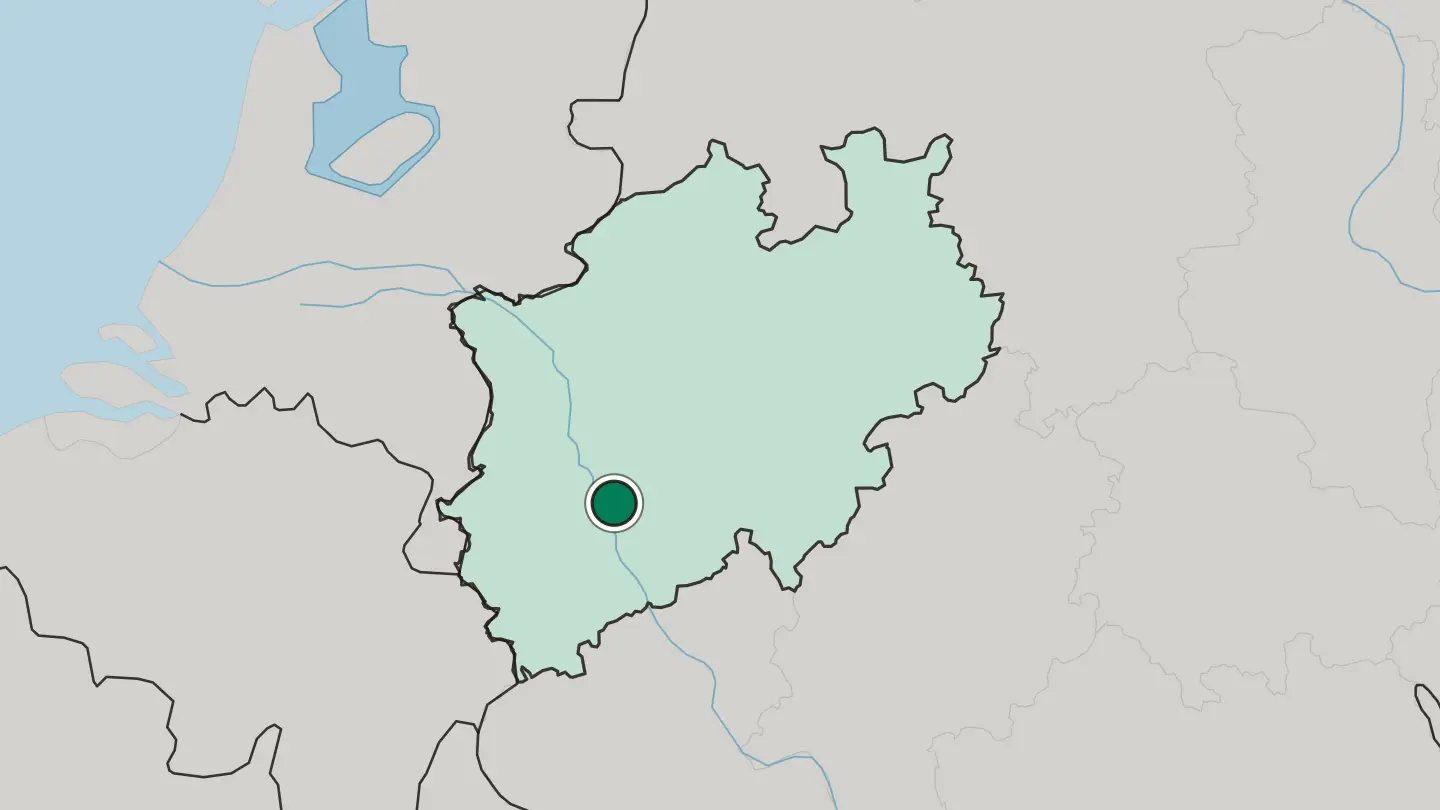 Germany
Neuss
Neuss sits on the west bank of the Rhine opposite Düsseldorf, a Roman foundation of 16 BCE that shares with Trier the title of Germany's oldest city.Where to stay →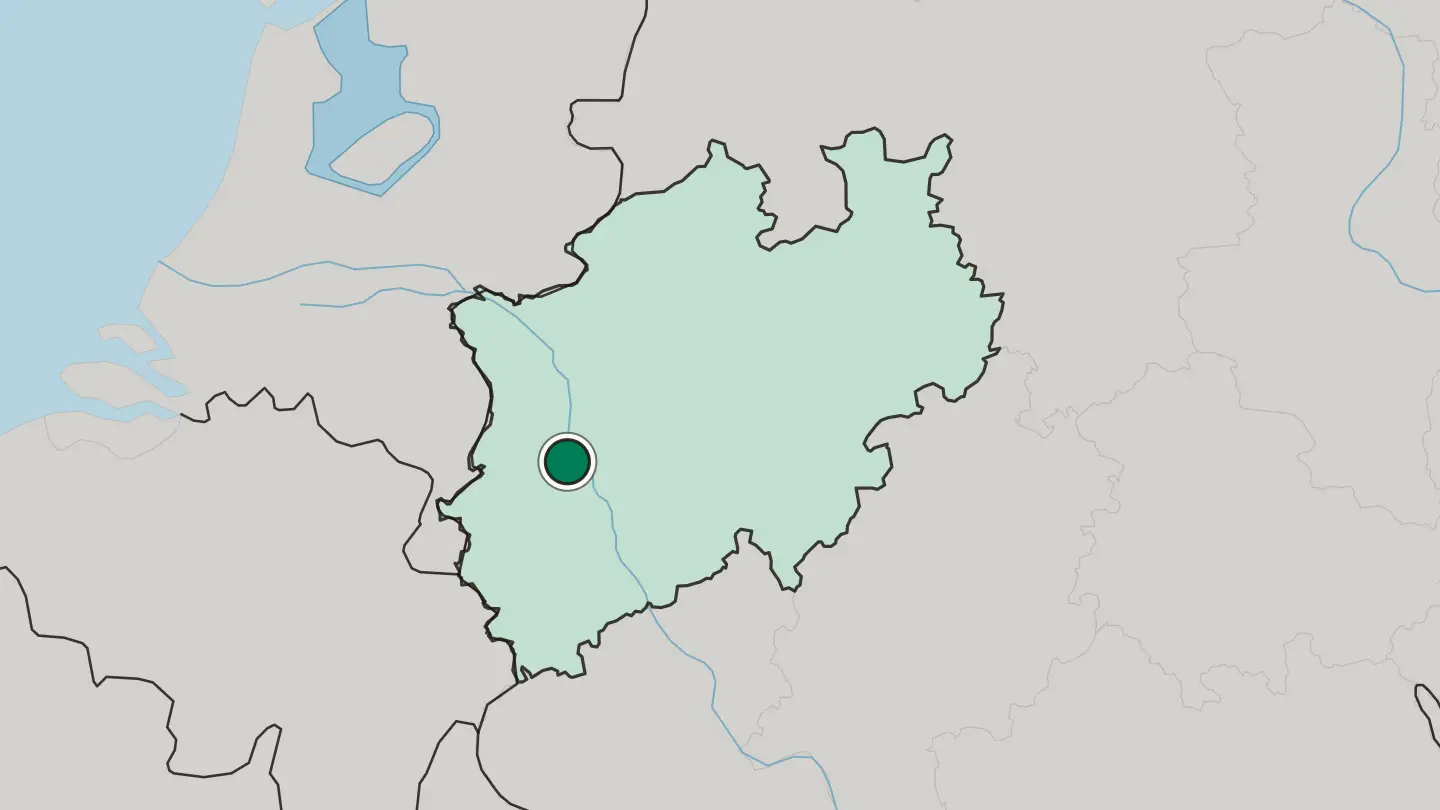 Germany
Paderborn
Paderborn takes its name from the Pader, a river rising in more than 200 springs beside the cathedral where Saint Liborius is buried.Where to stay →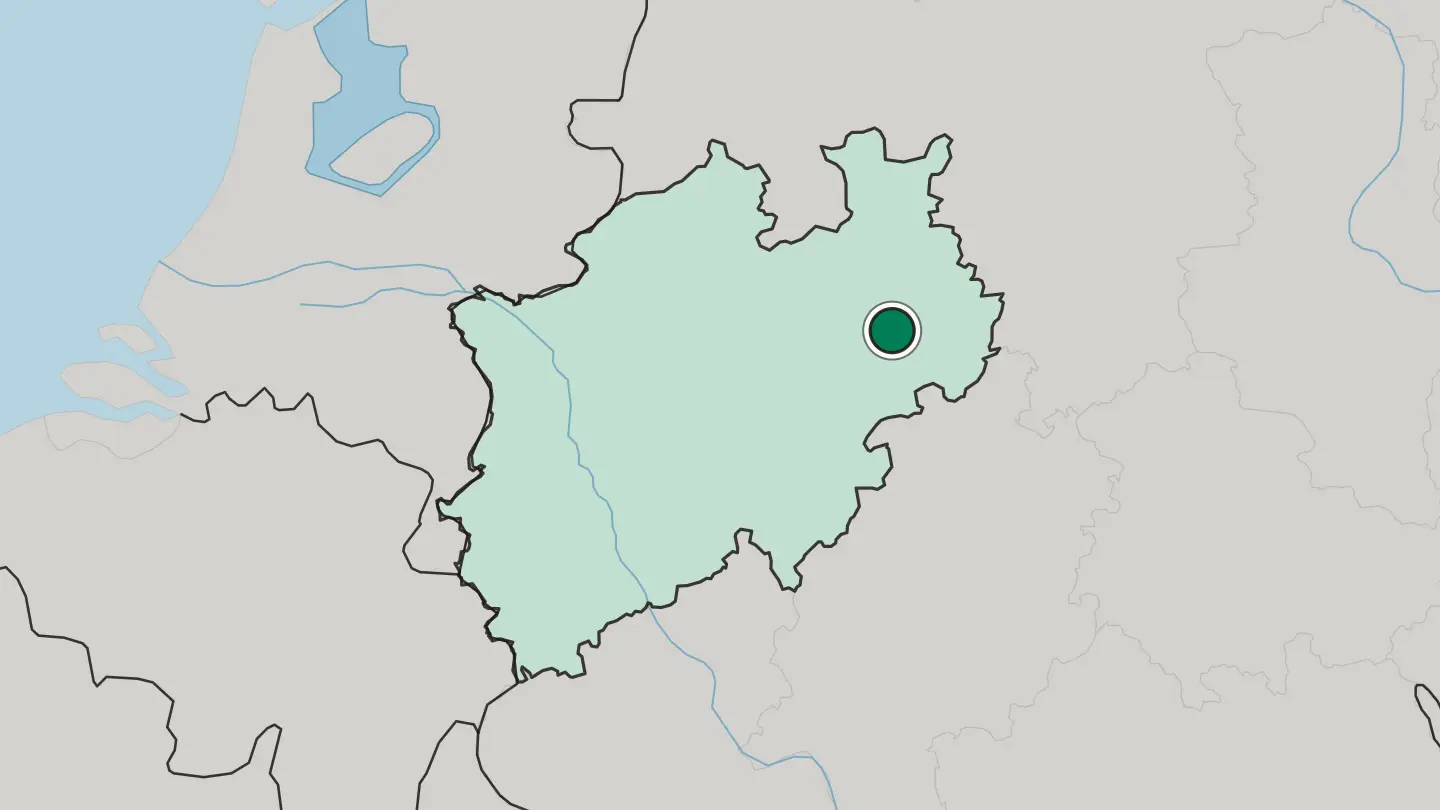
 Germany
Recklinghausen
Recklinghausen dates from 1017, the last Ruhr city before the fields of Münsterland, and keeps the Icon Museum Recklinghausen in its old town.Where to stay →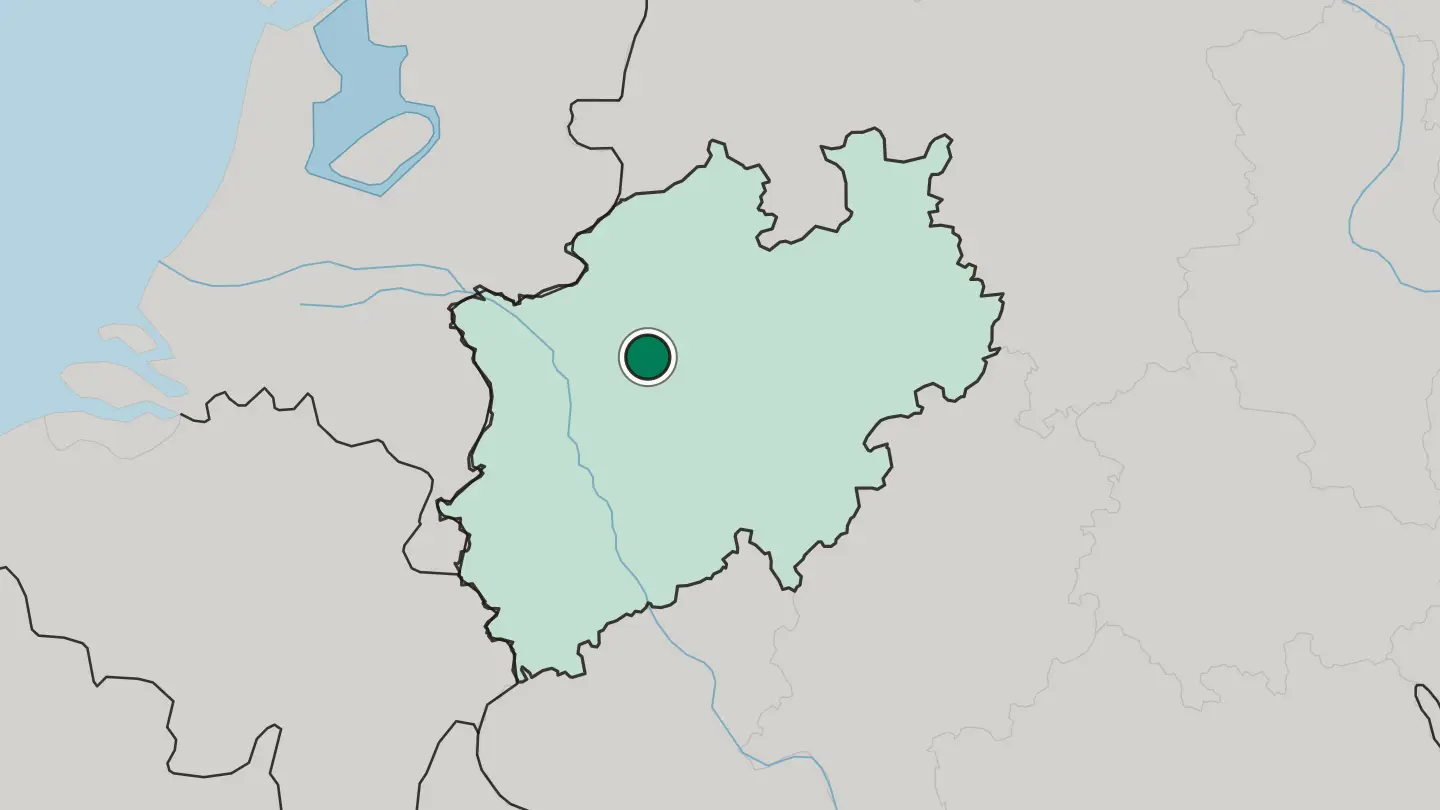
 Germany
Bottrop
Bottrop is a Ruhr city in Nordrhein-Westfalen on the Rhine-Herne Canal, chartered in 1921, known for the Tetrahedron and the Josef Albers Museum.Where to stay →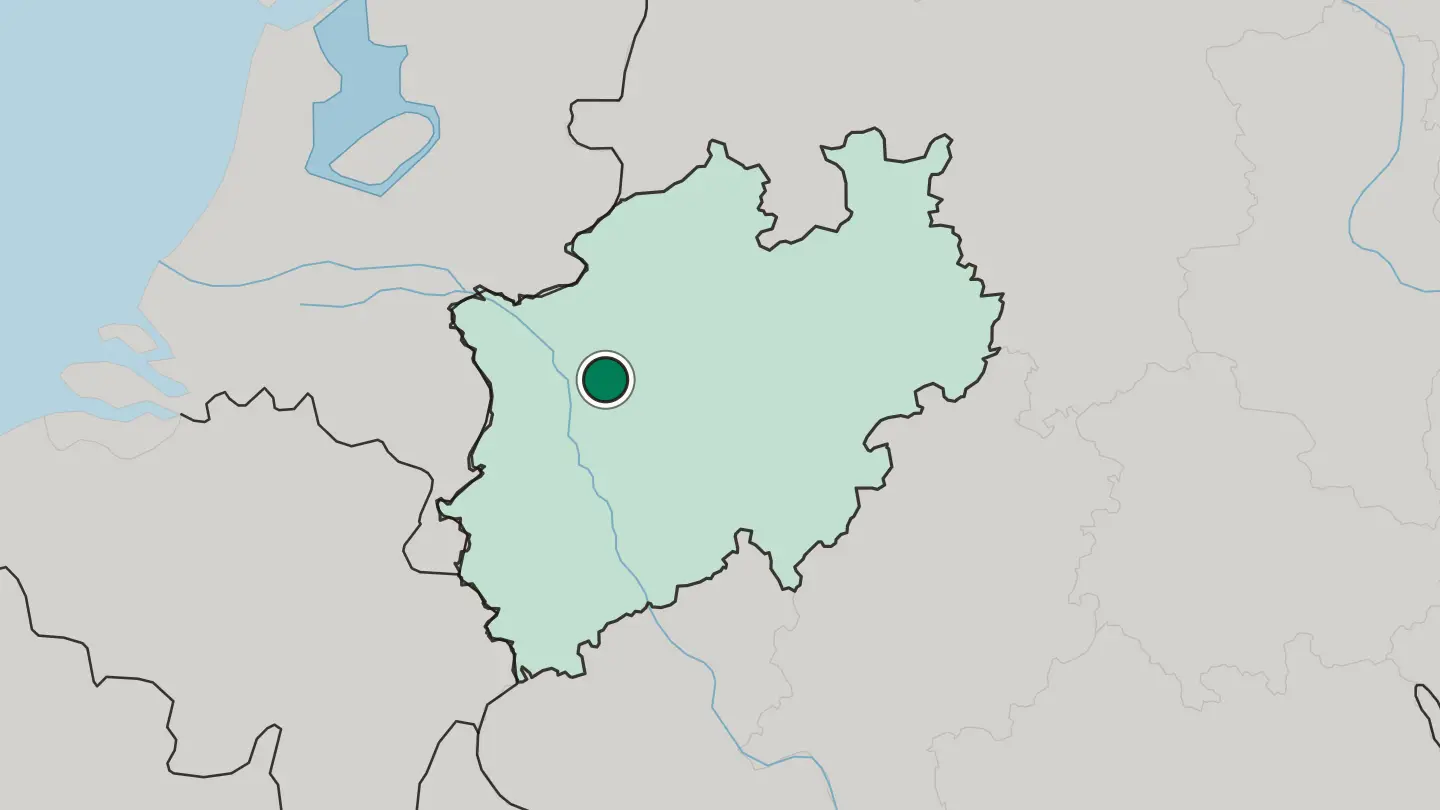
 Germany
Remscheid
Remscheid keeps the Deutsches Werkzeugmuseum and the Steffenshammer at the edge of Bergisches Land nearest the Ruhr area.Where to stay →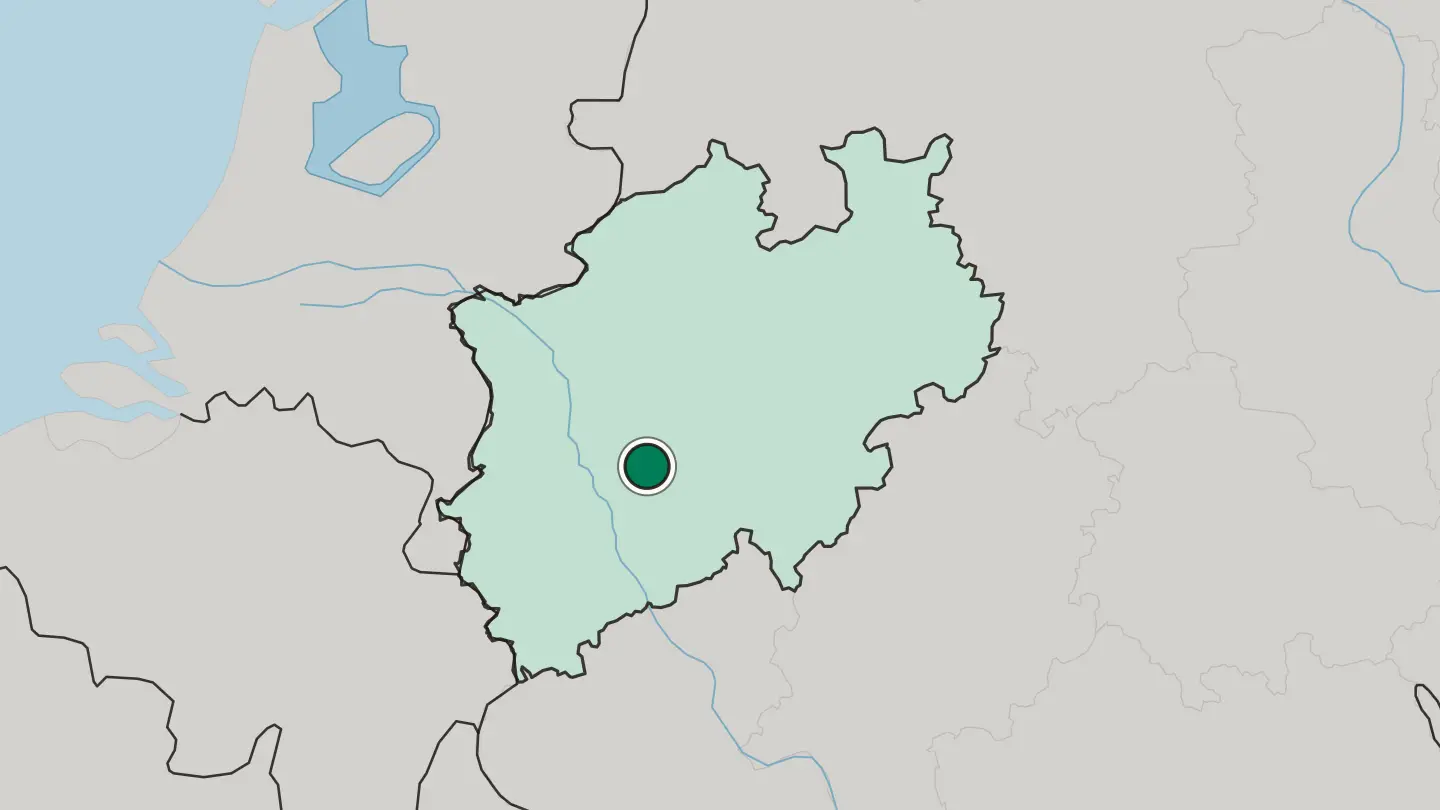
 Germany
Siegen
Siegen keeps two palaces, the Oberes Schloss and the Unteres Schloss, alongside the University of Siegen and four museums.Where to stay →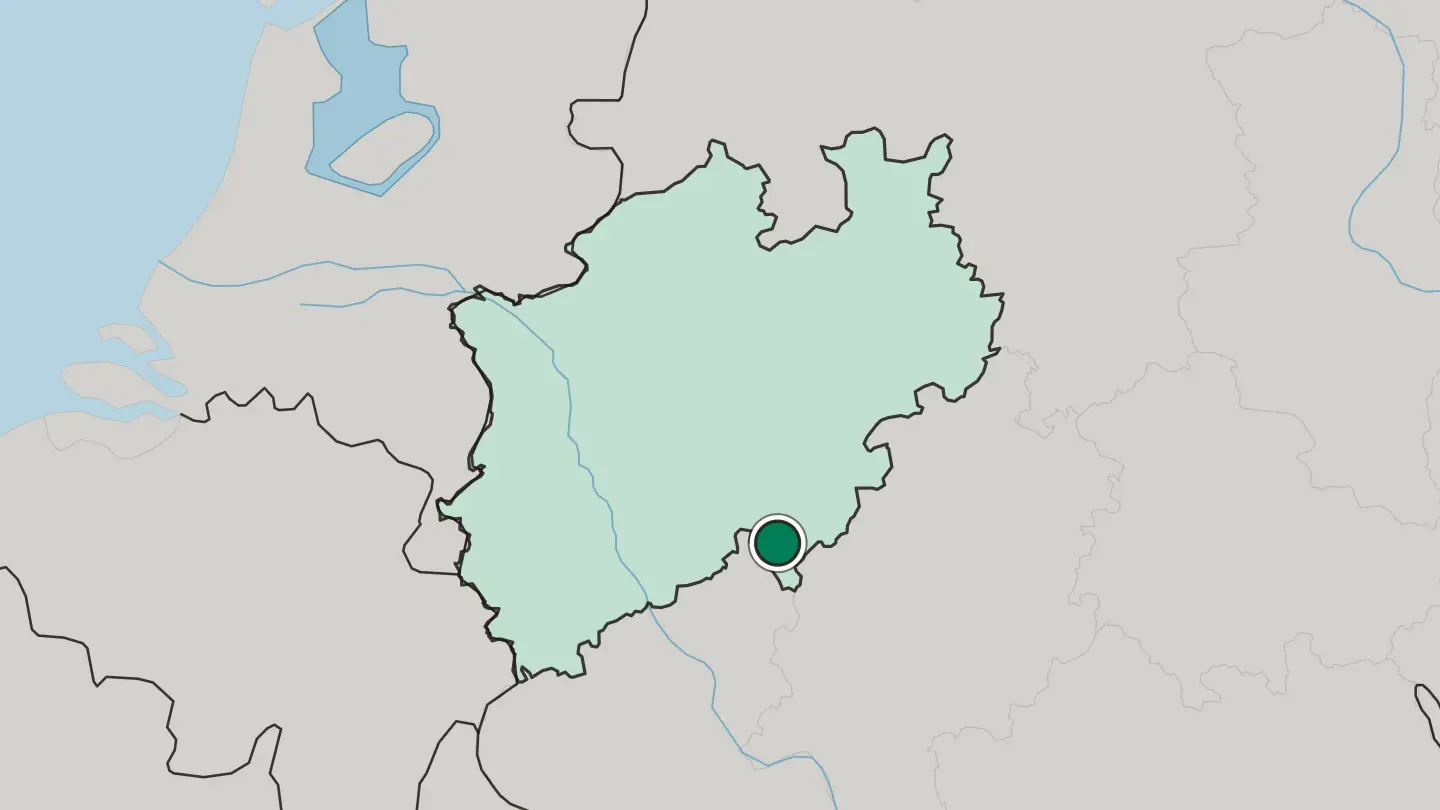
 Germany
Bergisch Gladbach
Bergisch Gladbach is the seat of the Rheinisch-Bergischer Kreis, a Cologne/Bonn Region city of castles, parish churches and old paper mills.Where to stay →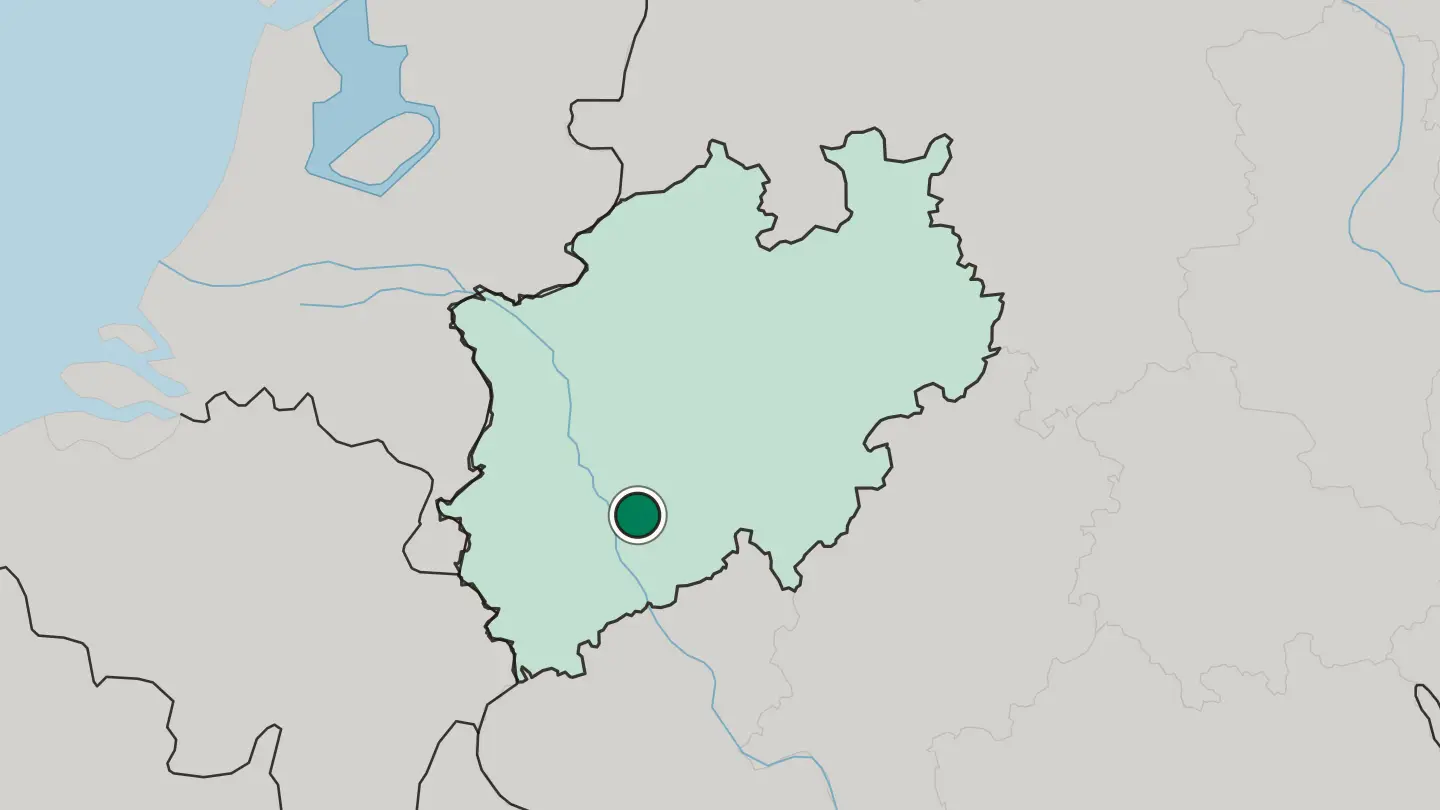 Germany
Moers
Moers sits on the western bank of the Rhine near Duisburg, in the district of Wesel, with its castle museum at the centre. A tower marks it.Where to stay →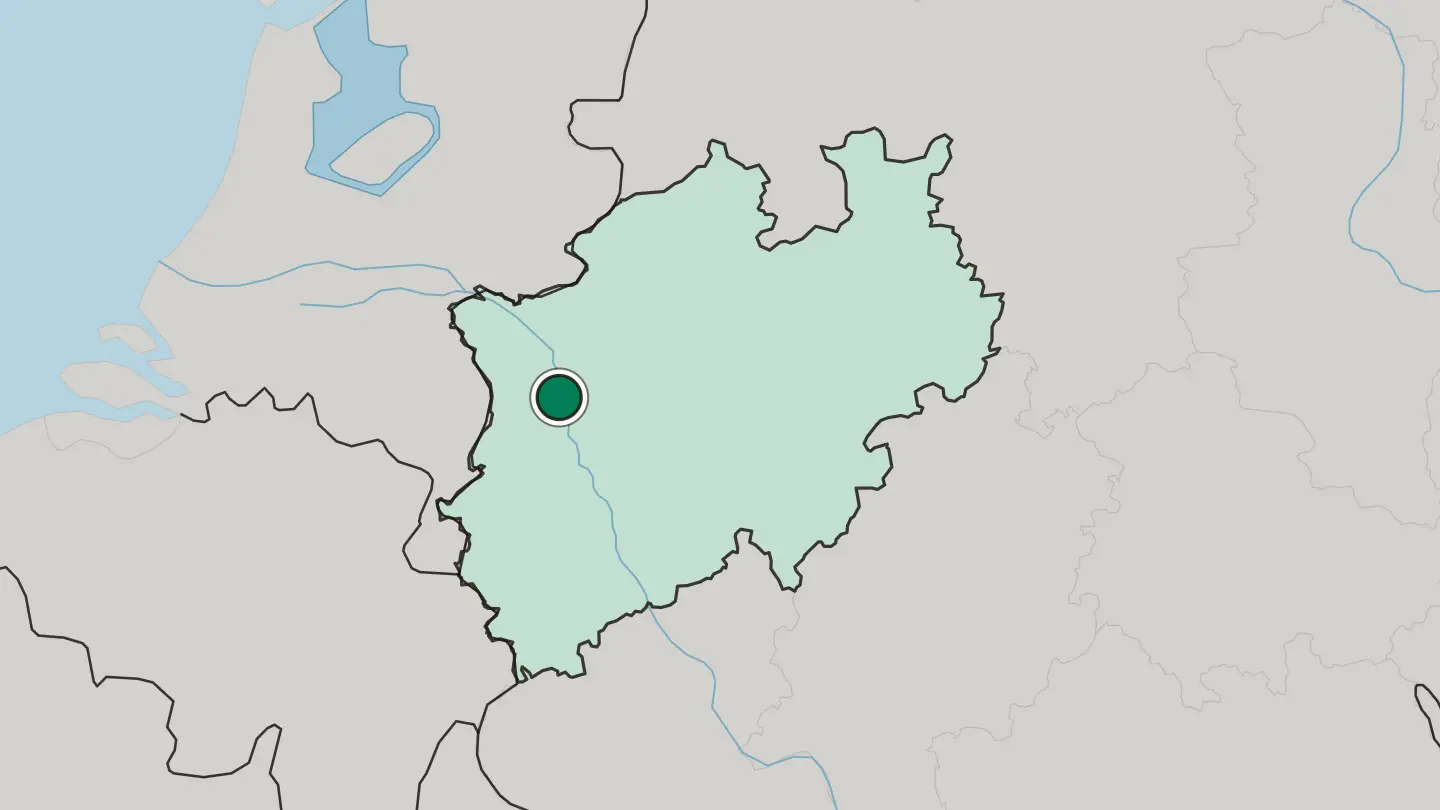
 Germany
Gütersloh
Gütersloh is the administrative centre of its district in Nordrhein-Westfalen, a Westphalian town of five churches and the Miele-Museum.Where to stay →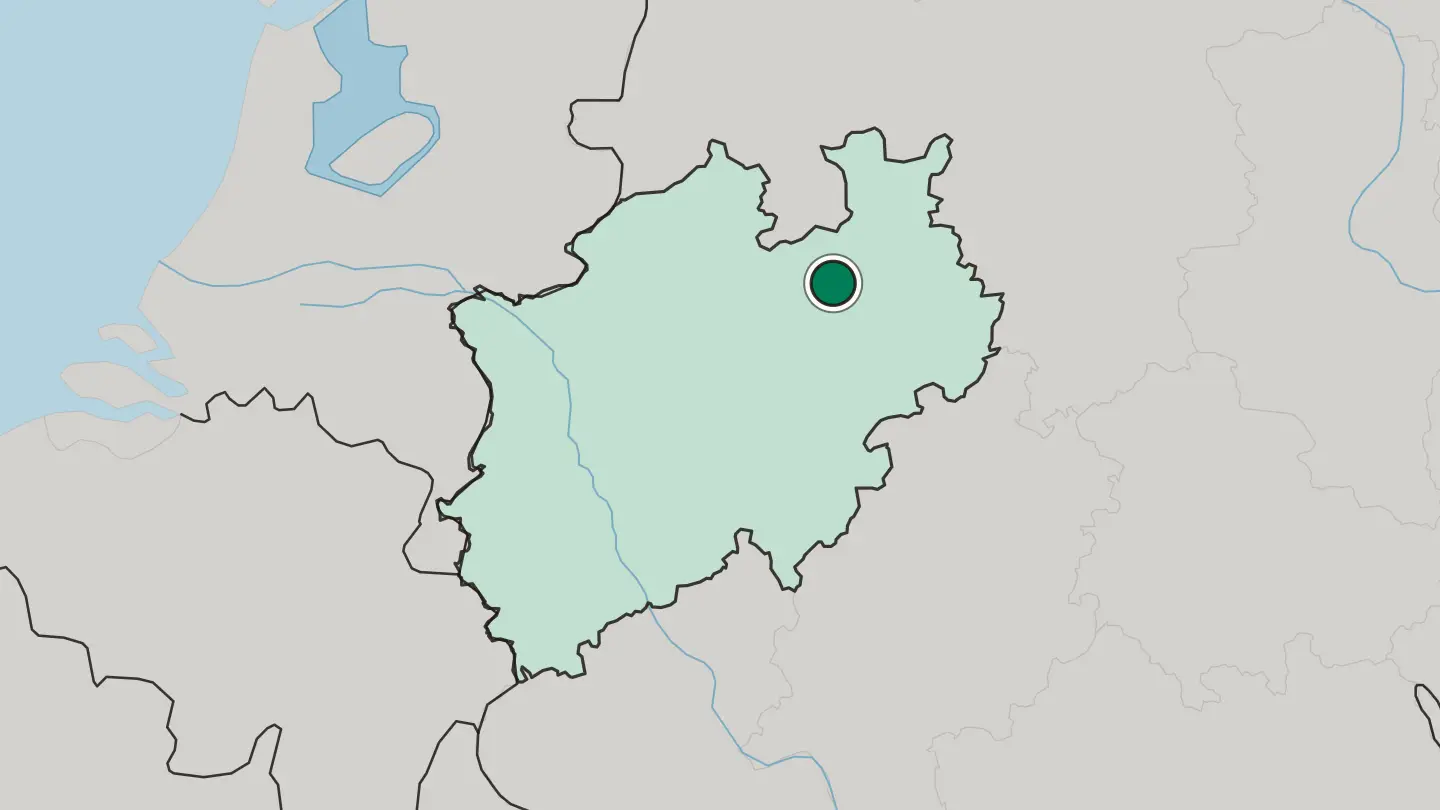
 Germany
Düren
Düren lies on the Rur between Aachen and Cologne, with the Papiermuseum Düren and the Leopold-Hoesch-Museum near its Dicker Turm.Where to stay →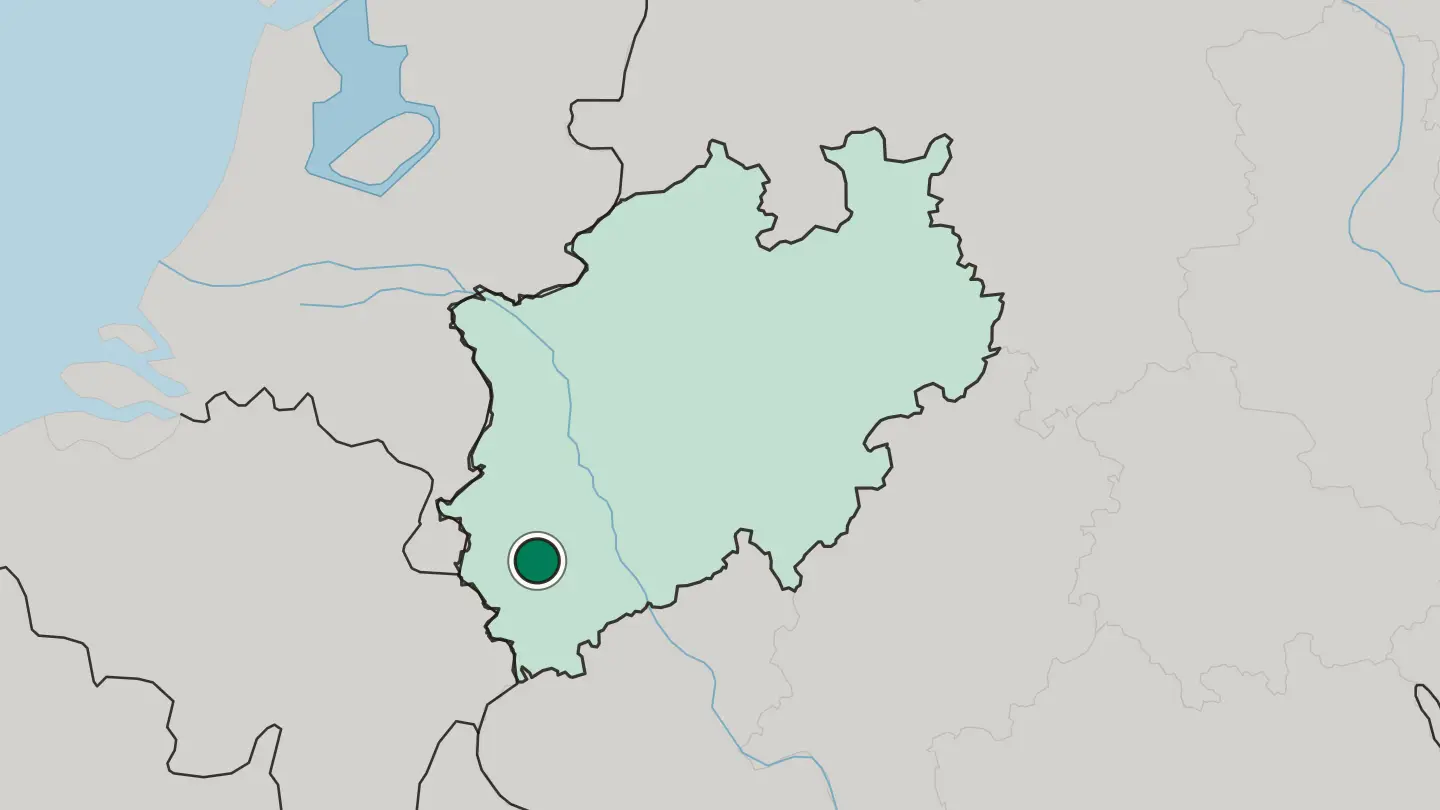
 Germany
Iserlohn
Iserlohn is the largest city of the Märkischer Kreis and of the Sauerland, known for Dechen Cave and the Danzturm on its wooded heights.Where to stay →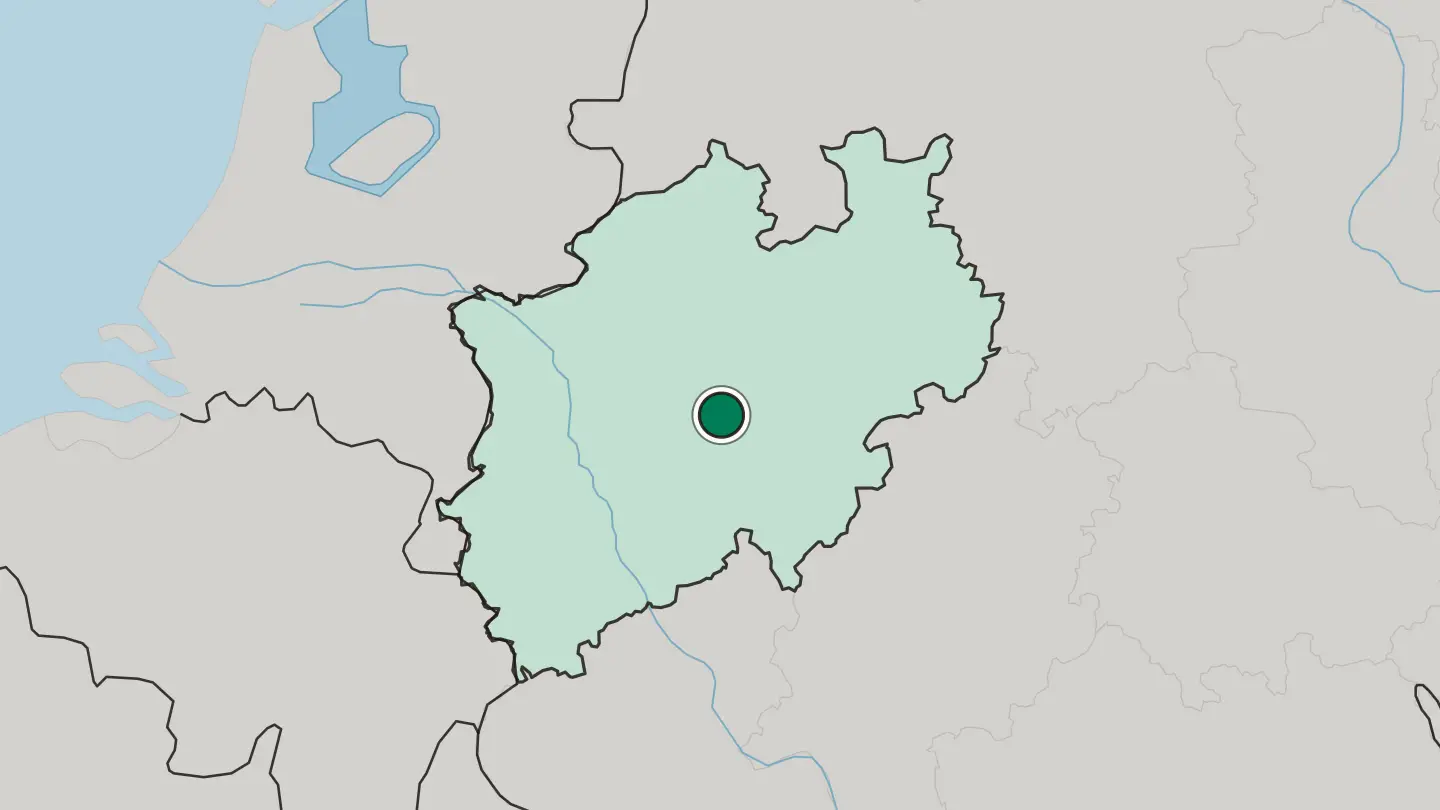
 Germany
Witten
Witten holds the Muttental, the valley where the LWL Industry Museum Mine Nachtigall keeps the Ruhr area's coal beginnings open to walkers.Where to stay →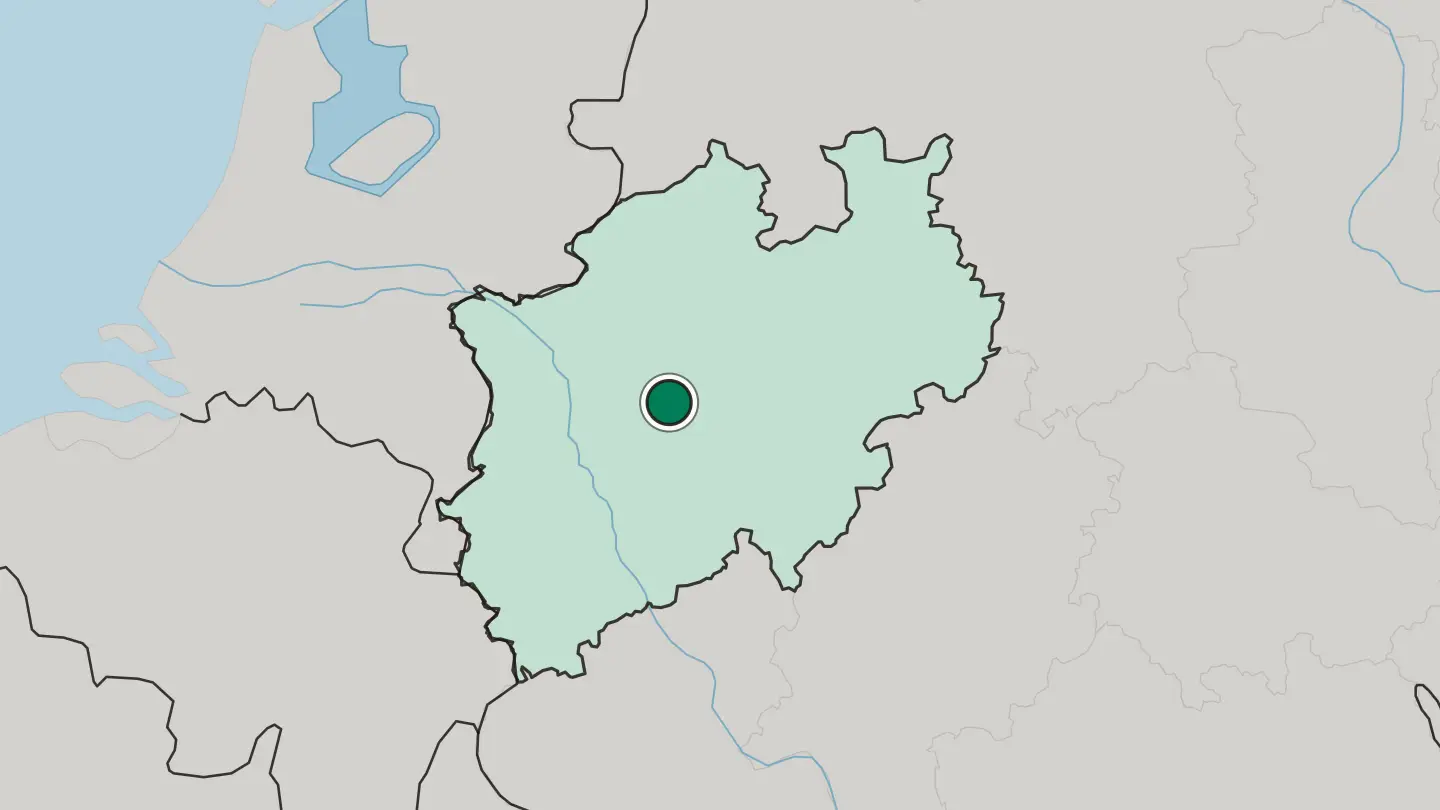
 Germany
Ratingen
Ratingen stands twelve kilometres north-east of Düsseldorf, holding the Textilfabrik Cromford, Museum Ratingen and Gräfgenstein Castle.Where to stay →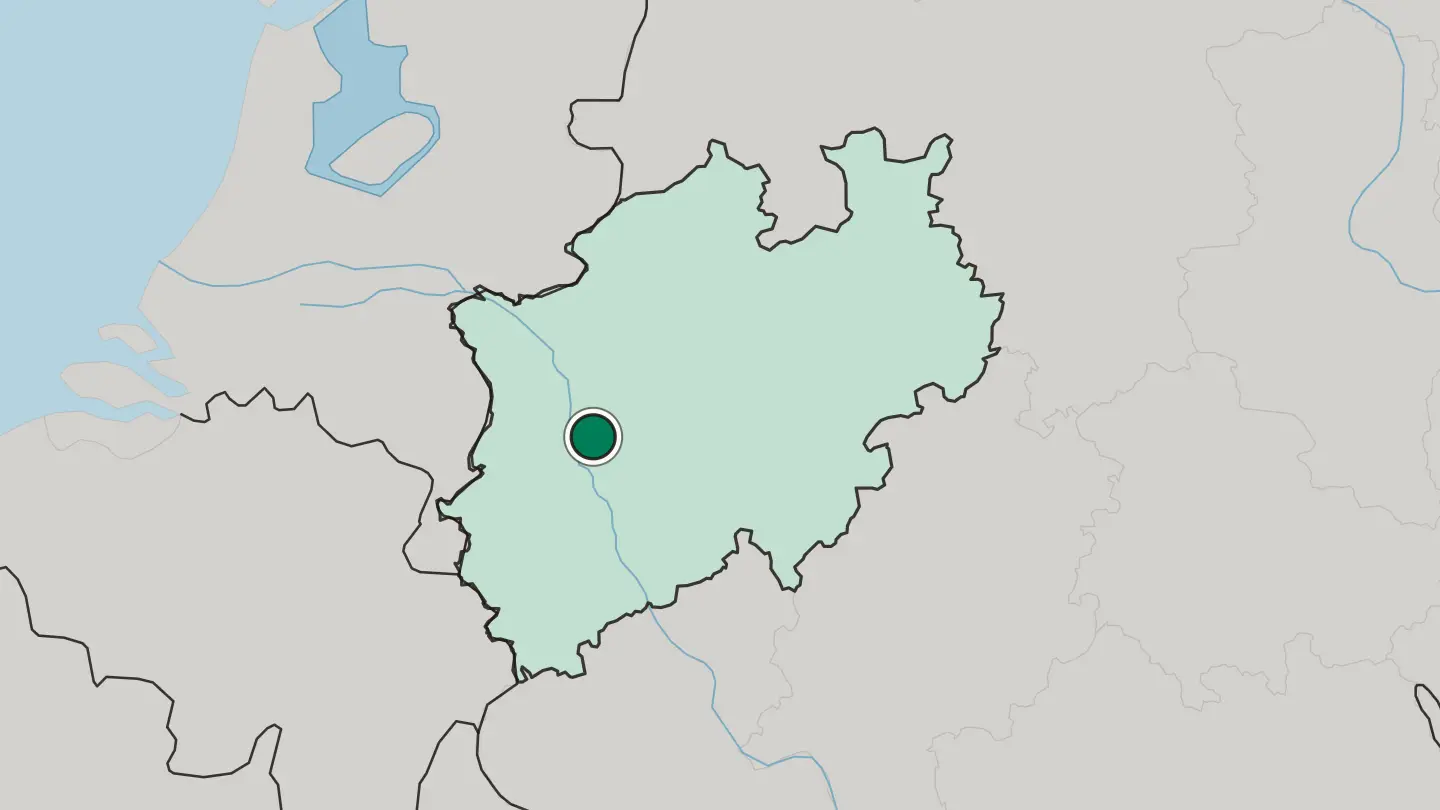
 Germany
Marl
Marl is a city in Nordrhein-Westfalen whose best-known institution is the Glaskasten, a museum of modern sculpture. Churches mark the rest.Where to stay →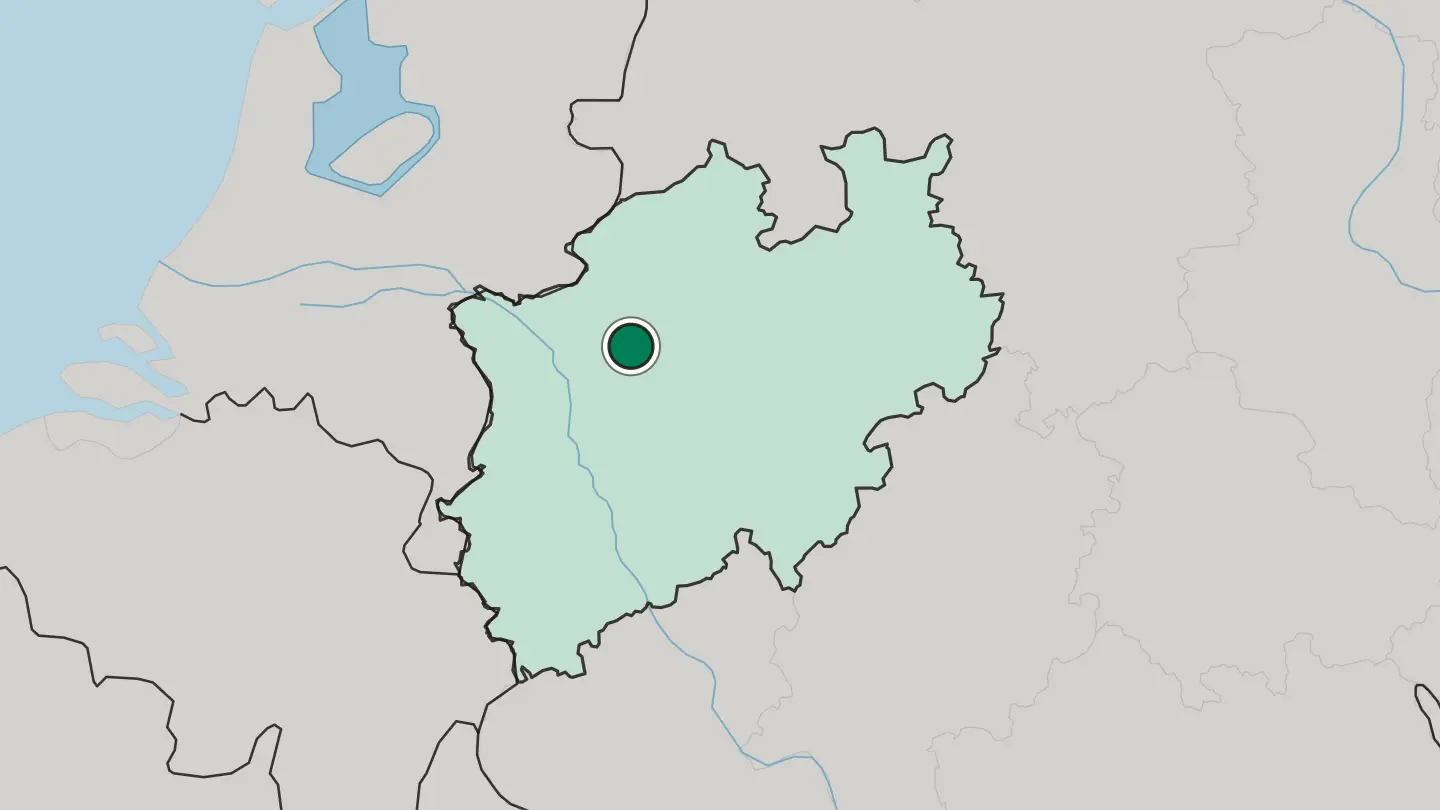 Germany
Lünen
Lünen is the largest town of the Kreis Unna, standing on both banks of the Lippe north of Dortmund, first recorded in 890 and granted town rights in 1341.Where to stay →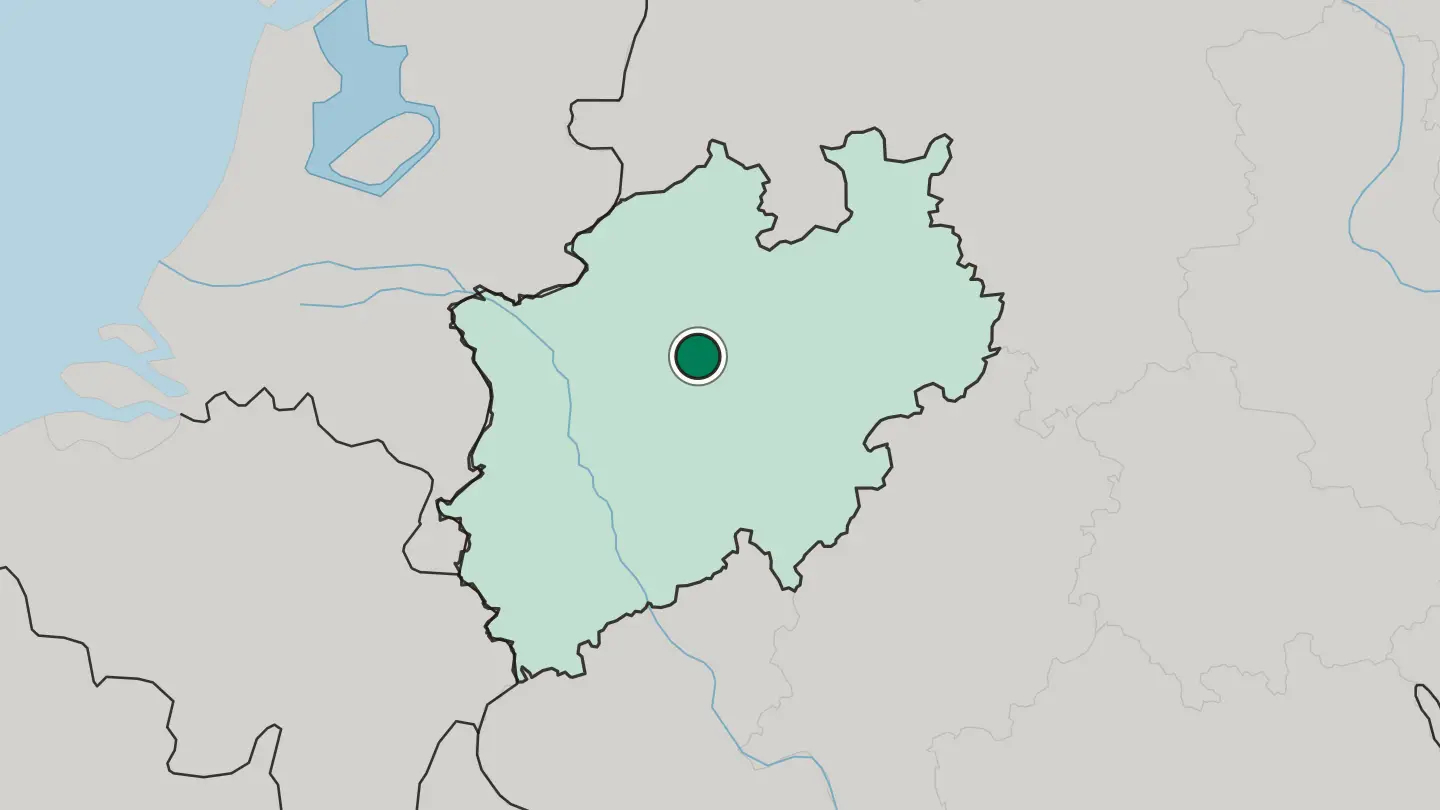
 Germany
Velbert
Velbert, in the district of Mettmann, produces locks and fittings, and the Deutsches Schloss- und Beschlägemuseum is named for exactly that.Where to stay →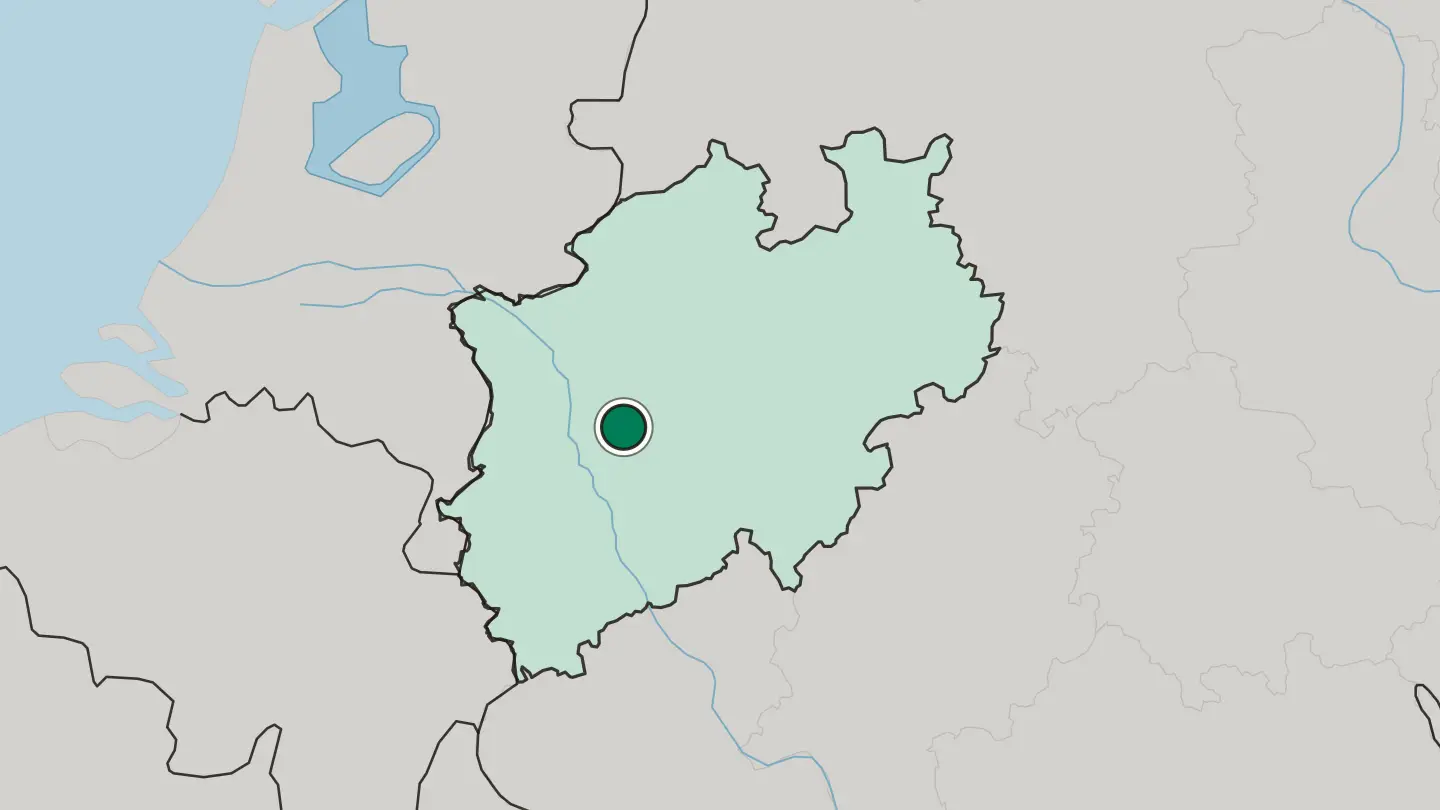
 Germany
Minden
Minden stands on both banks of the Weser, where the Mittelland Canal crosses the river on the Minden Aqueduct. A cathedral holds the old town.Where to stay →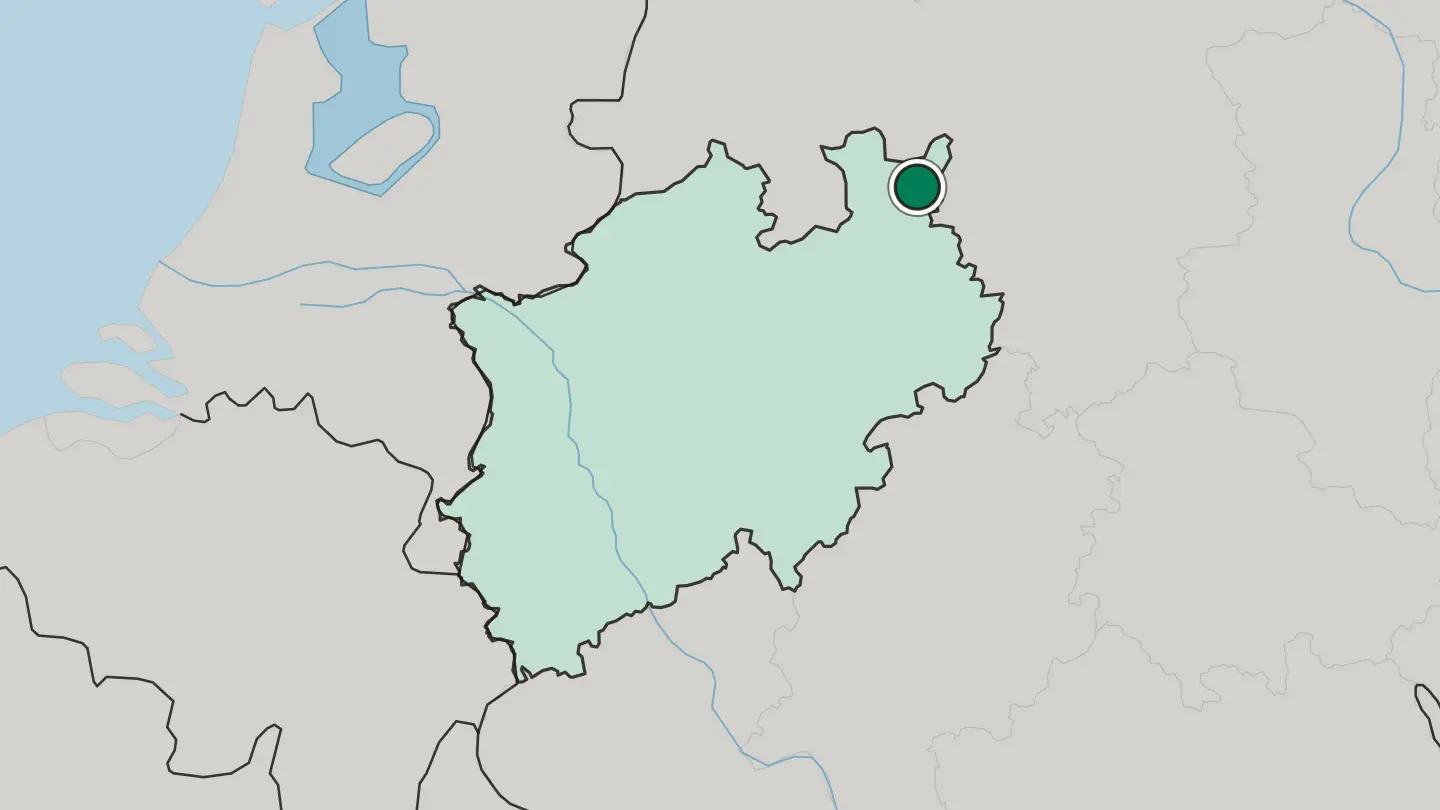 Germany
Dorsten
The Jewish Museum of Westphalia sits in Dorsten, a Recklinghausen-district town whose record runs from the Römerlager Holsterhausen onward.Where to stay →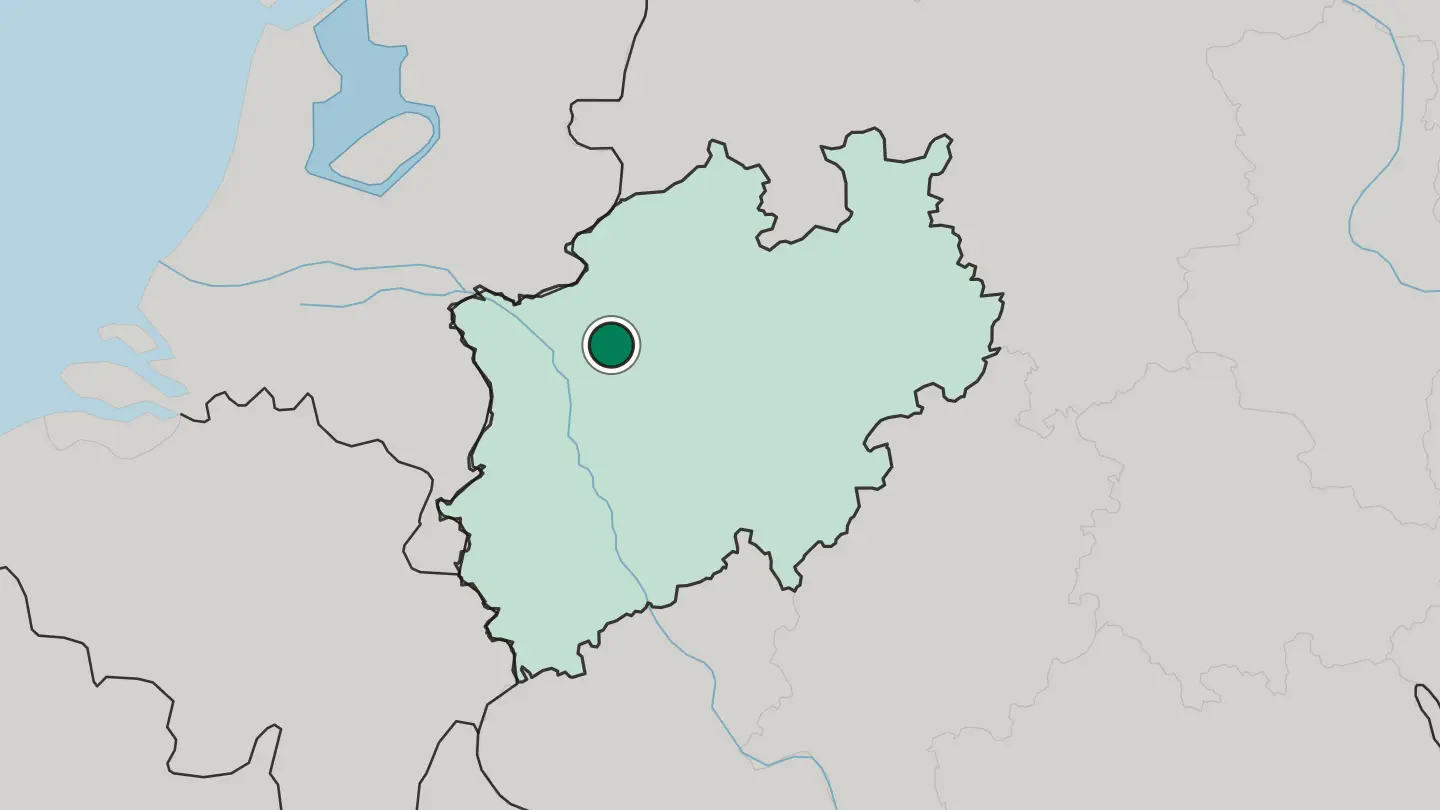
 Germany
Lüdenscheid
Lüdenscheid is a Sauerland city of the Märkischer Kreis in South Westphalia, marked from far off by the Fernmeldeturm Lange Sicht.Where to stay →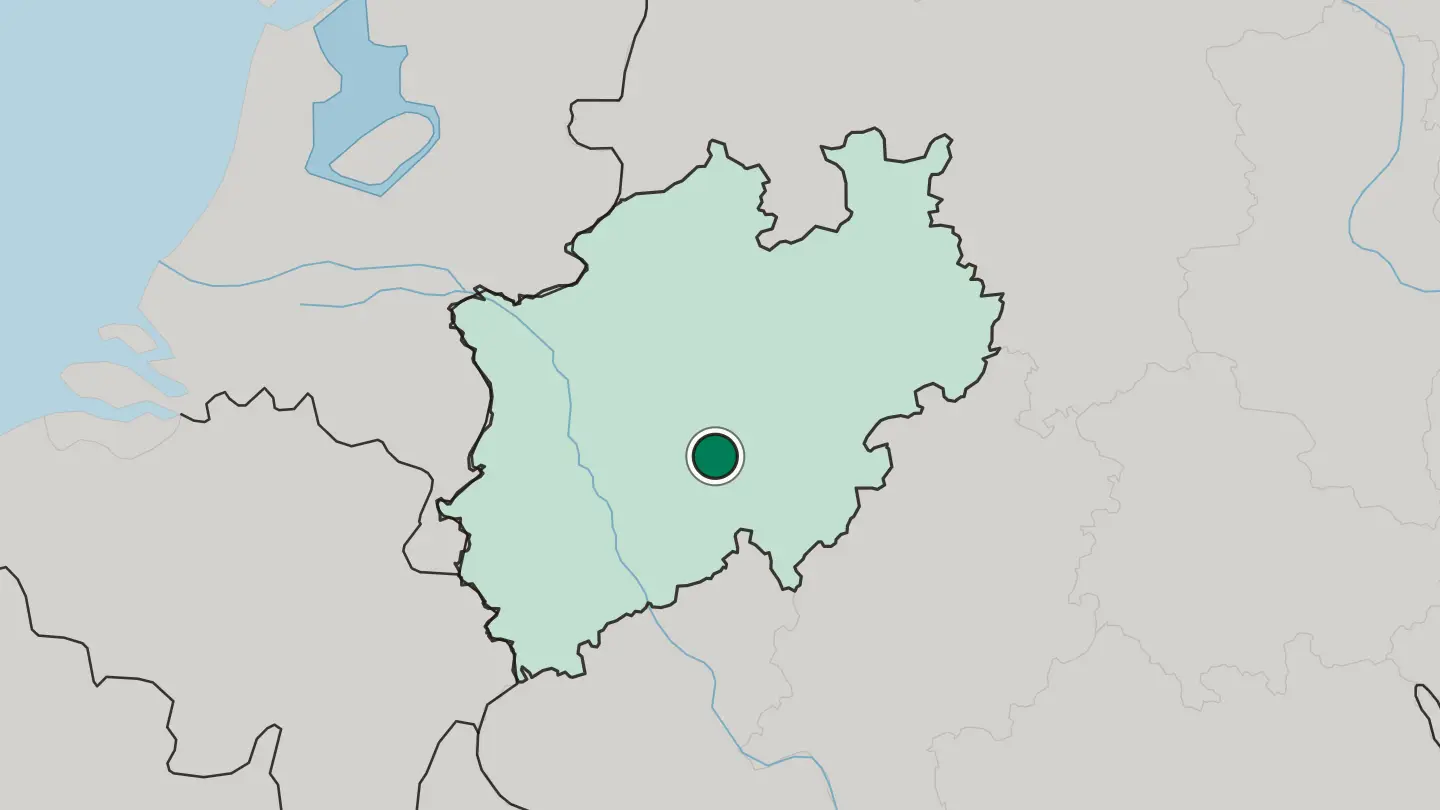
 Germany
Castrop-Rauxel
Castrop-Rauxel, or simply Castrop, is a former coal city of the Ruhr Area in Nordrhein-Westfalen, with the LWL-Industriemuseum among its landmarks.Where to stay →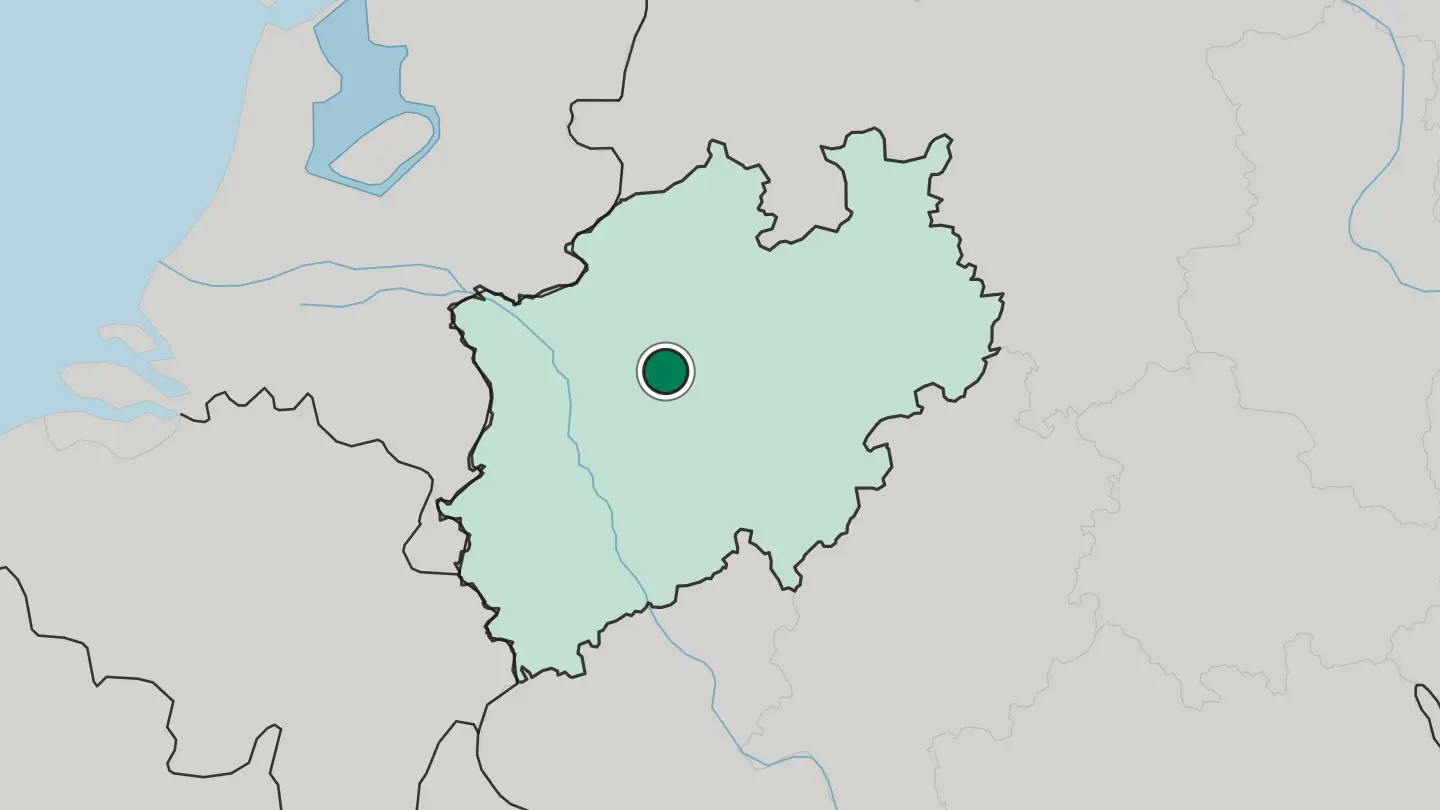 Germany
Rheine
Rheine is the largest city of the Steinfurt district, holding Kloster Bentlage, the NaturZoo Rheine and the Falkenhof-Museum inside one municipality.Where to stay →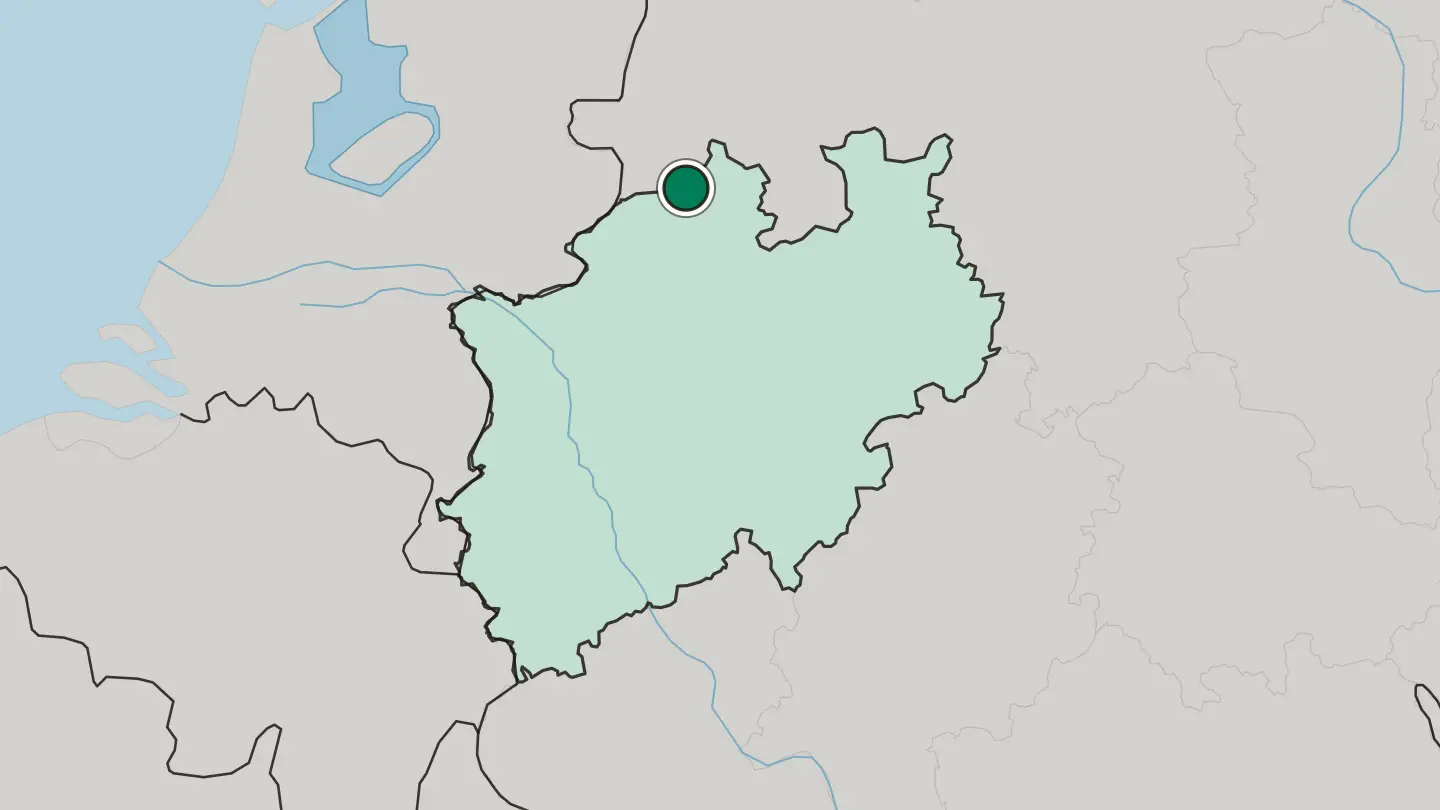
 Germany
Viersen
Viersen is the capital of the Viersen district in Nordrhein-Westfalen, and the Städtische Galerie im Park Viersen anchors its art holdings.Where to stay →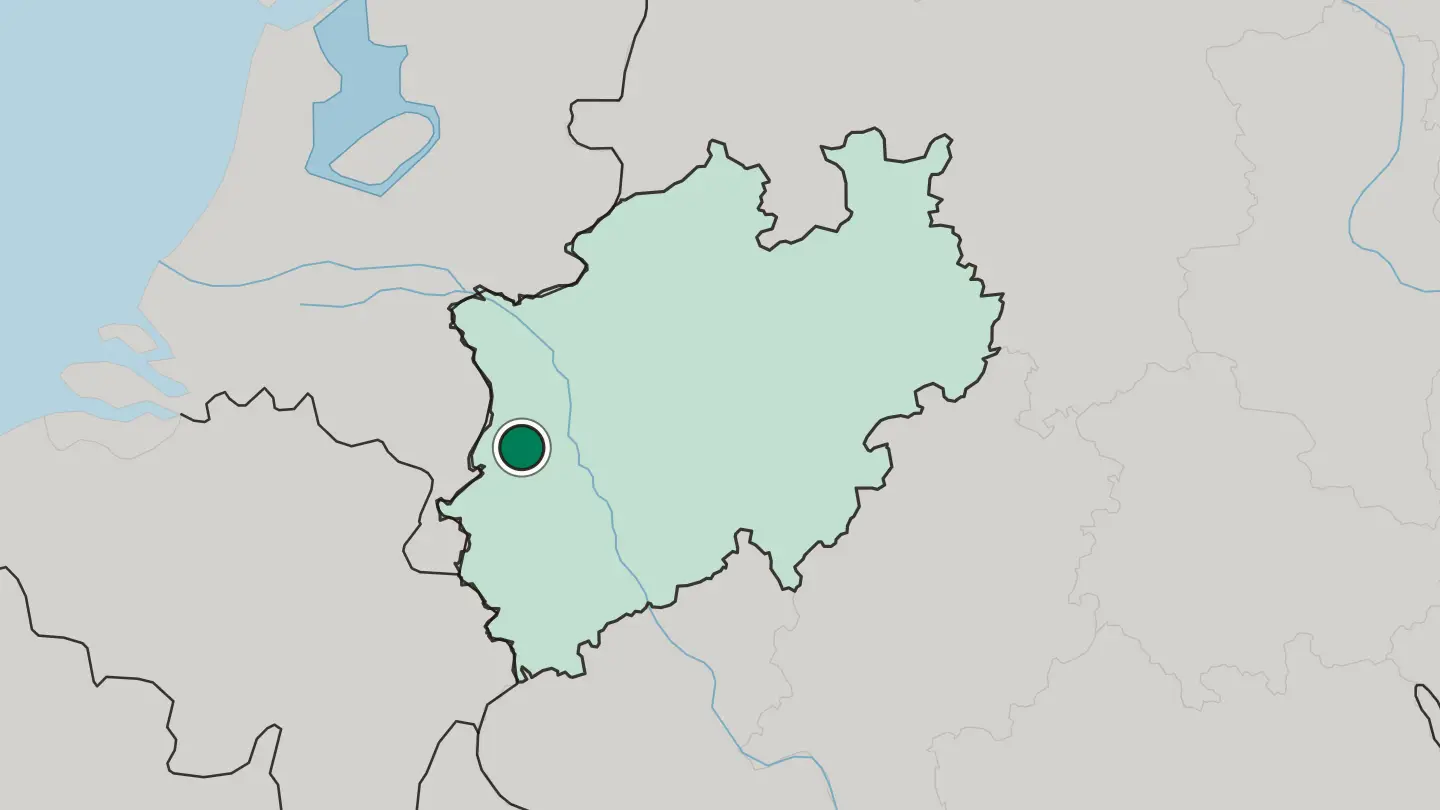
 Germany
Gladbeck
Gladbeck holds Wittringen Castle, a machine hall at Zweckel and a town museum inside thirty-six square kilometres of the Recklinghausen district.Where to stay →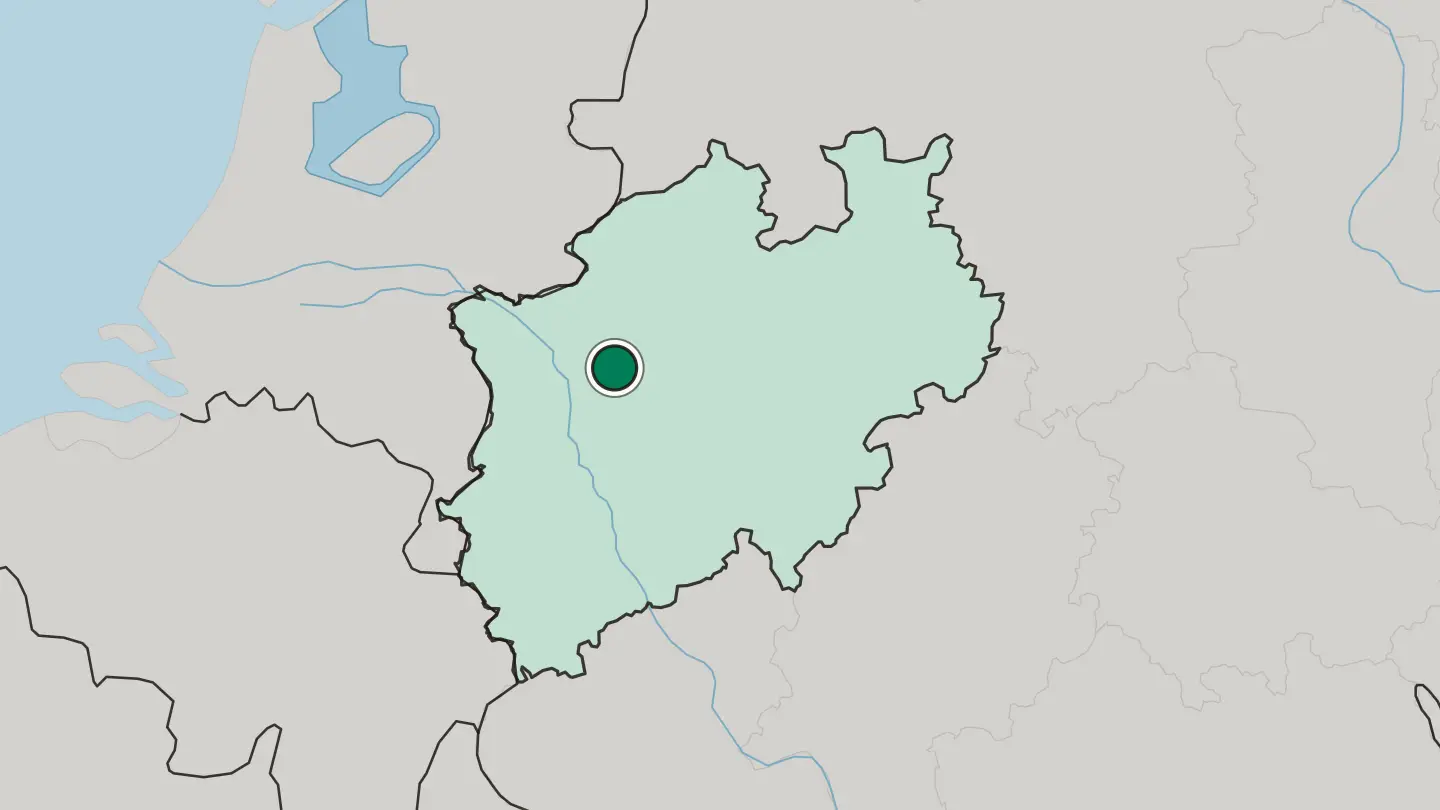
 Germany
Arnsberg
Arnsberg holds the Regierungsbezirk administration in the Hochsauerland, a North Rhine-Westphalian town of cloisters, castle ruins and wooded hills.Where to stay →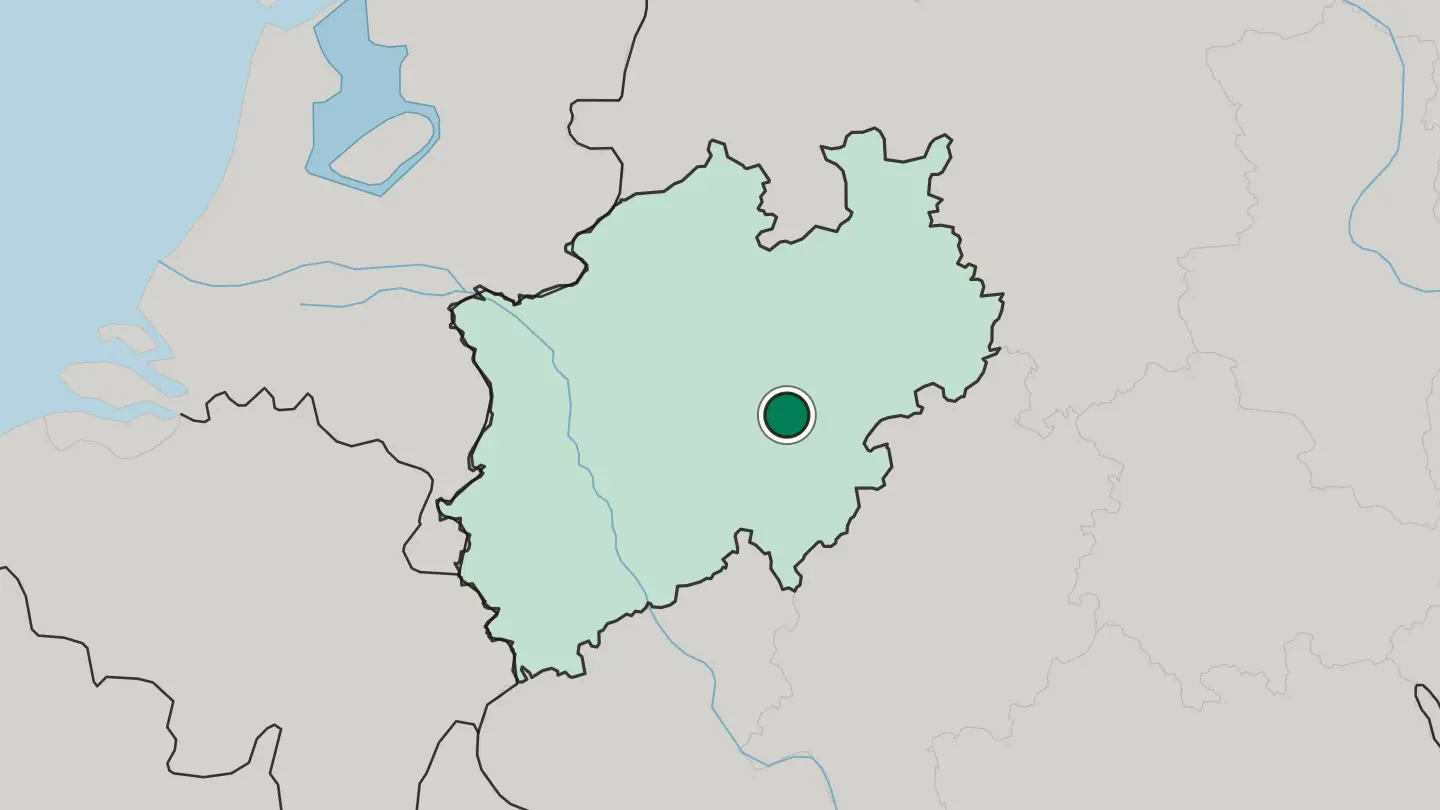 Germany
Troisdorf
Troisdorf stands along the Agger and the Sieg in the Rhein-Sieg-Kreis, and Wissem Castle holds the Picture Book Museum.Where to stay →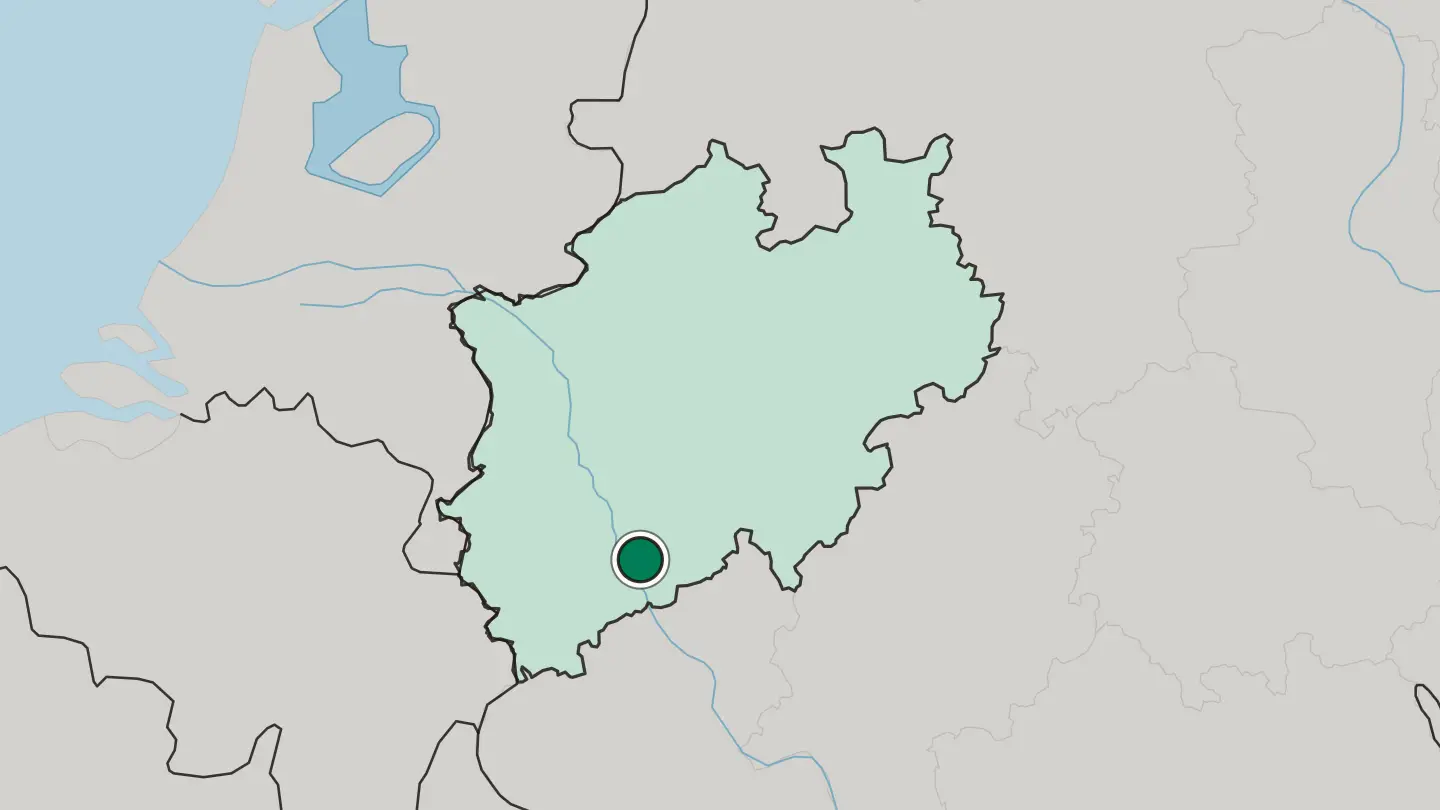 Germany
Wattenscheid
Wattenscheid is a Stadtbezirk of Bochum in the Ruhr area of North Rhine-Westphalia, an independent town until 1975 and a coal town before that.Where to stay →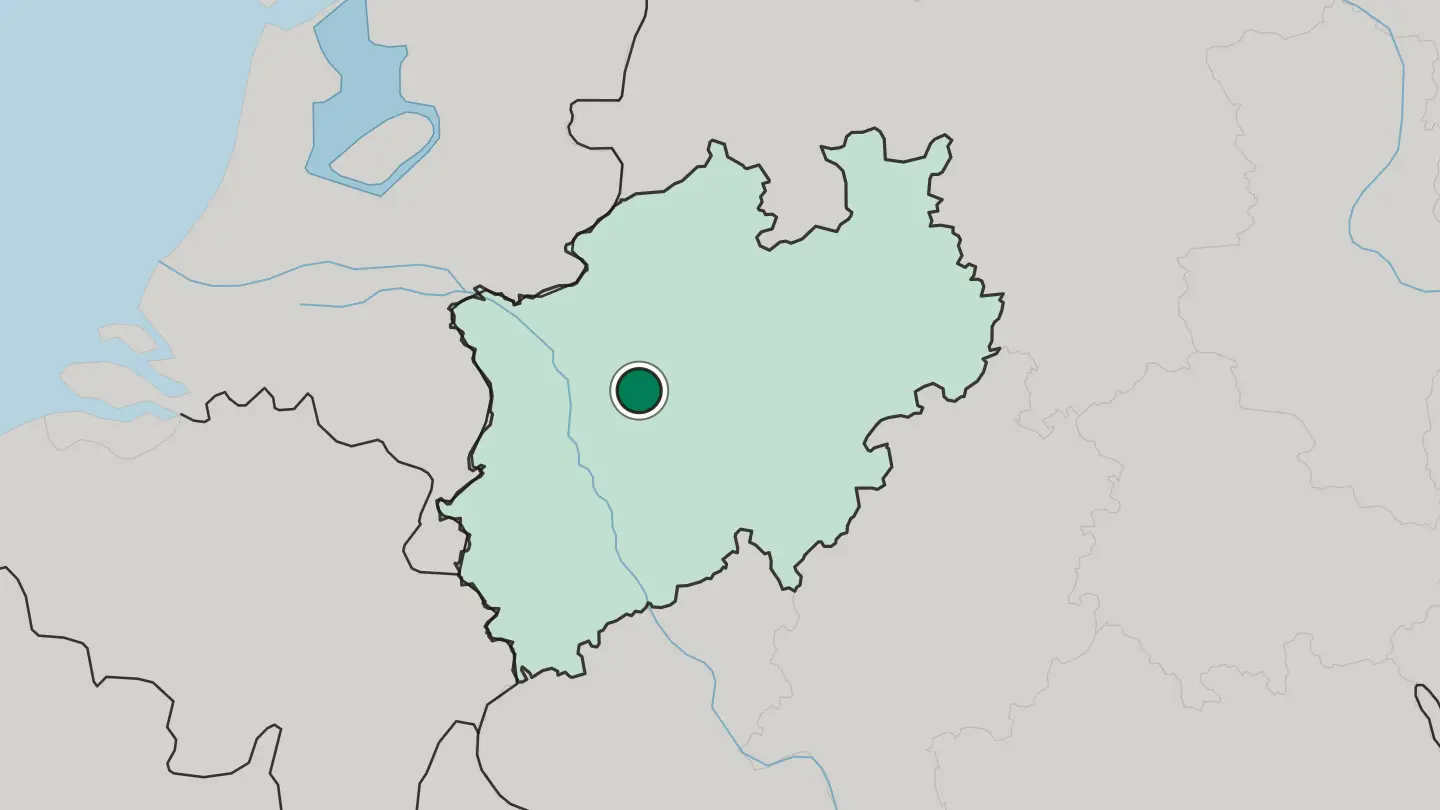
 Germany
Bocholt
Bocholt is a Münsterland town in Nordrhein-Westfalen, the shopping centre of West-Münsterland, standing 4 km from the Dutch border.Where to stay →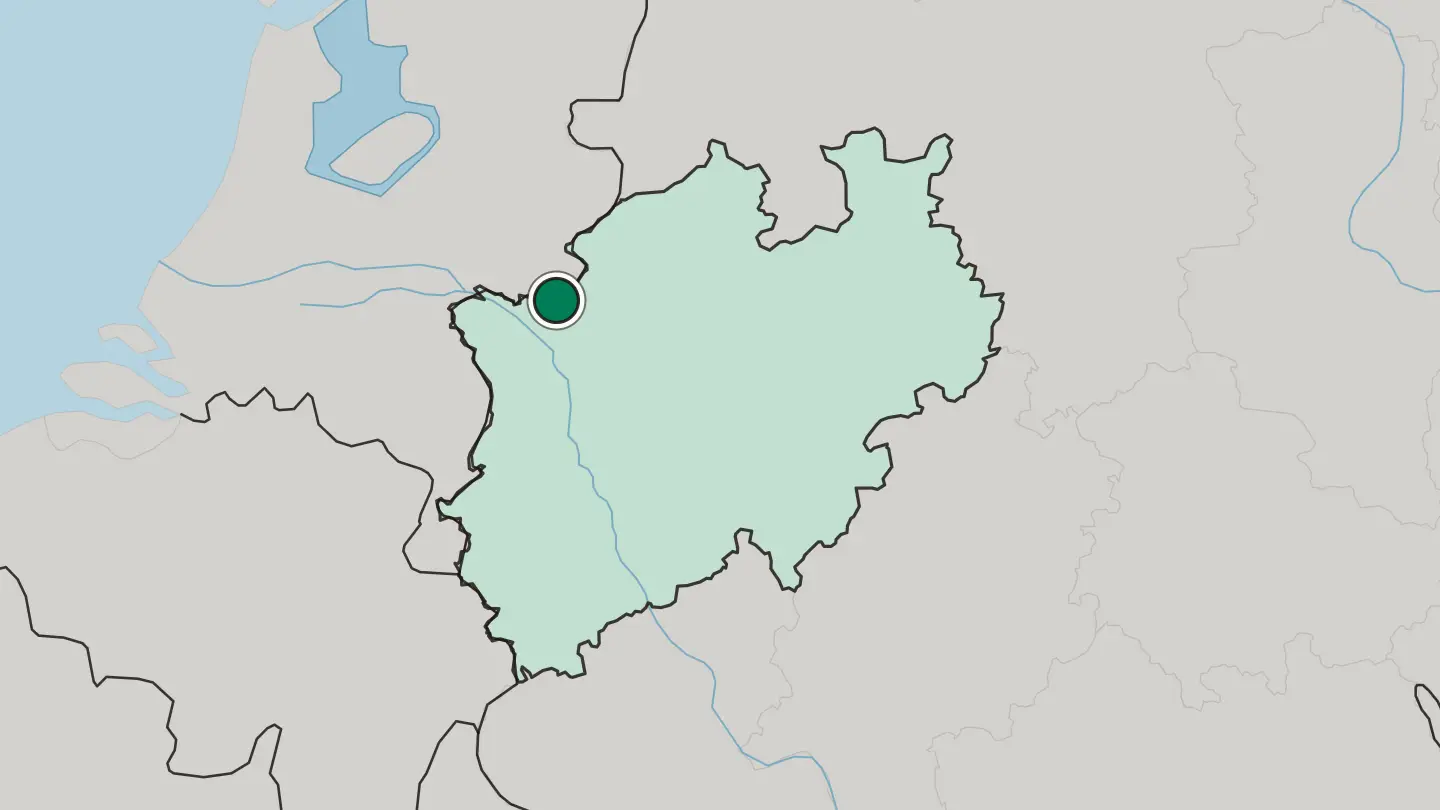
 Germany
Detmold
Detmold is the old capital of Lippe in Nordrhein-Westfalen, a Teutoburg Forest town of Schloss Detmold and a large open-air museum.Where to stay →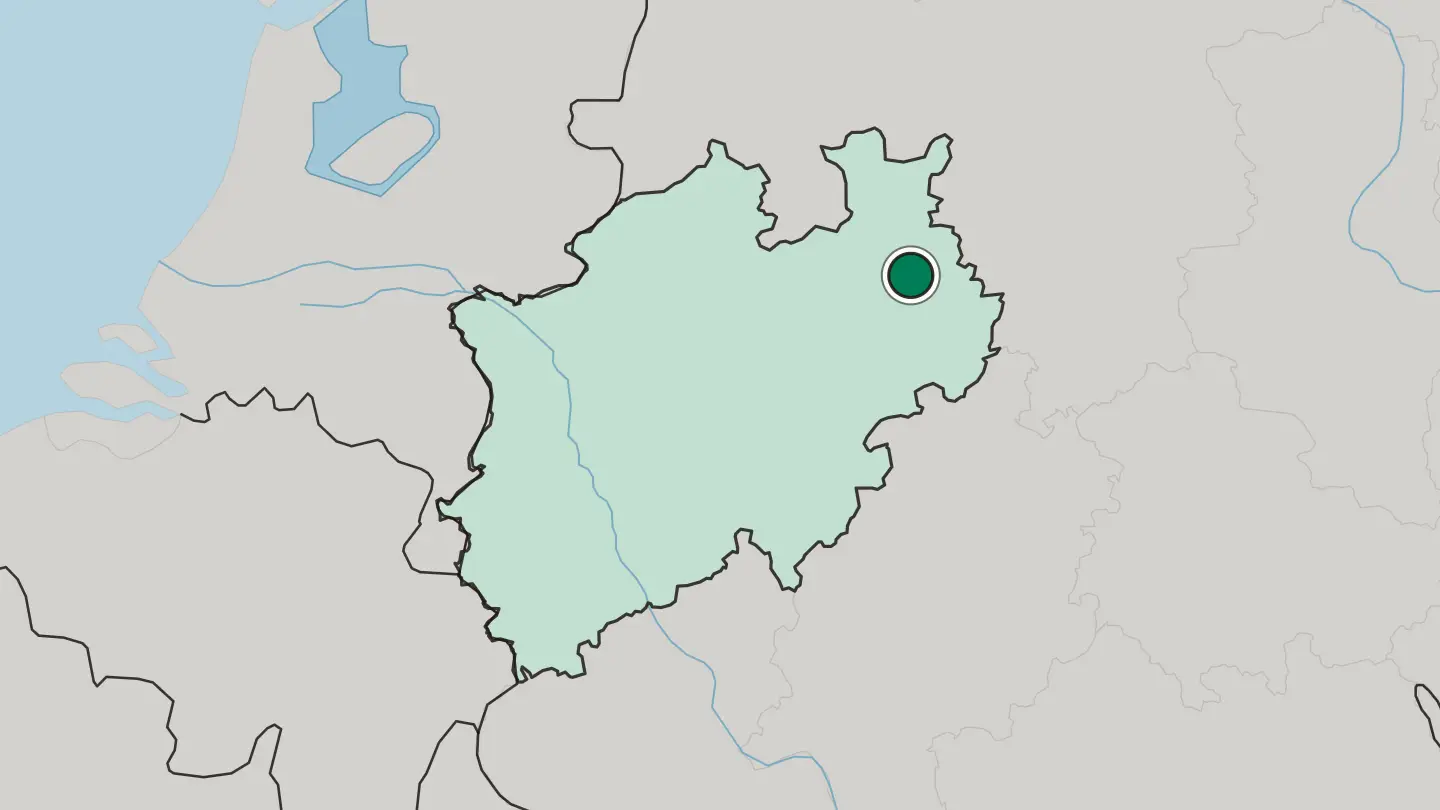
 Germany
Lippstadt
Lippstadt is the largest town of the Soest district, its old centre thick with churches and the spa quarter Bad Westernkotten among its villages.Where to stay →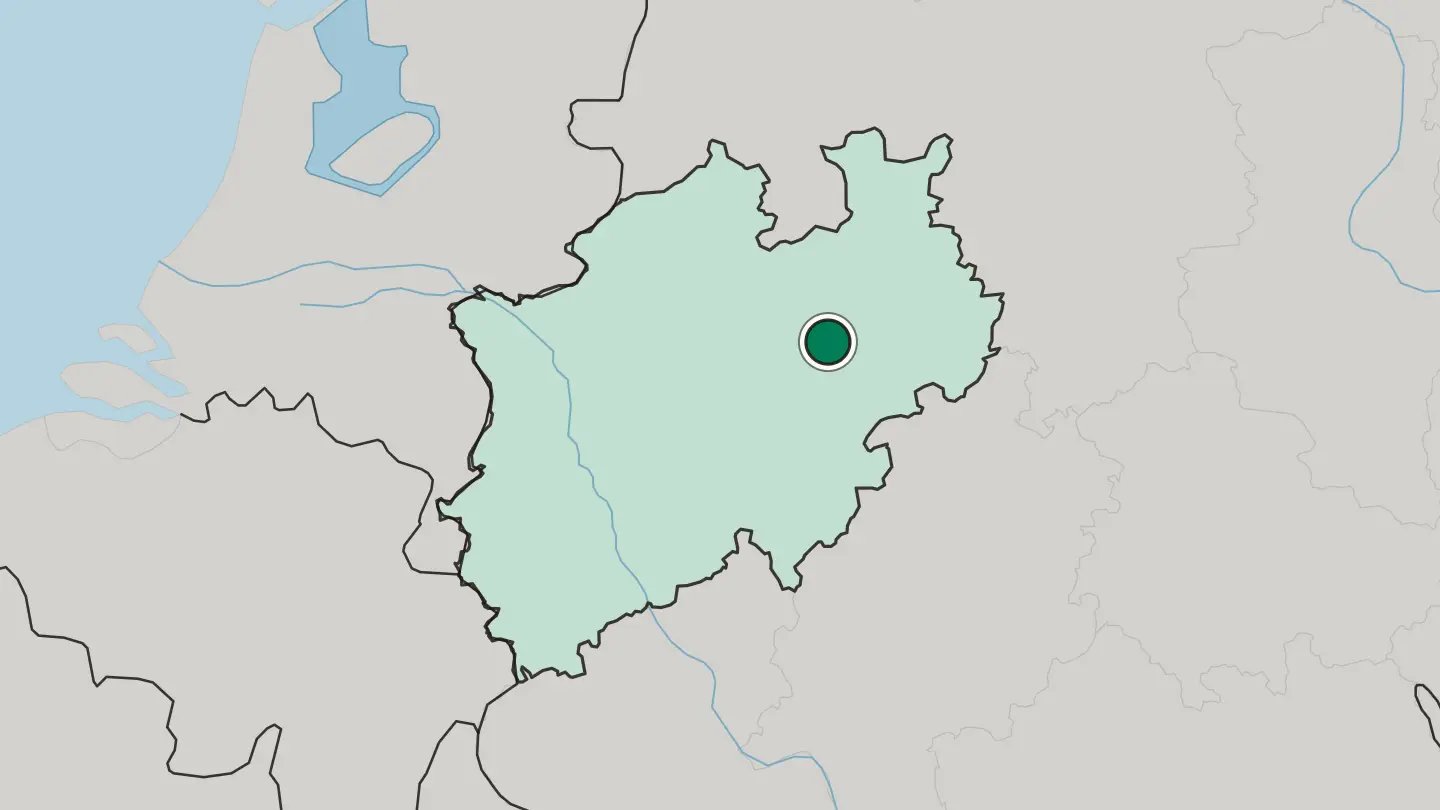
 Germany
Dinslaken
Burg Dinslaken anchors this Nordrhein-Westfalen town, with the Museum Voswinckelshof and the Evangelische Stadtkirche Dinslaken a short walk off.Where to stay →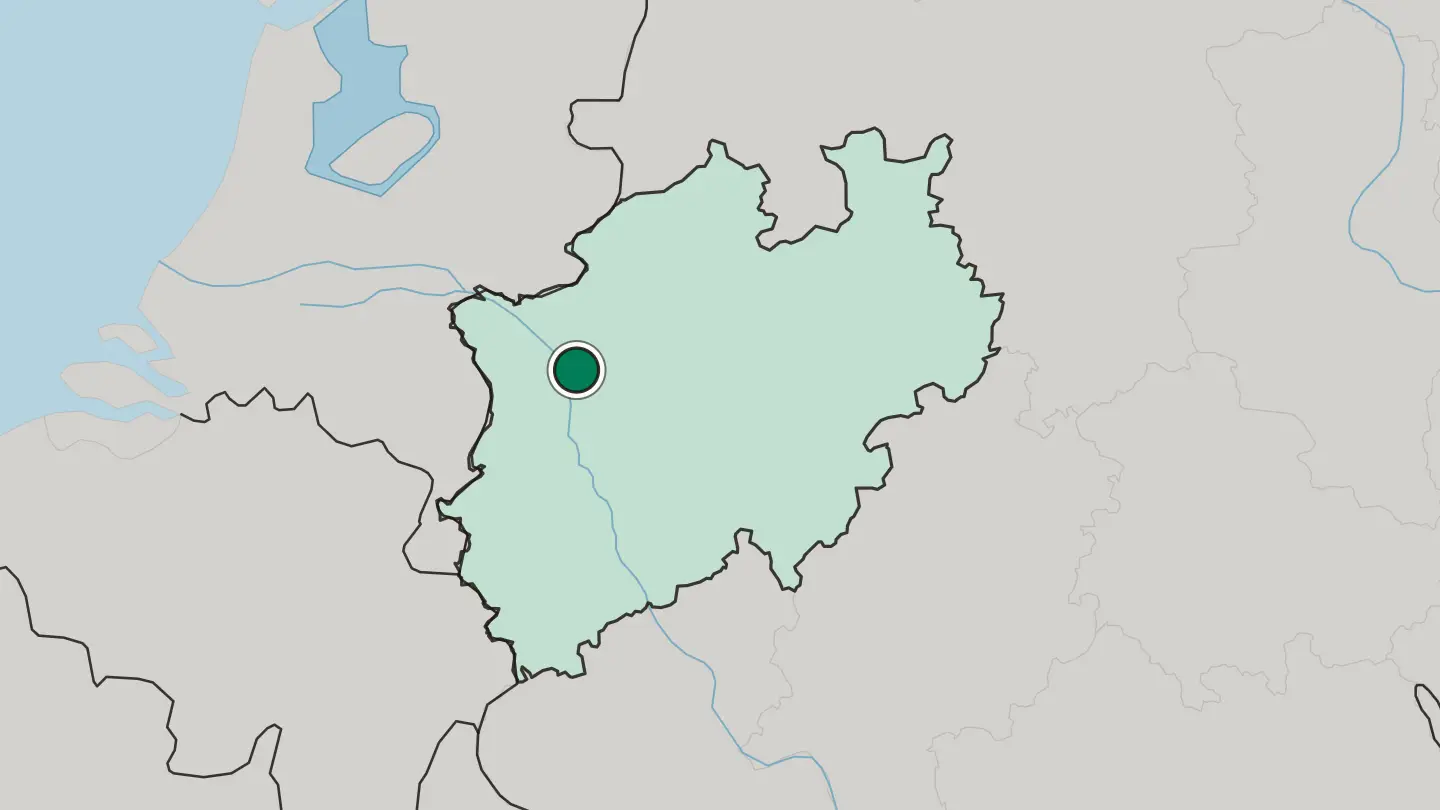
 Germany
Unna
Unna is the seat of the Unna district in Nordrhein-Westfalen, and the Centre for International Light Art is the most unusual name on its list.Where to stay →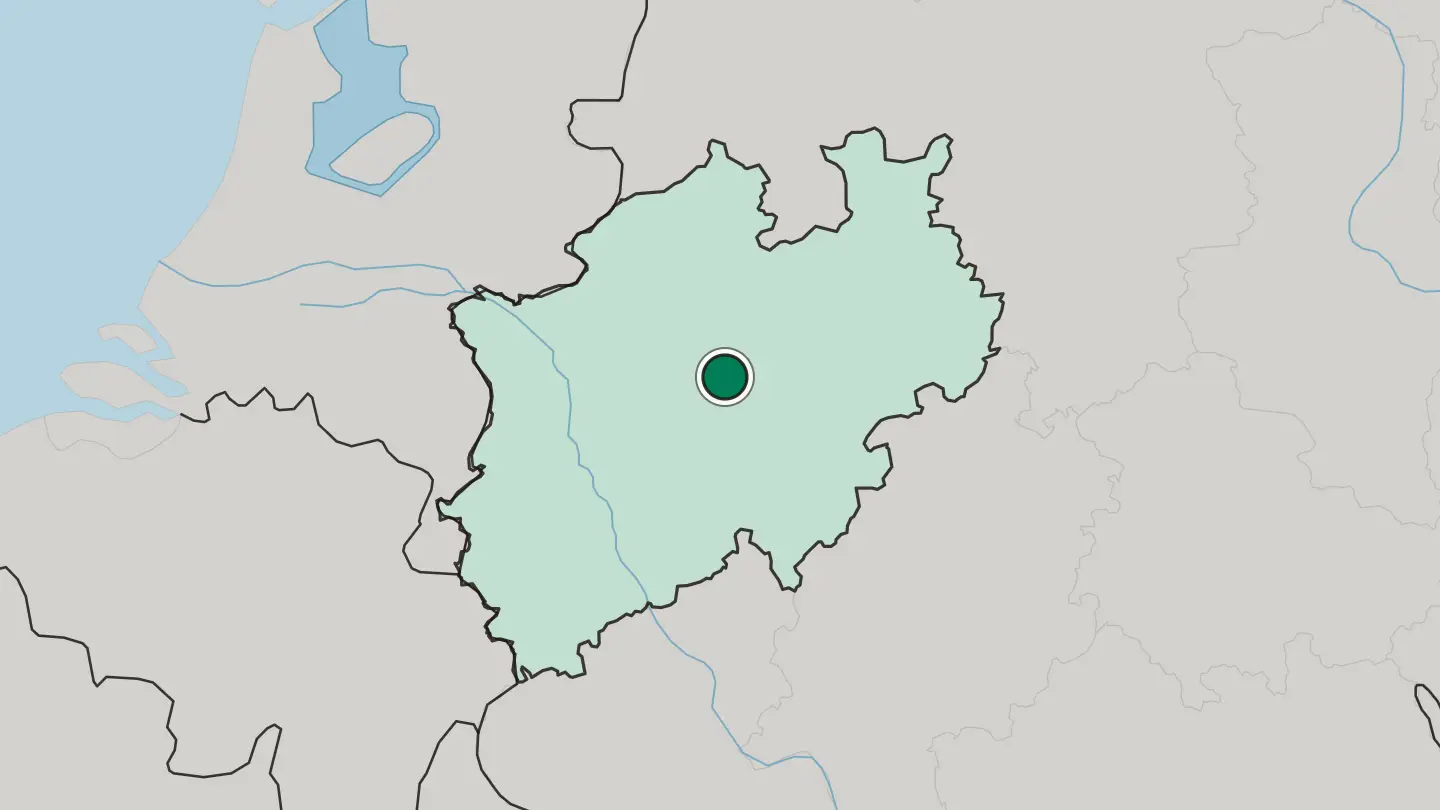
 Germany
Herten
Herten sits in the industrial Ruhr Area just west of Recklinghausen, with Schloßkapelle St Martinus and the Westerholt quarter for its older ends.Where to stay →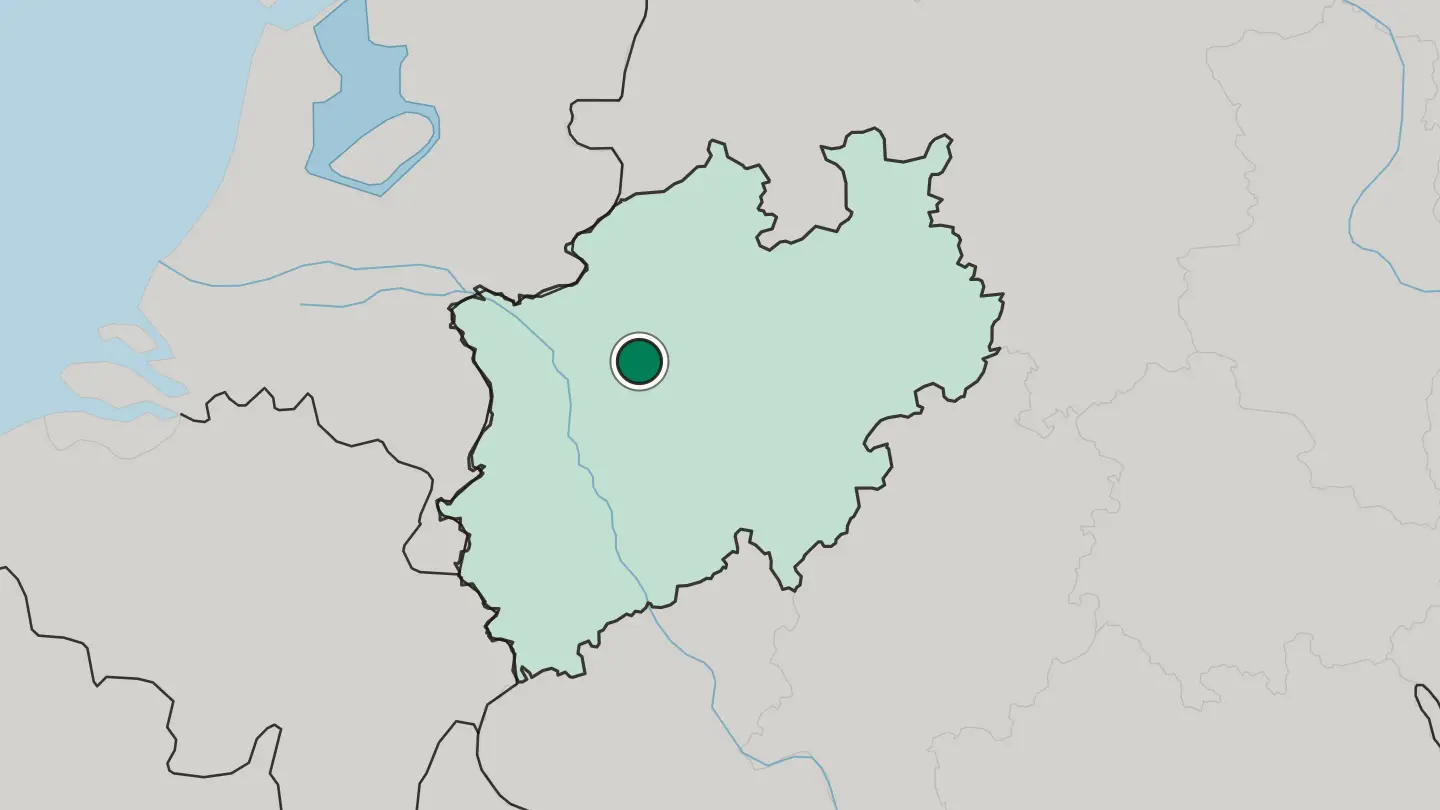
 Germany
Herford
Herford lies on the lowland between the Wiehen Hills and the Teutoburg Forest, seat of its Landkreis and site of the MARTa Herford museum.Where to stay →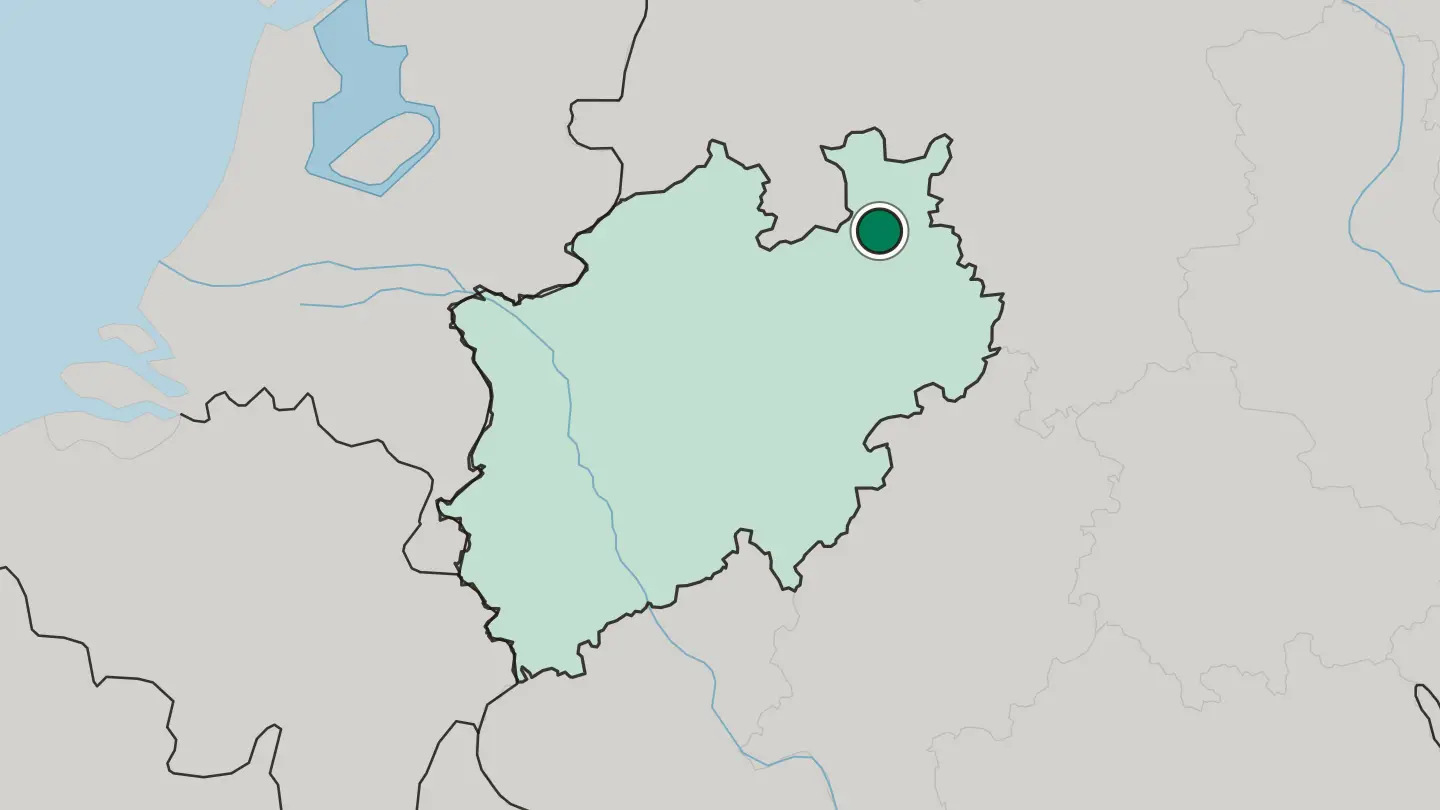 Germany
Grevenbroich
Grevenbroich spreads over a hundred square kilometres of Nordrhein-Westfalen, holding Kloster Grevenbroich, two castles and the Wildfreigehege Bend.Where to stay →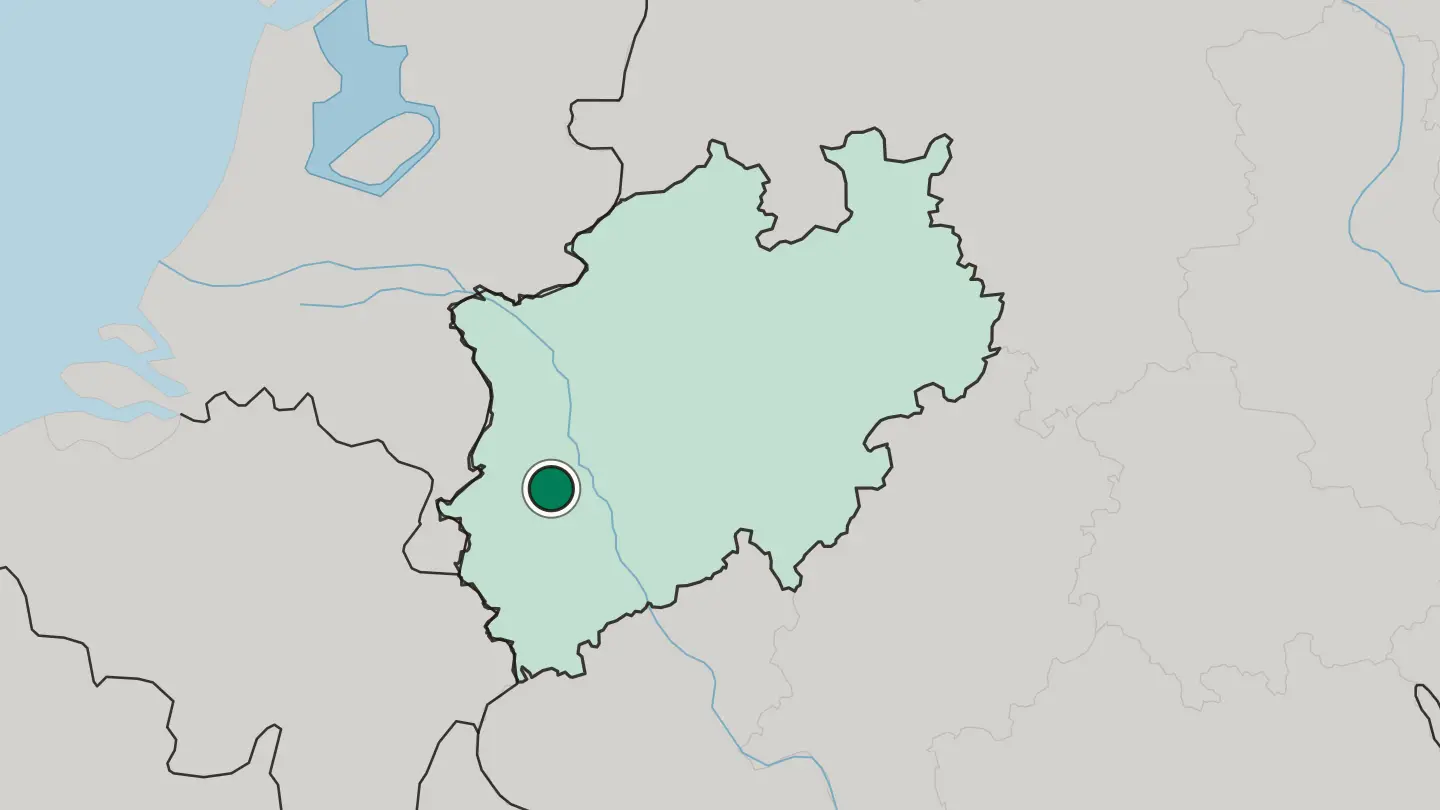 Germany
Kerpen
Kerpen is the largest town of the Rhein-Erft-Kreis, a cluster of castle and church parishes about 20 kilometres south-west of Cologne.Where to stay →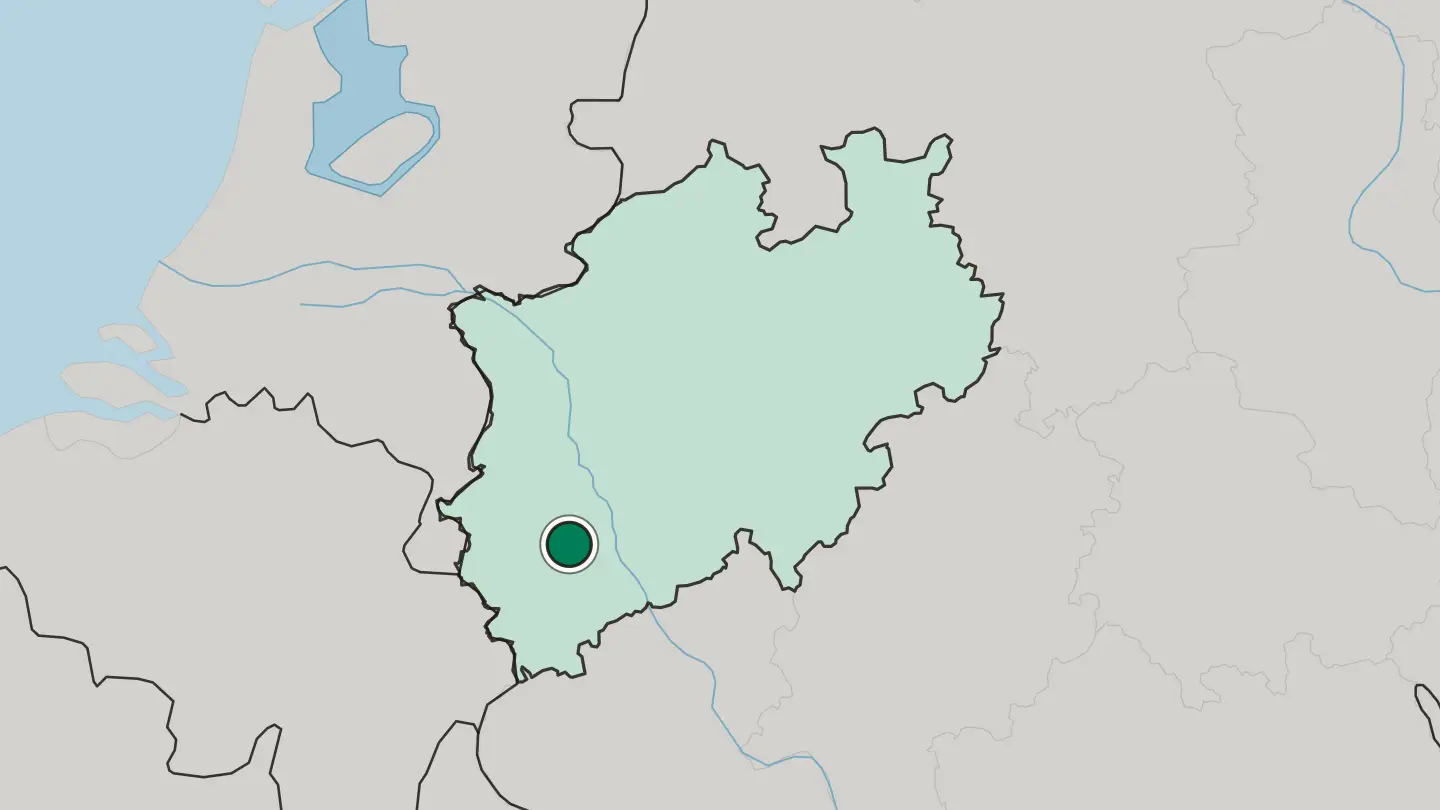
 Germany
Dormagen
Zons and Burg Friedestrom hold the old ground of Dormagen, a Rhein-Kreis Neuss town whose record reaches back to Roman Durnomagus.Where to stay →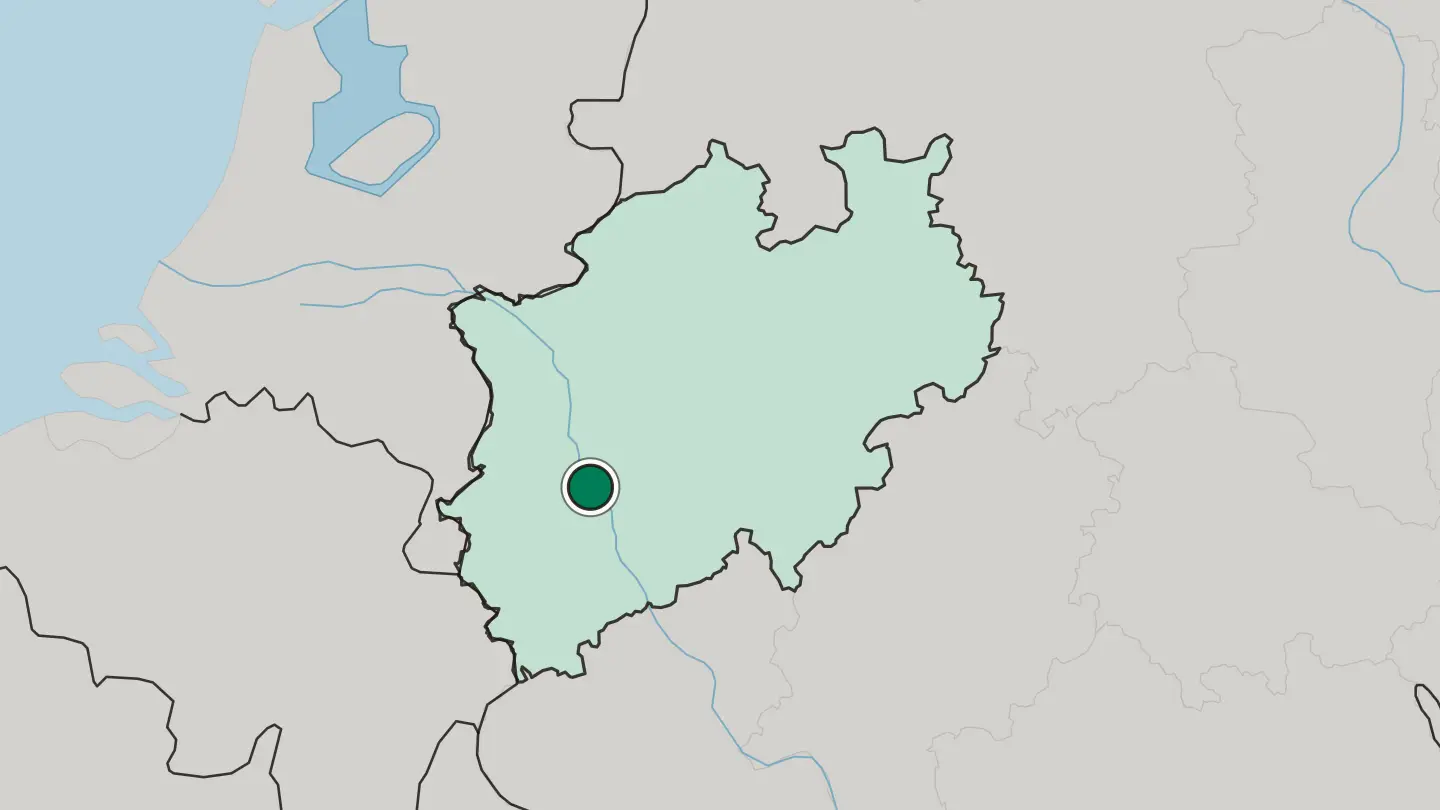 Germany
Bergheim
Bergheim, capital of the Rhein-Erft-Kreis, lies 22 km west of Cologne, a town of small castles, village churches and the lignite works at Niederaußem.Where to stay →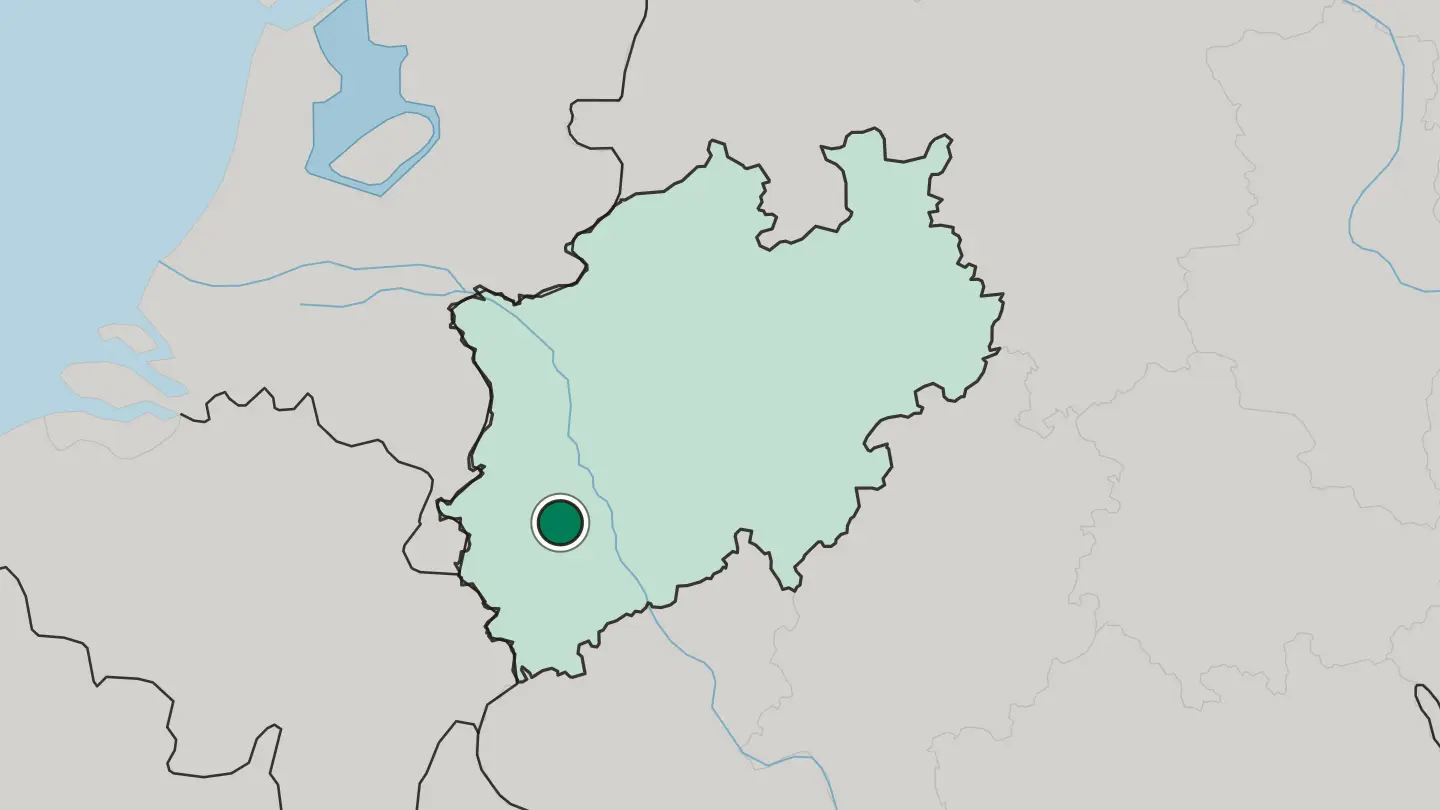
 Germany
Wesel
Wesel is the seat of Kreis Wesel in Nordrhein-Westfalen, with the Willibrordi Cathedral and the tower called Langer Heinrich fixing its skyline.Where to stay →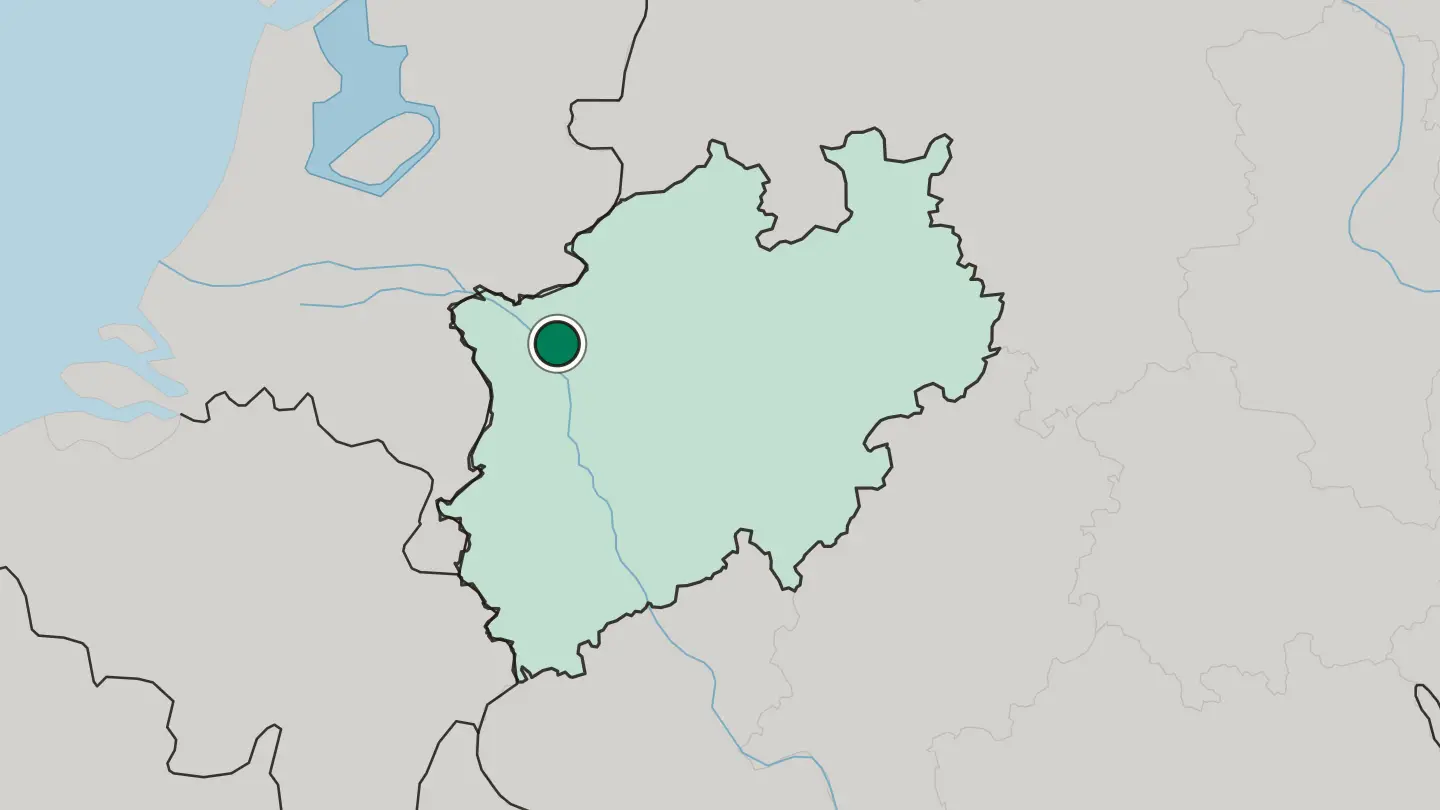
 Germany
Langenfeld
Langenfeld is a Mettmann-district town between Düsseldorf and Cologne, formed from Richrath and Reusrath and granted city rights in 1948.Where to stay →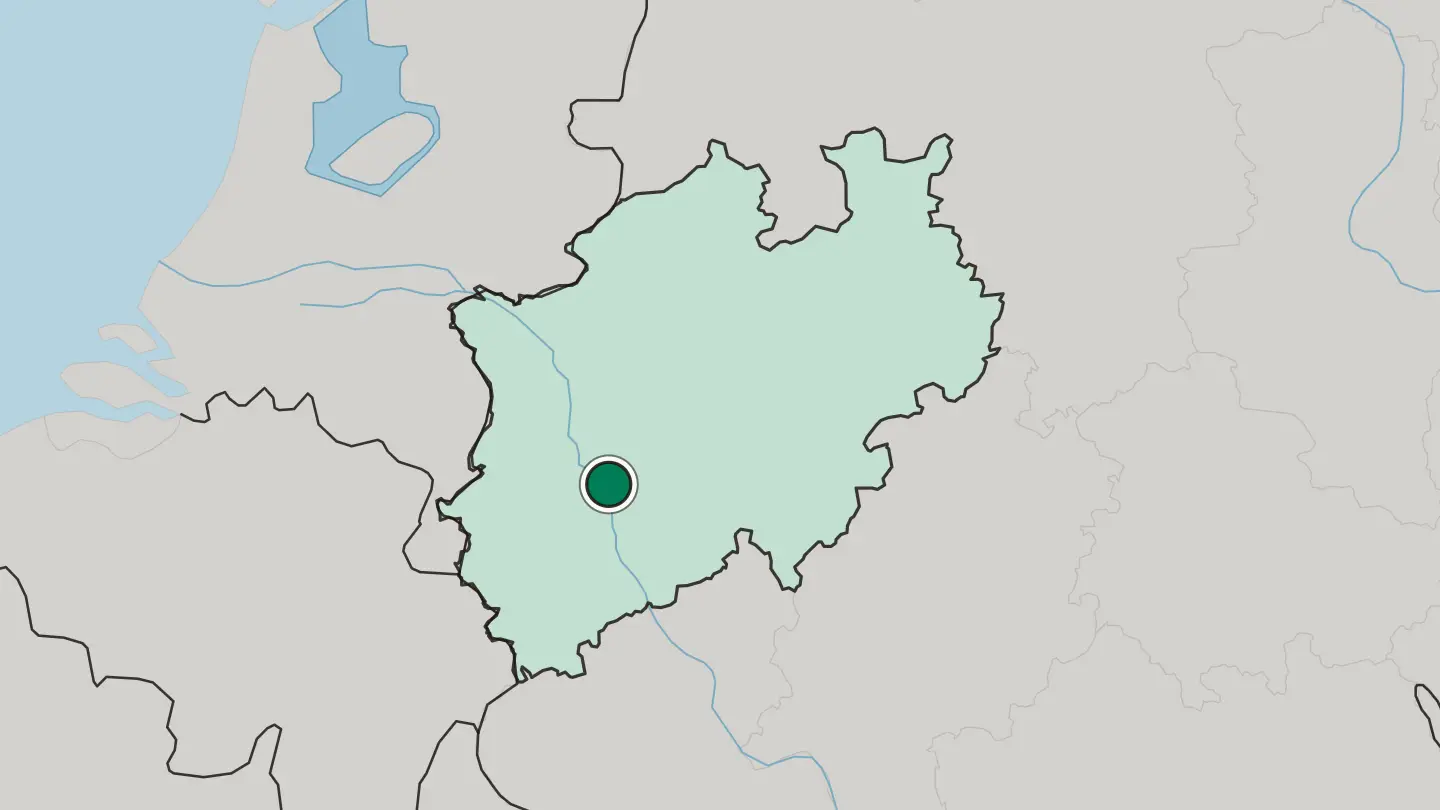
 Germany
Stolberg
Stolberg is a city of Nordrhein-Westfalen in the Rhineland, holding Burg Stolberg, four churches and the Museum Zinkhütter Hof.Where to stay →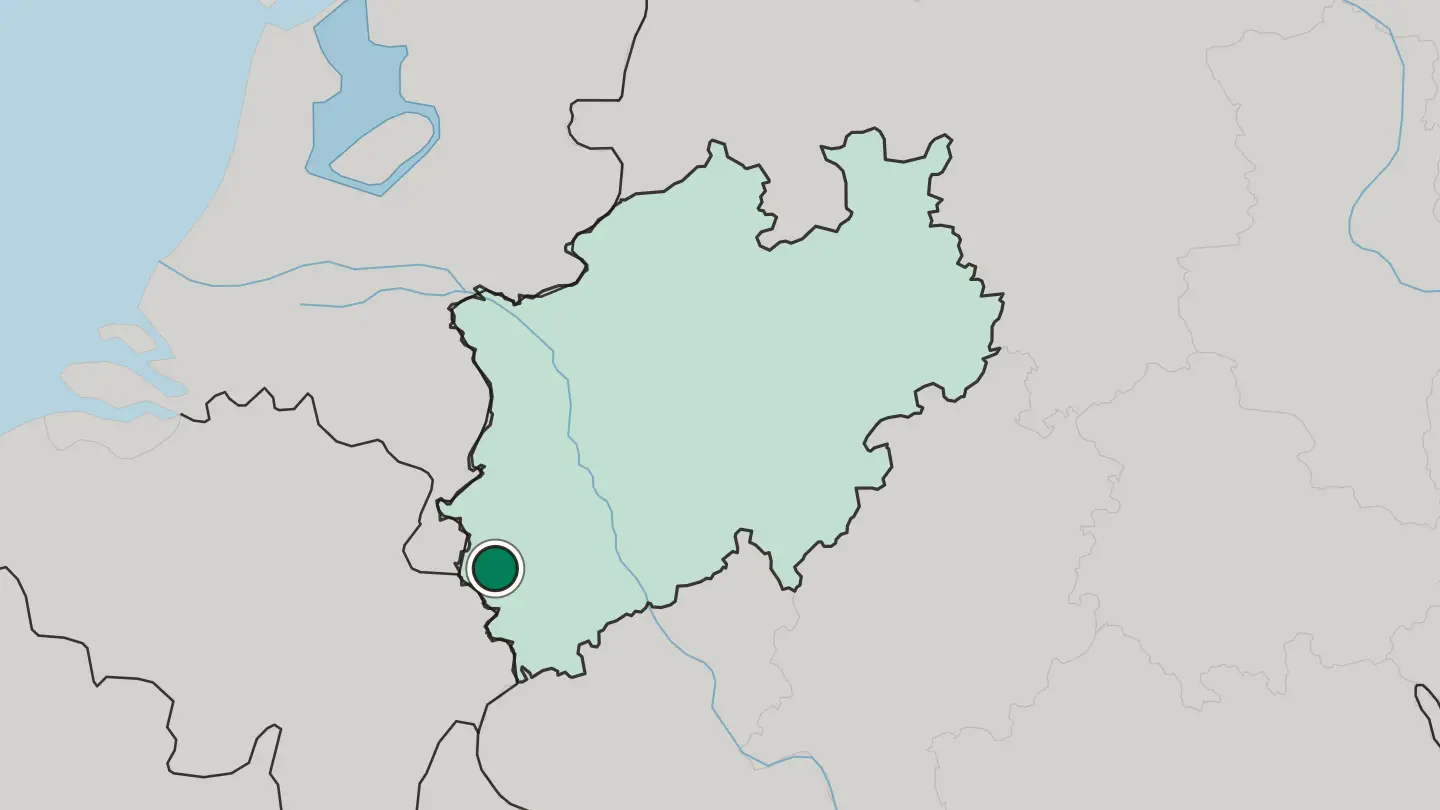
 Germany
Hattingen
Hattingen pairs a medieval old town with the Henrichshütte, a former steel works turned museum, in the northern Ennepe-Ruhr-Kreis.Where to stay →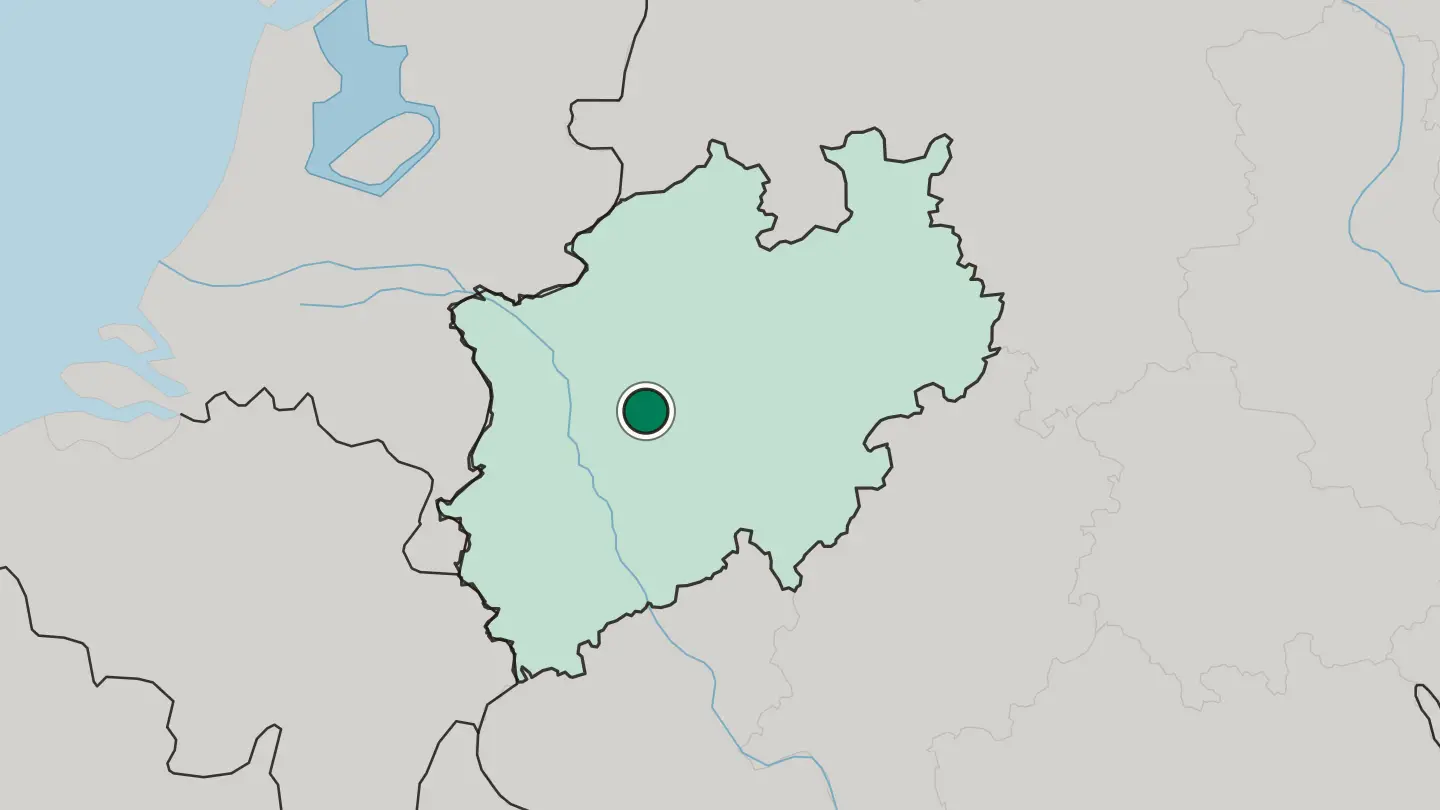 Germany
Hilden
Hilden lies between Düsseldorf and Solingen on the right side of the Rhine, an industrial town of the Mettmann district with a forest of its own.Where to stay →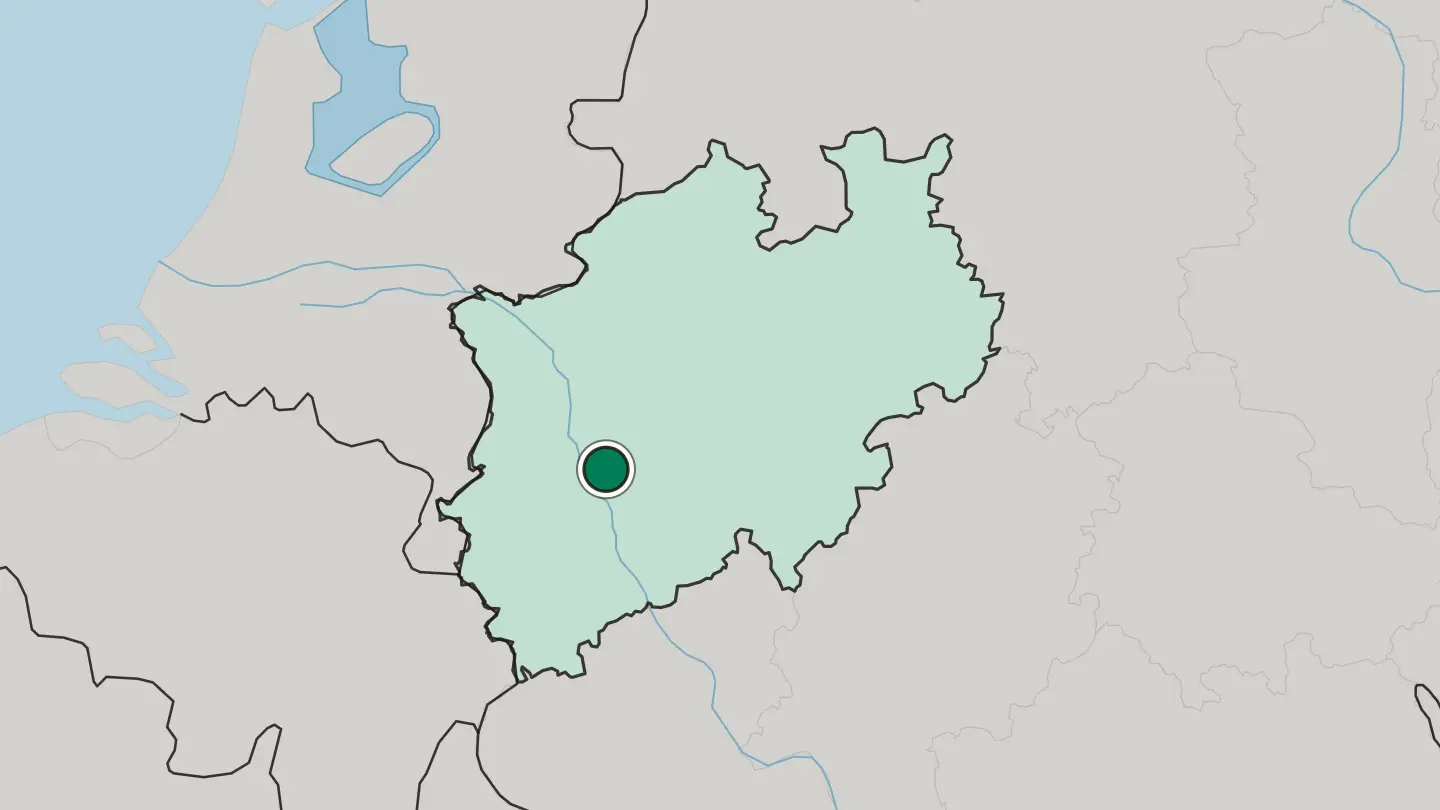
 Germany
Sankt Augustin
Sankt Augustin grew from a missionary monastery founded in 1913, eight kilometres north-east of Bonn in the Rhein-Sieg district.Where to stay →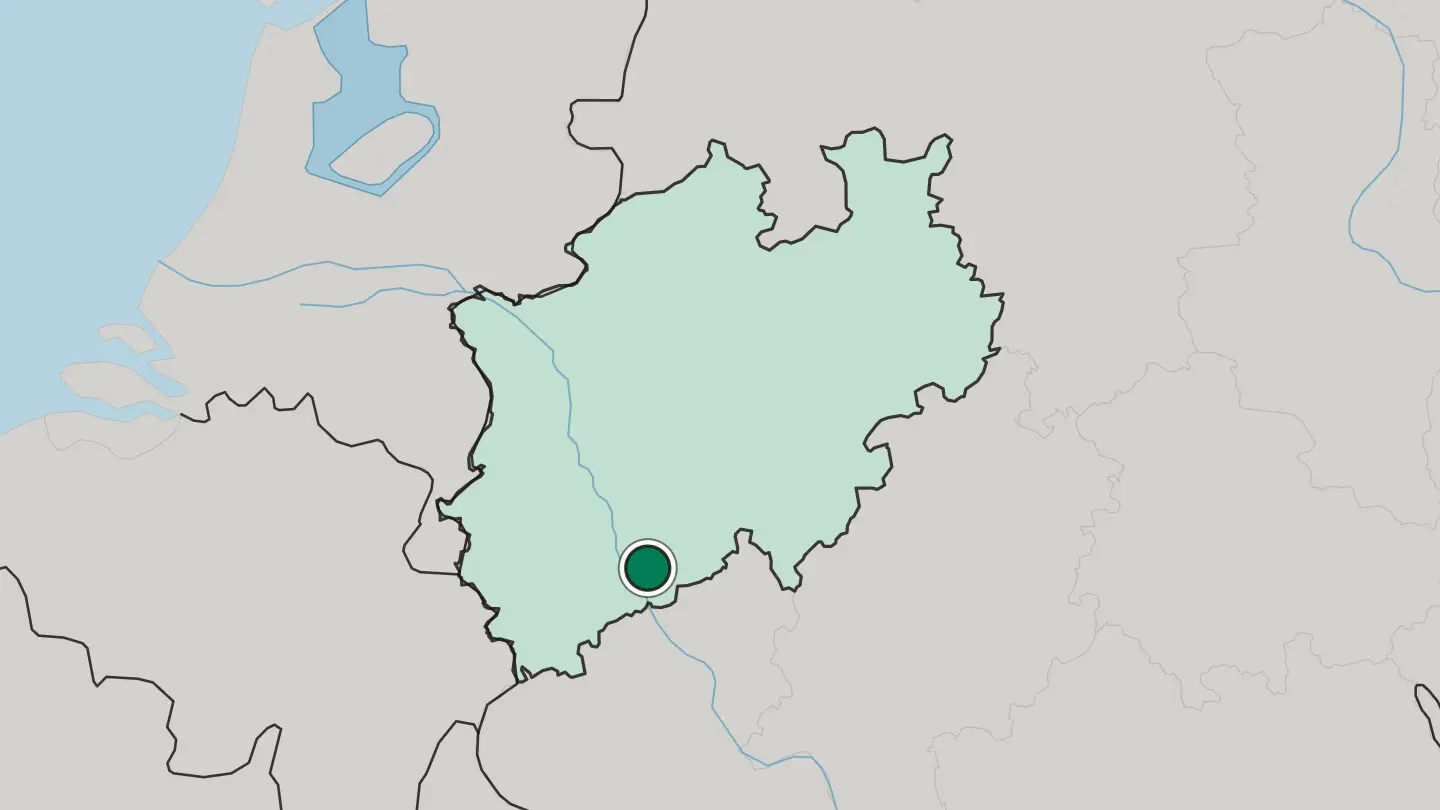
 Germany
Eschweiler
Eschweiler sits on the Inde in Nordrhein-Westfalen, a castle-and-church town east of Aachen and west of Cologne, close to the Dutch and Belgian borders.Where to stay →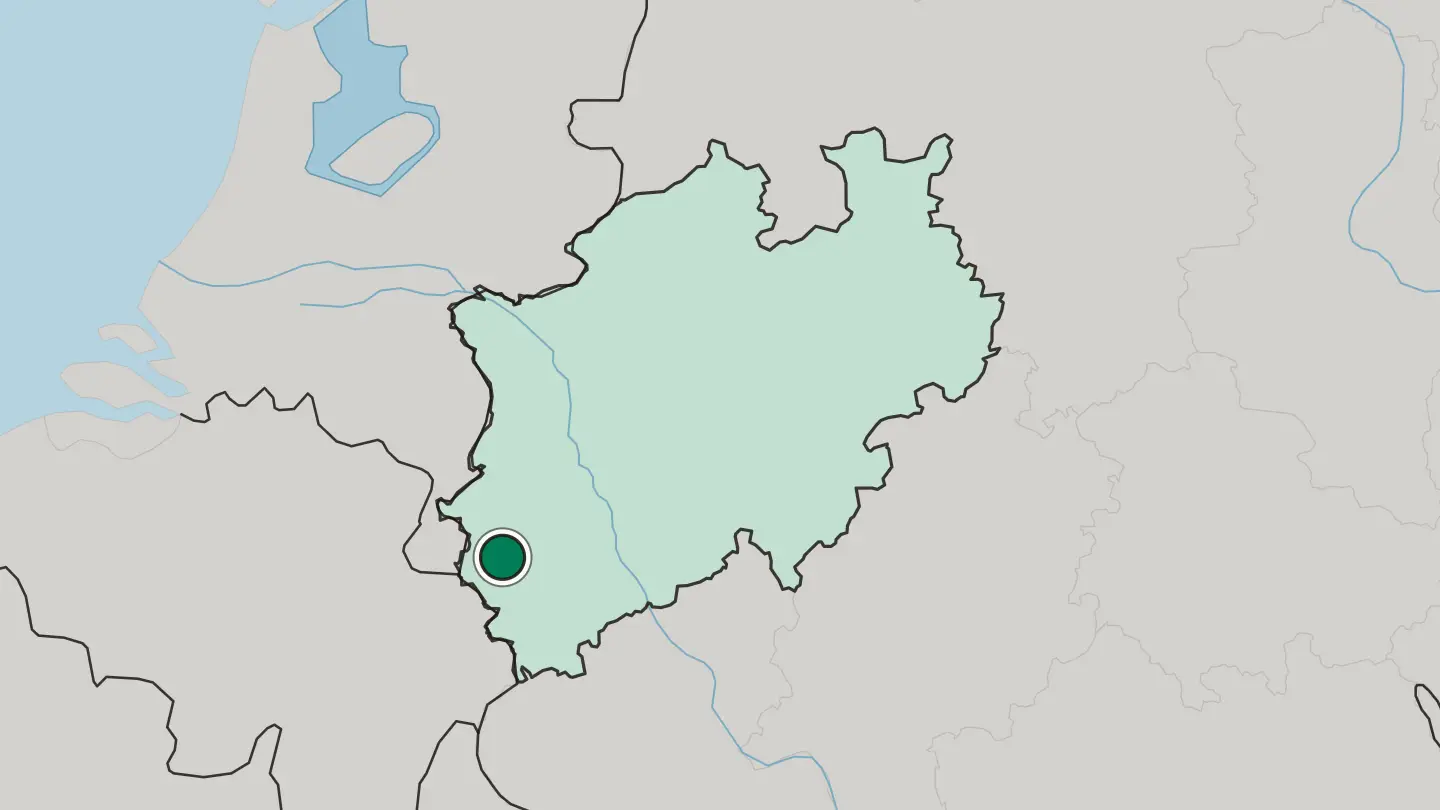
 Germany
Ahlen
Ahlen is the leading town of the District of Warendorf, lying in the historic Münsterland southeast of Münster in North Rhine-Westphalia.Where to stay →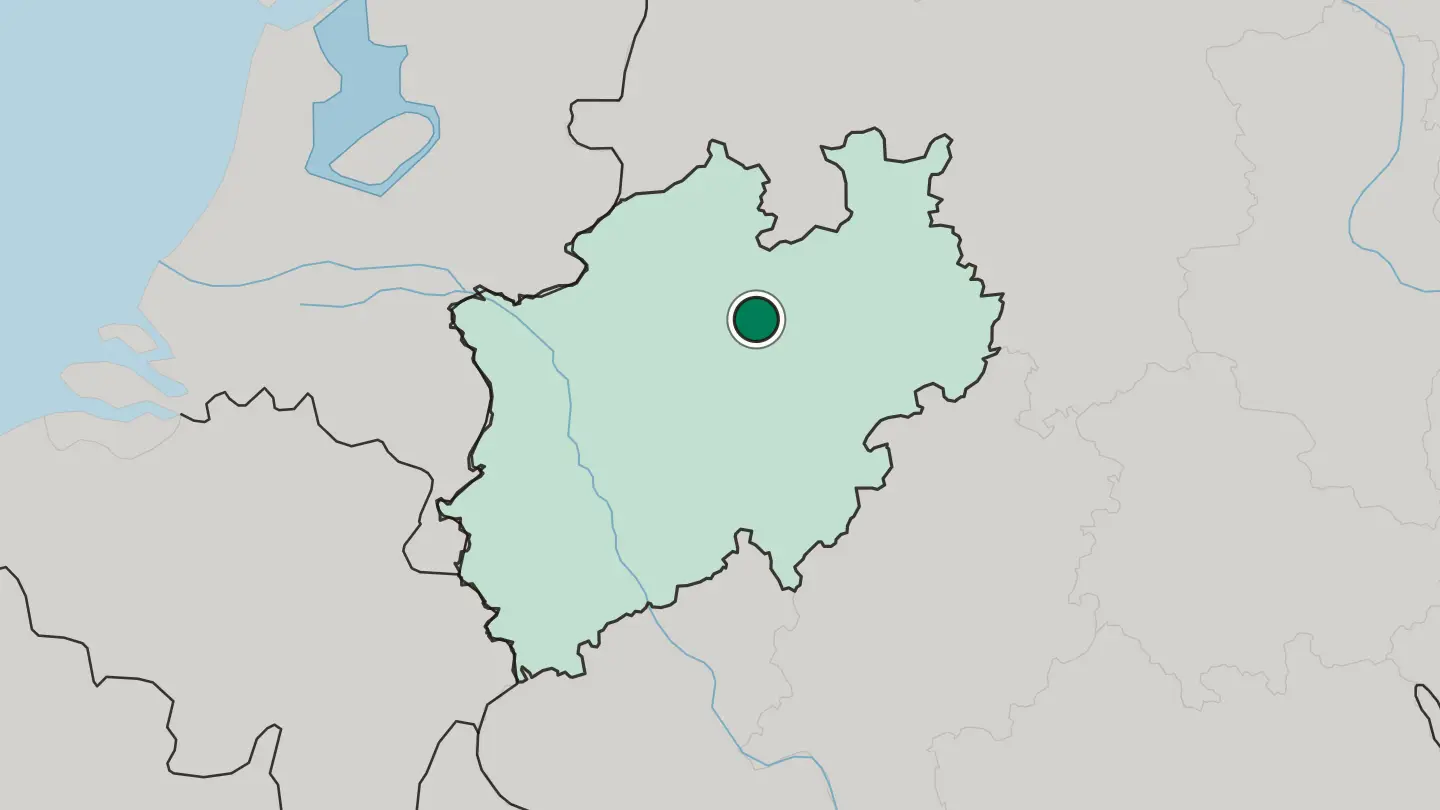 Germany
Bad Salzuflen
Bad Salzuflen is a thermal spa town in the Lippe district of North Rhine-Westphalia, built on salt, with brine still running through its Gradierwerk.Where to stay →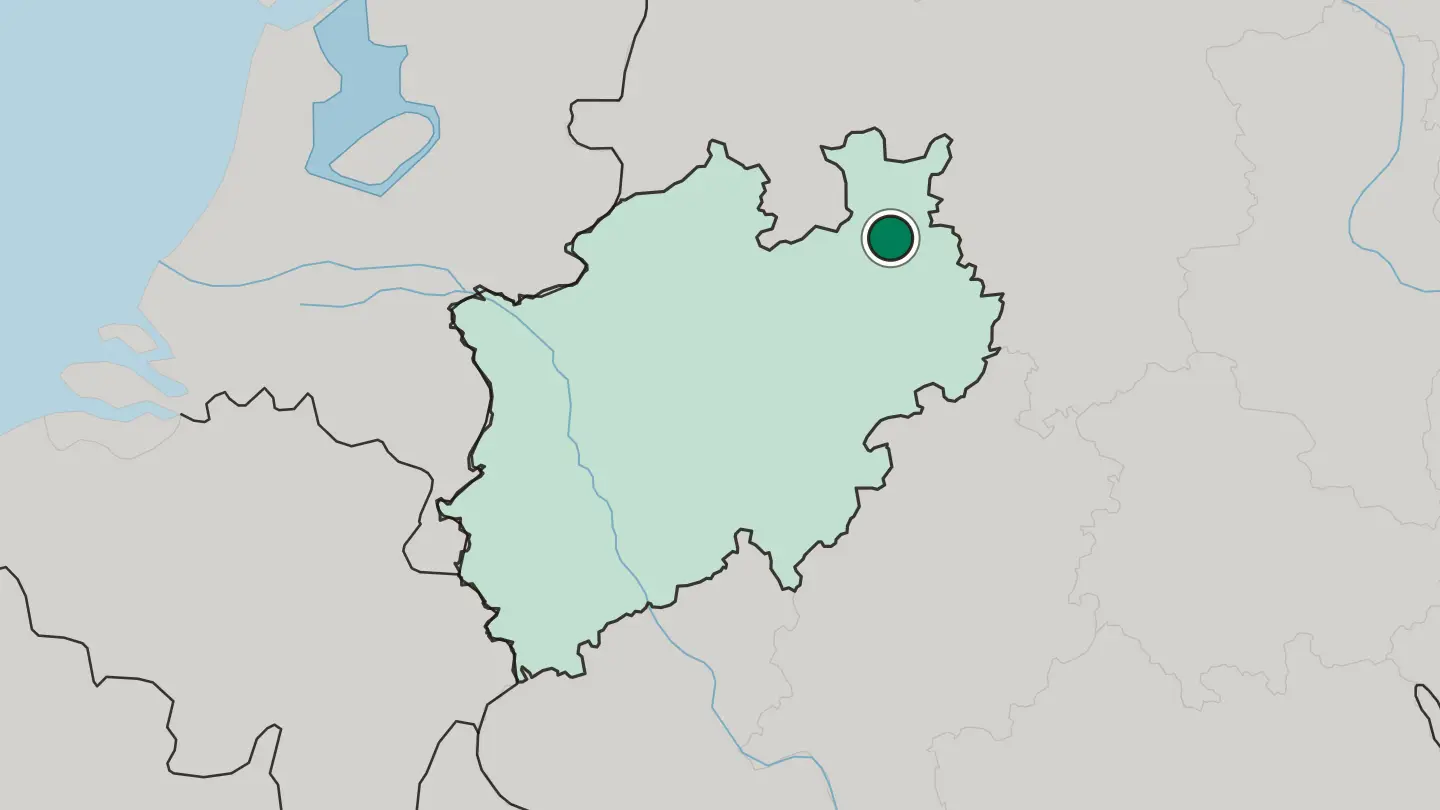
 Germany
Euskirchen
Euskirchen took its town charter in 1302 and runs the district that carries its name, a shopping town in Nordrhein-Westfalen ringed by old villages.Where to stay →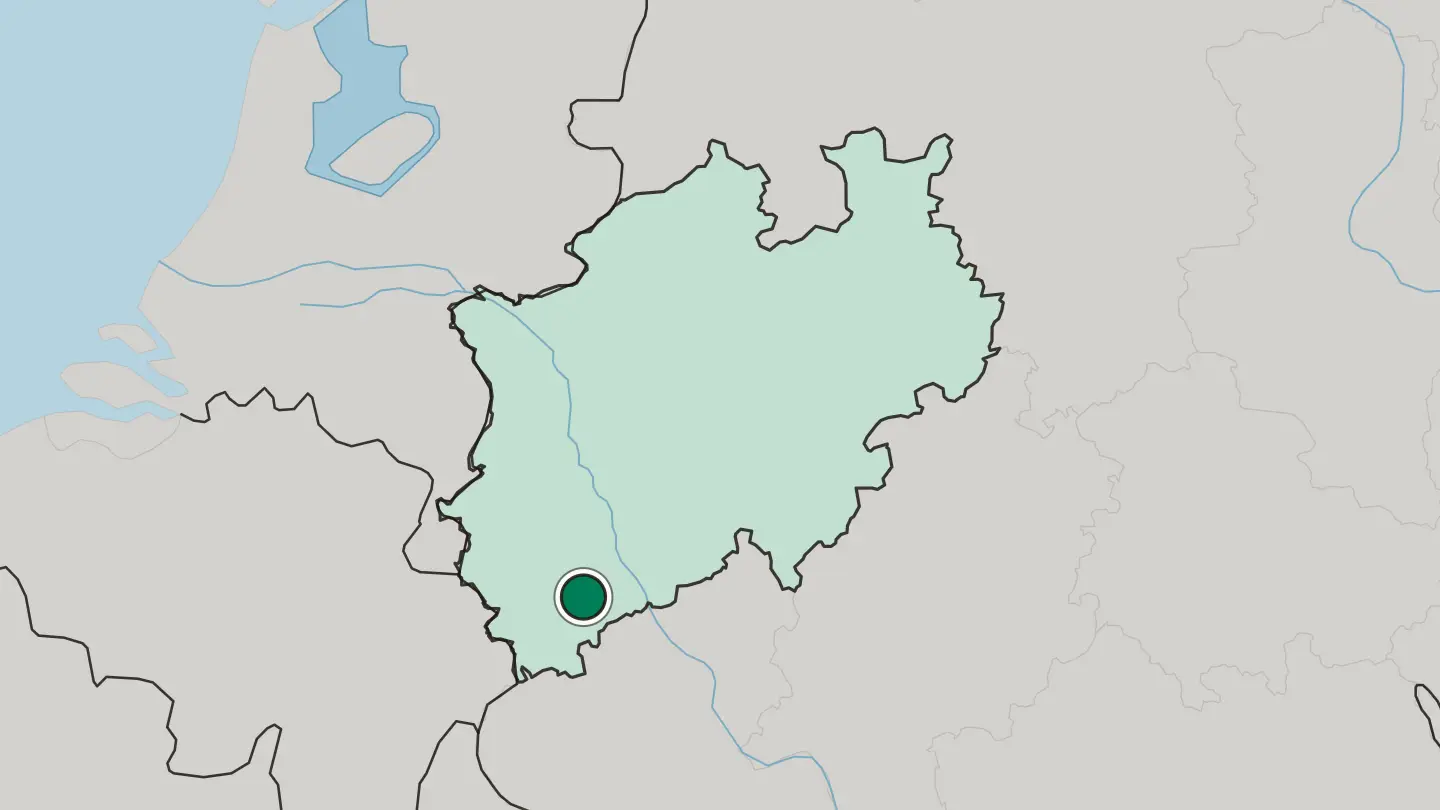 Germany
Meerbusch
Meerbusch is a town in Rhein-Kreis Neuss, incorporated in 1970, with Büderich and Osterath among its named parts. Manor houses survive between them.Where to stay →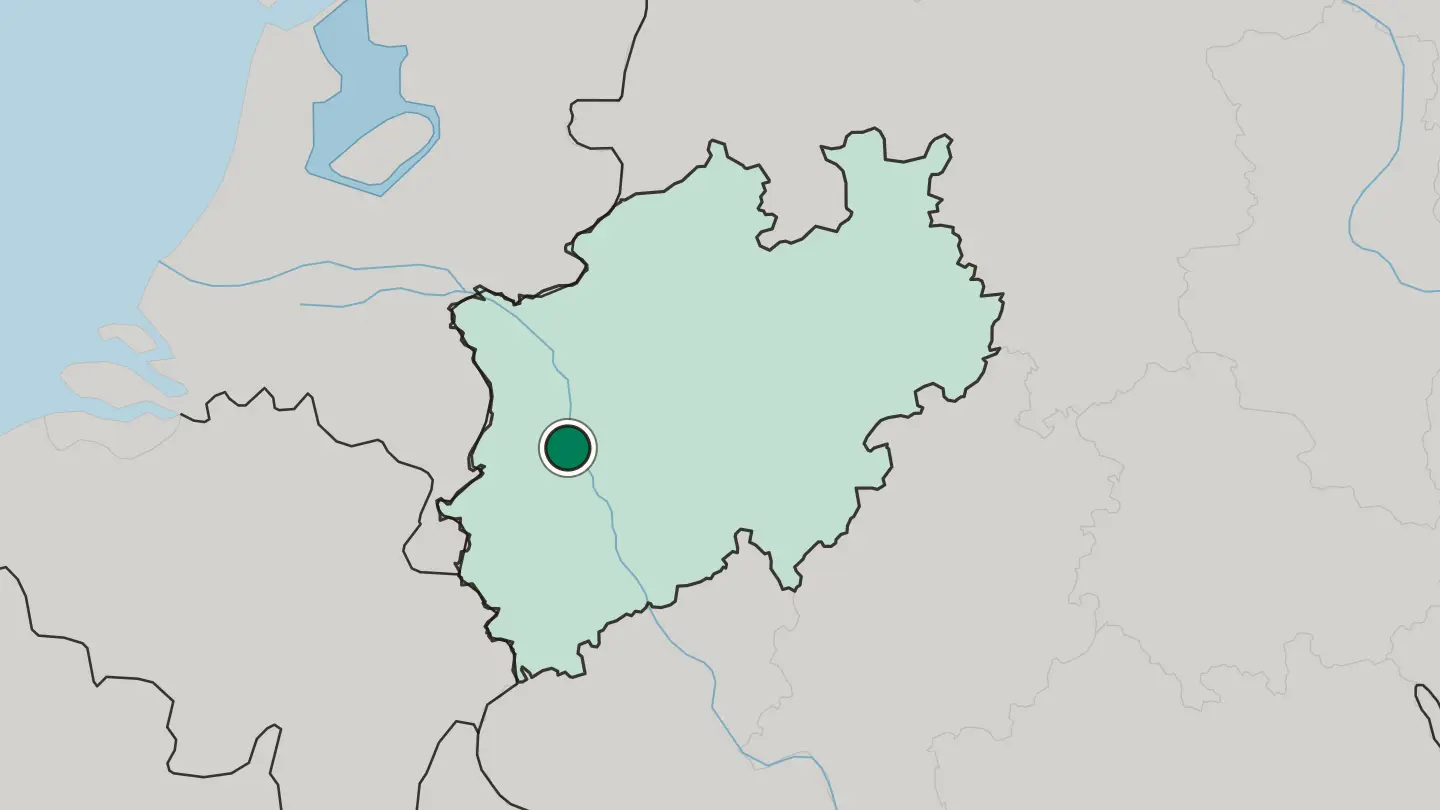
 Germany
Hürth
Hürth spreads over thirteen former villages southwest of Cologne, with four Burgen, a Roman water line and lakes scattered across its ground.Where to stay →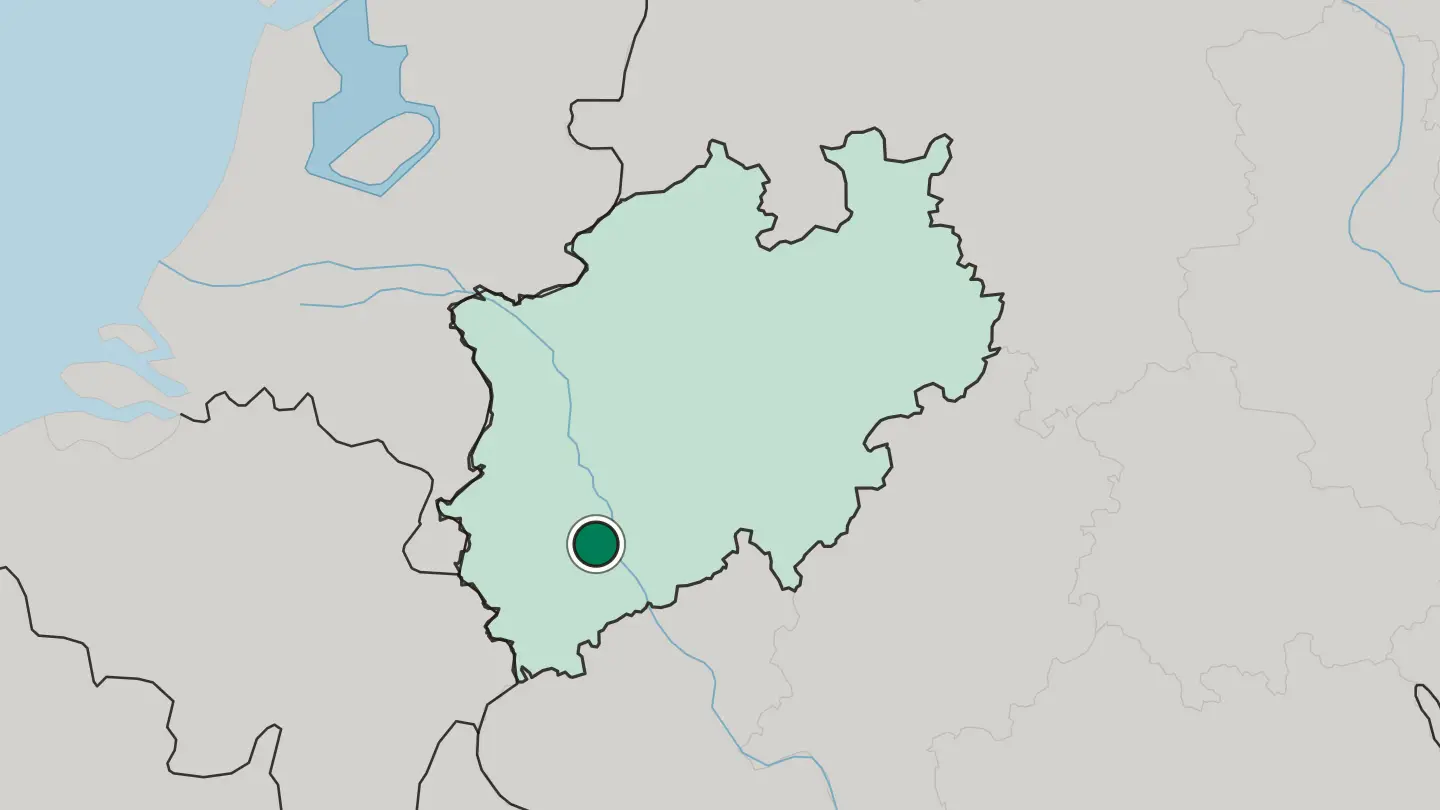
 Germany
Pulheim
Pulheim is a town in the Rhein-Erft-Kreis, and Stommeln, Sinthern, Geyen and Sinnersdorf each carry a church of their own.Where to stay →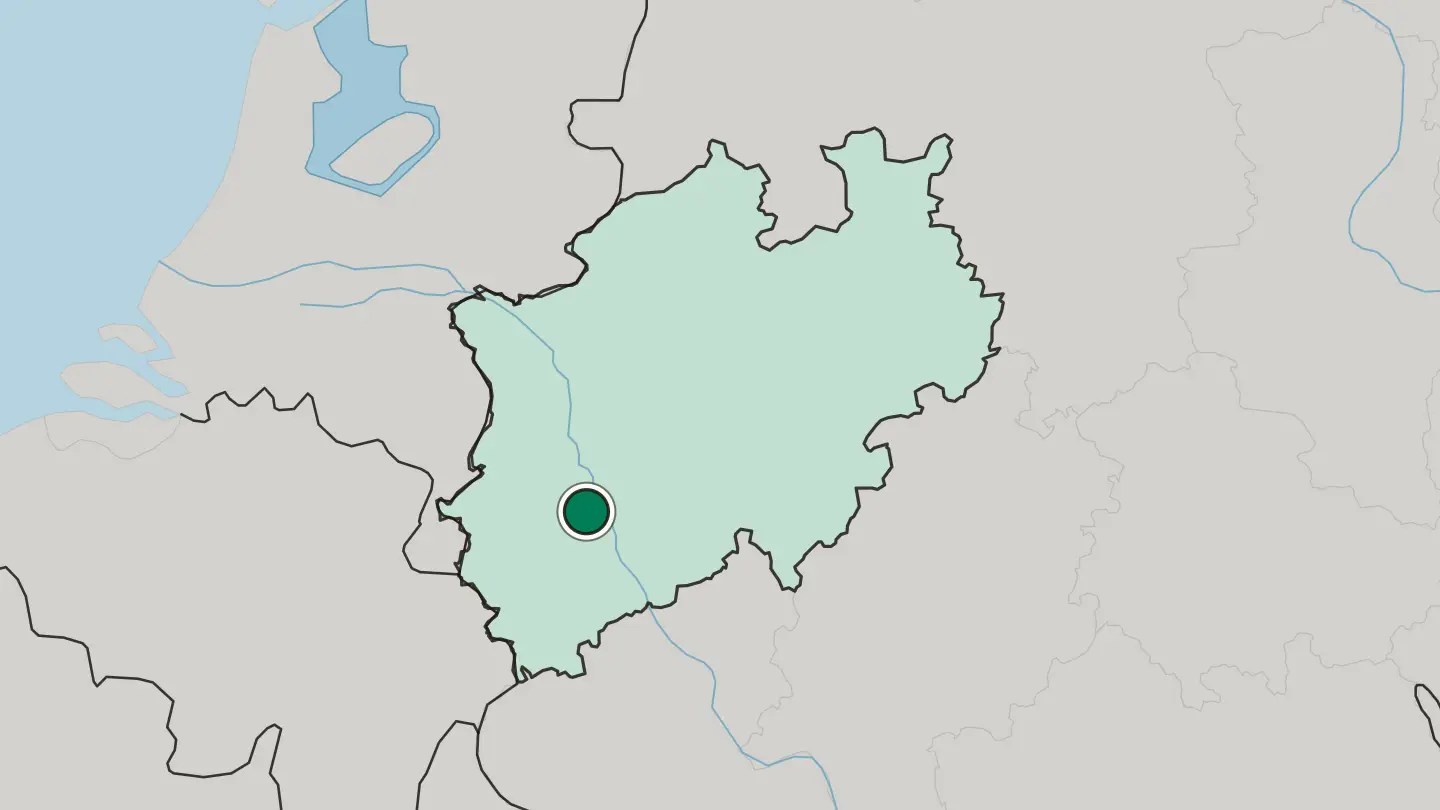
 Germany
Gummersbach
Gummersbach is a Nordrhein-Westfalen town of three churches, the Eugen-Haas-Halle and the Haus der Geschichten, spread over a wide municipality.Where to stay →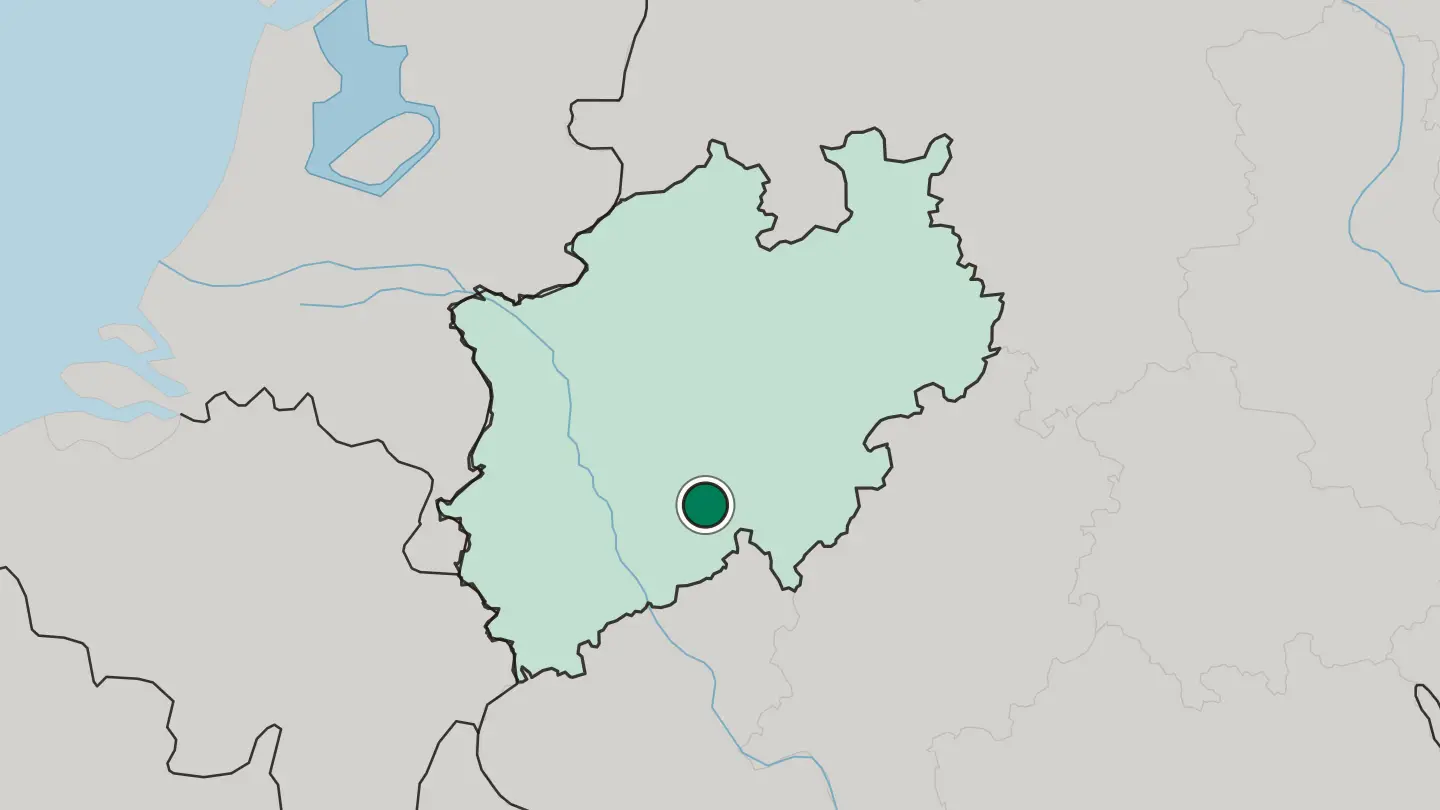 Germany
Menden
Menden lies at the north end of the Sauerland, near the Ruhr in Märkischer Kreis, with two castles inside its bounds. The Teufelsturm still stands.Where to stay →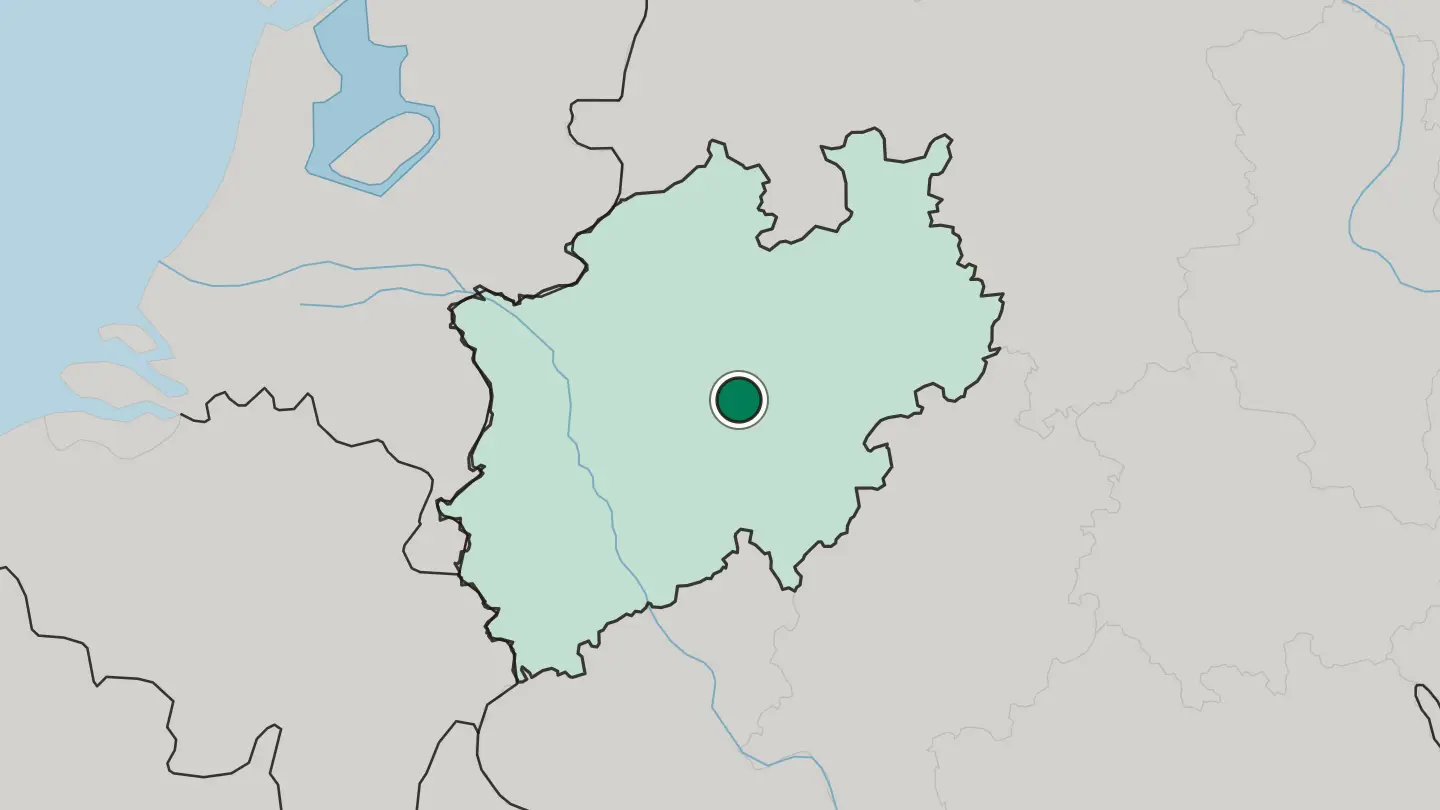 Germany
Frechen
Frechen carries the Keramion, three castles and ten church buildings inside one small town of the Rhein-Erft District in Nordrhein-Westfalen.Where to stay →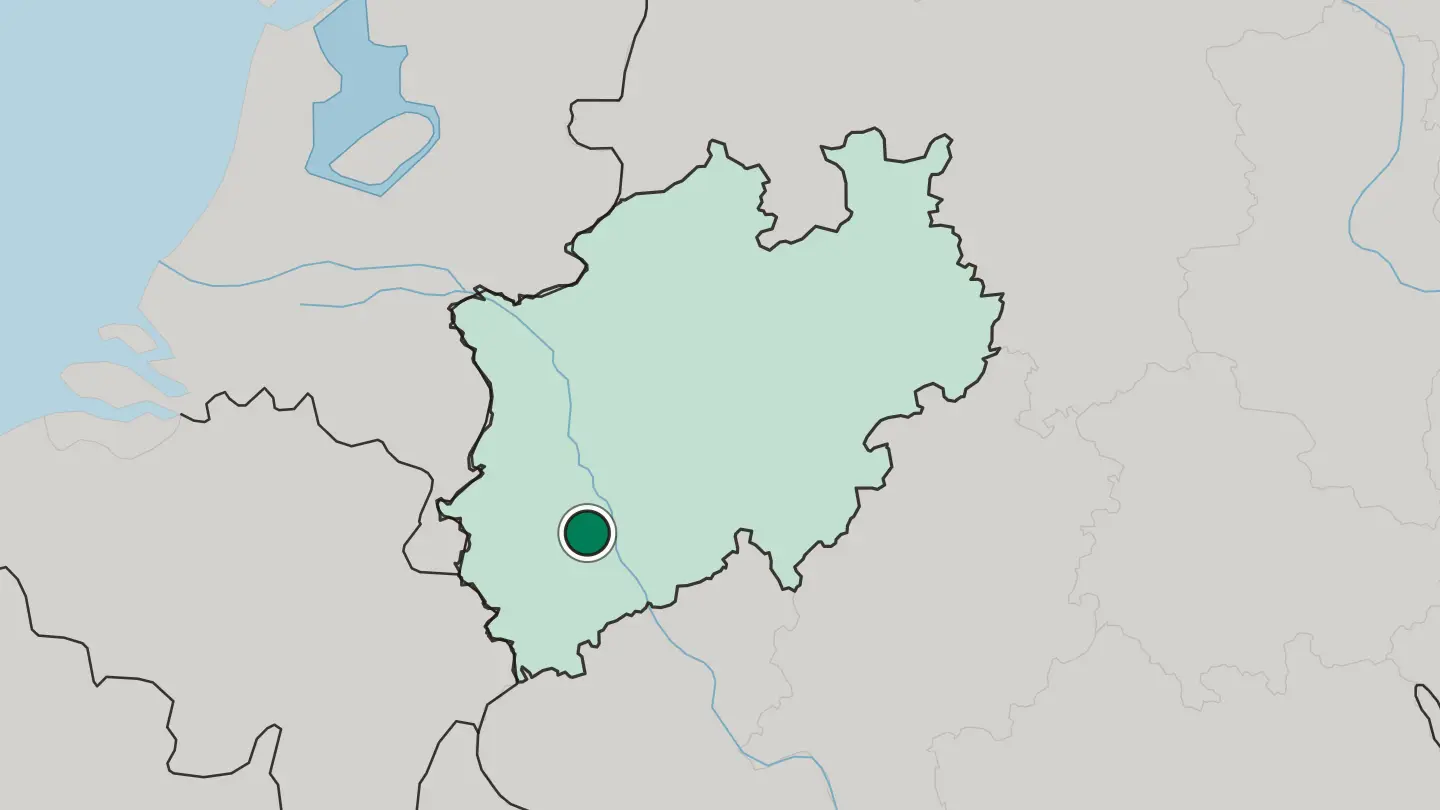
 Germany
Ibbenbueren
Ibbenbüren in the district of Steinfurt keeps its mining past in a museum and its summers at the Aaseebad.Where to stay →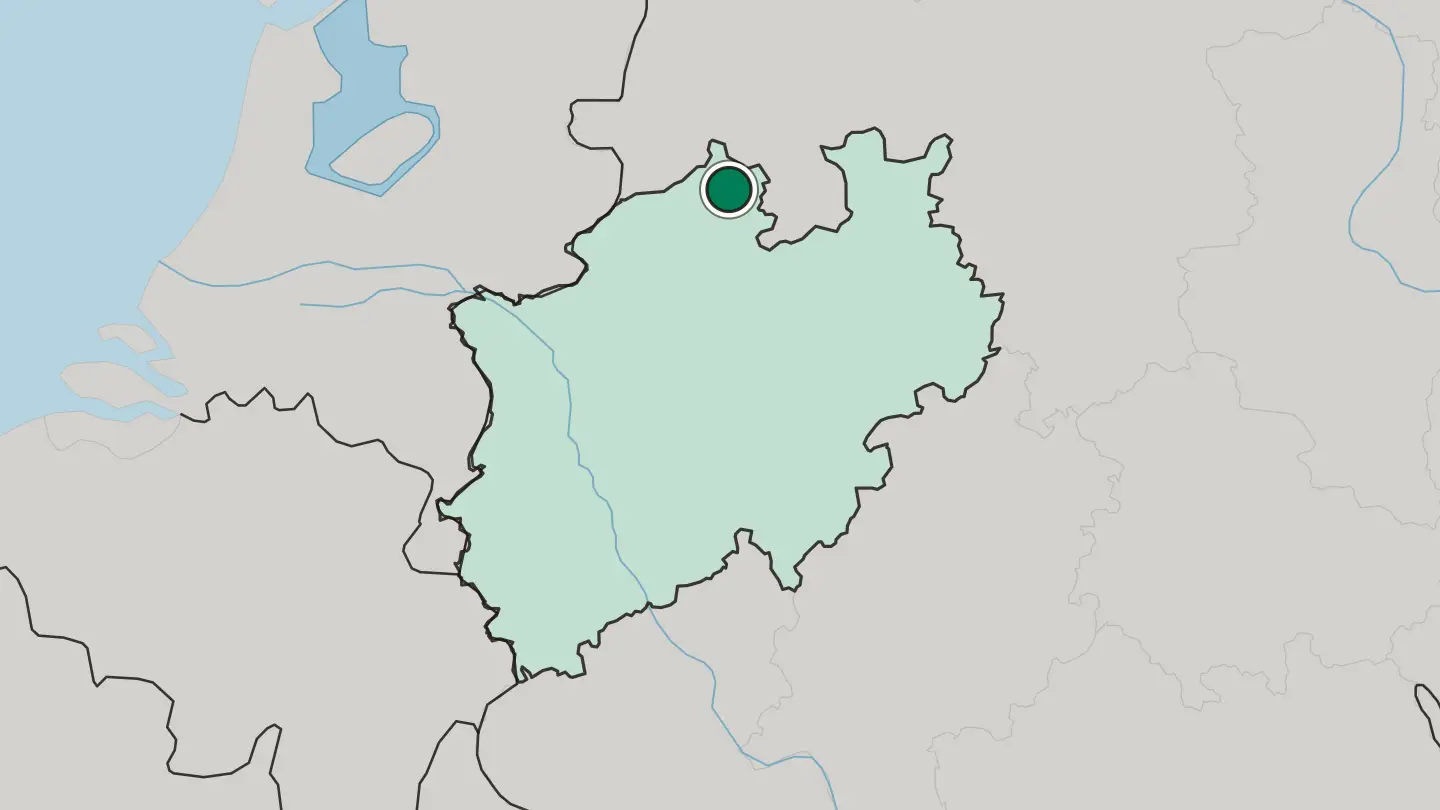 Germany
Gronau
Gronau is a Nordrhein-Westfalen town of two museums, the rock'n'popmuseum and the Drilandmuseum, with the Alter Rathausturm marking its old core.Where to stay →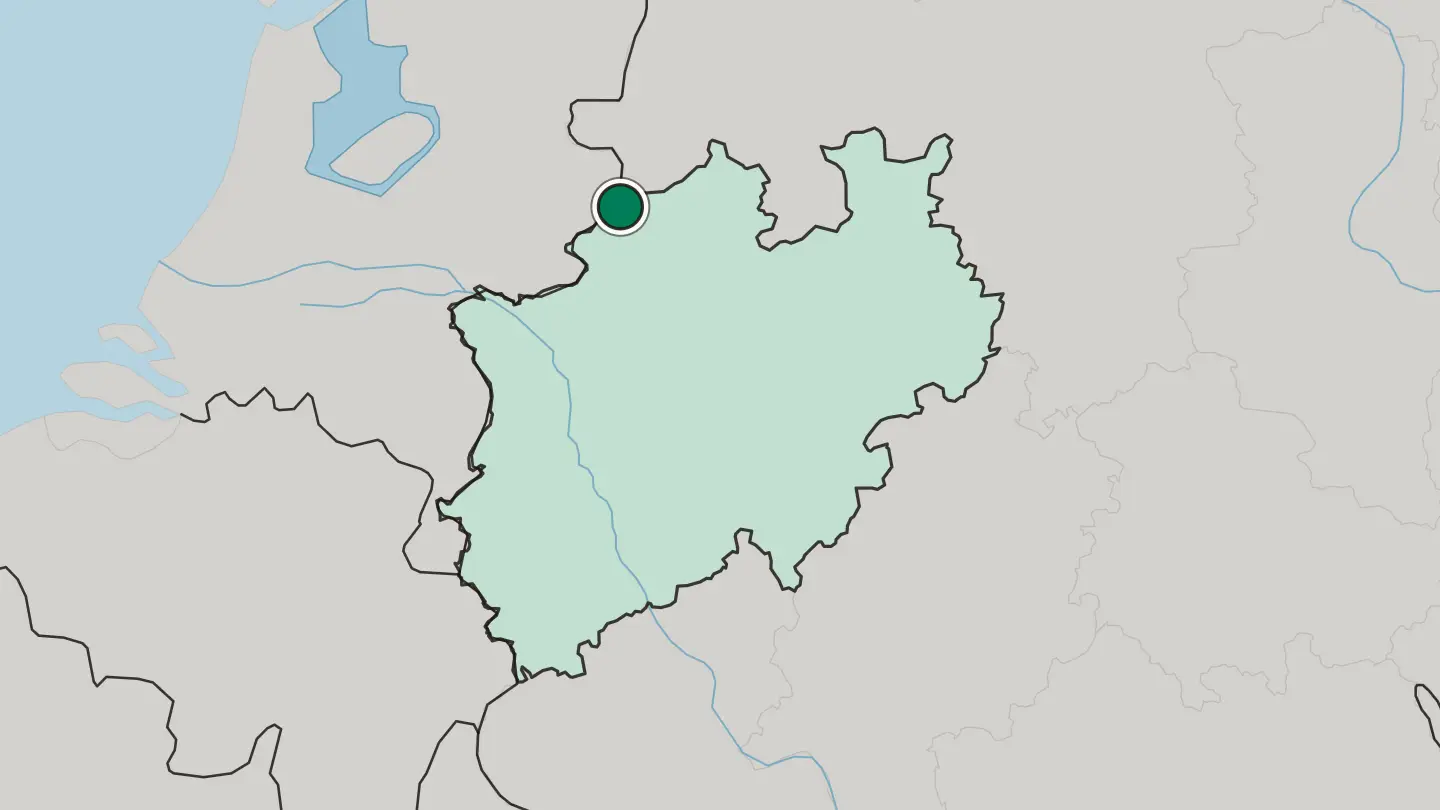
Hotel links are affiliate links: booking through them may earn us a commission, at no extra cost to you. It never affects how places are ranked. How this works
About Nordrhein-Westfalen
What is Nordrhein-Westfalen known for?
Nordrhein-Westfalen is known as Germany's industrial heartland, a state built from two old regions, Nordrhein and Westfalen. The Rhine runs through it. Its cities crowd the Ruhr Valley, once the country's great coal-and-steel belt, while green country reaches out to the Teutoburg Forest.
Industry and forest share the same state. Two lands, one name.
Where is Nordrhein-Westfalen?
Nordrhein-Westfalen is a landlocked state threaded by the river Rhine, which cuts across it from one side to the other. The Rhine orders the map. Along and across the river spreads Nordrhein, the urbanised half of the state, while Westfalen makes up the broader, greener country beyond.
It is the fourth-largest of Germany's states by area, large enough to hold both a great industrial belt and open forest. River and region shape it. Two landscapes fill the state.
The Ruhr Valley forms a dense industrial expanse, a belt where cities crowd one against the next across the old coal-and-steel ground. Away from it, the Teutoburg Forest rises green and wooded, a stretch of hills and trees that stands in complete contrast to the Ruhr. The Rhine links the two, carrying traffic and trade through the heart of the state.
Industry on one hand, forest on the other.
What is Nordrhein-Westfalen like?
Nordrhein-Westfalen's culture carries the mark of two old regions joined under one name. History split it in two. Nordrhein and Westfalen were long independent of each other, and that older divide still shows in local identity, dialect and habit across the state.
The Ruhr Valley adds a strong industrial culture of its own, shaped by generations of coal and steel. German is the common language, spoken from the Rhine cities to the villages of the Teutoburg Forest. Two heritages under one roof.
What is the history of Nordrhein-Westfalen?
Nordrhein-Westfalen was created in 1946, joining two historically separate lands into a single state. The union is younger than its parts. Nordrhein and Westfalen had each stood on its own for centuries before they were brought together after the war under one government.
The Ruhr Valley had already grown into a coal-and-steel powerhouse that drew workers from across the country. That industry helped bind the new state. Two histories, one border.
What is the climate of Nordrhein-Westfalen?
Nordrhein-Westfalen has a temperate climate, mild and damp, softened by lowland air off the Rhine. The lie of the land keeps it gentle. The Rhine valley and the Ruhr basin see mild winters and warm summers, while the higher ground toward the Teutoburg Forest runs a little cooler and wetter.
Rain is frequent year-round. Grey, mild weather prevails.
How do you get to Nordrhein-Westfalen?
Nordrhein-Westfalen is one of the best-connected German states, laced with motorways and rail across its crowded chain of cities. Routes run everywhere here. The Ruhr Valley and the Rhine cities sit within a tight web of roads and trains, so moving between centres is quick and frequent.
Being landlocked, the state has no coast, though the river Rhine carries barge traffic through its middle. The Teutoburg Forest lies a short way beyond the cities. Getting around is easy.
More regions in Germany
Updated September 2026