Spain · Cantabria
Where to Stay in Santander, Cantabria
Santander wraps a deep green bay on Spain's north coast, capital of Cantabria, known for El Sardinero, the Magdalena peninsula and the Centro Botín.
Hotel links are affiliate links: booking through them may earn us a commission, at no extra cost to you. It never affects how places are ranked. How this works


Where to stay in Santander
Where the beds are, and what that means for the visit.
Santander splits between the working city and the beach. Centro runs along the Paseo de Pereda, rebuilt after the fire of 1941 in tall arcaded blocks, and it puts the Centro Botín, the ferry berths and the Mercado de la Esperanza within a few streets of each other. Puertochico is the nicest corner of it.
The small-boat harbour there is ringed by terraces, and you can walk from a table on the quay to the Museo Marítimo del Cantábrico in ten minutes. Rooms above the arcades catch the harbour noise at first light, a fair trade for reaching everything on foot. El Sardinero is the other Santander.
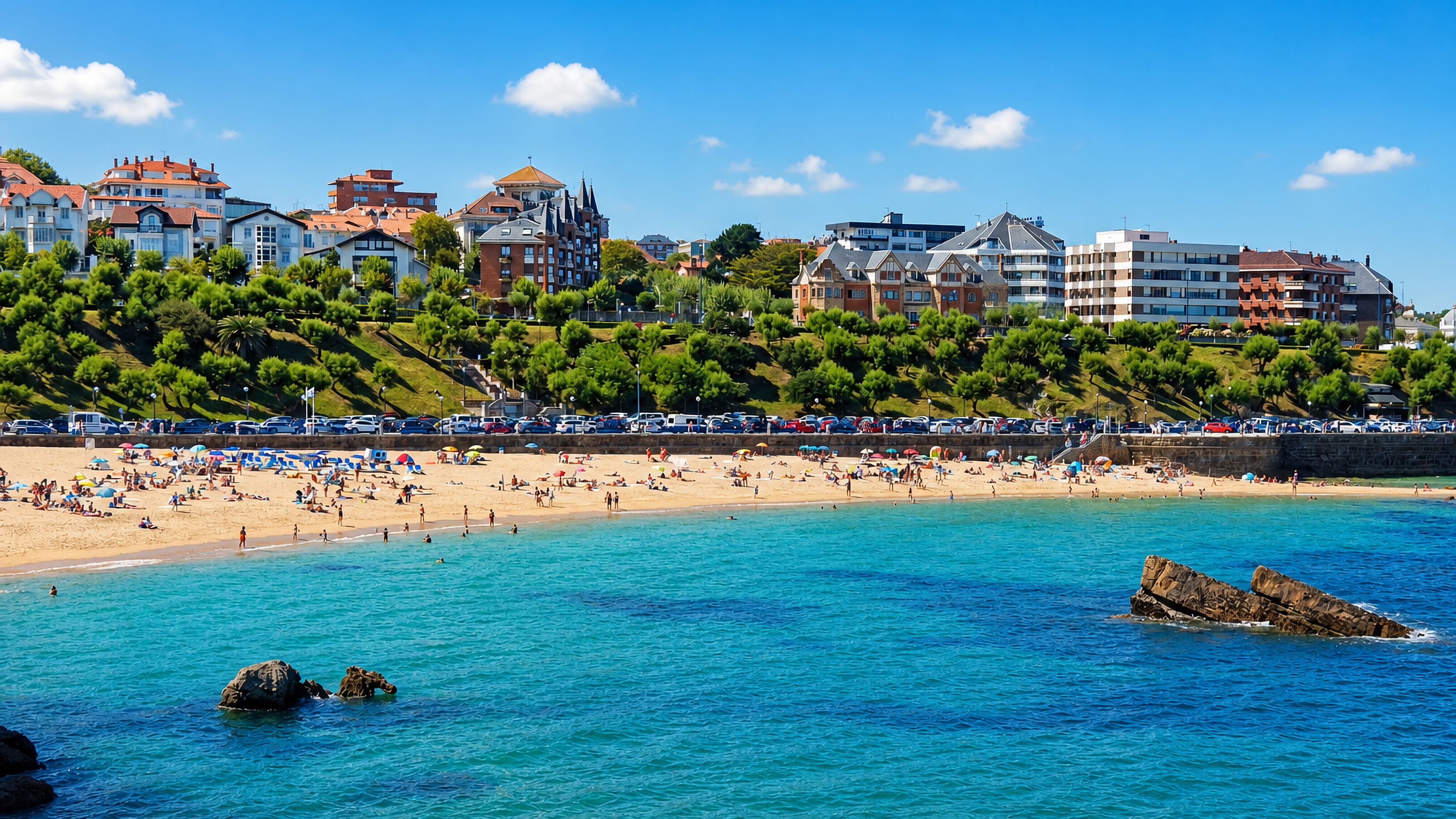
Two long beaches face open water on the far side of the headland, behind them the Gran Casino and the villas the court built, and the sand is wide enough that August never quite fills it. Half an hour on foot separates the two. Beyond the beaches the ground climbs to Cabo Mayor, where the lighthouse and the cliff path look straight out at the Cantabrian Sea, and the Magdalena peninsula closes the bay to the south with its palace and its park.
Find hotels in Santander
Direct booking searches for these neighbourhoods.
Centro
Arcaded blocks rebuilt after the 1941 fire, with the Centro Botín standing out over the waterFind hotels in CentroTerrace evenings around the small-boat harbourPuertochico
Quayside tables ten minutes on foot from the Museo Marítimo del CantábricoFind hotels in PuertochicoBeach weeks on open water behind the Gran CasinoEl Sardinero
Villa streets above two long strands, half an hour on foot from the bay sideFind hotels in El SardineroHotel links are affiliate links: booking through them may earn us a commission, at no extra cost to you. It never affects how places are ranked. How this works
Things to do in Santander
Ranked by global recognition; descriptions from Wikidata (CC0).
Museums & Galleries
3- Museo de Arte Moderno y Contemporáneo de Santander y Cantabria Heritage
- Museo de Prehistoria y Arqueología de Cantabria Heritage
- Botin Centre
Churches & Religious Sites
3- Church of Santa Lucía, Santander Heritage
- Church of San Francisco, Santander
- Church of the Sagrado Corazón, Santander
Castles & Historic Sites
3- Castillo de Corbanera Heritage
- Portus Victoriae Iuliobrigensium
- Panteón del Inglés
worth knowingacross 3 categories in Santander
About Santander
What is Santander known for?
Santander is known for El Sardinero, for the palace on the Magdalena, and for a summer that turns the bay into a stage. Royalty started it. Alfonso XIII took his court to the peninsula each August, the city built promenades and a casino to match, and the habit outlived the monarchy in the courses of the Universidad Internacional Menéndez Pelayo.
Sardines built the rest. Trade off the water raised the Naves de Gamazo over the dry dock, and Renzo Piano's Centro Botín sits on the same waterfront with the Museo Marítimo del Cantábrico a walk east.
What are the main landmarks in Santander?
Santander lost its old town to fire and rebuilt on the water. The Centro Botín stands out over the bay on Renzo Piano's steel legs, half a museum and half a pier, with the Museo Marítimo del Cantábrico and the Naves de Gamazo strung along the same shore. Older stone survives above.
The Church of Santa Lucía and the Church of the Sagrado Corazón kept their towers through the blaze, the Museo de Prehistoria y Arqueología de Cantabria holds what came out of the painted caves inland, and the Centro de Arte Faro de Cabo Mayor keeps a gallery inside the lighthouse north of the beaches.
What is the history of Santander?
Santander began as the Roman harbour of Portus Victoriae Iuliobrigensium. The fleet used the sheltered bay for the Cantabrian wars, then the harbour went quiet for centuries until a medieval charter gave the town its wool trade with Flanders. Wool paid for the abbey.
The collegiate church above the water grew into the cathedral, and the four barrios that clustered under it were the whole of Santander until the eighteenth century. America changed the scale. A royal grant opened the port to the colonial trade in 1778, quays were cut into the mud, and the merchants who prospered founded the bank that still carries the city's name.
Emigrant ships left for Cuba and Mexico from these quays through the nineteenth century, and the returns that came back built the villas above El Sardinero. Two disasters mark the modern town. The steamer Cabo Machichaco blew up at the quay in 1893 with a cargo of dynamite, and in February 1941 a south wind drove a fire through the medieval streets for two days, leaving the cathedral gutted and the old town gone.
What replaced it is the arcaded grid along the Paseo de Pereda.
Where is Santander?
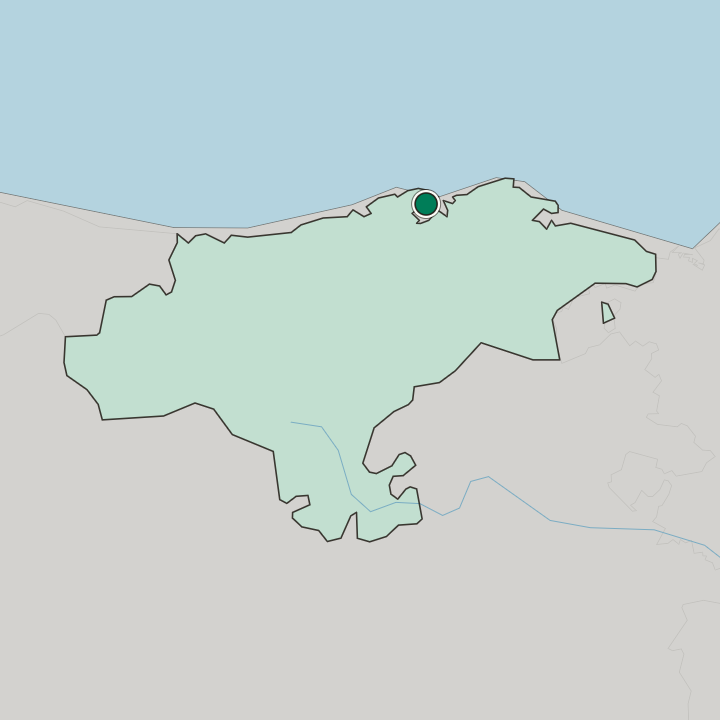
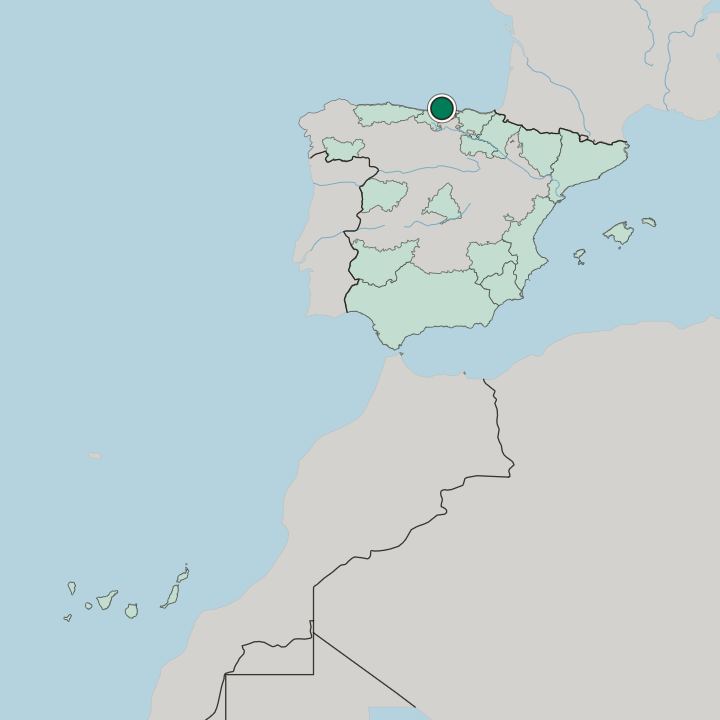
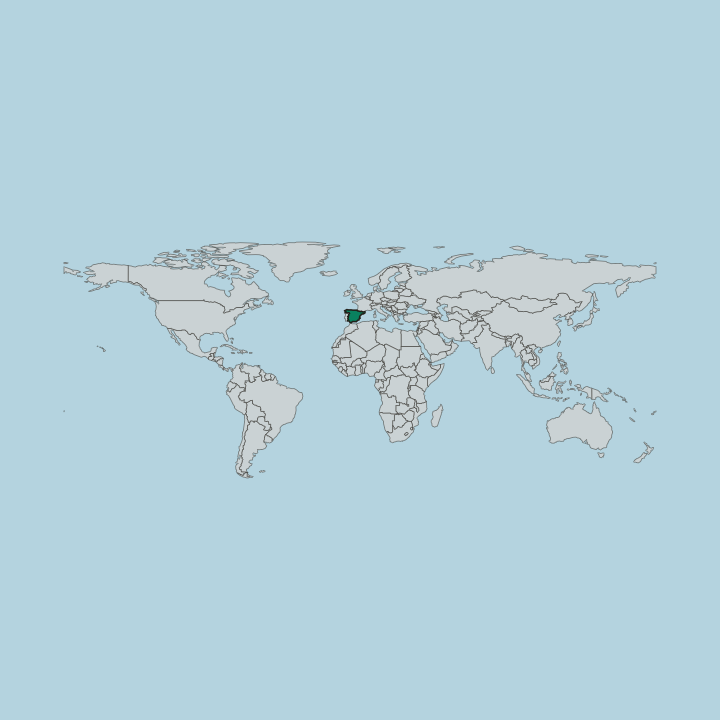
Santander stands on the north coast of Spain, on a peninsula that closes the Bay of Santander against the Cantabrian Sea. Water is on three sides. The bay behind the city is shallow and tidal, with sandbanks and the dunes of El Puntal opposite, while the open Atlantic swell breaks on the El Sardinero side of the same headland.
Inland the ground rises fast through green valleys to the limestone wall of the Picos de Europa.
What is the climate of Santander?
Santander lives under Atlantic fronts that the Picos de Europa wring dry before they clear the range. The calabobos drizzle rarely lets up. Winters stay mild and grey, summers rarely turn hot, and the green that covers Cantabria is the direct return on all that wet air off the Cantabrian Sea.
The exception is the sur, a dry south wind that pours down off the mountains, strips the humidity out of the streets and once carried a fire through the whole old town.
How do you get to Santander?
Santander is reached by ferry from Plymouth and Portsmouth, by rail from Madrid, and by the A-8 along the north coast. The ships dock beside the Paseo de Pereda, a few steps from the arcades, which makes this one of the few Spanish cities you can walk into straight off a boat. Rail is the slow way.
The line to Madrid climbs the Cordillera Cantábrica, the narrow-gauge track runs west to Oviedo and east to Bilbao along the valleys, and Parayas airport sits across the bay from the centre.
Common questions
What is the best area to stay in Santander?
Centro: Ferry arrivals who want the Paseo de Pereda outside the door. Puertochico: Terrace evenings around the small-boat harbour. El Sardinero: Beach weeks on open water behind the Gran Casino.
Good for
Another city in Cantabria
Updated October 2026