Spain · Comunidad de Madrid · Pozuelo de Alarcón
Húmera, Pozuelo de Alarcón — Area Guide & Where to Stay
Húmera is a barrio of Pozuelo de Alarcón in the Community of Madrid, Spain, and was a municipality in its own right until 1880.
Hotel links are affiliate links: booking through them may earn us a commission, at no extra cost to you. It never affects how places are ranked. How this works


Where to stay in Húmera
The practical side of choosing where to sleep.
Húmera is residential and quiet, on the western side of Madrid where Pozuelo de Alarcón meets the Casa de Campo. The old core survives inside a larger settlement. It now forms part of the population centre grouped as Húmera-Somosaguas, which puts the university campuses and the capital both within a short run.
About Húmera
What are the main landmarks in Húmera?
The sanatorio de Húmera is the building the barrio is known for, founded in 1916 as an anti-tuberculosis centre paid for by the Liga Popular contra la Tuberculosis. Much of what stood here did not survive the war. The whole area was rebuilt afterwards by the Dirección General de Regiones Devastadas, so the old core is a reconstruction of itself.
What is the history of Húmera?
Húmera goes back to the Middle Ages and belonged to the sexmo de Aravaca within the Tierra de Madrid, with its own municipal term running between Aravaca to the north, Pozuelo de Alarcón west, and the Casa de Campo east and south. It was tiny. By the middle of the nineteenth century thirty-two people lived in the villa, and Pascual Madoz described it in the ninth volume of his dictionary.
Húmera asked to be annexed to Madrid in 1877 and was refused, so on the twenty-eighth of June 1880 its council was suppressed and the place was added to Pozuelo de Alarcón instead.
Where is Húmera?
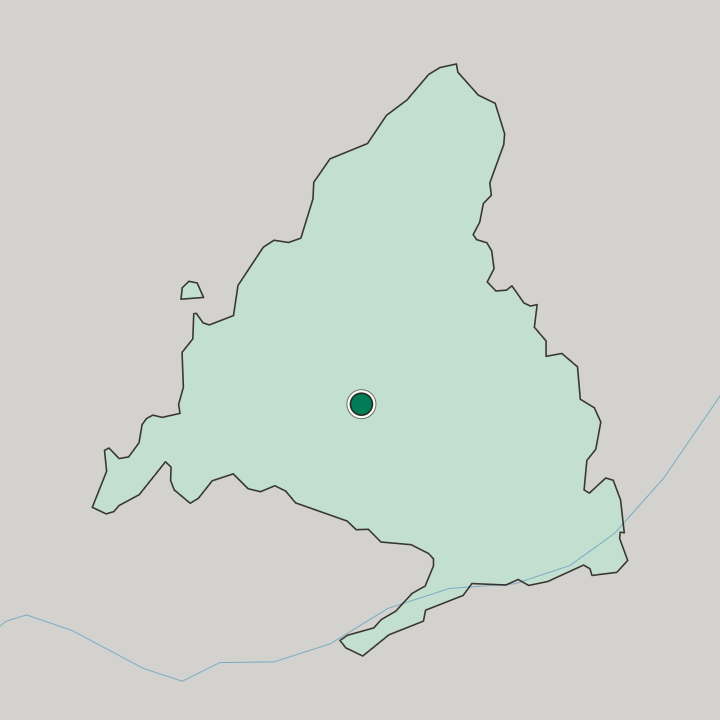
Húmera lies on the eastern edge of Pozuelo de Alarcón, against the Casa de Campo and the boundary of Madrid itself, with Aravaca to the north. Its old limits are still legible in the street pattern. The Carretera de La Coruña runs past to the north, which is what made this ground a battlefield in 1936.
Updated September 2026