Finland · Kymenlaakso
Where to Stay in Hamina, Kymenlaakso
Hamina is a fortress town in Kymenlaakso, south-eastern Finland, laid out in rings around a central octagonal square.
Find your area →


Where to stay in Hamina
The right area depends on your trip — here's what each neighbourhood is best for.
Hamina holds a compact stock of rooms within and around its ringed fortress core in Kymenlaakso, where small hotels and guesthouses sit close to the streets that circle the central octagonal square. Most visitors settle inside the fortress town. Stay inside the ramparts near the Marian kirkko and the round Apostolien Pietarin ja Paavalin kirkko, with the merchant past of the Kauppiaantalomuseo and the town story of the Haminan kaupunginmuseo within a short walk.
Everything is close here. Out toward the harbour the rooms look to the Gulf of Finland, a practical foothold for travellers passing through south-eastern Finland or touring the bastions and the RUK-museo on foot. Beds are limited in the small centre.
Visitors wanting quiet often stay out in the former Vehkalahti country near the Vehkalahden kylämuseo and the Vehkalahden kirkkomuseo, while many travellers instead sleep in the larger towns of Kymenlaakso and drive in for the day. Book ahead in summer, when the tattoo and the harbour fill the few rooms of Hamina early.
Things to do in Hamina
Ranked by global recognition; descriptions from Wikidata (CC0).
Museums & Galleries
4- RUK-museo
- Haminan kaupunginmuseo
- Kauppiaantalomuseo a museum in a former shop building
- Vehkalahden kirkkomuseo a museum displaying the history of the Saint Mary Church, former Vehkalahti Church
Churches & Religious Sites
4- Marian kirkko Heritage
- Johanneksen kirkko Heritage
- Apostolien Pietarin ja Paavalin kirkko Heritage eastern orthodox church
- Haminan hautausmaan kirkko Heritage Finnish orthodox church
worth knowingacross 2 categories in Hamina
About Hamina
What is Hamina known for?
Hamina is known for its rare concentric town plan, streets ringing the central octagonal square inside the old ramparts of Kymenlaakso. A garrison shaped it. The Reserve Officer School made the town a soldier's home, recorded now in the RUK-museo, while four churches crown the rings: the neoclassical Marian kirkko, the round Apostolien Pietarin ja Paavalin kirkko, the Johanneksen kirkko, and the Haminan hautausmaan kirkko.
What are the main landmarks in Hamina?
The ringed fortress town is itself the great landmark of Hamina, its streets curving around the central octagonal square inside earthworks raised on the frontier of Kymenlaakso. Churches mark the rings. The neoclassical Marian kirkko stands at the centre, the round Apostolien Pietarin ja Paavalin kirkko serves the Orthodox faithful, and the Johanneksen kirkko and the Haminan hautausmaan kirkko complete the set.
Museums tell the rest. The RUK-museo keeps the memory of the officer school, the Haminan kaupunginmuseo and the Kauppiaantalomuseo hold the town and merchant past, and out in the old Vehkalahti land stand the Vehkalahden kylämuseo and Vehkalahden kirkkomuseo of south-eastern Finland.
What is the history of Hamina?
Hamina was founded as a planned fortress on the eastern frontier. The town rose where the old trading place of Vehkalahti had stood, and when it was chartered in 1653 the planners gave it a radial design unlike any other Finnish town, streets ringing a central octagonal square inside ramparts meant to guard the approaches of Kymenlaakso. War tested the plan again and again.
The frontier ran close, and the fortifications were rebuilt under Swedish and then Russian rule as the border between the empires shifted along the Gulf of Finland. The garrison defined the centuries that followed. A great peace was signed in the town, and it became a seat of military schooling, the home of the Reserve Officer School whose story the RUK-museo now keeps.
Churches grew within the rings. The neoclassical Marian kirkko rose at the heart and the round Apostolien Pietarin ja Paavalin kirkko nearby, reflecting the Lutheran and Orthodox faiths of a frontier town caught between two empires. Trade prospered too.
The merchant houses grew rich on the Baltic, remembered in the Kauppiaantalomuseo, while the older country life of the absorbed Vehkalahti parish survives in the Vehkalahden kylämuseo of south-eastern Finland.
Where is Hamina?
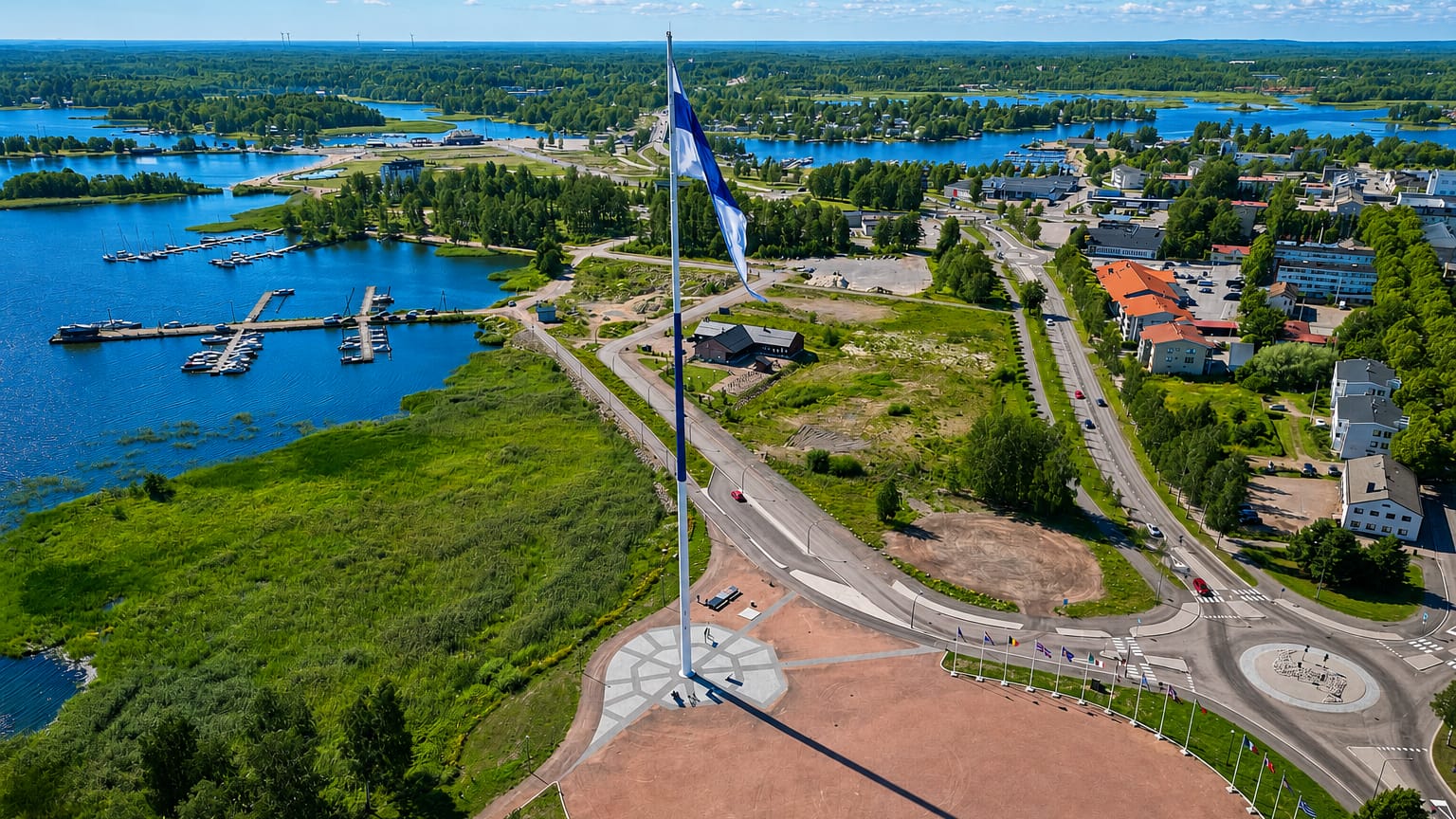
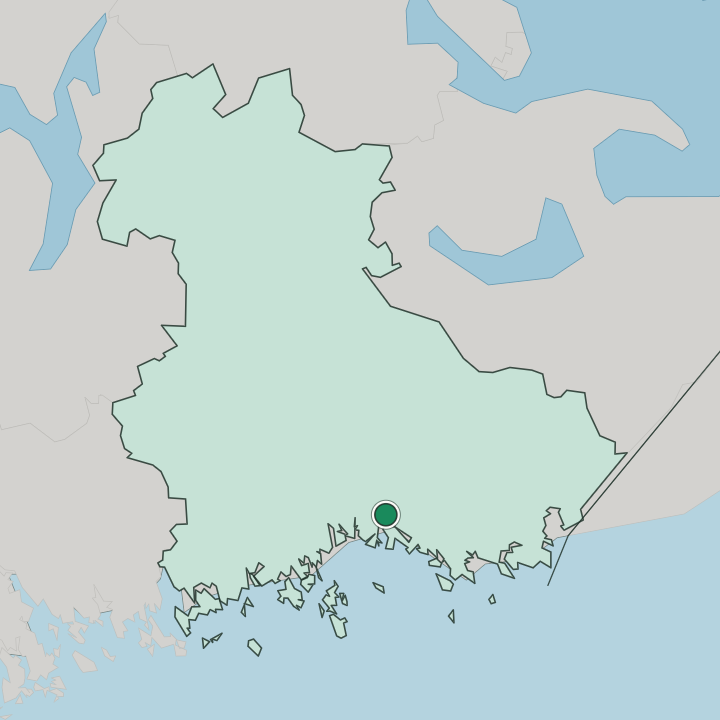
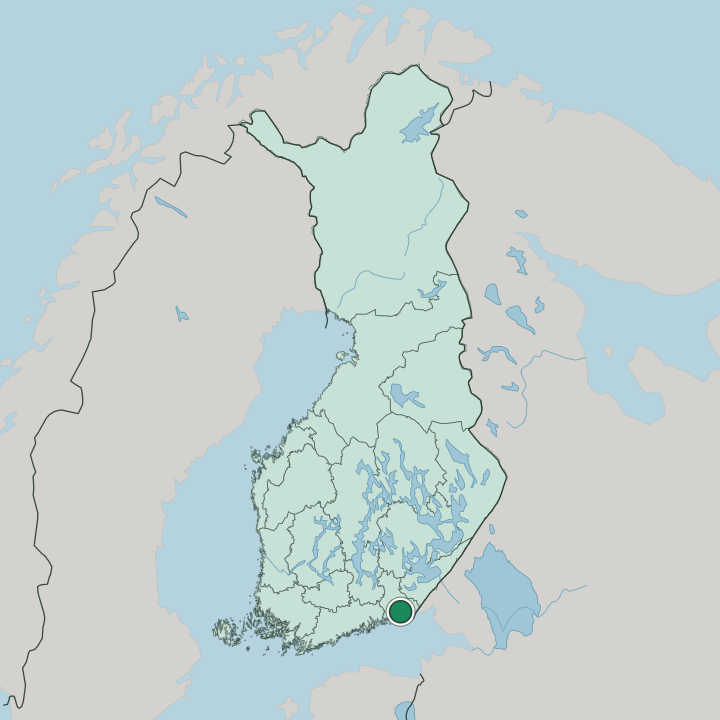
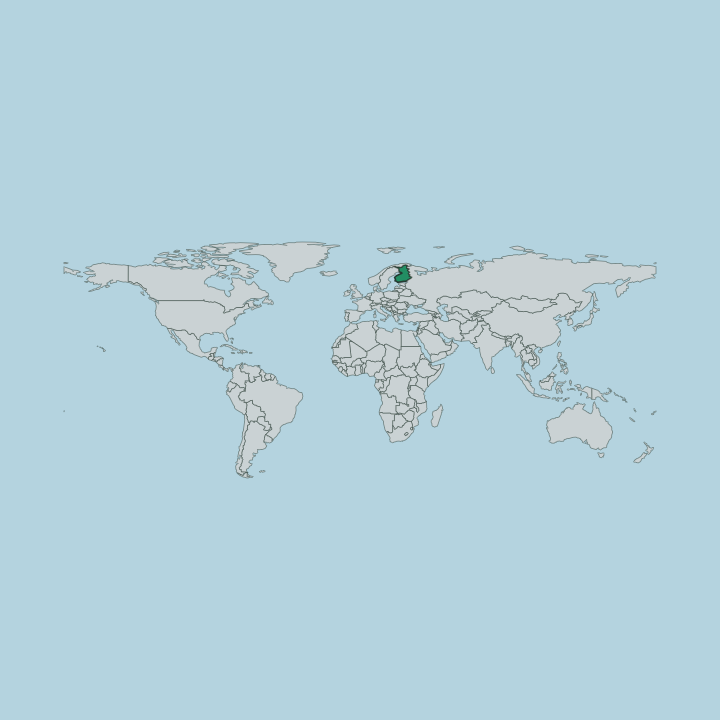
Hamina lies on the Gulf of Finland coast in eastern Kymenlaakso, in south-eastern Finland, where the town built up around a low rise above the sea. Water and frontier frame it. The ringed centre sits on its hill while a fringe of harbour and skerries opens to the Baltic and the wide bays of the coast run east toward the border.
Land spreads inland behind the rings. Forest and the old farm country of the former Vehkalahti parish surround Hamina, and the level shore of south-eastern Finland reaches out along the gulf toward the neighbouring towns of the region.
What is the climate of Hamina?
Hamina has a cold coastal climate on the Gulf of Finland, the sea moderating the chill a little over the frontier corner of Kymenlaakso. Winters are long and snowy, ice creeping out over the bays while frost grips the ringed town and the forests behind it through the dark months of south-eastern Finland. Summers are short and warmly lit.
The long northern daylight draws people to the ramparts and the shore around Hamina, the brief bright season before the cold returns again to the coast.
How do you get to Hamina?
Hamina sits on the main coastal road through south-eastern Finland, close to the regional centre and the eastern border, and access is straightforward. Buses and cars come in along the route that follows the Gulf of Finland, bringing most visitors to the ringed town and its central octagonal square. The harbour adds a sea link.
Cargo ships call at the port of Hamina, and small craft work the skerries off the coast, while the road carries travellers on from the larger towns of Kymenlaakso to the fortress and the RUK-museo.
Good for
More cities in Kymenlaakso
Updated September 2026