United Kingdom · Northern Ireland
Where to Stay in Derry, Northern Ireland
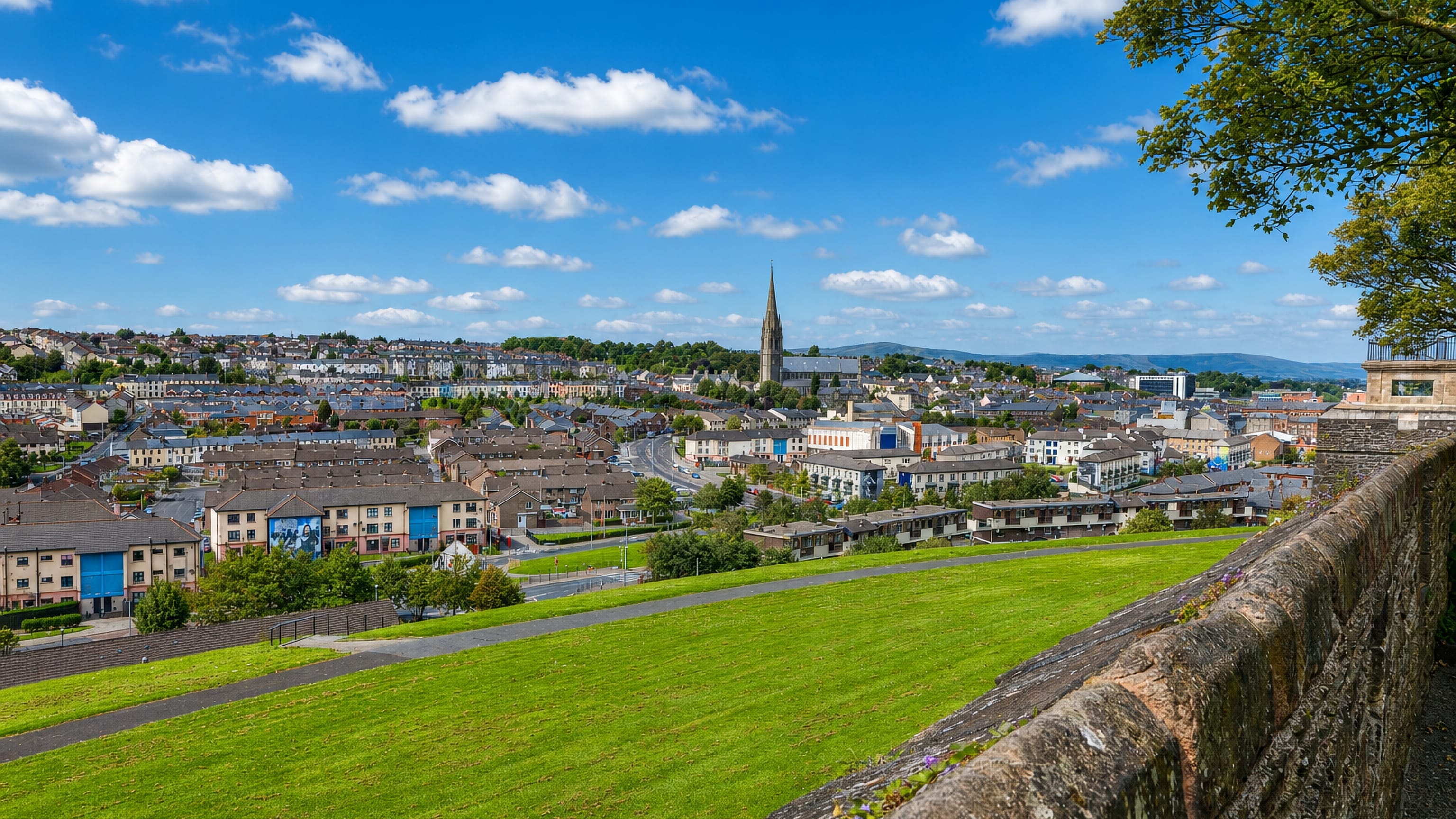
The River Foyle divides Derry, a walled city in Northern Ireland also known as Londonderry, known for its ramparts and the Museum of Free Derry.
Hotel links are affiliate links: booking through them may earn us a commission, at no extra cost to you. It never affects how places are ranked. How this works


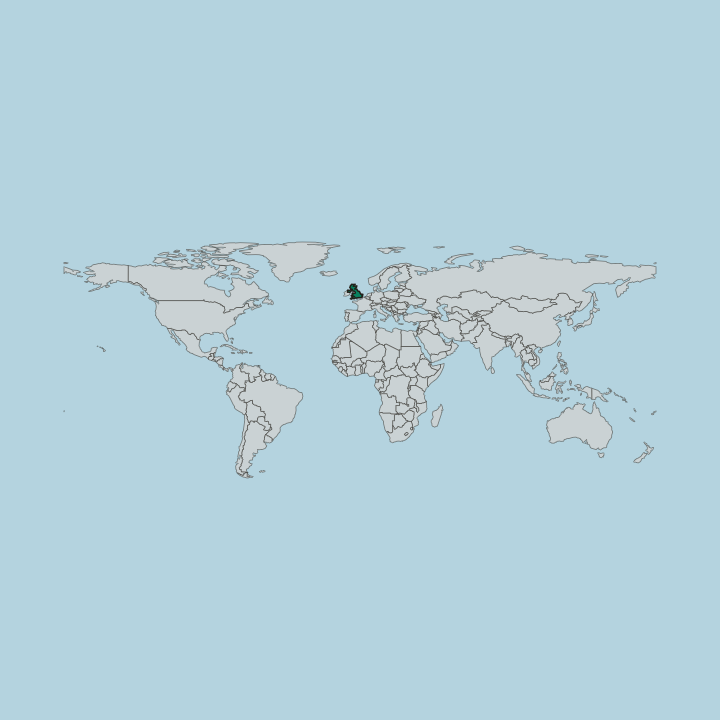
Where to stay in Derry
How the choice of base plays out on the ground.
Derry stands on both banks of the River Foyle in Northern Ireland, and where you stay depends on which side of the river you want at your feet. Cityside, on the west bank, holds the old walled city, walking distance from the Tower Museum and the ramparts, with most of the city's larger hotels within reach of the centre. Stay on Cityside first.
From here the walls enclose the streets, and the slopes below run down toward Free Derry Corner and the Museum of Free Derry. St Columba's Church and St. Augustine's Church stand within or beside the walls nearby. Waterside, across the river on the east bank, offers a quieter base among the older streets, with All Saints Clooney Parish Church and the Waterside Presbyterian Church close at hand.
Choose your bank by your plans. Cityside suits a first visit near the ramparts and the museums, while Waterside suits those who want the calmer streets across the water near St. Columb's Park House and Prehen House. Ebrington, the former barracks square on the Waterside, opens onto the riverfront.
Bridges link the two banks across the River Foyle that runs through the heart of the city.
Things to do in Derry
Ranked by global recognition; descriptions from Wikidata (CC0).
Museums & Galleries
3- Museum of Free Derry
- Tower Museum
- St Columba Heritage Centre
Churches & Religious Sites
8- St Columba's Church Heritage
- Artillery Street Theatre Heritage
- First Derry Presbyterian Church Heritage
- St. Augustine's Church Heritage
- All Saints Clooney Parish Church Heritage
Show 3 more →
- Ebrington Presbyterian Church Heritage
- Tower Hall Heritage
- Waterside Presbyterian Church Heritage
Castles & Historic Sites
1- Free Derry Corner
Stadiums & Sports
1- Celtic Park
Landmarks & Notable Places
8- Prehen House Heritage
- 6 Shipquay Street Heritage
- 9 Bond's Hill Heritage
- Ballynacross Heritage
- Bay View House Heritage
Show 3 more →
- Former Londonderry Fire Station Heritage
- Gaol Tower Heritage
- Hertford Heritage
worth knowingacross 5 categories in Derry
About Derry
What is Derry known for?
Derry is known as the second-largest city in Northern Ireland, a walled city on the River Foyle also called Londonderry. Its ramparts still stand whole. The Tower Museum and the Siege Museum hold its long story, while the Museum of Free Derry keeps the record of the Cityside slopes.
St Columba's Church carries the name of the saint tied to the city's origins. The Foyle Valley Railway Museum recalls the lines that once crossed the river.
What are the main landmarks in Derry?
Derry's landmarks gather along the walls and both banks of the River Foyle. The Tower Museum and the Siege Museum stand within the old walled city, near St Columba's Church and St. Augustine's Church. Free Derry Corner marks the slopes below.
The Museum of Free Derry sits close by, while the Foyle Valley Railway Museum keeps the railway record, and across the water Prehen House and St. Columb's Park House stand on the Waterside. Celtic Park lies west of the centre.
What is the history of Derry?
Derry began as a monastic settlement on the west bank of the River Foyle, its name carrying the memory of the oak grove where the community of St Columba took root. The St Columba Heritage Centre records those early centuries. The walled city rose much later.
In the early seventeenth century the great ramparts were raised around the streets on the higher ground, enclosing a planned town above the river, and the name Londonderry came into official use alongside the older Derry. The Siege Museum tells of the long siege the walls withstood in 1689. The city spread across both banks as it grew, and bridges were thrown over the River Foyle to join Cityside and the Waterside.
Rail came too. The Foyle Valley Railway Museum keeps the record of the lines that once served the crossings and the docks, while the twentieth-century history of the Cityside slopes is gathered at the Museum of Free Derry near Free Derry Corner. On the Waterside, Prehen House and the barracks square at Ebrington stand from the city's later expansion.
The grown city spans the river it rose beside, a walled place set on the border country of Northern Ireland.
Where is Derry?
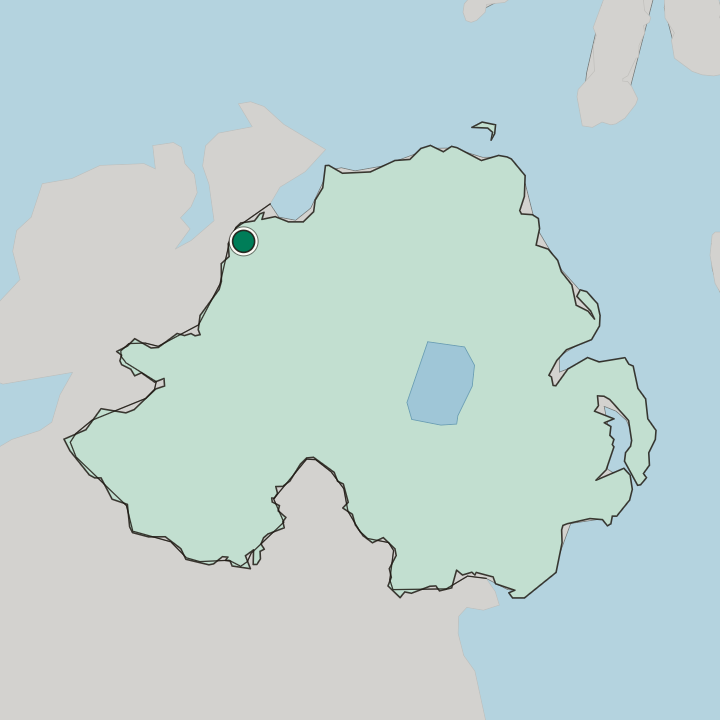
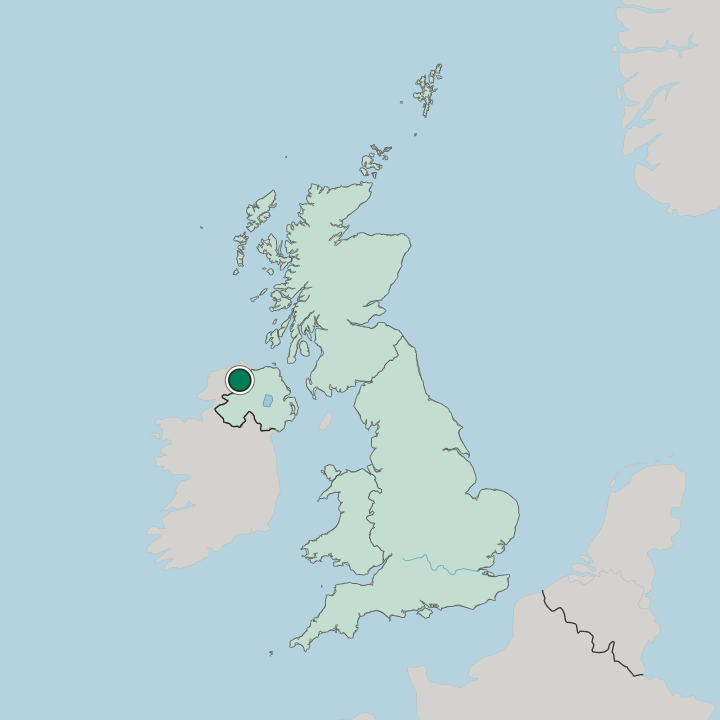
Derry stands on the River Foyle in the north-west of Northern Ireland, close to the border with County Donegal in the Republic of Ireland. The city covers both banks of the river. Water splits it in two.
Cityside and the old walled centre sit on the west bank, while the Waterside spreads across the east, joined by bridges over the Foyle. Beyond the built-up area the estuary opens northward toward the sea.
What is the climate of Derry?
Derry has a mild, wet oceanic climate shaped by the Atlantic and the estuary of the River Foyle. Winters are cool and damp, with rain rolling in off the sea and low cloud over the border country toward County Donegal. Summers are cool and green.
Rain falls through every season. When the clear days come, the river and the hills across the Foyle stand out sharply under a wide northern sky.
How do you get to Derry?
Derry is reached by air, rail, and road across the north-west of Northern Ireland. Its airport lies east of the city, out beyond the Waterside. Trains run along the coast.
The line follows the shore toward the wider region, and roads cross the River Foyle by the city bridges and run on across the border toward County Donegal in the Republic of Ireland.
Good for
More cities in Northern Ireland
Updated October 2026