United Kingdom · Northern Ireland
Where to Stay in Belfast, Northern Ireland
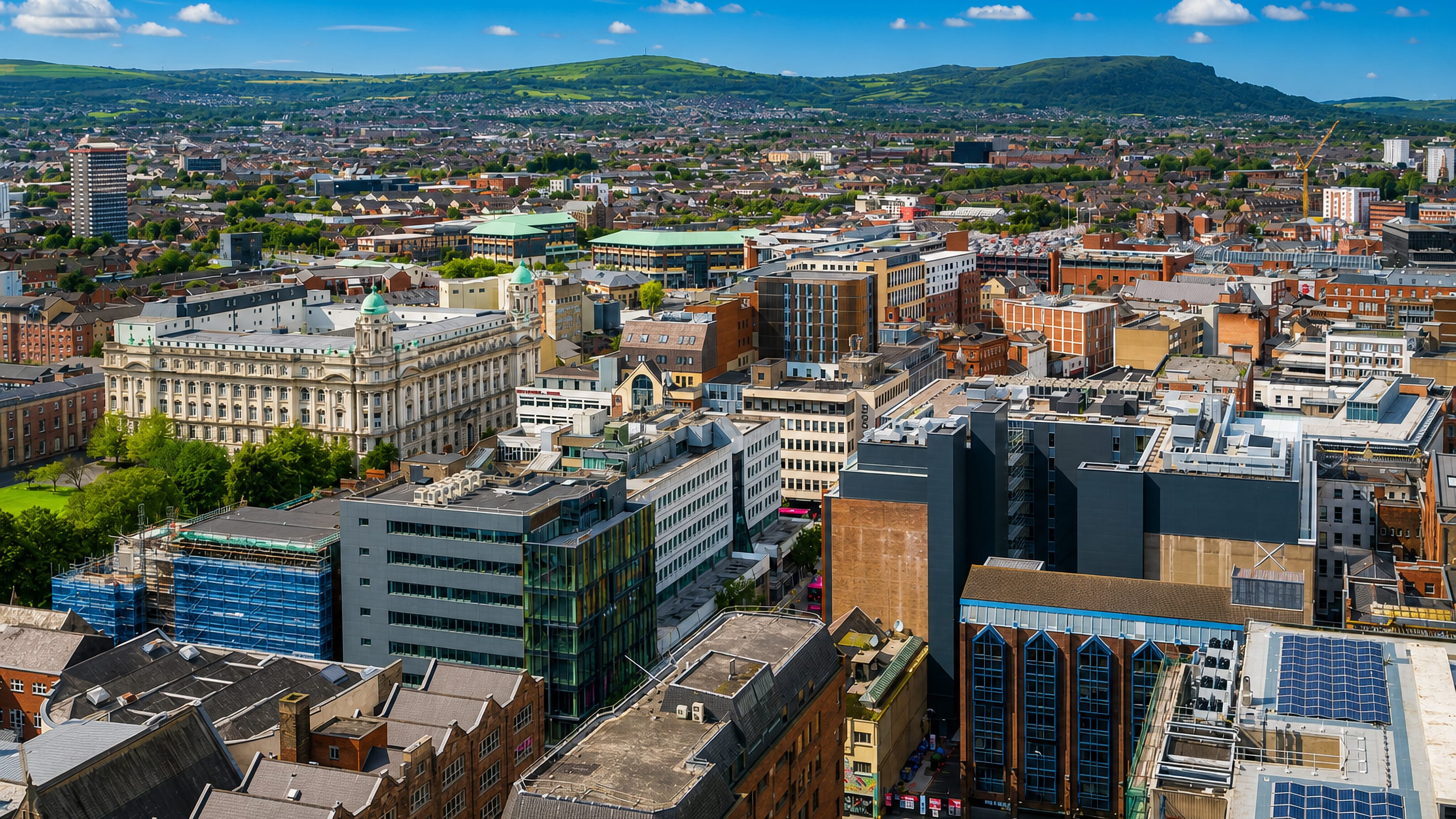
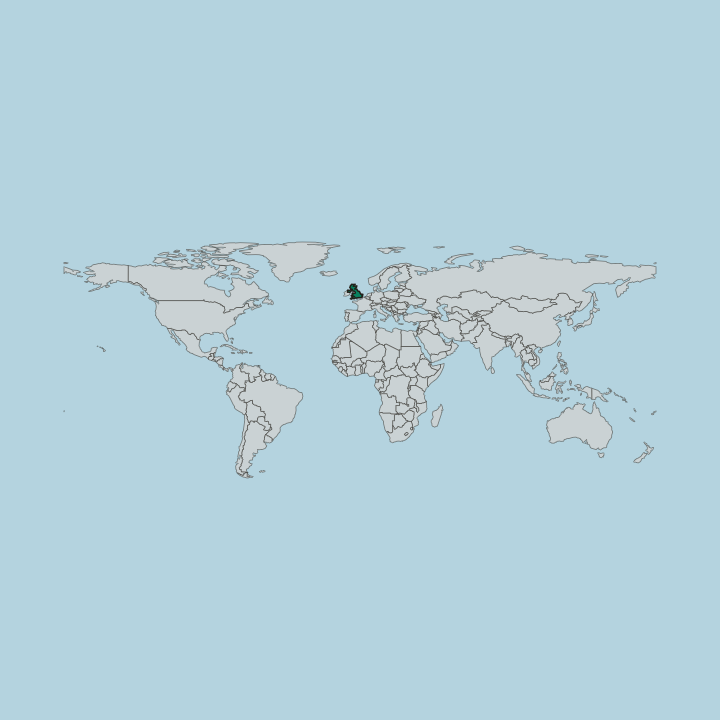
Belfast is the capital of Northern Ireland, a port city on the River Lagan, opening to the sea through Belfast Lough.
Hotel links are affiliate links: booking through them may earn us a commission, at no extra cost to you. It never affects how places are ranked. How this works


Where to stay in Belfast
Each area has its own feel; here's who each one suits.

 BelfastUnited Kingdom
Belfast city centre
Belfast city centre is the central business district of Belfast, gathered around the Albert Memorial Clock and Donegall Place.Where to stay →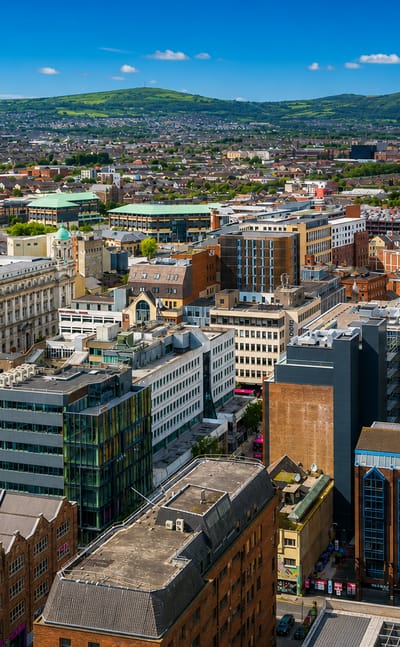 BelfastUnited Kingdom
Cathedral Quarter
Cathedral Quarter is Belfast's compact cultural district, a lattice of cobbled lanes and warehouses ringing the cathedral that gives it its name.Where to stay →BelfastUnited KingdomGolden Mile
The Golden Mile is Belfast's commercial and entertainment spine, running from the Linen Hall toward Queen's.Where to stay →BelfastUnited KingdomShort Strand
Short Strand is a small nationalist enclave of Belfast on the east bank of the River Lagan, a short walk from the city centre.Where to stay →BelfastUnited KingdomNew Lodge
New Lodge is a residential neighbourhood of North Belfast, strung along the New Lodge Road off the Antrim Road.Where to stay →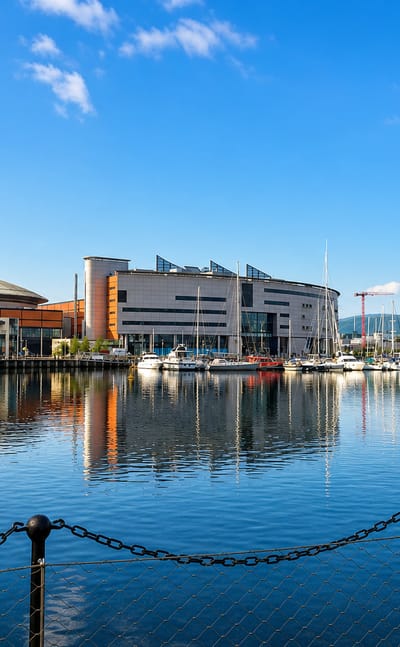 BelfastUnited Kingdom
Titanic Quarter
Titanic Quarter reclaims the Harland & Wolff shipyard on Queen's Island, the Belfast slipways where the Titanic itself was built and launched.Where to stay →BelfastUnited KingdomGaeltacht Quarter
The Gaeltacht Quarter is the Irish-language district of west Belfast, set along the Falls Road near Clonard Monastery.Where to stay →Hotel links are affiliate links: booking through them may earn us a commission, at no extra cost to you. It never affects how places are ranked. How this works
Find hotels in Belfast
Direct booking searches for these neighbourhoods.
City centre
Around the Albert Memorial Clock and The Linen Hall, closest to the shops, the stations and St George's Church.Find hotels in City centrethe maritime and Titanic storyThe waterfront
The old shipyards on the Lagan around Titanic Belfast, the SS Nomadic, HMS Caroline and the Belfast Wheel.Find hotels in The waterfronta quieter, greener base near the museumsAround Queen's
South of the centre by the Ulster Museum and The Naughton Gallery at Queen's, in the university streets.Find hotels in Around Queen'sHotel links are affiliate links: booking through them may earn us a commission, at no extra cost to you. It never affects how places are ranked. How this works
Things to do in Belfast
Ranked by global recognition; descriptions from Wikidata (CC0).
Museums & Galleries
3- HM Prison Crumlin Road Heritage
- Ulster Museum
- Irish Republican History Museum
Churches & Religious Sites
8- Clonard Monastery Heritage
- St Marks Church Heritage
- St. Mary's Church, Belfast Heritage
- St George's Church, Belfast Heritage
- St. Thomas' Church Heritage
Show 3 more →
- Holy Cross Church, Ardoyne Heritage
- Cooke Centenary Presbyterian Church, Belfast Heritage
- Iglesia NI Cristo Church, Belfast Heritage
Castles & Historic Sites
2- No Pasaran sculpture
- William Conor statue
Stadiums & Sports
2- Odyssey Arena
- Corrigan Park
Landmarks & Notable Places
2- Fernhill House Heritage
- Albert Memorial Clock
worth knowingacross 5 categories in Belfast
About Belfast
What is Belfast known for?
Belfast is the capital and largest city of Northern Ireland, and its main port. Its name was made by ships. The yards on the River Lagan built the Titanic, a story told at Titanic Belfast and the Titanic Memorial, with the tender SS Nomadic preserved nearby.
Linen made the city too, a trade remembered at The Linen Hall. Belfast is the second-largest city on the island of Ireland. The Albert Memorial Clock still leans over the streets near the harbour water.
What are the main landmarks in Belfast?
Belfast's landmarks cluster around the water and the old centre. Titanic Belfast rises over the former shipyards on the River Lagan, with the SS Nomadic and the warship HMS Caroline moored close by. In the centre, the Albert Memorial Clock and St George's Church stand among the older streets, and The Linen Hall keeps the memory of the linen trade.
The Ulster Museum holds the city's art and history. The Belfast Wheel once turned above it all.
What is the history of Belfast?
Belfast has no single founding date on record; it grew instead as a port and a factory town. The River Lagan and Belfast Lough gave it a harbour open to the sea, and industry did the rest. Linen came first.
The linen trade built much of the old city, a story The Linen Hall still keeps. Then came the shipyards, whose slipways on the Lagan launched the Titanic and made the city known for building ships. Both trades leaned on the water at the city's feet.
In the twentieth century Belfast became the capital of Northern Ireland, the new country formed in 1921 on the north-east of the island of Ireland. The later part of that century was a troubled one for the city. Those hard years are past.
Reconciliation and renewal have shaped the decades that followed. Belfast has turned back toward its river and its harbour, and the old shipyards carry Titanic Belfast and the restored SS Nomadic. The second-largest city on the island of Ireland draws travellers to that heritage as much as it ever drew trade.
Where is Belfast?
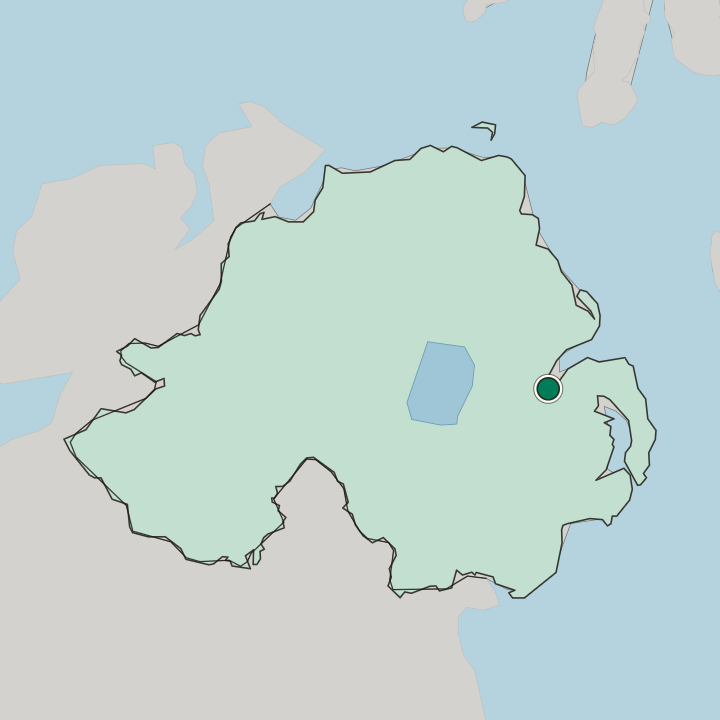
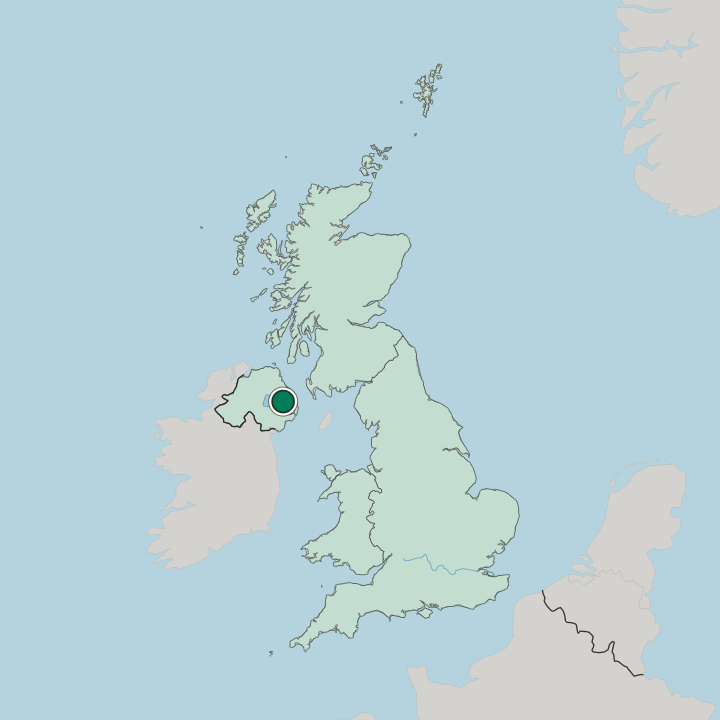
Belfast stands at the head of Belfast Lough, on the River Lagan, in the north-east of the island of Ireland. The Lagan runs through the middle of the city and out into the Lough, which opens through the North Channel to the open sea. Most of Belfast lies west of the river in County Antrim, with about a third on the east bank in County Down.
The river ties the two together. Water is never far off.
What is the climate of Belfast?
Belfast has a mild, damp climate. The sea at the head of Belfast Lough softens it, holding off the sharpest cold in winter and the real heat in summer, so the year keeps to a narrow, temperate band. Rain is frequent, carried in off the water in any season.
Cloud comes and goes quickly. Bright spells break through between the showers over the River Lagan.
How do you get to Belfast?
Getting to Belfast is straightforward. As Northern Ireland's main port, it takes ferries up Belfast Lough and in through the North Channel from the open sea. Flights land just outside the city, and roads and rail run out across Northern Ireland from the centre.
South over the open border, the Republic of Ireland is close. From the River Lagan, the rest of the island of Ireland is within a short drive by road.
Common questions
What is the best area to stay in Belfast?
City centre: first-time visitors who want to walk everywhere. The waterfront: the maritime and Titanic story. Around Queen's: a quieter, greener base near the museums.
Good for
More cities in Northern Ireland
Updated September 2026