United Kingdom · Northern Ireland
Where to Stay in Lisburn, Northern Ireland
Lisburn is a cathedral city on the River Lagan in Northern Ireland, the old heart of the Irish linen trade near Belfast.
Hotel links are affiliate links: booking through them may earn us a commission, at no extra cost to you. It never affects how places are ranked. How this works


Where to stay in Lisburn
How the choice of base plays out on the ground.
Where you stay in Lisburn turns on the old town or the river. The streets around the market square keep the cathedral, the linen centre, and the shops within a walk, and staying downtown suits anyone here for the city. The Lagan runs past the town.
Old spires rise over the streets. Out along the Lagan toward Belfast, the valley gives way to towpaths, bleach-greens, and river parks. A room by the river trades the centre for the canal walks, the old villages, and the green country of the Lagan.
The river winds on to the sea. Stay downtown for the linen centre, or by the river for the walks. The town lies a short way up.
Find hotels in Lisburn
Direct booking searches for these neighbourhoods.
The old town
Around the market square by the LaganFind hotels in The old townStays wanting the canal walks and villagesThe riverside
Along the Lagan toward BelfastFind hotels in The riversideHotel links are affiliate links: booking through them may earn us a commission, at no extra cost to you. It never affects how places are ranked. How this works
Things to do in Lisburn
Ranked by global recognition; descriptions from Wikidata (CC0).
Museums & Galleries
1- Irish Linen Centre and Lisburn Museum
Churches & Religious Sites
4- Christ Church of Ireland Heritage
- Lambeg Parish Church Heritage
- Christ Church Heritage
- Railway Street Presbyterian Church Heritage
Landmarks & Notable Places
8- 1 Glenmore Terrace Heritage
- 13 Victoria Crescent Heritage
- 2 Glenmore Terrace Heritage
- 20 Seymour Street Heritage
- 214 Hillhall Road Heritage
Show 3 more →
- 22 Pond Park Road Heritage
- 24 Railway Street Heritage
- 29 Church Hill Heritage
worth knowingacross 3 categories in Lisburn
About Lisburn
Lisburn is the linen city of the Lagan.
What is Lisburn known for?
On the river a short way up from Belfast, it grew as the centre of the Irish linen trade under weavers who fled here from France, and it keeps a small cathedral above the river, a linen museum in its old market house, the memory of the Huguenot masters, and the villages of the Lagan valley where the cloth was bleached and drummed. The river runs down to Belfast. Old mills line the Lagan.
What are the main landmarks in Lisburn?
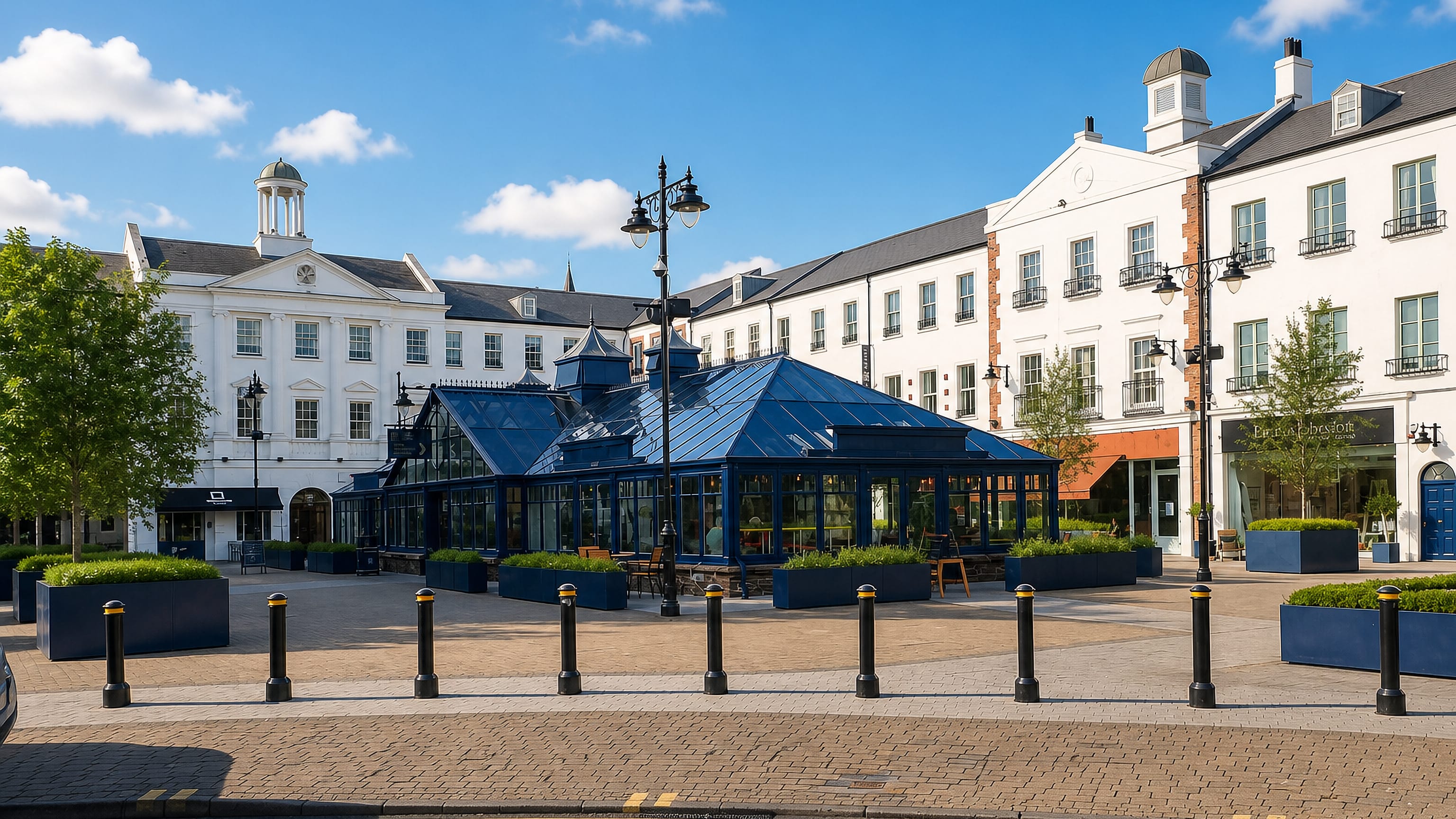
The old market house holds the linen museum at the heart of Lisburn. The fine stone assembly rooms on the market square, now the Irish Linen Centre, keep the story of the trade, the emblem of the city, in the centre. A small cathedral stands above.
The Christ Church cathedral rises over the river nearby, while the Huguenot graves, the old bleach-greens, and the Lagan canal mark the country around Lisburn.
What is the history of Lisburn?
Lisburn was made by the linen trade. When Huguenot weavers fled France for Ireland at the end of the seventeenth century, their master Crommelin settled here and set the whole Lagan valley to spinning and weaving flax, and the town became the heart of the Irish linen industry. Linen made the town.
The bleach-greens and mills of the valley turned out the finest cloth in the land, sold under the name of Irish linen across the world. Fire and growth remade the town. A great fire burned the old town to the ground in the early eighteenth century, and it was rebuilt around its market house and its small cathedral, growing on the linen trade through the years.
Belfast rose beside it. As the great city grew downstream, Lisburn became part of its wider country, but it kept its cathedral, its linen museum, and the drums and bleach-greens of the Lagan. The river still runs to Belfast.
Lisburn keeps its cathedral and its linen story on the Lagan.
Where is Lisburn?
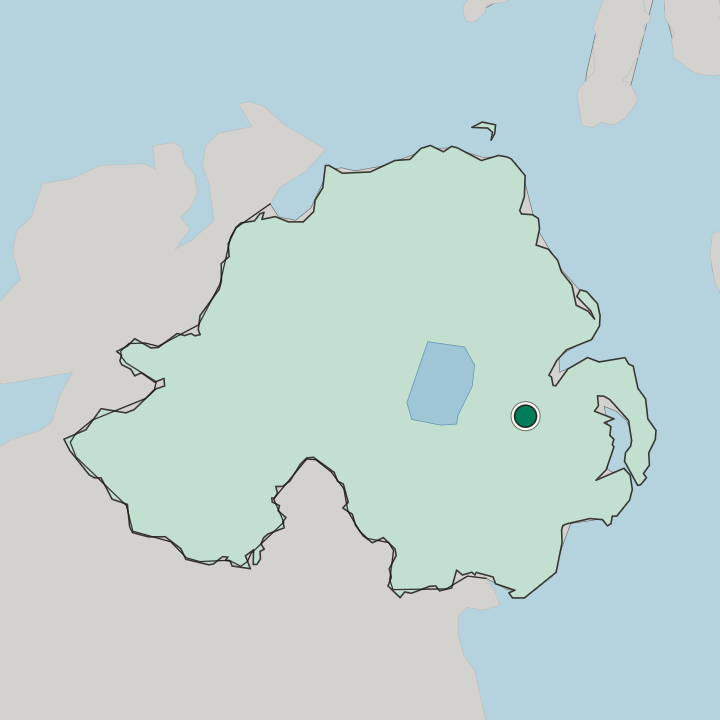
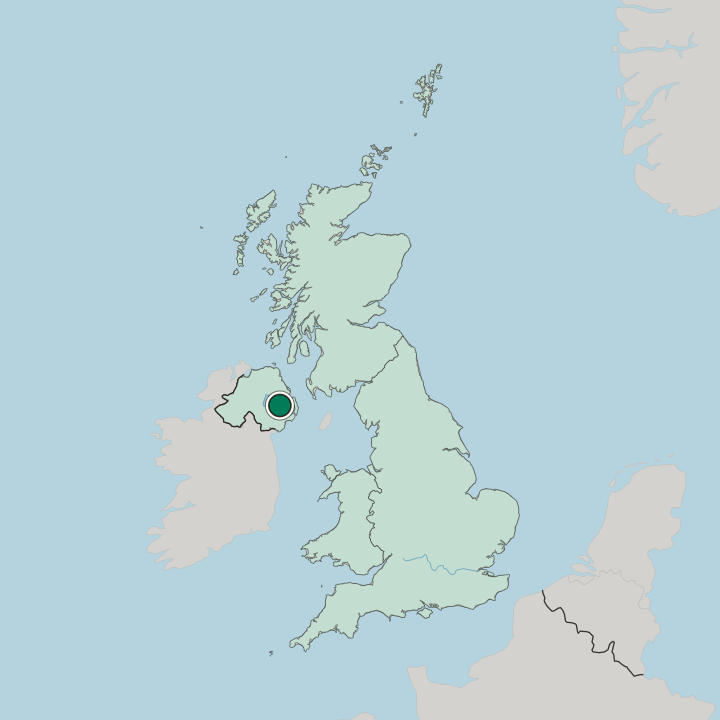
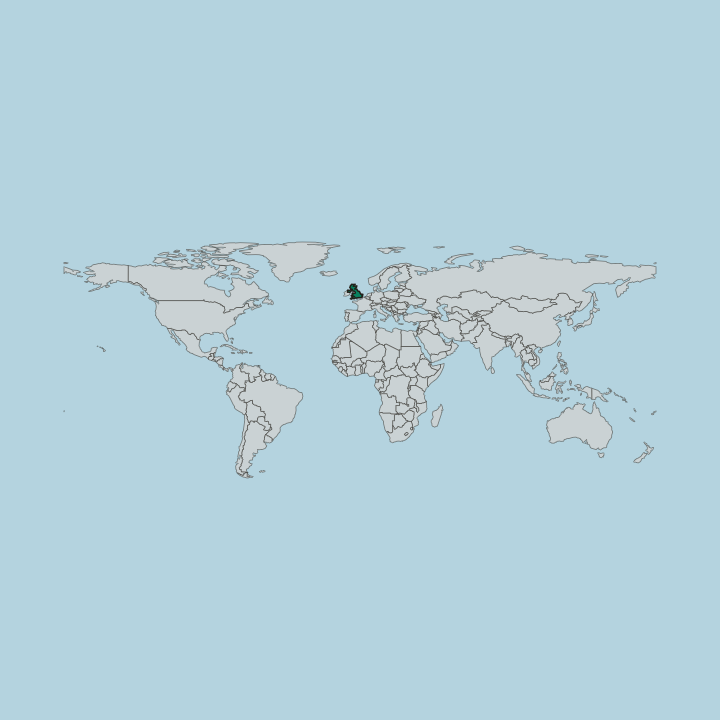
Lisburn lies in Northern Ireland, on the River Lagan a short way southwest of Belfast. The city sits in the green valley of the Lagan where the river runs down toward the sea and the great city, in a country of low hills and old bleach-greens, with the Belfast hills rising to the northeast. Low green hills roll around.
The river winds down to Belfast.
What is the climate of Lisburn?
Lisburn has a mild, damp maritime climate. Cool summers and soft winters cross the valley, kept mild by the Atlantic, with rain spread through the year and green fields all season. Grey skies hang over the hills.
The rivers stay full year round.
How do you get to Lisburn?
Lisburn lies in Northern Ireland, on the main road and rail southwest of Belfast. Trains and the motorway run to it up the Lagan from Belfast in minutes, and roads run on to Armagh. Towpaths follow the old canal.
Belfast lies northeast down the river.
Common questions
What is the best area to stay in Lisburn?
The old town: Visitors here for the cathedral and linen centre. The riverside: Stays wanting the canal walks and villages.
Good for
More cities in Northern Ireland
Updated September 2026