Italy · Marche
Where to Stay in Fano, Marche
Fano is an Adriatic fishing port and beach town in Marche, at the point where the Via Flaminia comes down to the sea.
Hotel links are affiliate links: booking through them may earn us a commission, at no extra cost to you. It never affects how places are ranked. How this works


Where to stay in Fano
The practical side of choosing where to sleep.
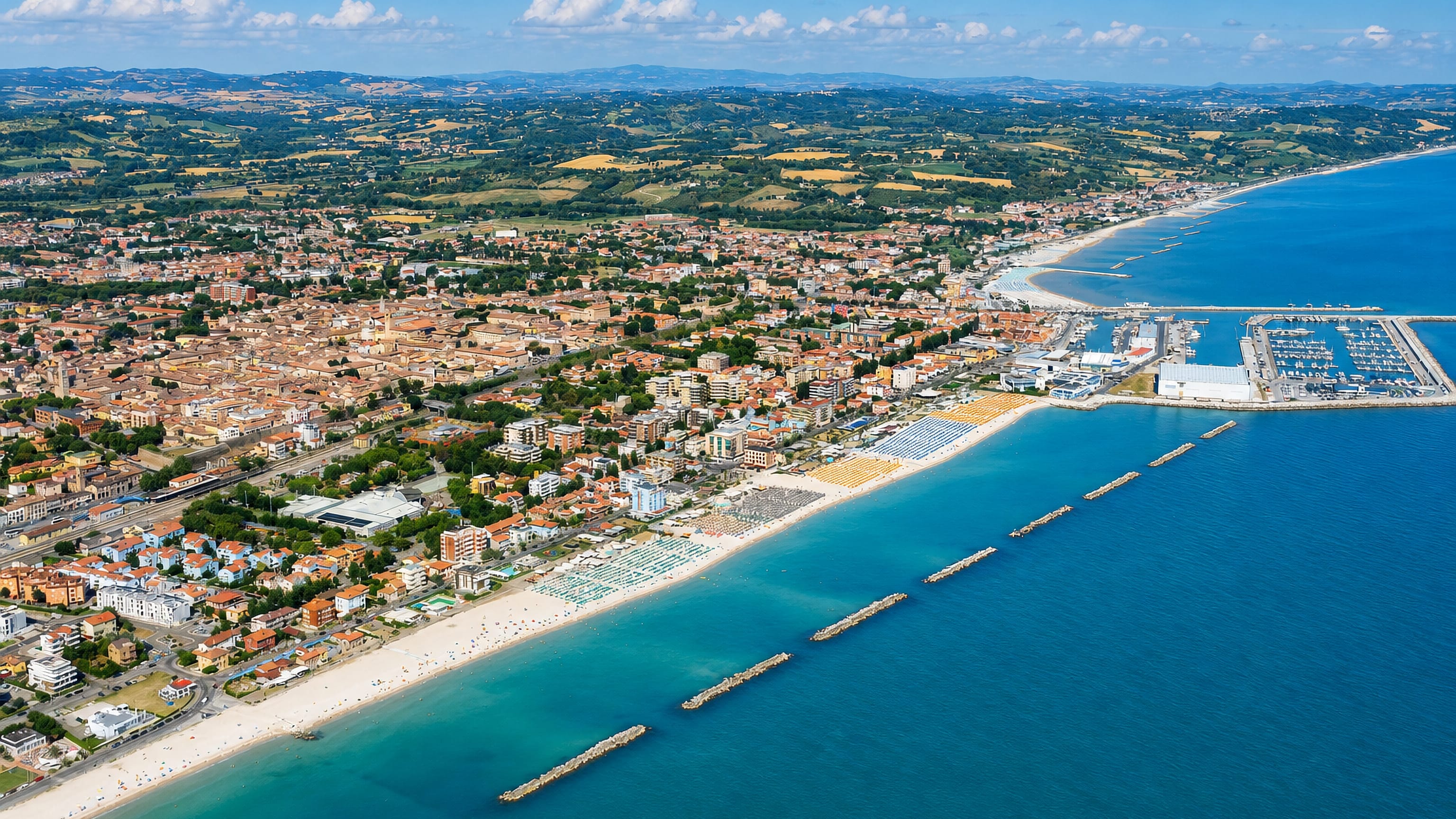
Beds in Fano split the way the coast does. The Lido, west of the harbour mouth, carries the sandy front and most of the seasonal rooms, while Sassonia holds the eastern side with a shore of its own and a shorter walk back into the streets behind it. Only the harbour mouth separates the two.
You want the Lido if the sand is the whole point of the trip, and Sassonia if the working port interests you more than the beach umbrellas. Inland from both fronts the old centre offers a different sort of stay. The Cathedral Basilica of St. Mary of the Assumption, the Pinacoteca San Domenico and the Biblioteca Federiciana stand within a few streets of one another there, with the fishing harbour close enough to walk to before breakfast and rooms that stay open past the beach season.
Crowds follow the sand. Further out along the coast the smaller settlements at Torrette, Metaurilia and Fosso Sejore each keep their own bay, thinning steadily as the hilly countryside rises a few kilometres behind the shoreline, and a room there trades walkable streets for quiet water. Pesaro lies twelve kilometres up the coast, near enough that a base in Fano serves both towns without a second booking.
Find hotels in Fano
Direct booking searches for these neighbourhoods.
The Lido
The sandy Lido front gathers most of the seasonal rooms in townFind hotels in The LidoWatching the Adriatic fishing fleet work the harbourSassonia
The eastern beach sits a short walk from the port and the streets behind itFind hotels in SassoniaStays built around the Pinacoteca San Domenico and the Biblioteca FedericianaThe old centre
The Cathedral Basilica of St. Mary of the Assumption anchors these few streetsFind hotels in The old centreQuiet bays along the coast road out of FanoTorrette and Metaurilia
Small beaches run south with the hilly countryside close behind them. Lodging is scarce in this area; reserve in advance.Find hotels in Torrette and MetauriliaHotel links are affiliate links: booking through them may earn us a commission, at no extra cost to you. It never affects how places are ranked. How this works
Things to do in Fano
Ranked by global recognition; descriptions from Wikidata (CC0).
Museums & Galleries
3- Pinacoteca San Domenico Heritage
- Museo civico di Fano Heritage
- Biblioteca Federiciana
Churches & Religious Sites
8- Santa Maria Nuova church Heritage
- San Pietro in Valle, Fano Heritage
- Chiesa di Sant'Agostino Heritage
- Santa Maria del Gonfalone Heritage
- Basilica of St. Paternian Heritage
Show 3 more →
- Sant'Antonio Abate Heritage
- San Tommaso Heritage
- chiesa di San Francesco da Paola Heritage
Castles & Historic Sites
1- Palazzo Bracci Pagani
worth knowingacross 3 categories in Fano
About Fano
The port splits the shore.
What is Fano known for?
Sassonia takes the eastern side of the harbour mouth and the sandy Lido the western, so Fano keeps two separate fronts with one of the more important Adriatic fishing fleets working out of the water between them. Rome knew the place as Fanum Fortunae. Wider sands and small bays continue along the coast at Fosso Sejore, Metaurilia and Torrette, and hilly country begins a few kilometres inland.
What are the main landmarks in Fano?
Churches carry most of the old fabric in Fano. The Cathedral Basilica of St. Mary of the Assumption leads them, with the Basilica of St. Paternian, Santa Maria Nuova, Chiesa di Sant'Agostino and San Pietro in Valle spread through the streets behind the harbour. Palazzo Bracci Pagani stands among them.
Collections fill out the rest: the Pinacoteca San Domenico, the Museo civico di Fano with its ceramics and coins, the Museo Diocesano and the Museo della Via Flaminia.
What is the history of Fano?
Rome laid the road, and Fanum Fortunae grew where it ended. The Via Flaminia runs out of the interior and finishes at the Adriatic here, which gave the settlement a harbour on one side and a paved link to the inland cities on the other. Its collections keep the evidence.
The Museo della Via Flaminia records the route itself, while the Museo archeologico and the numismatic section of the Museo civico di Fano hold what the ground and the coin hoards have given up. Christian building followed the Roman centuries. The Cathedral Basilica of St. Mary of the Assumption became the seat of the diocese whose treasures the Museo Diocesano now shows, and San Pietro in Valle, the Basilica of St. Paternian, Santa Maria Nuova, Sant'Antonio Abate, San Tommaso and Chiesa di Sant'Agostino were raised across the same compact core.
Confraternities added their own chapels. Santa Maria del Gonfalone and the Venerabile Confraternita di Santa Maria del Suffragio kept paintings and furnishings that later passed into public view, and the Pinacoteca San Domenico gathered much of the town's art into one former convent. Learning and money left their marks too.
The Biblioteca Federiciana holds the book collections, Palazzo Bracci Pagani stands for the patrician building of the merchant centuries, and the art collection of the Fondazione Cassa di Risparmio di Fano continues that patronage in a later form. Fishing sustained the port throughout. The beach economy came last, turning Sassonia and the Lido into a resort coast while the fleet went on working out of the same harbour mouth it had always used.
Where is Fano?
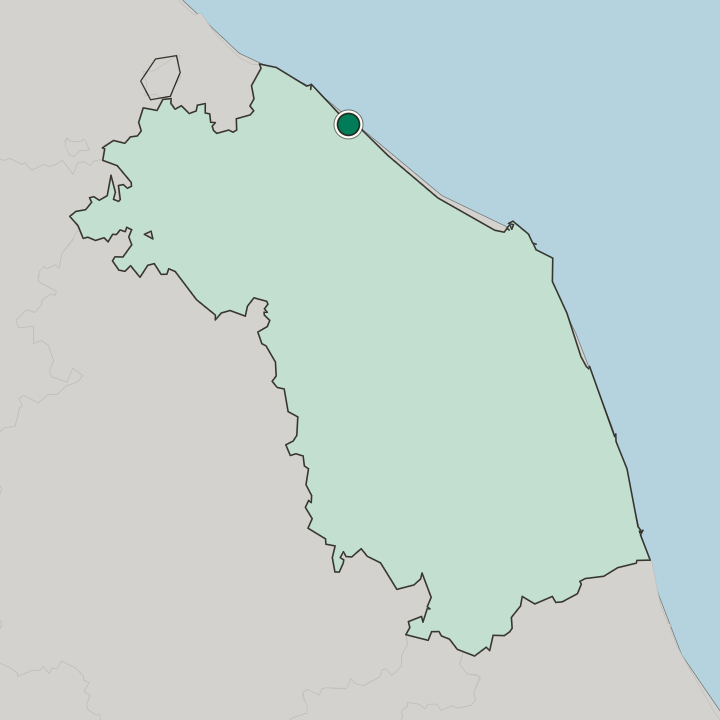
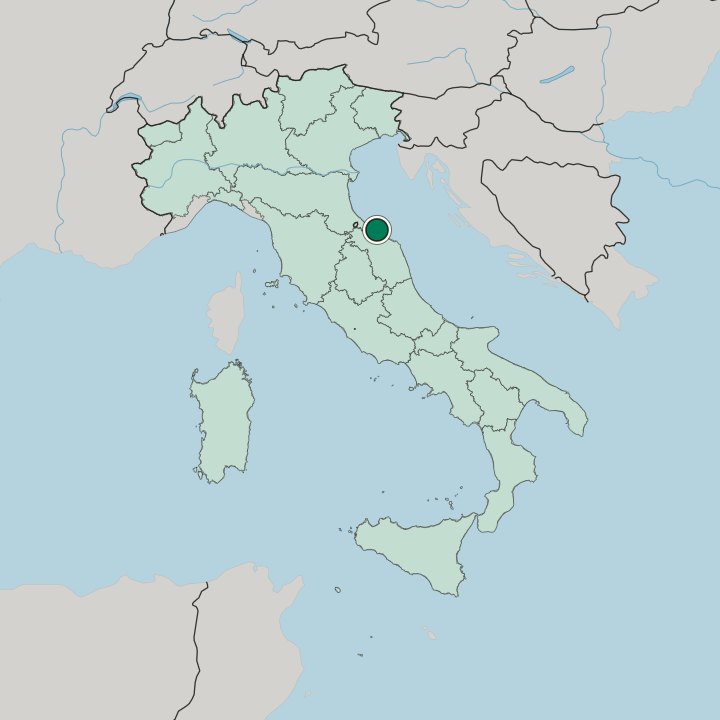
Fano occupies a straight stretch of the Adriatic shore in Marche, with its harbour mouth dividing Sassonia from the Lido and the flat coastal strip carrying the town away from the water in both directions. Hills begin a few kilometres inland. Pesaro stands twelve kilometres up the coast, the two of them sharing a province with Urbino, and further south the coast runs on past Torrette and Metaurilia toward the larger city of Ancona.
The Via Flaminia arrives from the interior.
What is the climate of Fano?
The Adriatic sets the terms. Sea air holds Fano in the temperate band, keeping the sharpest cold off the Lido and Sassonia in winter and drawing enough warmth through the summer to fill both beaches for months at a time. Rain favours the cooler half of the year.
The hills a few kilometres inland feel the difference first, running cooler and wetter than the shoreline itself.
How do you get to Fano?
The Via Flaminia still governs arrivals. Rome's road from the interior finishes its run at Fano, and the coastal corridor that crosses it there links the town north to Pesaro, twelve kilometres away, and south along the Adriatic toward Ancona. Arrivals by road come through the flat strip behind the beaches.
The harbour handles the fishing fleet rather than passengers, so the sea route is a working one. Torrette and Metaurilia sit on the same coastal line.
Common questions
What is the best area to stay in Fano?
The Lido: Sand west of the Fano harbour mouth. Sassonia: Watching the Adriatic fishing fleet work the harbour. The old centre: Stays built around the Pinacoteca San Domenico and the Biblioteca Federiciana. Torrette and Metaurilia: Quiet bays along the coast road out of Fano.
Good for
More cities in Marche
Updated October 2026