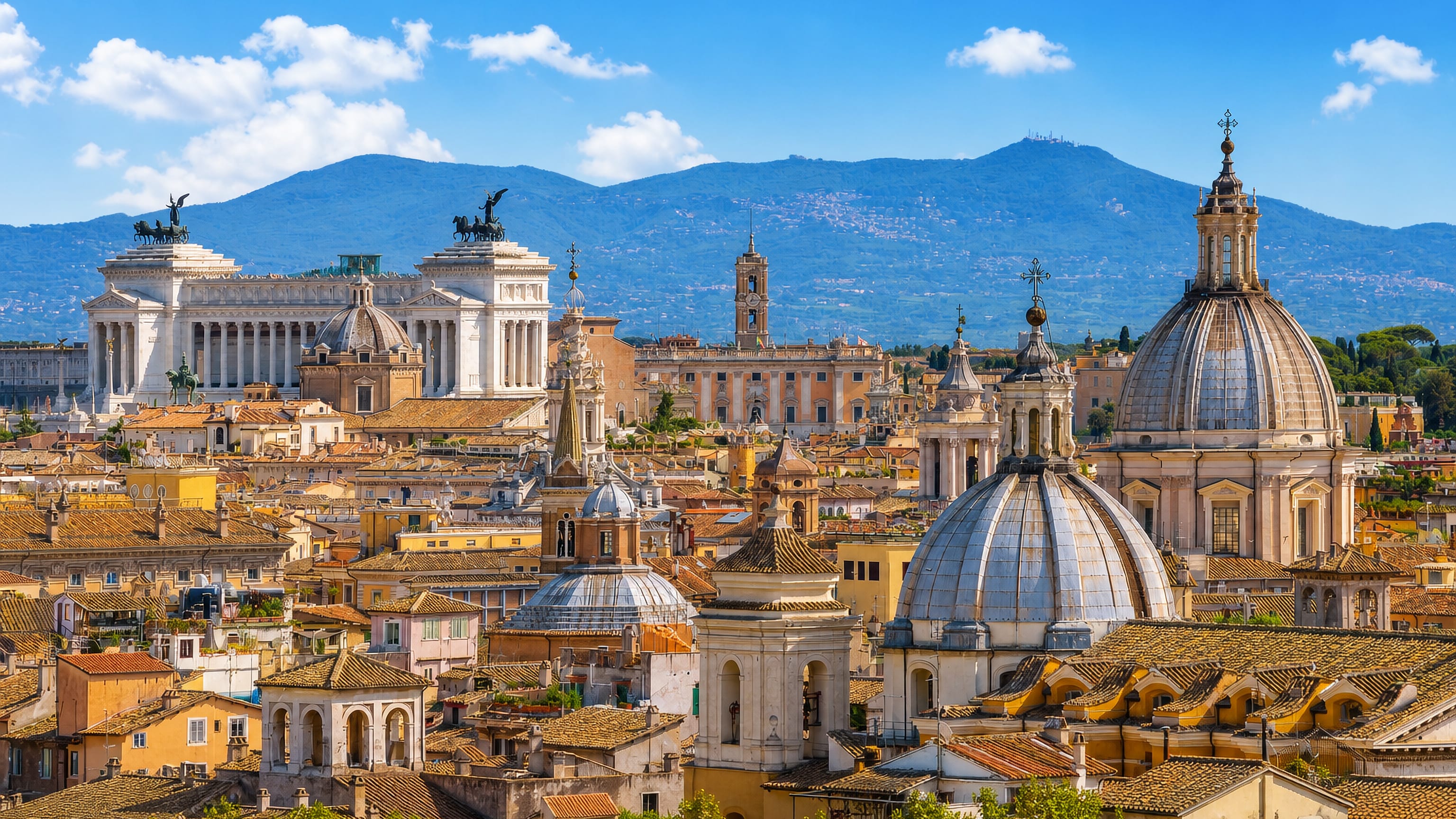
Italy: Regions, Cities & Travel Guide
Italy is a Mediterranean peninsula reaching from the Alps to Sicily and Sardinia, heartland of the Roman Empire and the Renaissance.
Hotel links are affiliate links: booking through them may earn us a commission, at no extra cost to you. It never affects how places are ranked. How this works


Top destinations in Italy
Cities to start from, then drill into areas and hotels.
 Italy
Italy
Rome
Rome is the capital of Italy, on the river Tiber across the seven hills, where ancient Rome grew around the Colosseum and the Roman Forum.Where to stay →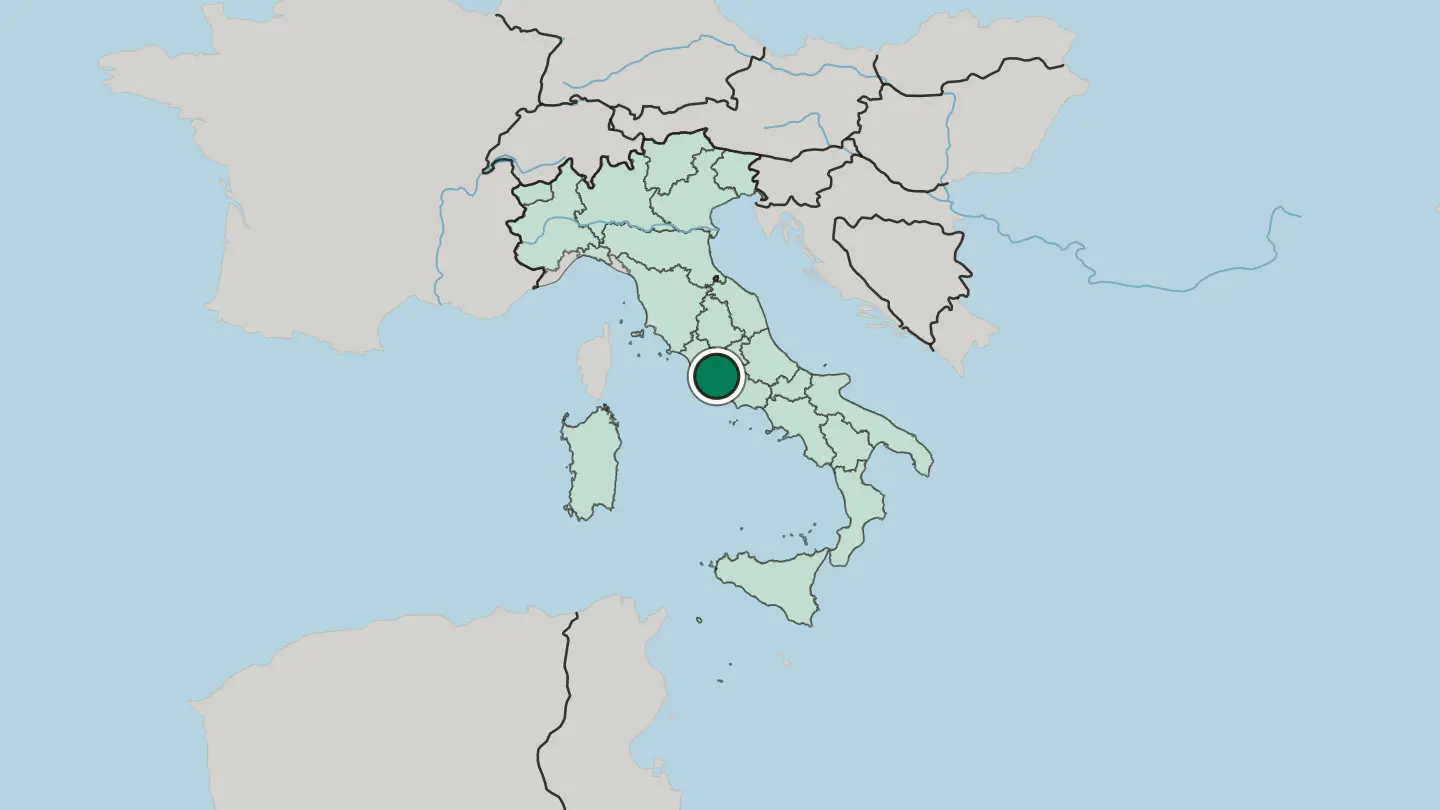
 Italy
Italy
Milan
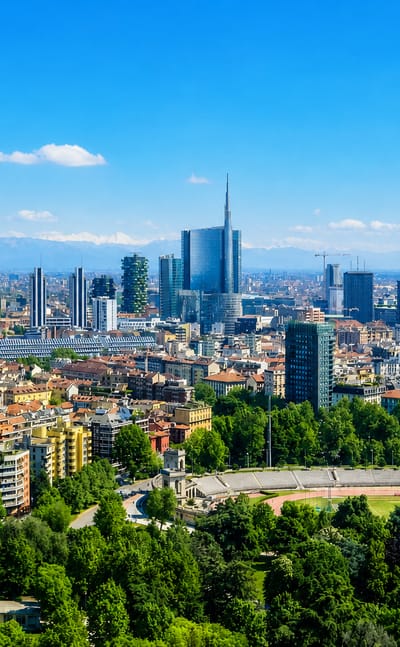
Pale marble spires crown the Duomo at Milan, a city in northern Italy and capital of Lombardia, known for fashion, opera and the Sforza Castle.Where to stay →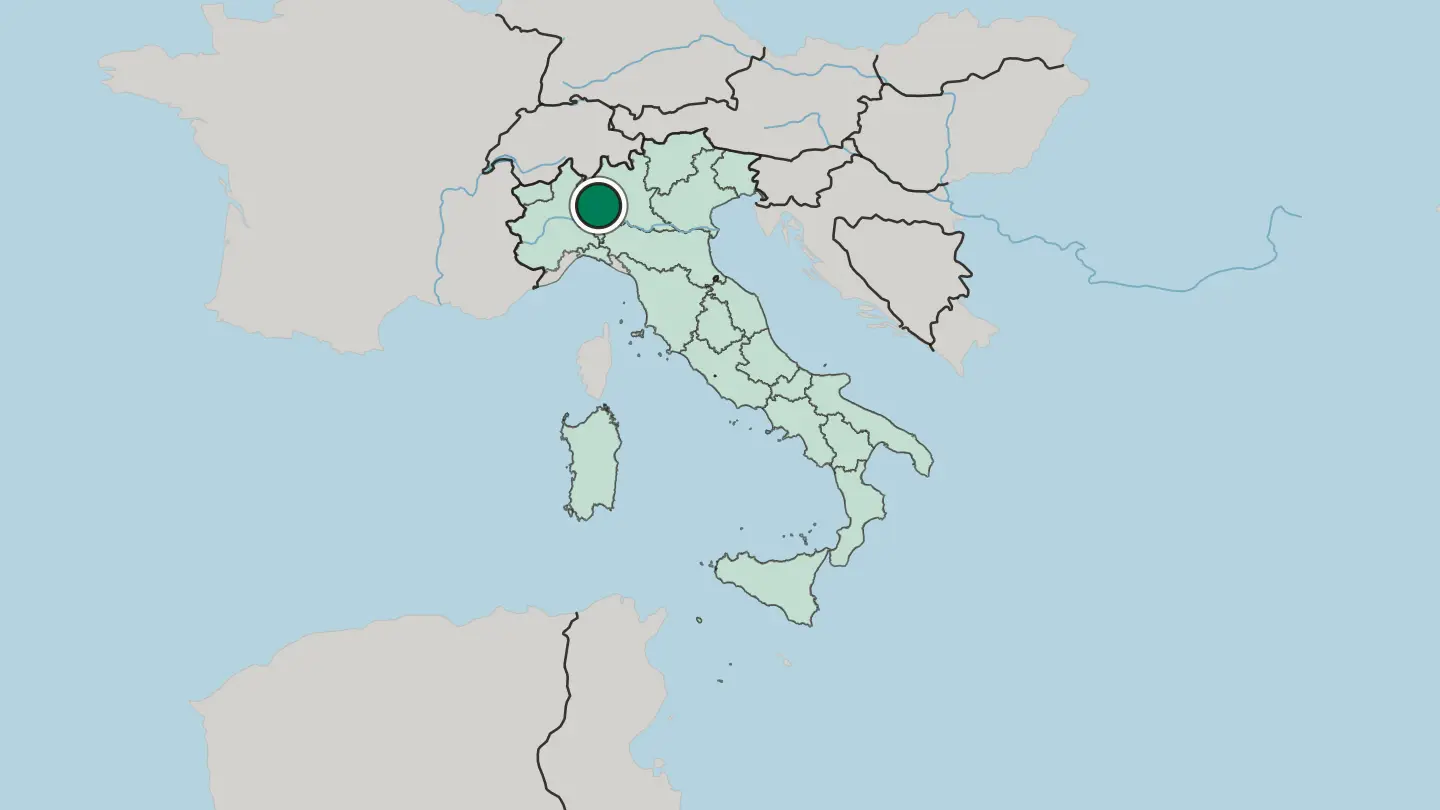
 Italy
Italy
Venice
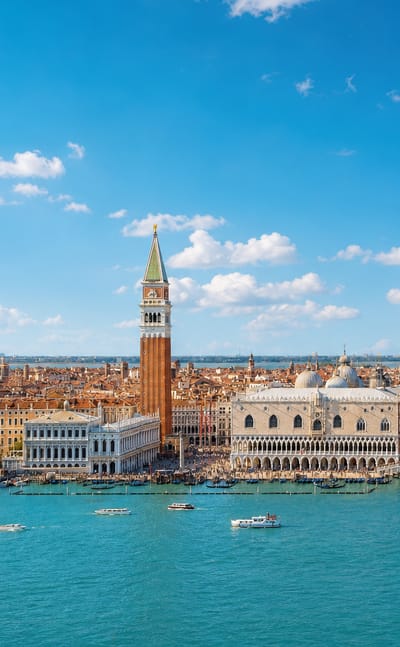
Venice is a lagoon city in northeastern Italy, built across 126 islands threaded by canals and crossed by the Grand Canal at its centre.Where to stay →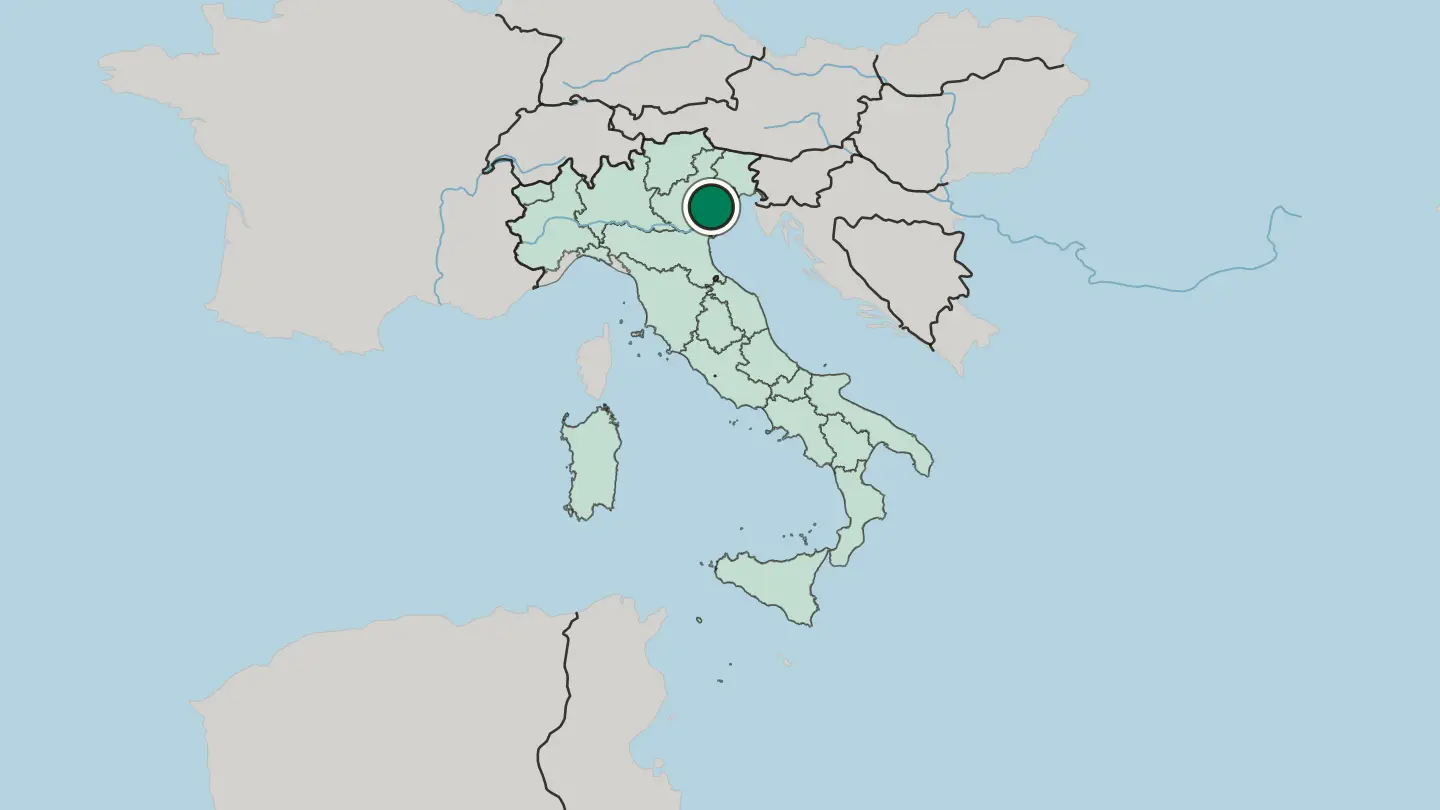
 Italy
Italy
Naples
Naples faces Vesuvius across its own bay, capital of Campania and a Greek foundation, known for the Centro Storico and the Cappella Sansevero.Where to stay →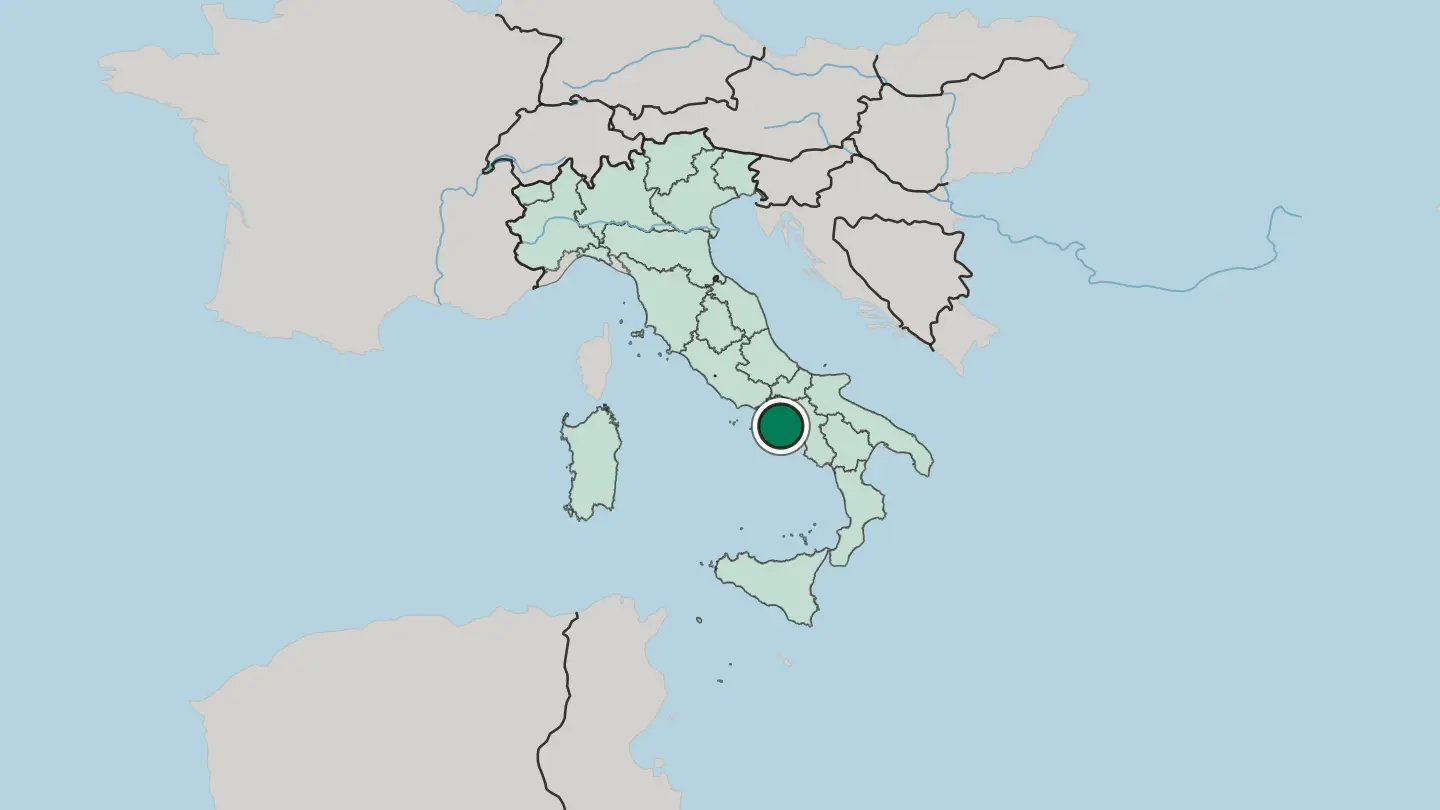
 Italy
Italy
Florence
Brunelleschi's dome rules the skyline of Florence, the Tuscan capital on the Arno, known for the Uffizi Gallery and the Ponte Vecchio.Where to stay →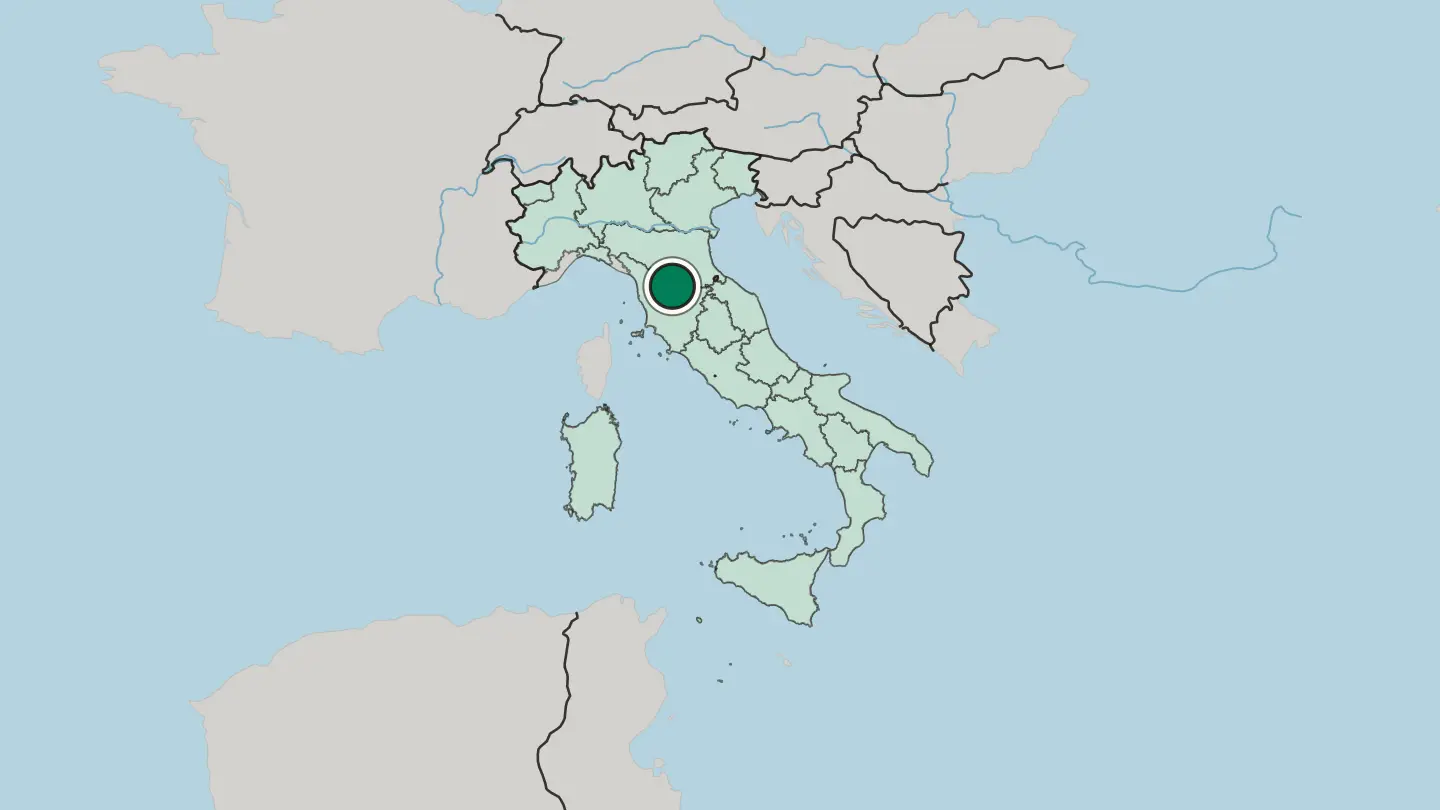
 Italy
Italy
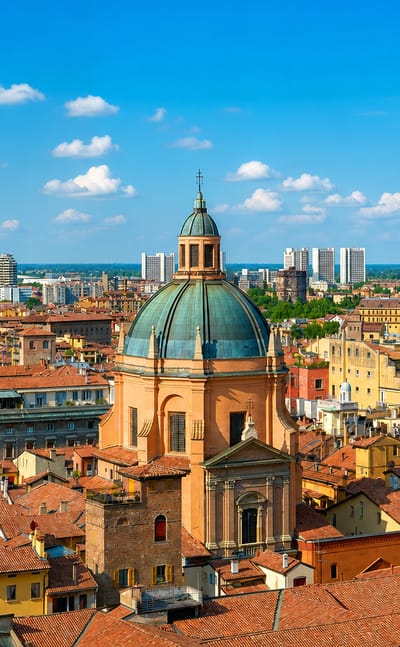
Turin
Baroque arcades and the Alps frame Turin, the Piemonte capital on the Po, known for the Mole Antonelliana and the Museo Egizio.Where to stay →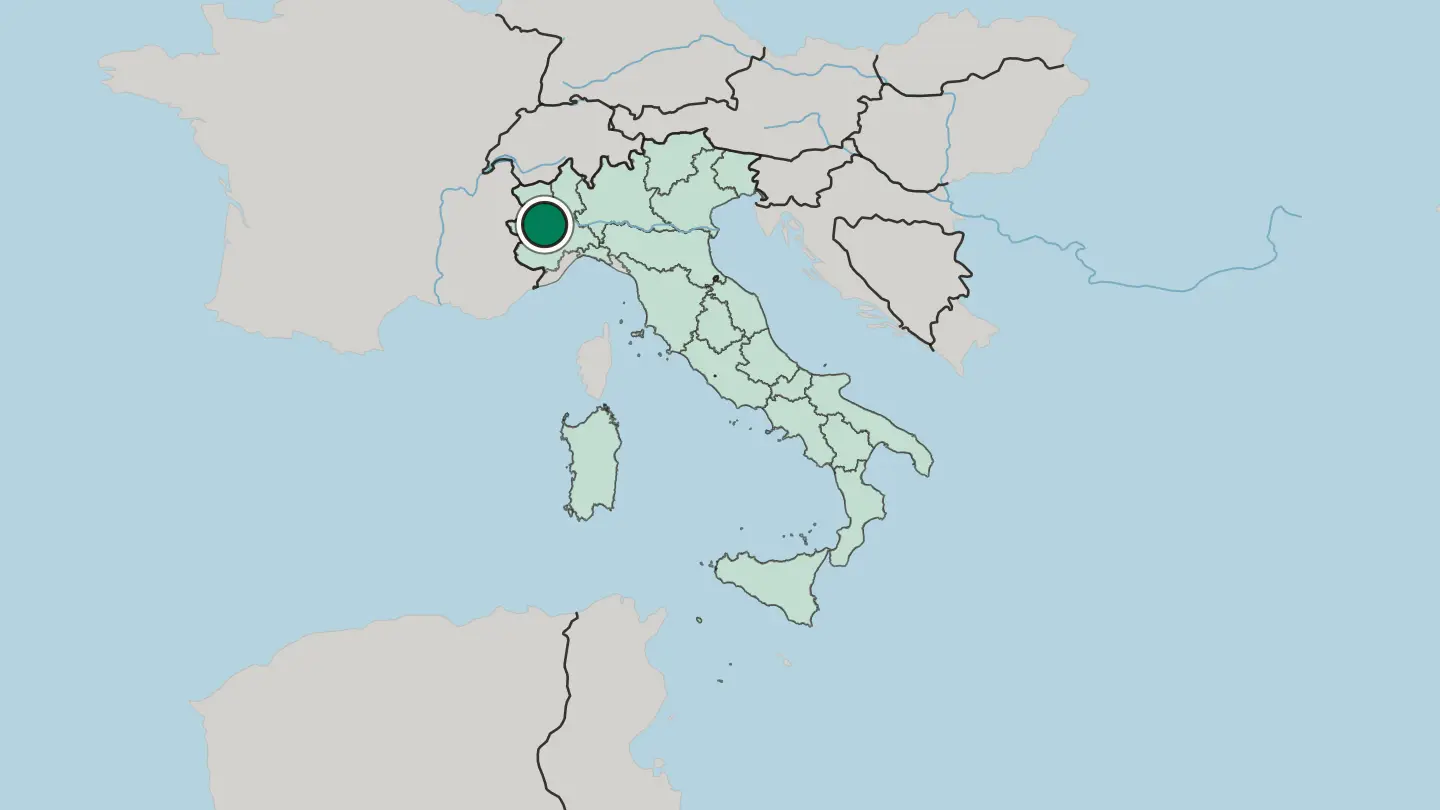
 Italy
Italy
Bologna
Bologna is the capital of Emilia-Romagna in northern Italy, an arcaded university city built around the Basilica di San Petronio.Where to stay →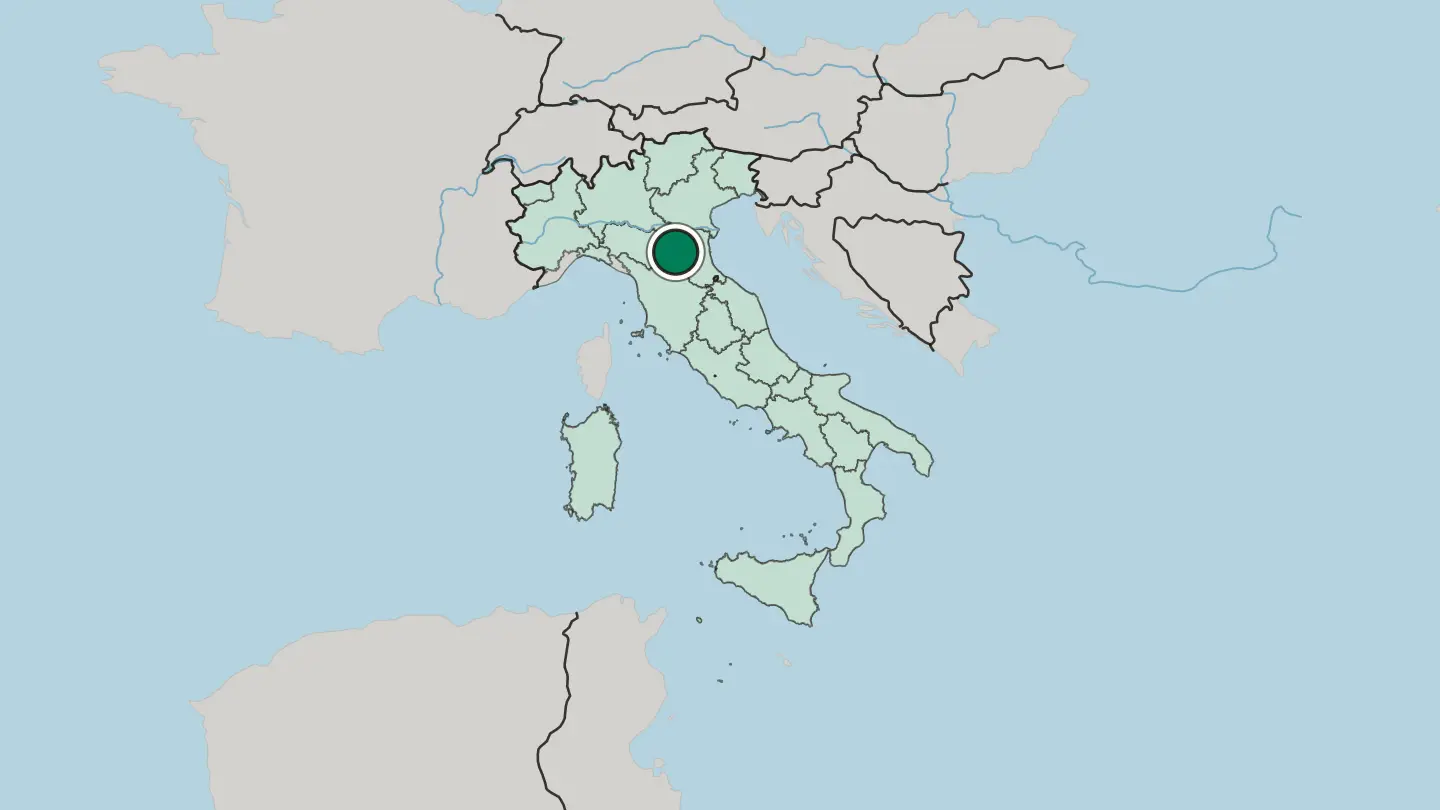
 Italy
Italy
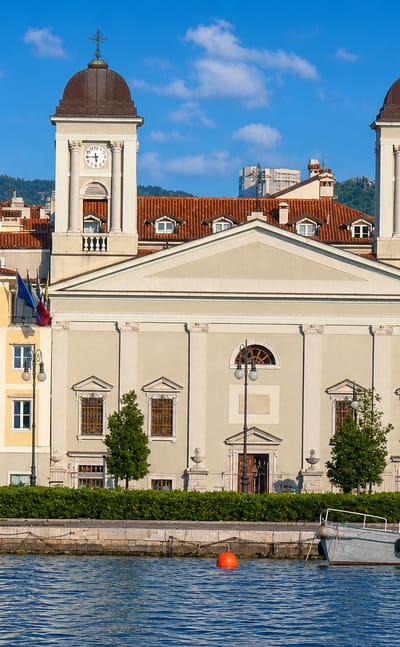
Genoa
Genoa stacks its alleys above the Ligurian Sea, capital of Liguria and an old maritime republic, known for the Porto Antico and Via Garibaldi.Where to stay →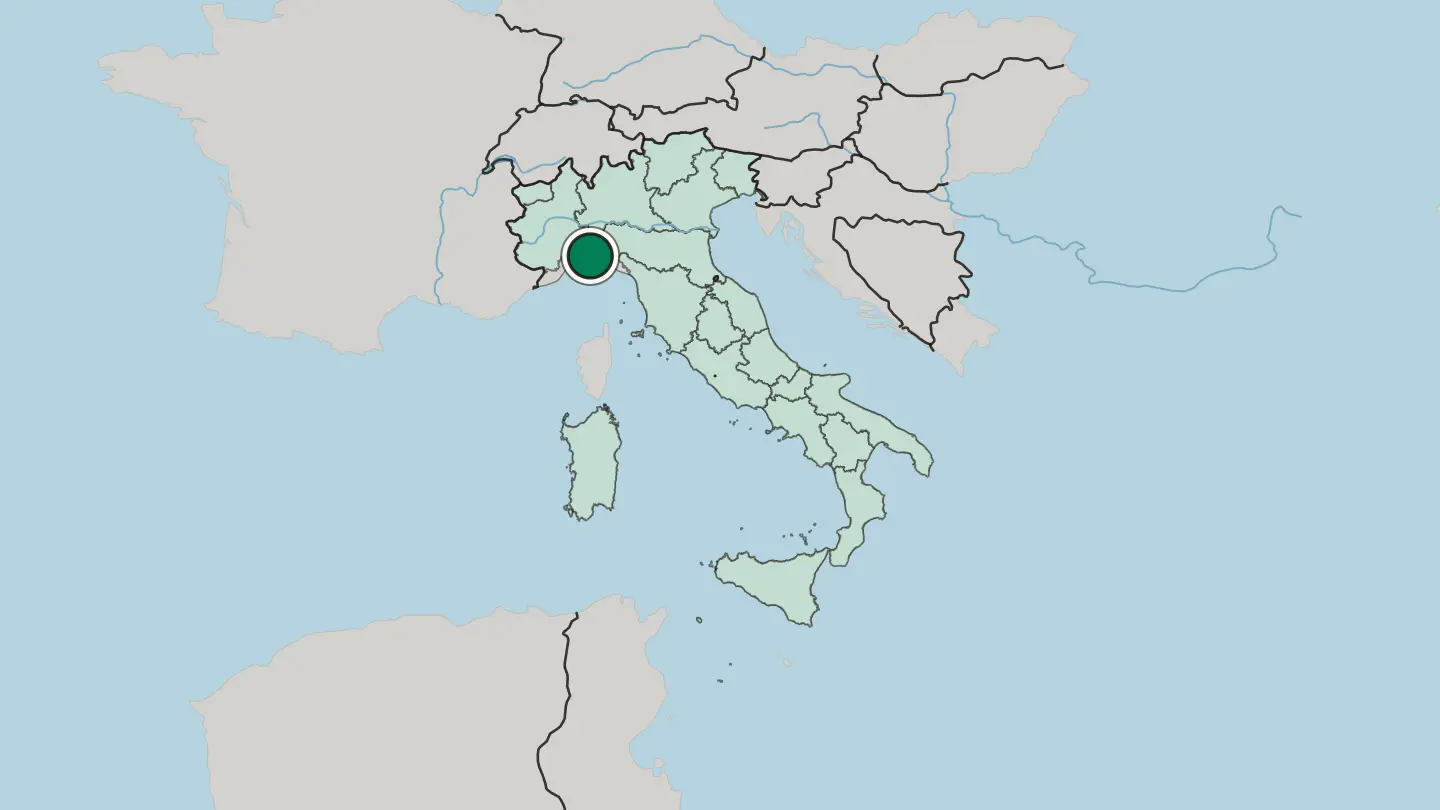
 Italy
Italy
Trieste
Trieste is a seaport in north-eastern Italy and the capital of the autonomous region of Friuli Venezia Giulia, below the San Giusto hill.Where to stay →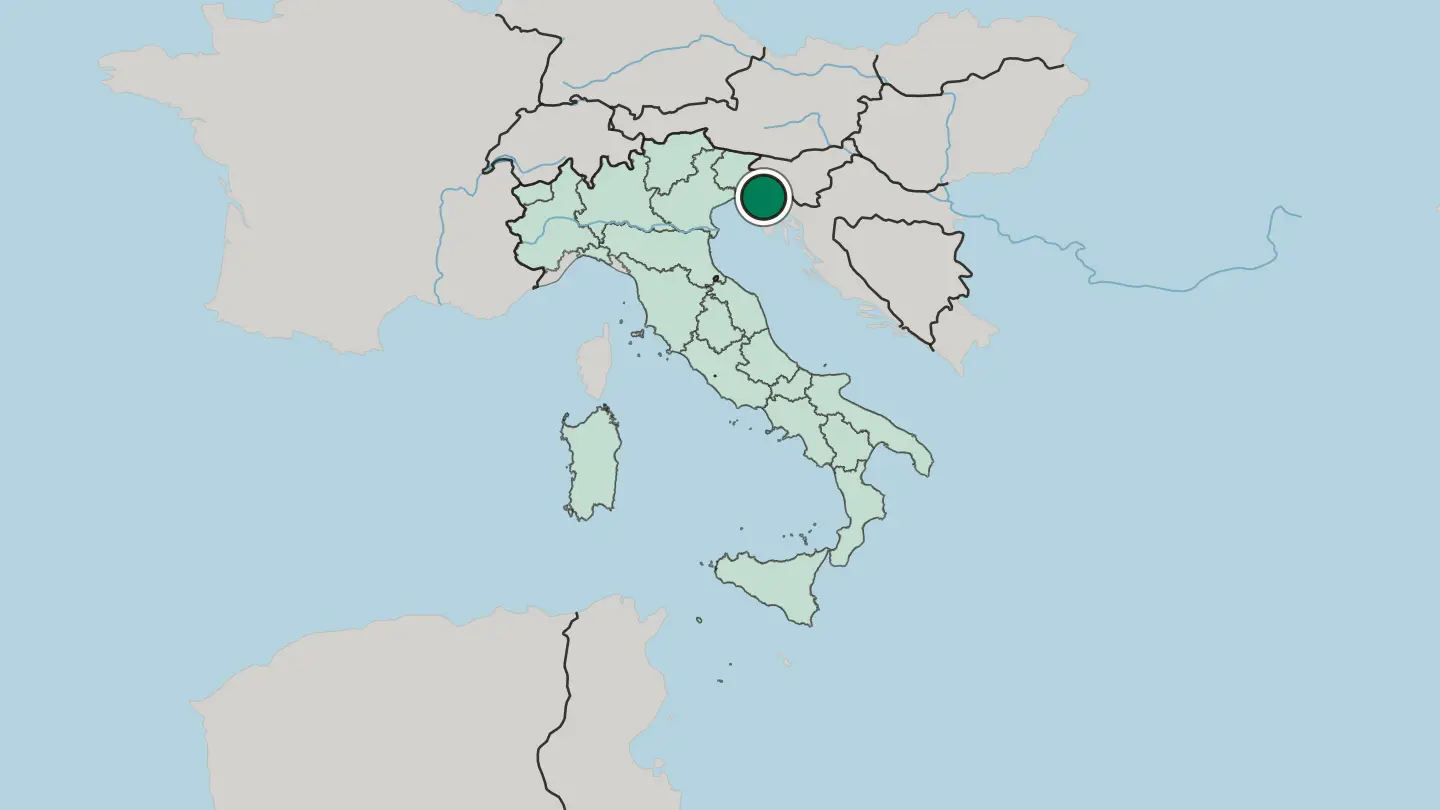
Hotel links are affiliate links: booking through them may earn us a commission, at no extra cost to you. It never affects how places are ranked. How this works
Regions of Italy
 Italy
Italy
Abruzzo
Abruzzo is a region of central Italy where the highest peaks of the Apennines drop east to the Adriatic Sea.Towns & cities →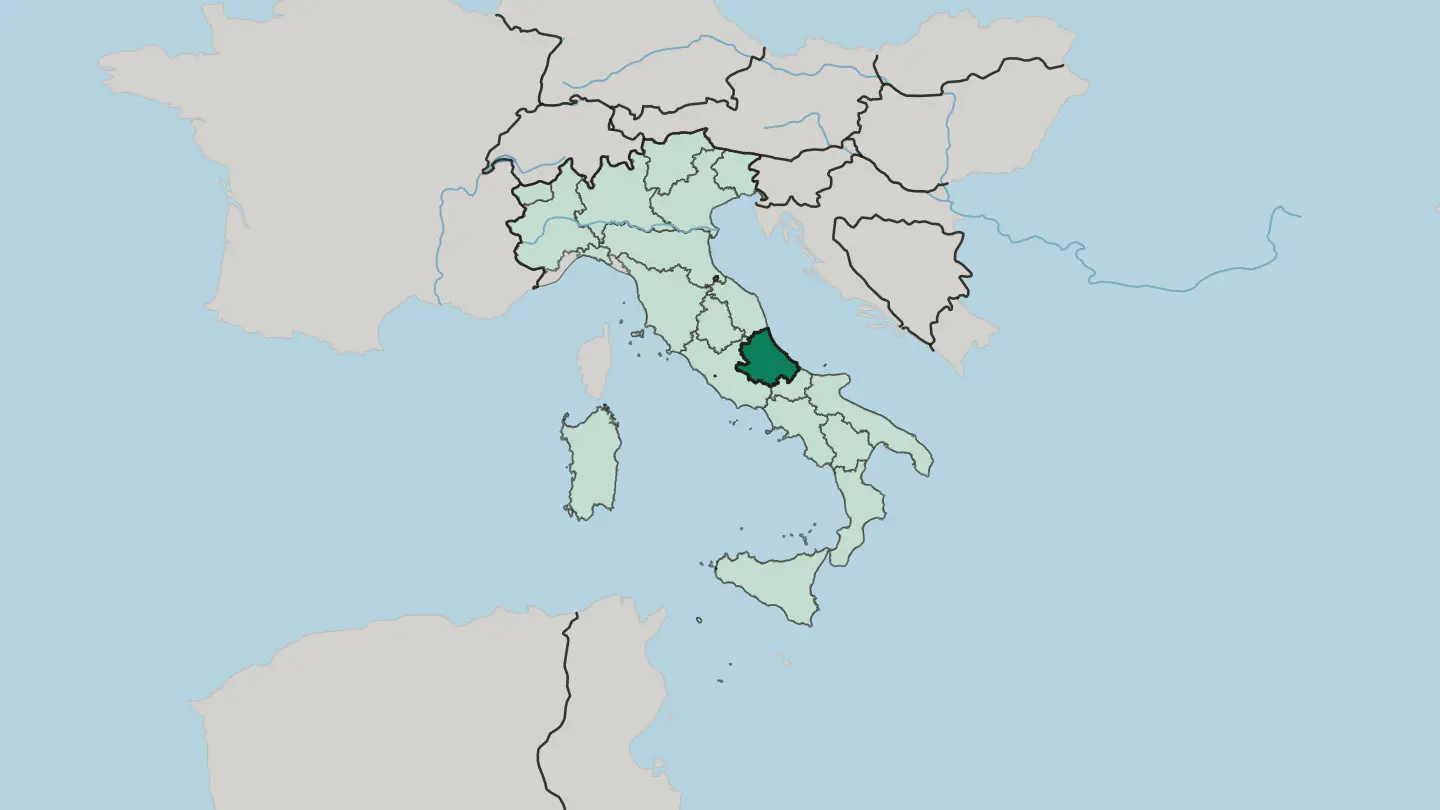
 Italy
Italy
Basilicata
Basilicata is the arch of Italy's boot, a mountainous southern region known in antiquity as Lucania and home to the cave city of Matera.Towns & cities →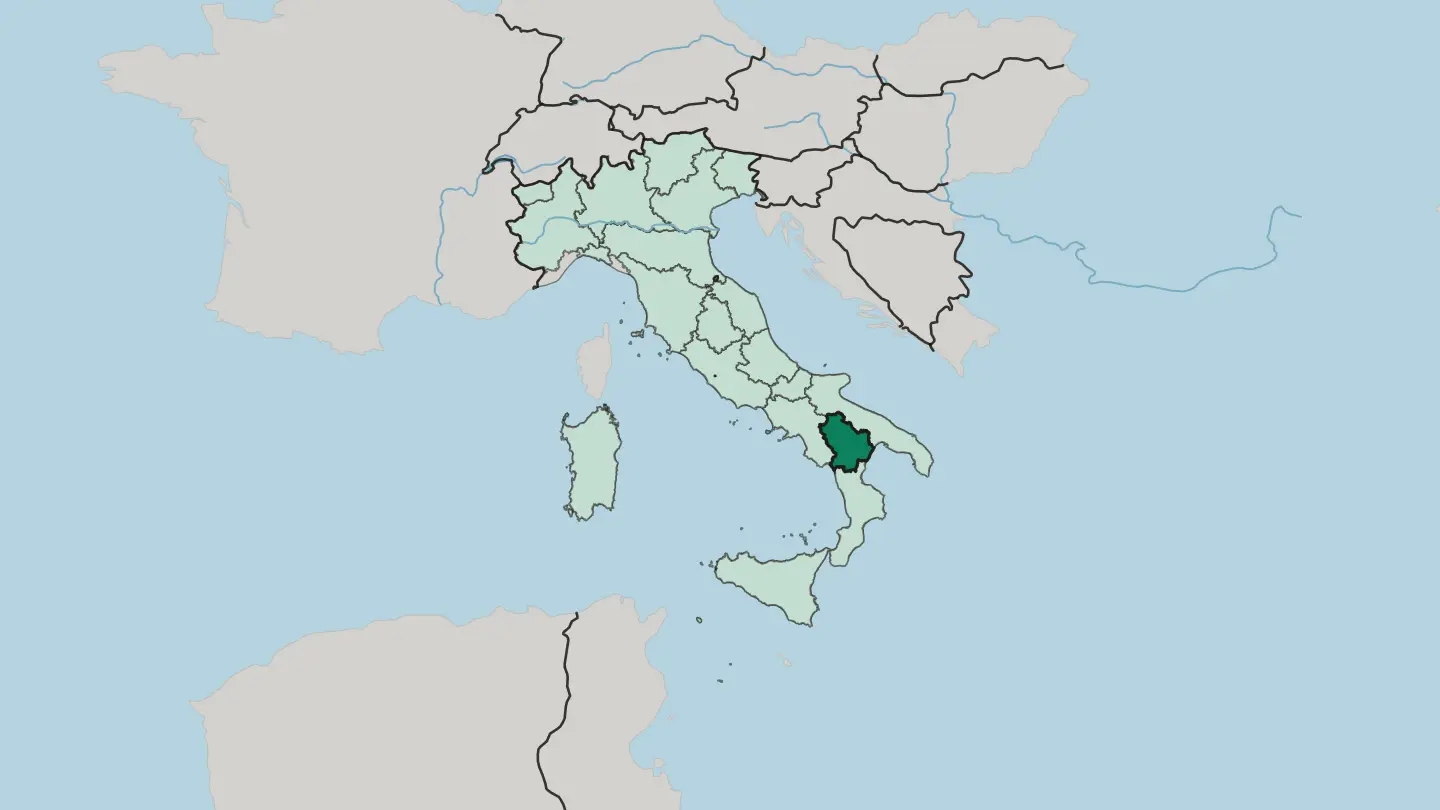
 Italy
Italy
Calabria
Calabria is the mountainous toe of the Italian peninsula, a long strip of coast between two seas facing Sicily.Towns & cities →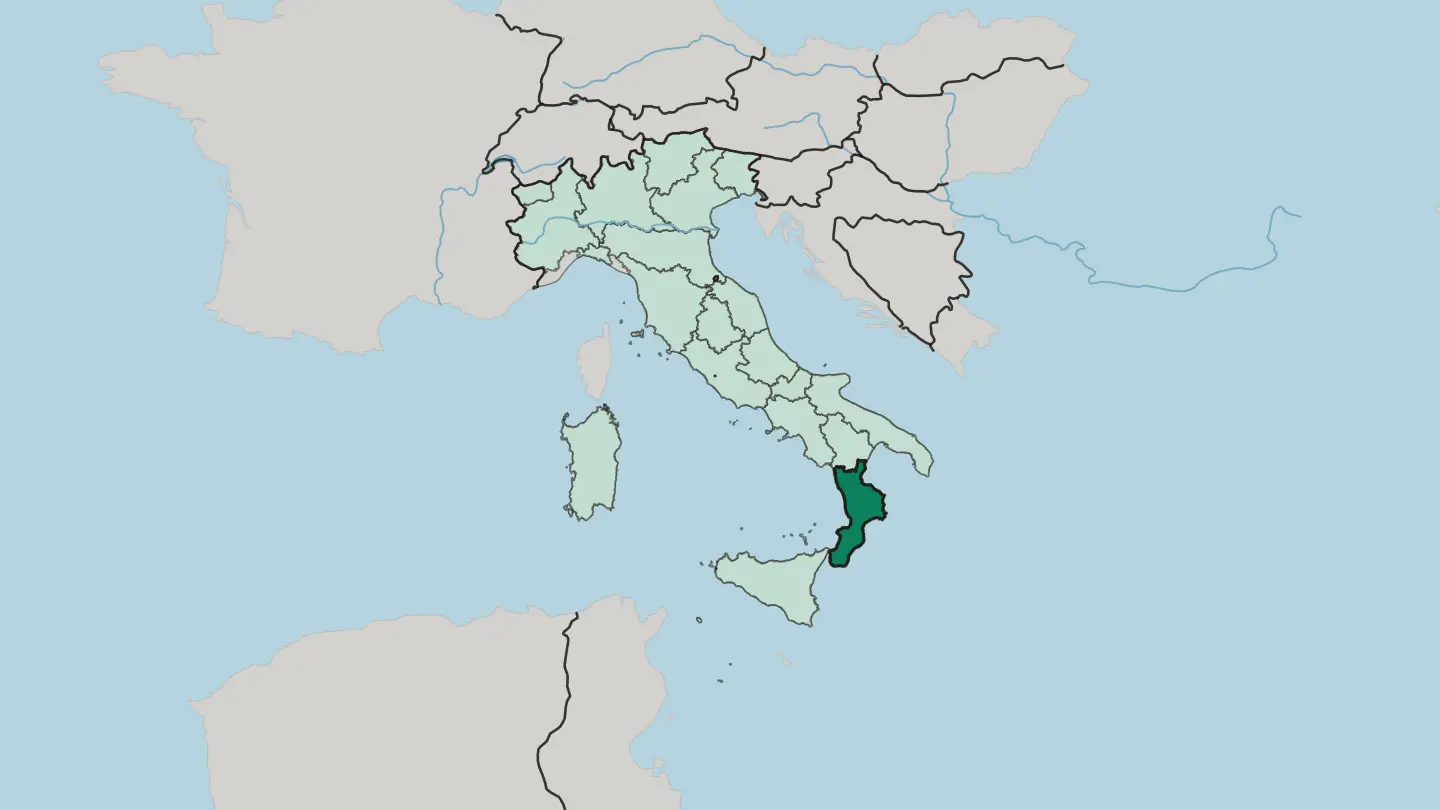 Italy
Italy
Campania
Campania is a region of southern Italy around Naples, with Mount Vesuvius, the Amalfi Coast and the island of Capri.Towns & cities →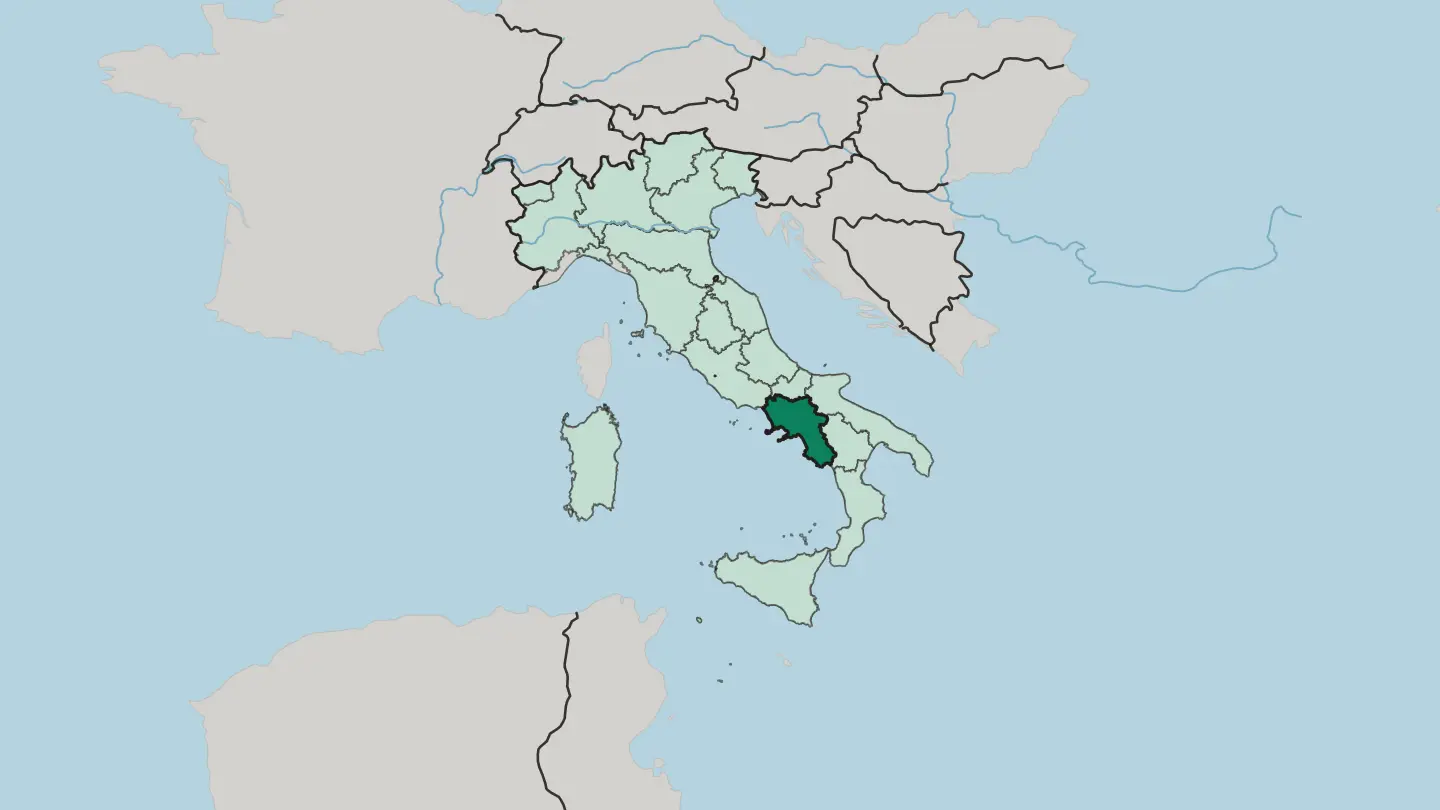 Italy
Italy
Emilia-Romagna
Emilia-Romagna is an administrative region of northern Italy, uniting the historical lands of Emilia and Romagna around its capital, Bologna.Towns & cities →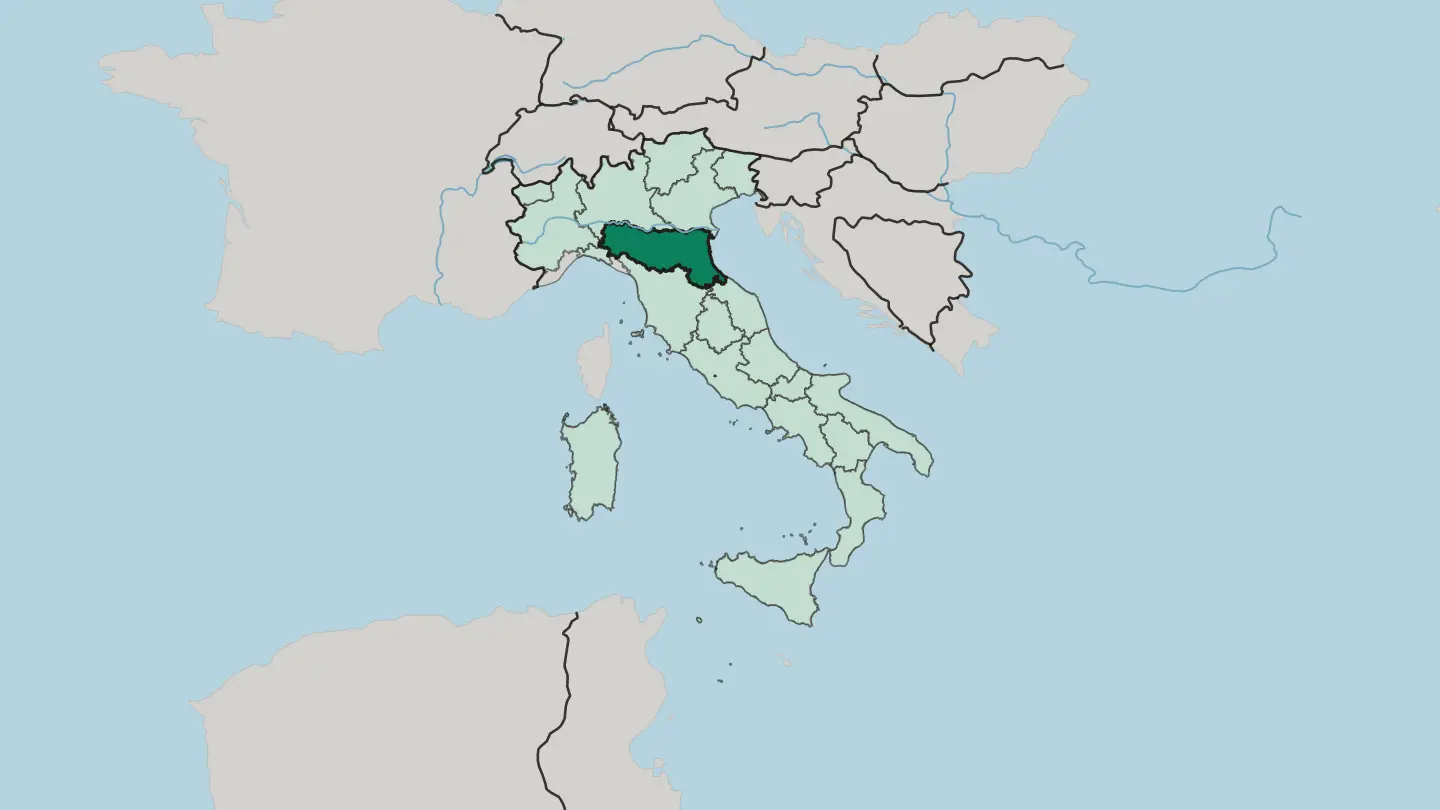 Italy
Italy
Friuli Venezia Giulia
Friuli Venezia Giulia is a region of Italy, formed in 1963 and centred on its principal city, Trieste.Towns & cities →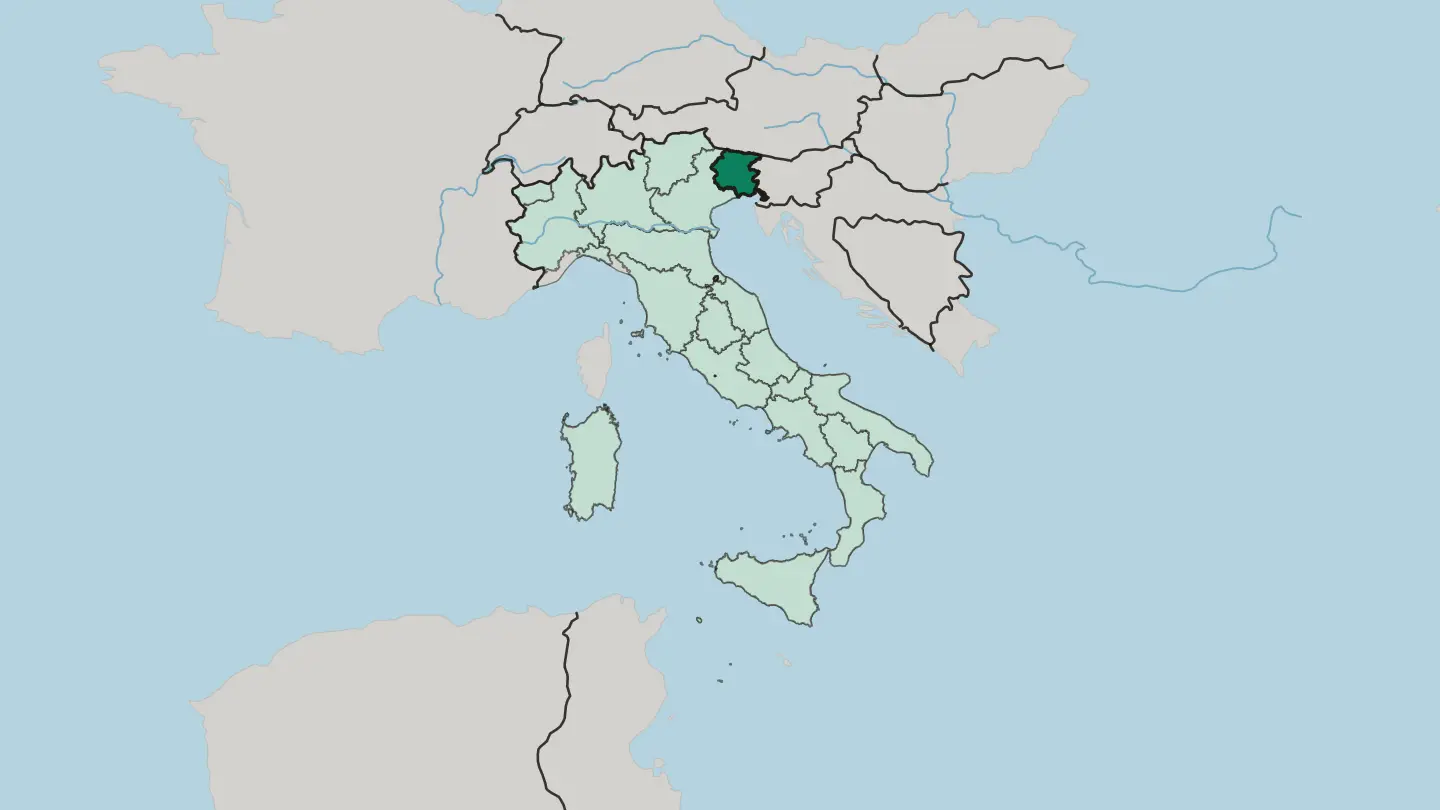 Italy
Italy
Lazio
Lazio is the central-Italian region around Rome, with inland lakes, hill-walking country, and a coastline of near-continuous beach.Towns & cities →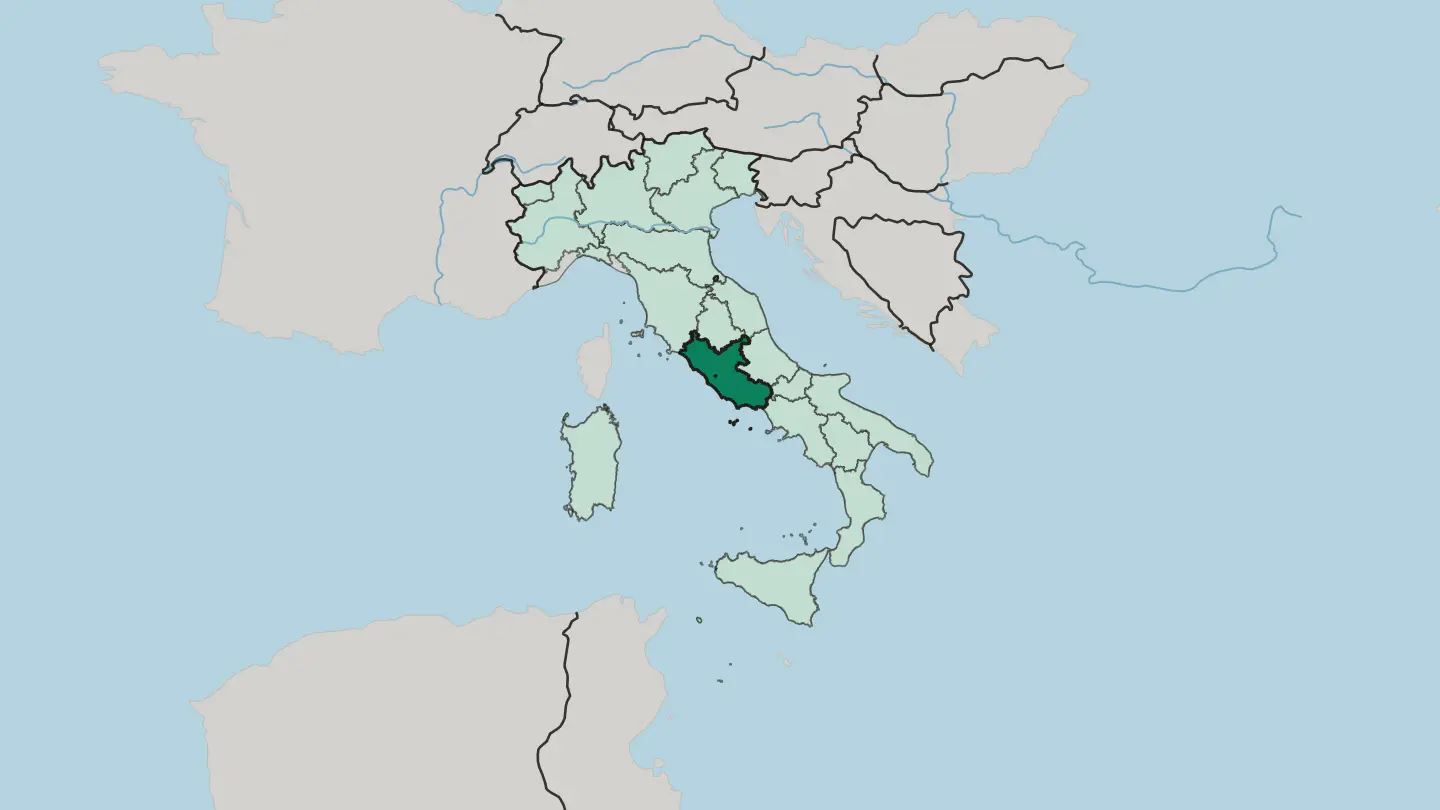 Italy
Italy
Liguria
Liguria is Italy's crescent of coast between the Ligurian Sea and the Apennines, with Genoa at its centre.Towns & cities →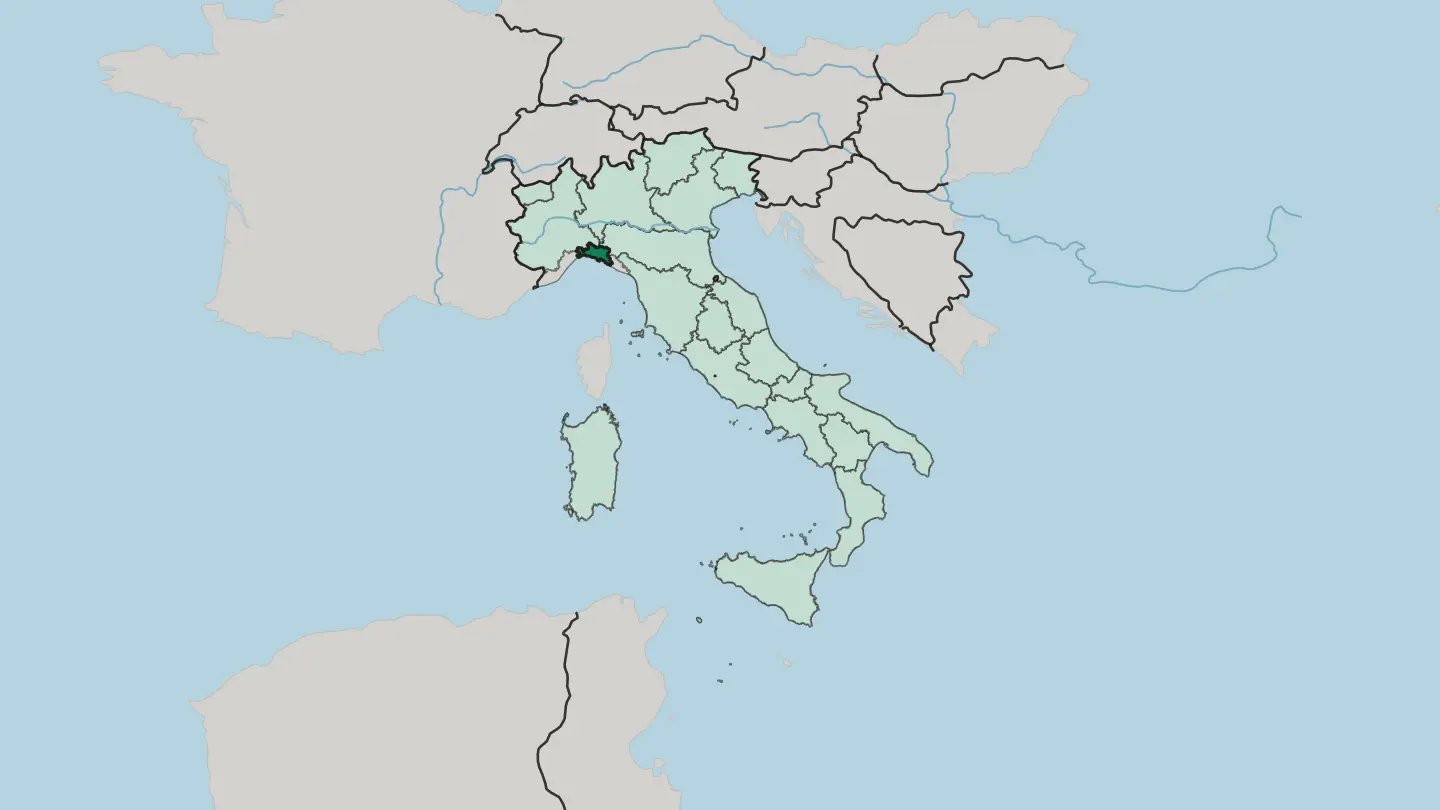 Italy
Italy
Lombardia
Lombardy is the wealthy region of northern Italy that runs from the Alps and the lakes down to the river Po, with Milan as its capital.Towns & cities →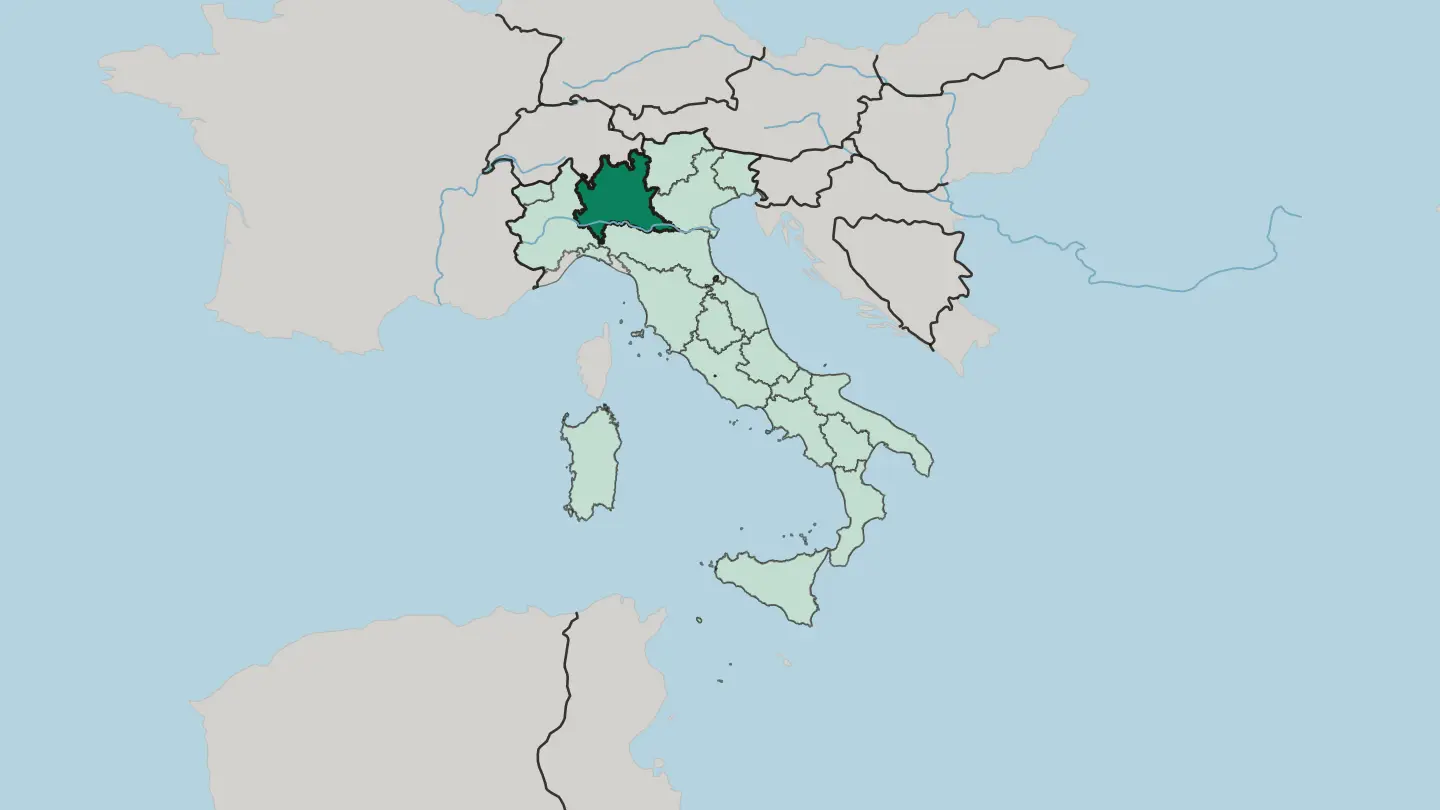
 Italy
Italy
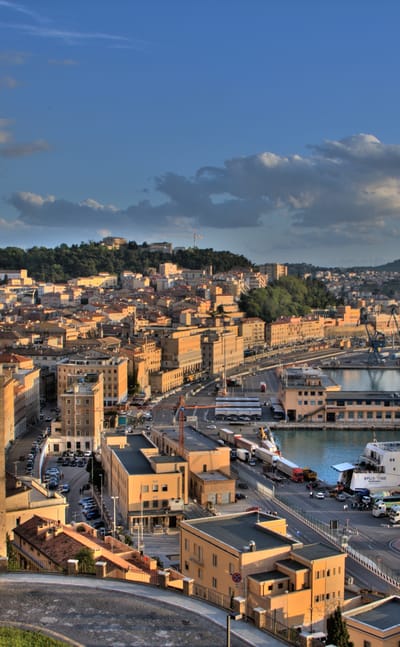
Marche
Marche is a region of central Italy, known in English as the Marches and centred on its capital, Ancona.Towns & cities →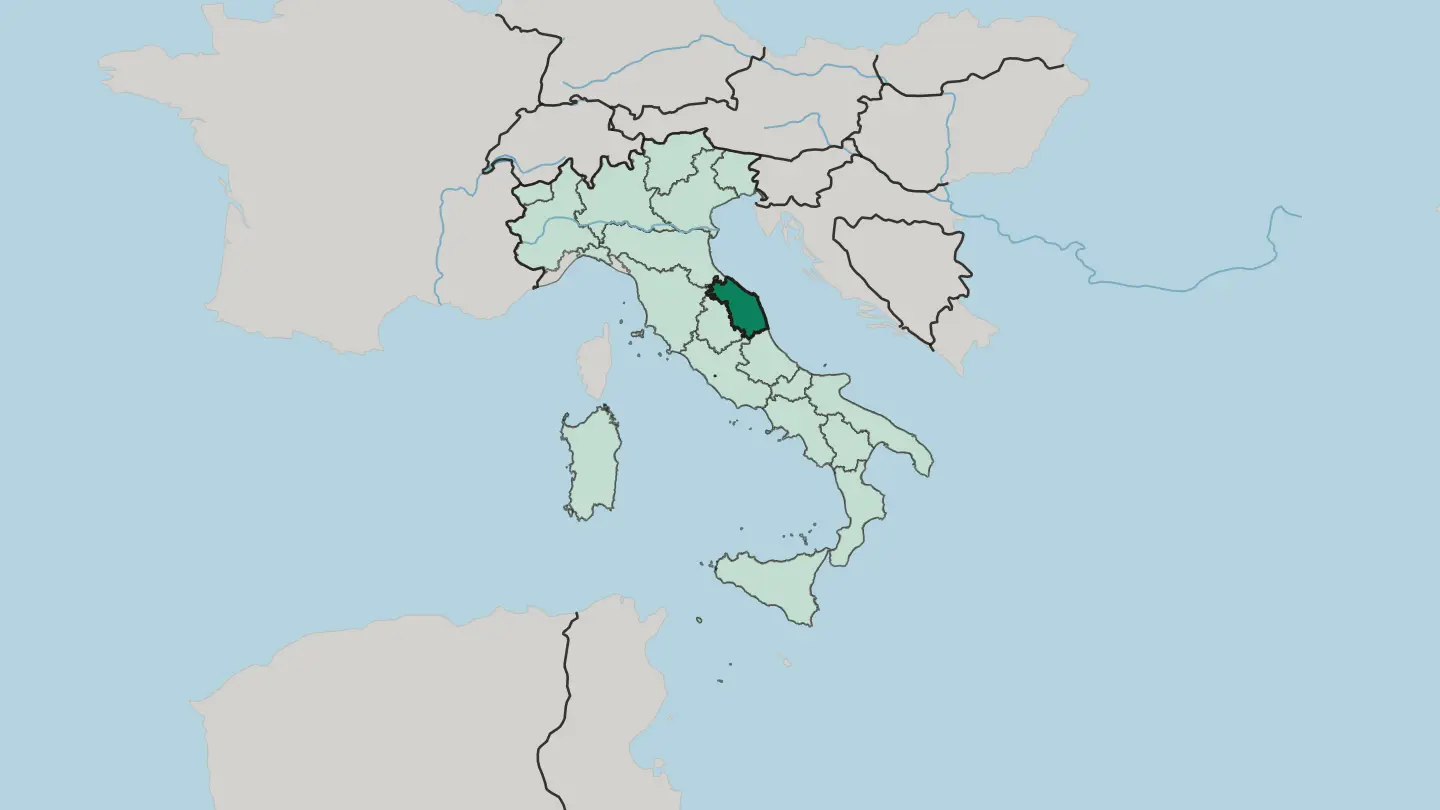 Italy
Italy
Molise
Molise is Italy's second-smallest and least-populated region, a mountainous corner of the south reaching a short Adriatic coast.Towns & cities →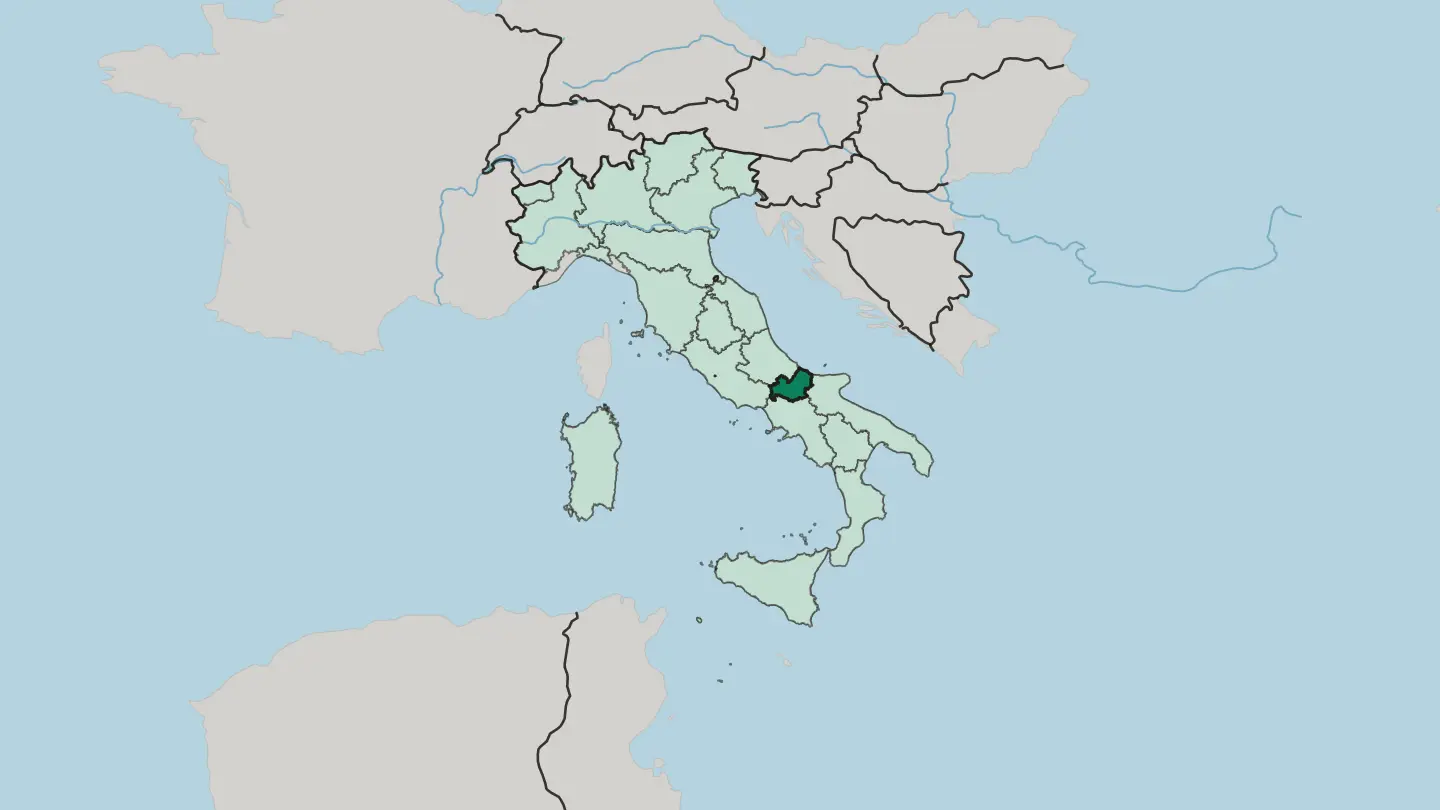 Italy
Italy
Piemonte
Piemonte lies at the foot of the Alps in northwest Italy, where the Po rises below Monviso and Turin holds the plain.Towns & cities →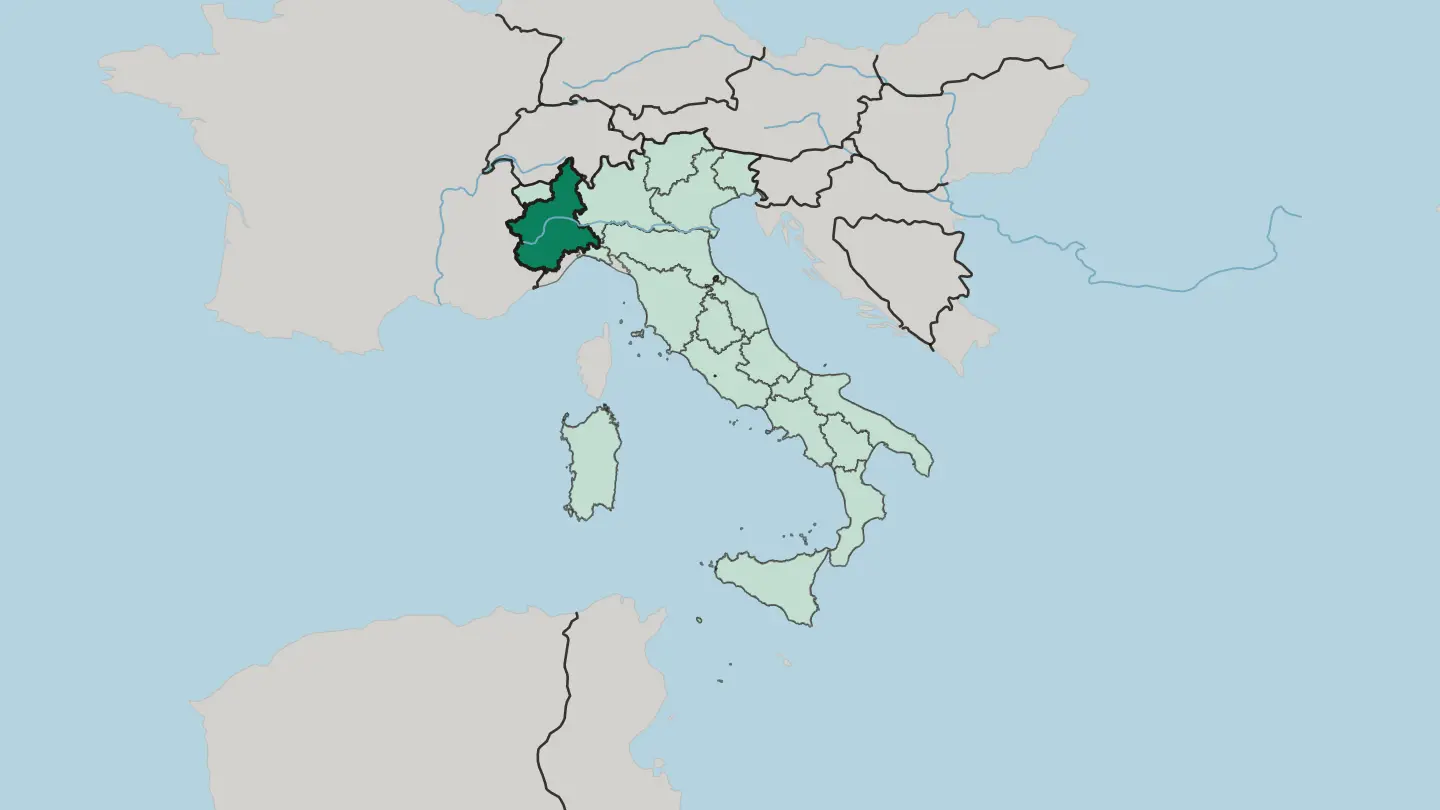
 Italy
Italy
Puglia
Puglia is the heel of Italy's boot, a long region reaching down between the Adriatic and Ionian seas to the Salento peninsula.Towns & cities →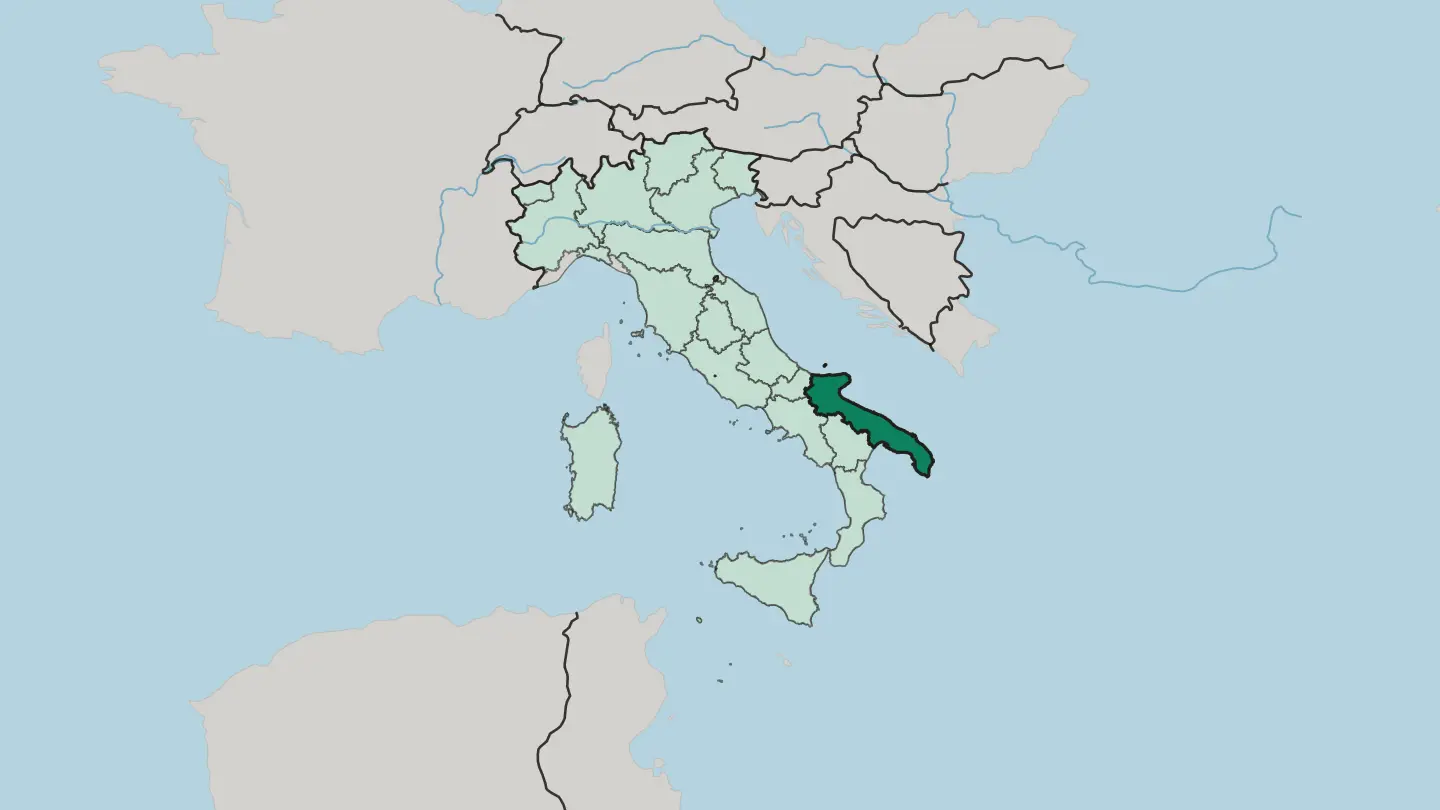 Italy
Italy
Regione Autonoma Valle d'Aosta
The Valle d'Aosta is Italy's smallest region, ringed by the Alps' highest peaks, Mont Blanc, the Matterhorn, Monte Rosa, and Gran Paradiso.Towns & cities →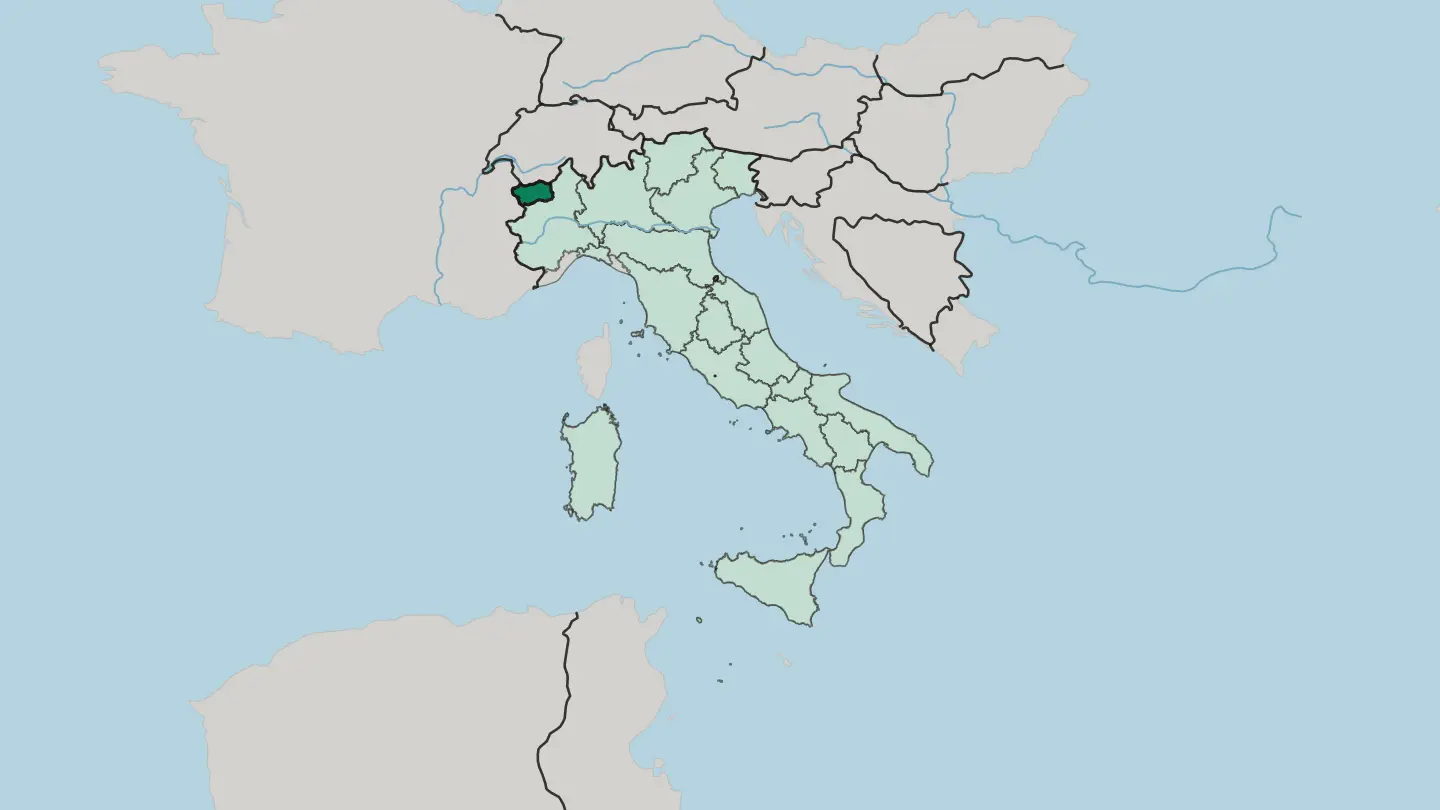
 Italy
Italy
Sardegna
Sardegna is the second-largest island in the Mediterranean, an autonomous region of Italy west of the mainland.Towns & cities →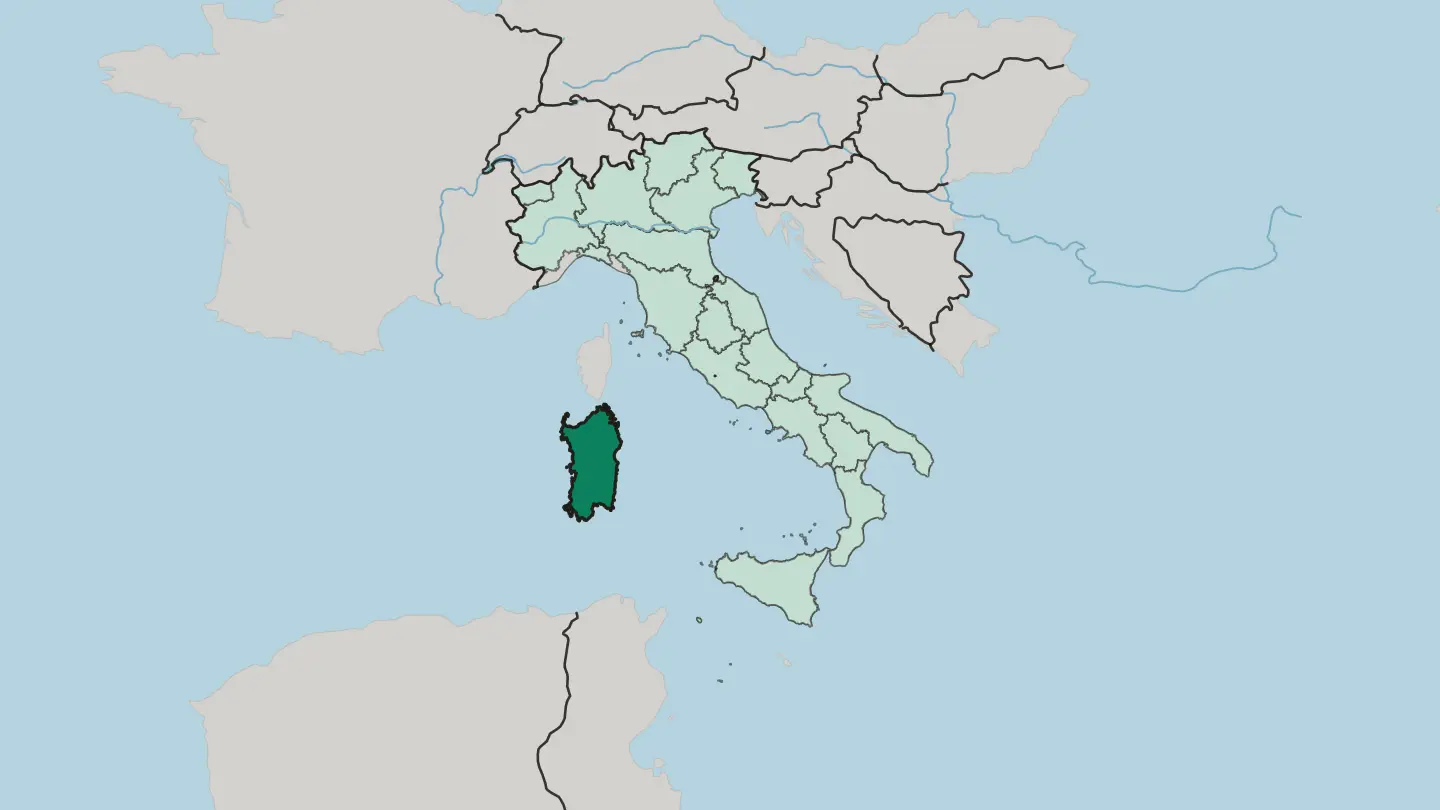
 Italy
Italy
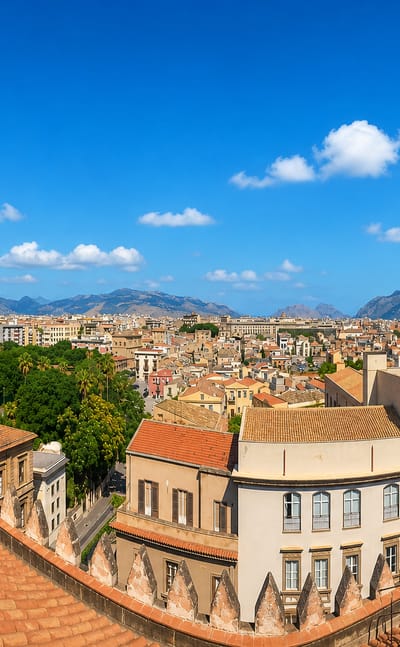
Sicilia
Sicilia is the largest island in the Mediterranean Sea and an autonomous region of Italy, with Palermo as its capital.Towns & cities →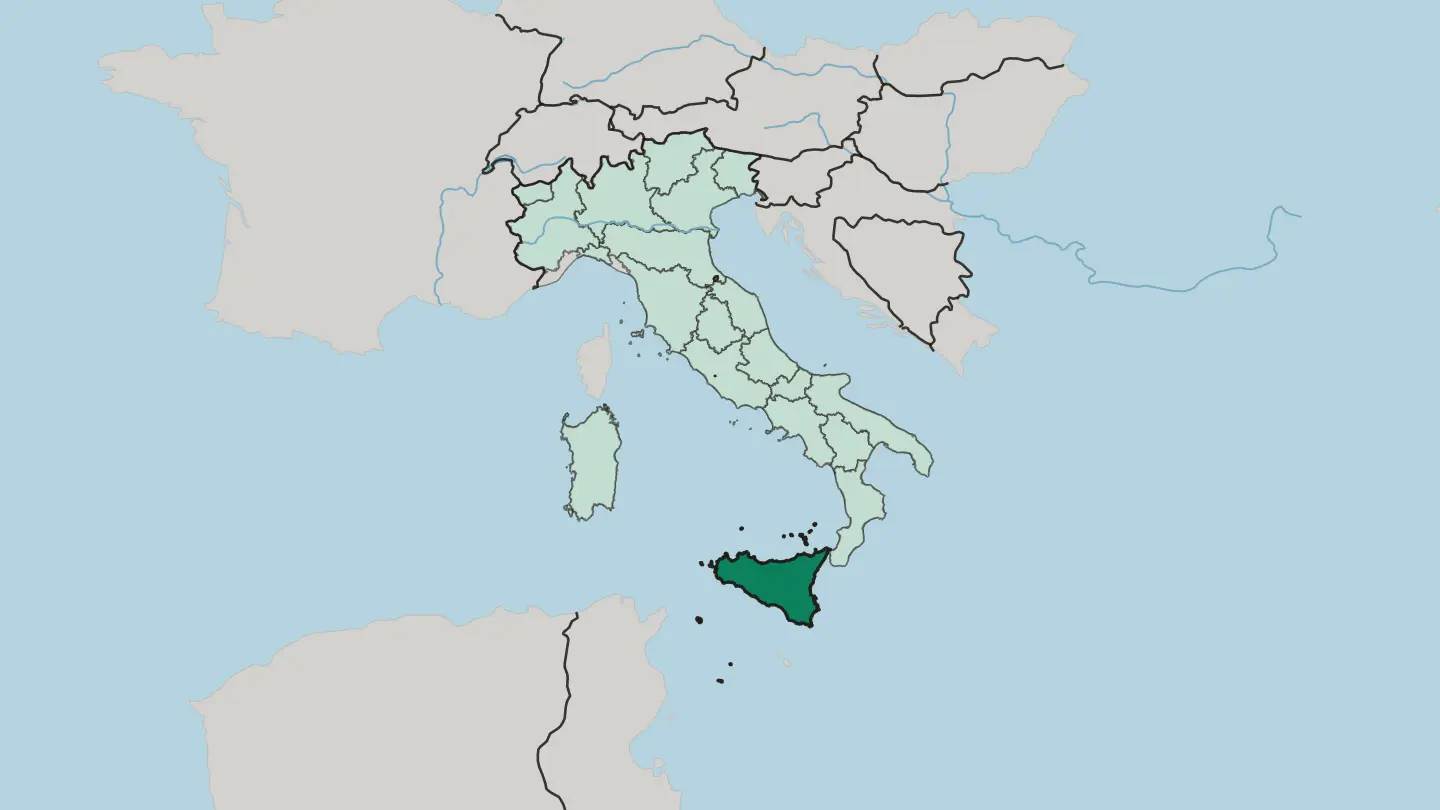 Italy
Italy
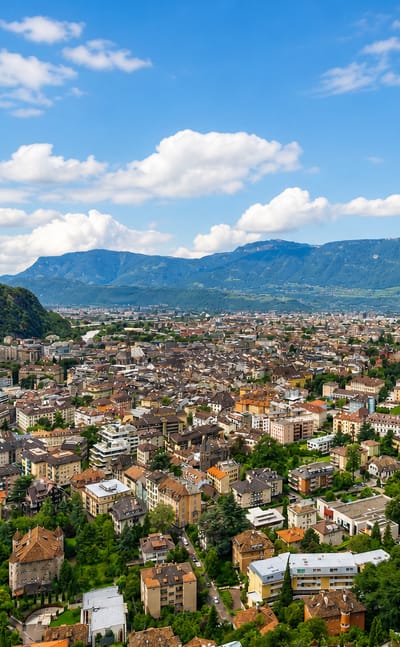
Toscana
Toscana is a region of central Italy, home to Florence and the Renaissance, hill towns, vineyards, and a Tyrrhenian coast.Towns & cities →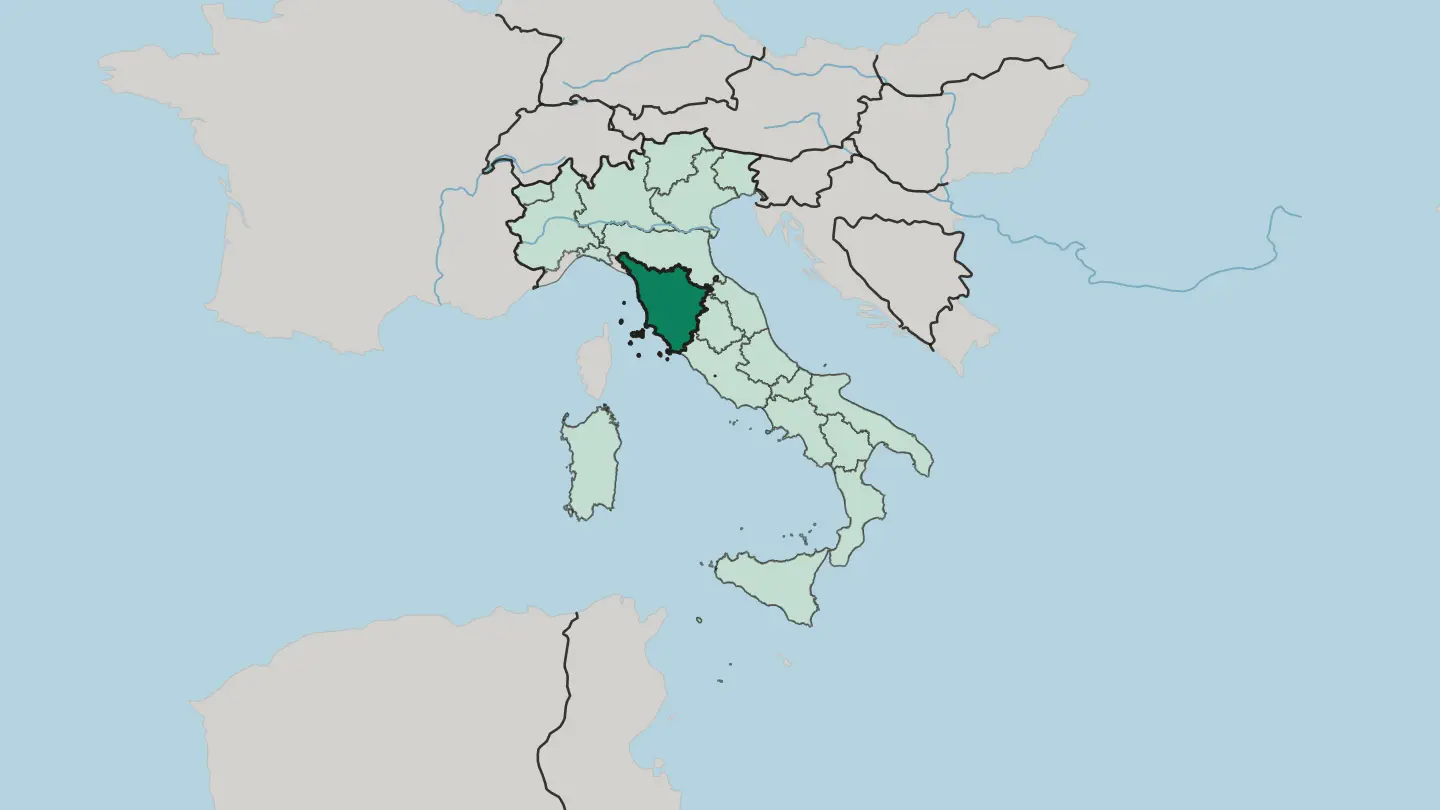
 Italy
Italy
Trentino-Alto Adige
Trentino-Alto Adige is an autonomous region of northern Italy, split between German-speaking South Tyrol and Italian-speaking Trentino.Towns & cities →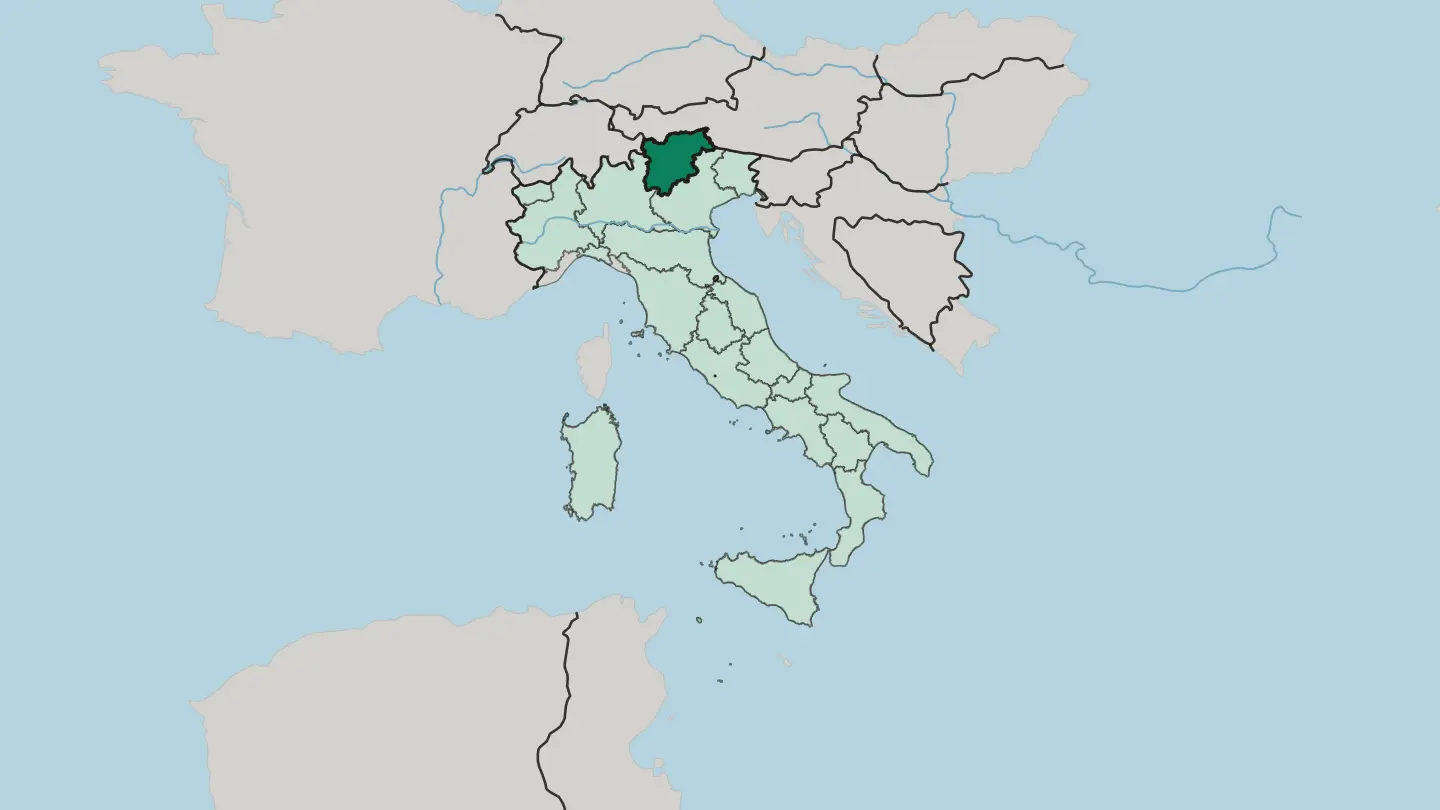
 Italy
Italy
Umbria
Umbria is the green heart of Italy, a landlocked region of hill towns, the Tiber valley and the Apennine ridges east of Tuscany.Towns & cities →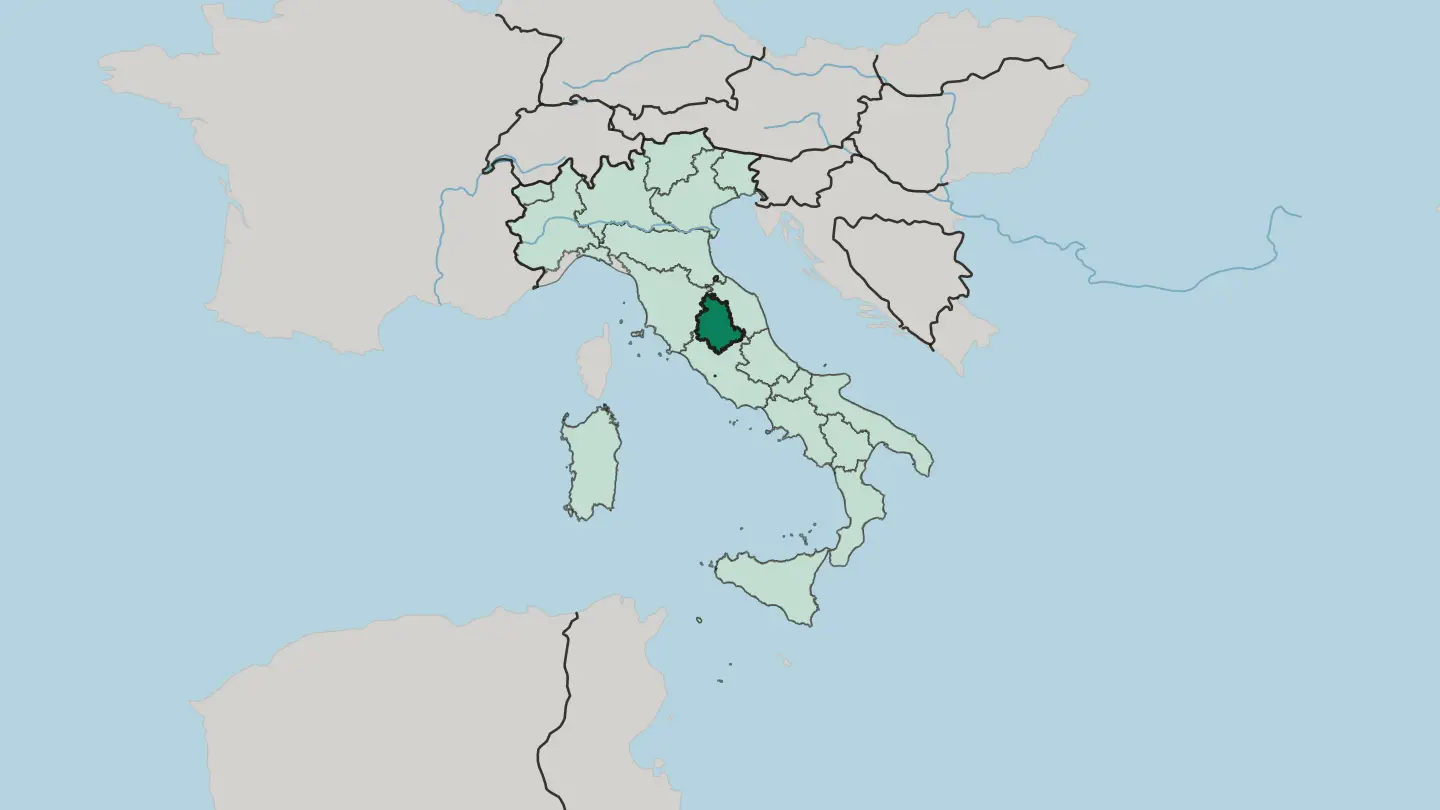 Italy
Italy
Veneto
Veneto is the north-eastern Italian region that runs from the Alps and Lake Garda down to the coast, with Venice as its capital.Towns & cities →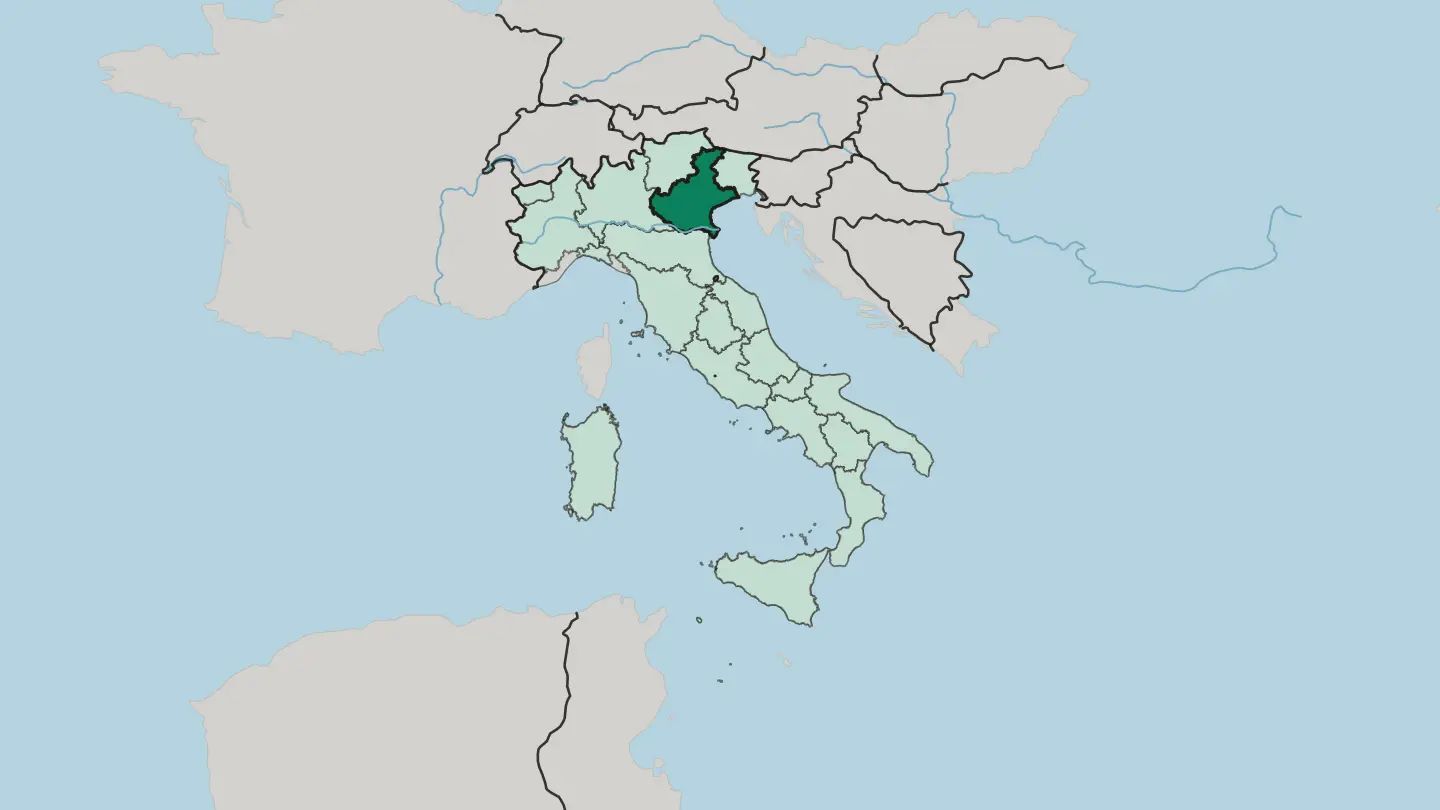
Explore by experience
Not sure which place? Start from how you want to travel.
About Italy
Few countries carry as much Western past.
What is Italy known for?
Italy was the core of the Roman Empire, and later the cradle of the Renaissance. Alongside Greece, it is counted among the birthplaces of Western culture, and it holds more UNESCO World Heritage Sites than any country on earth. The proof is everywhere.
High art and ancient monuments lie scattered the length of the peninsula, while Rome, Florence, and Venice gather the largest share of visitors and Milan, Naples, and Turin guard collections of their own.
Where is Italy?
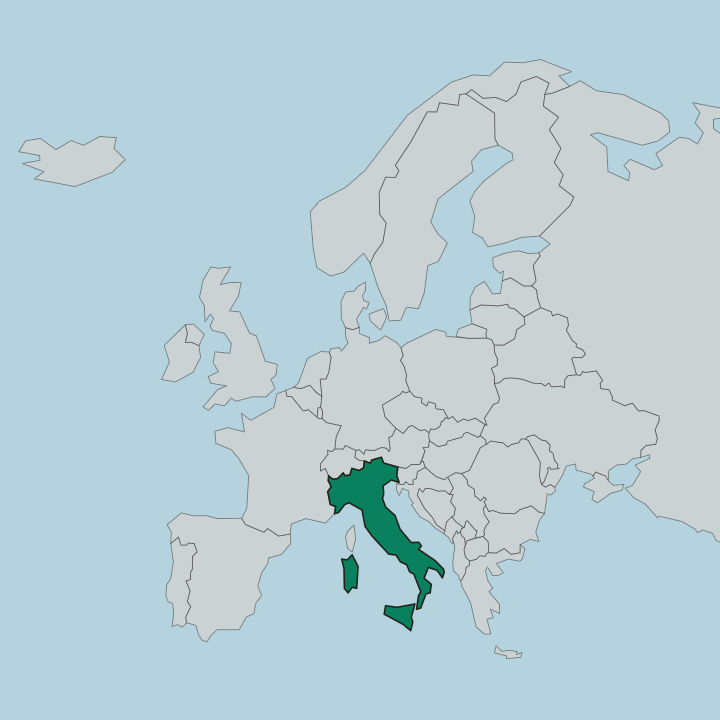
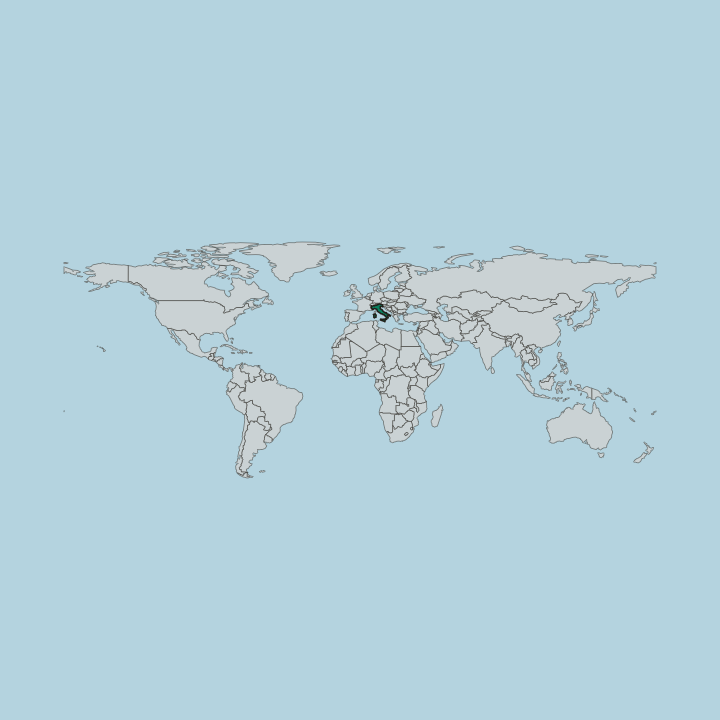
Italy runs south from the European mainland as one long peninsula, narrowing as it drops into the Mediterranean Sea. The country sits in southern and western Europe at once. The Alps close the top of it.
They draw most of the land border and lift the ground into high rock and lasting snow, the highest ground in the country. Four neighbours line that mountain frontier. France lies to the west, Switzerland and Austria stand across the north, and Slovenia adjoins the eastern end.
South of the range the peninsula stretches for hundreds of kilometres toward the centre of the Mediterranean Sea. Beyond the mainland the territory breaks into nearly 800 islands. Sicily and Sardinia are by far the largest, both set well out in the open sea.
There is more inside the borders than Italy alone. Two enclaves sit wholly within them: the Vatican City, ringed by Rome, and the small Republic of San Marino on higher ground inland. Sea lies on almost every side, so the coast shapes the country as much as the mountains do.
From the snow of the Alps to the southern shore of Sicily, the land spans a long reach of coast and climate.
What is the history of Italy?
Few places have shaped Europe so long. Italy was the core of the mighty Roman Empire. Rome itself grew from a single city into the capital of that empire.
From there its power reached across the Mediterranean Sea and deep into Europe over many centuries, until the empire at last broke apart. Older still was the debt to Greece. Greek thought and Roman order together are remembered as the birthplace of Western culture.
After the empire, for long stretches, the peninsula was a patchwork of separate states rather than one country. Then those same cities lit the Renaissance, the rebirth of art and learning that began here and reshaped the wider world. Florence, Venice, Rome, Milan, and Naples still hold much of what those centuries produced.
It is from these ages that Italy keeps more UNESCO World Heritage Sites than any other country, in high art and standing monuments alike. Unity itself came late. The modern Italian Republic, the Repubblica Italiana, dates from 1946.
Its capital is Rome, the same city where the oldest part of the whole story first began.
What is Italy like?
Culture here is not kept behind glass. Italy holds more UNESCO World Heritage Sites than any country on earth, and most of that heritage stands in streets and squares that people still use every day. The Roman past and the Renaissance are the two deepest layers.
Both began here. Ancient monuments from the age of the Roman Empire share the same cities as the art and architecture of the Renaissance, the movement that started on the peninsula and remade European taste. That is why the country is counted, with Greece, among the birthplaces of Western culture.
What Italy did not invent it often inherited, much of it from Greece, then reshaped and passed on. The art is spread, not gathered in one capital. Almost every old city has its share.
Rome, Florence, Venice, Naples, and the other great cities each keep collections, churches, and monuments of their own. A church, a square, or a single old wall can hold centuries at once. Italian, the language of the Repubblica Italiana, carries the whole of it.
Here the past is lived in, not shut away.
What is the climate of Italy?
Length sets the pattern. Most of Italy sits in the temperate band, but the long reach from the Alps to Sicily pulls the weather into very different moods. Along the coasts and across the south the climate is broadly Mediterranean, with warm, dry summers and milder, wetter winters.
Inland and uphill it cools. The Alps in the north carry cold, snowy winters, and snow lingers on the high peaks long after the lowlands have warmed. Sicily and Sardinia, far out in the Mediterranean Sea, stay the warmest of all.
How do you get to Italy?
Italy is simple to reach. Four countries touch it by land: France, Switzerland, Austria, and Slovenia. Road and rail cross those borders through and around the Alps, tying the country into the rest of Europe.
Travellers from further off mostly come by air, landing first at the largest cities before fanning out down the peninsula. Everything else comes by water. Ferries cross the Mediterranean Sea to Sicily and Sardinia, and the long coastline keeps almost every part of the country within reach of water.
Common questions
What is the best area to stay in Italy?
Rome: a first visit built around the Roman Empire and the Vatican City. Florence: travellers who come for the Renaissance. Venice: a car-free stay on the water. Milan: design, shopping, and fast trains under the Alps. Naples: the south and crossings to Sicily and Sardinia.
Good for
Updated September 2026