Italy · Sicilia · Catania
Cibali, Catania — Area Guide & Where to Stay
Cibali, Cìfali in Sicilian, is a quarter of Catania in the IV Municipio, its name from the Greek kephalé for the head or source of the Longane river.
Hotel links are affiliate links: booking through them may earn us a commission, at no extra cost to you. It never affects how places are ranked. How this works


Where to stay in Cibali
Where the beds are, and what that means for the visit.
Three squares hold the quarter together. Piazza Michelangelo Bonadies, Piazza Vincenzo Spedini and Piazza Santa Maria Ausiliatrice are the reference points of this part of the Catania semiperiferia, and the streets that matter run off them, Via Cibele, Via Cìfali, Via Galermo, Via Santa Sofia and Via Giuseppe Fava. The Viale marks the southern edge.
Viale Mario Rapisardi closes Cibali on that side and the Circonvallazione closes it on the north and northwest, running here as Viale Fratelli Vivaldi and Viale Antoniotto Usodimare. This is residential ground, not a base.
About Cibali
What are the main landmarks in Cibali?
The water made the reputation. The spring of the Lognina rose in Cibali and the Diocese of Catania held it from 1092 as a gift of Roger of Hauteville, and after 1669 bishop Michelangelo Bonadies passed it to the Senato Civico so the city could use it, which is how the public wash house came about and how the lavandaie di Cìfali got their trade. That water also fed an aqueduct.
Bishop Innocenzo Massimo and abbot Teodosio agreed in 1625 to channel it, and the Acquedotto dei Benedettini was built between 1644 and 1649 under abbot Mauro Caprara to carry water from the Timpa della Leucatìa to the monastery of San Nicolò l'Arena. Two churches mark the old core. Santa Maria degli Angeli went up in 1383, the Capuchins under Bernardino da Reggio built a monastery beside it in 1551 on donations from Caterina Fimia and left it in 1622, and a church to the Madonna delle Grazie was raised for the Misterbianco refugees who settled here.
What is the history of Cibali?
Shepherds came first. Siculi grazed flocks on this ground in the 10th century before Christ, and when Chalcidian settlers from Naxos founded Katane on the hill of Montevergine in 729 they took Cìfali as well, enlarging the village and later raising a temple to Cybele there. Rome called it Demetria.
The village kept a grain store under the Romans and a temple to Ceres, and after Christianity spread through Sicily pope Gregory the Great founded a Benedictine convent here in 591 at the urging of a Catanese noble named Giuliano. Those nuns came and went twice. The Badìa di Cìfali was dedicated to San Giuliano by the end of the 9th century, stopped when Catania fell to the Arabs in 948, restarted when the Normans took Sicily in 1072, and was abandoned in 1293 when the building had decayed too far.
Two disasters remade the place. Lava from the Etna eruption of 1669 filled the lake of Nicito just to the south and drove about a thousand refugees from old Misterbianco to settle here for good, and the Val di Noto earthquake of 1693 levelled Cìbali entirely, after which university lectures restarted in three sheds put up in its gardens.
Where is Cibali?
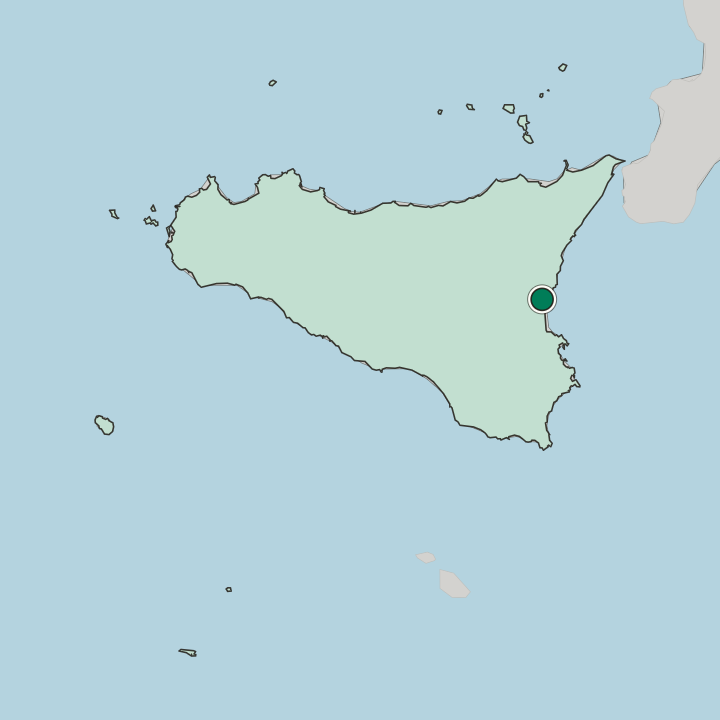
Cibali sits in the north-centre of Catania, bordering Trappeto to the north, San Nullo to the northwest, Sacra Famiglia to the west, Curìa and Sant'Antonio di Padova to the south and Consolazione to the east, and it holds the five contrade Cristaldi, Gelsi Bianchi, Ogliastro, Stazzone and Susanna.
Good for
Updated September 2026