Italy
Sicilia, Italy — Towns & Travel Guide
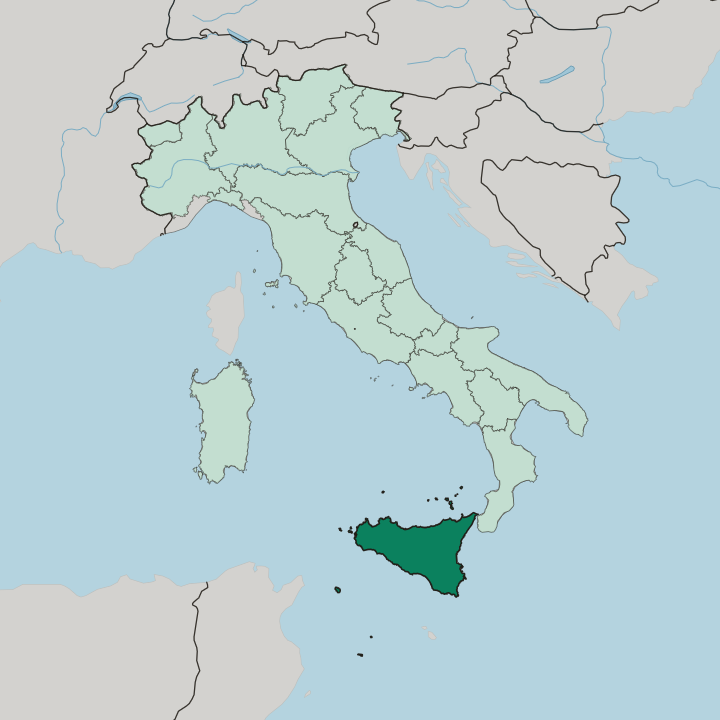
Sicilia is the largest island in the Mediterranean Sea and an autonomous region of Italy, with Palermo as its capital.
Hotel links are affiliate links: booking through them may earn us a commission, at no extra cost to you. It never affects how places are ranked. How this works


Towns & cities in Sicilia
Pick a town or city — each links to where to stay.
 Italy
Italy
Palermo
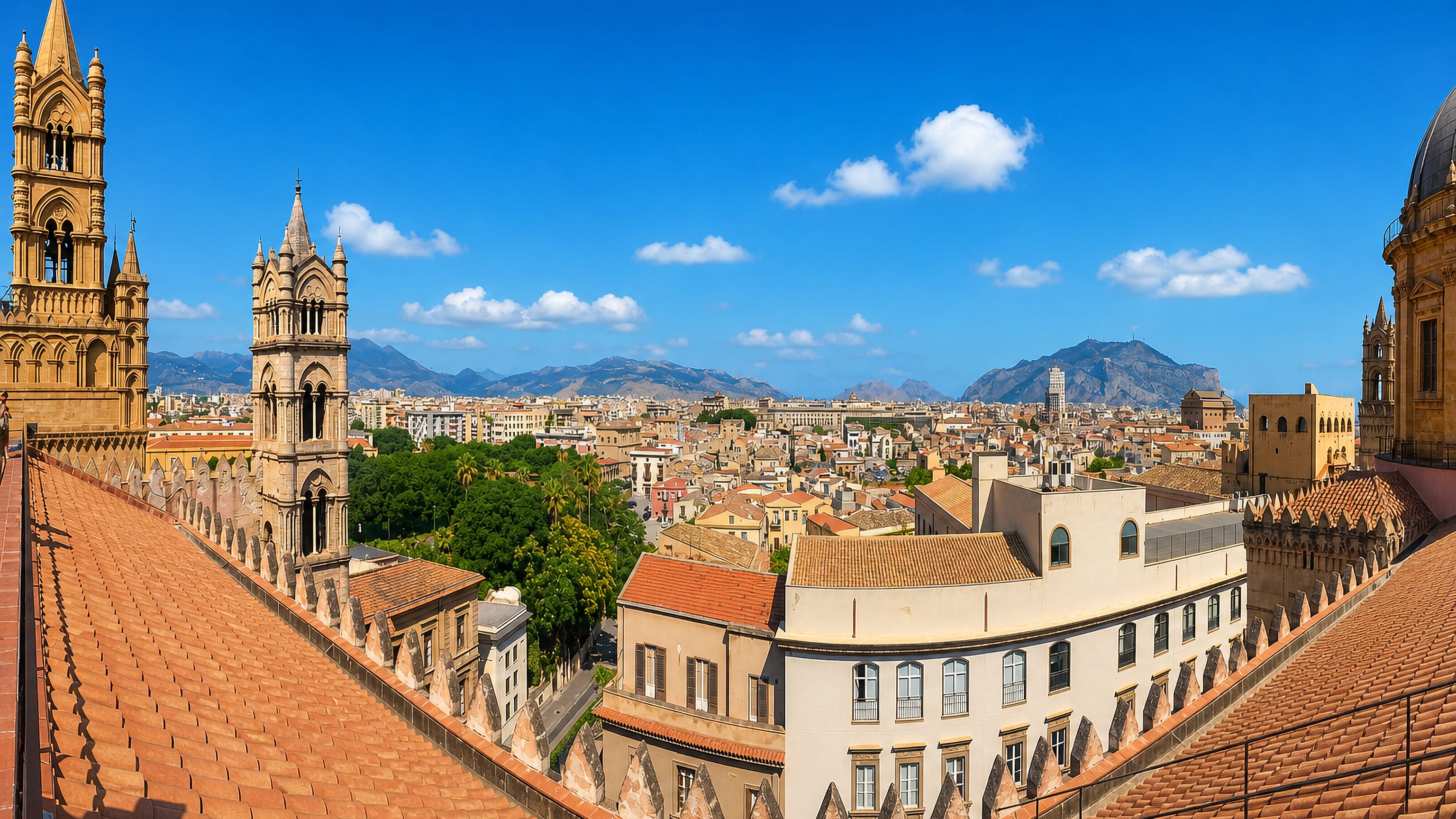
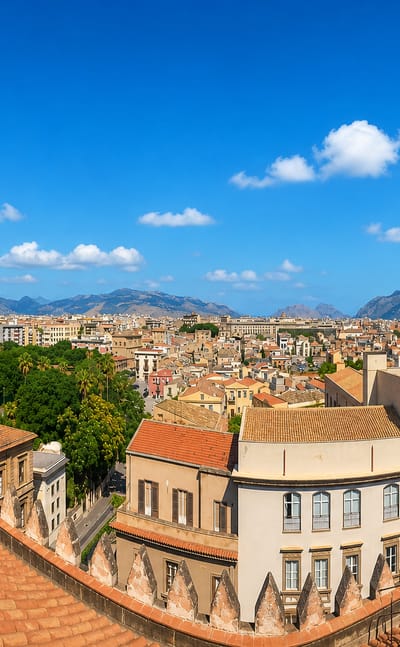
Palermo is the capital of Sicily, an Italian port city on the Tyrrhenian coast known for its Arab-Norman palaces and churches.Where to stay →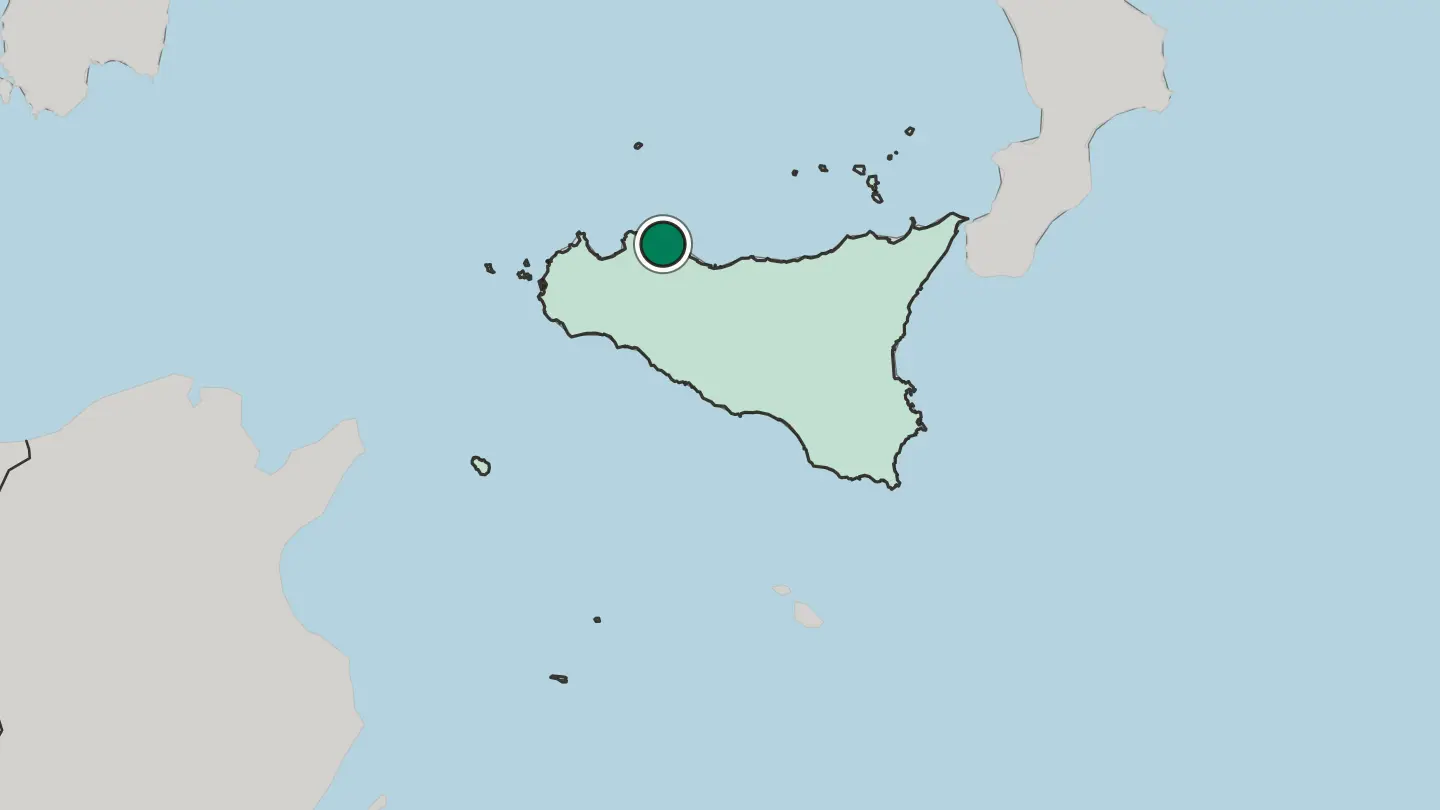
 Italy
Italy
Catania
Catania stands on the Ionian Sea at the foot of Mount Etna, a baroque city rebuilt after the earthquake of 1693 and the second city of Sicily.Where to stay →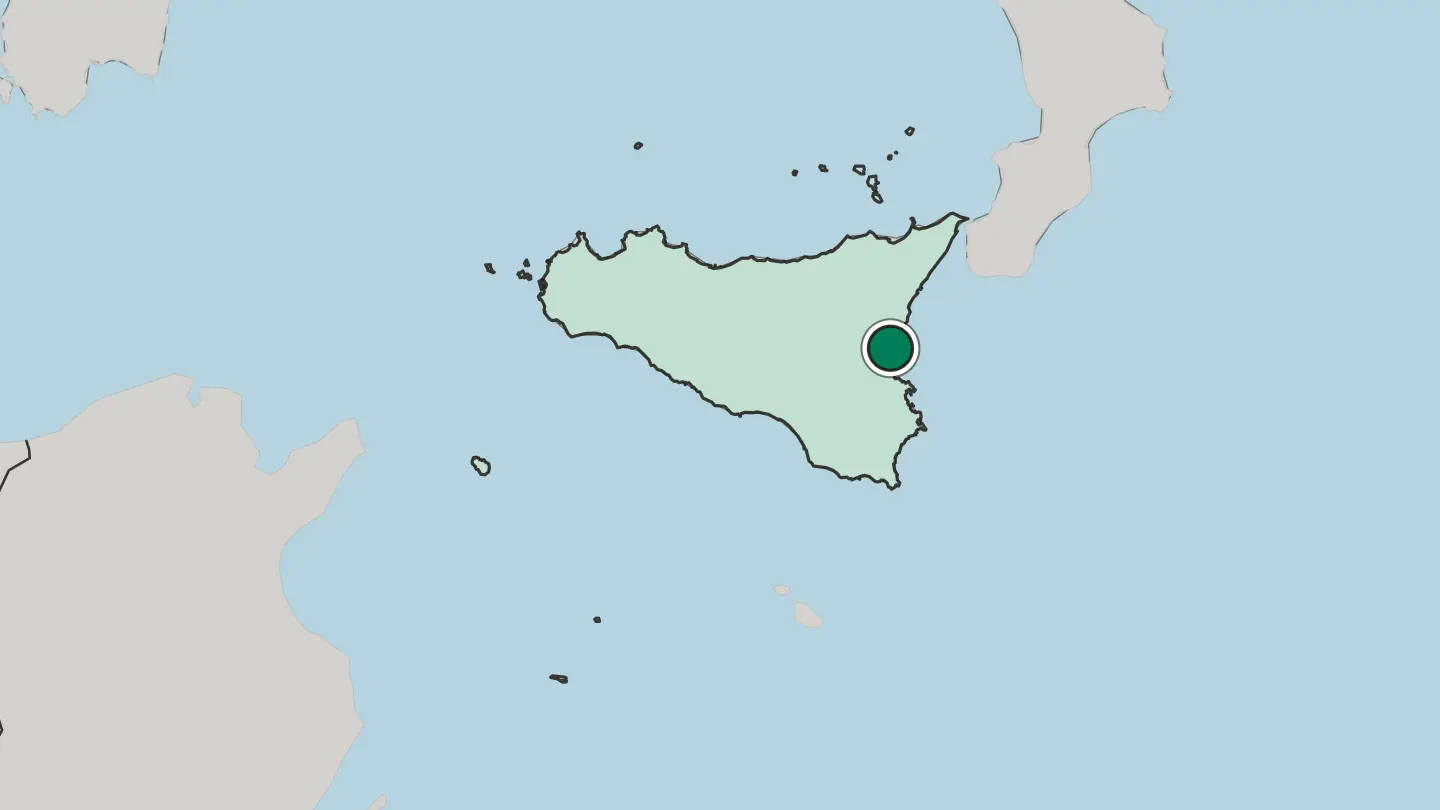
 Italy
Italy
Messina
Messina is a harbour city on the Strait of Messina, the ferry crossing between Sicily and Calabria, rebuilt after the earthquake of 1908.Where to stay →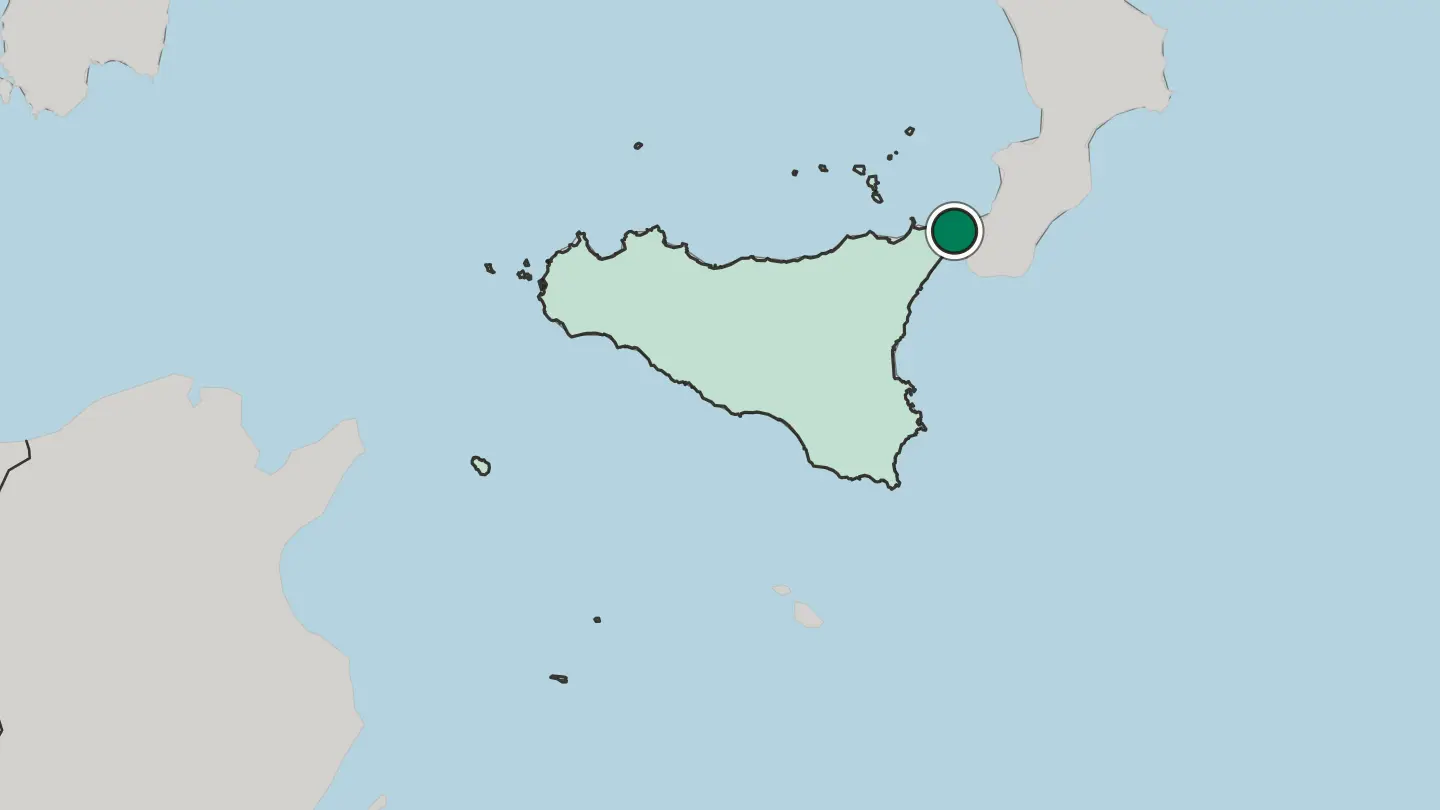
 Italy
Italy
Siracusa
Greek and Roman ground lies under Siracusa, a city on the eastern coast of Sicilia, listed with Pantalica as UNESCO World Heritage.Where to stay →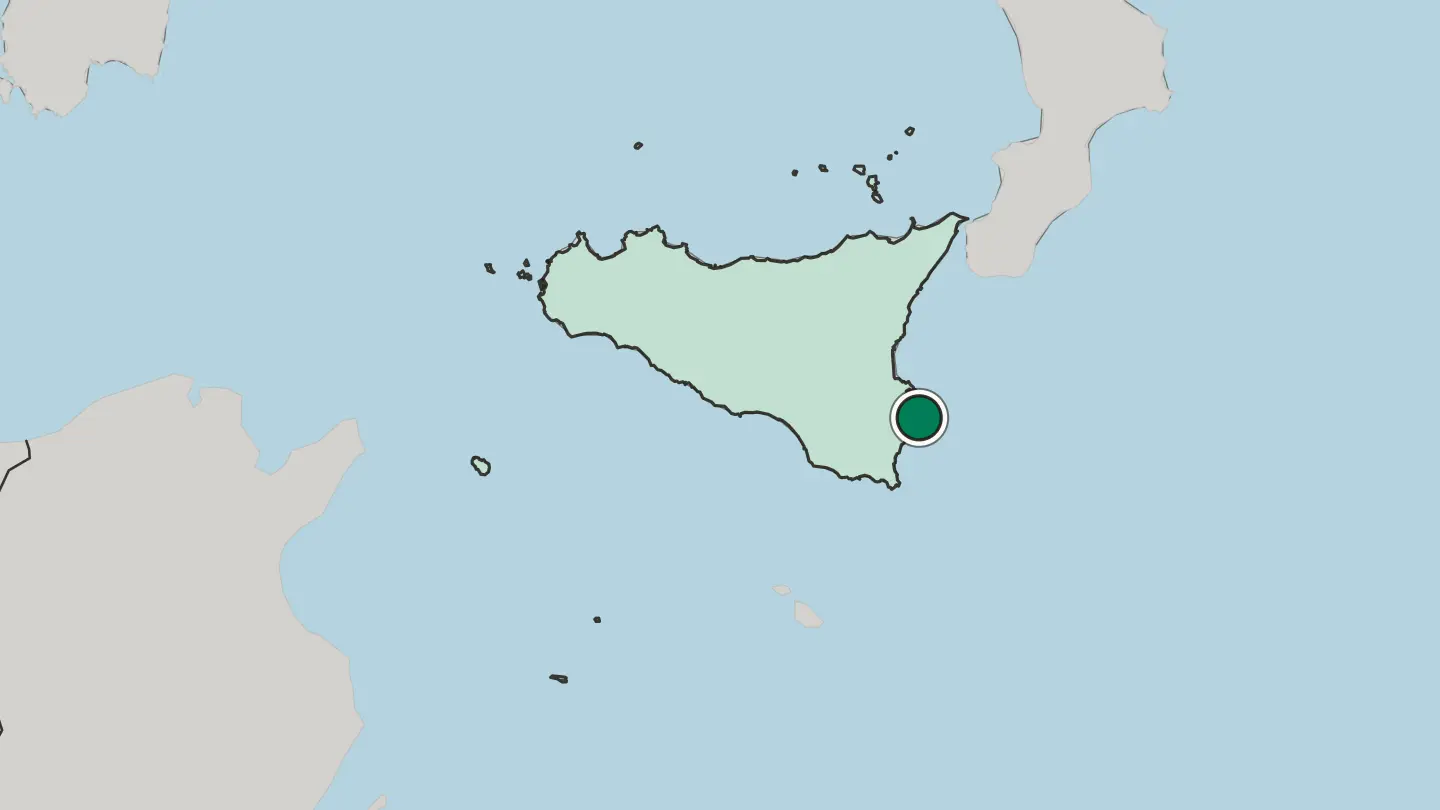
 Italy
Italy
Marsala
Marsala is a waterfront town in the Province of Trapani, built over the ruins of Lilybaeum and known for the fortified wine that carries its name.Where to stay →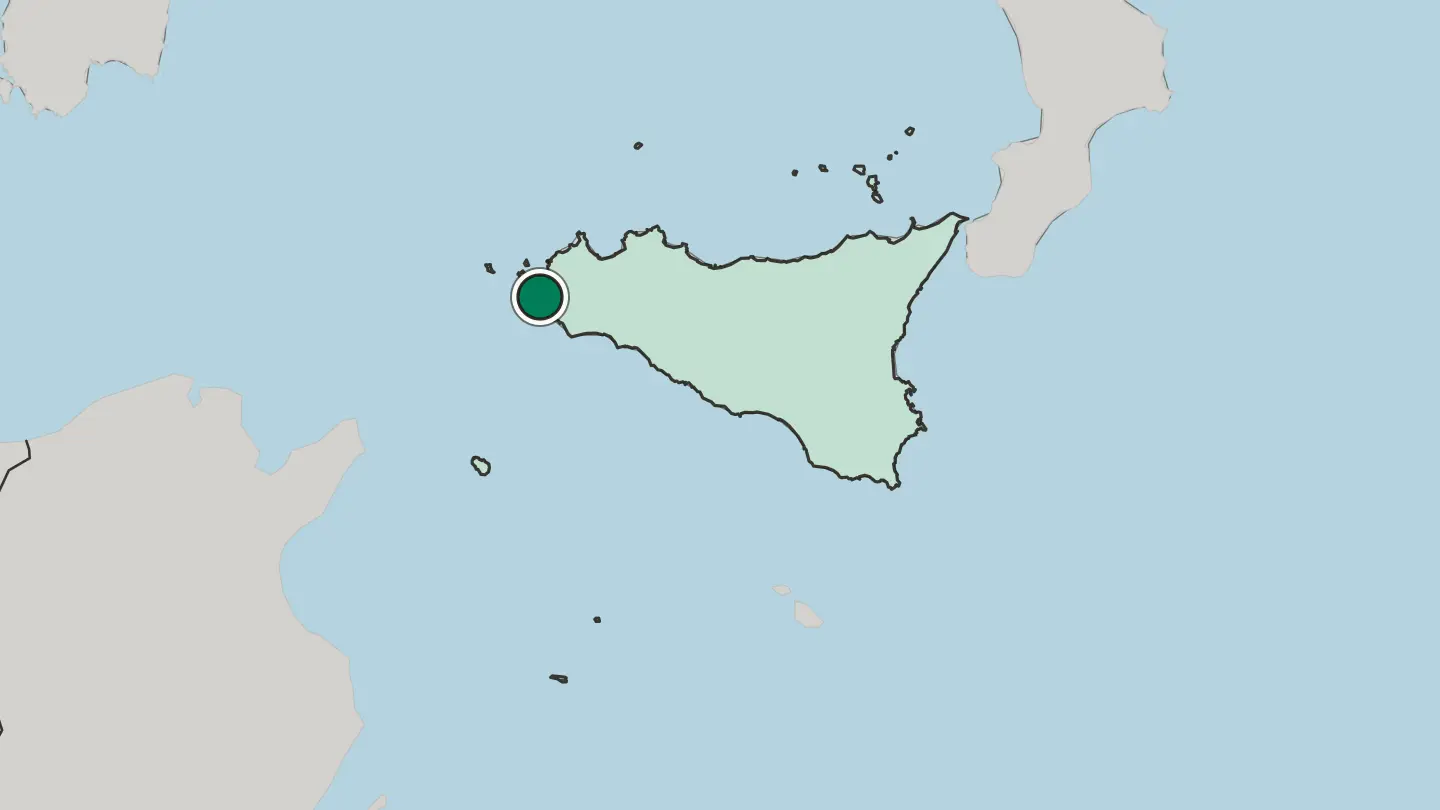
 Italy
Italy
Gela
Gela is an ancient Greek foundation on the Sicilian coast, settled around 688 BC by colonists from Rhodes and Crete.Where to stay →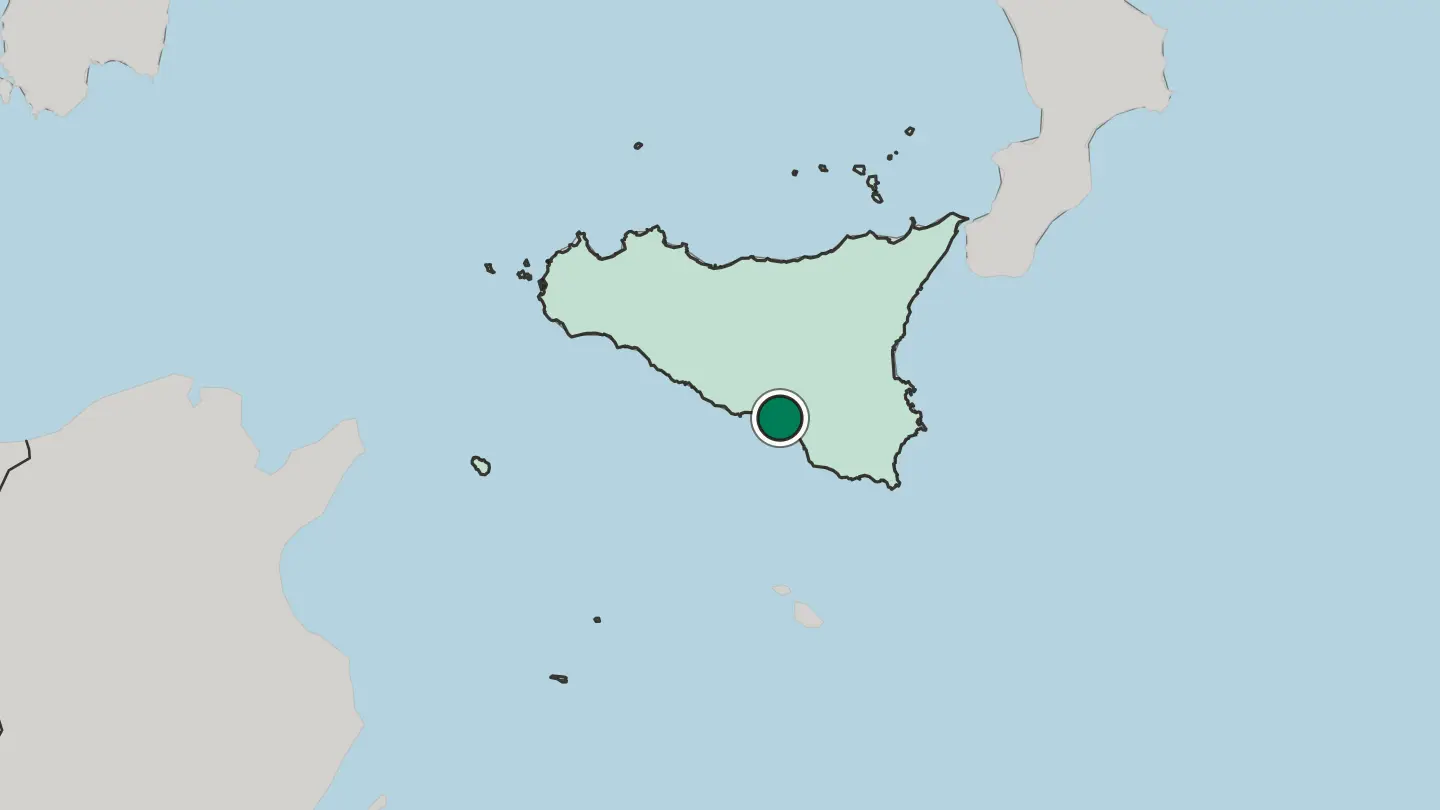
 Italy
Italy
Ragusa
Ragusa is the capital of its own province in Sicily, a city of churches and museums listed with seven neighbours as a UNESCO World Heritage Site.Where to stay →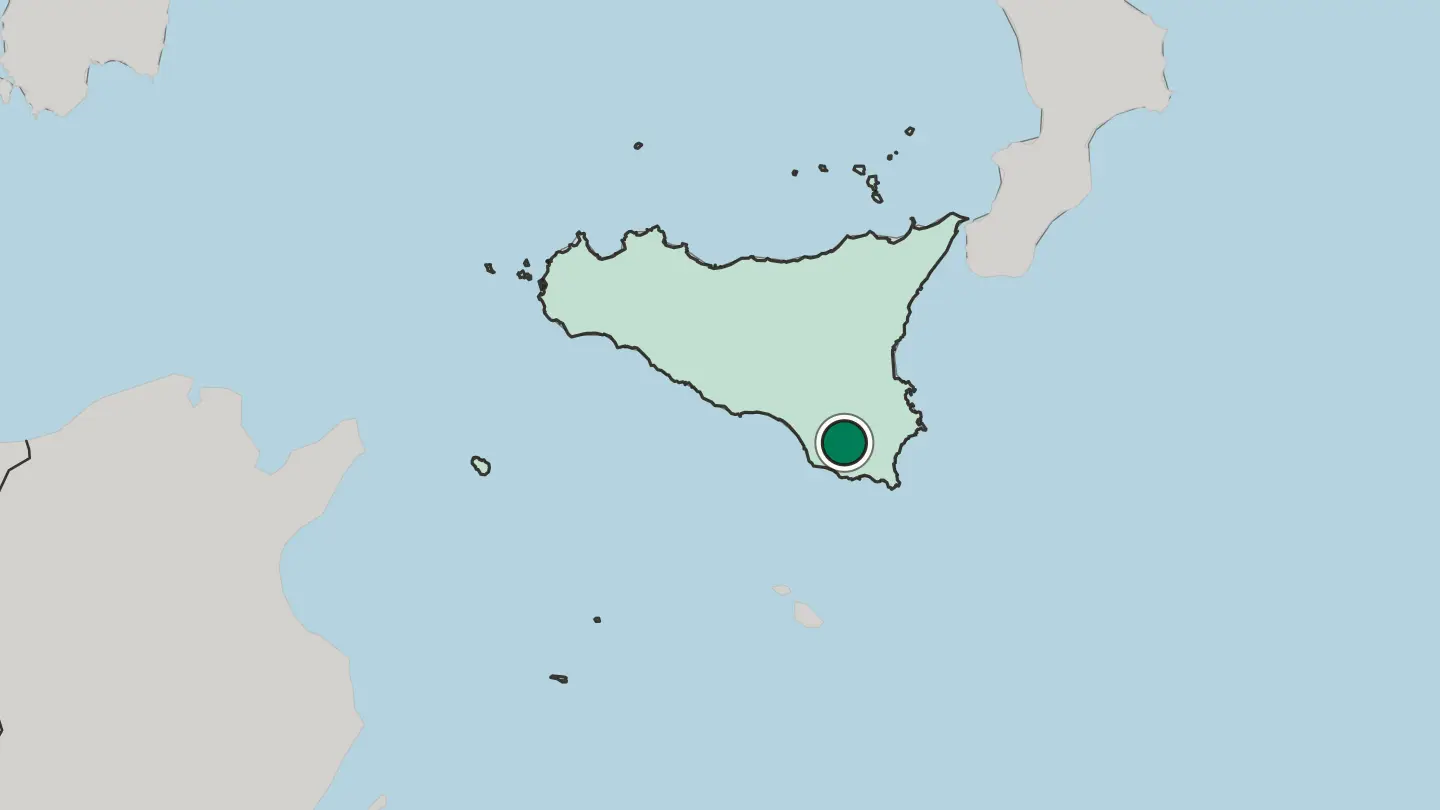
 Italy
Italy
Trapani
Trapani runs out along a narrow peninsula on the west coast of Sicily, a walled fishing port and provincial capital held between two seas.Where to stay →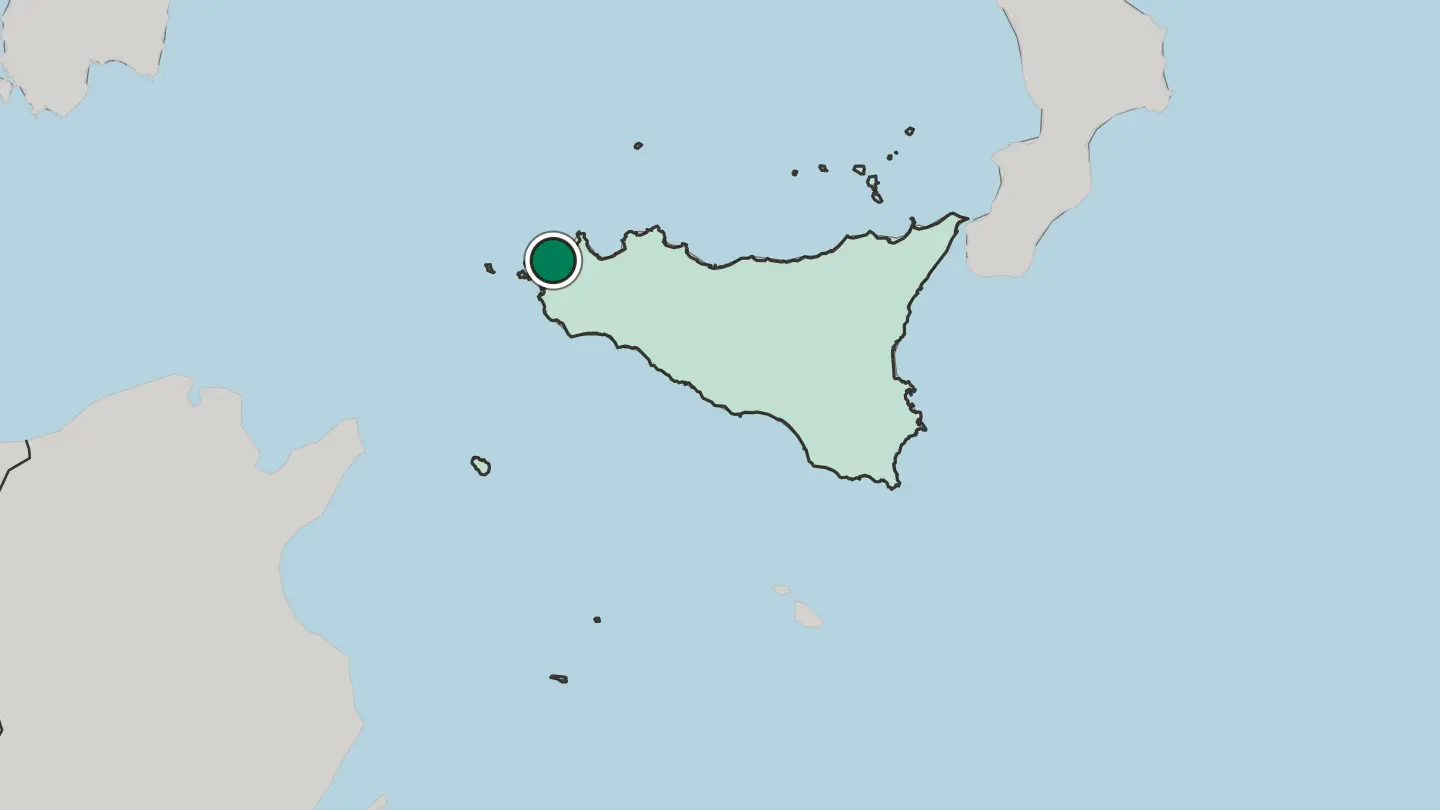
All towns & cities (13)
 Italy
Italy
Caltanissetta
Caltanissetta is a city of central Sicily in Italy, capital of its free municipal consortium, holding the Castle of Pietrarossa and five churches.Where to stay →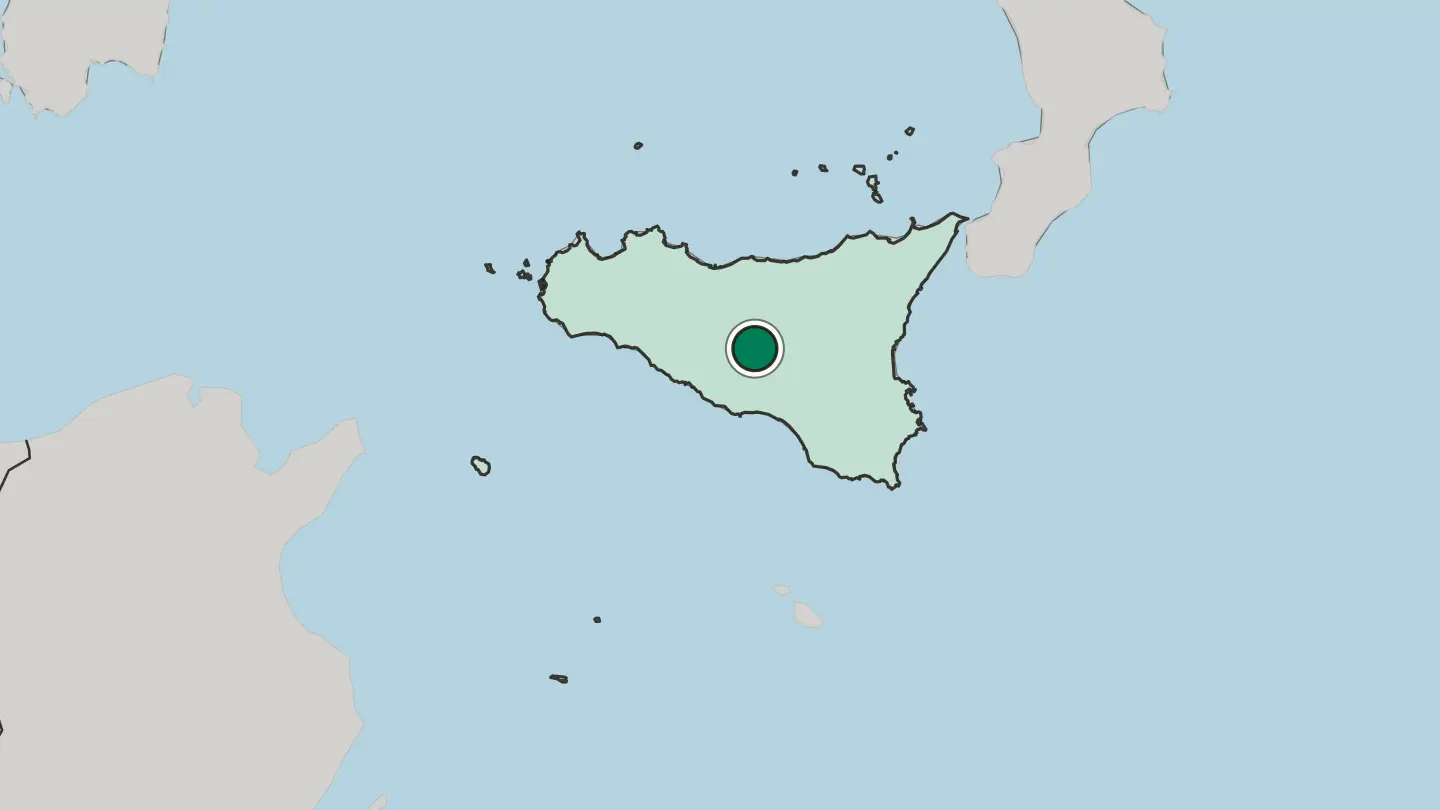
 Italy
Italy
Modica
Modica is a town in the Hyblaean Mountains of the Province of Ragusa, built around the Duomo of San Giorgio and the Castle of Modica.Where to stay →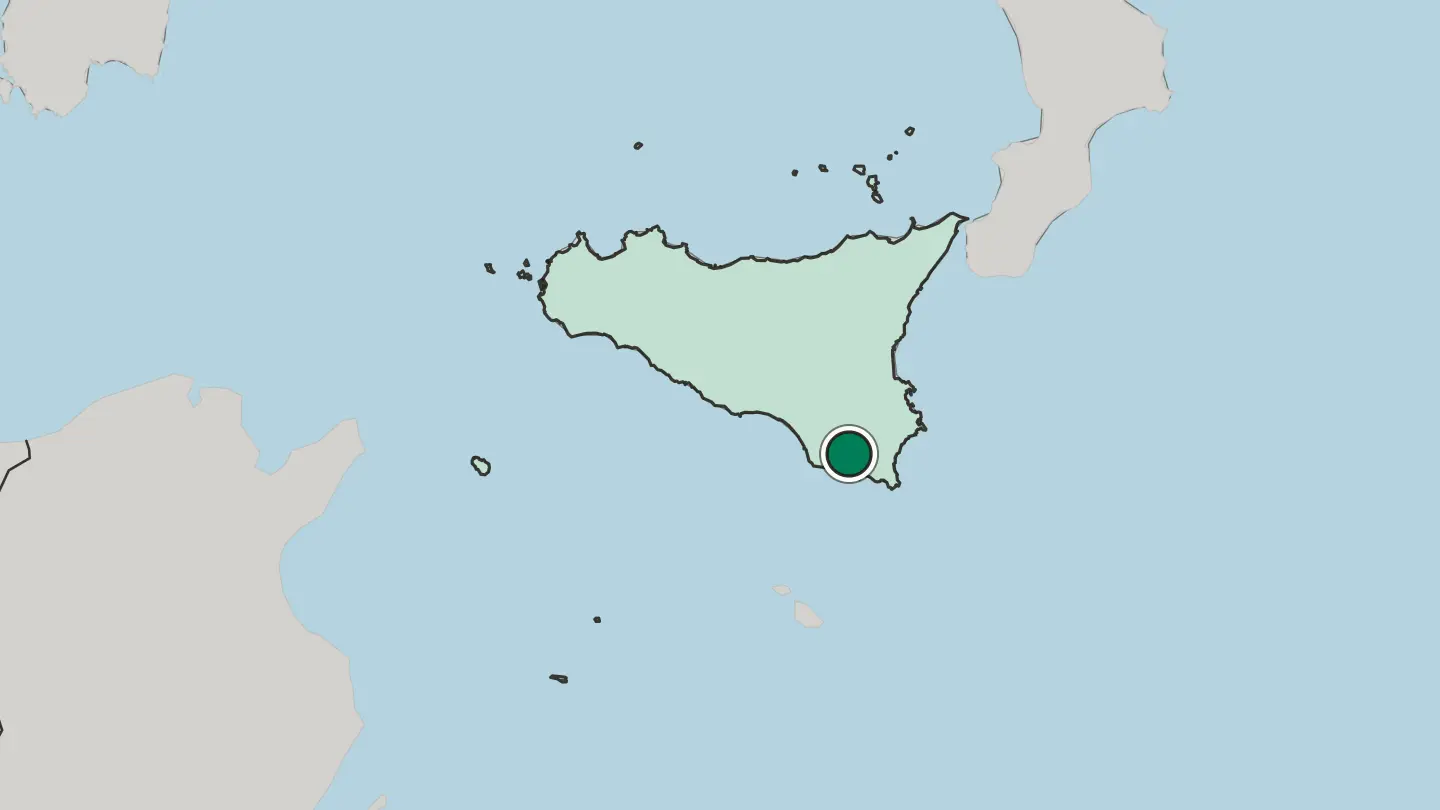
 Italy
Italy
Bagheria
Bagheria is a comune east of Palermo in Sicily, 10 kilometres from the city centre, holding the site of Soluntum and a stock of old towers.Where to stay →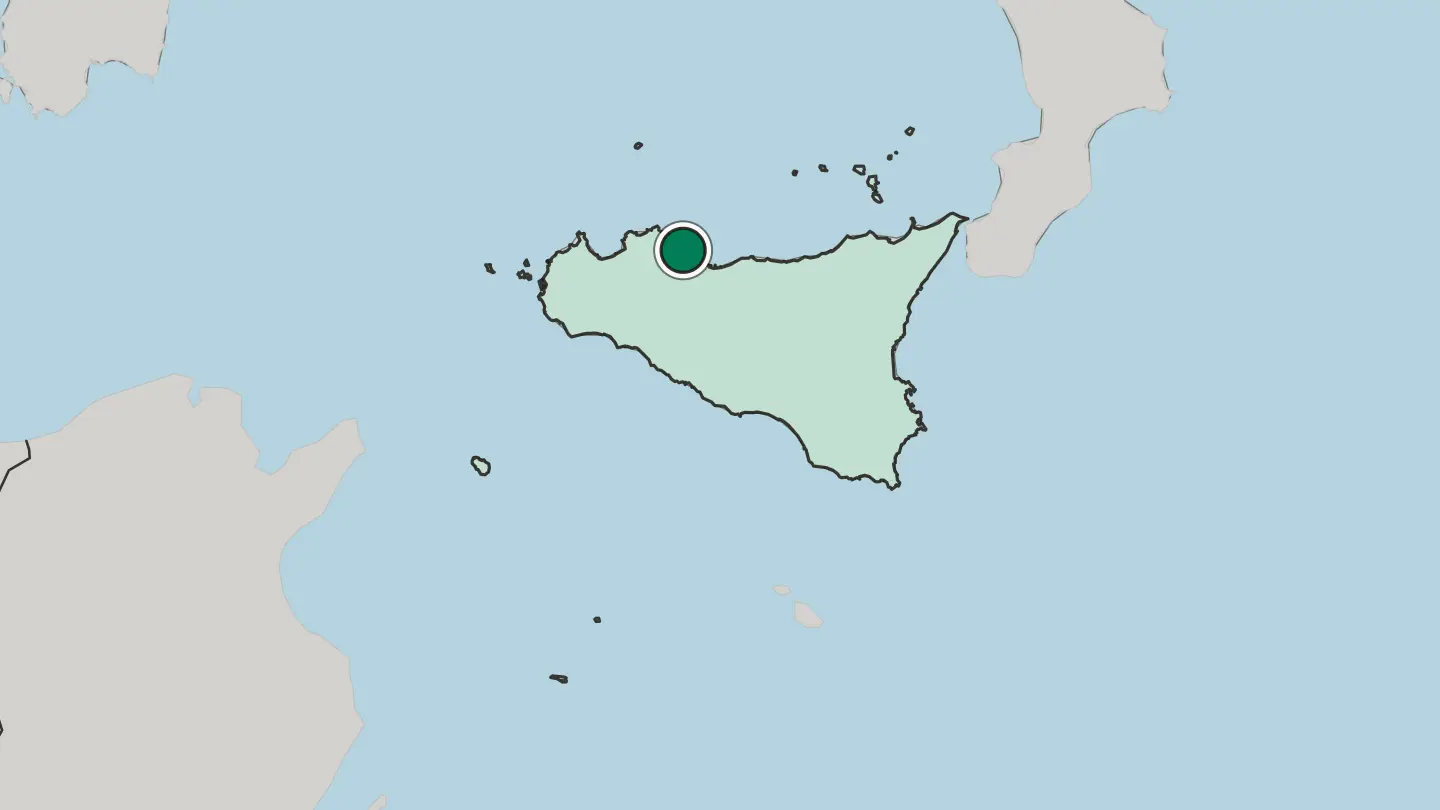
 Italy
Italy
Mazara del Vallo
Mazara del Vallo works one of Italy's leading fishing harbours, at the mouth of the Mazaro river, and keeps the Dancing Satyr in its own museum.Where to stay →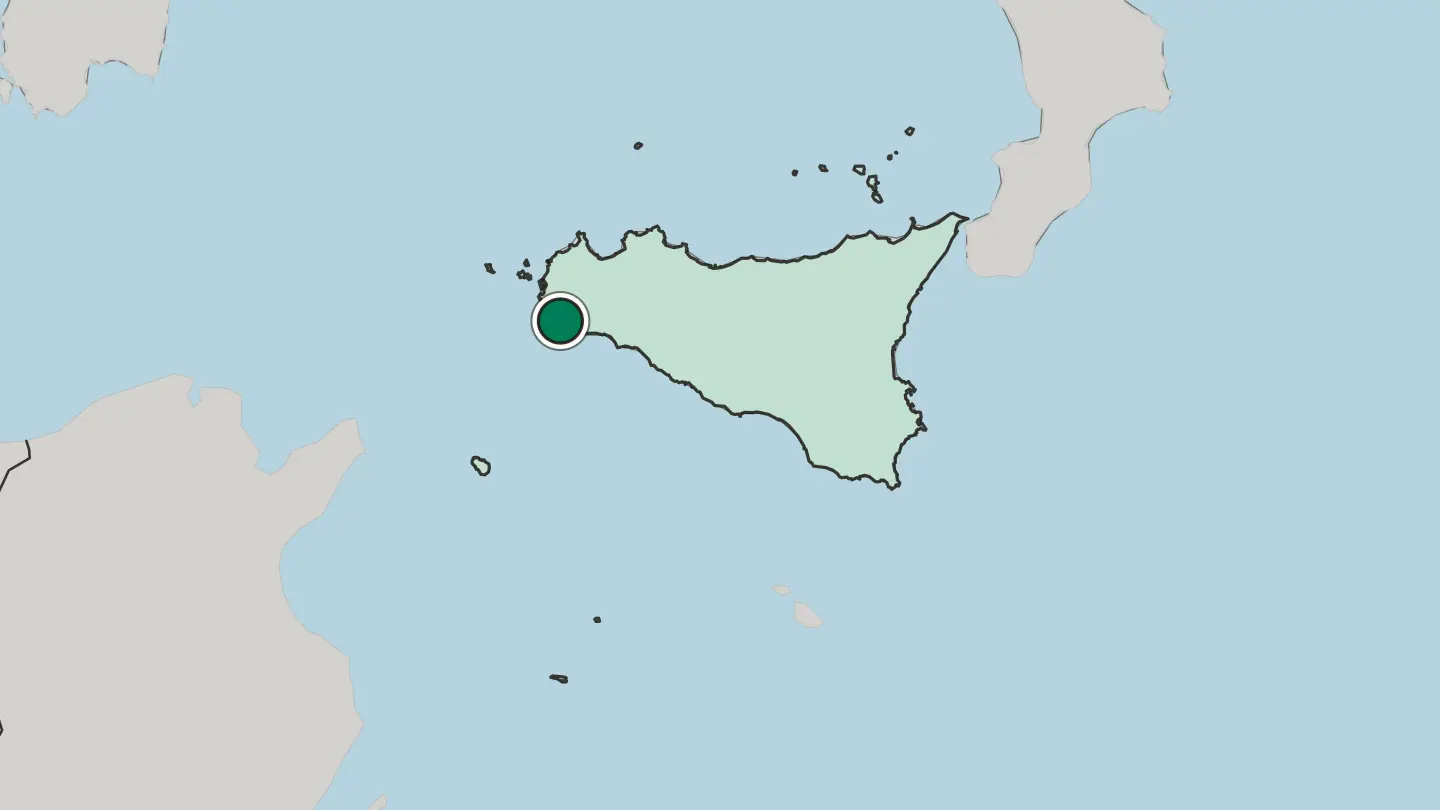
 Italy
Italy
Vittoria
Vittoria is a comune in the province of Ragusa, an inland Sicilian town whose centre gathers around its parish churches and Castello Henriquez.Where to stay →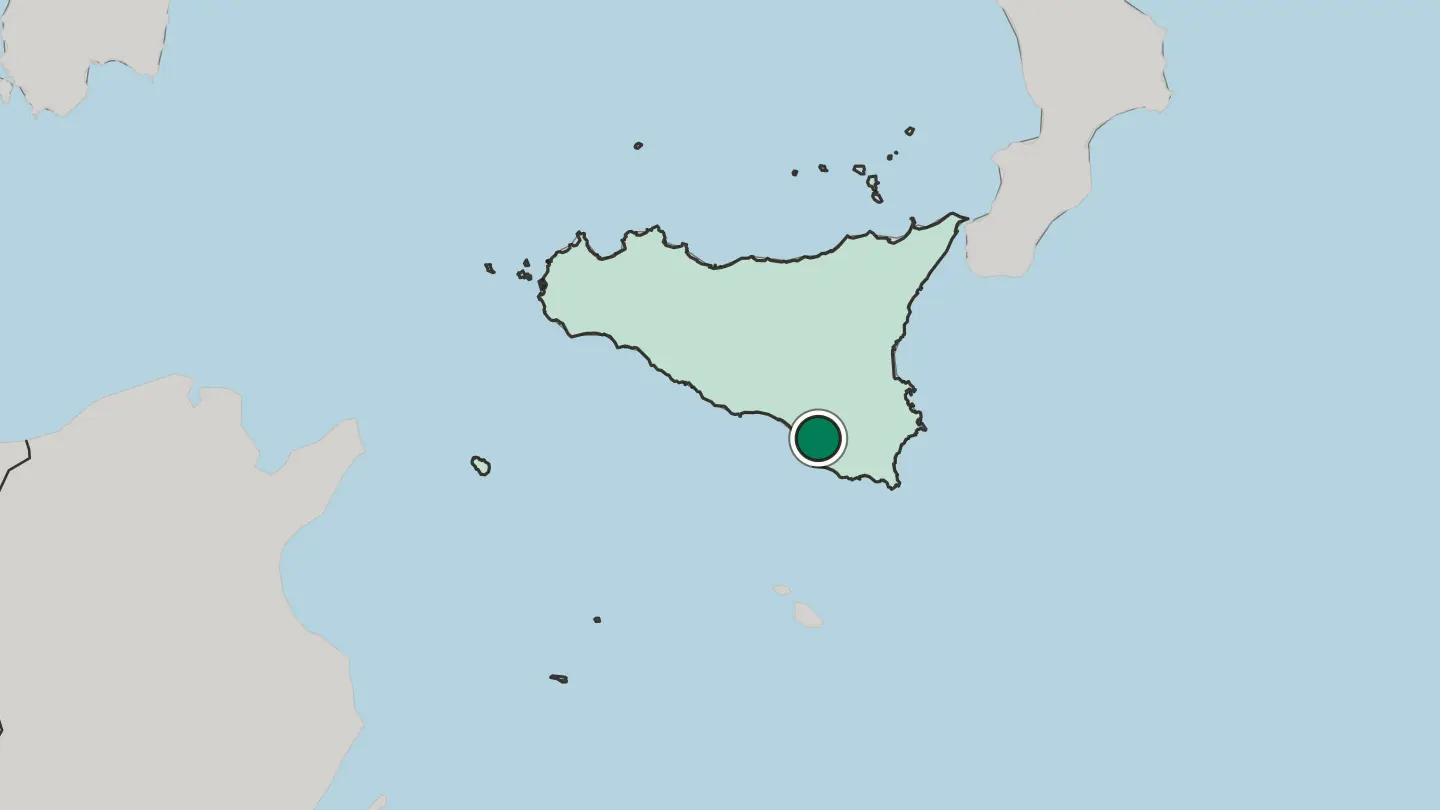
Hotel links are affiliate links: booking through them may earn us a commission, at no extra cost to you. It never affects how places are ranked. How this works
About Sicilia
What is Sicilia known for?
Sicilia draws travellers for its layered past and its place at the centre of the Mediterranean Sea. Greek temples, Roman mosaics, Arab gardens, and Norman cathedrals stand across the island, the marks of the many peoples who ruled this central Mediterranean crossroads over more than two thousand years. Palermo anchors the north coast.
The sea shapes everything. Volcanic soil, citrus groves, fishing harbours, and hill towns fill the land between its long shores.
Where is Sicilia?
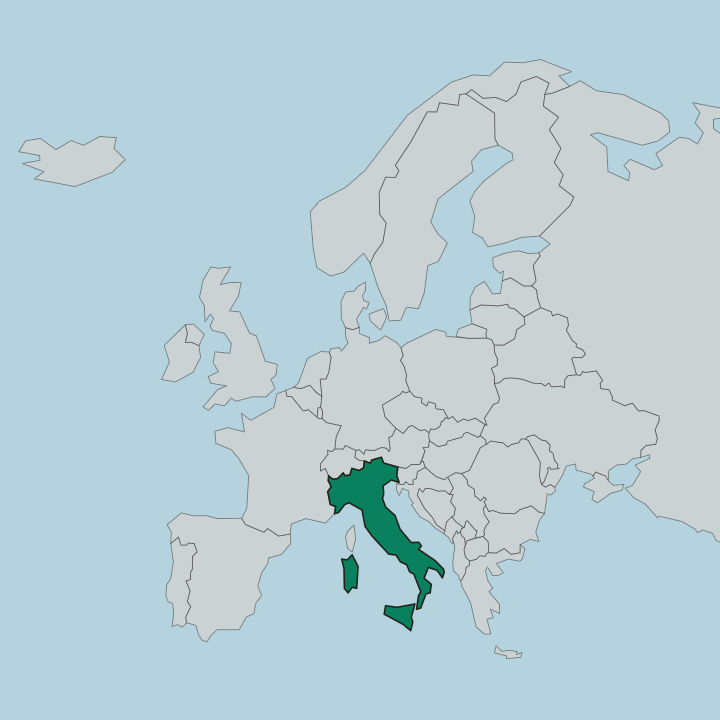
Sicilia sits at the centre of the Mediterranean Sea, the largest island in that sea and a region at the foot of Italy. A narrow channel separates it from the toe of the Italian Peninsula, setting the island just off the mainland yet apart from it. Water rings every side.
Long coasts run for hundreds of kilometres around the island, turning from cliffs and headlands to sheltered bays and harbours, and the open sea governs the climate, the fishing, and the rhythm of the towns along the shore. The land is far from flat. Beyond the coastal strips the ground rises into hills and upland that fill much of the interior, giving the island the diverse landscapes that set one corner apart from the next.
Palermo stands on the north coast, the capital and chief harbour, facing the sea that carried so many rulers here. Smaller plains open near the shore. Rivers run short and seasonal off the high ground, and the warm southern position keeps the whole island closer in feel to the wider Mediterranean than to the cooler mainland to the north.
On Sicilia no place lies far from the shore.
What is Sicilia like?
Sicilia carries the mark of every people who held it. Greek settlers, Roman rulers, Arab emirs, and Norman kings each left their stamp on the island, and that blend still shows in its buildings, its art, and its speech. The layers do not cancel out.
A single town can hold a Greek temple, a Roman ruin, and a Norman church raised on Arab foundations, so that centuries of separate rule stand side by side within a short walk of one another. Palermo holds the deepest mixing. The old capital drew scholars, traders, and craftsmen from across the Mediterranean Sea, and its churches and palaces still carry the Greek, Arab, and Norman hands that built them.
Language keeps the memory too. Sicilian speech holds words left by every tongue once spoken here, a record of conquest worn into ordinary talk. Art and faith follow the same pattern.
Mosaic, carving, and ritual on the island braid the styles of its many rulers into one tradition, neither wholly European nor wholly of the sea that surrounds it. The past is never far from view. Stone remembers the conquerors.
What is the history of Sicilia?
Sicilia changed hands many times. Greek colonies, Roman provinces, Arab emirates, and a Norman kingdom each ruled the island across the long centuries, leaving it one of the most fought-over grounds in the Mediterranean Sea. Conquest shaped its story.
Palermo served as the seat of power under ruler after ruler, a prize for whoever commanded the central sea. In 1946 the island became an autonomous region of Italy, with its own assembly and a measure of self-rule won after the war.
What is the climate of Sicilia?
The sea rules the weather here. Sicilia draws hot, dry summers and mild, wet winters from its place in the central Mediterranean, the pattern of a warm southern island ringed by open water on every side. Rain falls mostly in the cooler months.
The surrounding sea softens the swings, holding back hard frost in winter and easing the heat along the coast, while the interior bakes drier and warmer away from the shore. Sun dominates the long season. Sea winds reach far inland.
How do you get to Sicilia?
Most travellers arrive by air or sea. Palermo holds the main airport and the chief port, taking flights and ferries from the Italian mainland and across the wider Mediterranean Sea. Ferries cross the narrow strait.
Boats run from the toe of the Italian Peninsula to the island, carrying cars and trains over the water, while road and rail link the ports on either side. Smaller airports serve the coast. The sea crossing is short.
Good for
More regions in Italy
Updated September 2026