Morocco · Casablanca-Settat
Where to Stay in Casablanca, Casablanca-Settat
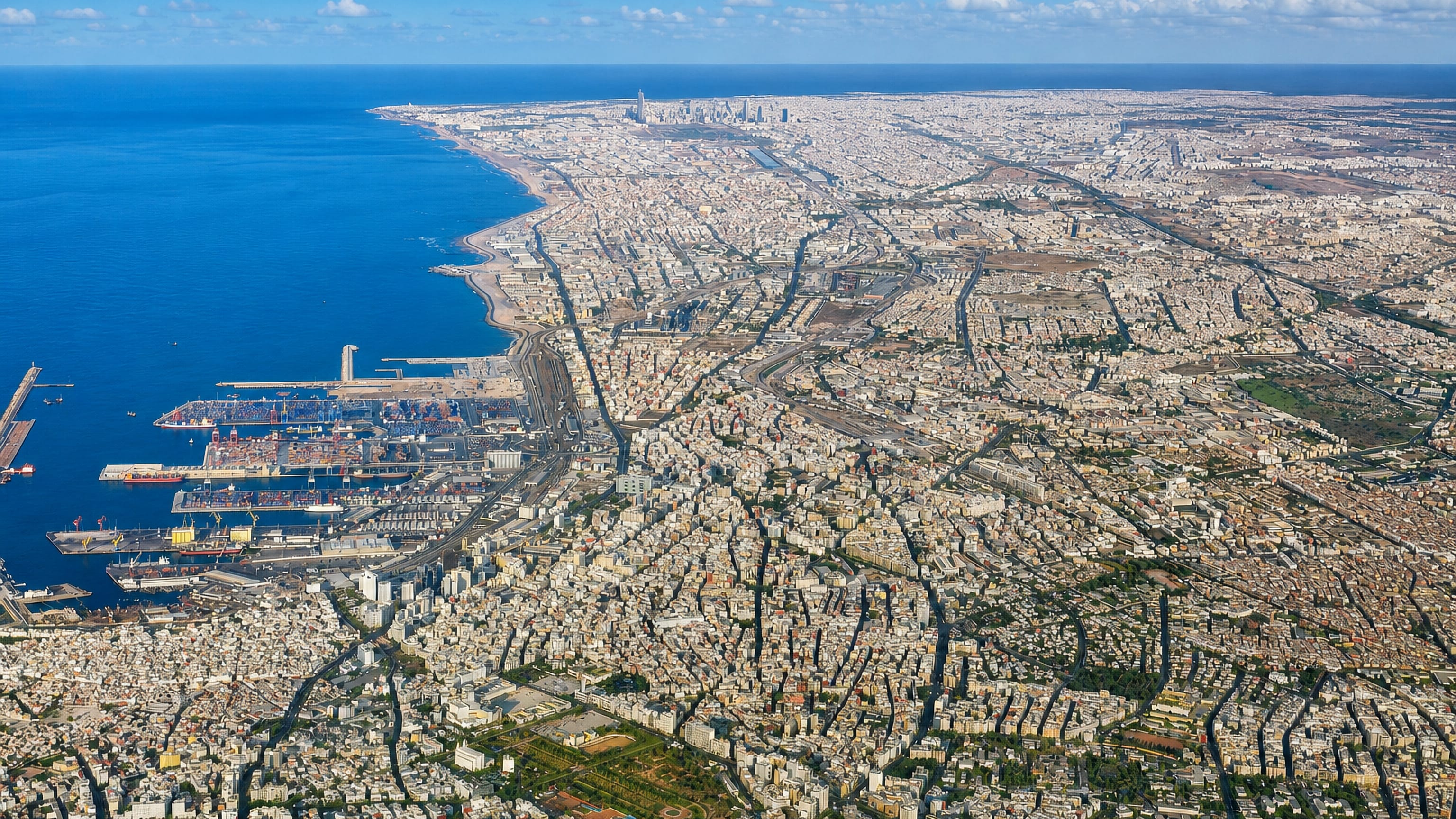
Salt air and Atlantic surf line the shore at Casablanca, the largest city of Morocco and its economic centre, known for the Hassan II Mosque.
Hotel links are affiliate links: booking through them may earn us a commission, at no extra cost to you. It never affects how places are ranked. How this works


Where to stay in Casablanca
Where you base yourself shapes the visit — here's the character of each area.

 CasablancaMorocco
Gauthier
Gauthier is a central district of Casablanca, Morocco, built around the Abderrahman Slaoui Museum.Where to stay → CasablancaMorocco
Bourgogne
Bourgogne is a residential district of Casablanca, Morocco, laid out around the Villa des Arts de Casablanca.Where to stay →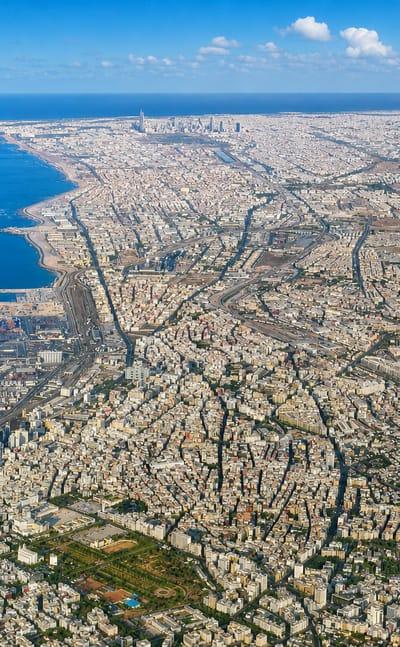 CasablancaMorocco
Belvedere
Belvedere is a museum-and-church district of Casablanca in Morocco, gathered around the Abderrahman Slaoui Museum.Where to stay → CasablancaMorocco
Habous
Habous is a planned Moroccan-style quarter of Casablanca, laid out around covered arcades, workshops, and a walled market grain.Where to stay →CasablancaMoroccoBousbir
Bousbir is a walled former quarter of central Casablanca, built in 1924 in a neo-Moorish style by Edmond Brion.Where to stay →CasablancaMoroccoDerb sultan
Derb sultan is a dense, market-driven quarter of Casablanca, threaded with trade lanes and everyday commerce in Morocco.Where to stay →CasablancaMoroccoCIL
CIL is a residential district of Casablanca, ranged around the Complexe sportif Mohammed V and the Salle Mohammed V.Where to stay →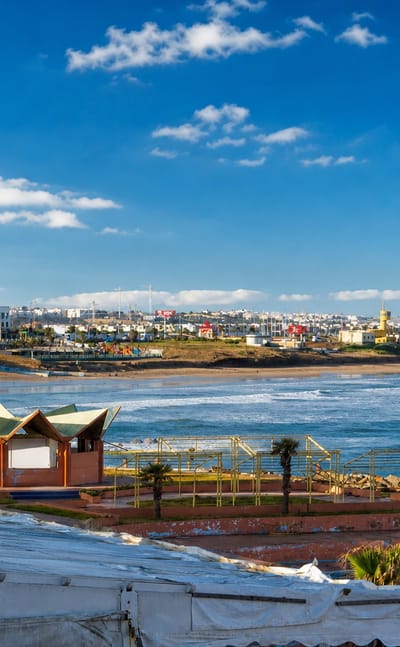 CasablancaMorocco
Ain Diab
Ain Diab is an affluent seafront neighbourhood of Casablanca, strung along the Corniche between Lalla Meryem Beach and the ribat of Sidi Abderrahman.Where to stay →CasablancaMoroccoEl Oulfa
El Oulfa is a residential district on the western side of Casablanca, Morocco, near the prehistoric Thomas Quarry.Where to stay →CasablancaMoroccoCalifornie
Californie is an upscale residential quarter of Casablanca, its luxury villas spread between Boulevard de la Mecque, Boulevard Fez and Boulevard Taddart.Where to stay →CasablancaMoroccoDerb Ghallef
Derb Ghallef is a dense, market-driven quarter of Casablanca, known for its sprawling flea-market lanes in Morocco.Where to stay →Hotel links are affiliate links: booking through them may earn us a commission, at no extra cost to you. It never affects how places are ranked. How this works
Find hotels in Casablanca
Direct booking searches for these neighbourhoods.
Ville nouvelle
Casablanca's central new town around United Nations Square, where most hotels and offices standFind hotels in Ville nouvelleTravellers who want the old townThe medina
Casablanca's old walled quarter of narrow lanes at the edge of the modern centreFind hotels in The medinaTime by the oceanThe seafront
The Atlantic shore beside the Hassan II Mosque, Casablanca's landmark on the waterFind hotels in The seafrontHotel links are affiliate links: booking through them may earn us a commission, at no extra cost to you. It never affects how places are ranked. How this works
Things to do in Casablanca
Ranked by global recognition; descriptions from Wikidata (CC0).
Museums & Galleries
3- Museum of Moroccan Judaism
- Abderrahman Slaoui Museum
- Villa des Arts de Casablanca
Churches & Religious Sites
1- Notre-Dame-de-Lourdes Church Heritage
Castles & Historic Sites
1- Thomas Quarry
Stadiums & Sports
3- Salle Mohammed V
- Complexe Al Amal
- Complexe sportif Mohammed V
Landmarks & Notable Places
1- Torre de Anifee
worth knowingacross 5 categories in Casablanca
About Casablanca
What is Casablanca known for?
Casablanca is the economic and business centre of Morocco and the country's largest city. The sea sets the scene. The Hassan II Mosque stands on the Atlantic shore as its best-known landmark, and beyond it the city spreads from an old medina into the wider ville nouvelle.
United Nations Square sits at the heart of the centre. For many travellers Casablanca is the way in, a short run from Rabat along the coast.
What are the main landmarks in Casablanca?
Casablanca gathers its landmarks between the centre and the shore. The Hassan II Mosque rises on the Atlantic waterfront as the city's signature building, a landmark mosque looking out over the ocean. Nearby stand the Notre-Dame-de-Lourdes Church and the Abderrahman Slaoui Museum, while United Nations Square anchors the ville nouvelle.
The Salle Mohammed V and the Villa des Arts de Casablanca add halls for sport and art. The old medina holds the rest.
What is the history of Casablanca?
Casablanca carries its history in two layers. The old medina marks the earlier town, a walled core of narrow streets close to the Atlantic shore. Around and beyond it spread the ville nouvelle, the newer town of broad avenues and open squares that gave the modern city its shape.
Between the two, the growth of Casablanca is written on the ground rather than in a single founding date. Its old quarter came first. The new town followed and outgrew it.
The city rose on the Chaouia plain by the Atlantic to become the economic and business centre of Morocco. Trade and industry drew people to the shore, and Casablanca grew into the largest city of the country. United Nations Square and the wide streets of the ville nouvelle belong to that later expansion, laid out well beyond the old medina walls.
The Hassan II Mosque, on the waterfront, stands as a later landmark on the same shore. The old medina and the ville nouvelle stand side by side, the two ages of Casablanca held within one city on the Atlantic.
Where is Casablanca?
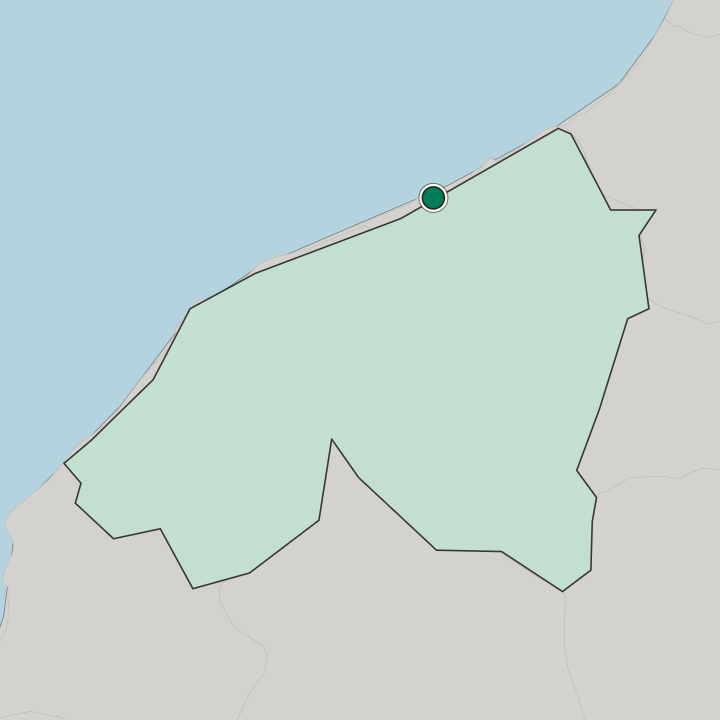
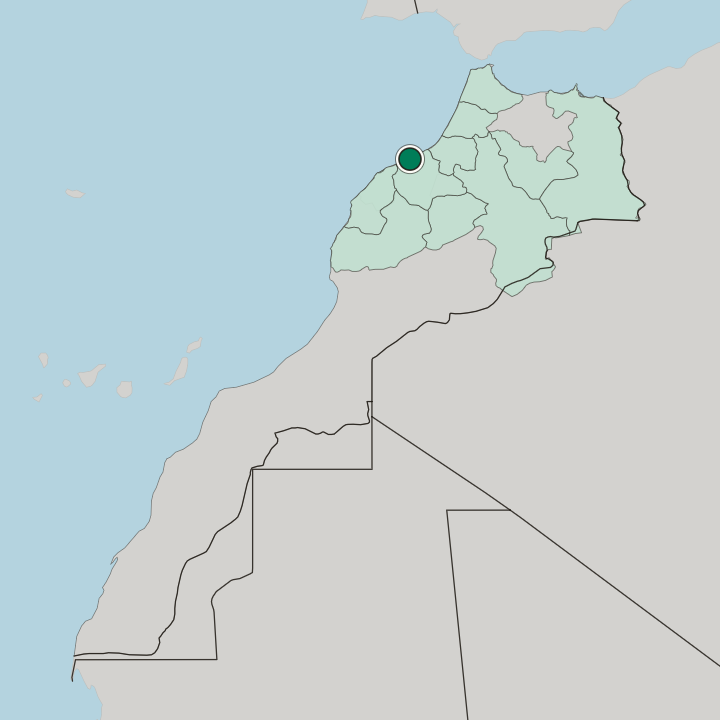
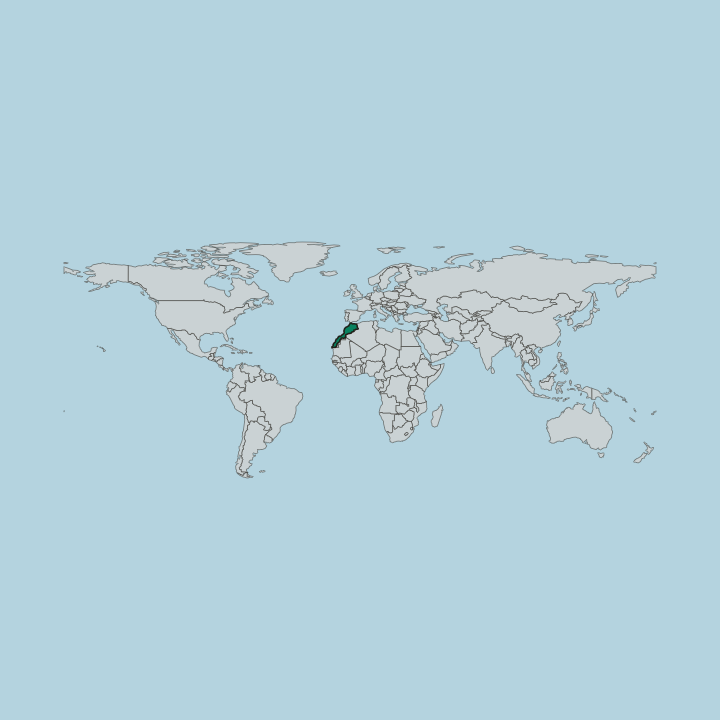
Casablanca sits on the Atlantic coast of Morocco, spread across the Chaouia plain along the ocean's edge. The city faces the open Atlantic. Its seafront runs along the shore, while the ville nouvelle and the old medina fill the ground behind.
Rabat lies a short way up the coast. The setting is low and coastal, the plain on one side and the ocean on the other.
What is the climate of Casablanca?
Casablanca has a mild, subtropical climate shaped by the Atlantic. The ocean keeps the coast temperate, with warm, dry summers and milder, wetter weather through the cooler months along the shore. The sea moderates every season.
Away from the water, the Chaouia plain runs hotter and drier than the coast itself. On the shore, the Atlantic holds the extremes in check.
How do you get to Casablanca?
Casablanca is the main point of arrival for many visitors to Morocco. Most arrivals begin here. Trains run from the city up the coast to Rabat and on across the country, the main rail line following the shore.
The old medina and the ville nouvelle both lie within the compact centre. From the coast, the rest of Morocco opens up by rail and road.
Common questions
What is the best area to stay in Casablanca?
Ville nouvelle: First stays and business trips. The medina: Travellers who want the old town. The seafront: Time by the ocean.
Good for
More cities in Casablanca-Settat
Updated September 2026