Morocco · Oriental
Where to Stay in Taourirt, Oriental
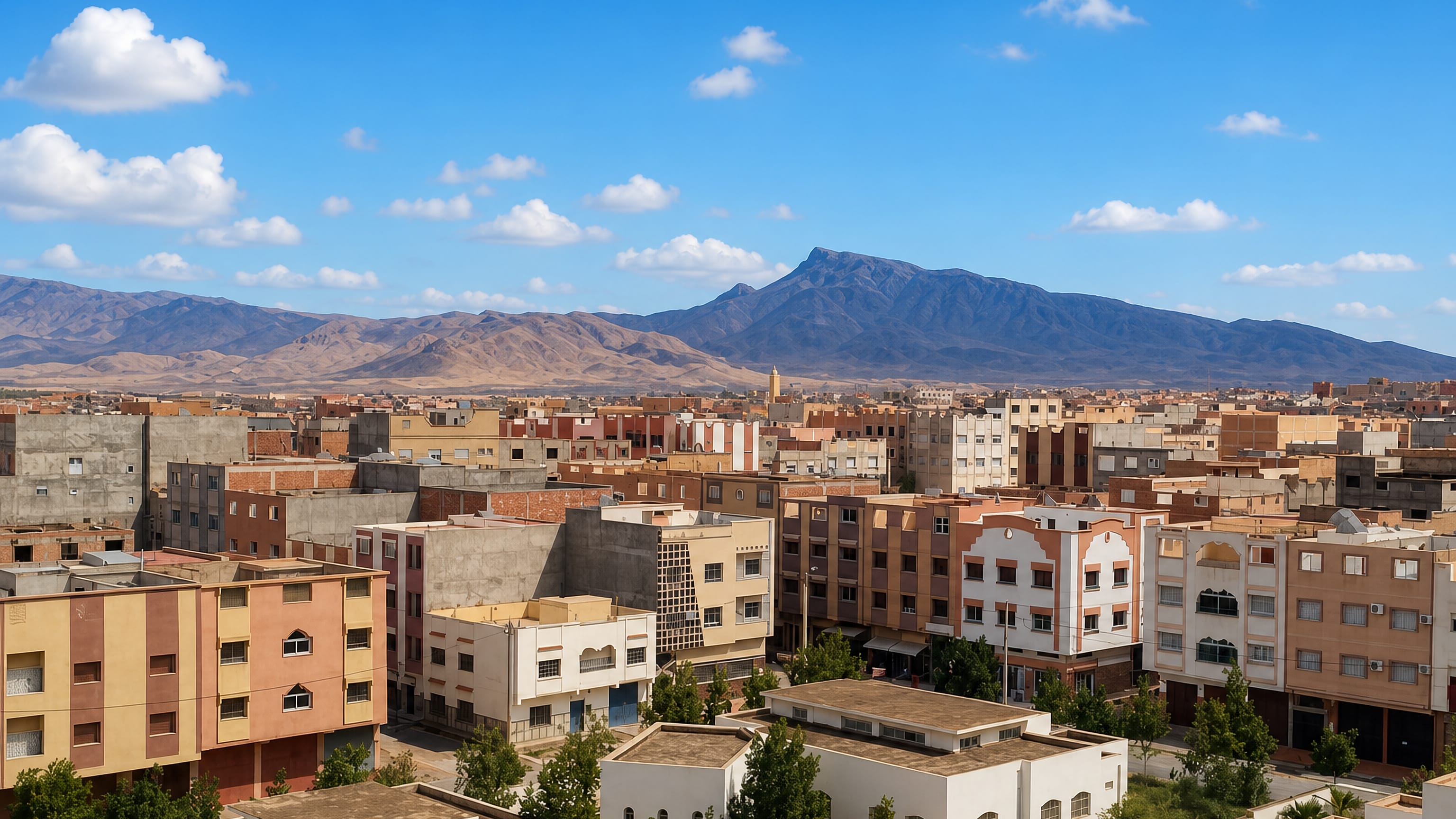
Taourirt stands above Wadi Za in Morocco's Oriental region, an olive and scrap-metal town grown out of a Marinid frontier fort.
Hotel links are affiliate links: booking through them may earn us a commission, at no extra cost to you. It never affects how places are ranked. How this works


Where to stay in Taourirt
The practical side of choosing where to sleep.
Three parts of Taourirt decide where a night here lands. The Old Quarter is the oldest, grown up around the barracks that Lyautey raised below Jbel Azrou once Oujda was secured, and a covered market from those years still trades. Uphill sits the other pole.
The Kasbah of Moulay Ismail crowns the mound the town is named for, lived in by Kerarma families, and a paved road now climbs to a wall whose remaining 273 metres carry square and rectangular towers. Borj Rouis is the landmark catalogued under the town's name. Little in Taourirt lies far from road number 6, so the choice is really which side of it to sleep on: the covered market and the old streets on one hand, the municipal stadium and the road out to the railway station on the other.
Trains on the Casablanca to Oujda line call here, and the branch that opened in 2009 turns north through the mountains to Nador, so the station side suits anyone travelling without a car. Guercif sits west along the same axis, Debdou south in its own hills. Oujda is the fallback when choice matters more than the drive, since the city anchors the Oriental region roughly a hundred kilometres east and the corridor between the two carries most of what moves through Taourirt Province.
Find hotels in Taourirt
Direct booking searches for these neighbourhoods.
Old Quarter
The Old Quarter grew around the barracks Lyautey raised below Jbel Azrou, and it is the oldest ground in Taourirt, with a covered market of the same period still working nearby. Beds are limited here, so book early.Find hotels in Old QuarterArrivals off the Casablanca to Oujda trains, or off the Nador branch lineStation side
The municipal stadium and the road out to the railway station lie on this side of Taourirt, which puts the least ground between a bed and the Nador branch line opened in 2009. Beds are limited here, so book early.Find hotels in Station sideA wider choice of rooms roughly a hundred kilometres east on road number 6Oujda
Oujda anchors the Oriental region at the eastern end of the road that runs from Fez through Taourirt, so it carries room stock that a province town on the corridor cannot.Find hotels in OujdaHotel links are affiliate links: booking through them may earn us a commission, at no extra cost to you. It never affects how places are ranked. How this works
About Taourirt
Olives set the terms here.
What is Taourirt known for?
Taourirt is ranked the largest olive-producing city in Morocco, and roughly 176 factories stand in and around it, on ground where the Tafrata plain gives out at Wadi Za. Scrap is the other trade. The largest scrap market in Morocco for cars and iron is held here, along with a market for selling the cars themselves.
Money sent home by emigrants underpins much of this, and each summer their return turns Taourirt into a family town again.
What are the main landmarks in Taourirt?
Borj Rouis is the one landmark on record for Taourirt. The bigger draw is older: the Marinid fort on the hill, renewed under Moulay Ismail and known locally as the Kasbah of Moulay Ismail or simply the old market, since a weekly souk met inside its walls before moving out to Dar el Chaoui. Its towers are square and rectangular, never round, and rise about 10 metres.
Kerarma families live inside it. Below the hill, the covered market of the colonial town still trades.
What is the history of Taourirt?
The name is Amazigh and means hill. Local tribes still say Thawrart, and the Arabic that settled over the region turned the first sound into the t that maps now carry. Before that the place was Saa, after the river the old geographies call Wadi Saa and later Wadi Za.
Ibn Hawqal put Saa in Surat al-Ard as a pleasant town on a great river; al-Bakri listed it on the road out of Oujda towards Sijilmasa; al-Idrisi set it below a mound of earth above a river cutting through its gardens. Caravans made it matter. Credit for the founding goes to the Africans in al-Wazzan's telling, which is another way of saying nobody knows who built it.
The fort is dated. Abu Yaqub Yusuf laid it out on the frontier with the Banu Abd al-Wad of Tlemcen, finishing the wall in Ramadan of 694, which Ibn Khaldun records and later chroniclers followed, while Ibn Abi Zar puts the same work a year later. Guercif's fort could no longer watch the tribes of the plain, so the Marinid sultan built his own here.
Abu Said Uthman rebuilt it in 721. Moulay Ismail renewed it again in the Alawite period, settling a hundred horsemen and their families inside the walls to keep the eastern tribes under the Makhzen. French rule shifted the centre downhill.
Lyautey put a barracks below Jbel Azrou after securing Oujda, the circle went up around 1912, and the weekly market left the kasbah for Dar el Chaoui, three kilometres out. Christians and Jews settled the quarter around the barracks. Taourirt Province was drawn in 1997.
Where is Taourirt?
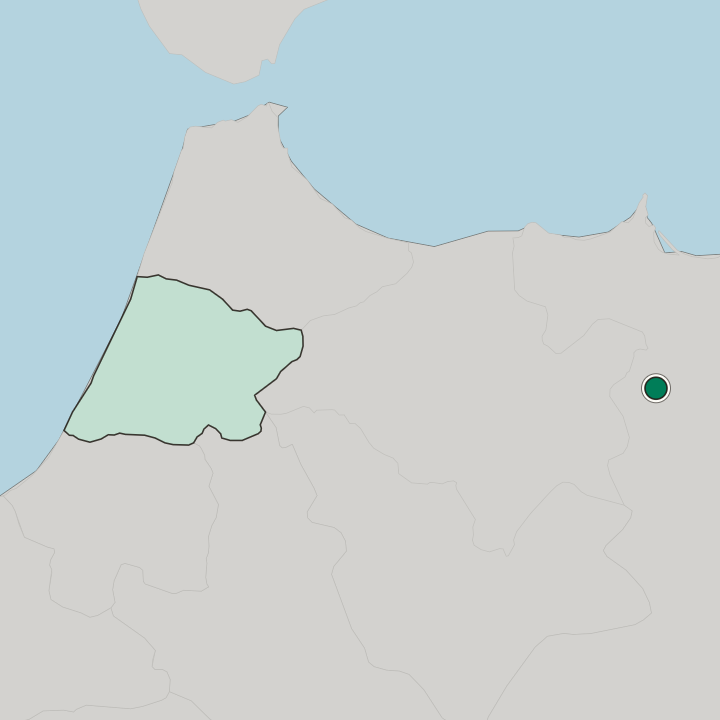
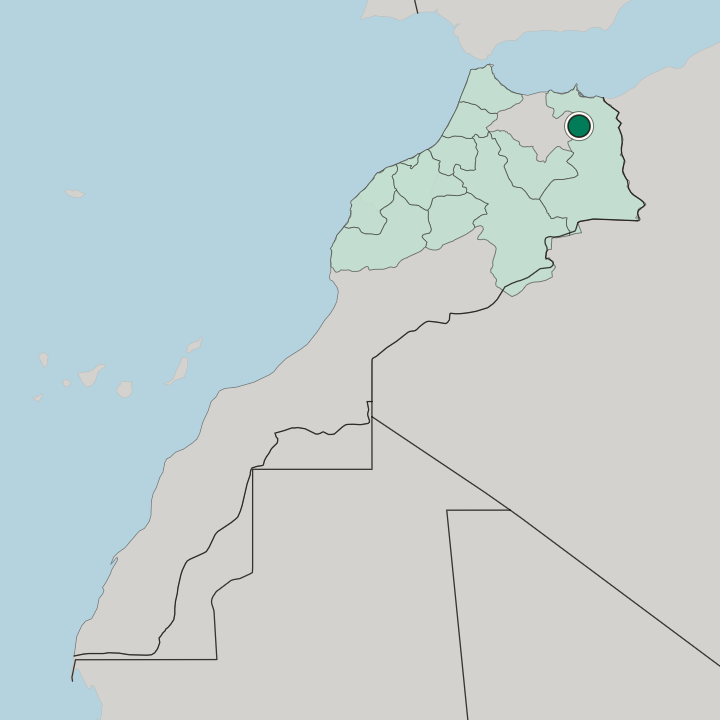
Taourirt sits low between highlands, where the Angad and Tafrata plains meet. Wadi Za cuts the plateau above the town into small tables that local usage calls harchas, among them Harcha Mahrach beside the old barracks and Harcha El Ghorab on the Debdou road. The Beni Znassen mountains close the north, the hills of Debdou the south, and the Rif stands away to the west.
Water is the shortage. Wadi Moulouya bounds the Tafrata plain to the west, most of the plain's other channels run dry, and the north-eastern stretch is known as the land of thirst.
What is the climate of Taourirt?
The Chergui does the damage. That dry wind arrives off the High Plateaus and pushes Taourirt's summers into the semi-arid range, while the Beni Znassen mountains to the north and the Rif to the west hold back the damp air that reaches the coast. Sand comes with the south-westerly spells.
Air off the desert crosses the Tafrata plain in sheets, sometimes thick with it, and the ground loses moisture faster than the wadis can return it.
How do you get to Taourirt?
Road number 6 does most of the work, running east from Fez to Oujda through the middle of the town. Trains help too. The main east-west line out of Casablanca and Rabat, by way of Fez, calls at Taourirt before Oujda, and the branch opened in 2009 climbs north through the mountains to Nador along the road it follows.
Buses from towns across Nador province stop here as well. Guercif is the next place west, Debdou the road south.
Common questions
What is the best area to stay in Taourirt?
Old Quarter: Stays that want the covered market and the barracks streets below Jbel Azrou on foot. Station side: Arrivals off the Casablanca to Oujda trains, or off the Nador branch line. Oujda: A wider choice of rooms roughly a hundred kilometres east on road number 6.
More cities in Oriental
Updated September 2026