Madagascar: Regions, Cities & Travel Guide
Madagascar is an island country in the Indian Ocean off south-eastern Africa, with Antananarivo as its highland capital.
Hotel links are affiliate links: booking through them may earn us a commission, at no extra cost to you. It never affects how places are ranked. How this works


Top destinations in Madagascar
Cities to start from, then drill into areas and hotels.
 Madagascar
Antananarivo
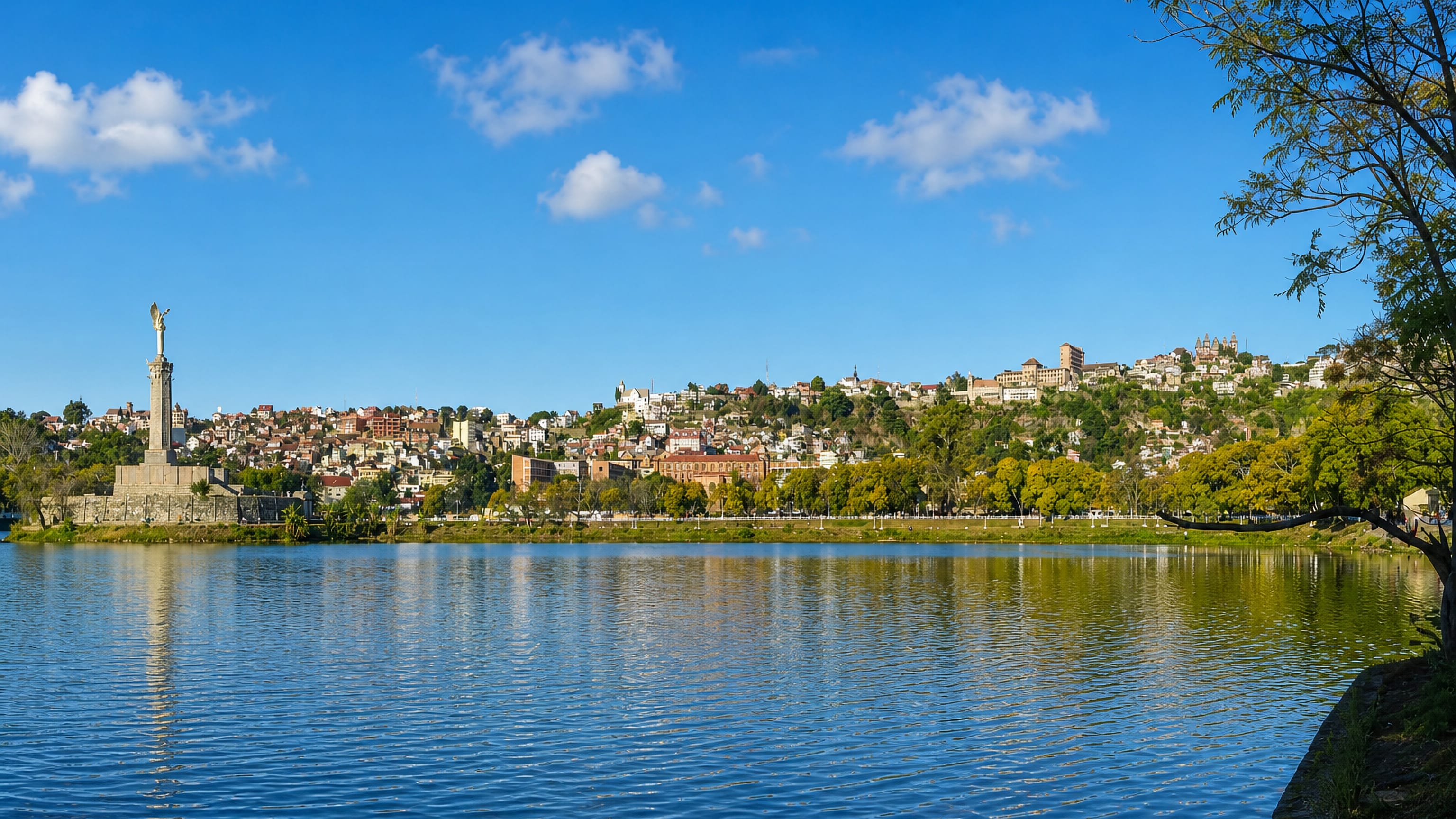
Antananarivo climbs across plateau hills at the centre of Madagascar, the island's capital and largest city, known for its royal palaces and Lake Anosy.Where to stay →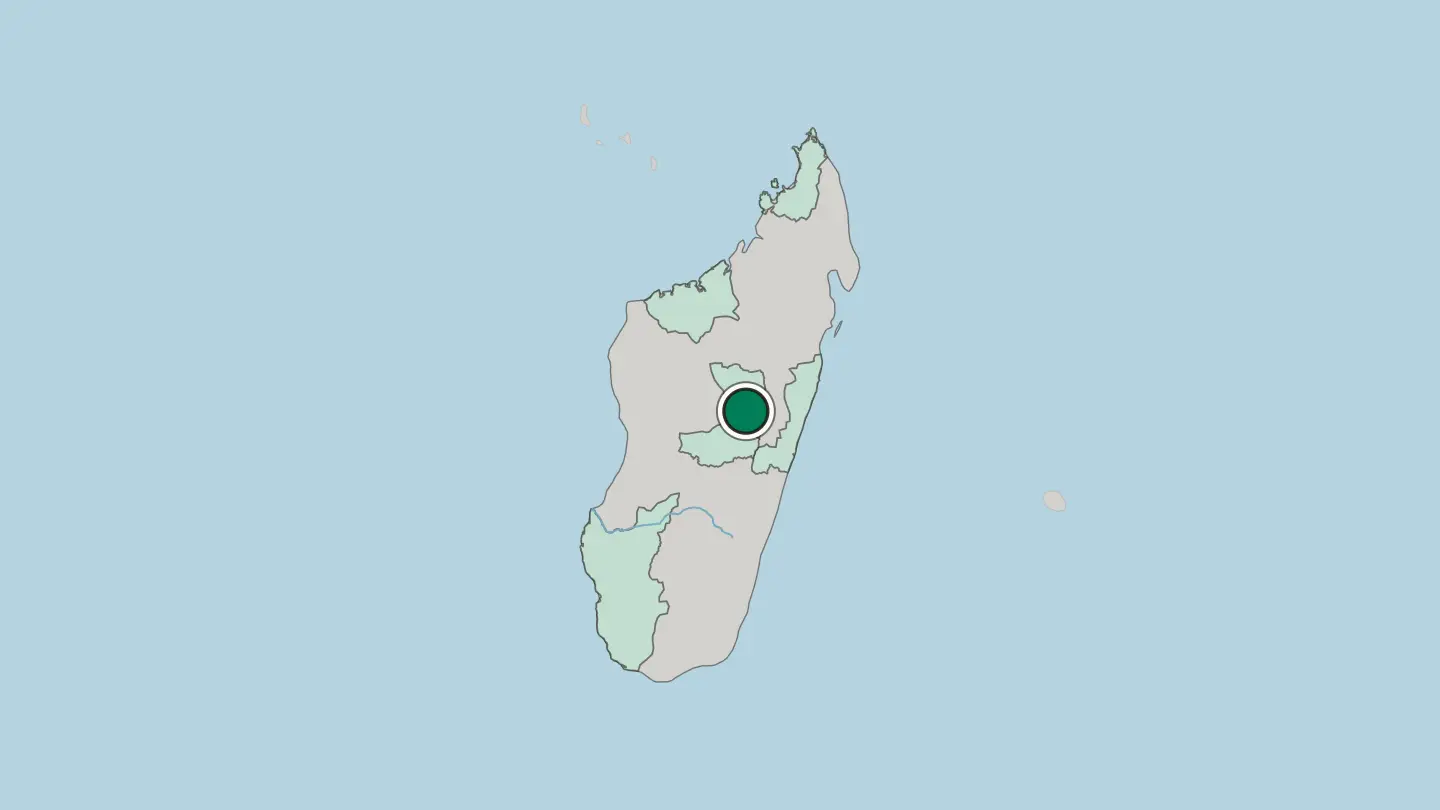
 Madagascar
Toamasina
Toamasina is a city of Madagascar's east coast on the Indian Ocean, the island's chief port, where the highland railway reaches the sea among lagoons.Where to stay →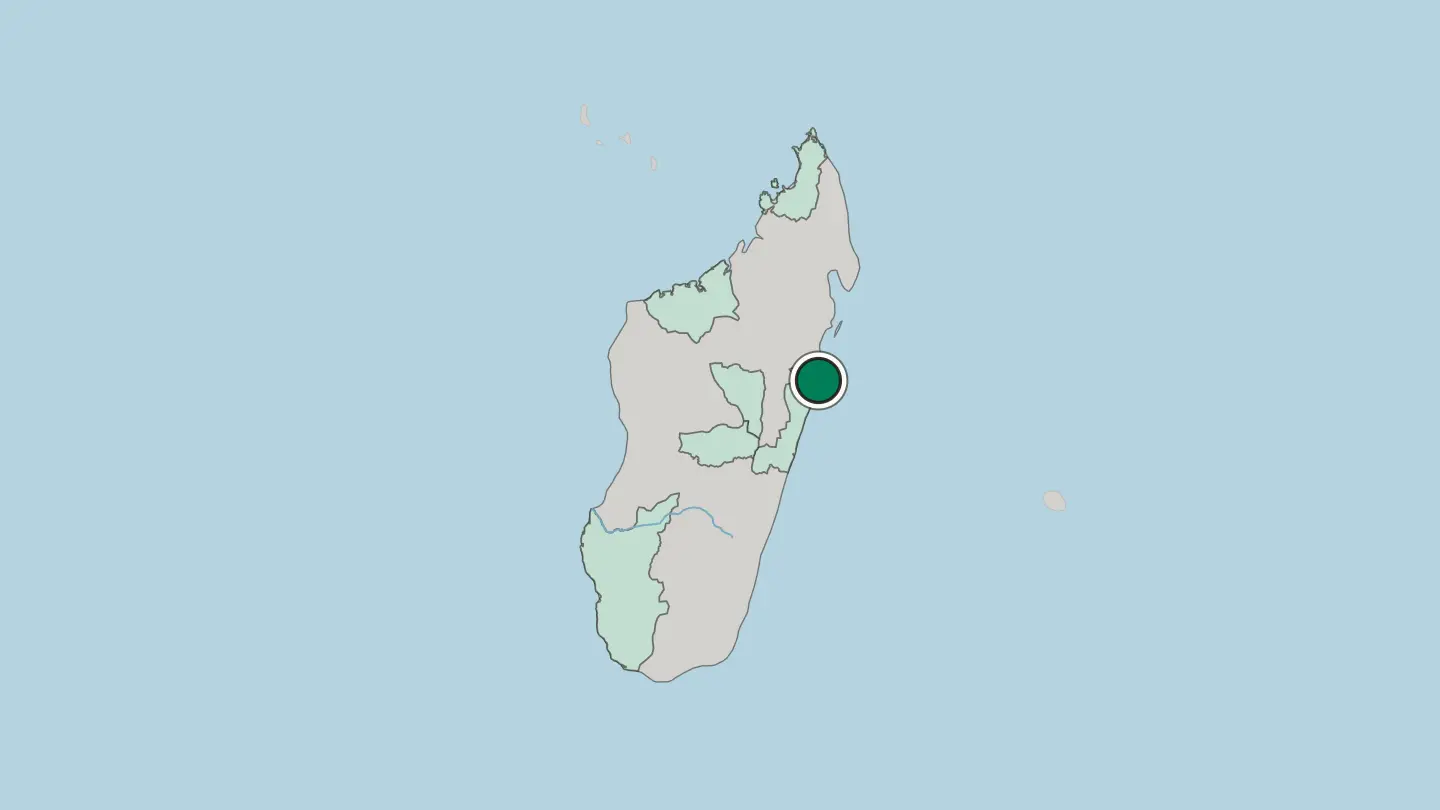 Madagascar
Antsiranana
Antsiranana is a city of far-north Madagascar on a great bay of the Indian Ocean, an old French naval port on one of the world's finest natural harbours.Where to stay →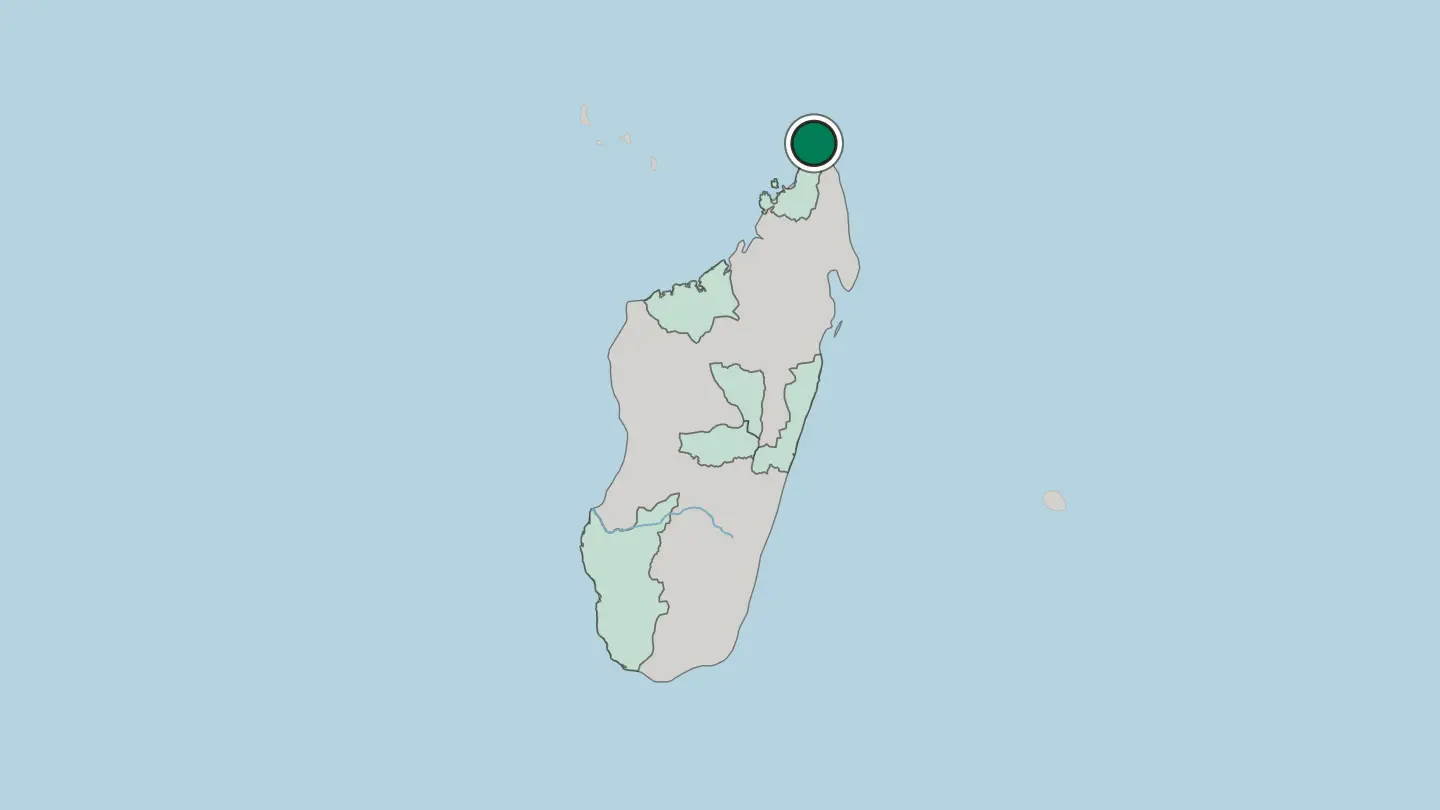
 Madagascar
Antsirabe
Antsirabe is a highland spa town of central Madagascar, a cool city of thermal springs and rickshaws set among old volcanoes and crater lakes.Where to stay →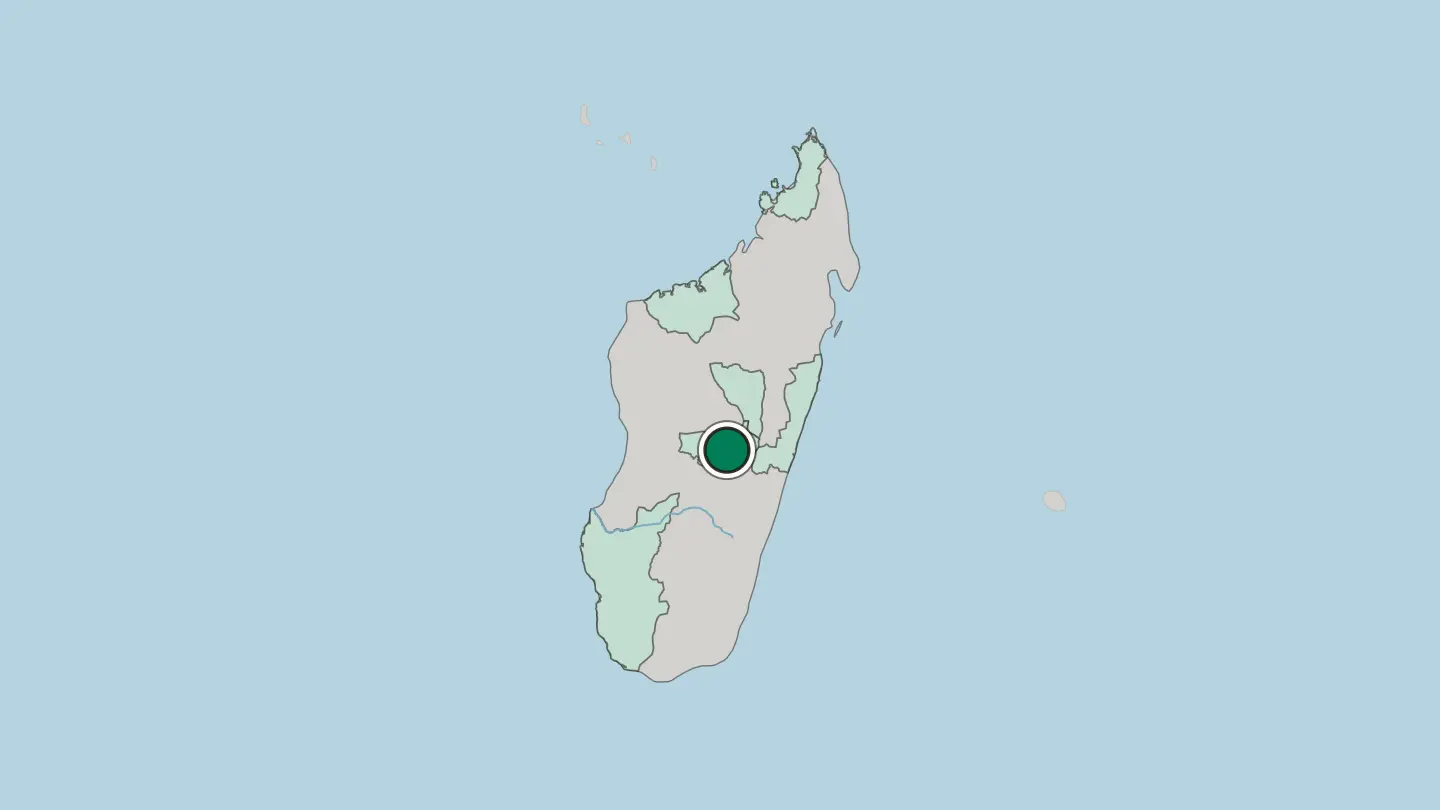
 Madagascar
Toliara
Toliara, still called Tuléar in French, ends the RN7 on the coast of southern Madagascar as capital of Atsimo-Andrefana.Where to stay →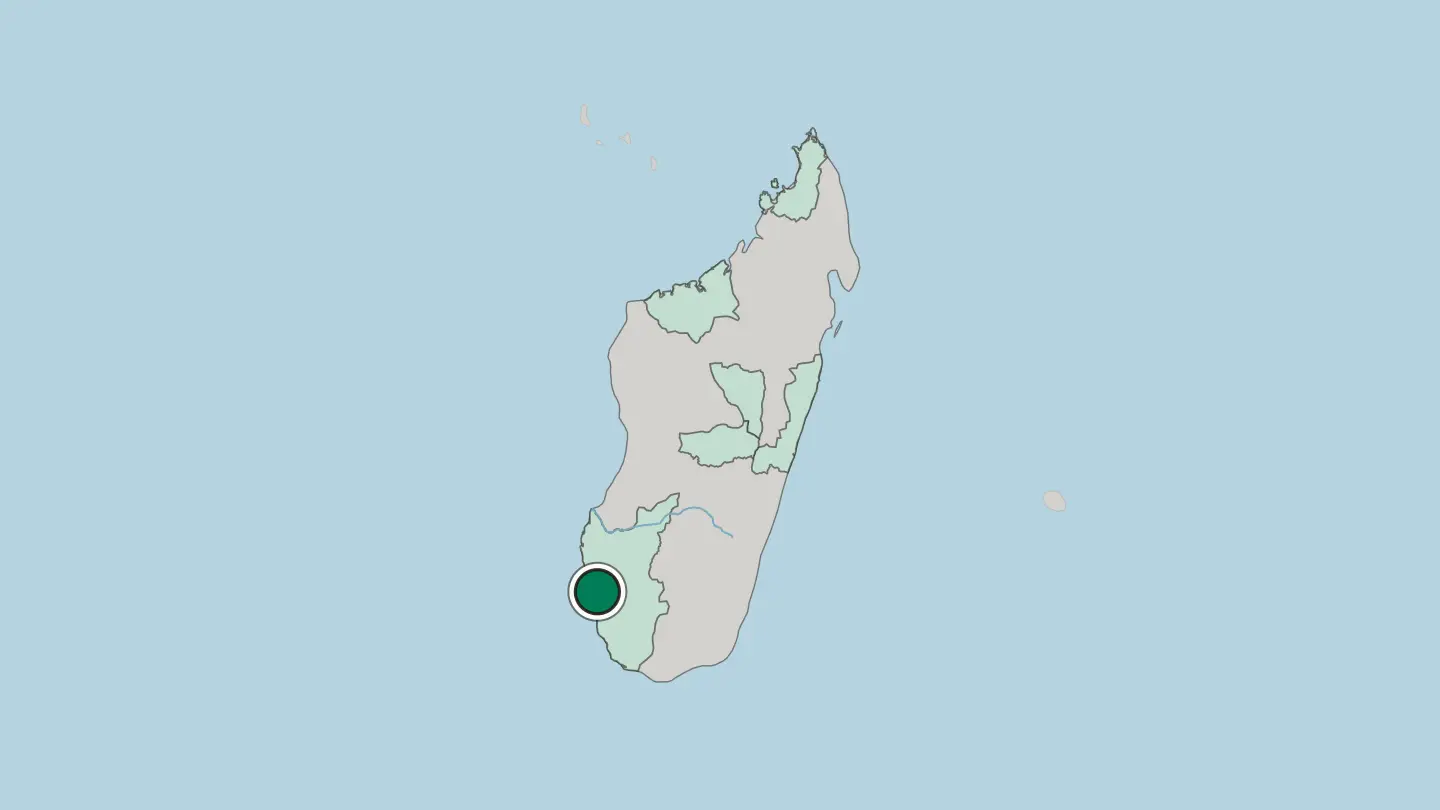
 Madagascar
Mahajanga
Mahajanga is a city and an administrative district on the northwest coast of Madagascar, and the capital of the Boeny Region.Where to stay →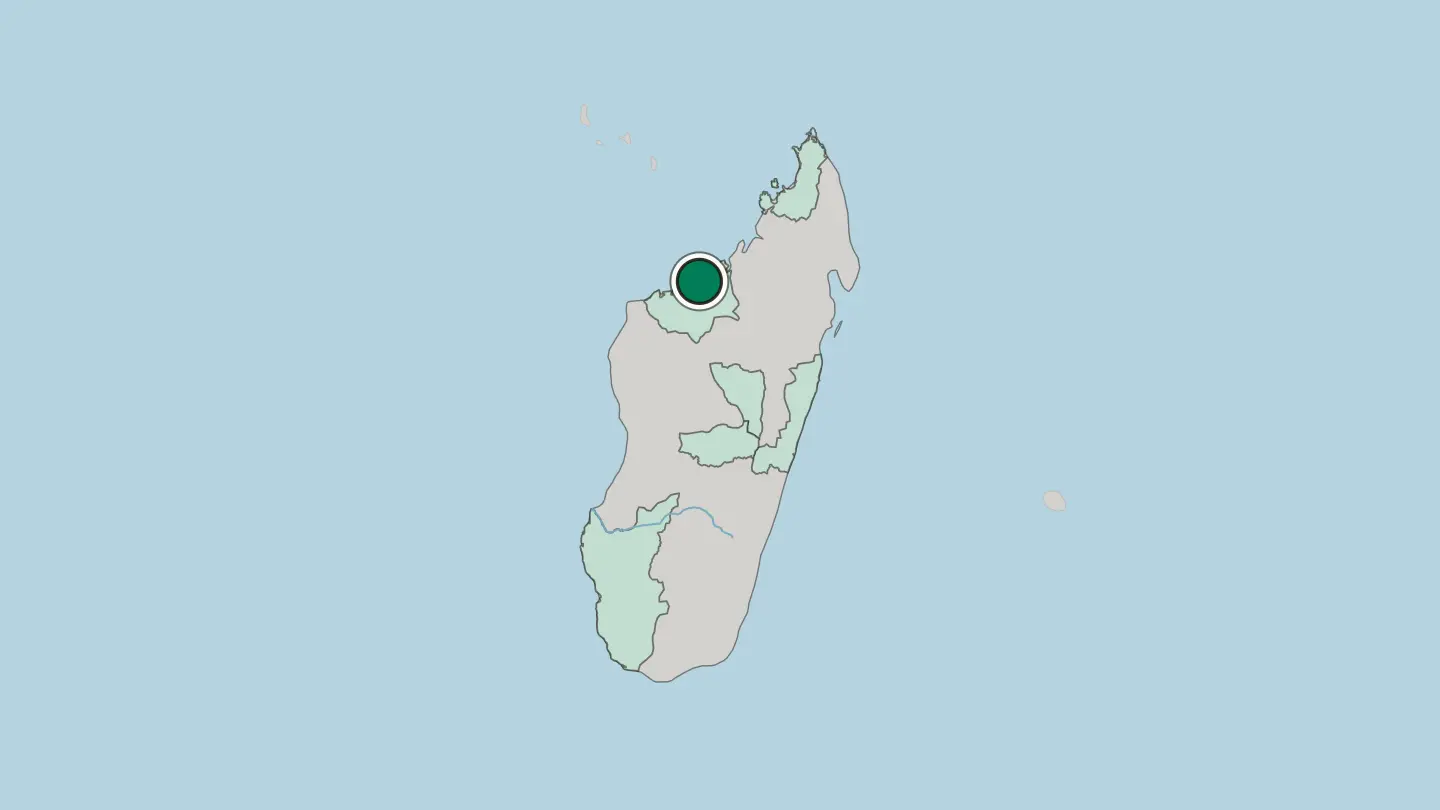
Hotel links are affiliate links: booking through them may earn us a commission, at no extra cost to you. It never affects how places are ranked. How this works
Regions of Madagascar
Madagascar
Analamanga Region
Analamanga is a region in central Madagascar built around Antananarivo, the national capital, and the highland plateau that surrounds it.Towns & cities →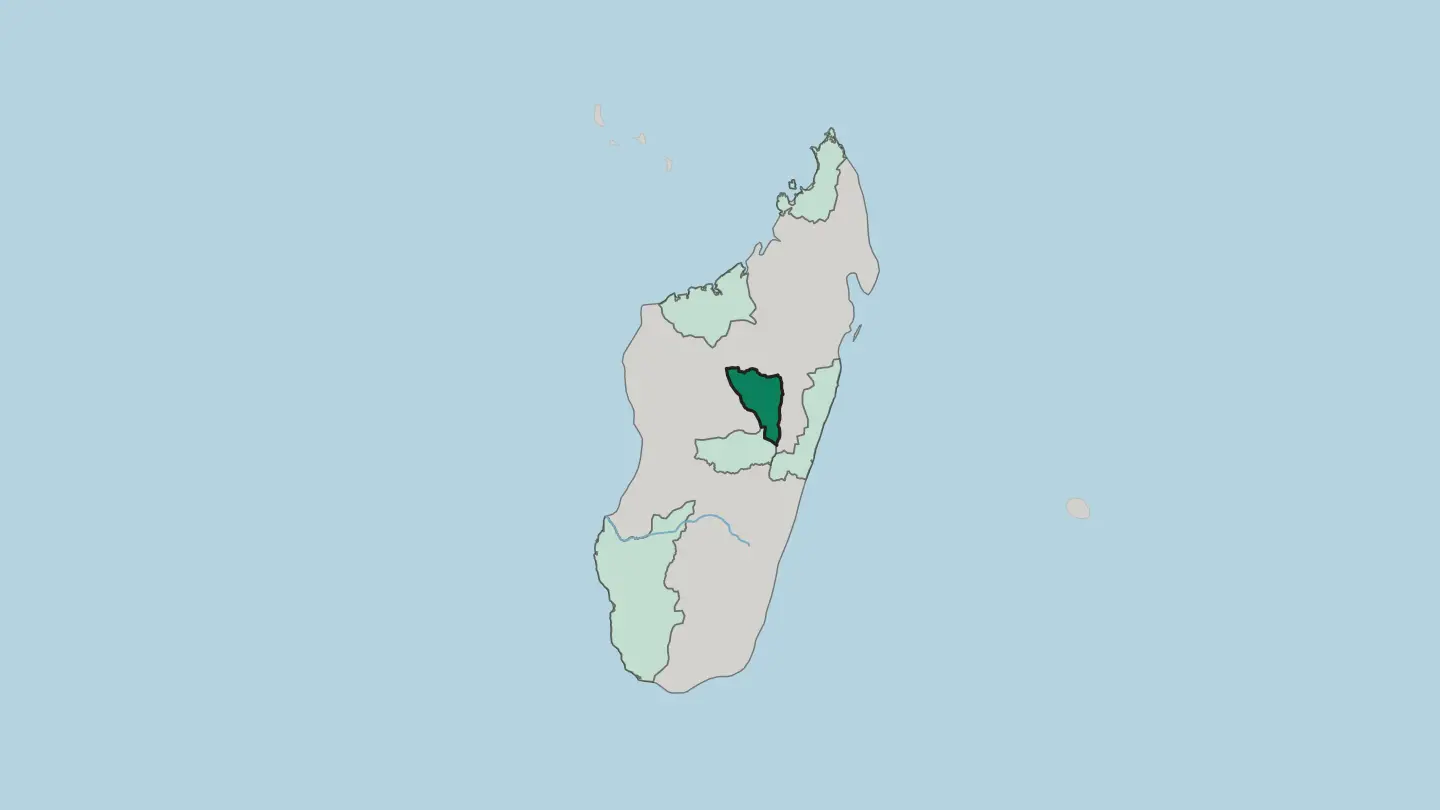 Madagascar
Atsimo-Andrefana Region
Atsimo-Andrefana is the largest of Madagascar's regions, an enormous administrative territory governed from Toliara.Towns & cities →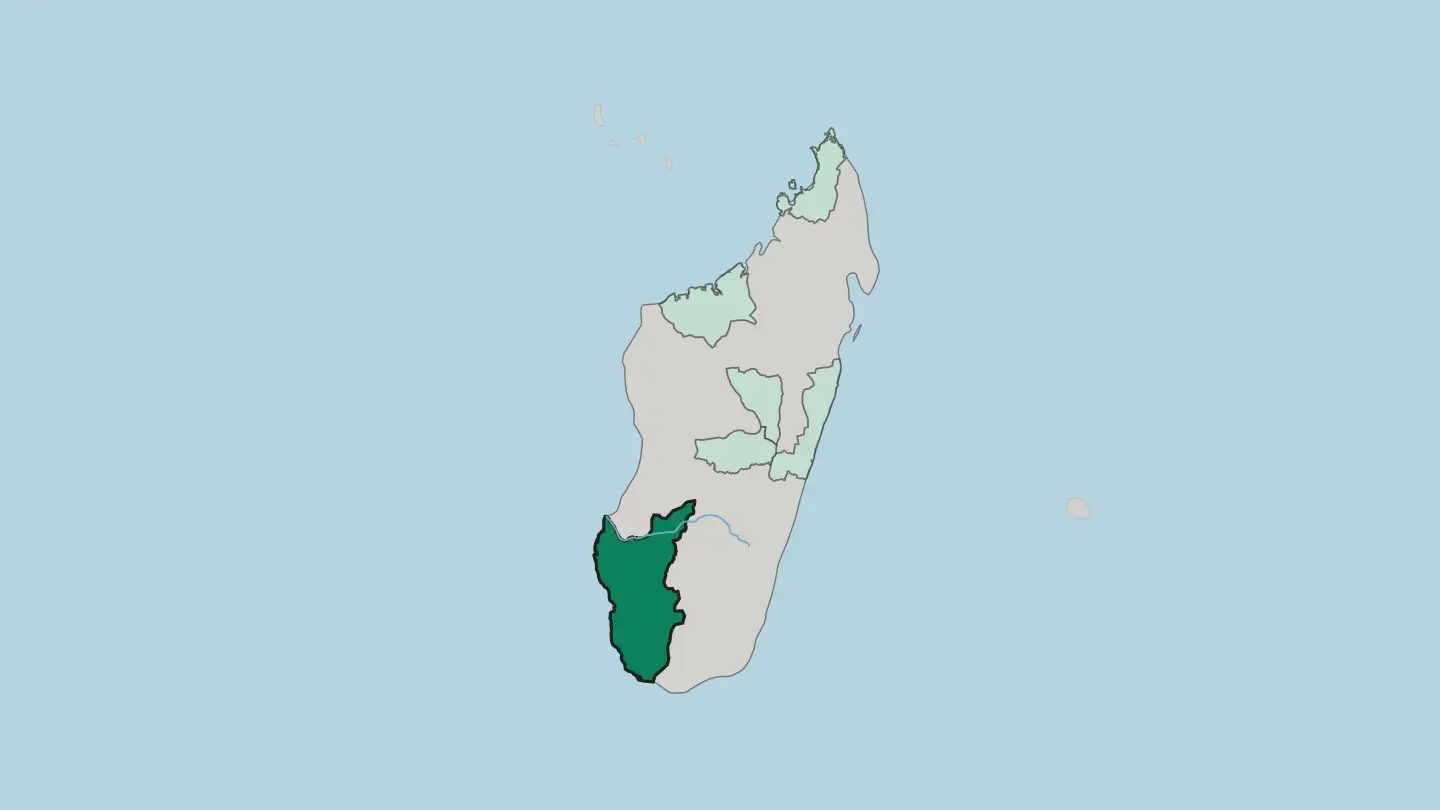 Madagascar
Atsinanana Region
Atsinanana is a coastal region of eastern Madagascar, with more than 285 kilometres of shore, beaches and cultural heritage sites along it.Towns & cities →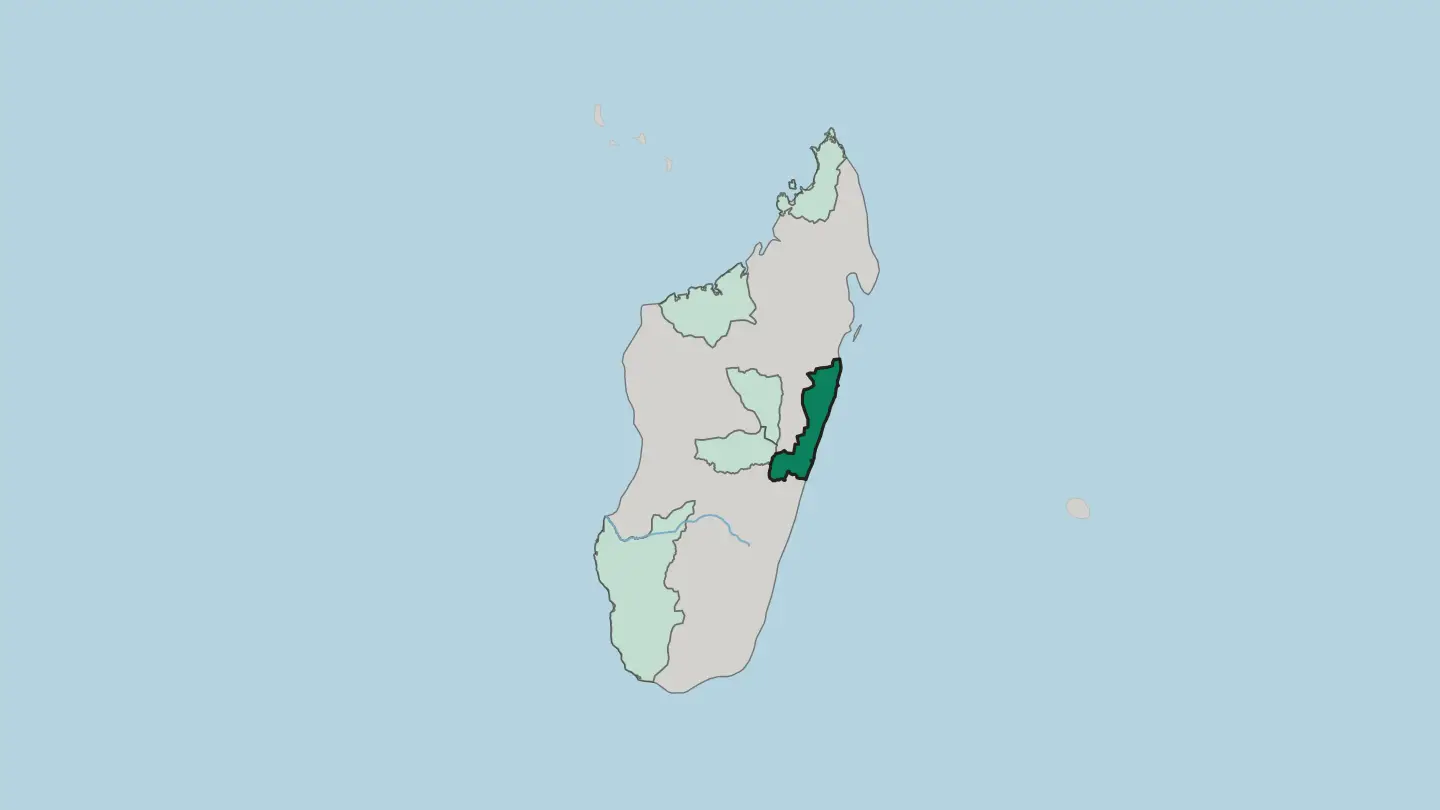 Madagascar
Boeny Region
Boeny sits in northwestern Madagascar, a region administered from Mahajanga and bounded by Sofia Region, Betsiboka and Melaky.Towns & cities →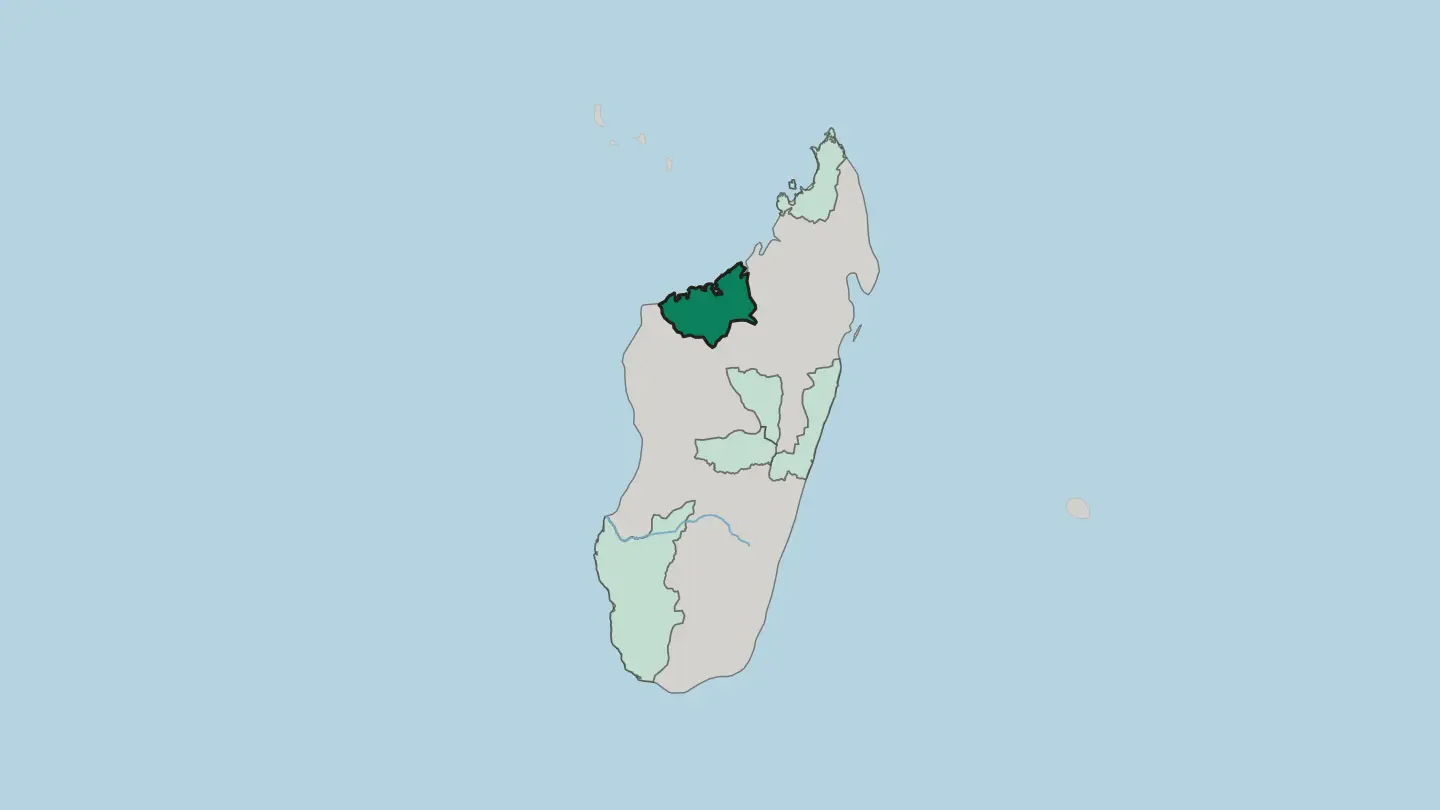 Madagascar
Diana Region
Diana occupies the northern part of the island of Madagascar, a region run from Antsiranana and bordering Sava and Sofia.Towns & cities →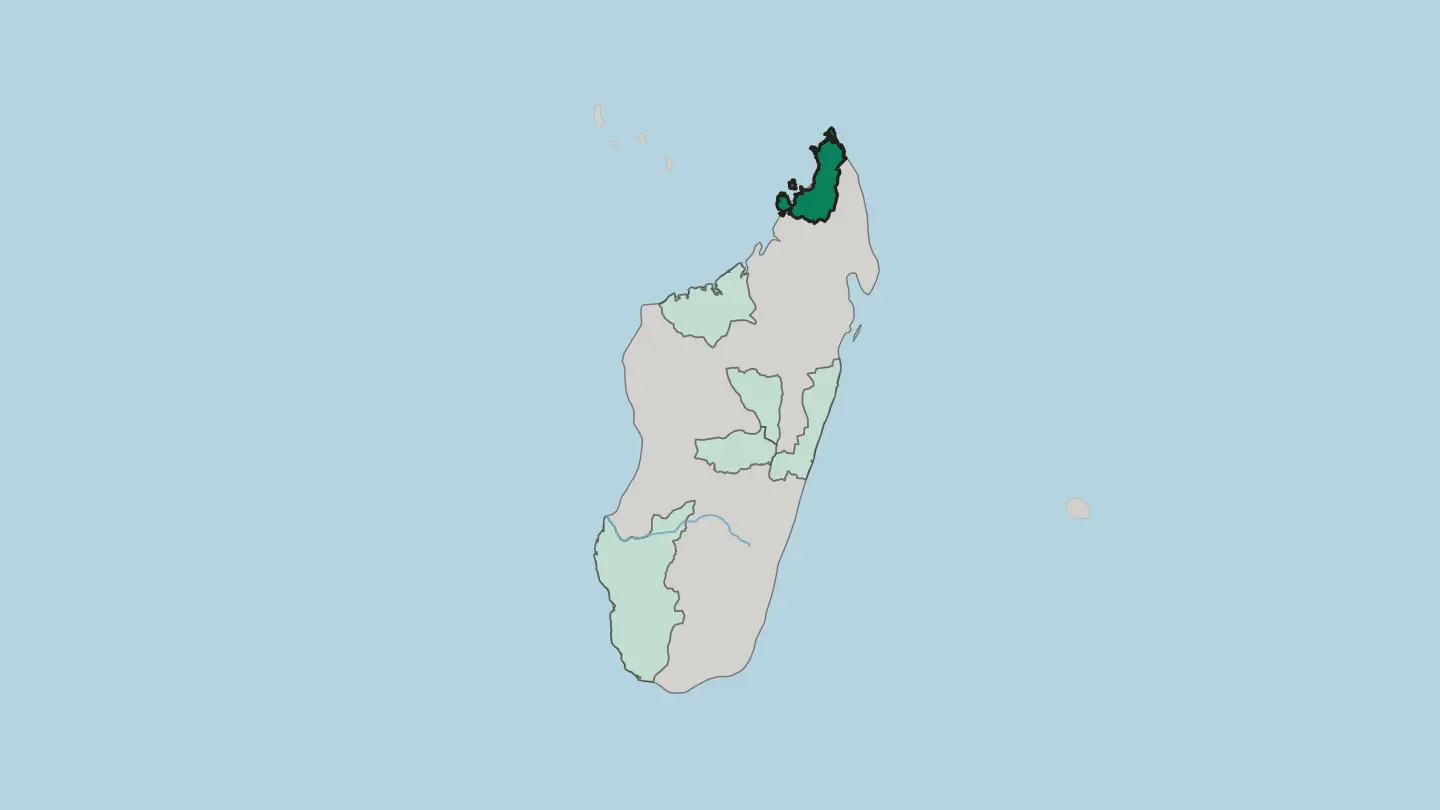 Madagascar
Vakinankaratra Region
Vakinankaratra is a region of central Madagascar, governed from Antsirabe and one of the four regions of the Antananarivo Province.Towns & cities →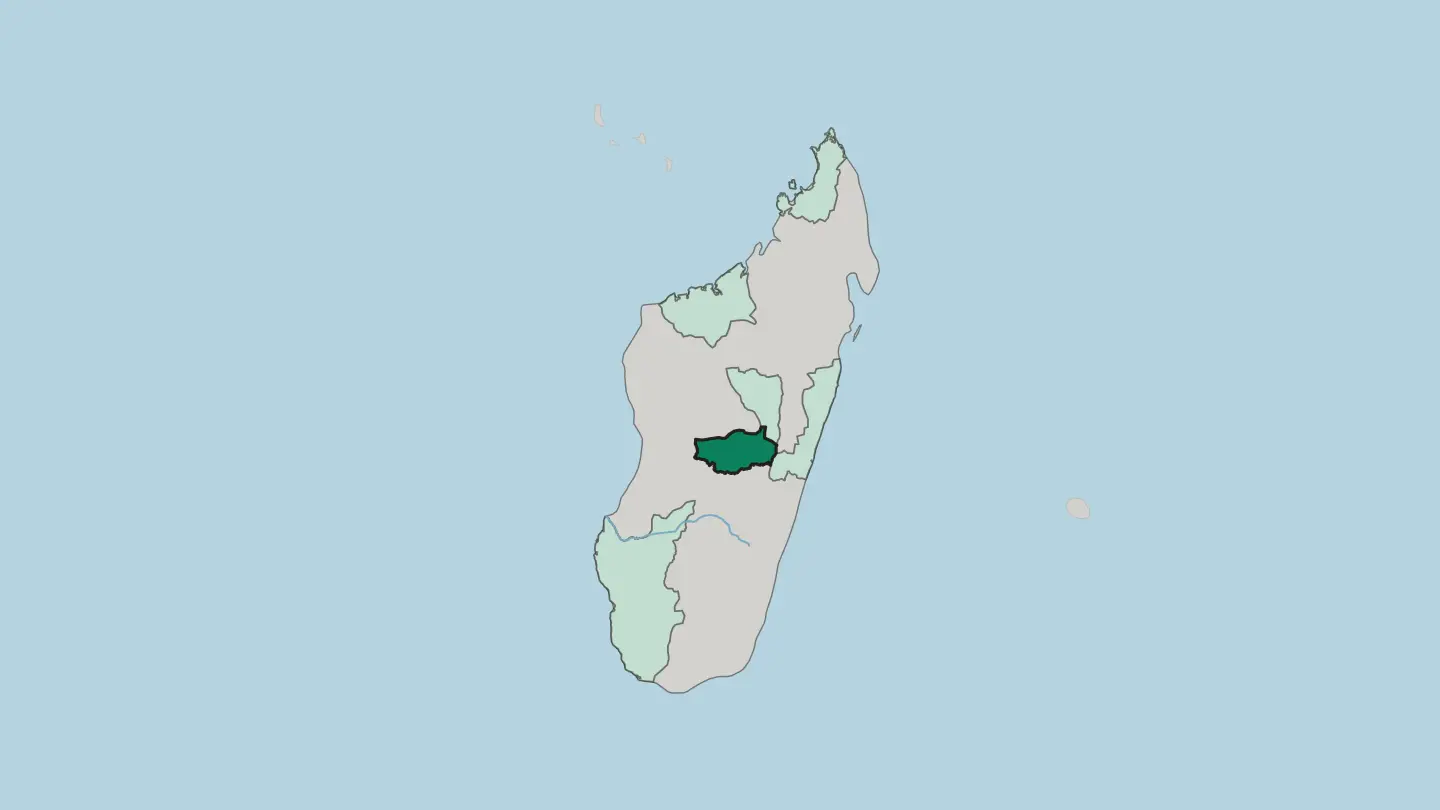
About Madagascar
Wildlife defines Madagascar.
What is Madagascar known for?
After the island split from the rest of Gondwana tens of millions of years ago, its plants and animals evolved in isolation, so lemurs, chameleons, and baobabs found nowhere else fill its forests. The rainforest of Andasibe-Mantadia National Park shelters the indri, while the sandstone canyons of Isalo National Park and the limestone blades of Tsingy de Bemaraha National Park draw hikers. Near Morondava, the Avenue of the Baobabs lines a dirt road with Grandidier's baobabs centuries old.
The capital, Antananarivo, climbs a ridge of the Central Highlands.
Where is Madagascar?
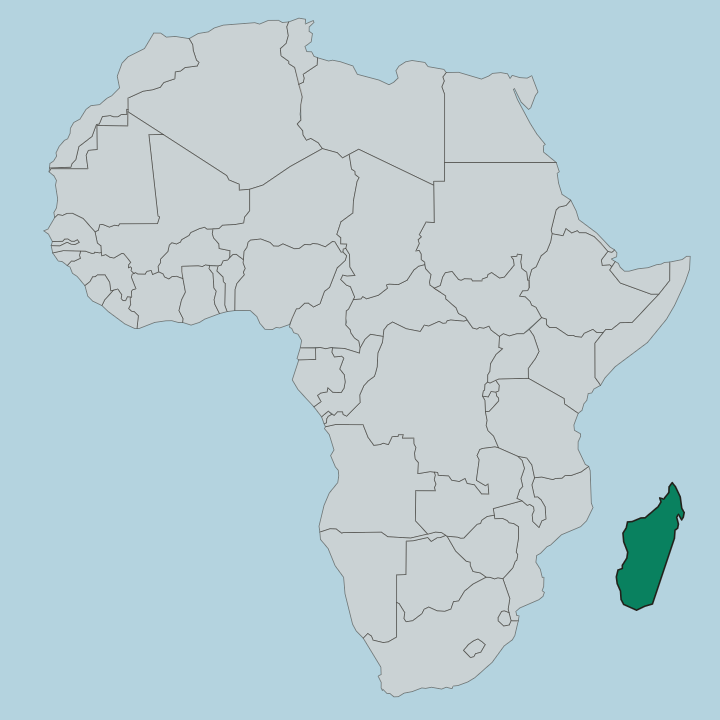
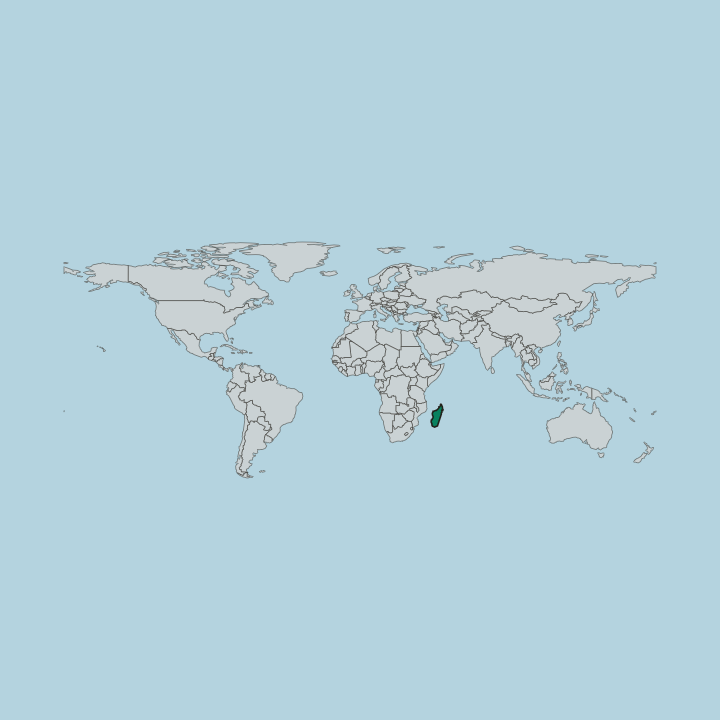
Madagascar is the world's fourth-largest island, set in the Indian Ocean off the south-eastern edge of Africa across the Mozambique Channel. The island runs long and narrow. Down its spine rise the Central Highlands, a plateau of rounded hills, granite outcrops, and extinct volcanoes that mostly sits between 800 and 1,800 metres, its basins terraced into irrigated rice fields.
Antananarivo, the capital, stands on one of these highland ridges near the plateau's northern end. East of the mountains a narrow, steep coastal strip drops to the ocean, catching the trade winds and holding the coastal rainforest. To the west the land descends more gently into low plateaus and broad plains, drained by rivers such as the Betsiboka, which carries a heavy load of red highland soil down to the sea near the port of Mahajanga.
The far south-west turns almost to desert. Its spiny thickets and sandstone have been shaped by long drought. The relief itself splits the land in two, so a wet windward east and a dry leeward west sit on either side of the highland wall, and the sandstone canyons of Isalo National Park and the karst pinnacles of Tsingy de Bemaraha National Park show how differently that western dryness has weathered the rock.
From reef-fringed coast to highland plateau, the range of terrain is remarkable.
What is the history of Madagascar?
People reached Madagascar late. The first settlers were Austronesian seafarers who crossed the Indian Ocean from the Barito region of southern Borneo, most likely around the middle of the first millennium, and their language spread across the whole island. Bantu-speaking migrants from East Africa followed, settling the coasts and bringing zebu cattle, and from that meeting the Malagasy people and their many regional groups took shape.
By the eighteenth century the Merina kingdom had risen in the highlands around Antananarivo. Andrianampoinimerina drew the fragmented highland chiefdoms together, and his son Radama I pushed Merina authority over much of the island, opening it to British missionaries and traders. That kingdom did not survive the scramble for Africa.
France bombarded the royal palace at Antananarivo and annexed the island in 1896, exiling Queen Ranavalona III and dissolving the monarchy, though the Menalamba revolt kept resistance alive for years. Colonial rule lasted more than six decades. It shaped the schools, the language of administration, and the road network before the island regained its independence in 1960.
From ocean crossing to sovereign republic, the island's story keeps returning to the highlands where its kings once ruled.
What is Madagascar like?
Malagasy culture faces two oceans at once. Its Austronesian roots show in the language, in wet-rice farming, and in the valiha, a bamboo tube zither close kin to instruments still played in Indonesia and the Philippines, while its African inheritance shows in the herds of zebu that measure a family's standing. Rice sits at the centre of everything.
Malagasy people eat it at nearly every meal, and their single word vary means both rice and food itself. A plate might carry romazava, a broth of zebu beef and bitter greens, or ravitoto, which is pounded cassava leaves cooked with pork. Respect for ancestors runs just as deep.
In the highlands around Antananarivo, families still practise famadihana, the turning of the bones, exhuming their dead every few years to rewrap them in fresh silk and carry them through the streets to music and dancing. It is a celebration, not a mourning. Oratory is prized too, and the hira gasy troupes of the highlands blend music, dance, and long spoken performance at weekend gatherings.
French, left by the colonial era, shares official use with Malagasy in schools and government. Fianarantsoa, in the southern highlands, has long anchored a large share of the island's academic, religious, and printing life. The result is one island culture carrying Asia, Africa, and Europe at once.
What is the climate of Madagascar?
Madagascar has two seasons rather than four. A hot, wet season runs from November to April, and a cooler, drier one from May to October, but the highland wall makes the map more complicated than the calendar. The east coast, taking the full force of the trade winds, is warm and drenched, feeding the rainforest that lines it, while the west sits in a rain shadow and the far south-west dries almost to desert.
Up on the plateau around Antananarivo the air stays notably cooler. Cyclones sweep in off the Indian Ocean, and the floods after them can devastate the western plains. One island holds many climates.
How do you get to Madagascar?
Most international flights land at Antananarivo, the capital. Roads here are slow. The island is huge, and the distances between its regions are long and rough.
From the capital, planes reach Nosy Be in the north-west, Toamasina and its east-coast port, and Toliara in the arid south-west. Overland journeys reward the patient but eat days. Plan the internal legs early.
Good for
Updated October 2026