Mexico · Estado de Puebla · Puebla
Xonaca, Puebla — Area Guide & Where to Stay
Xonaca, the Barrio de Xonaca, is one of the seven original barrios of Puebla, founded in the 16th century on the far bank of the Río de San Francisco.
Hotel links are affiliate links: booking through them may earn us a commission, at no extra cost to you. It never affects how places are ranked. How this works


Where to stay in Xonaca
Where the beds are, and what that means for the visit.
Bulevar Xonaca has no hotels. The rooms are two kilometres west, in the Centro Histórico de Puebla, and that is the practical base for anyone whose business is in Xonaca. Staying inside the barrio means a rented room or a short-let flat among stone streets and steep callejones, which suits visitors who came for the carnival rather than for the museum circuit.
Fuerte de Guadalupe, roughly 700 metres north of the barrio and outside it, is the one drawcard within walking distance of a bed on Bulevar Xonaca.
Find hotels in Xonaca
Direct booking searches for these neighbourhoods.
Centro Histórico de Puebla
The walled grid two kilometres west of Bulevar Xonaca, where Puebla's rooms are concentratedFind hotels in Centro Histórico de PueblaAnyone staying close to the Casa del Obispo and the barrio's own streetsBulevar Xonaca
The barrio's main avenue, with the Casa del Obispo and Iglesia de la Candelaria beside it. Rooms are few around here — worth securing early.Find hotels in Bulevar XonacaTravellers pairing the barrio with the hill forts to its northThe slope below Fuerte de Guadalupe
Fuerte de Guadalupe stands roughly 700 metres north of Xonaca, outside the barrio but within a walk. Beds are limited here, so book early.Find hotels in The slope below Fuerte de GuadalupeHotel links are affiliate links: booking through them may earn us a commission, at no extra cost to you. It never affects how places are ranked. How this works
About Xonaca
What are the main landmarks in Xonaca?
Casa del Obispo is the set piece, a French-styled mansion of the late 19th century with a carriage entrance, an enclosed central garden and a kitchen lined in period talavera, standing beside Bulevar Xonaca under the name of Juan de Palafox y Mendoza, the bishop who lived in it. The casa de cultura opened in 2017. Neighbours cleared and repaired the abandoned house themselves, and the Foro Teatral Xonaca now performs inside it, on 22 Oriente.
Iglesia de la Candelaria stands next door and Mercado de Xonaca trades a few streets off. Fuerte de Guadalupe is not part of this: it sits roughly 700 metres north, outside the barrio.
What is the history of Xonaca?
Tlaxcalan settlers and the first families of the new Puebla de los Ángeles founded the barrio in the 16th century, one of the arrabales that ringed the Spanish grid alongside Barrio de Xanenetla. Parroquia de la Santa Cruz, begun in 1693 between the Xonaca and San Francisco streams, took Xonaca into its jurisdiction. Consecration followed in 1714.
Maximino Ávila Camacho died in his house in the barrio on 17 February 1945, and the Casa del Obispo is said to have lodged Maximiliano and Carlota on their passage through Puebla in 1864. In 1987 the original barrios, Xonaca among them, were recognised once more as part of the Centro Histórico de Puebla, and the barrio still runs the oldest carnival in the city.
Where is Xonaca?
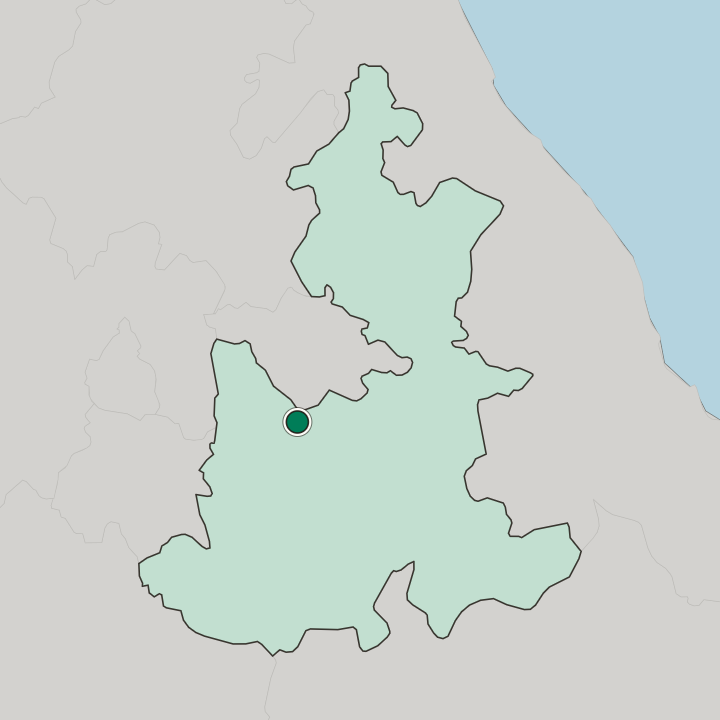
Xonaca sits east of the Río de San Francisco and north of Barrio del Alto, its slope threaded by Bulevar Xonaca and by the arroyo de Xonaca that once marked the old barrio boundaries; the name shortens the Nahuatl toponym Xonacatepec, the hill of onions, after the rise the quarter grew beneath.
Common questions
What is the best area to stay in Xonaca?
Centro Histórico de Puebla: Visitors who want hotel stock and reach Xonaca by day. Bulevar Xonaca: Anyone staying close to the Casa del Obispo and the barrio's own streets. The slope below Fuerte de Guadalupe: Travellers pairing the barrio with the hill forts to its north.
Another area in Puebla
Updated October 2026