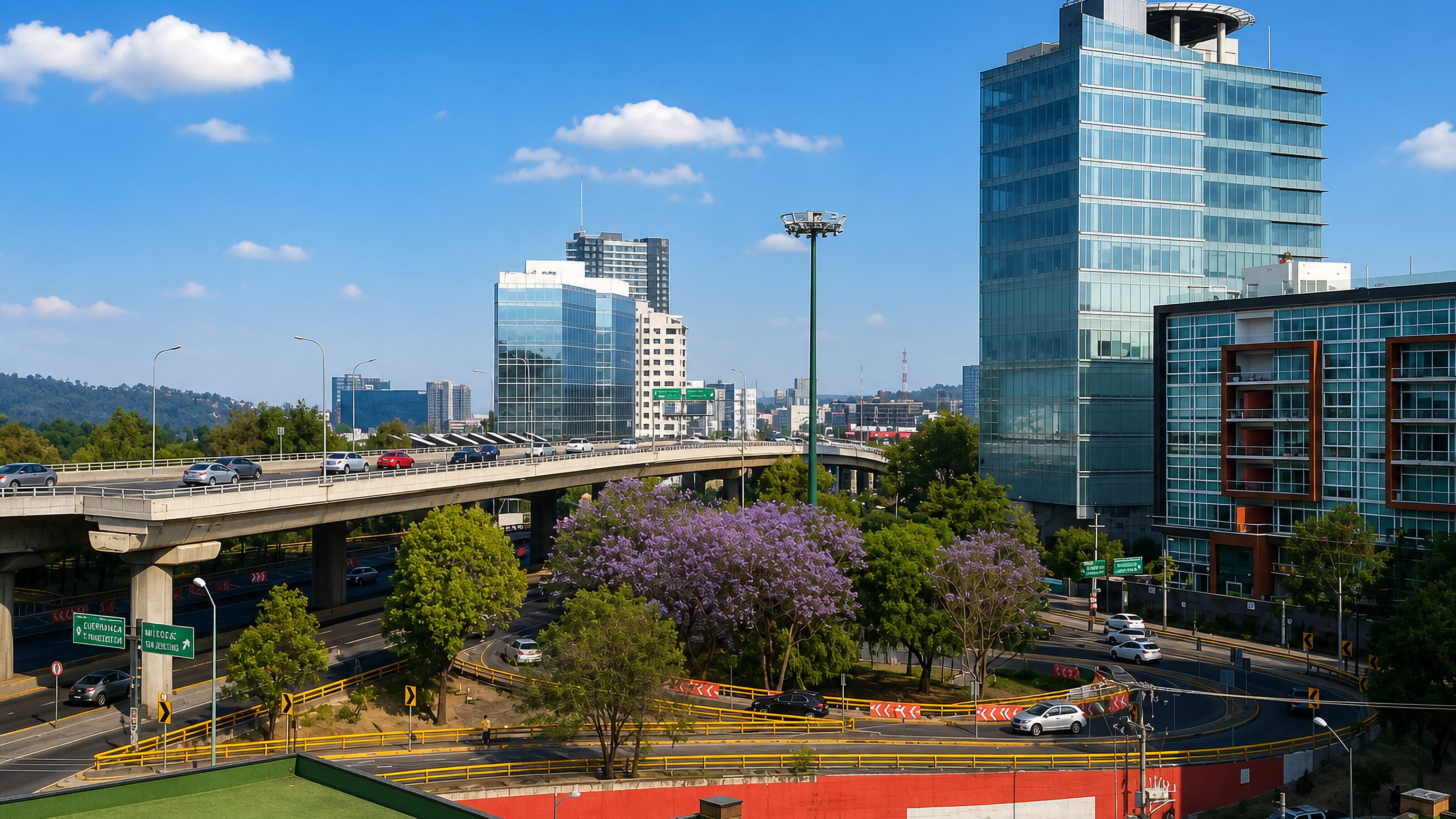
Mexico: Regions, Cities & Travel Guide
Mexico runs from desert and the Sierras to Caribbean beaches and Pacific surf, a North American country of ancient pyramids and Spanish speech.
Hotel links are affiliate links: booking through them may earn us a commission, at no extra cost to you. It never affects how places are ranked. How this works


Top destinations in Mexico
Cities to start from, then drill into areas and hotels.
 Mexico
Mexico City
Mexico City is Mexico's capital, filling the high Valley of Mexico with grand plazas and museums above the ruins of Tenochtitlan.Where to stay →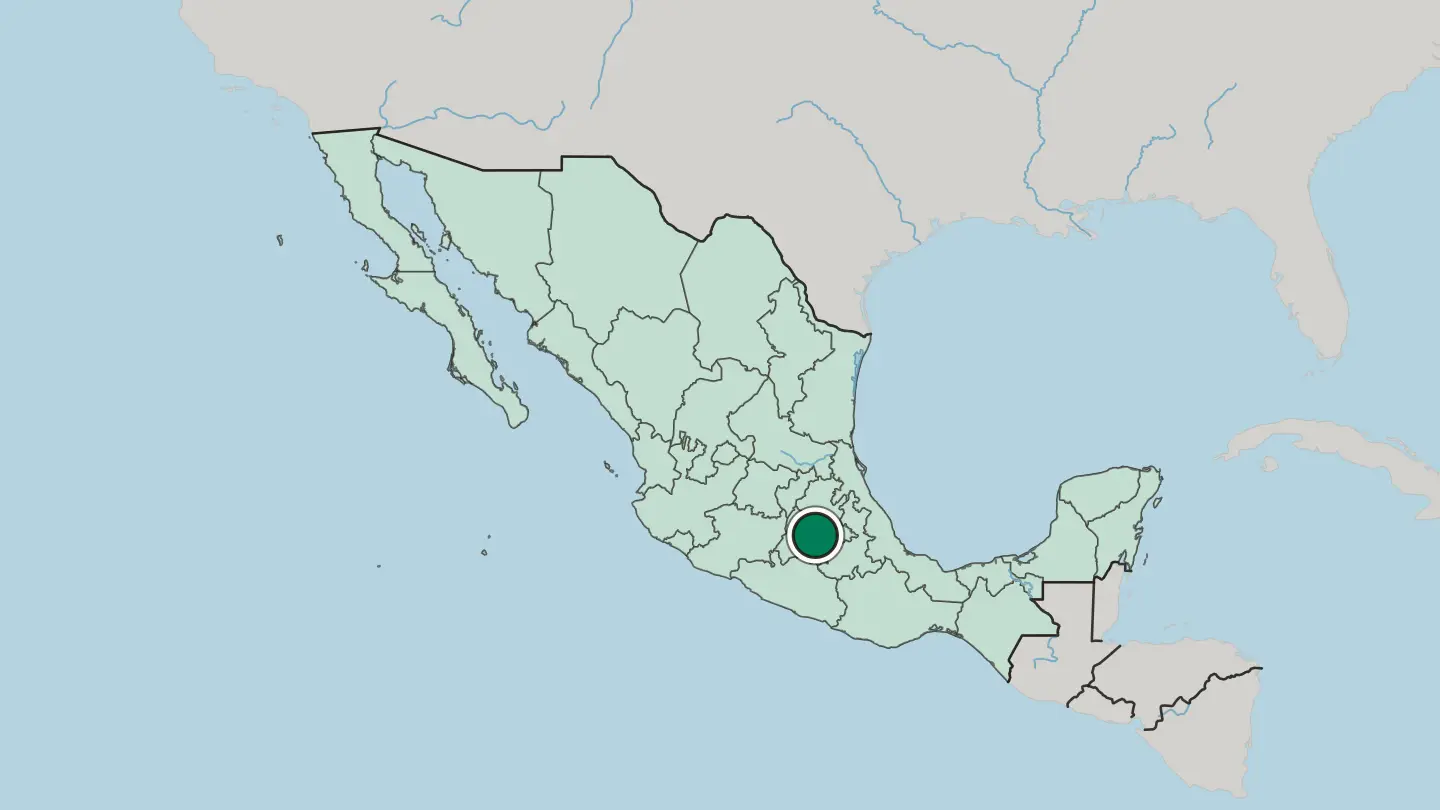
 Mexico
Guadalajara
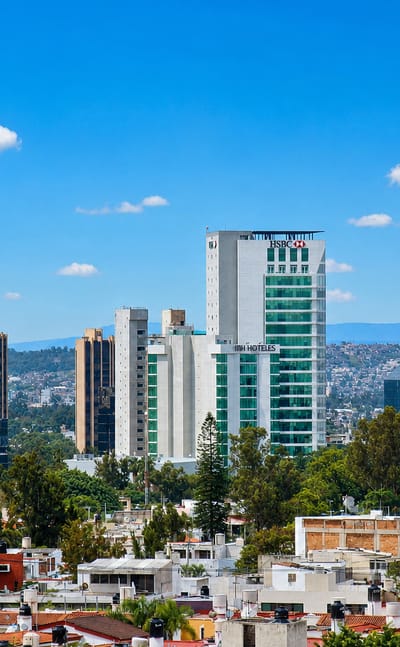
Church bells ring over colonial Guadalajara, capital of Jalisco in western Mexico, known for the Guadalajara Cathedral and its mariachi tradition.Where to stay →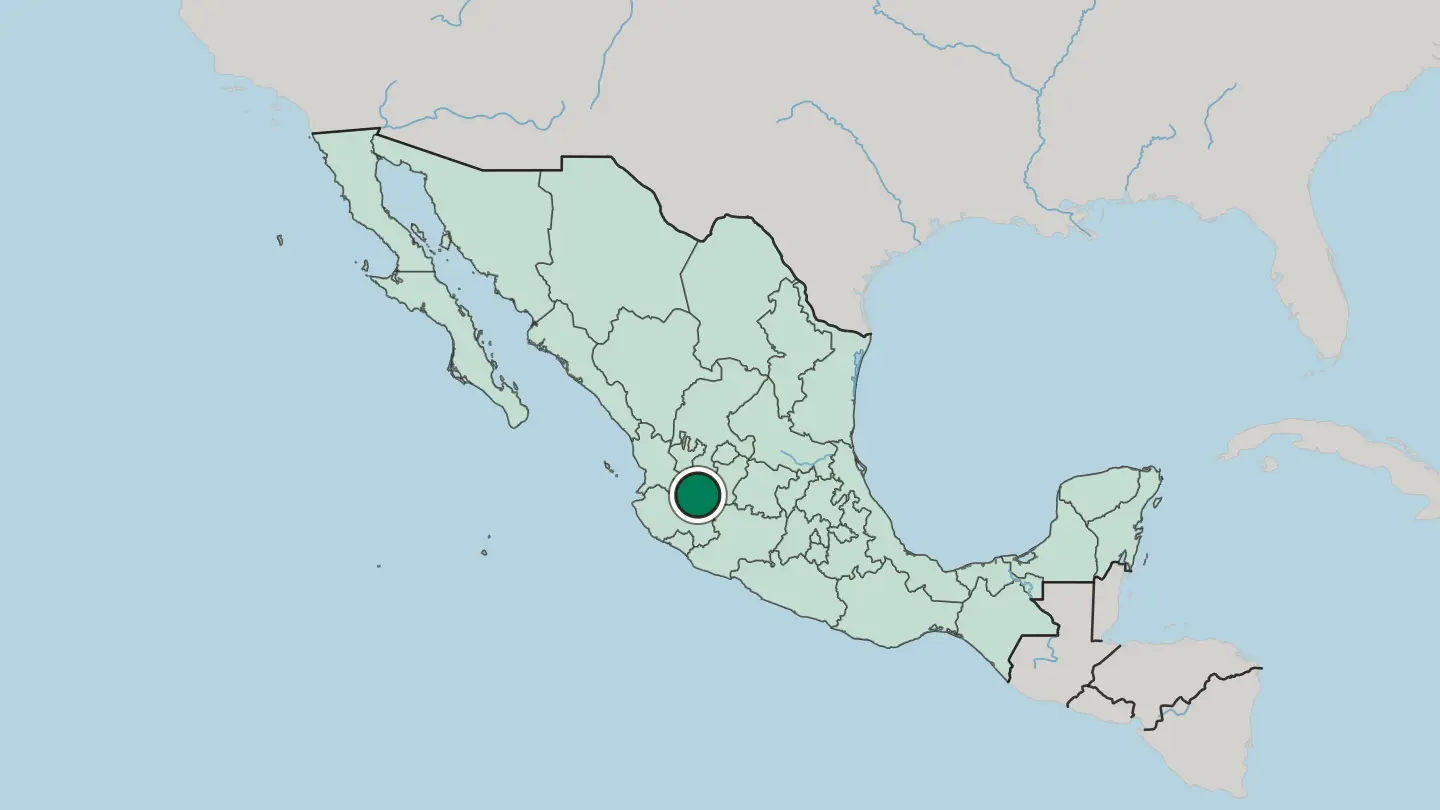
 Mexico
Cancún
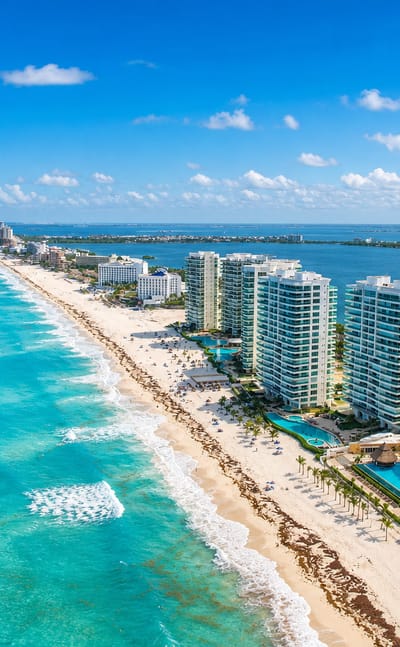
Caribbean water meets white sand at Cancún, a resort city on the Yucatán Peninsula in Quintana Roo, known for its Hotel Zone.Where to stay →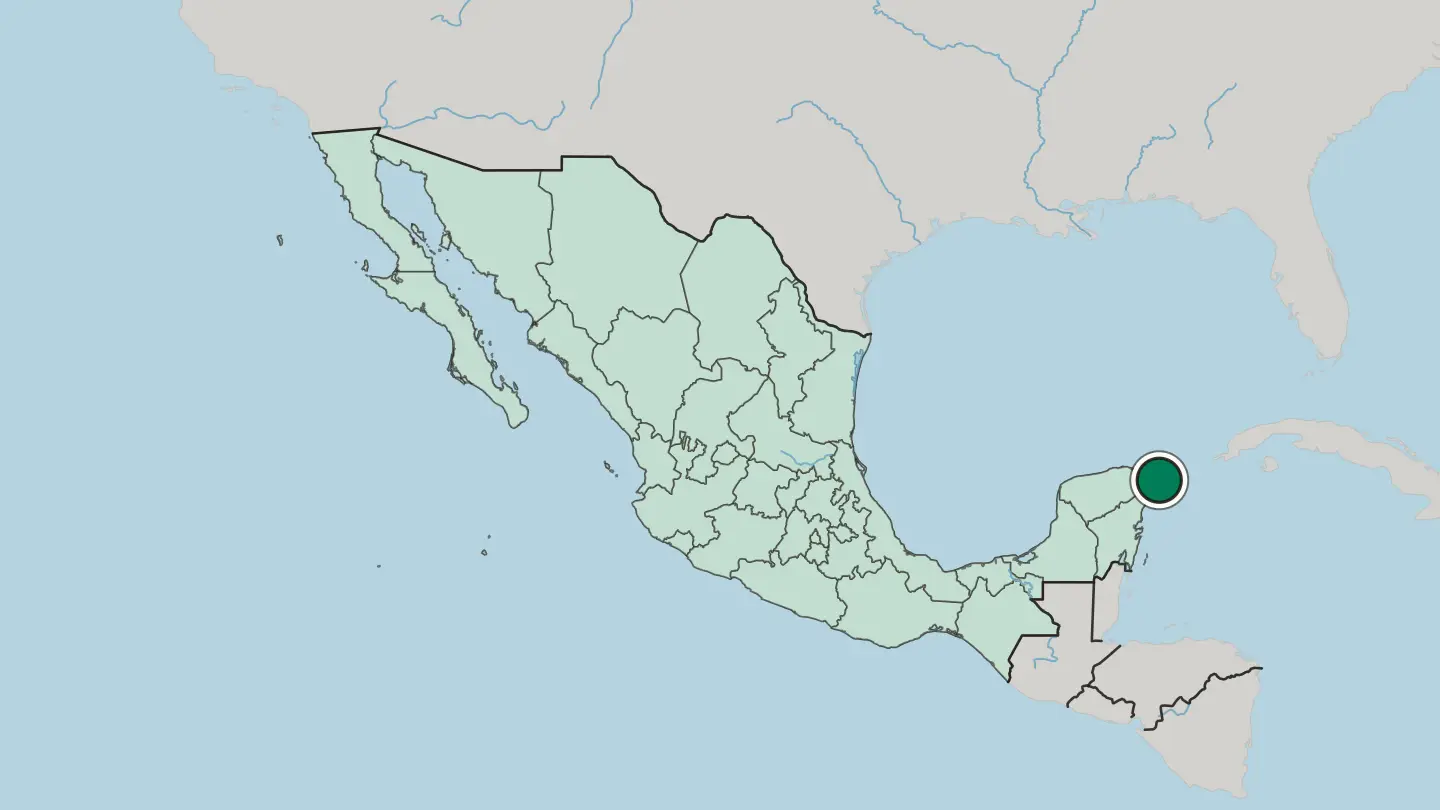
 Mexico
Monterrey
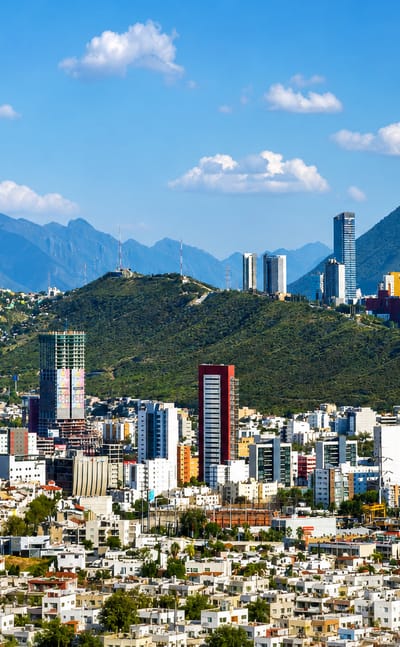
Monterrey stands at the foot of the Sierra Madre Oriental in Nuevo León, an industrial city known for the Faro del Comercio.Where to stay →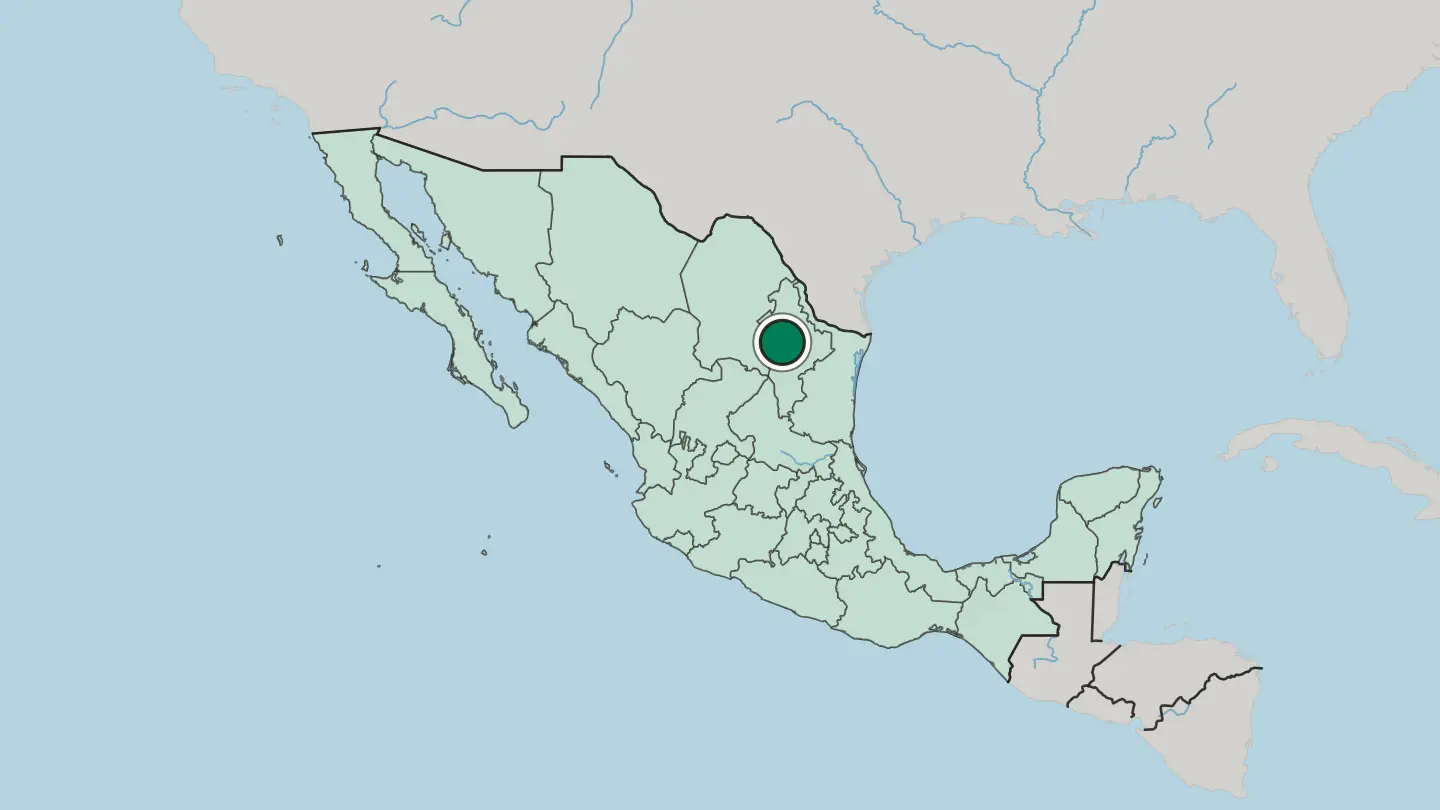
 Mexico
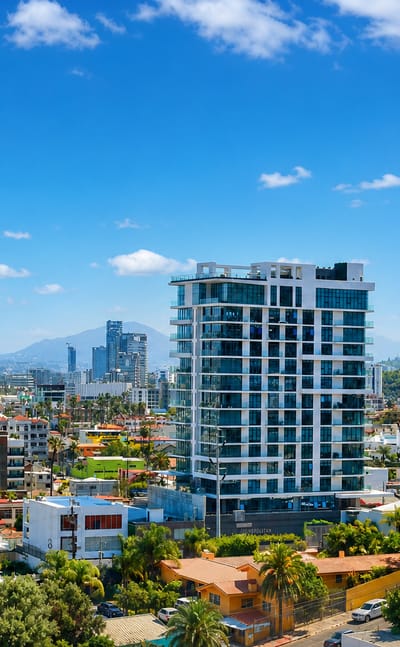
Tijuana
Tijuana rises against the border hills of Baja California, a Pacific city known for the Centro Cultural Tijuana and its crossing with San Diego.Where to stay →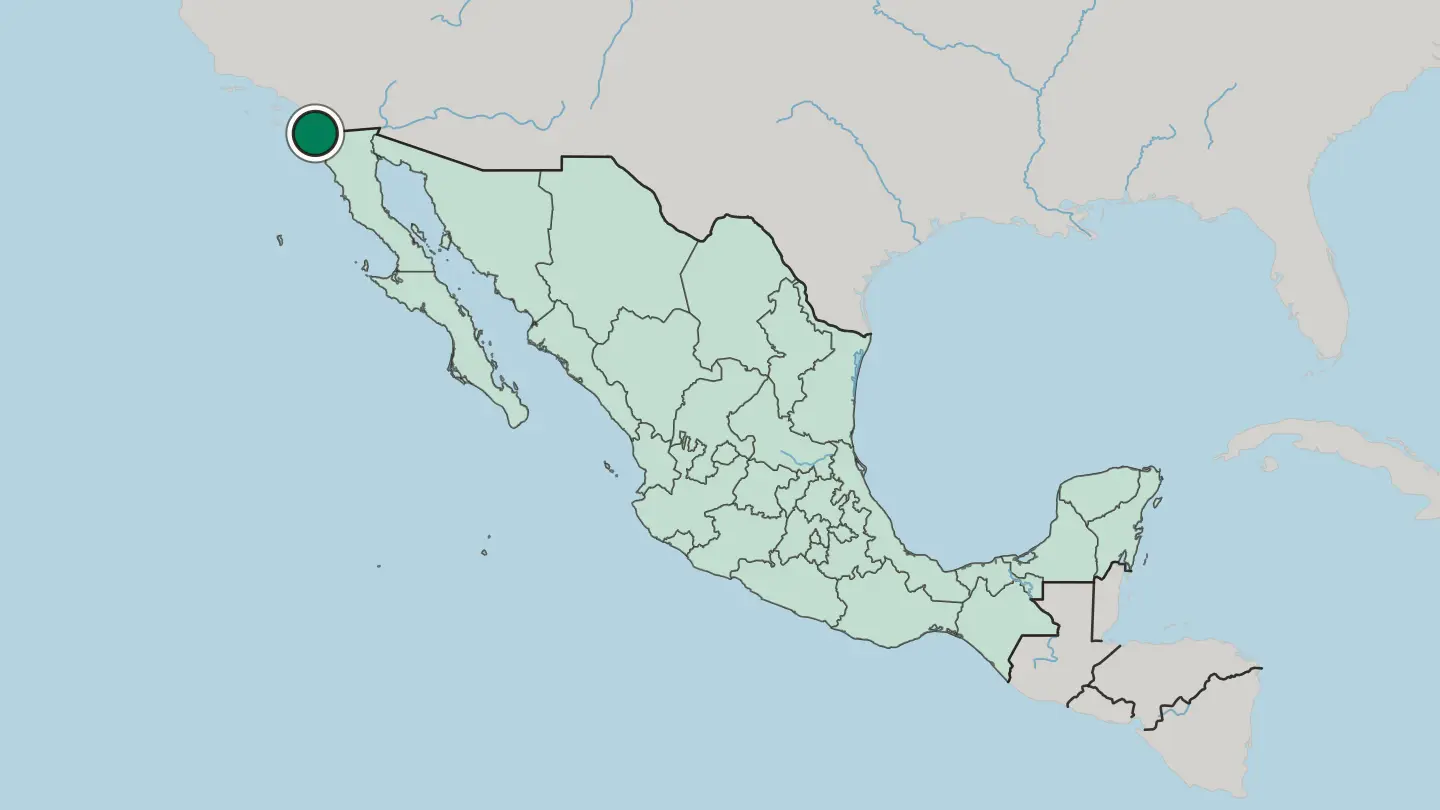
 Mexico
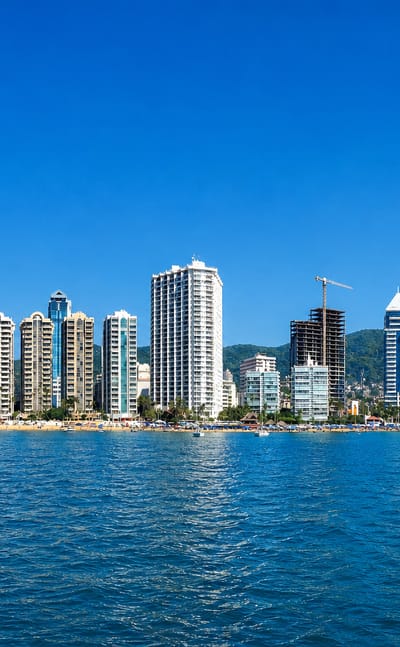
Acapulco de Juárez
Acapulco de Juárez curves around a deep Pacific bay in Guerrero, a seaport and resort city known for Fuerte de San Diego.Where to stay →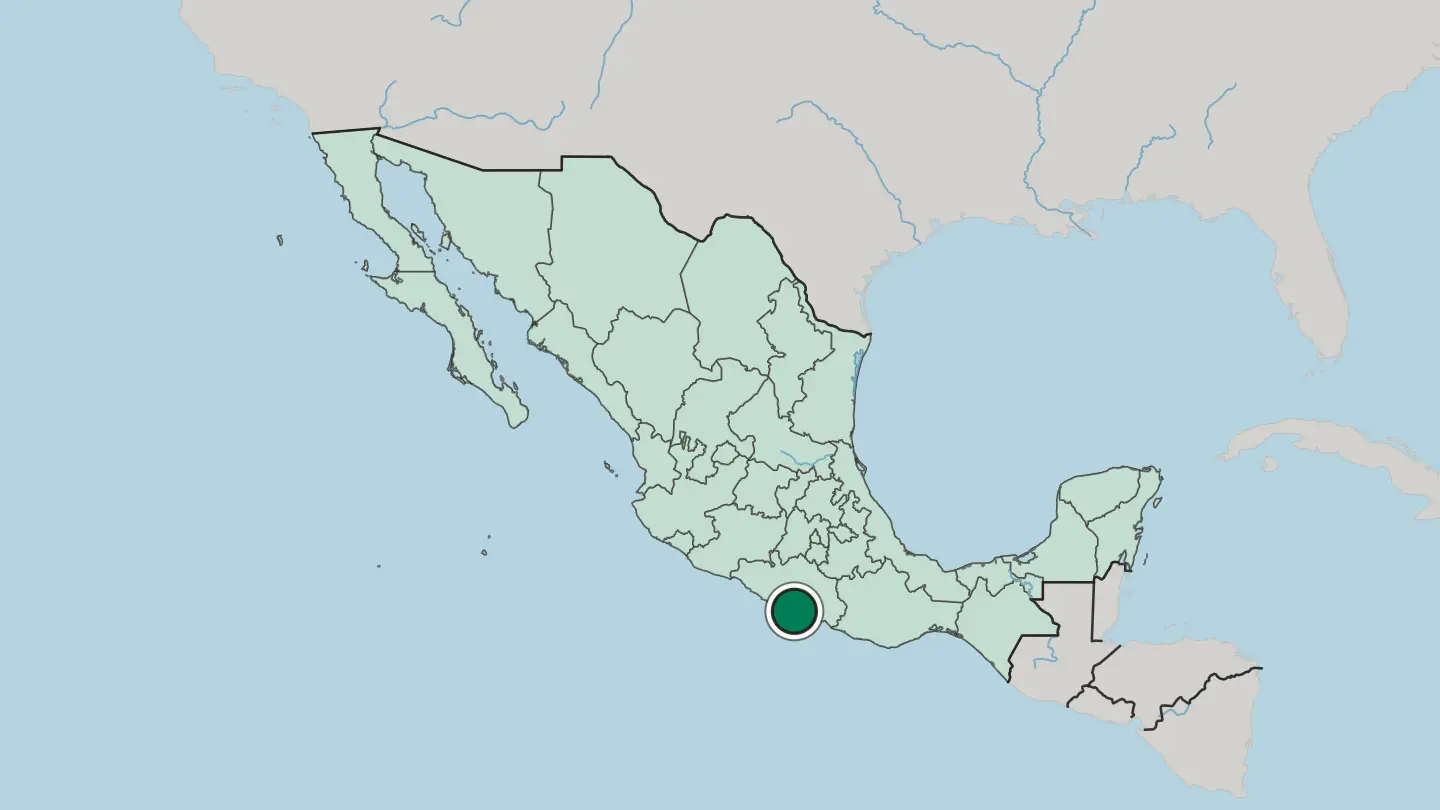
 Mexico
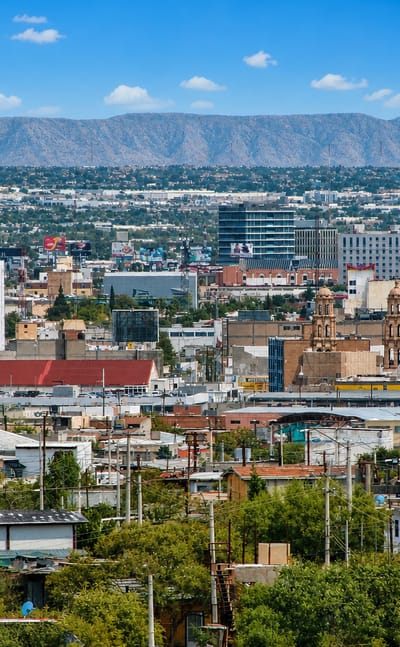
Ciudad Juárez
Ciudad Juárez stands on the Rio Grande in Chihuahua, a border city facing El Paso, known for the Misión de Nuestra Señora de Guadalupe.Where to stay →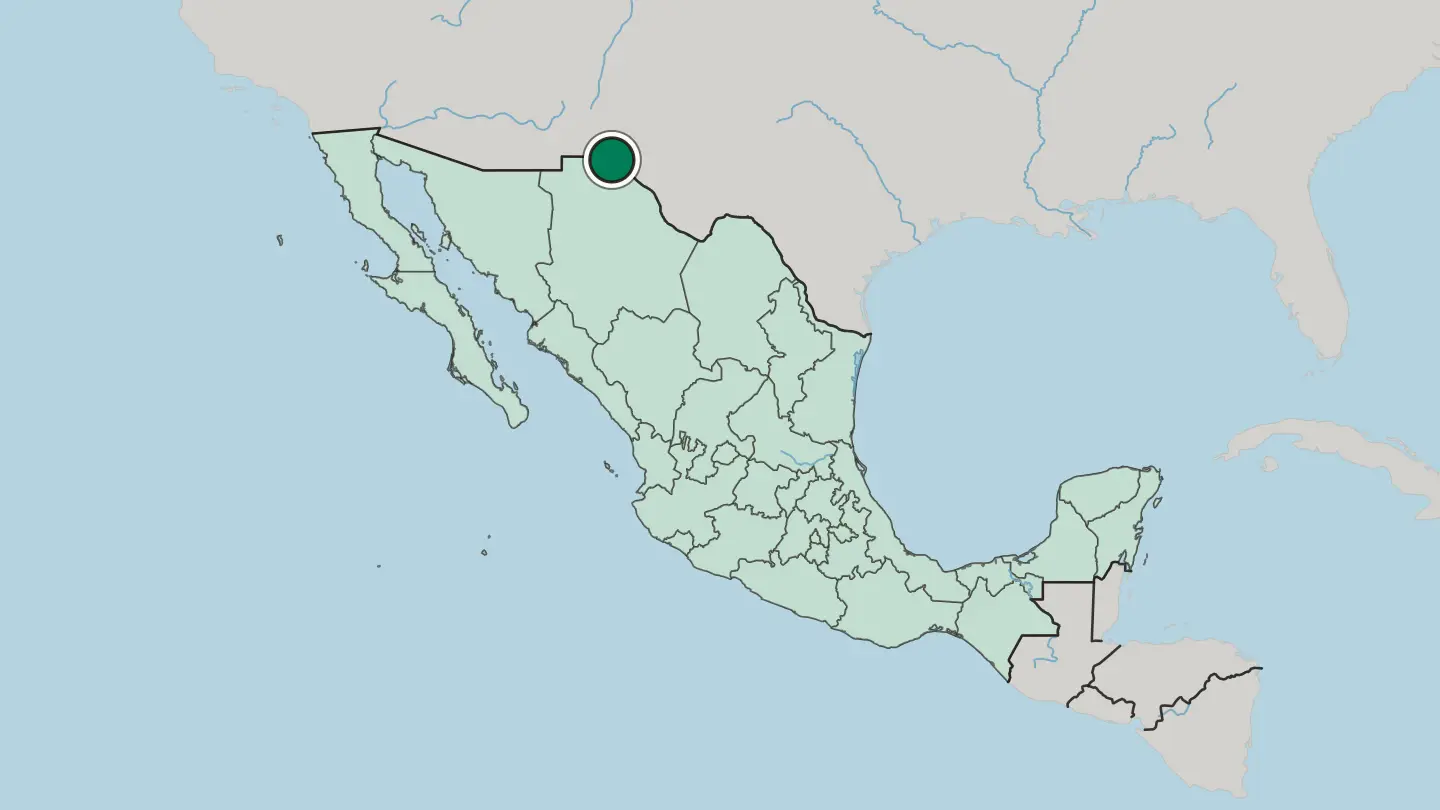
 Mexico
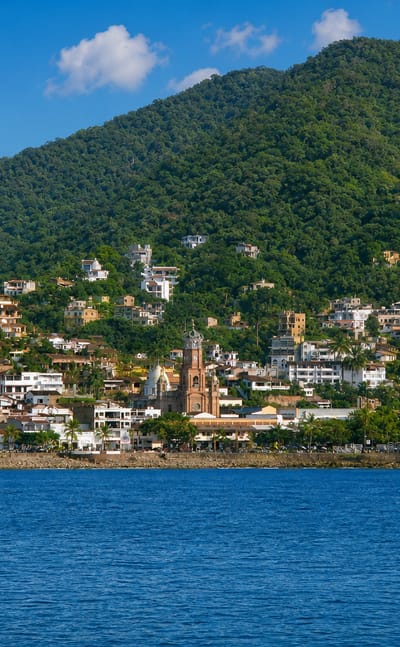
Puerto Vallarta
Surf folds onto the sand at Puerto Vallarta, a resort city on Bahía de Banderas along the Pacific coast in Jalisco, known for the Malecon and its old town.Where to stay →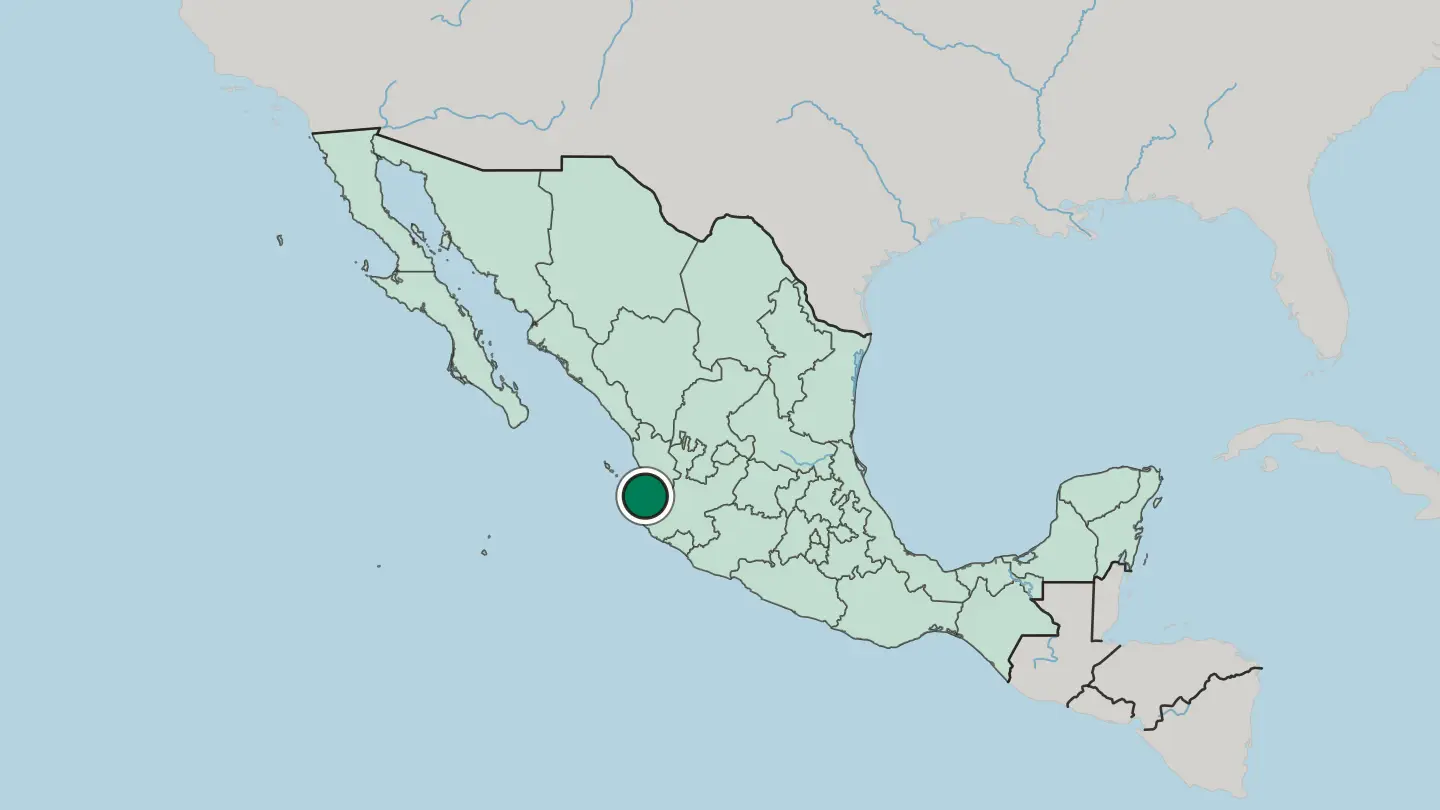
 Mexico
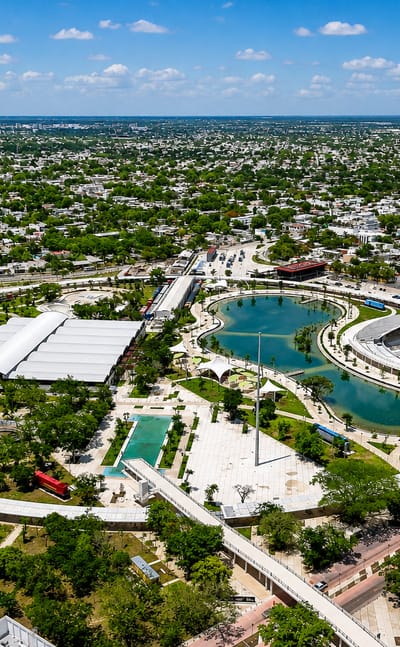
Mérida
Pale limestone fronts the streets of Mérida, capital of Estado de Yucatán, known for the Palacio Cantón and the Plaza de toros de Mérida.Where to stay →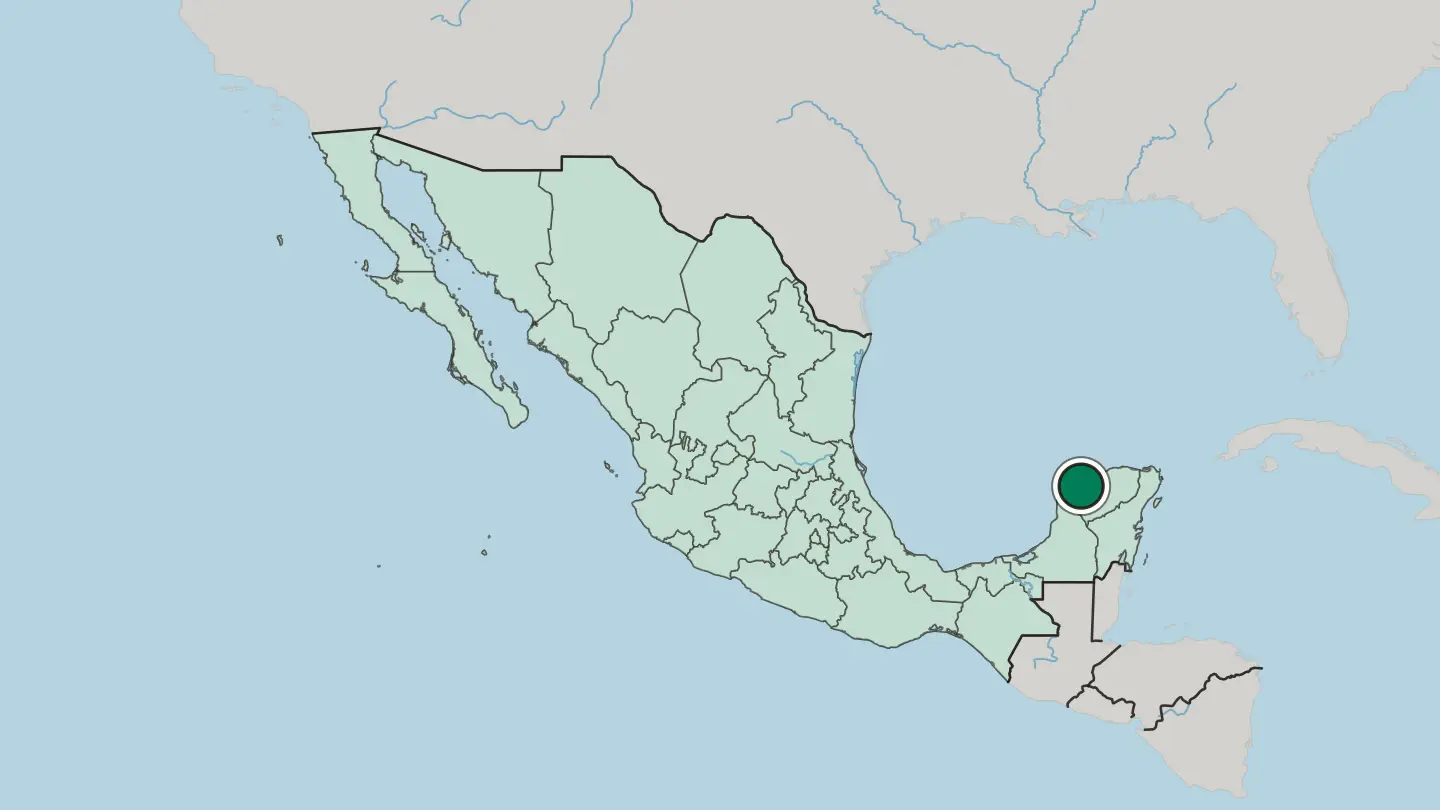
Hotel links are affiliate links: booking through them may earn us a commission, at no extra cost to you. It never affects how places are ranked. How this works
Regions of Mexico
Mexico
Ciudad de México
Ciudad de México is Mexico's capital region, rising across the Valley of Mexico where the Aztec capital Tenochtitlan once stood.Towns & cities →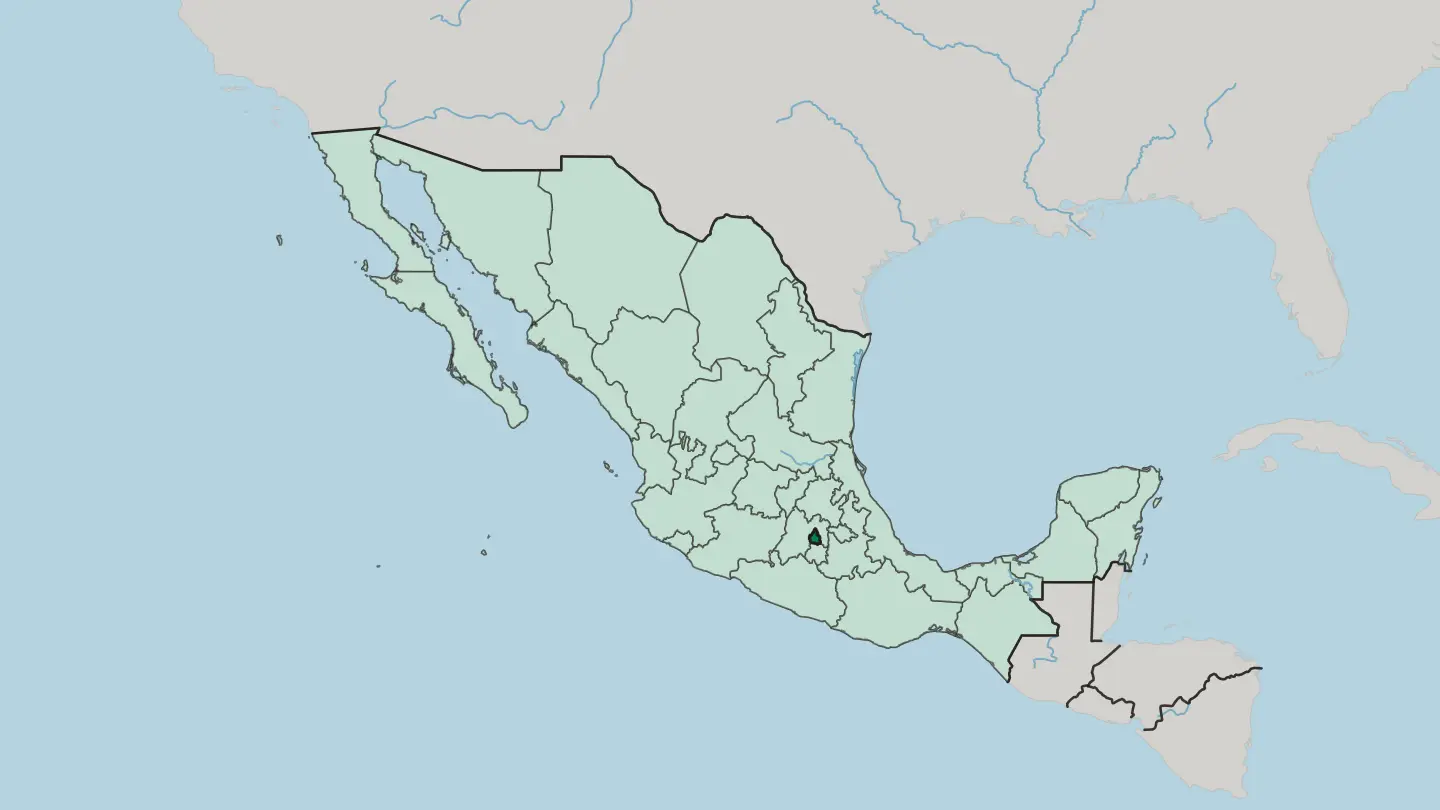
 Mexico
Estado de Aguascalientes
Estado de Aguascalientes is one of Mexico's smallest states, a highland corner of El Bajío named for the hot springs beneath its capital.Towns & cities →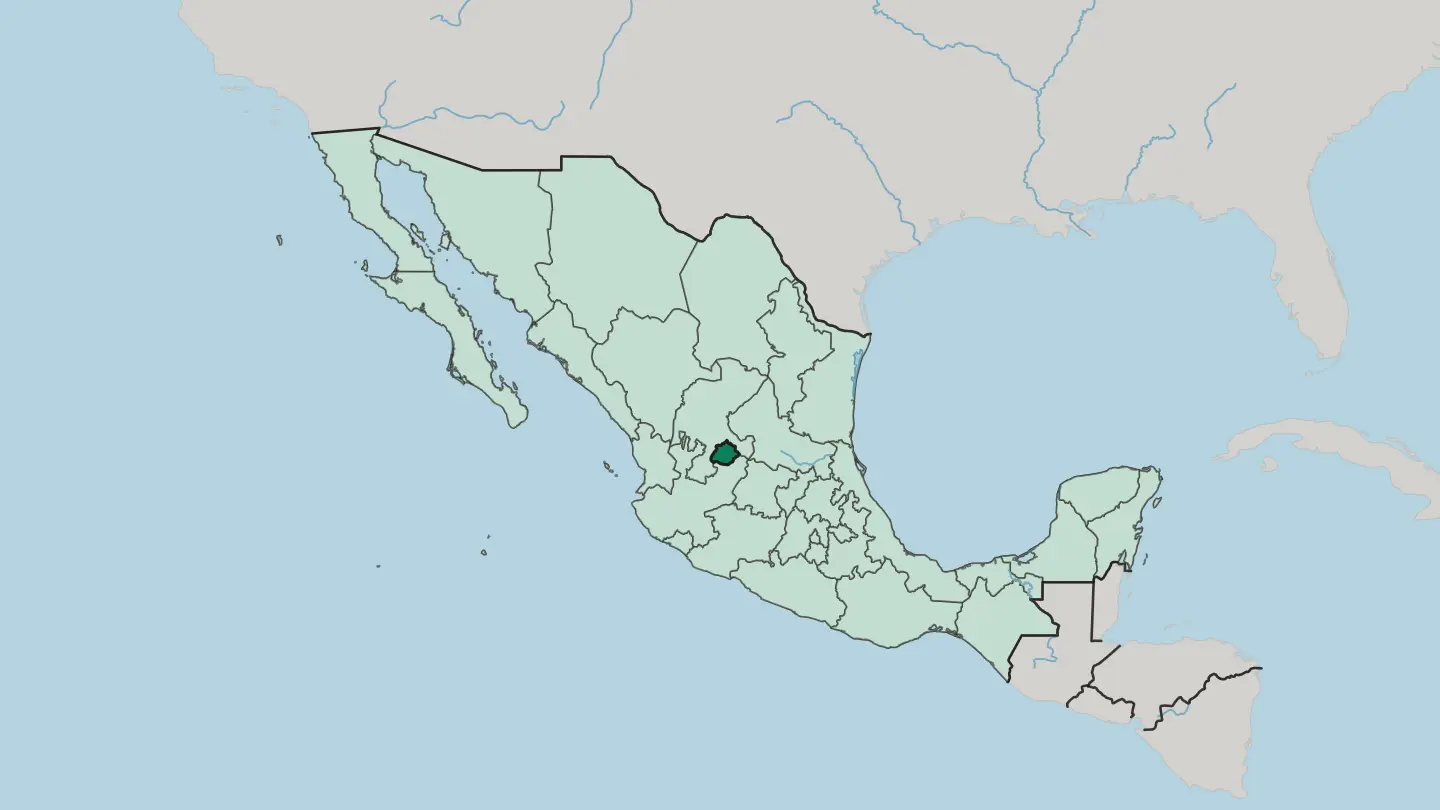 Mexico
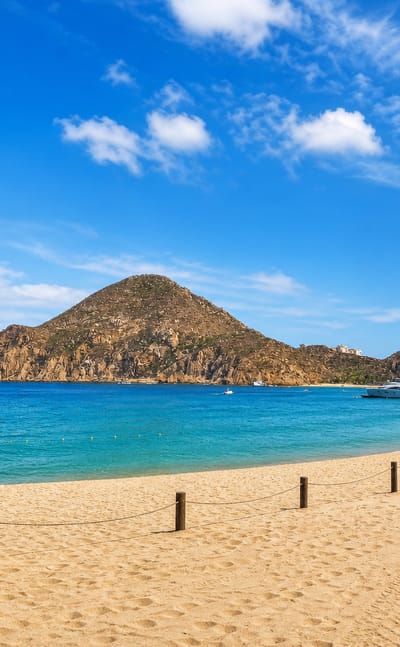
Estado de Baja California
Baja California is Mexico's north-westernmost state, the top half of a long peninsula between the Pacific Ocean and the Gulf of California.Towns & cities →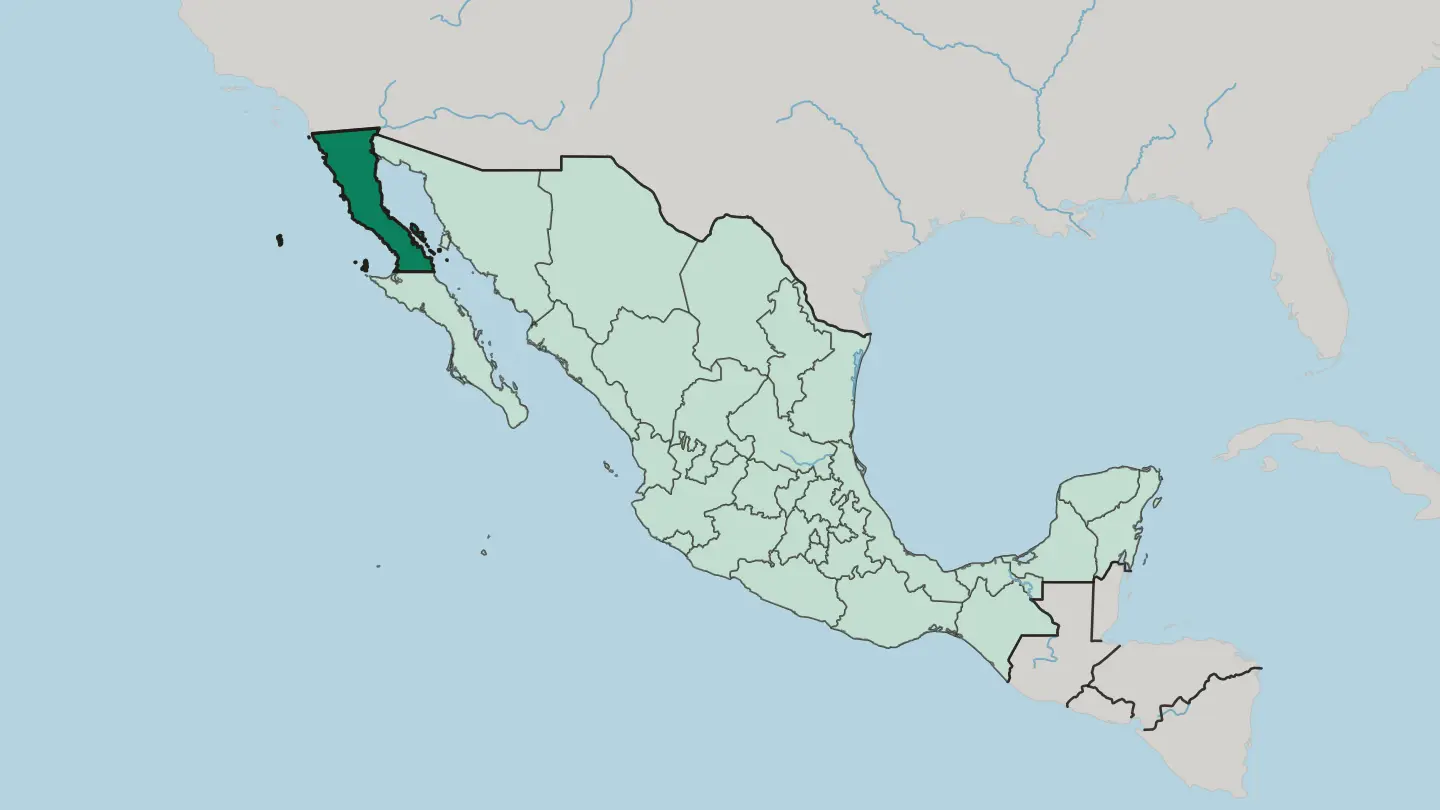
 Mexico
Estado de Baja California Sur
Baja California Sur is the southern half of Mexico's Baja California peninsula, a desert land between the Gulf of California and the Pacific Ocean.Towns & cities →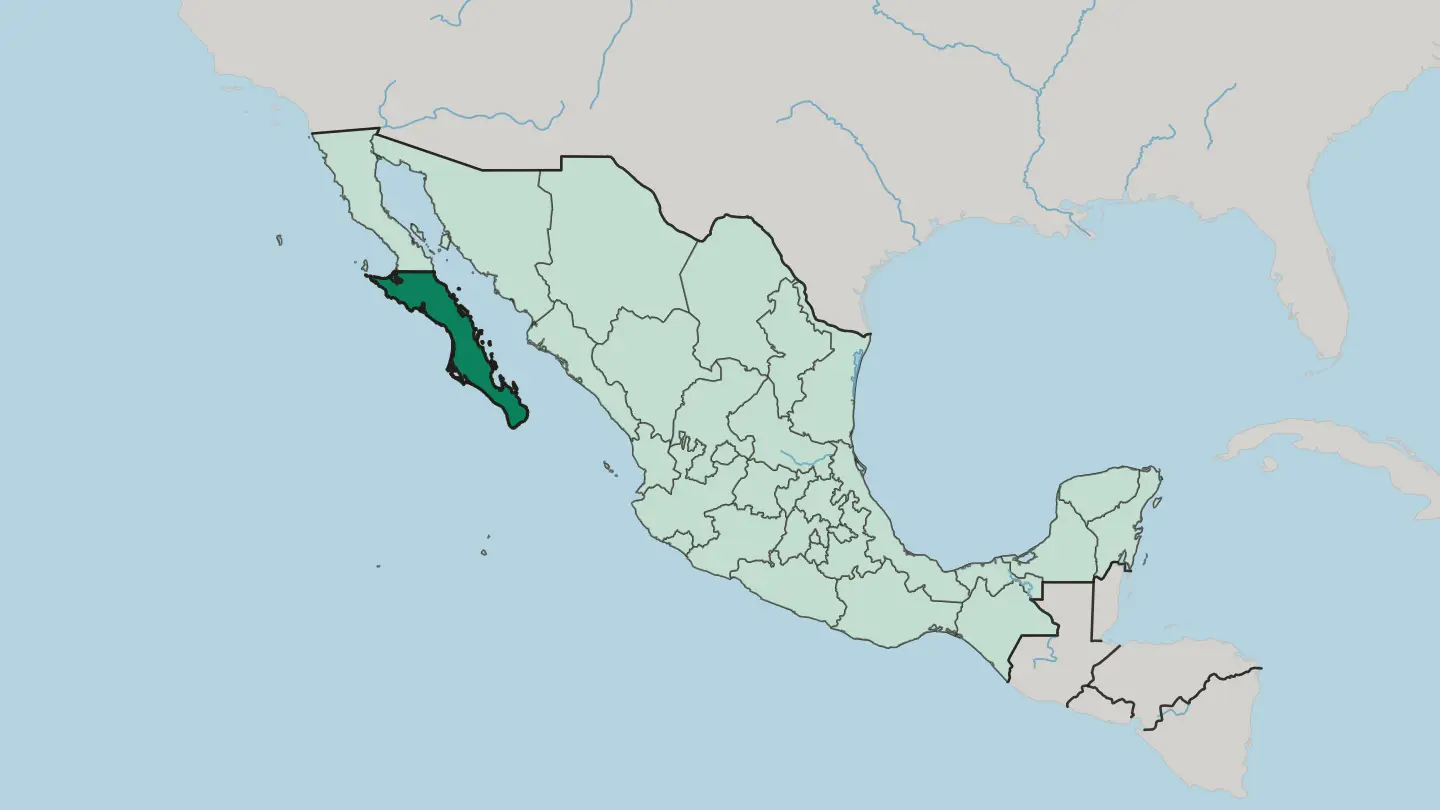
 Mexico
Estado de Campeche
Estado de Campeche spreads across the western Yucatán Peninsula, a walled Gulf capital backed by the Maya forests of Calakmul.Towns & cities →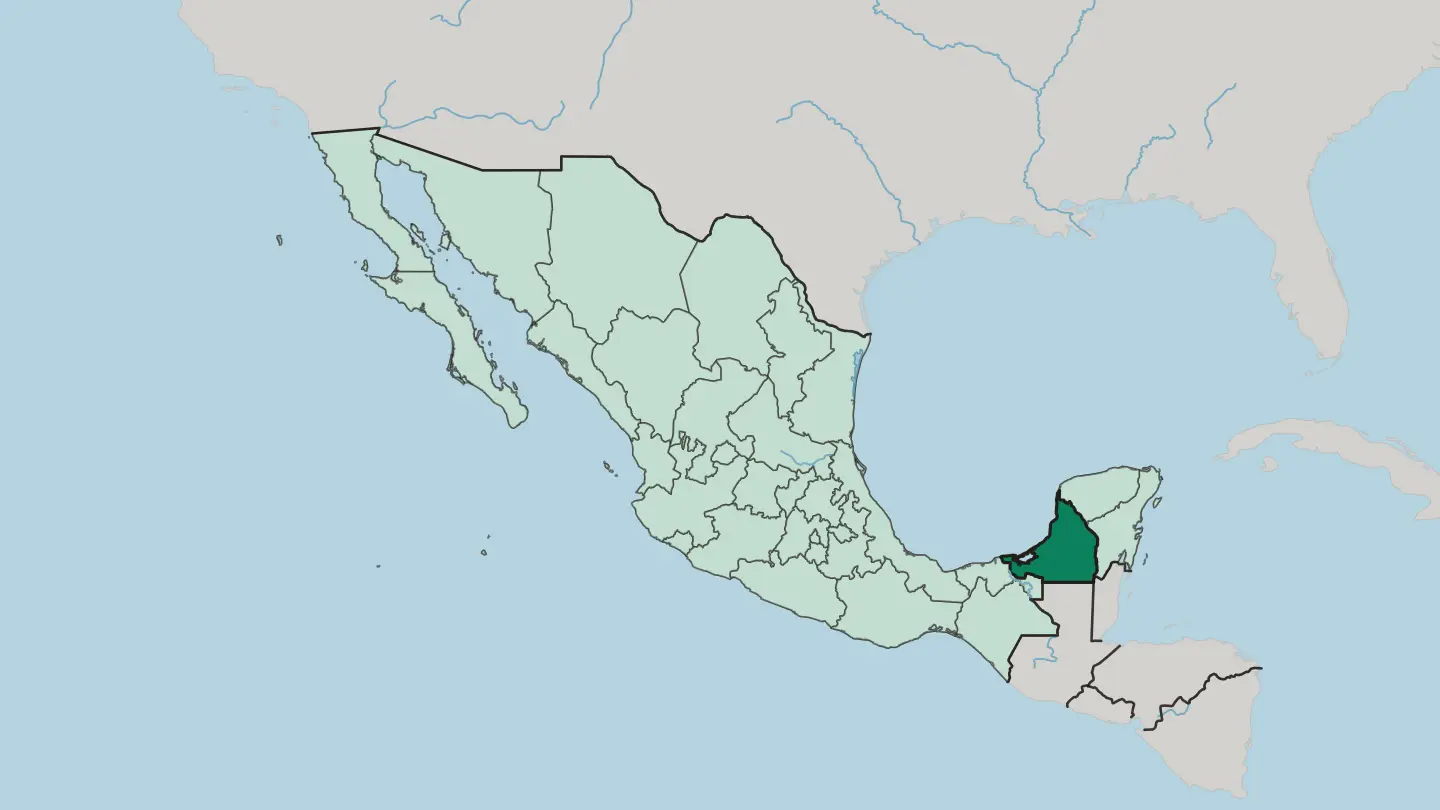
 Mexico
Estado de Chiapas
Chiapas is Mexico's southernmost state, a land of Maya highlands, the Grijalva's Sumidero Canyon, and jungle ruins on the Guatemalan border.Towns & cities →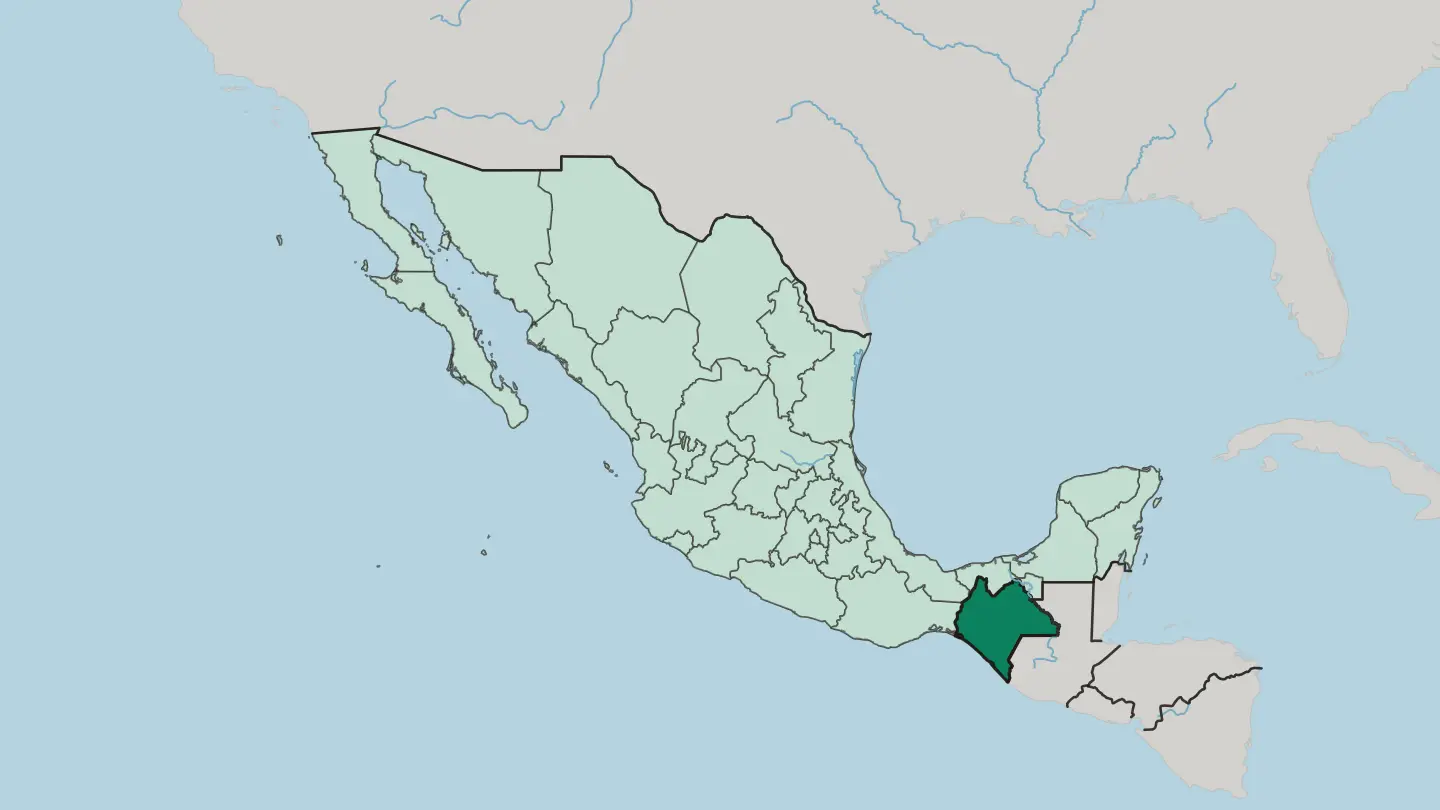 Mexico
Estado de Chihuahua
Estado de Chihuahua is the largest state in Mexico, spanning the Chihuahuan Desert and the Sierra Madre Occidental's Copper Canyon.Towns & cities →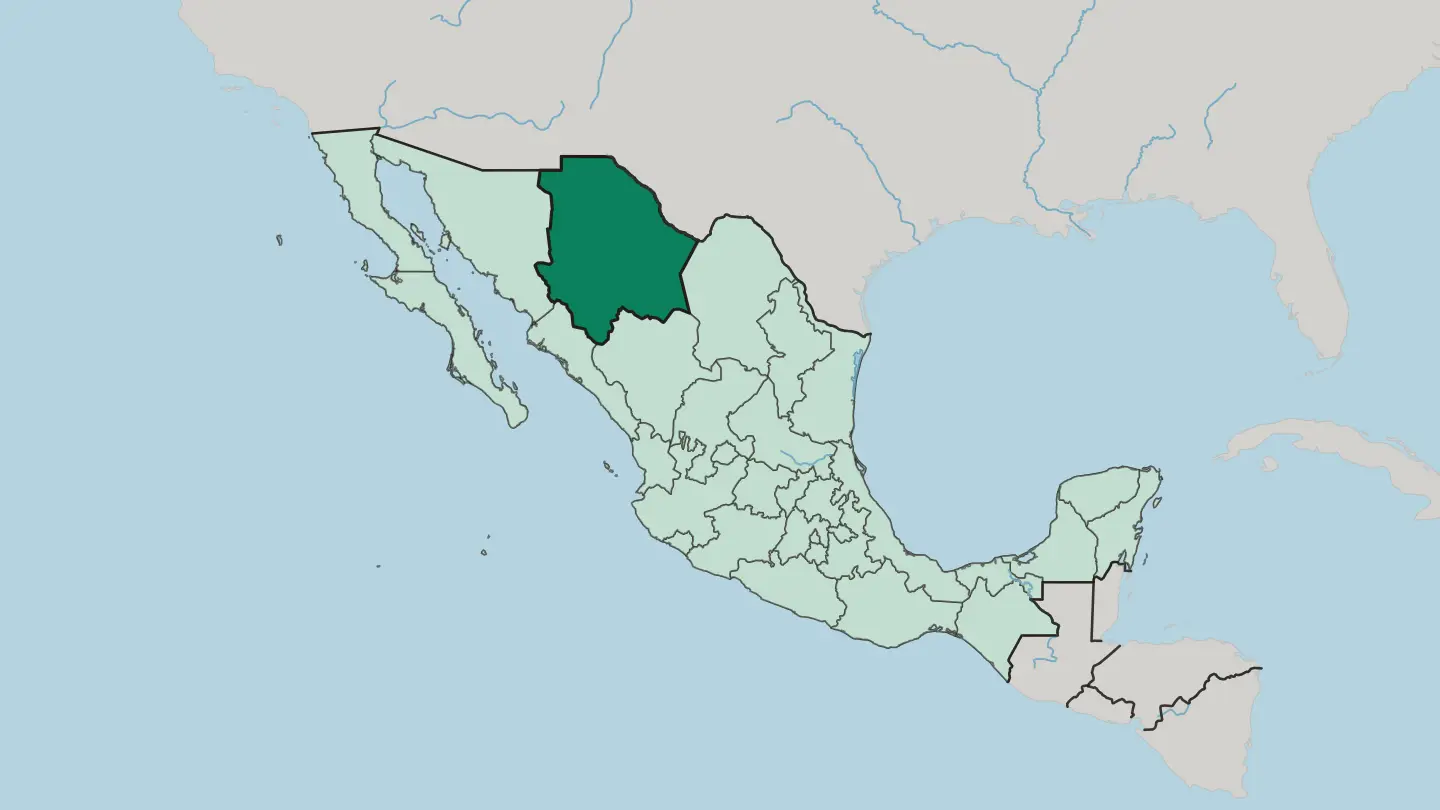
 Mexico
Estado de Coahuila de Zaragoza
Coahuila de Zaragoza is Mexico's third-largest state, a high desert reaching from the Sierra Madre Oriental to the Rio Grande border with Texas.Towns & cities →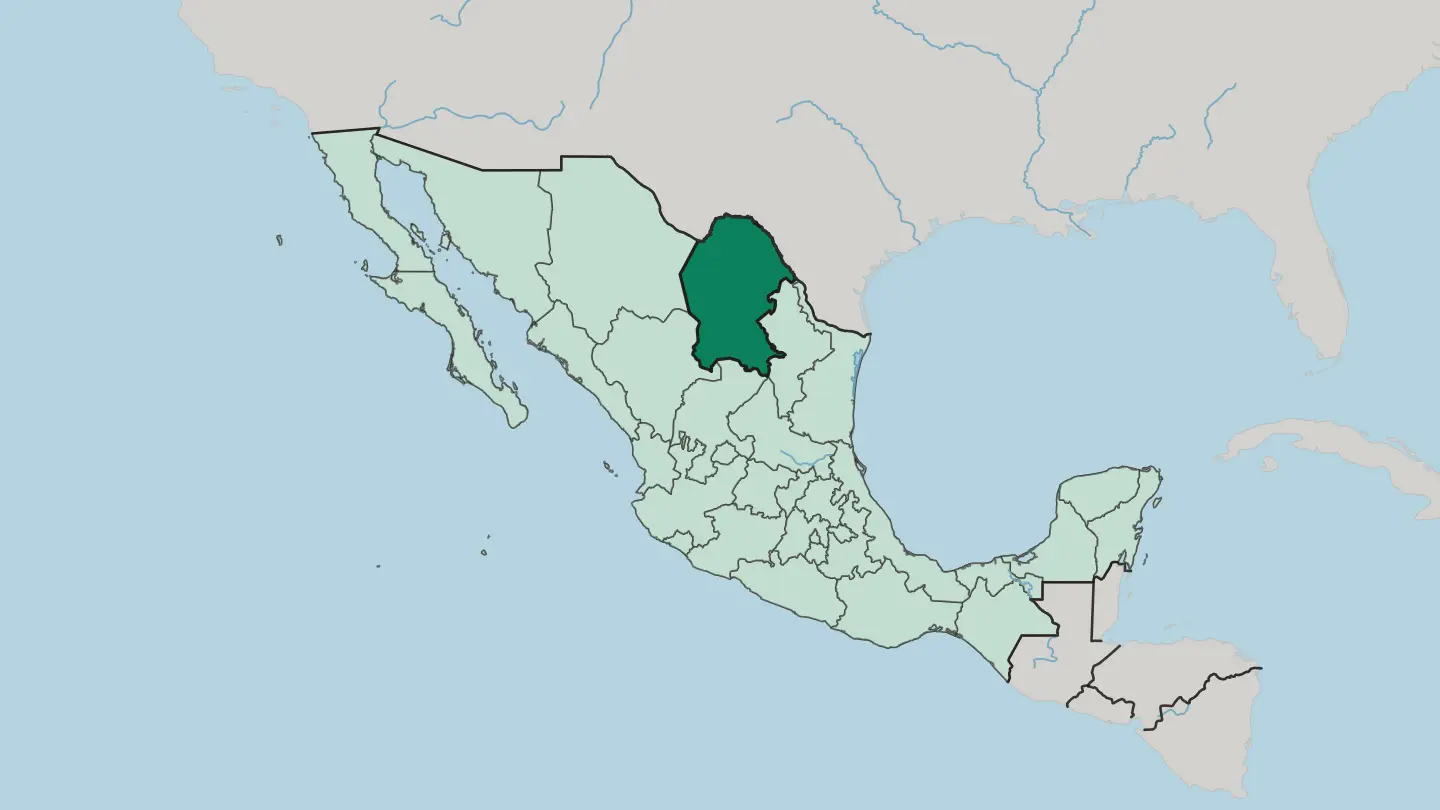
 Mexico
Estado de Colima
Colima is one of Mexico's smallest states, a strip of Pacific coast between two volcanoes and the port of Manzanillo.Towns & cities →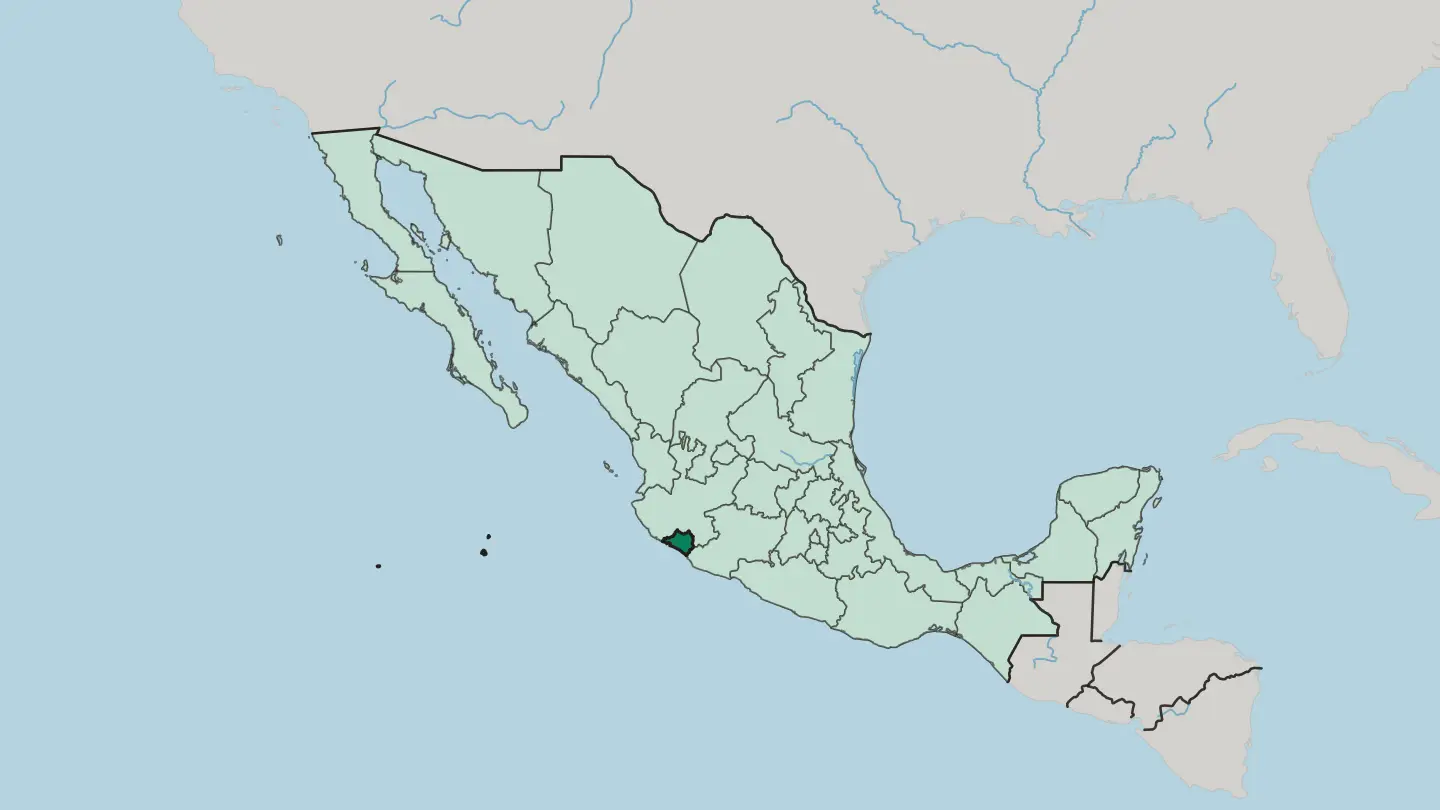
 Mexico
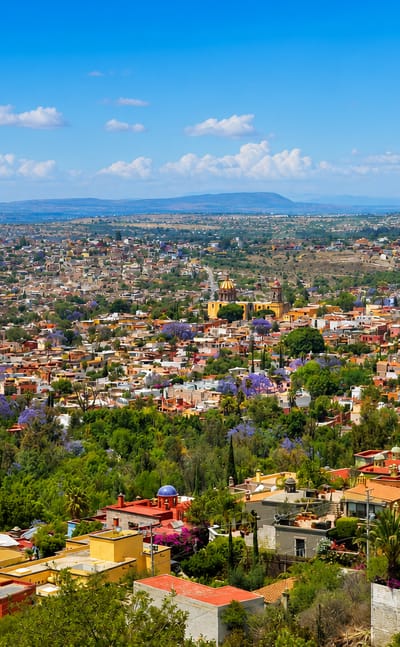
Estado de Durango
Estado de Durango is a landlocked state of northern Mexico, where the Sierra Madre Occidental falls from pine forest to high desert and old silver towns.Towns & cities →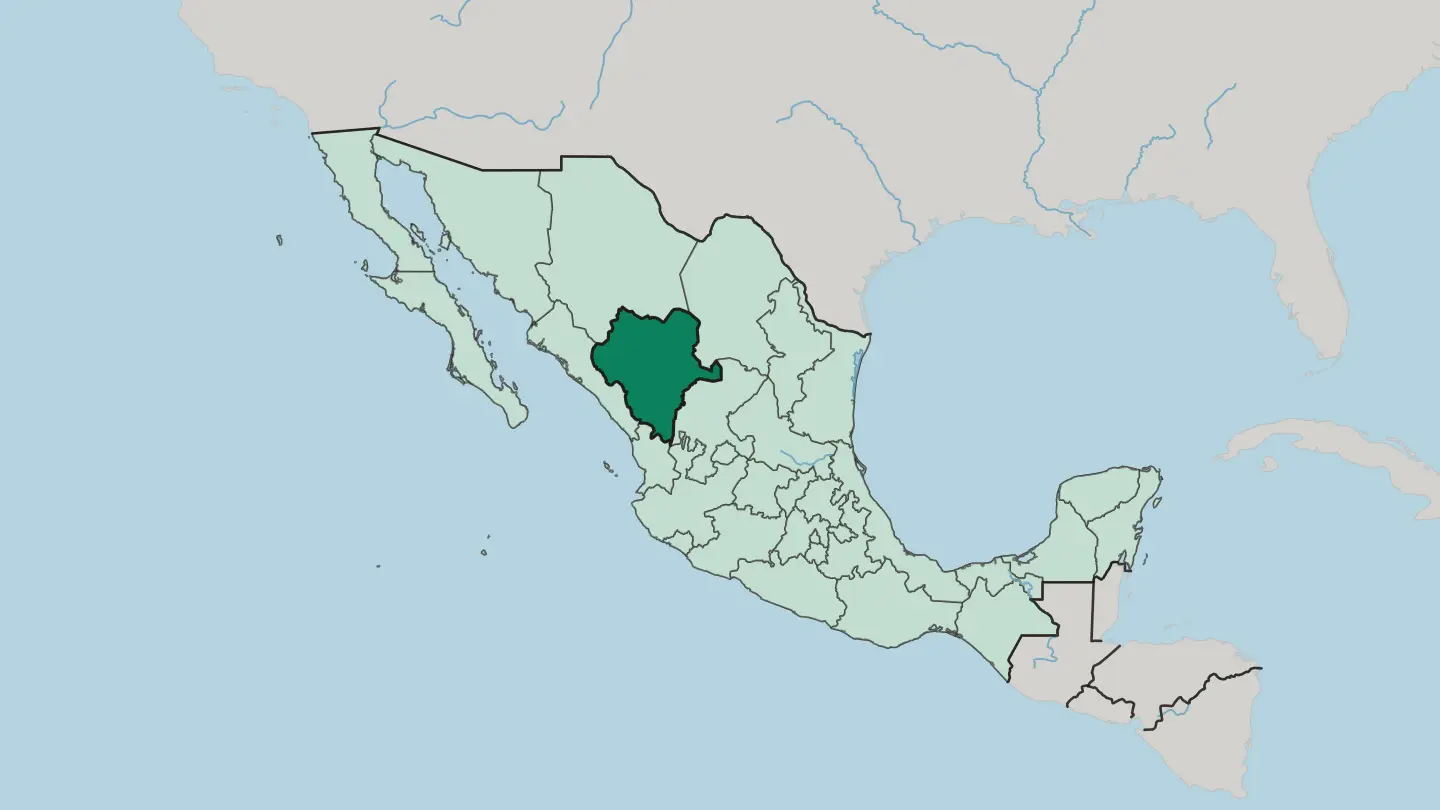
 Mexico
Estado de Guanajuato
Guanajuato is a silver-rich state in the Bajío highlands of central Mexico, its colonial cities born from the mines that once funded an empire.Towns & cities →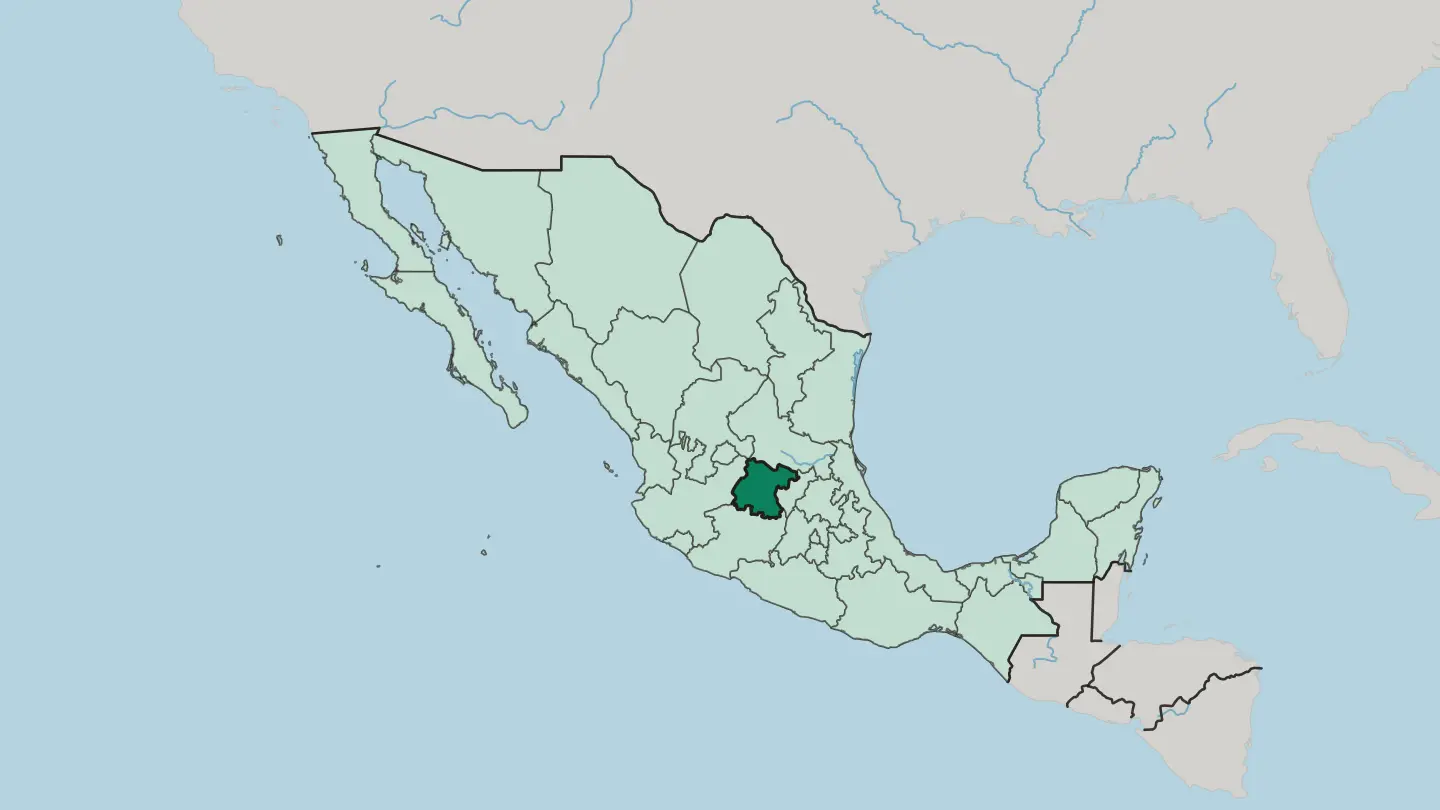 Mexico
Estado de Guerrero
Guerrero is a Pacific-coast state of southwestern Mexico, where the Sierra Madre del Sur falls to Acapulco and the beaches of the Costa Grande.Towns & cities →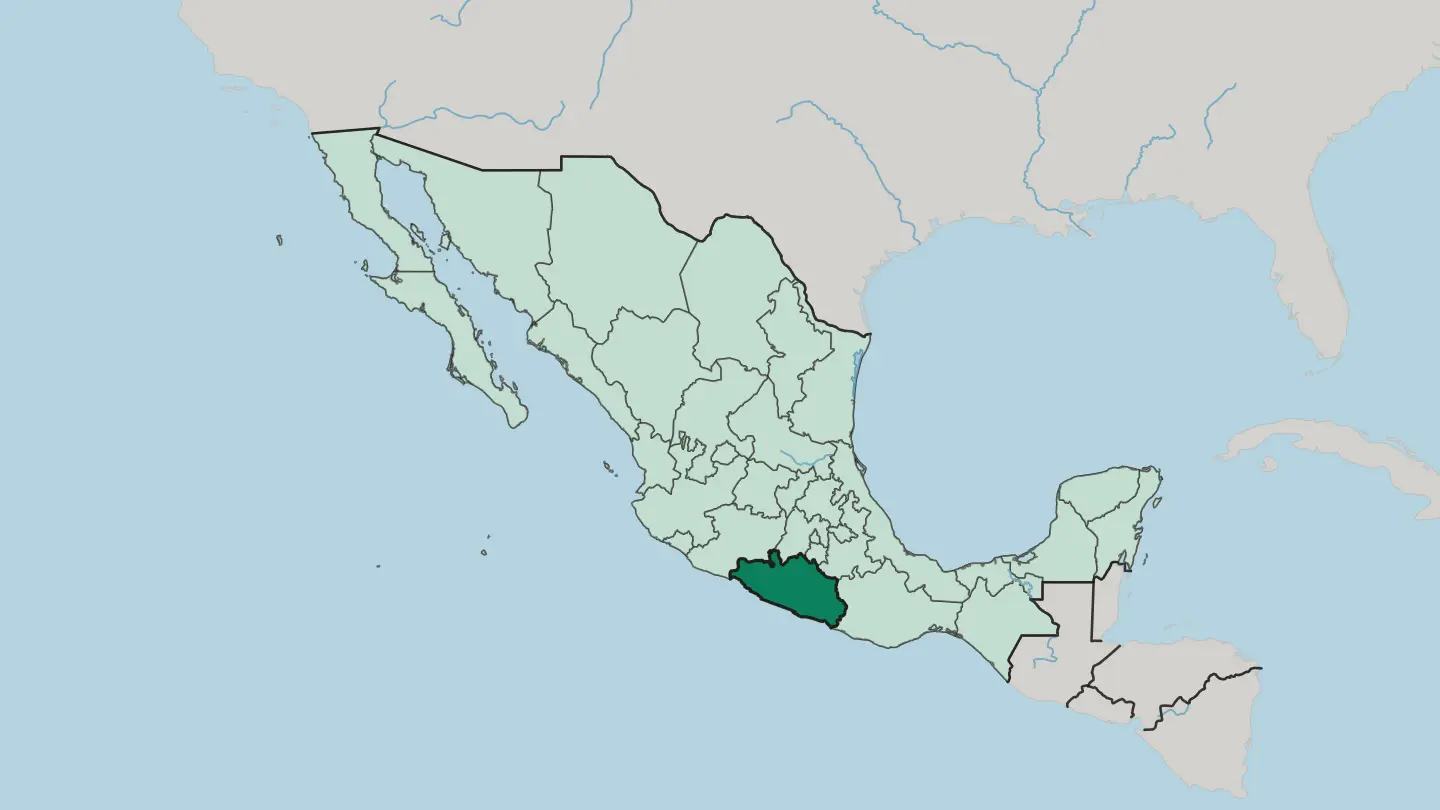
 Mexico
Estado de Hidalgo
Estado de Hidalgo runs from the Toltec pyramids of Tula through Pachuca's silver mountains to the thermal pools of Grutas de Tolantongo.Towns & cities →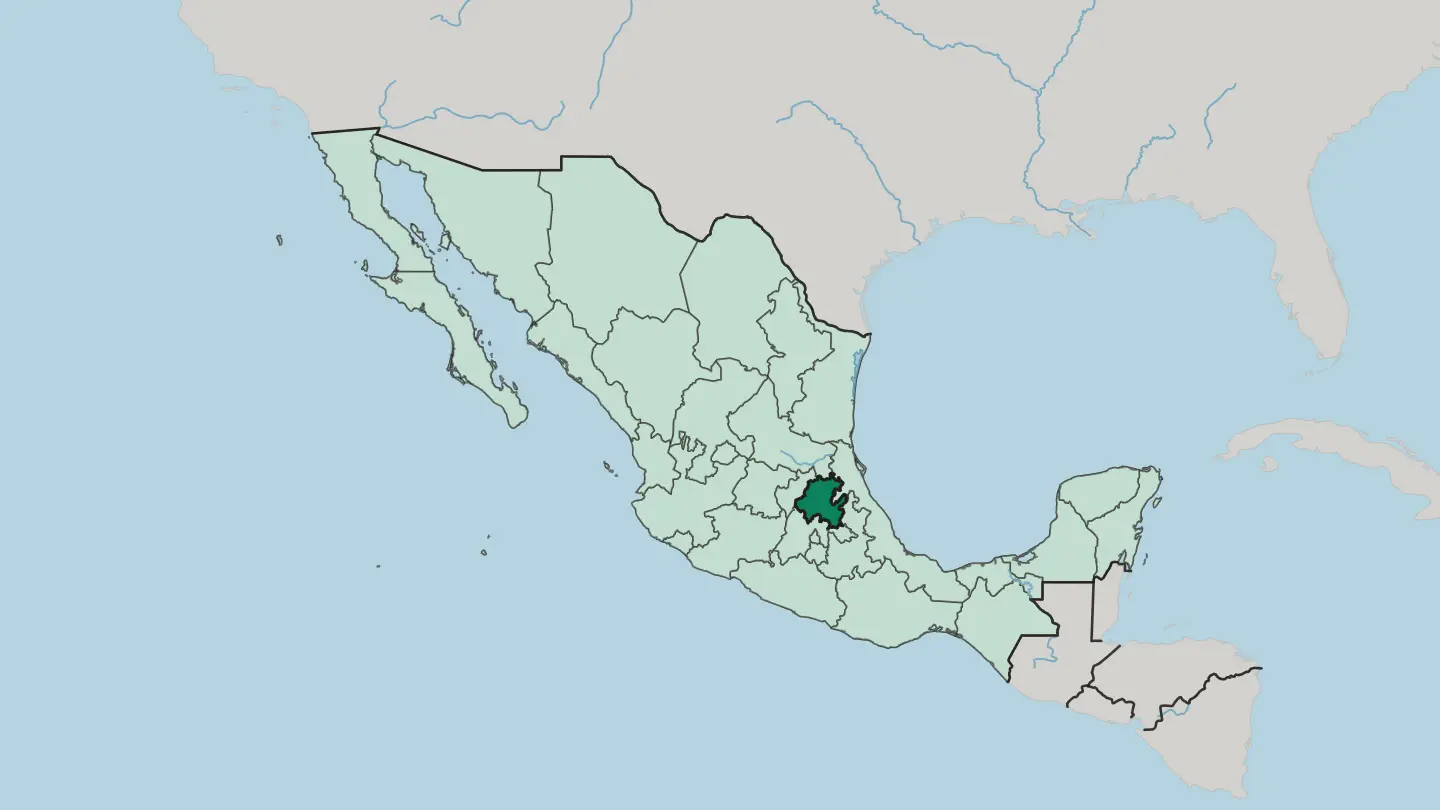 Mexico
Estado de Jalisco
Jalisco is a state of western Mexico where tequila and mariachi began, anchored by Guadalajara and the Pacific resort of Puerto Vallarta.Towns & cities →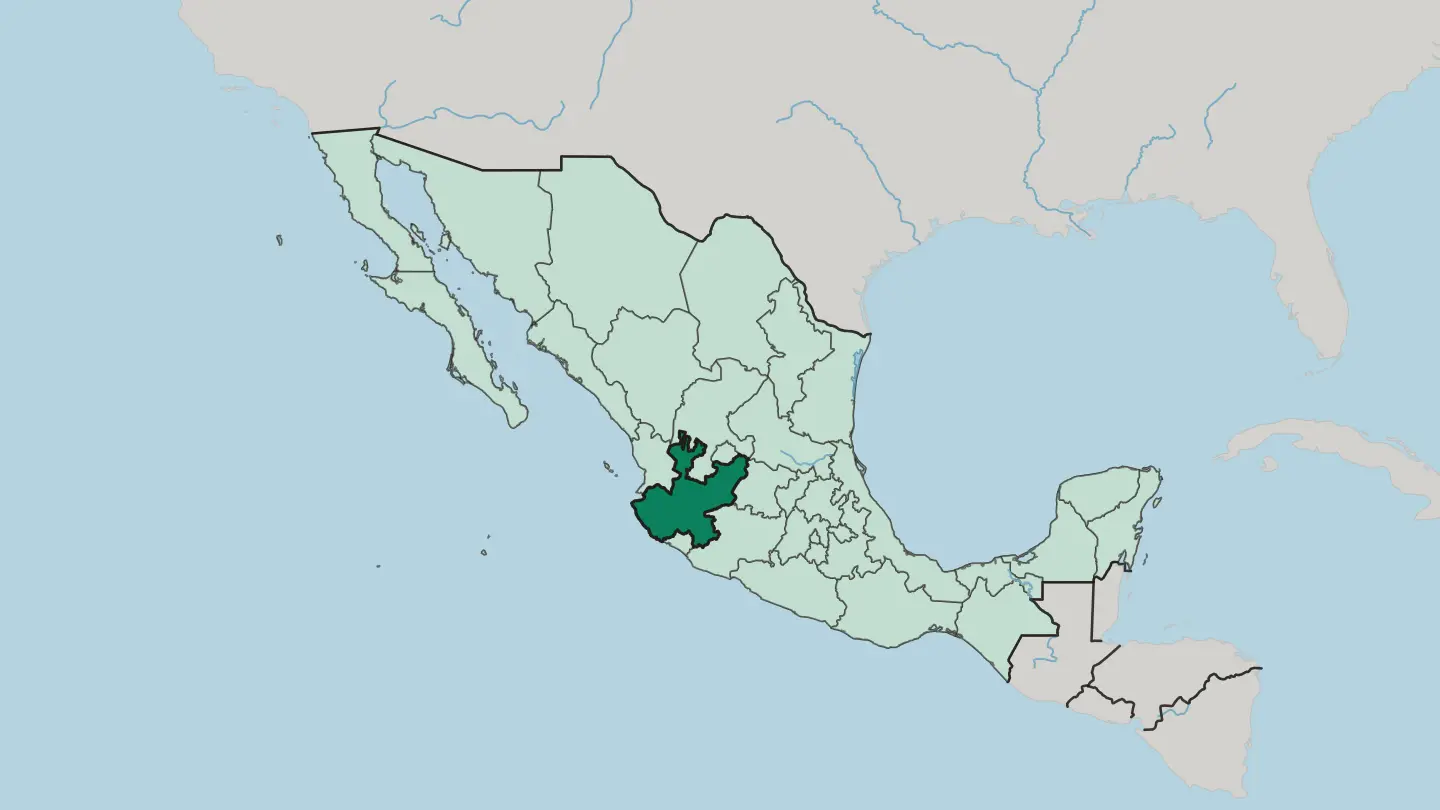
 Mexico
Estado de Michoacán de Ocampo
Michoacán is a state of western Mexico, rising from the Pacific coast to volcanic highlands, its capital Morelia at the heart of old Purépecha country.Towns & cities →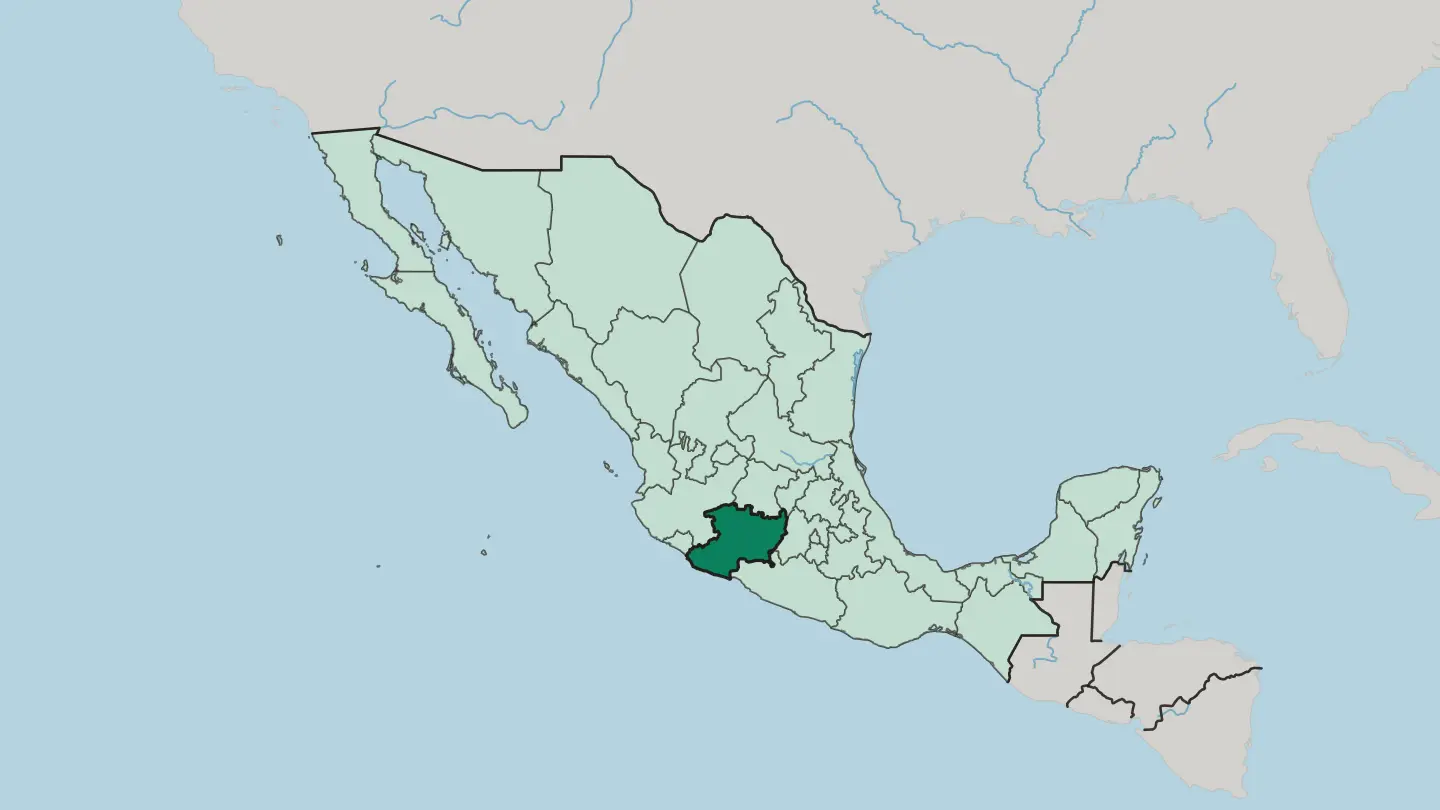
 Mexico
Estado de Morelos
Morelos is a small, warm state just south of Mexico City, the capital's weekend country, where Cuernavaca keeps its famous eternal spring.Towns & cities →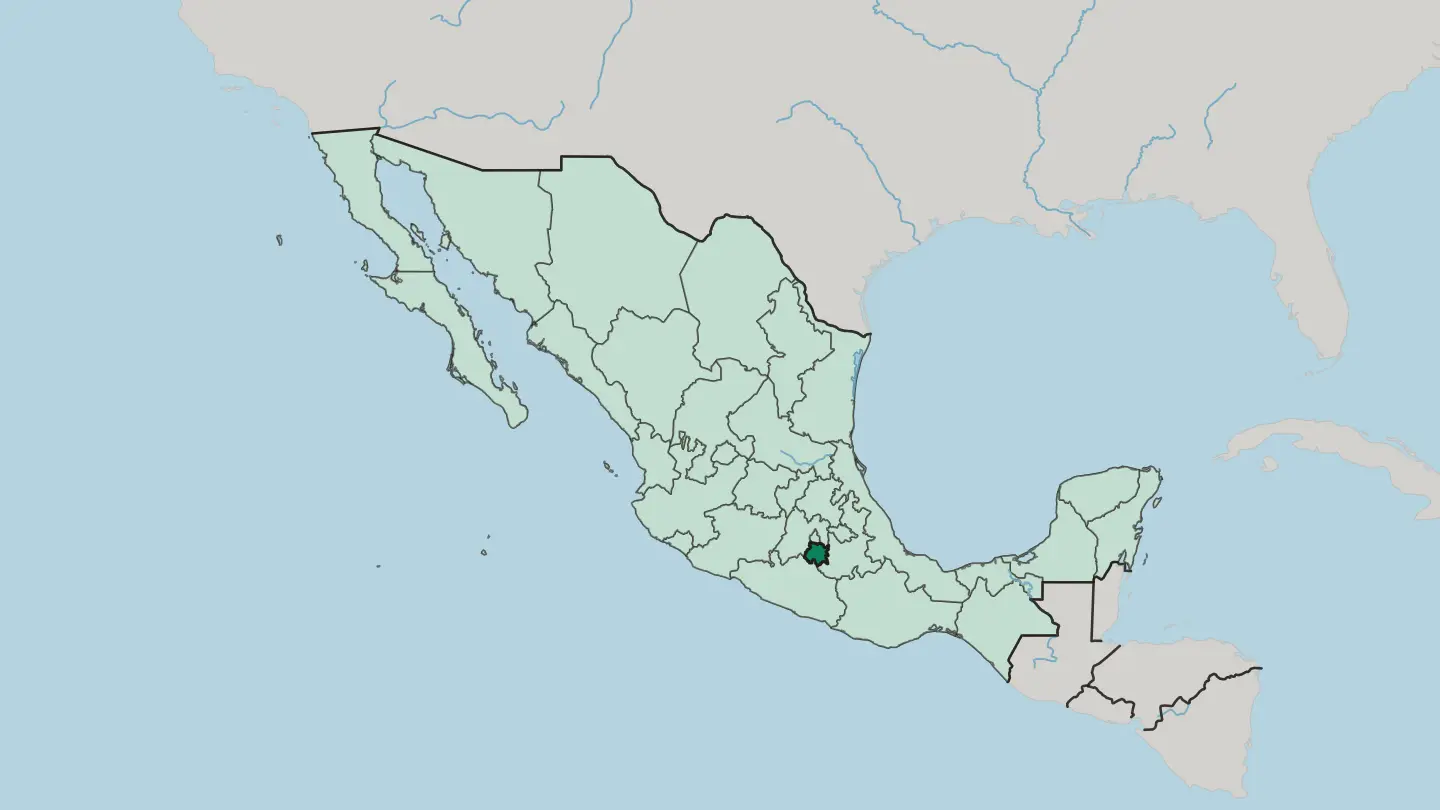
 Mexico
Estado de México
Estado de México wraps around Mexico City on three sides, from Teotihuacán's pyramids to the Nevado de Toluca and the lake at Valle de Bravo.Towns & cities →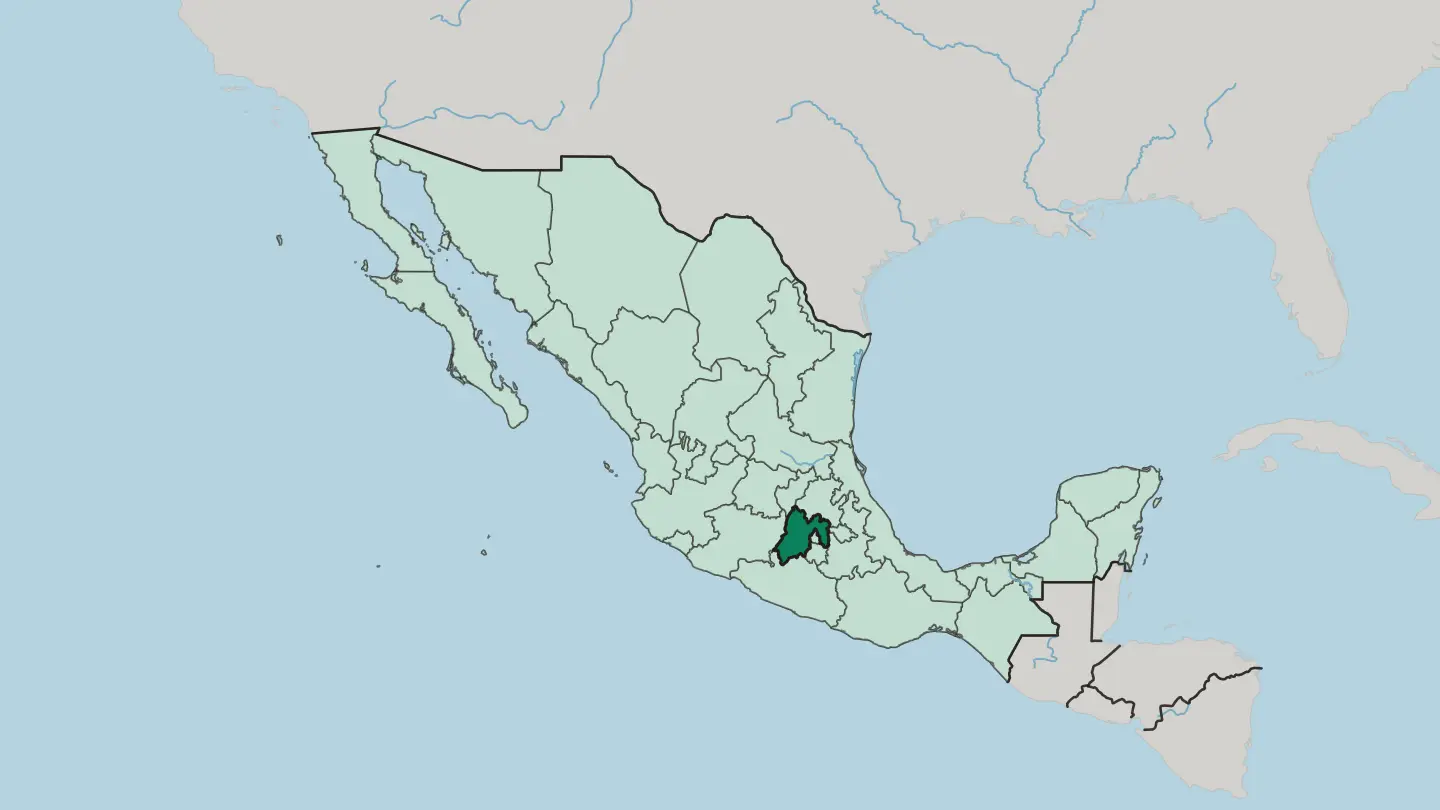
 Mexico
Estado de Nayarit
Nayarit is a Pacific-coast state of western Mexico, running from the Sierra Madre Occidental down to the surf towns of the Riviera Nayarit.Towns & cities →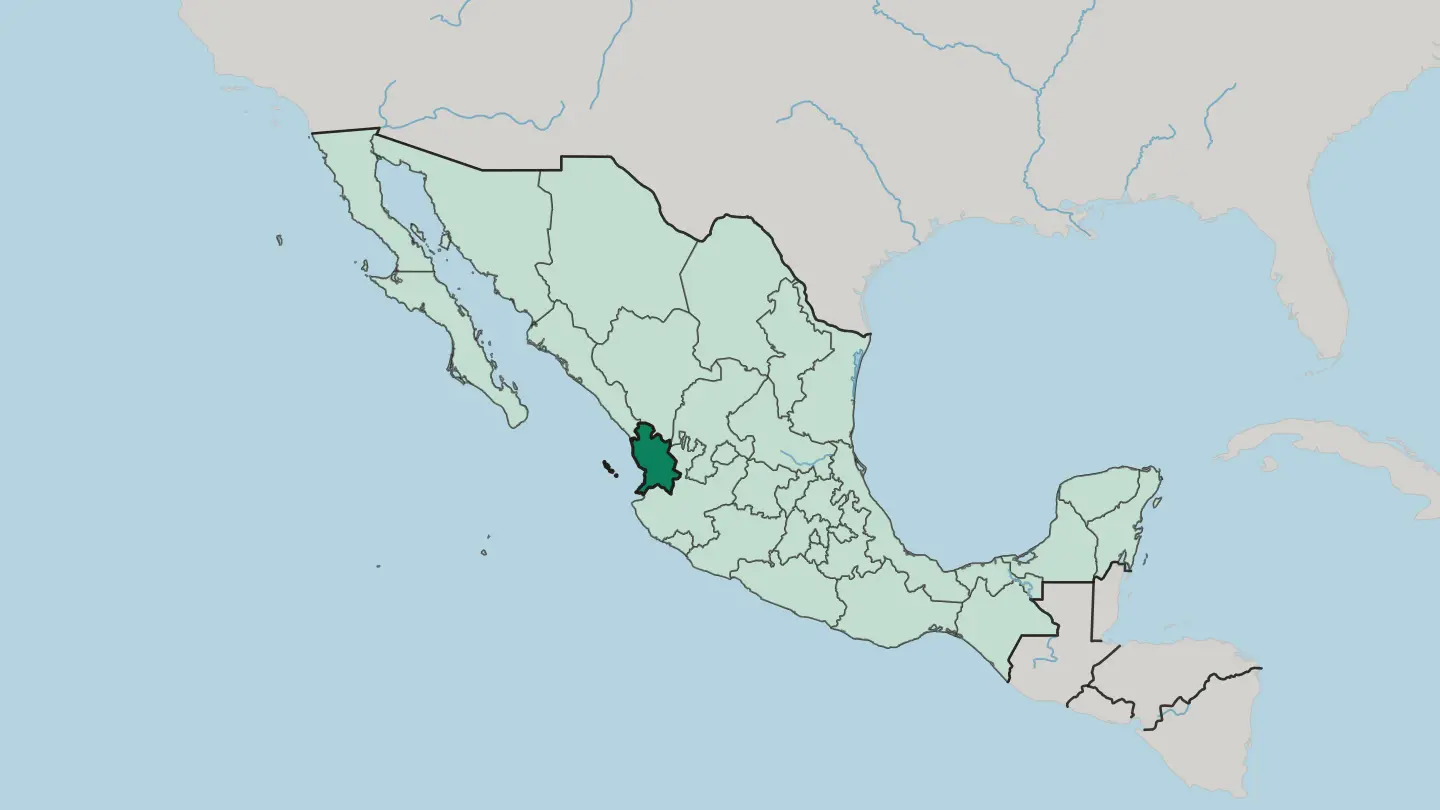 Mexico
Estado de Nuevo León
Nuevo León is an industrial state in northeastern Mexico, its capital Monterrey ringed by the peaks of the Sierra Madre Oriental.Towns & cities →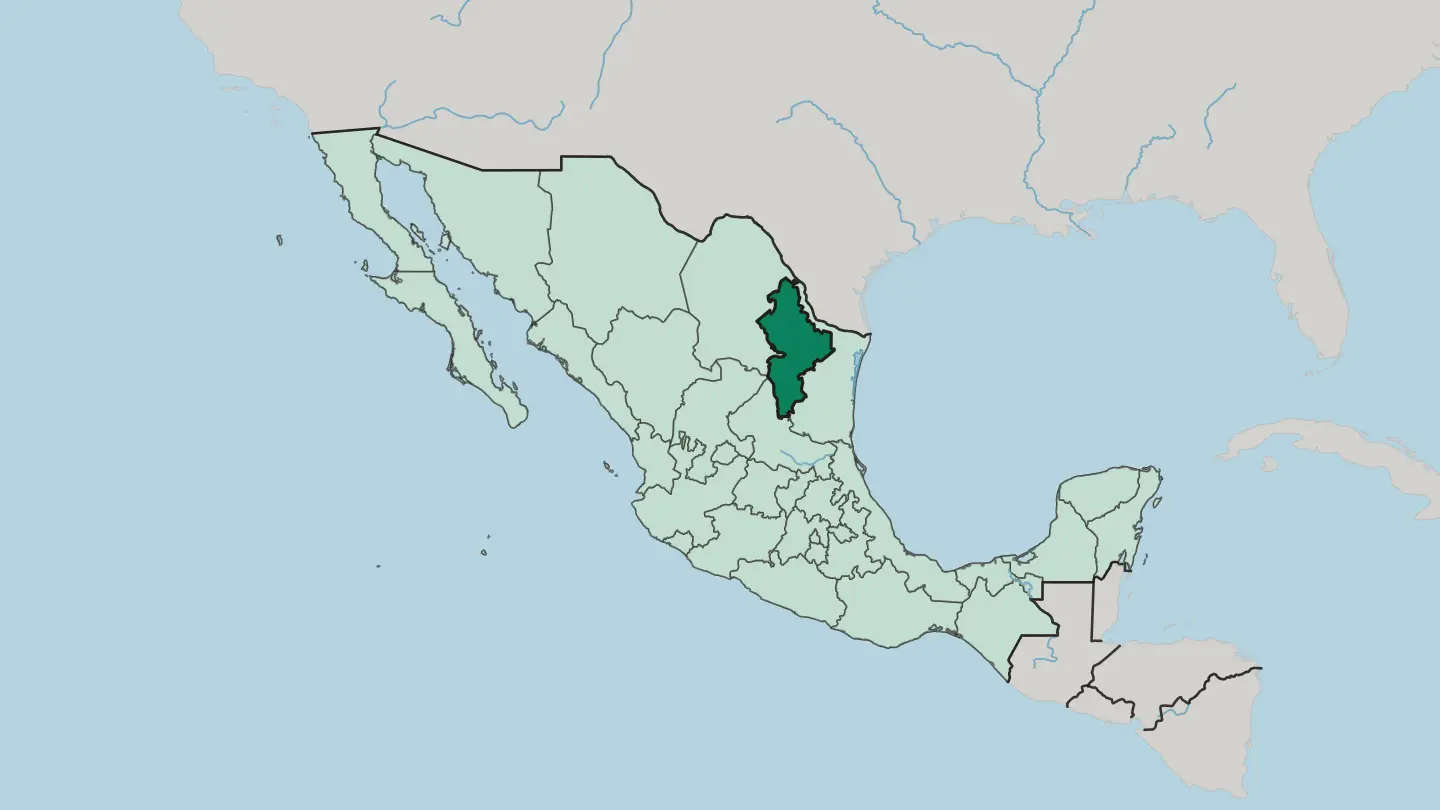
 Mexico
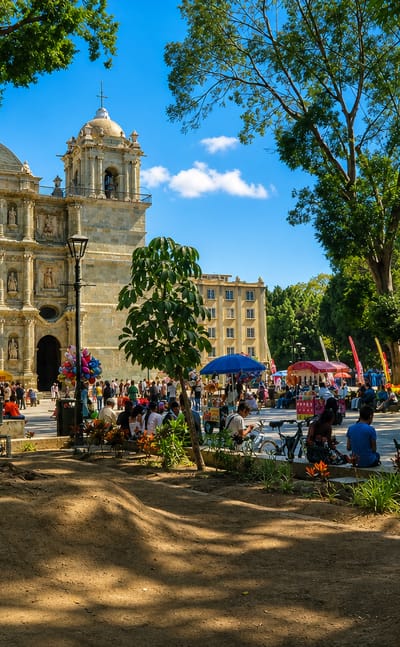
Estado de Oaxaca
Oaxaca is a state of southern Mexico, Zapotec and Mixtec country, Monte Albán, mezcal, and a Pacific surf coast at Puerto Escondido.Towns & cities →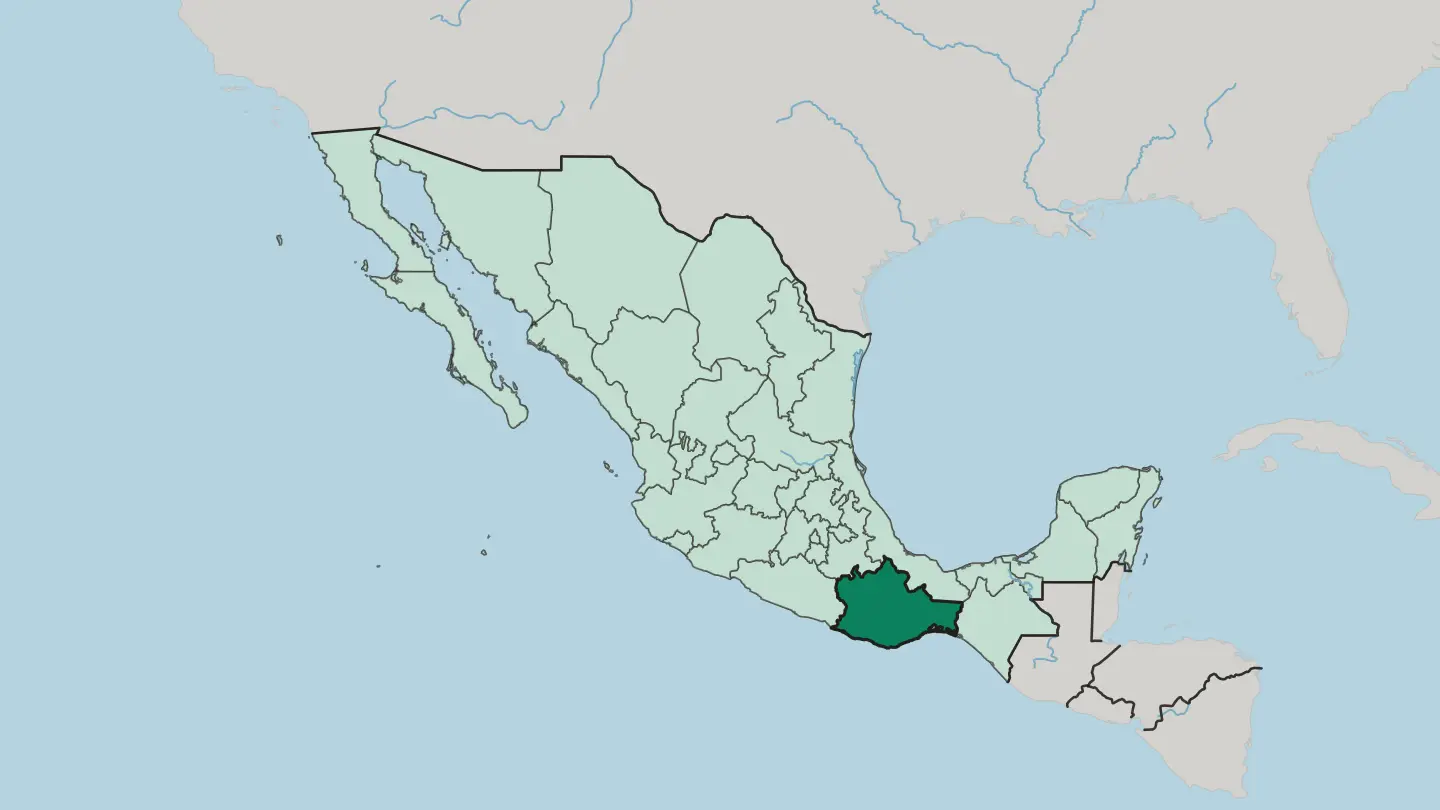
 Mexico
Estado de Puebla
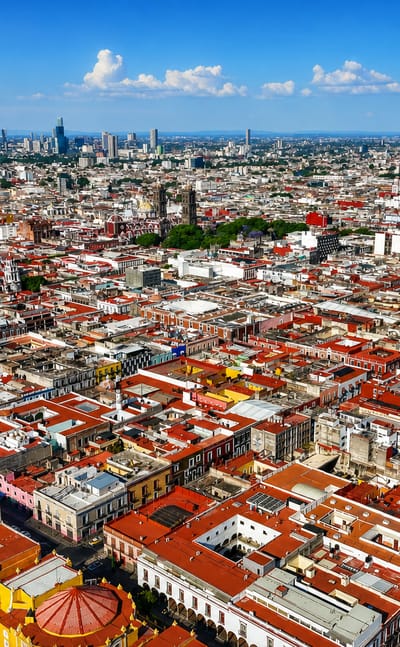
Estado de Puebla is a volcanic state of east-central Mexico, where the colonial city of Puebla and the pyramid of Cholula sit below Popocatépetl.Towns & cities →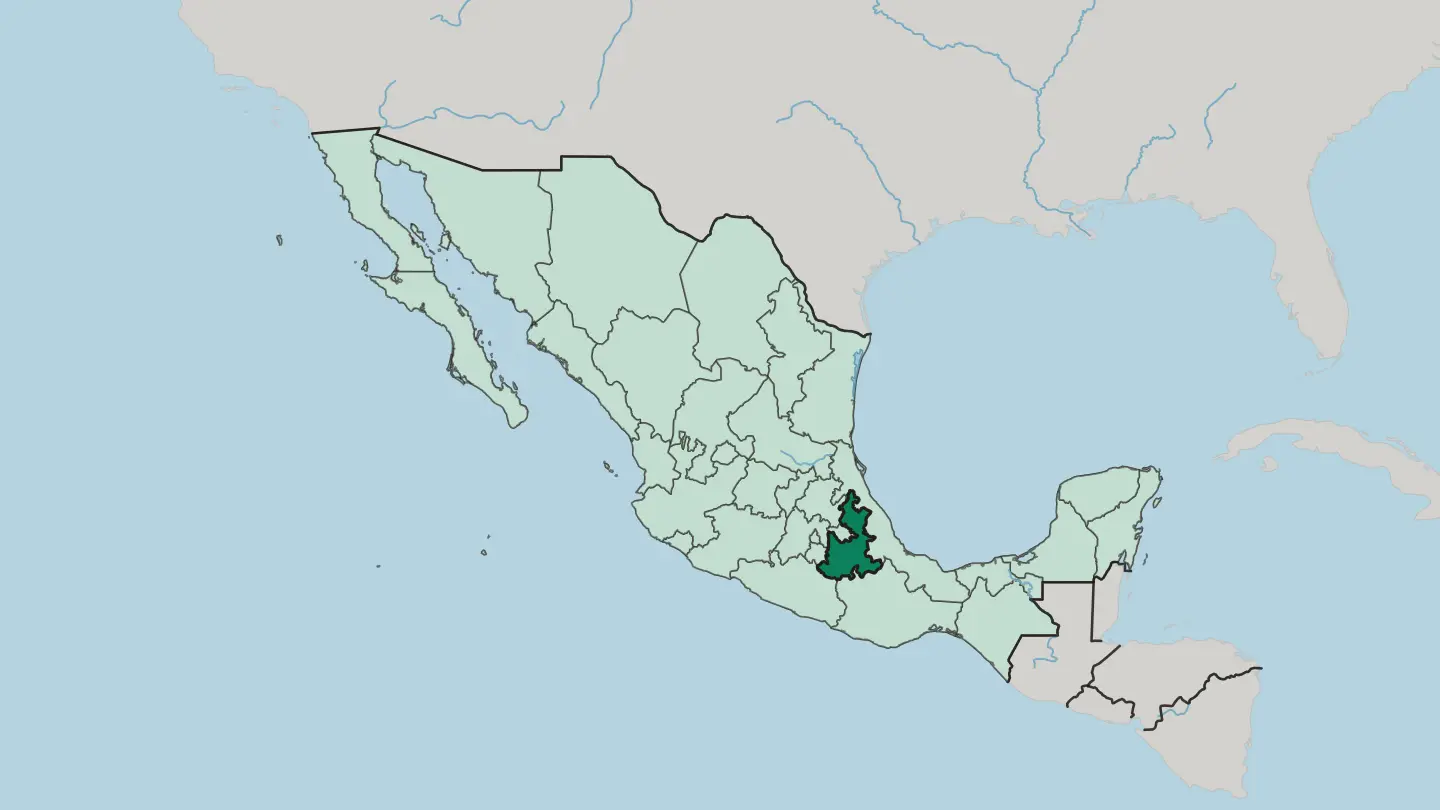
 Mexico
Estado de Querétaro
Querétaro is one of Mexico's smaller states, filling a stretch of the Bajío where irrigated valleys climb north into the canyons of the Sierra Gorda.Towns & cities →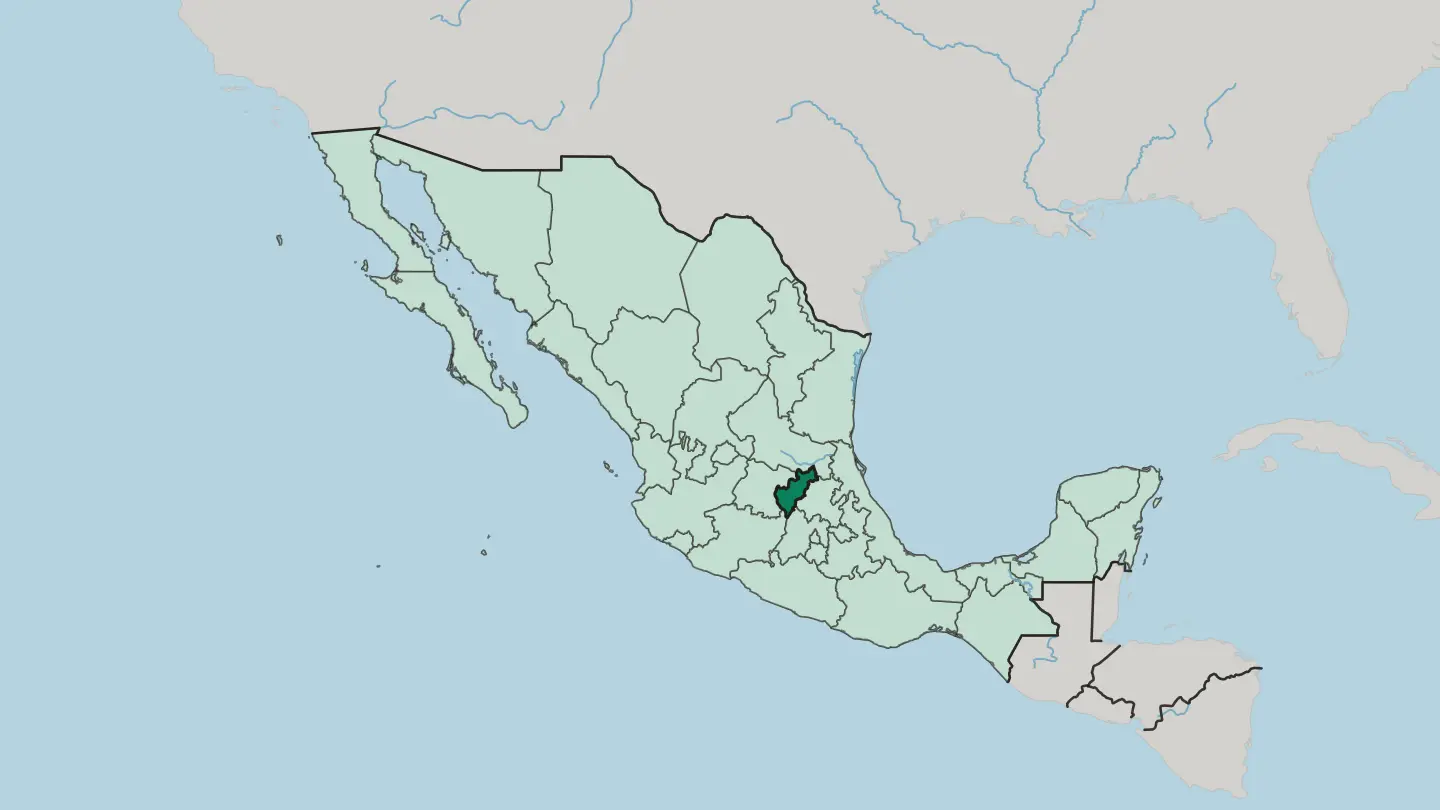 Mexico
Estado de Quintana Roo
Quintana Roo is Mexico's Caribbean state on the eastern Yucatán Peninsula, holding Cancún, Tulum, Cozumel and the Mesoamerican reef.Towns & cities →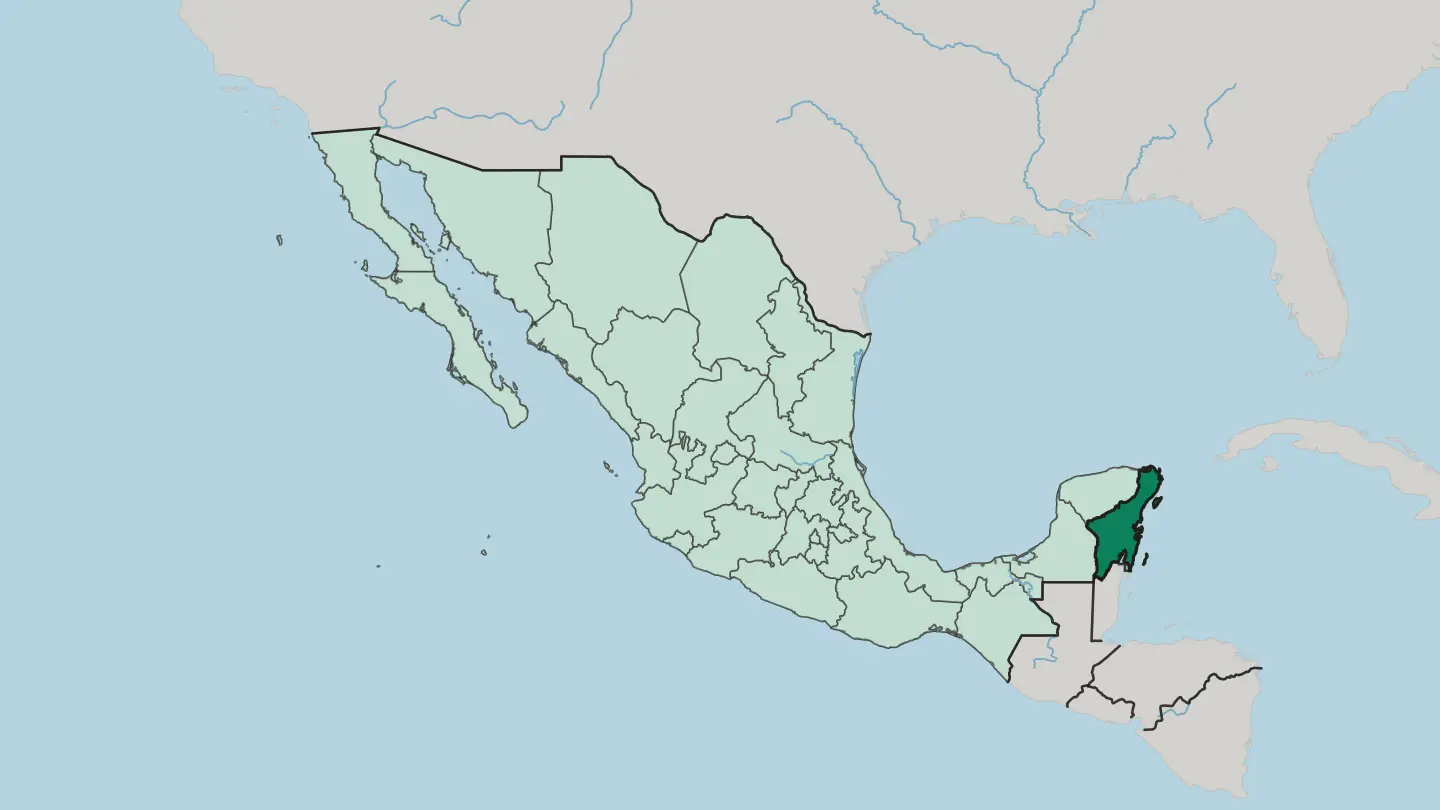
 Mexico
Estado de San Luis Potosí
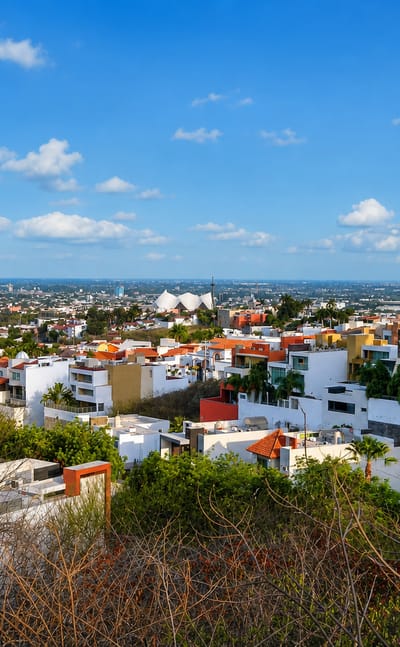
San Luis Potosí climbs from the Altiplano's silver desert over the Sierra Madre Oriental into the jungle rivers of the Huasteca Potosina.Towns & cities →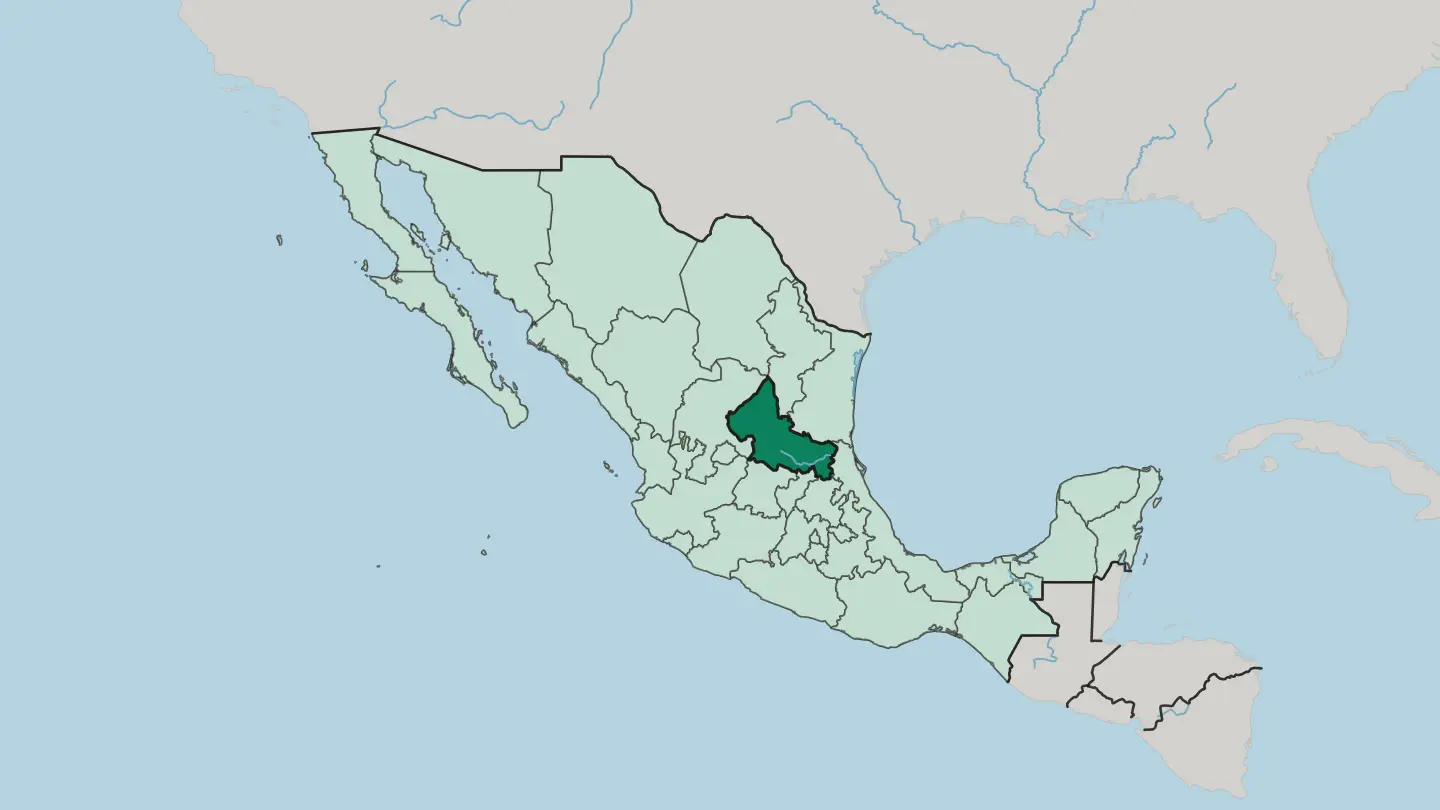
 Mexico
Estado de Sinaloa
Sinaloa is a Pacific-coast state of northwestern Mexico, a farm-rich plain between the Sierra Madre Occidental and the Gulf of California.Towns & cities →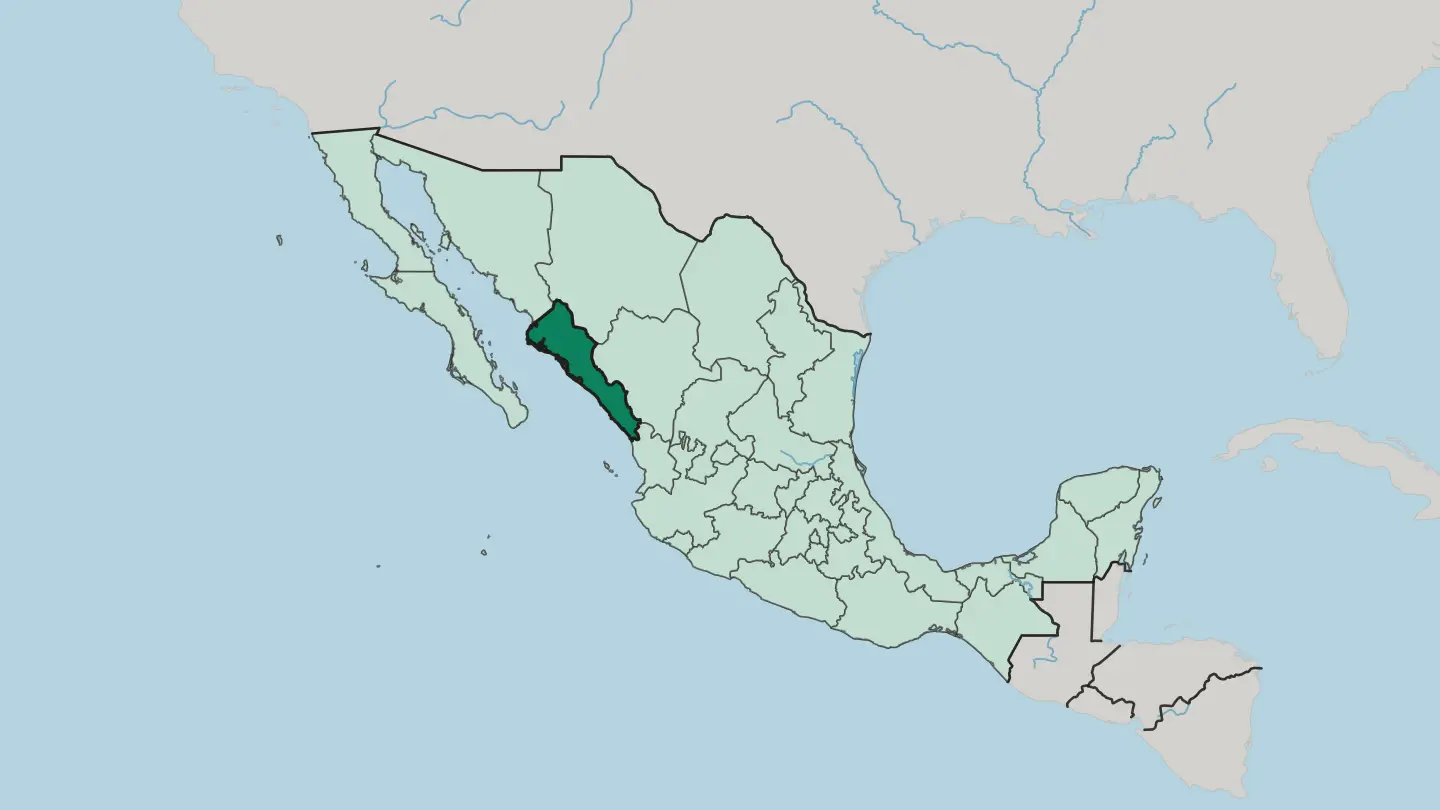
 Mexico
Estado de Sonora
Sonora is a desert state in northwestern Mexico, its Sonoran Desert stretching west to the beaches of the Gulf of California.Towns & cities →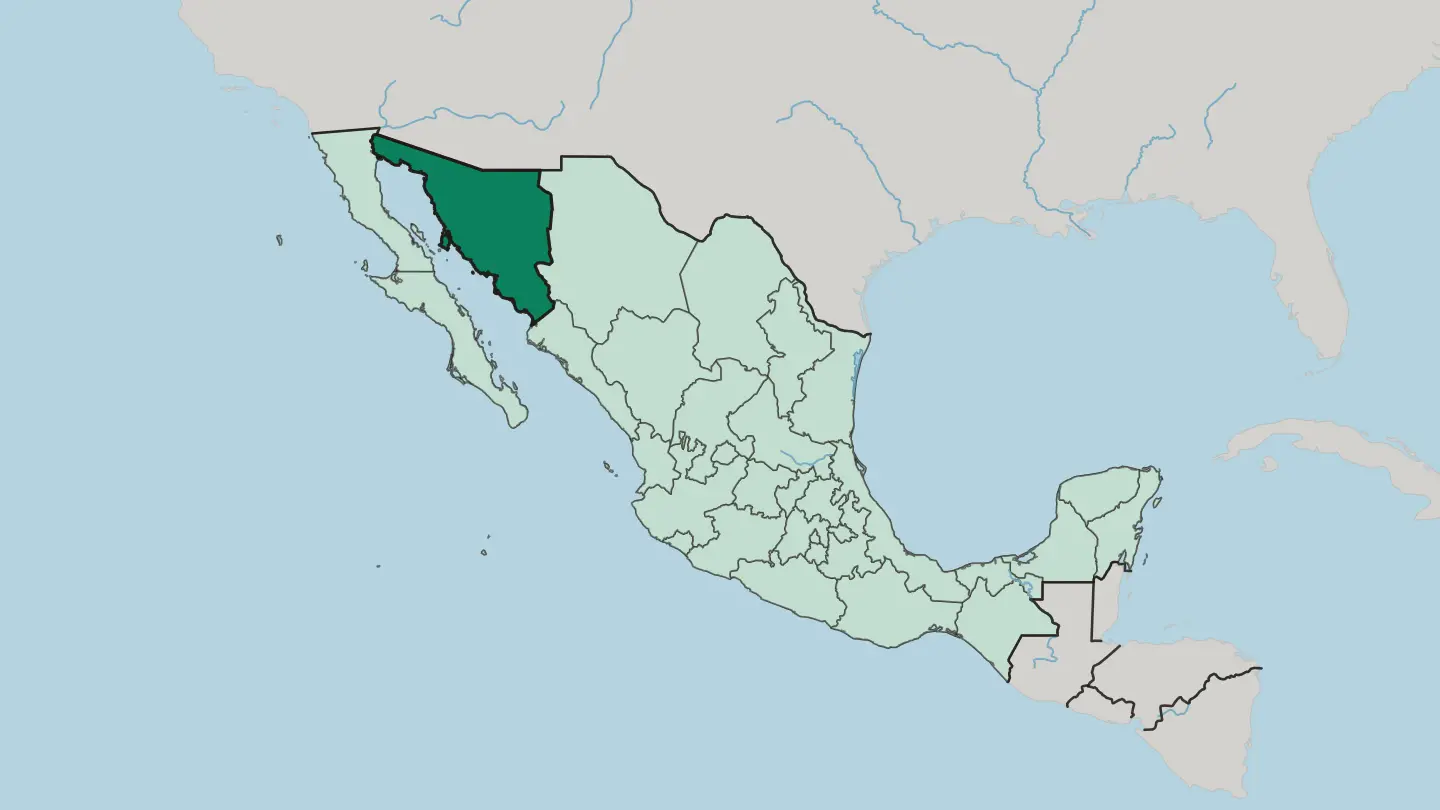 Mexico
Estado de Tabasco
Tabasco is Mexico's wet Gulf lowland, drained by the Grijalva and Usumacinta rivers and holding the Olmec ruins of La Venta near Villahermosa.Towns & cities →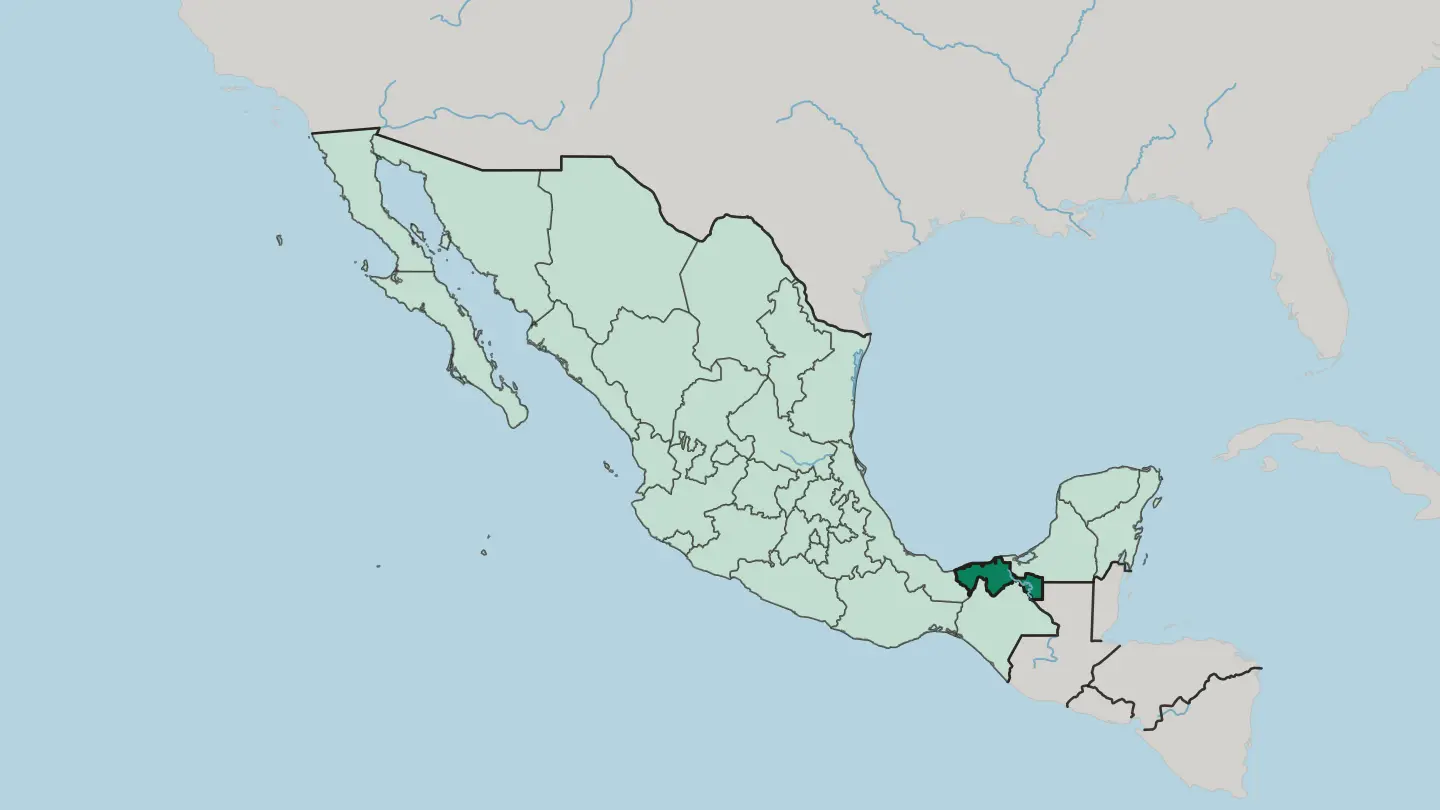
 Mexico
Estado de Tamaulipas
Tamaulipas is Mexico's north-eastern corner, where the Río Bravo del Norte, the Sierra Madre Oriental, and the Gulf of Mexico frame the state.Towns & cities →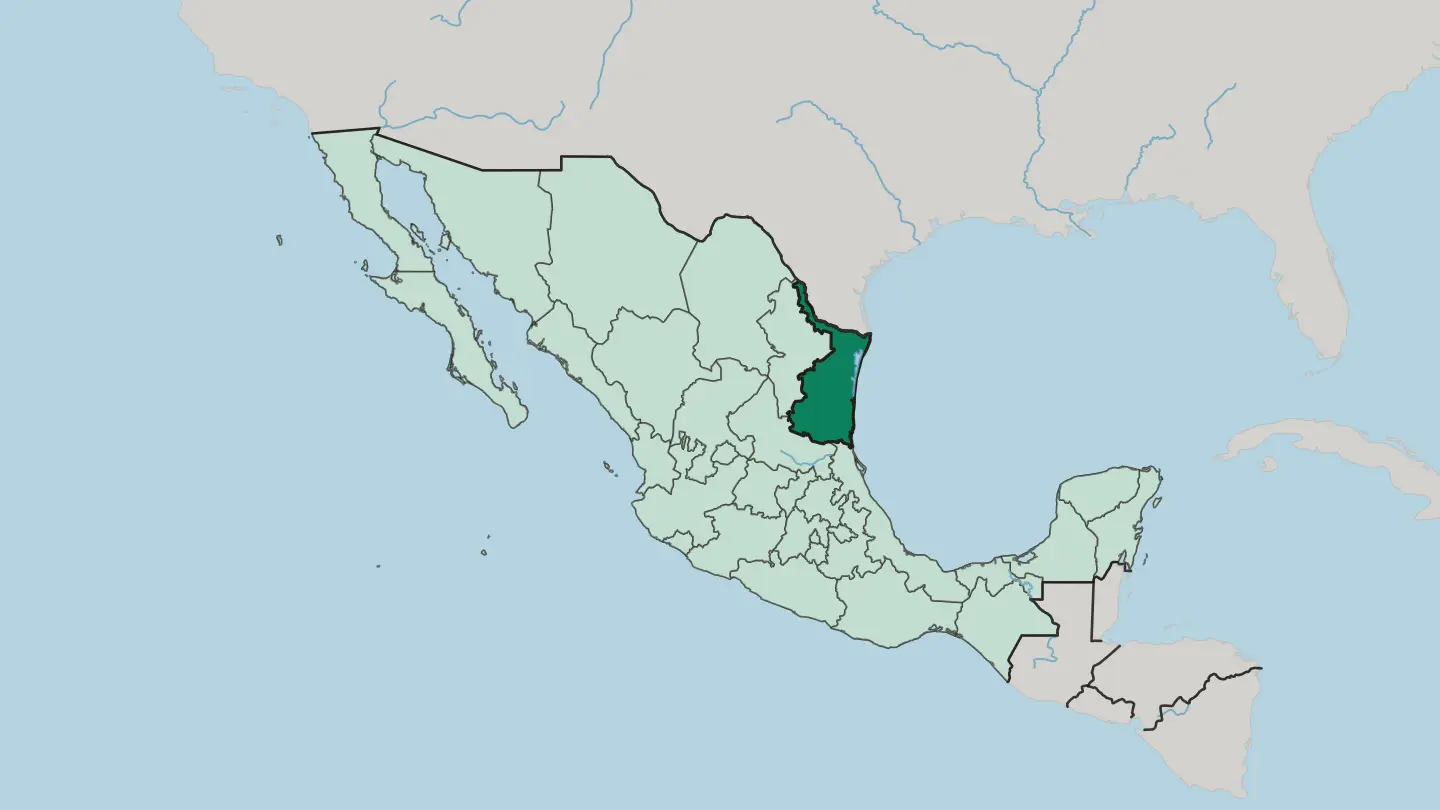
 Mexico
Estado de Tlaxcala
Tlaxcala is Mexico's smallest state, a high volcanic plateau below La Malinche, ringed by Puebla east of Mexico City.Towns & cities →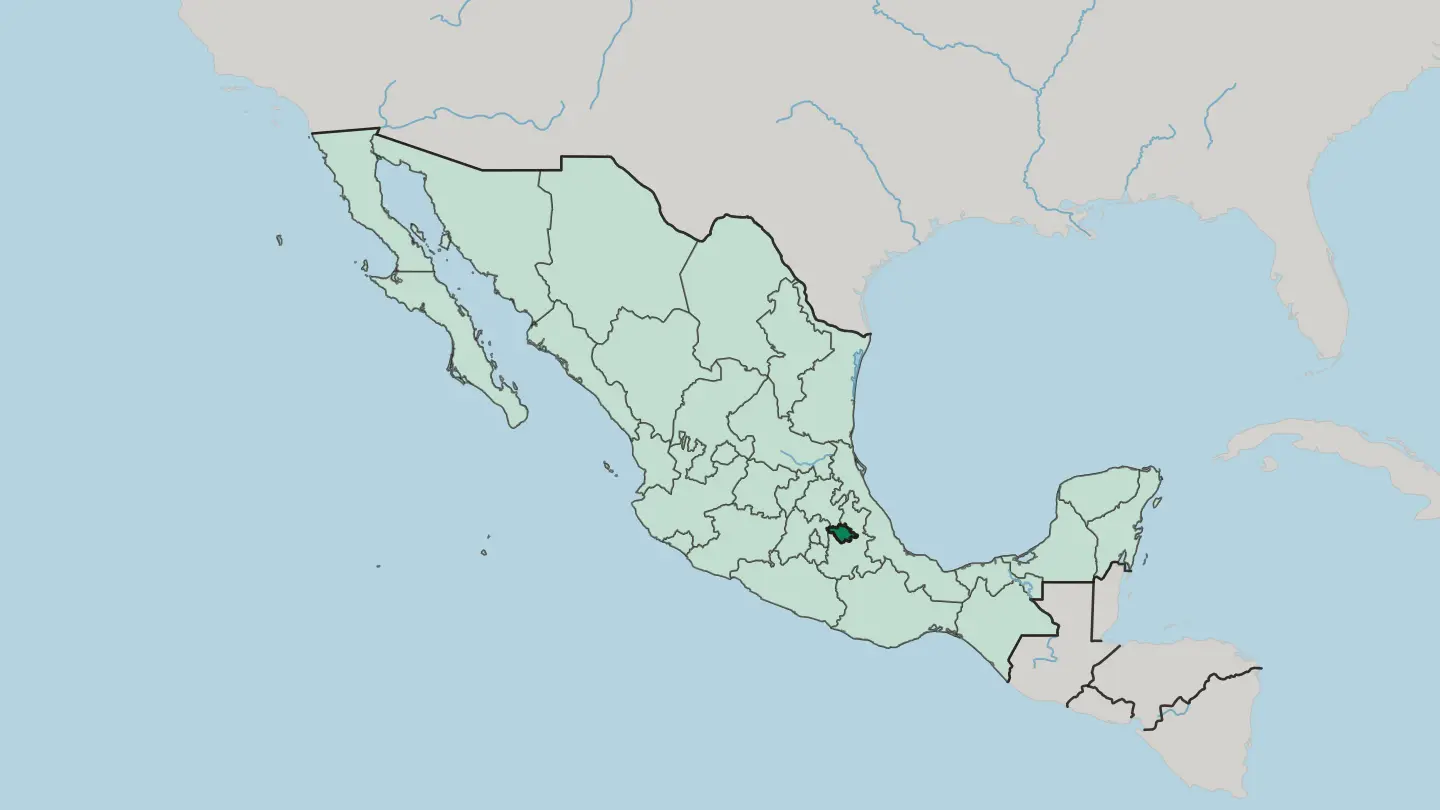
 Mexico
Estado de Veracruz-Llave
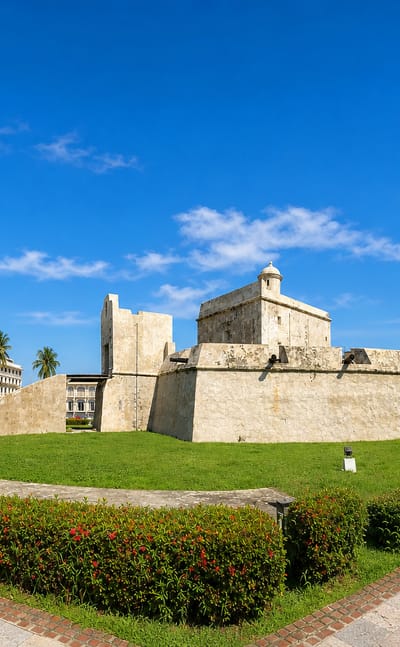
Veracruz is Mexico's Gulf coast state, a long crescent of tropical shore and Sierra Madre Oriental highland in the country's east.Towns & cities →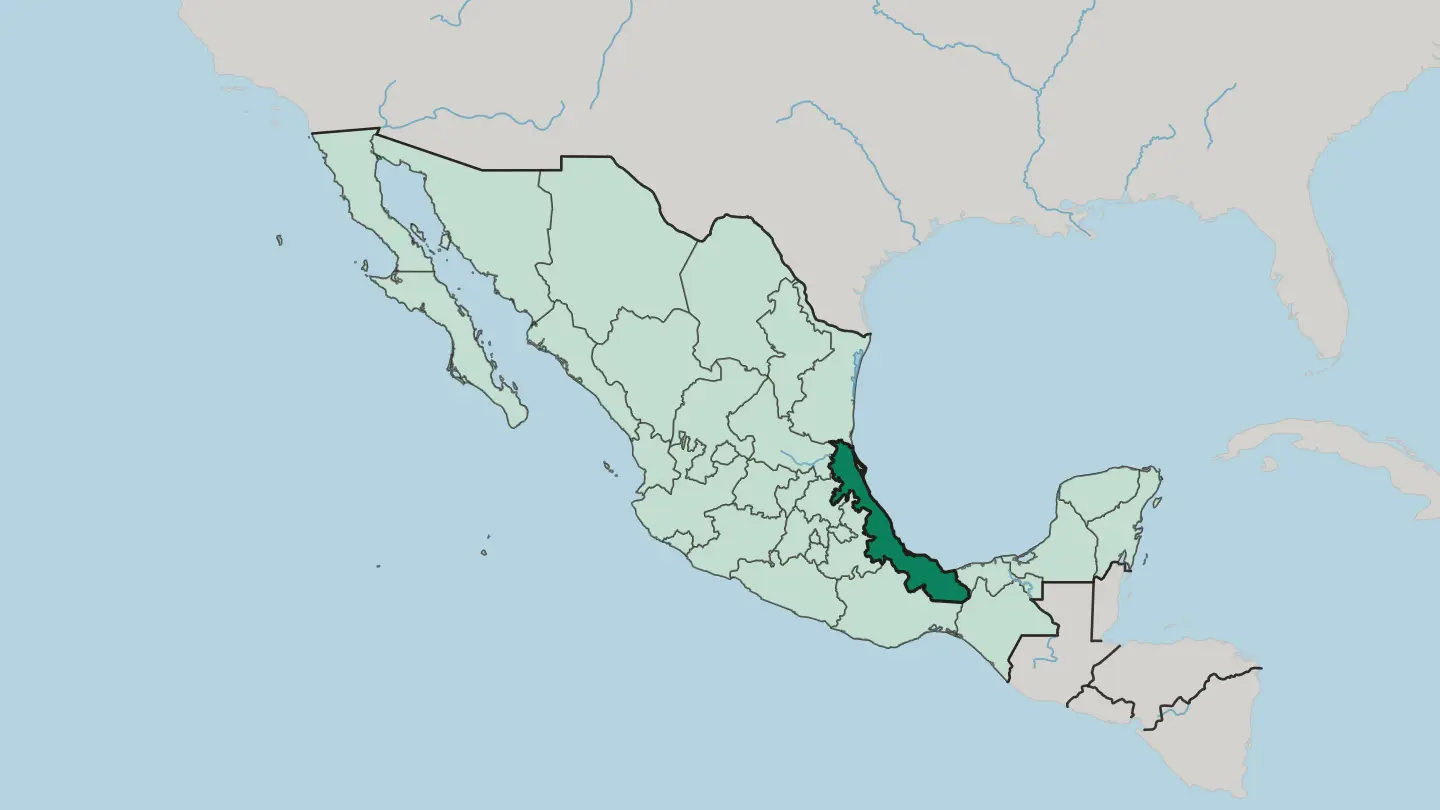 Mexico
Estado de Yucatán
Estado de Yucatán covers the north of Mexico's Yucatán Peninsula, a flat limestone country of Maya ruins, cenotes and a long Gulf of Mexico coast.Towns & cities →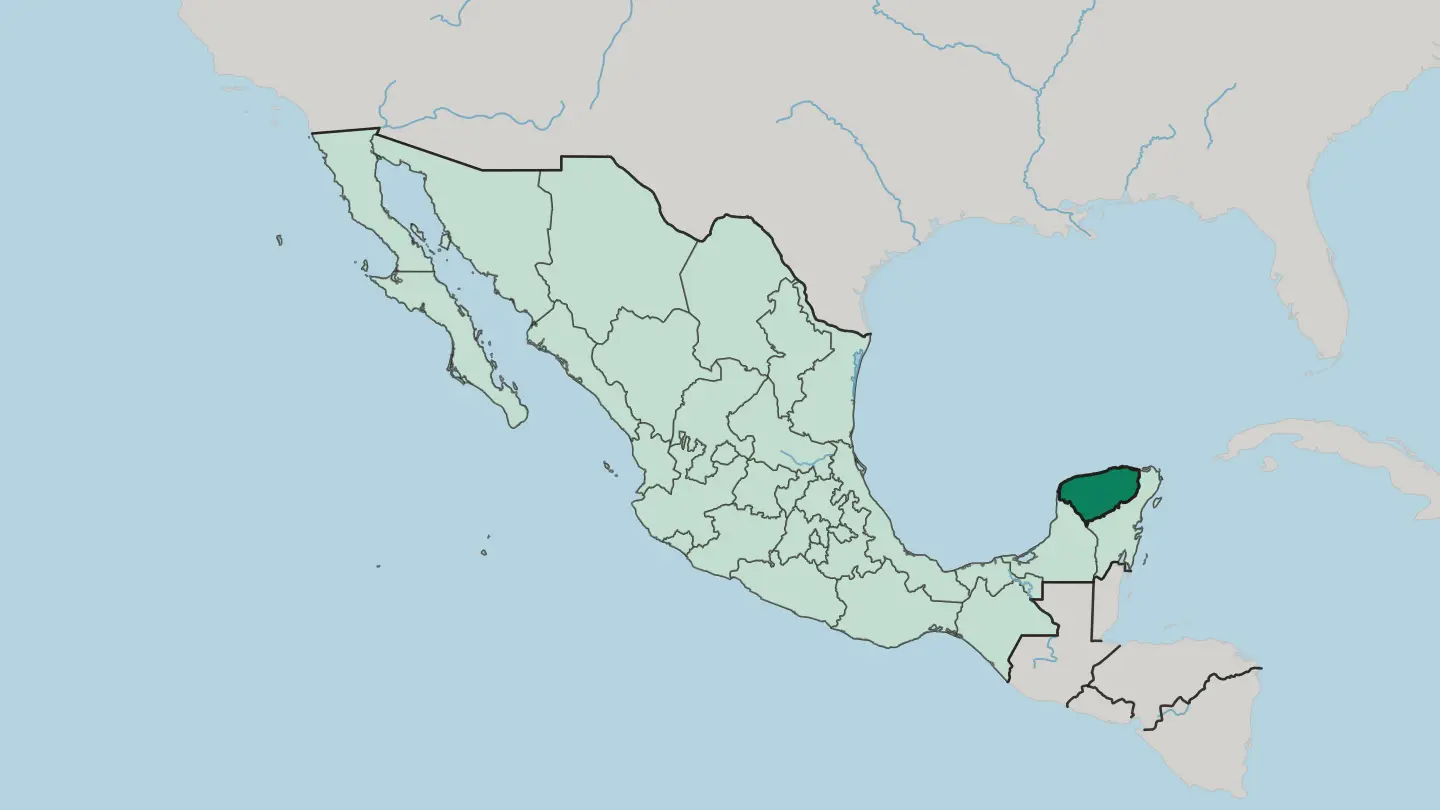
 Mexico
Estado de Zacatecas
Zacatecas is Mexico's silver state, its colonial capital a UNESCO city of pink cantera stone under the Cerro de la Bufa on the central plateau.Towns & cities →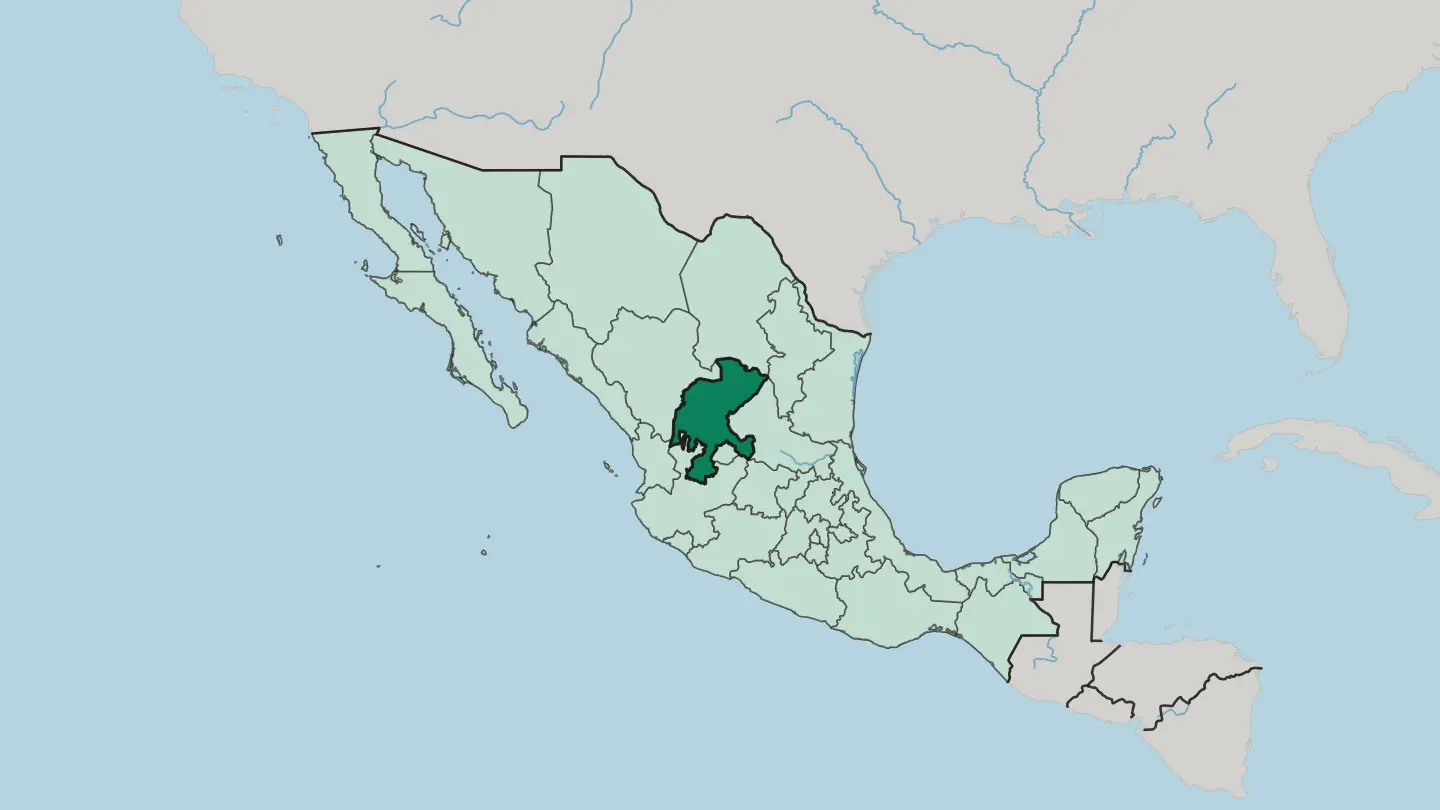
Explore by experience
Not sure which place? Start from how you want to travel.

About Mexico
What is Mexico known for?
Mexico is known for its ancient pyramids, its food, and the reach of Spanish across the country. The past is everywhere. Ruined pyramids and old stone cities recall the civilizations that rose here long before Spanish rule ever arrived.
The land runs all the way from desert to rainforest, edged by the Pacific Ocean, the Gulf of Mexico, and the Caribbean Sea. Mexico City, the capital, stands among the world's largest cities. North America holds no other country quite like it.
Where is Mexico?
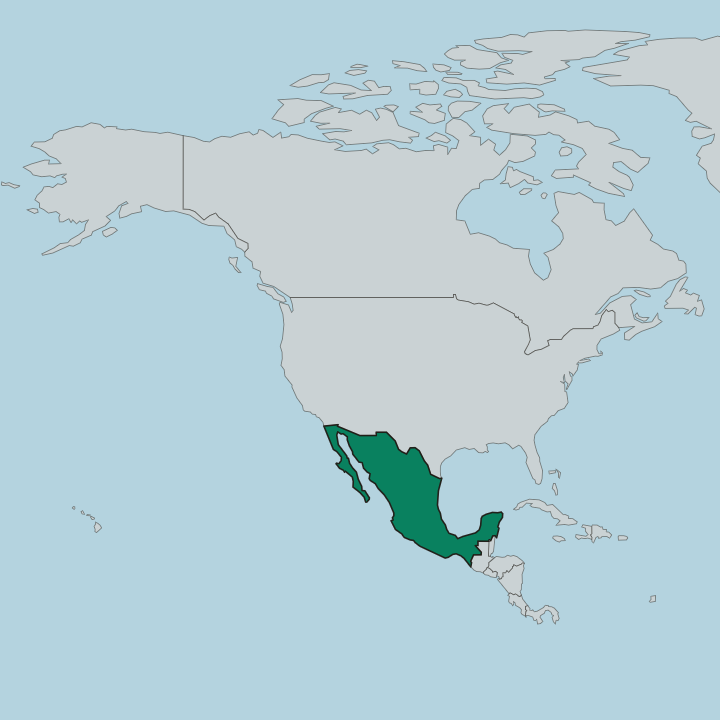
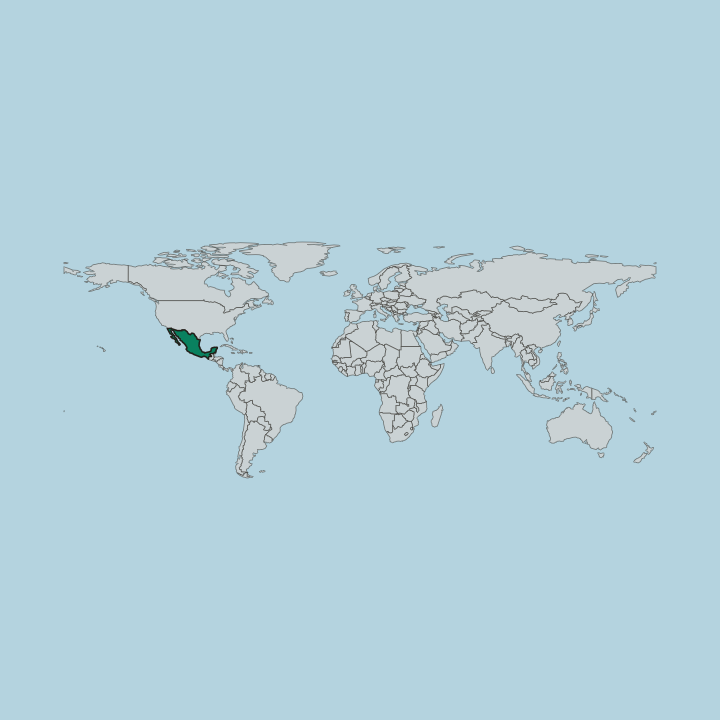
Mexico is a large country in North America, the northernmost land of Latin America. It stretches between three seas. The Pacific Ocean runs along one side, while the Gulf of Mexico and the Caribbean Sea wash the other, giving the country a long coastline on more than one ocean.
Inland, the land climbs into the Sierras, high mountain ranges that run the length of the country. Deserts, high plateaus, and tropical rainforest all lie within its borders. Few countries hold so many landscapes at once.
Mexico covers nearly two million square kilometres, which makes it the thirteenth-largest in the world by land area. It shares a long land border with the United States, and it also meets the smaller nations of Guatemala and Belize. From snow-capped peaks in the Sierras to hot rainforest and open desert, the country runs through every kind of land.
The high plateau in the middle rises well above the coasts. Mexico City, the capital, is the largest city and the heart of the nation. From its centre the land reaches out toward the coasts on either hand.
What is the history of Mexico?
Mexico counts its independence from 1821, when it broke free of Spanish rule. Long before that, great civilizations rose across the land. Empires and city-states held the country in turn over many centuries.
They left the pyramids and the stone cities that still stand among the country's many ruins. Spanish arrived with conquest and stayed on as the language of the nation. The layers of that past run deep across the whole country, from ancient stone temples to the streets of the modern republic.
The pyramids mark the age before Spanish rule, when cities and empires filled the land. After 1821 the country took shape as an independent nation in North America. Spanish remained the common tongue of the whole nation.
The new nation kept both the language and much of the older culture beneath it. Independence did not erase what came before. Its people carried old traditions into the new age.
Mexico City grew into the capital and one of the great cities of the world, and its story joins ancient ruins to a modern state on the same ground.
What is Mexico like?
Culture in Mexico is famous the world over for its food, its art, and its music. Mexican cooking is known across the globe. Museums, old haciendas, and colonial architecture fill the cities, holding centuries of art and craft between them.
Spanish is the common language, spoken by more people here than in any other country on earth. Across the country, ancient and modern sit side by side. The old and the new blend together across the streets of every city.
The pyramids and ruined cities of Mexico speak of civilizations that flourished long ago, and their heritage still runs through the country's sense of itself. Music runs through daily life. Food ties it all together, from street stalls to grand tables, and Mexican cuisine stands among the country's proudest exports.
Craft markets sell pottery, textiles, and silver from every part of the land. Art, from wall murals to folk craft, fills the museums and the streets alike. Festivals mark the year.
Between its ancient heritage and its living culture, Mexico carries one of the most distinctive national identities in the Americas.
What is the climate of Mexico?
Mexico has a wide range of climates, from tropical heat to cool mountain air. The Sierras rise into snow-capped peaks, while the coastal lowlands stay warm right through the year. Rainforest in the wetter country runs humid and green.
Desert country stays dry and hot. Along the coasts, the Pacific Ocean and the Caribbean Sea keep the shores warm and humid right through the seasons of the year.
How do you get to Mexico?
Mexico is reached most often through Mexico City, the capital and the country's main gateway. Many visitors arrive there first. Others cross the long land border from the United States, or come by sea to the Caribbean and Pacific coasts.
From Mexico City, roads and flights reach the rest of the country. The two coasts and the inland cities all open up from the capital.
Common questions
What is the best area to stay in Mexico?
Mexico City: City breaks, museums, and history. The Caribbean coast: Beach holidays and warm water. The Pacific coast: Surf and seaside towns.
Good for
Updated September 2026