Malaysia · Pahang
Where to Stay in Kuantan, Pahang
Kuantan is a city of eastern Peninsular Malaysia, the capital of Pahang, a river port on the South China Sea near palm beaches and old tin-mining hills.
Hotel links are affiliate links: booking through them may earn us a commission, at no extra cost to you. It never affects how places are ranked. How this works


Where to stay in Kuantan
How the choice of base plays out on the ground.
Where you stay in Kuantan turns on the town or the beach. The centre by the river keeps the mosque, the markets, and the waterfront within a walk, and staying downtown suits anyone here for the town. The sea lies just east.
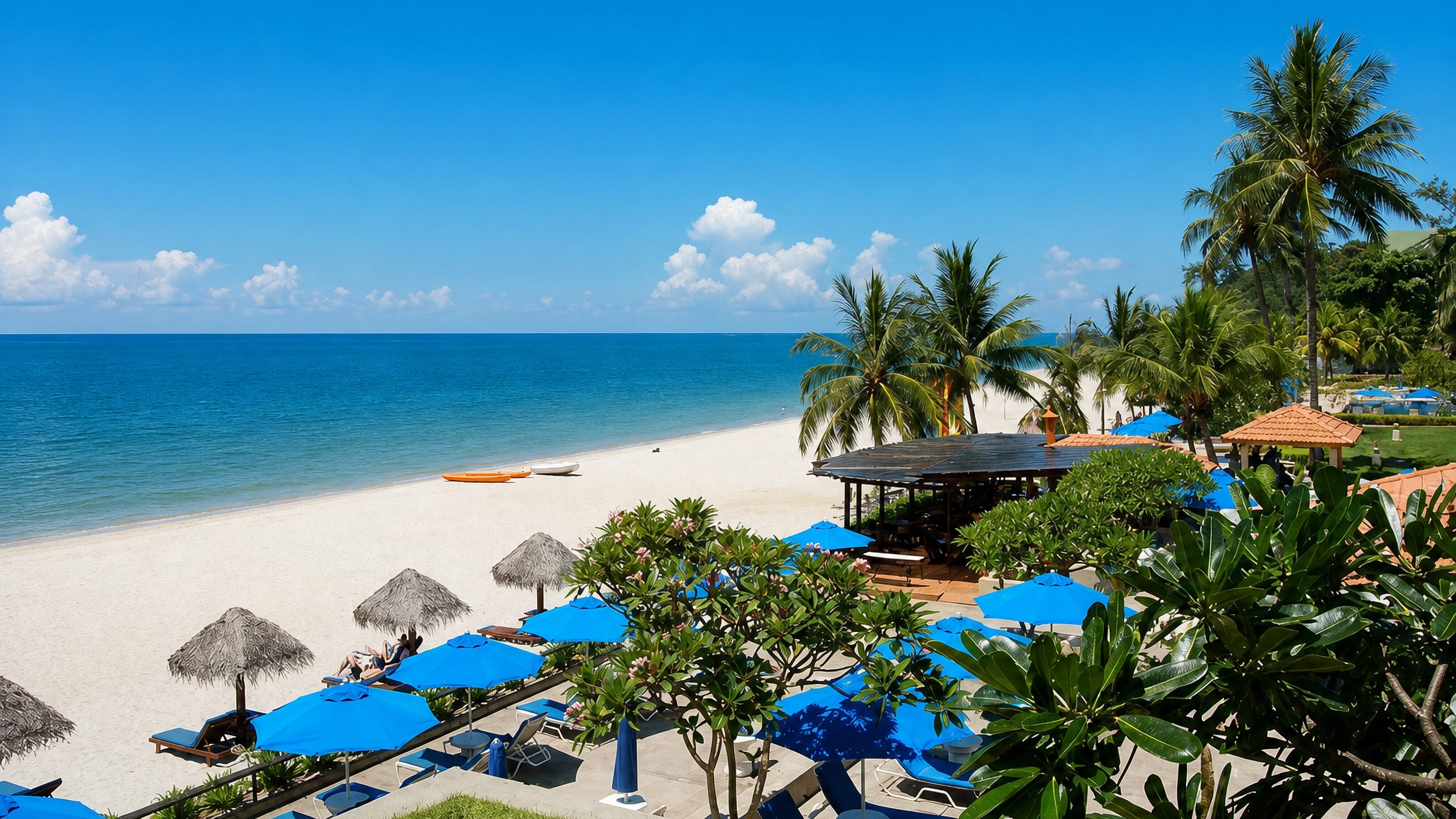
Boats drift on the river. Out along the coast and the hills, the town gives way to the beach resorts, the fishing kampungs, and the road up to Sungai Lembing. A room by the sea trades the streets for the open sand, the warm surf, and the palms above the shore.
The coast runs north for miles. Stay downtown for the town, or out for the beach. The long beach and the tin hills hold the Pahang city.
Find hotels in Kuantan
Direct booking searches for these neighbourhoods.
The town centre
By the waterfrontFind hotels in The town centreStays wanting the sand and surfThe beach
East along the coastFind hotels in The beachHotel links are affiliate links: booking through them may earn us a commission, at no extra cost to you. It never affects how places are ranked. How this works
About Kuantan
Kuantan is the seaside capital of Pahang.
What is Kuantan known for?
On the South China Sea in the east of Malaysia, at the mouth of its river, it grew as a port and a state town, and it keeps the long beach of Teluk Cempedak, the old tin town of Sungai Lembing in the hills, the cave temples of Charah nearby, and the turtle sands of Cherating up the coast. The warm sea washes the beach. Fishing boats crowd the river mouth.
What are the main landmarks in Kuantan?
Teluk Cempedak is the pride of the Kuantan country. The long curving beach under wooded headlands, the favourite shore of the east coast, is the emblem of the town, out of downtown. Old shafts pierce the hills.
The deep tin mine of Sungai Lembing bores under the ranges inland nearby, while the cave temples, the turtle sands of Cherating, and the jungle rivers mark the country around Kuantan.
What is the history of Kuantan?
Kuantan grew from tin and the sea. For centuries fishermen worked the river mouth, and in the hills inland the miners dug rich tin at Sungai Lembing, and the ore came down to the coast. A state chose it for a capital.
When Pahang looked for a seat on the east coast, it made Kuantan its capital, and the town spread along the river. The mines ran deep underground. At Sungai Lembing the shafts drove far below the hills, one of the deepest tin mines in the world, until the lodes at last gave out.
The coast turned to holidays. In time the beaches of Teluk Cempedak and Cherating drew travelers to the sea, and Kuantan grew as the resort and market town of Pahang, keeping its river, its beaches, and its old mines. The surf still rolls up the sand.
Kuantan keeps its seaside city on the South China Sea.
Where is Kuantan?
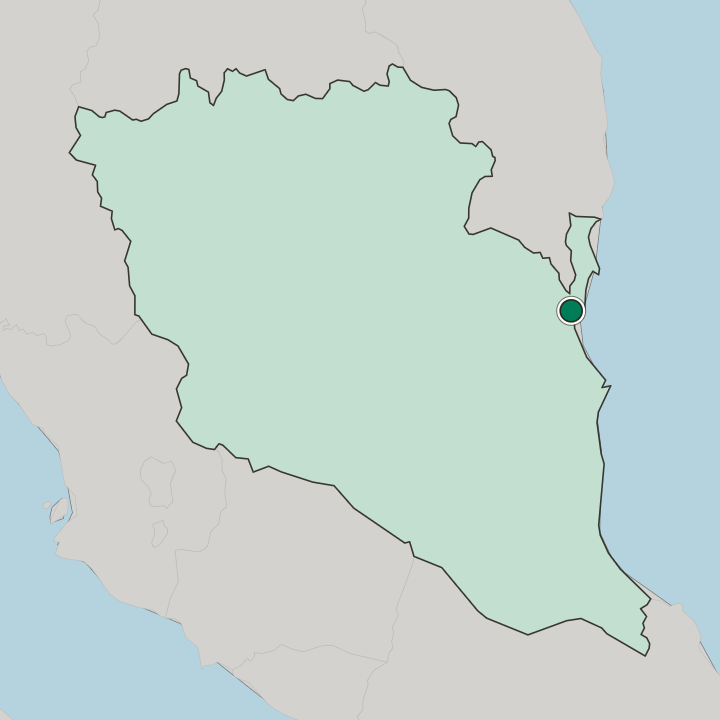
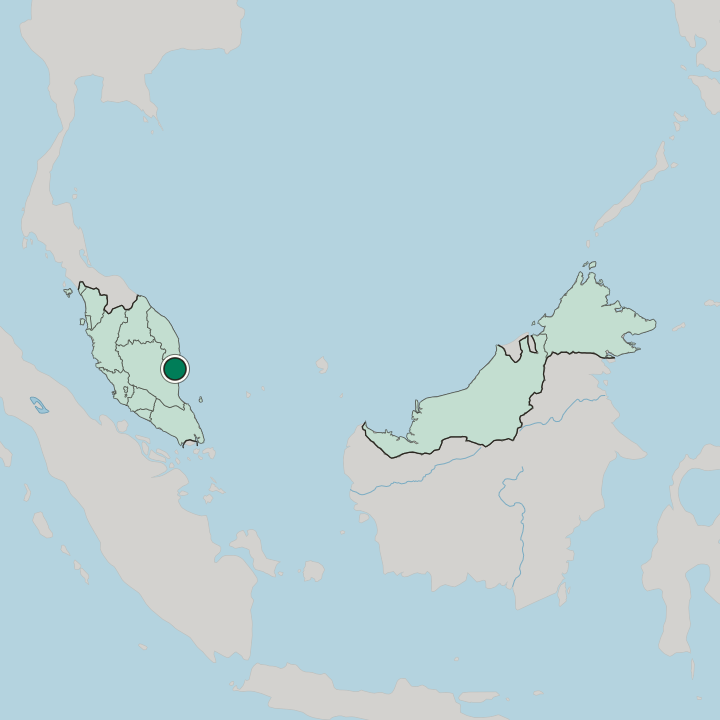
Kuantan lies on the east coast of Peninsular Malaysia, where the Kuantan river runs to the sea. The city sits on a low coastal plain by the South China Sea, backed by rainforest hills and palm estates, with the long sandy beaches to the east and the jungle mountains of Pahang rising inland to the west. The tide slides up the river.
Green hills climb to the interior.
What is the climate of Kuantan?
Kuantan has a hot, wet tropical climate. Warm humid weather holds all year on the coast, with a heavy monsoon from the northeast that brings the rains and floods late in the year. The monsoon lashes the coast.
Bright days follow the storms.
How do you get to Kuantan?
Kuantan lies on the east coast of Malaysia, across the peninsula from the capital. A highway crosses the mountains from Kuala Lumpur, and flights land at its coastal airport. Boats work the river.
Kuala Lumpur lies west over the range.
Common questions
What is the best area to stay in Kuantan?
The town centre: Visitors here for the market and Sungai Lembing. The beach: Stays wanting the sand and surf.
Good for
Updated September 2026