Malaysia
Pahang, Malaysia — Towns & Travel Guide
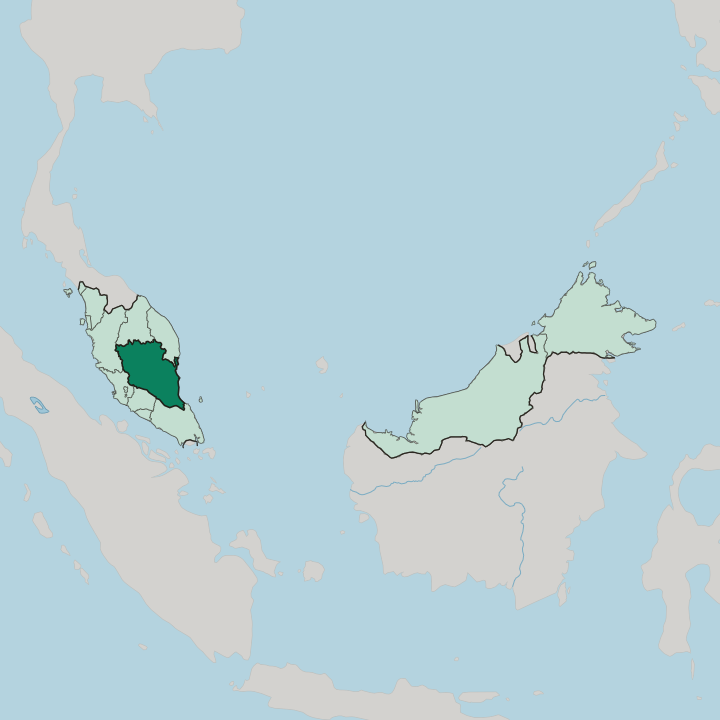
Pahang is the largest state of Peninsular Malaysia, a rainforest interior on the South China Sea, capital Kuantan.
Hotel links are affiliate links: booking through them may earn us a commission, at no extra cost to you. It never affects how places are ranked. How this works


Towns & cities in Pahang
One town here has its own guide — it links to where to stay.

 Malaysia
Kuantan
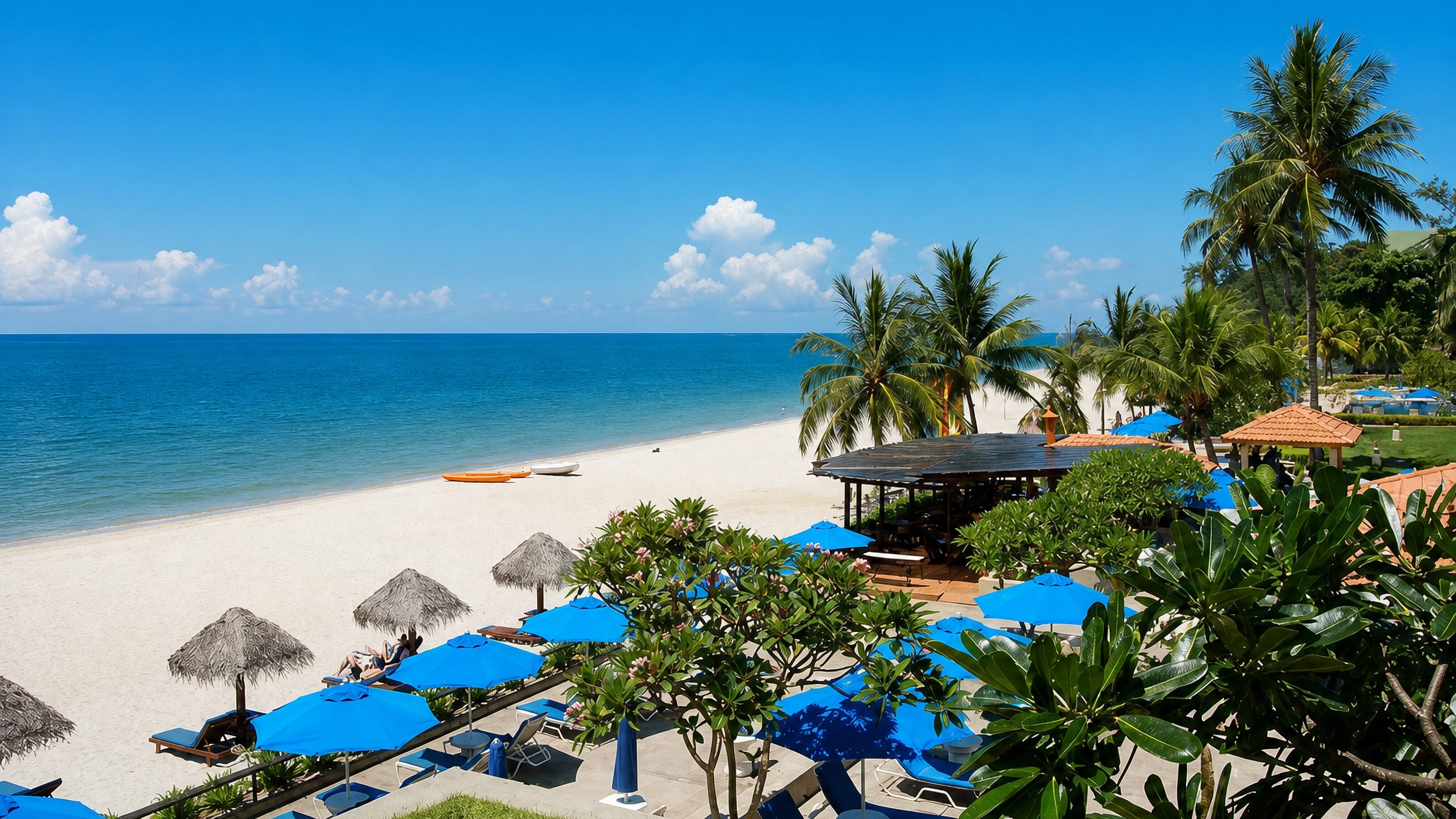
Kuantan is a city of eastern Peninsular Malaysia, the capital of Pahang, a river port on the South China Sea near palm beaches and old tin-mining hills.Where to stay →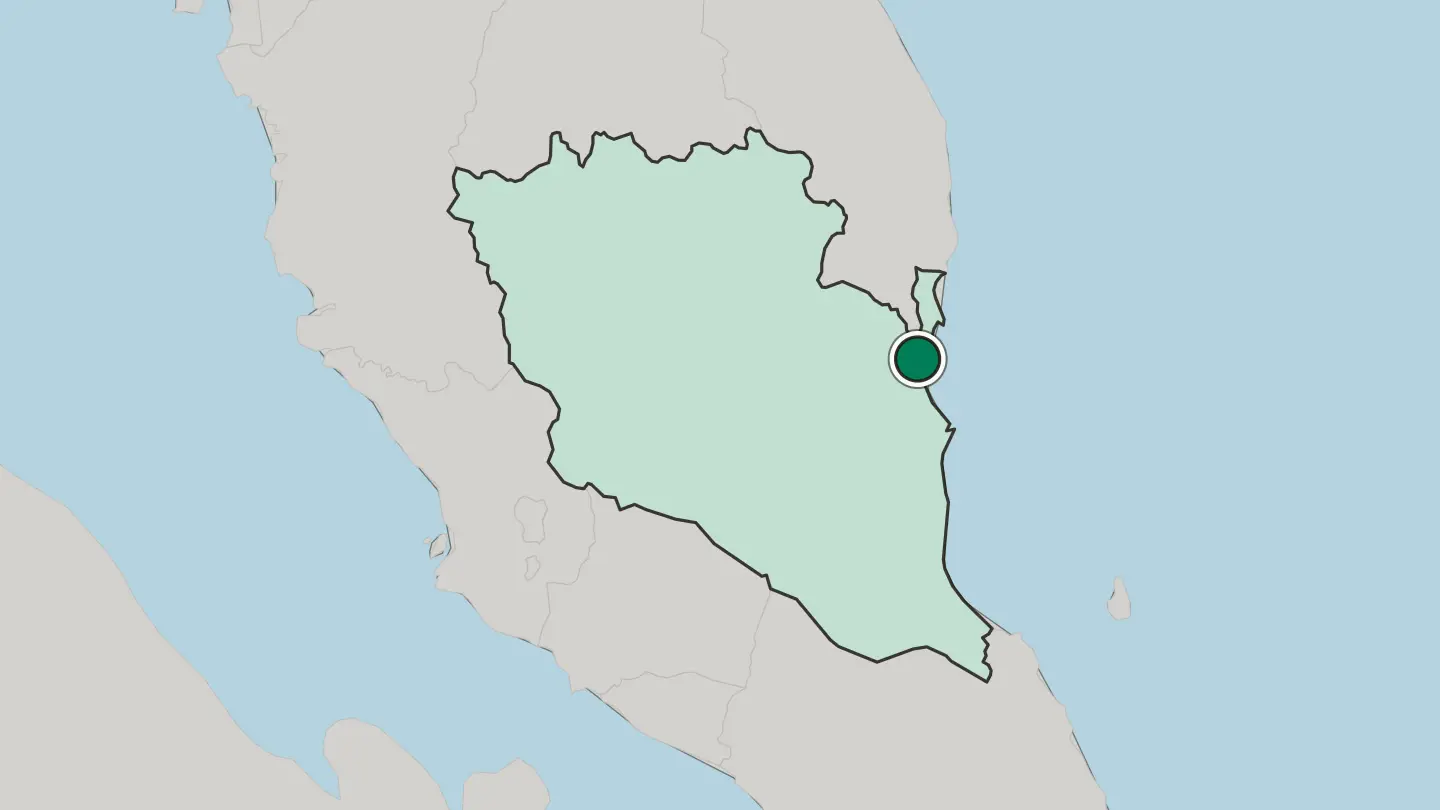
Hotel links are affiliate links: booking through them may earn us a commission, at no extra cost to you. It never affects how places are ranked. How this works
About Pahang
Pahang is jungle country.
What is Pahang known for?
It is the largest state in Peninsular Malaysia, and two-thirds of it is dense rainforest drained by the Pahang River, the longest river on the peninsula. Taman Negara spreads across its northern interior, an ancient lowland forest older than the Amazon. The Titiwangsa Mountains wall off the western edge, lifting the tea terraces of the Cameron Highlands into cool air.
Beaches, offshore reefs, and the sultan's old royal town at Pekan line the coast facing the South China Sea.
Where is Pahang?
Pahang fills the eastern flank of Peninsular Malaysia, the largest of the peninsula's states. The South China Sea forms its whole eastern edge. Behind that coast the land climbs steadily inland, and roughly two-thirds of the state lies under dense tropical rainforest that has never been cleared.
The Titiwangsa Mountains run down the western boundary, dividing Pahang from the west-coast states of Perak and Selangor and holding back the weather that crosses the peninsula. In the far north the Tahan Range carries Mount Tahan to 2,187 metres, the highest summit on the whole peninsula. Between the ranges lies the great basin of the Pahang River.
That river runs 459 kilometres to the coast, the longest in Peninsular Malaysia, and it links two large freshwater lakes, Bera and Chini, before it reaches the sea. Kuantan stands on the northern coast where the Kuantan River meets the water. The royal town of Pekan lies just south of it, near the Pahang River's own mouth, an old seat of the sultans.
Three states ring the borders. Kelantan holds the north and Johor the south, while Terengganu shares the north-eastern corner near the coast. Offshore, Tioman Island rises out of the sea off the Rompin coast.
It is forest, river, and ridge.
What is Pahang like?
Pahang is a Malay heartland with a living royal court. The great majority of its people are Bumiputera Malays, and Islam is the state religion, alongside long-settled Chinese and Indian communities in the mining and market towns. Malay is the everyday language, spoken here in a distinct Pahang dialect that marks the state out from its neighbours.
The sultanate anchors the culture. Pahang keeps a hereditary sultan of the Bendahara line, whose seat is the riverside royal town of Pekan, and its ruler has also served as the elected king of all Malaysia. Older peoples still hold the interior.
Orang Asli groups such as the Semai, Temiar, and Jah Hut live in and around the forests, with their own languages and their own claim on the land that far predates the towns. That deep forest shapes daily life as much as the court does. Rivers were the old roads here, and settlement clung to the banks of the Pahang River long before any highway crossed the ranges.
Kuantan on the coast is the modern working city, a port and market town facing the sea. The result is a state pulled between three worlds: the royal river town, the trading coast, and the vast green interior behind them both.
What is the history of Pahang?
Pahang's story is old. An early trading polity stood on the Pahang River in the Hindu-Buddhist age, and a Malay sultanate rose in the 15th century as a vassal of Malacca before growing independent after Malacca fell. Civil war tore the state apart in the mid-19th century until Wan Ahmad won through and was proclaimed sultan in 1881.
Britain moved in soon after, and by 1895 Pahang had joined the Federated Malay States under British control. The royal capital held at Pekan through all of it. Pahang entered independent Malaysia in 1957.
What is the climate of Pahang?
Pahang stays hot and wet. Temperatures hold between about 21 and 33 degrees, and the humidity rarely drops below three-quarters through the year. The heaviest rain comes with the north-east monsoon from October to March, when storms roll in off the South China Sea and swell the Pahang River.
Up in the Cameron Highlands the air turns markedly cooler, dropping toward the mid-teens at night, which is why the tea and vegetables grow there and the lowlanders come up to escape the heat.
How do you get to Pahang?
Most reach Pahang overland. Kuantan on the coast has the state's main airport and its busiest highways, a few hours' drive east from Kuala Lumpur over the Titiwangsa Mountains. From the capital's edge the Genting and Cameron highland roads climb straight up into Pahang's western ranges.
Boats run out to Tioman Island from the Rompin coast, and Jerantut is the jumping-off point for the river trip into Taman Negara. Inside the state, road follows river and ridge more than any straight line.
Common questions
What is the best area to stay in Pahang?
Kuantan: a first base on Pahang's coast. Cameron Highlands: cool highland air and tea estates. Tioman Island: diving and island beaches. Jerantut: reaching Taman Negara's rainforest.
Good for
More regions in Malaysia
Updated September 2026