
Malaysia: Regions, Cities & Travel Guide
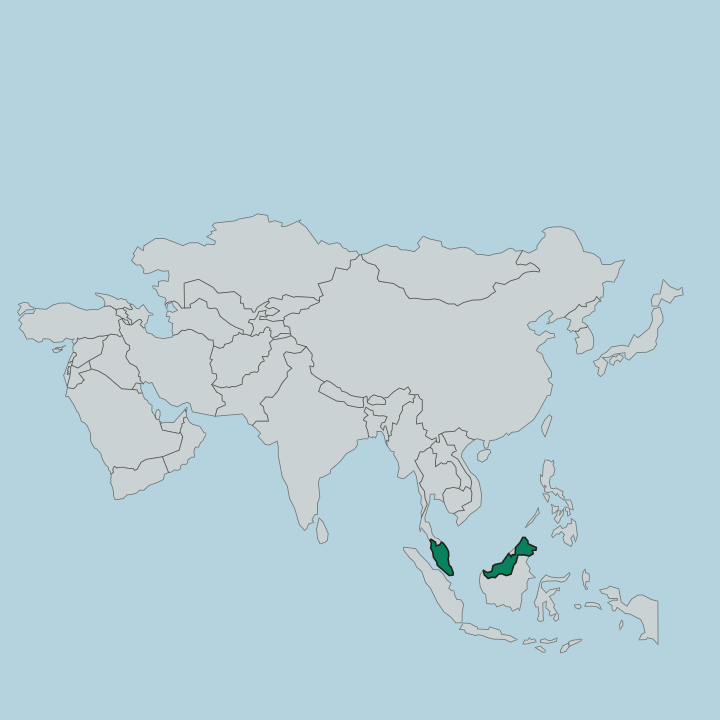
Malaysia is a Southeast Asian federation split by the South China Sea between the Malay Peninsula and northern Borneo.
Hotel links are affiliate links: booking through them may earn us a commission, at no extra cost to you. It never affects how places are ranked. How this works


Top destinations in Malaysia
Cities to start from, then drill into areas and hotels.

 Malaysia
Kuala Lumpur
Kuala Lumpur is Malaysia's capital in the Klang Valley, a skyline of glass towers led by the Petronas Towers.Where to stay →
 Malaysia
Johor Bahru
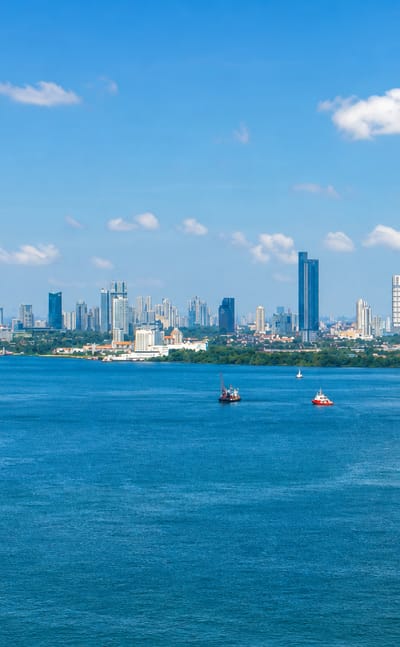
Water separates Johor Bahru from Singapore, the border-city capital of Johor at the southern tip of the Malay Peninsula in Malaysia, known as JB.Where to stay →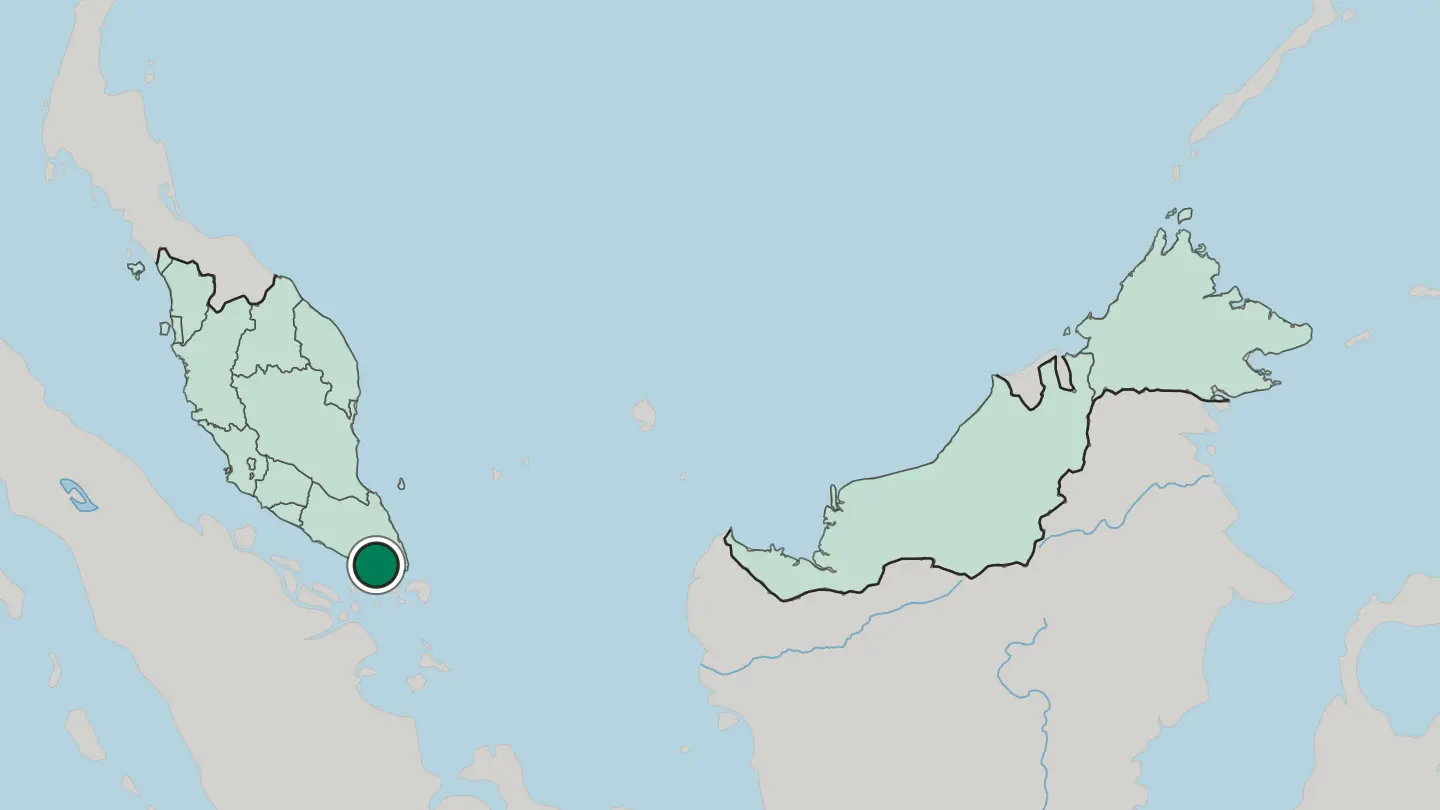
 Malaysia
Putrajaya
Putrajaya is a city in Malaysia dating from 1995, with the Millennium Monument and the Perdana Leadership Foundation among its landmarks.Where to stay →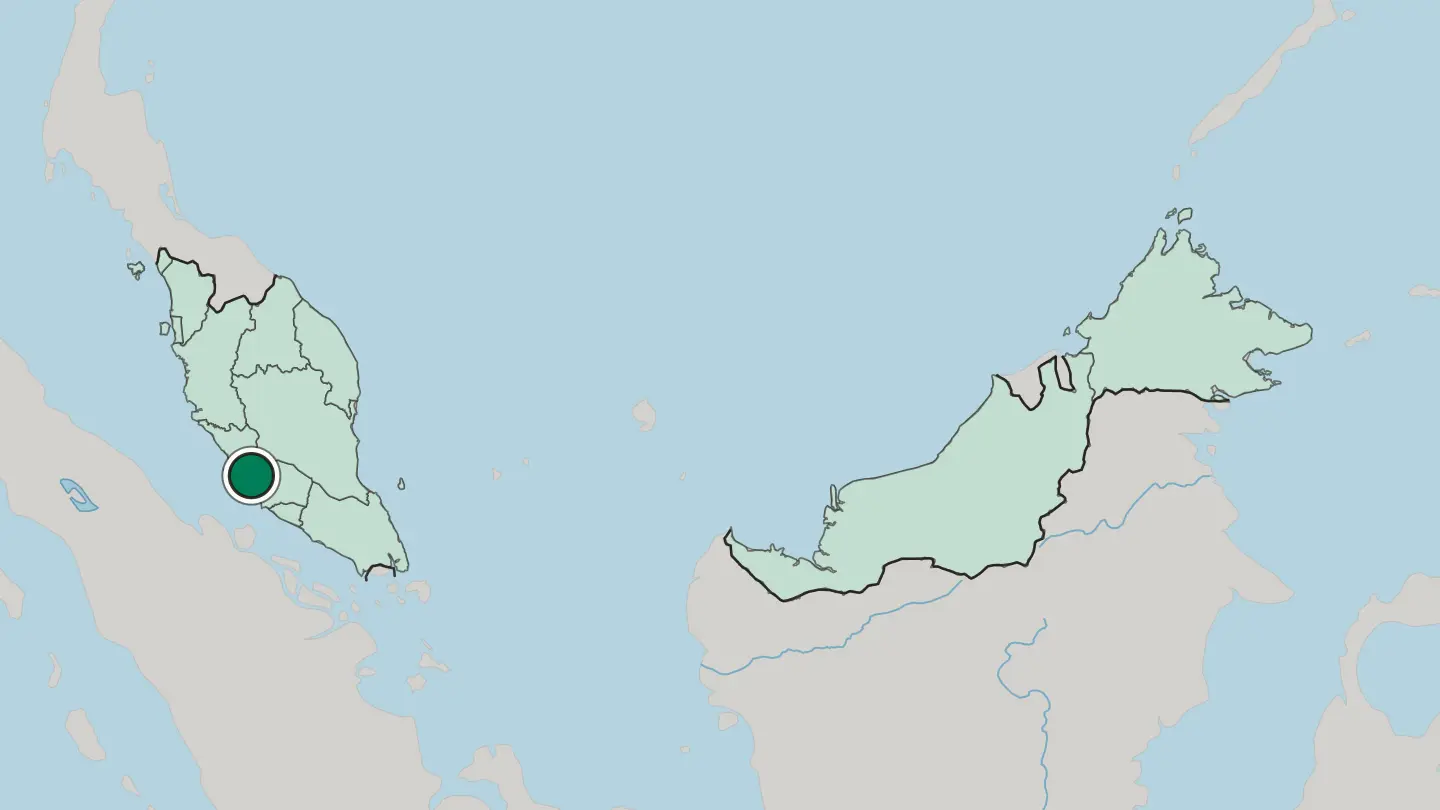
 Malaysia
Kota Kinabalu
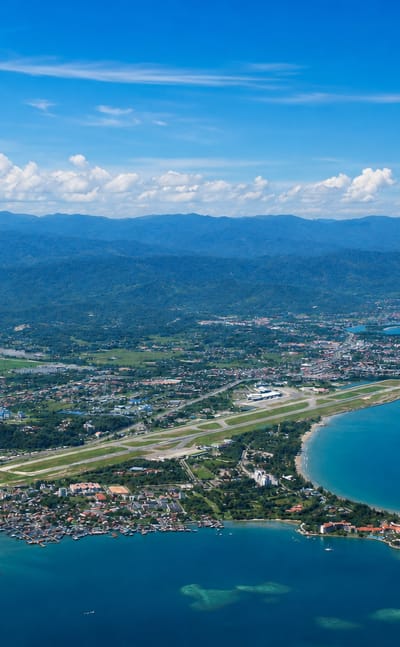
The South China Sea washes the shore at Kota Kinabalu, the coastal capital of Sabah on Borneo, Malaysia, known as KK and set below Mount Kinabalu.Where to stay →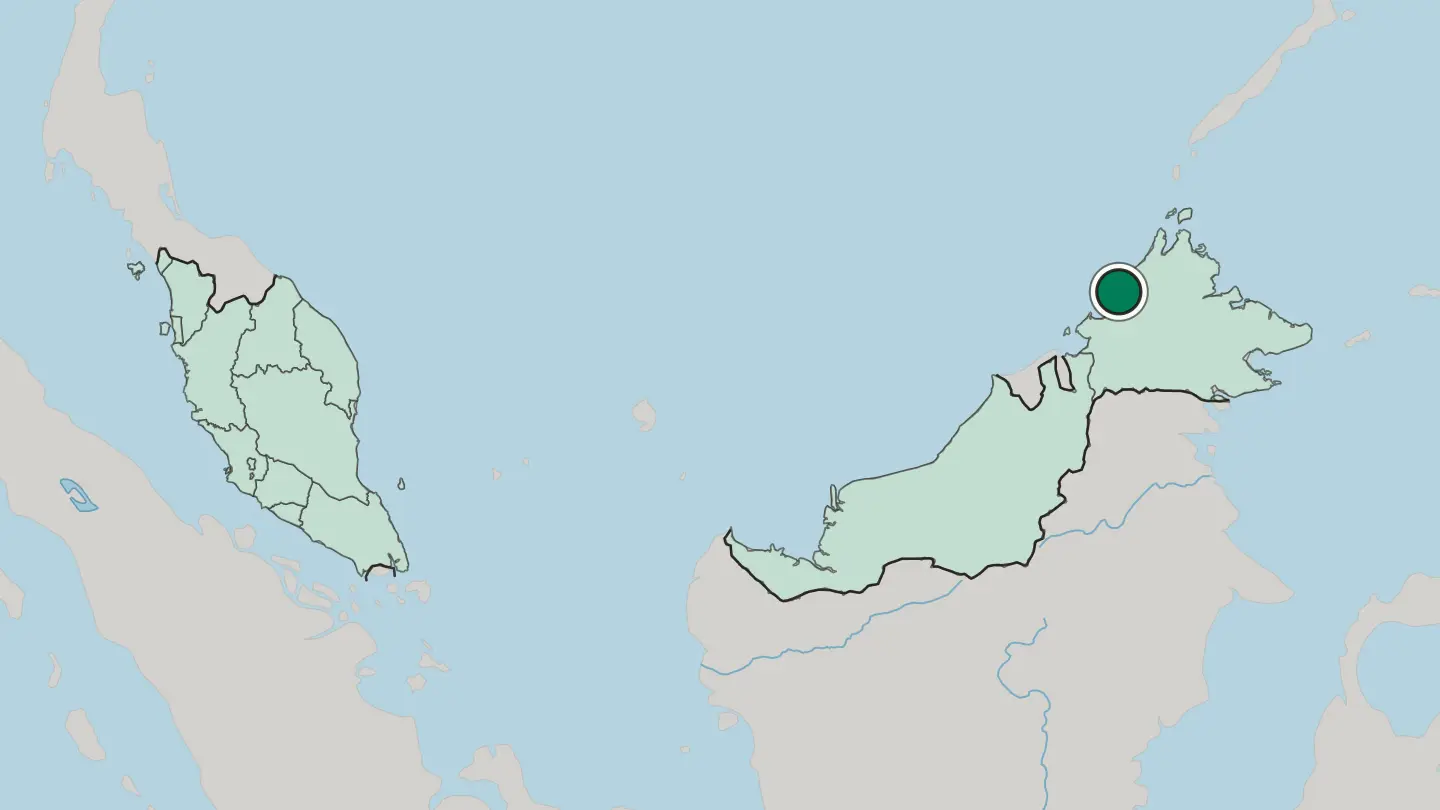
 Malaysia
Ipoh
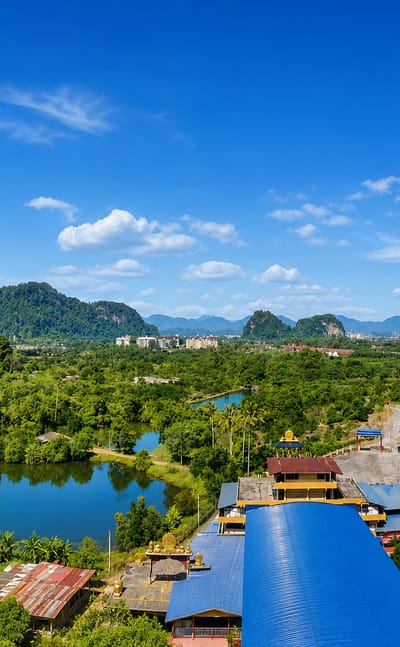
Steep limestone hills close around Ipoh, the tin-town capital of Perak on the Kinta River in Malaysia, known for its old town and hawker food.Where to stay →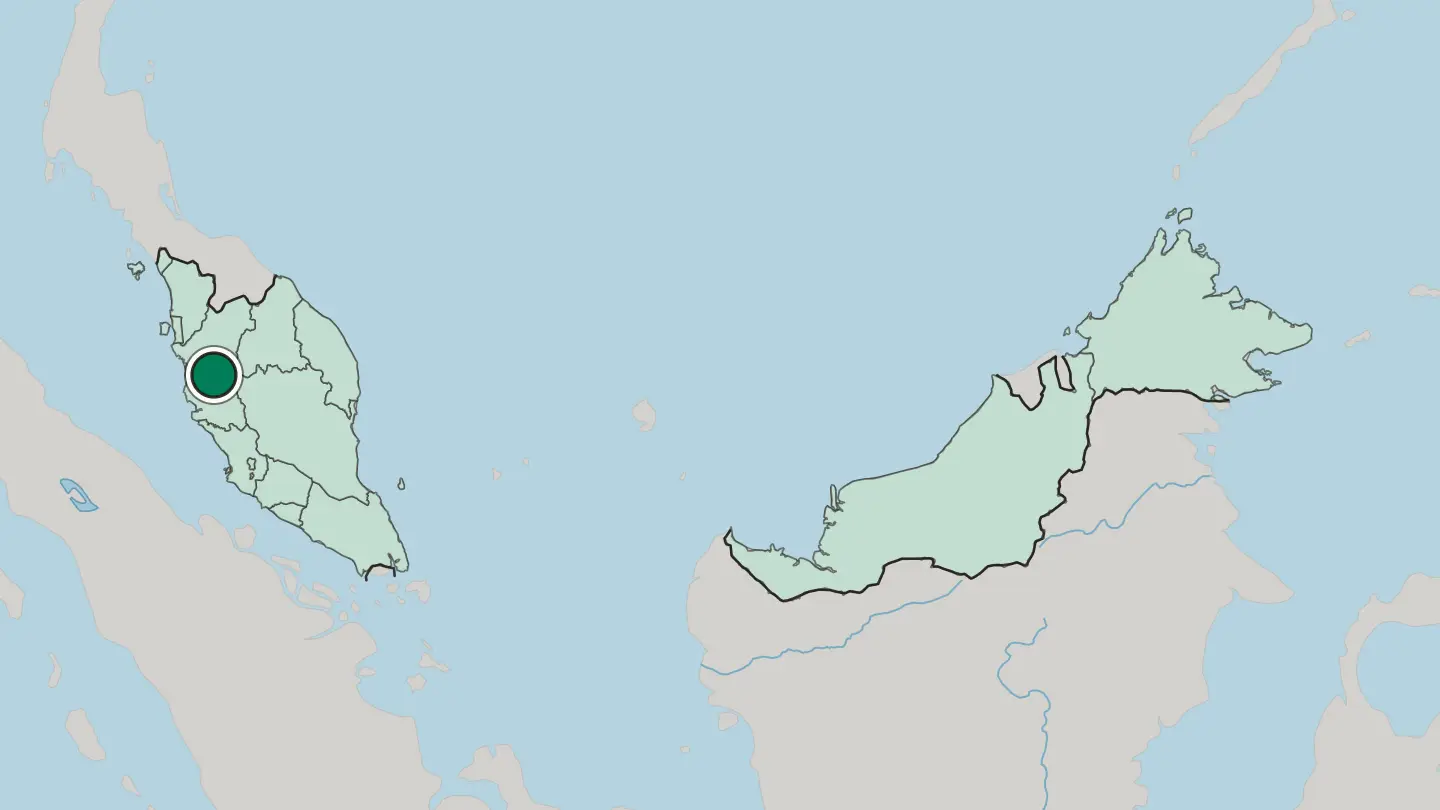
 Malaysia
Malacca
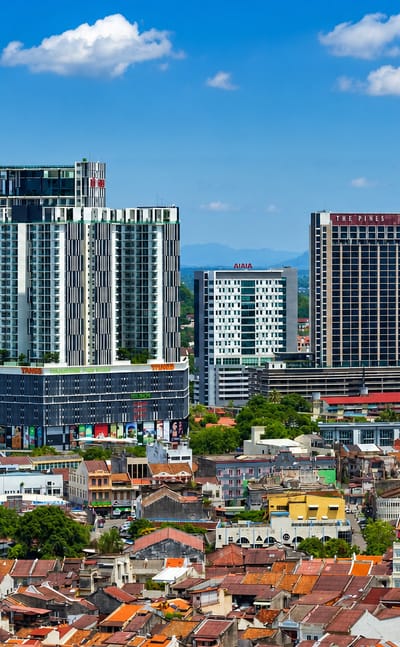
Red laterite walls rise above the water at Malacca, a port city on the Strait of Malacca in Melaka, Malaysia, known for its old core and Christ Church.Where to stay →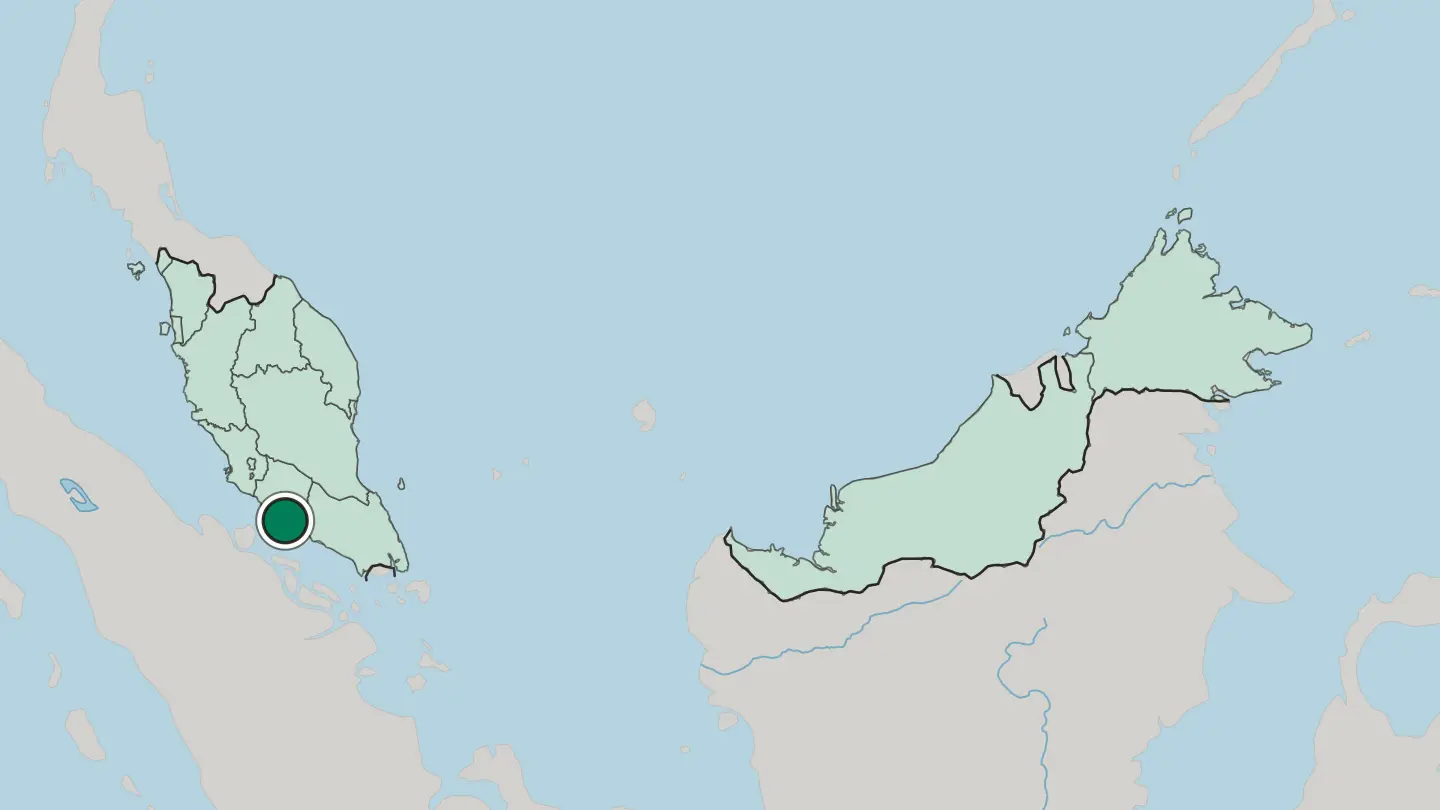
 Malaysia
George Town
George Town is the historic capital of Penang, Malaysia, a multicultural port founded in 1786, known for its old churches and the Pinang Peranakan Mansion.Where to stay →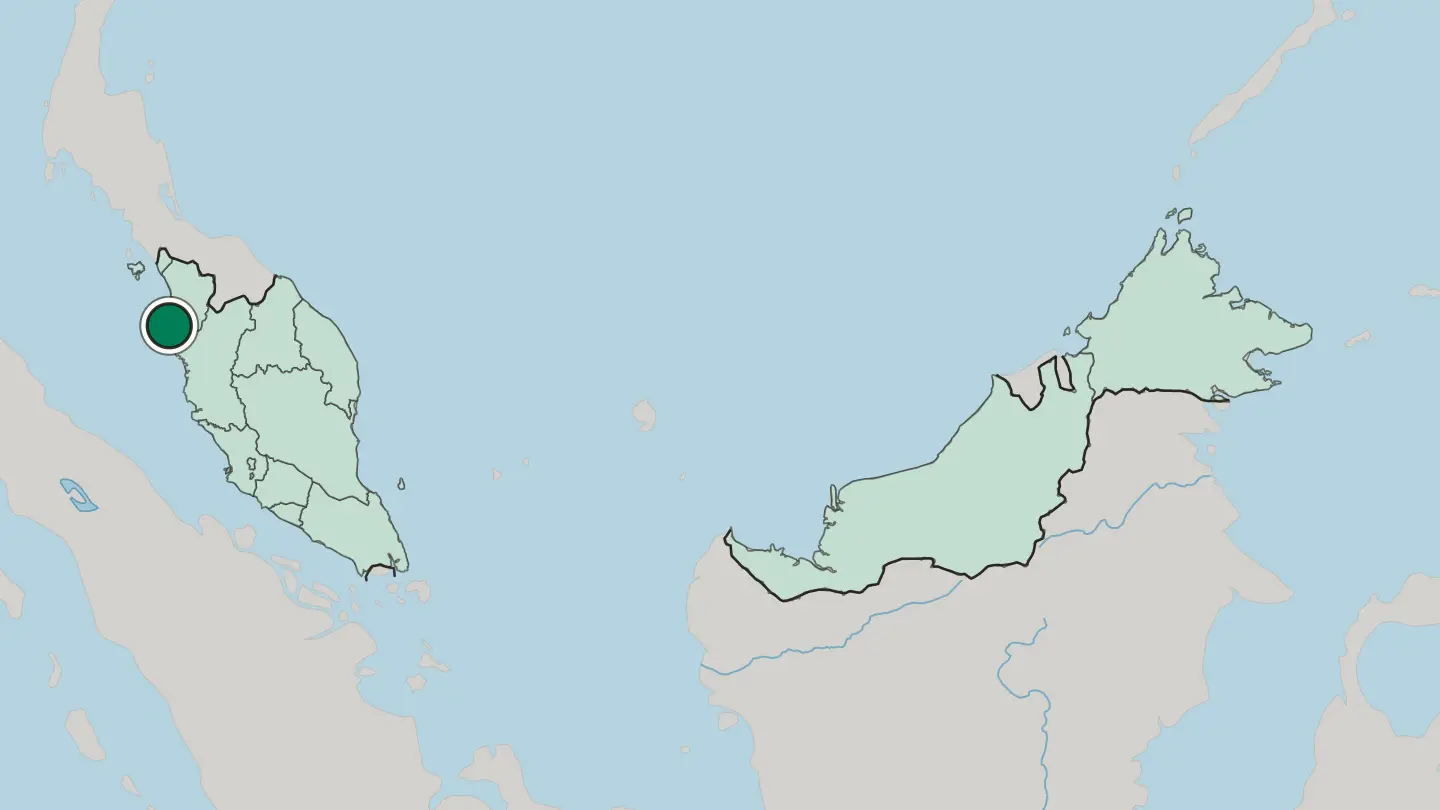
 Malaysia
Kuching
Kuching is the capital of Sarawak on the island of Borneo, a riverside city in Malaysia long known as the Cat City.Where to stay →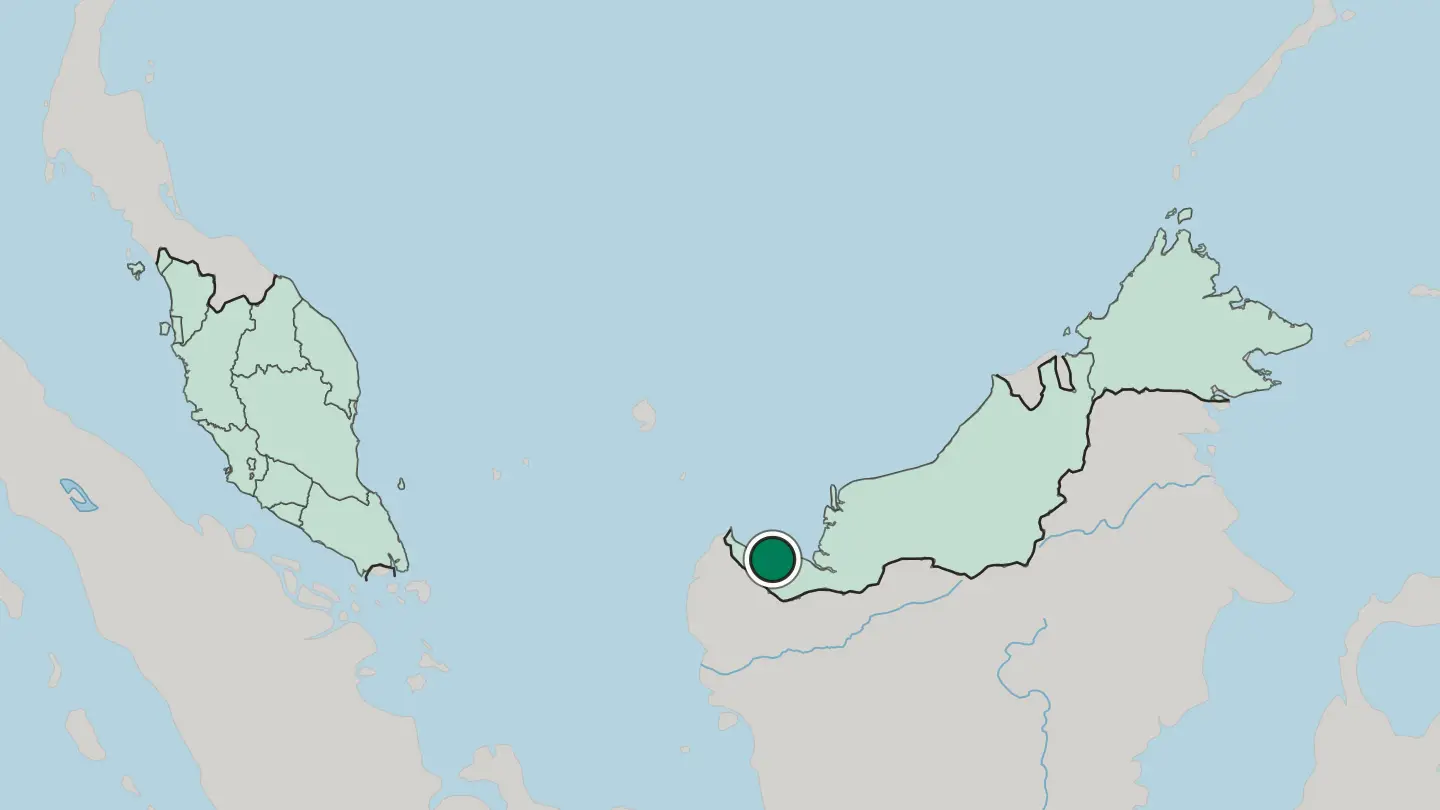
 Malaysia
Kuantan
Kuantan is a city of eastern Peninsular Malaysia, the capital of Pahang, a river port on the South China Sea near palm beaches and old tin-mining hills.Where to stay →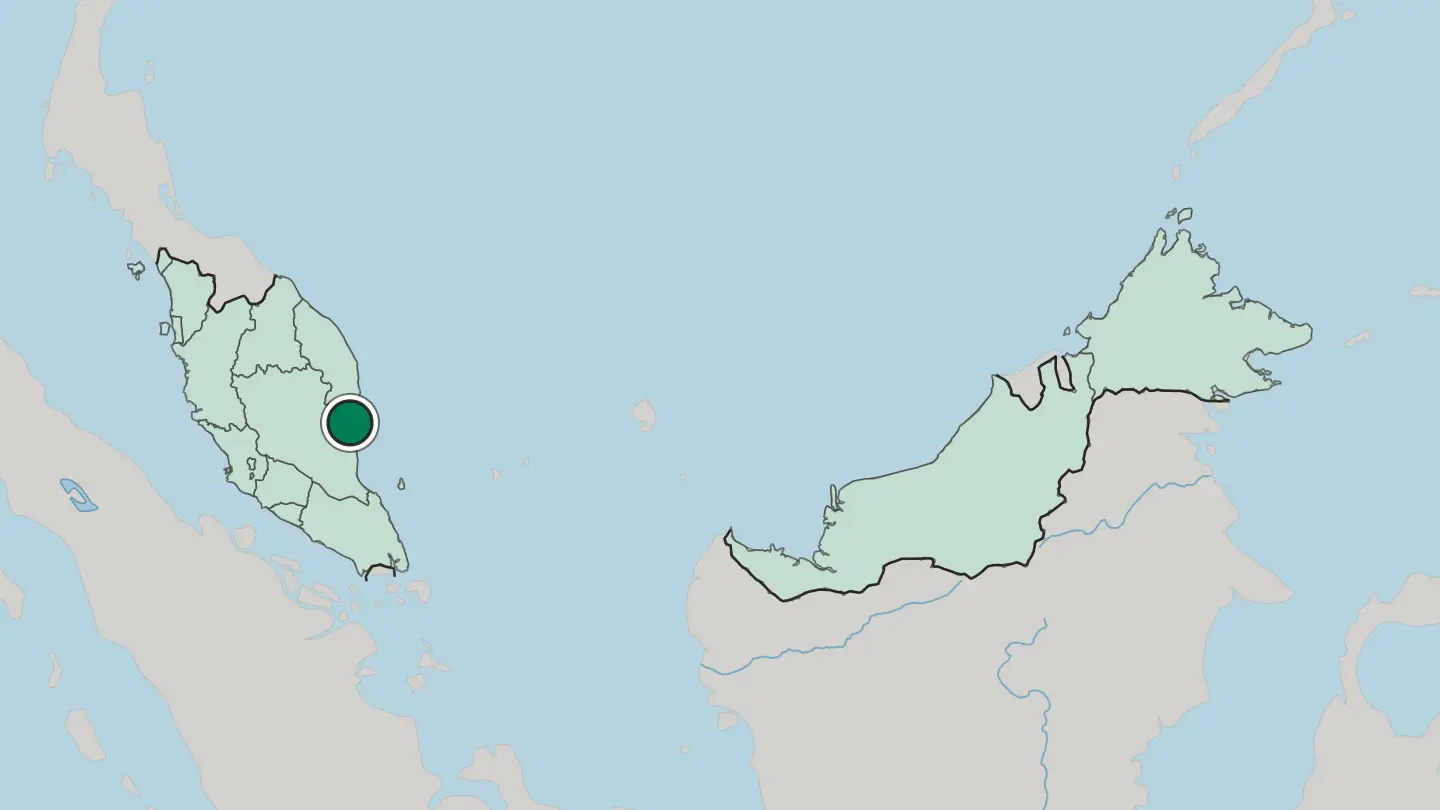
Hotel links are affiliate links: booking through them may earn us a commission, at no extra cost to you. It never affects how places are ranked. How this works
Regions of Malaysia
Malaysia
Johor
Johor is the southernmost state of Peninsular Malaysia, facing Singapore across the Straits of Johor at the tip of the mainland.Towns & cities →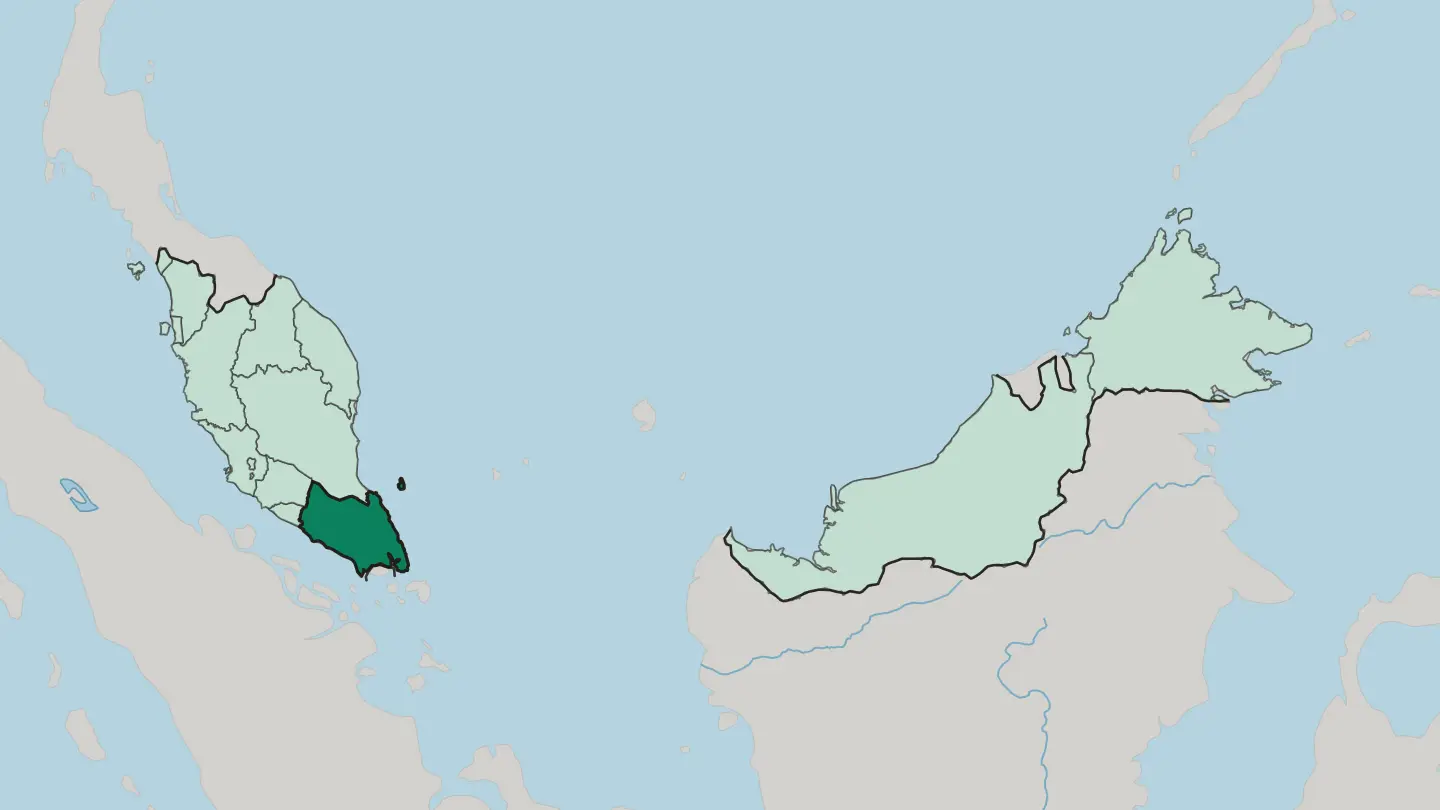
 Malaysia
Kedah
Kedah is Malaysia's rice bowl, a flat green state in the northwest that also owns the Langkawi islands offshore.Towns & cities →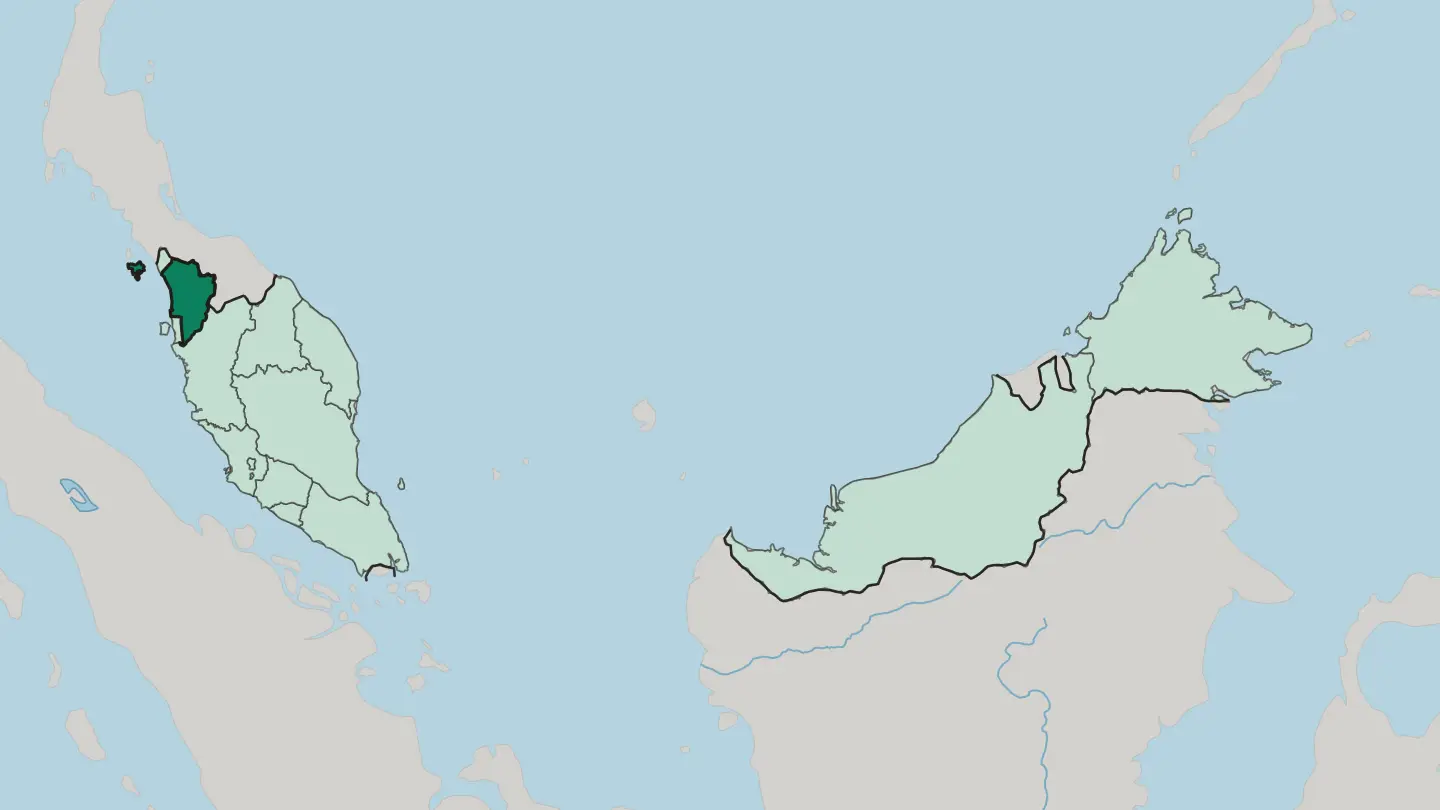
 Malaysia
Kelantan
Kelantan is Malaysia's north-eastern corner, an agrarian state of paddy and fishing villages on the South China Sea.Towns & cities →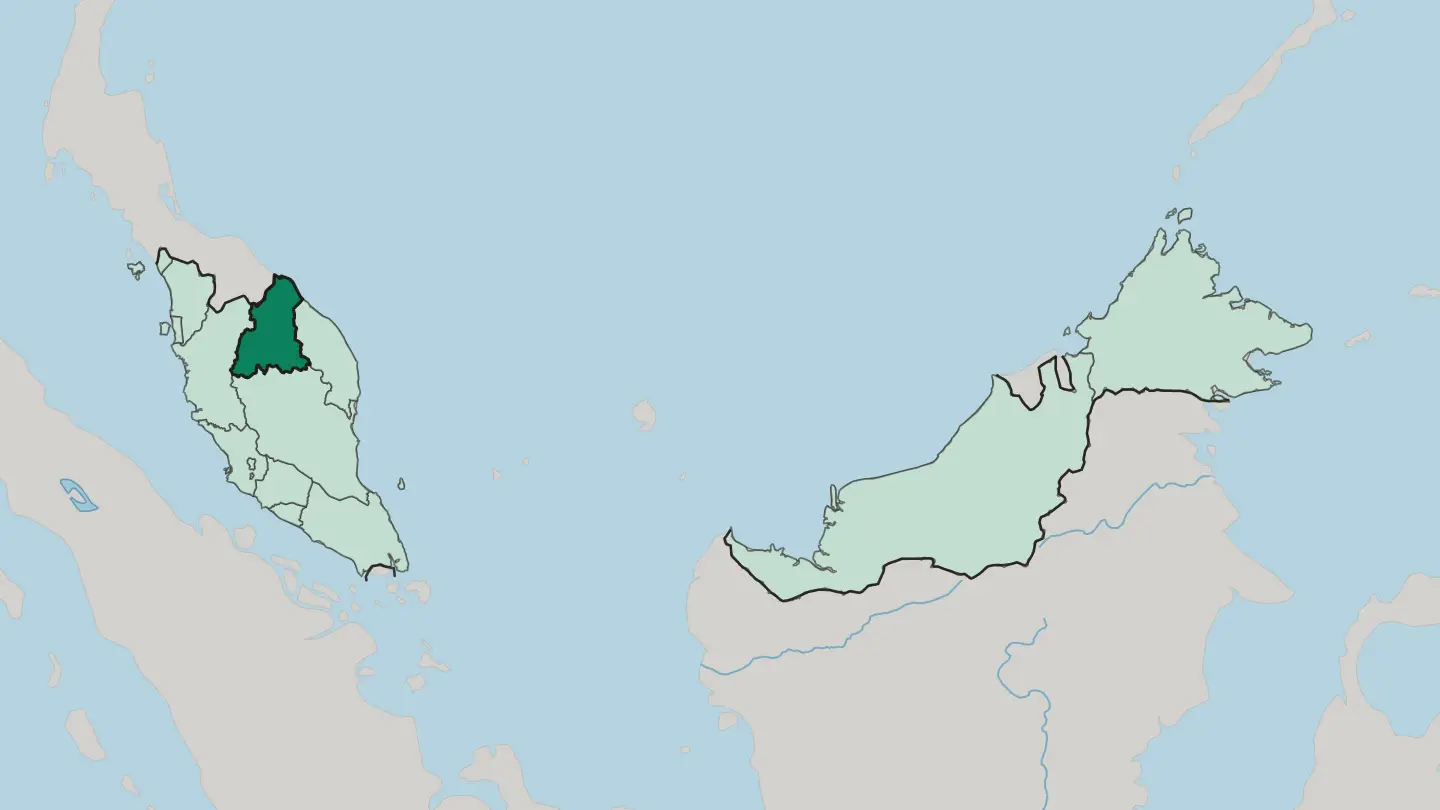 Malaysia
Kuala Lumpur
Kuala Lumpur is the federal territory around Malaysia's capital, filling the Klang Valley on the Malay Peninsula.Towns & cities →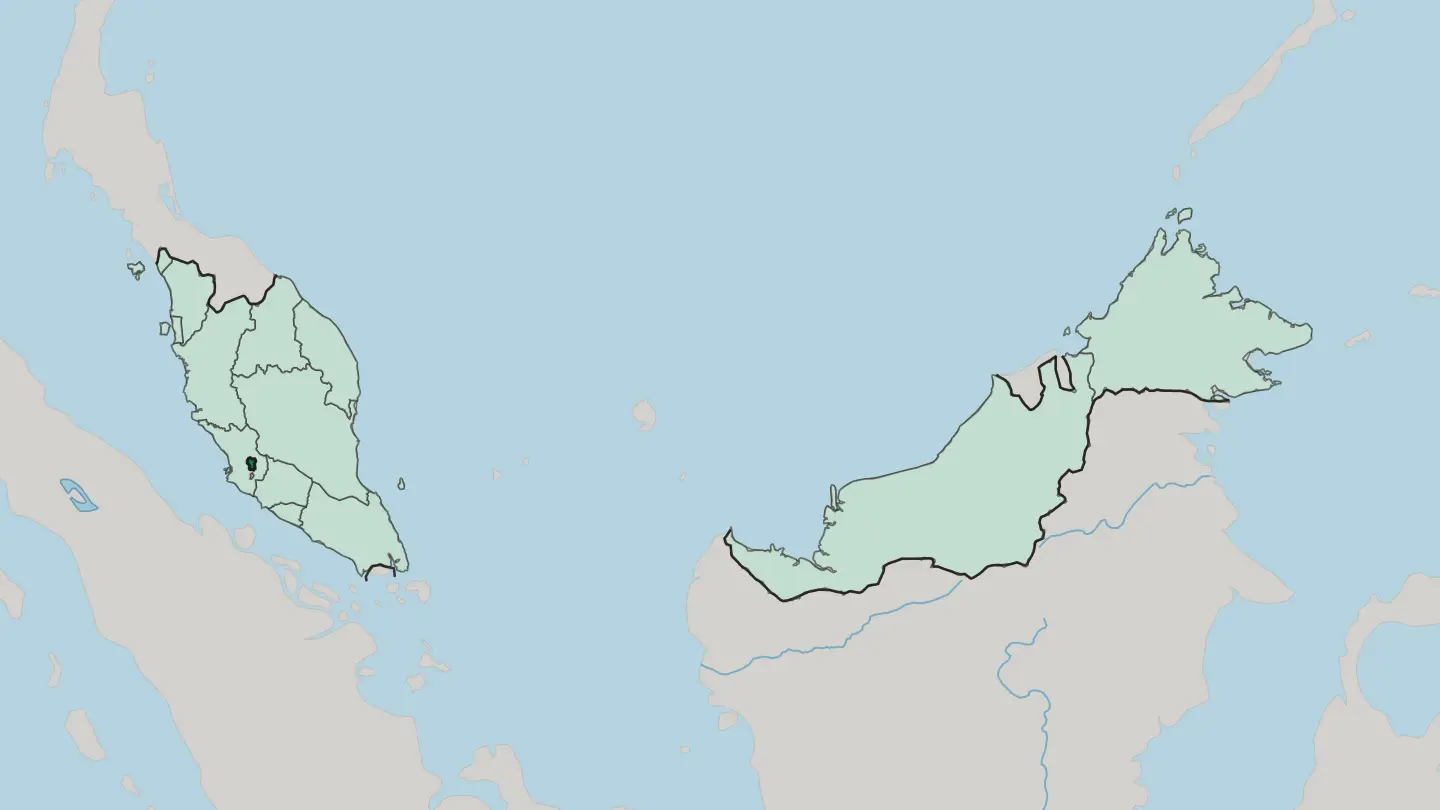
 Malaysia
Labuan
Labuan is a Malaysian island territory off the coast of Borneo, known for wreck diving, duty-free trade and WWII history.Towns & cities →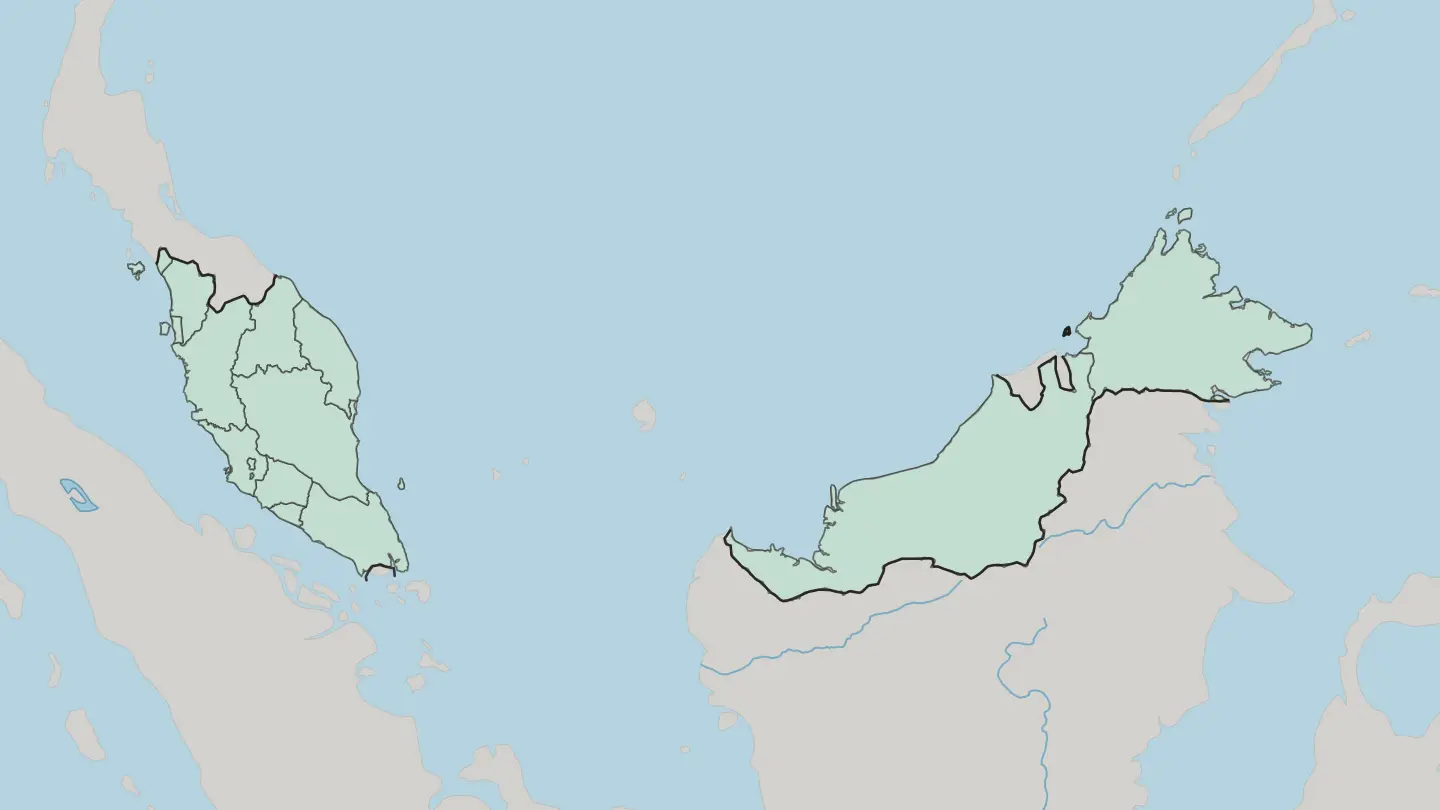 Malaysia
Melaka
Melaka is a small Malaysian state on the Strait of Malacca, built around a UNESCO-listed old port city.Towns & cities →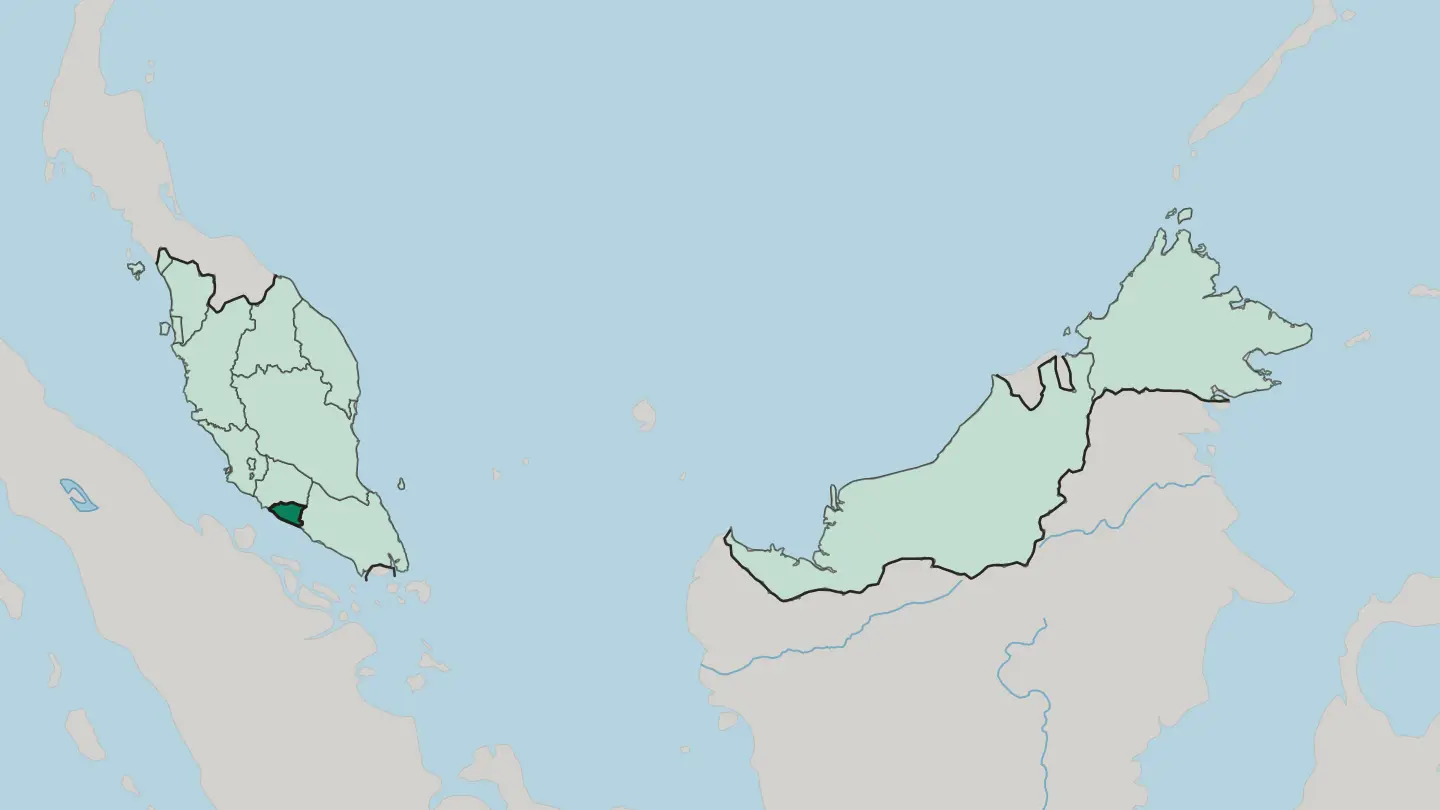
 Malaysia
Negeri Sembilan
Negeri Sembilan is Malaysia's matrilineal state on the Strait of Malacca, ruled by Minangkabau custom and elected kings.Towns & cities →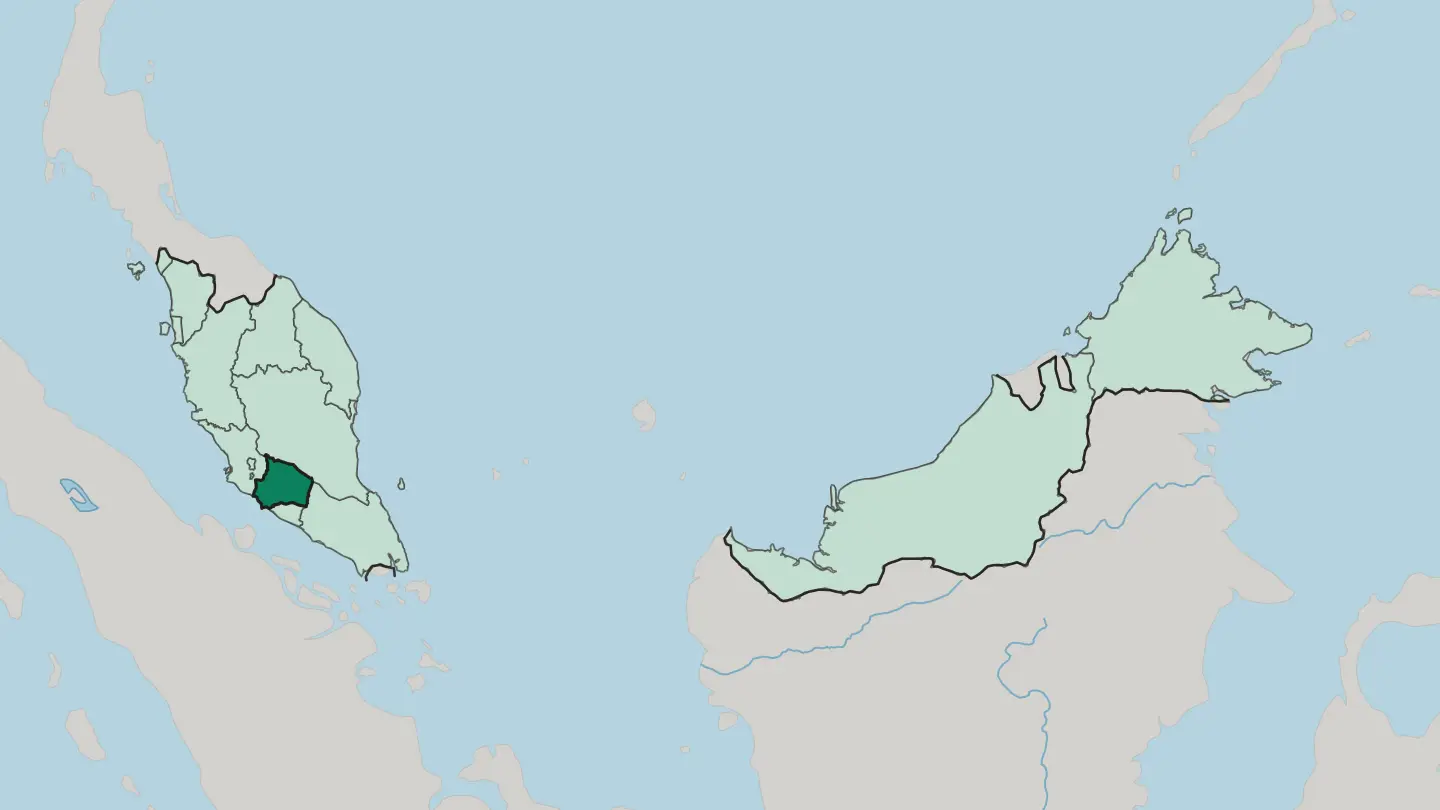 Malaysia
Pahang
Pahang is the largest state of Peninsular Malaysia, a rainforest interior on the South China Sea, capital Kuantan.Towns & cities →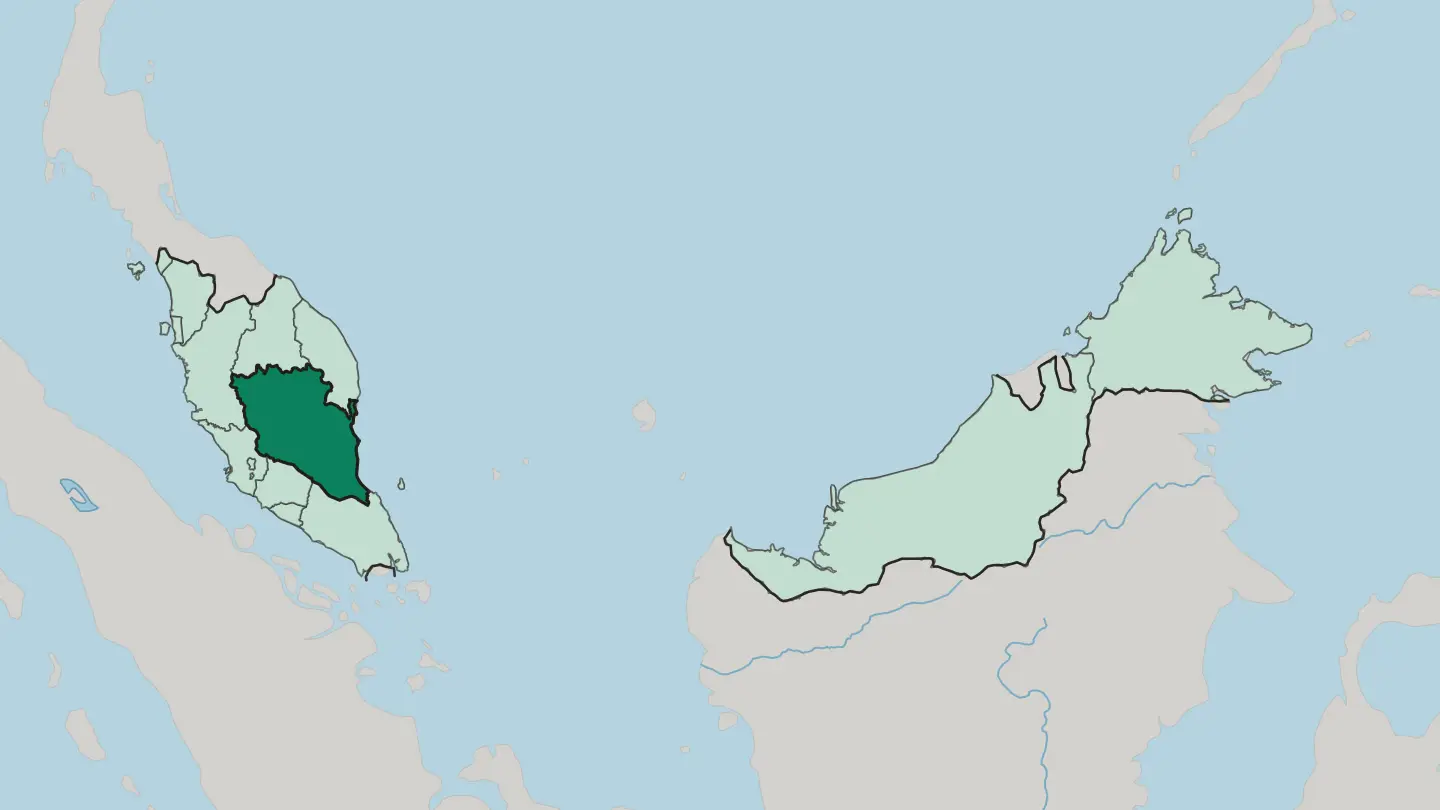 Malaysia
Perak
Perak is a tin-country state on Malaysia's west coast, where the Kinta Valley and the Perak River shaped its towns.Towns & cities →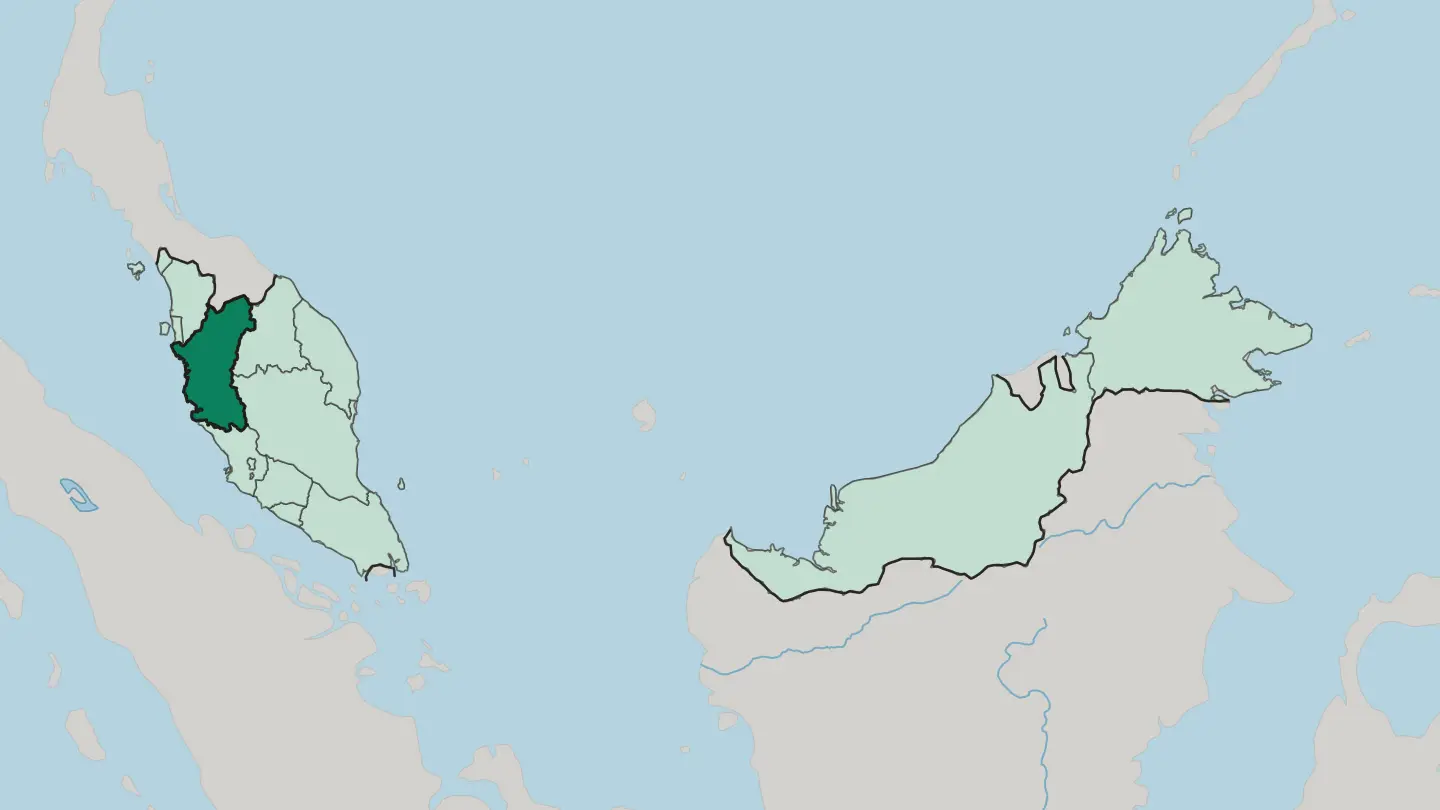
 Malaysia
Perlis
Perlis is Malaysia's smallest state, a sliver of paddy plains and limestone hills in the far north against the Thai border.Towns & cities →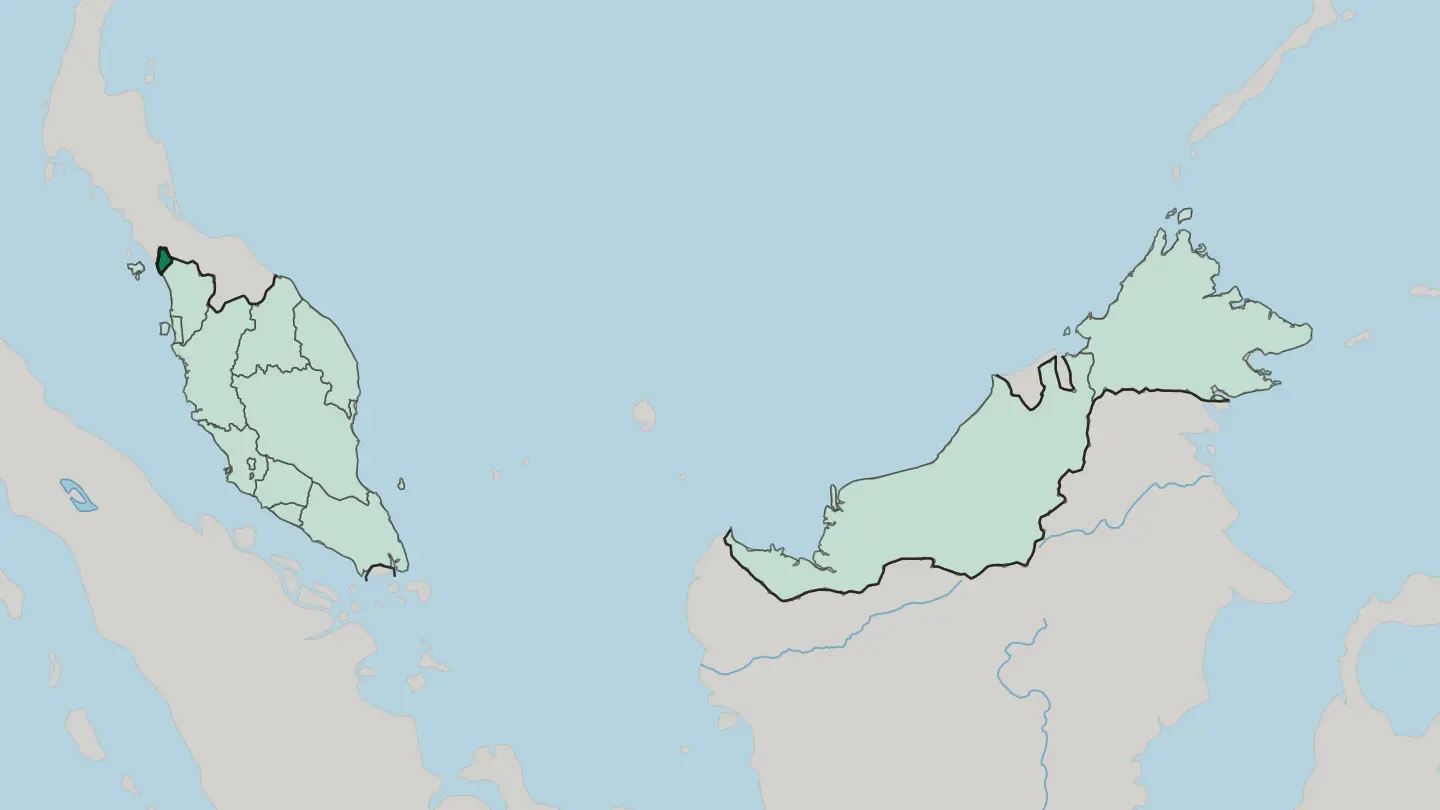 Malaysia
Pulau Pinang
Pulau Pinang is a Malaysian state split by the Strait of Malacca into an island and its mainland, with George Town at its heart.Towns & cities →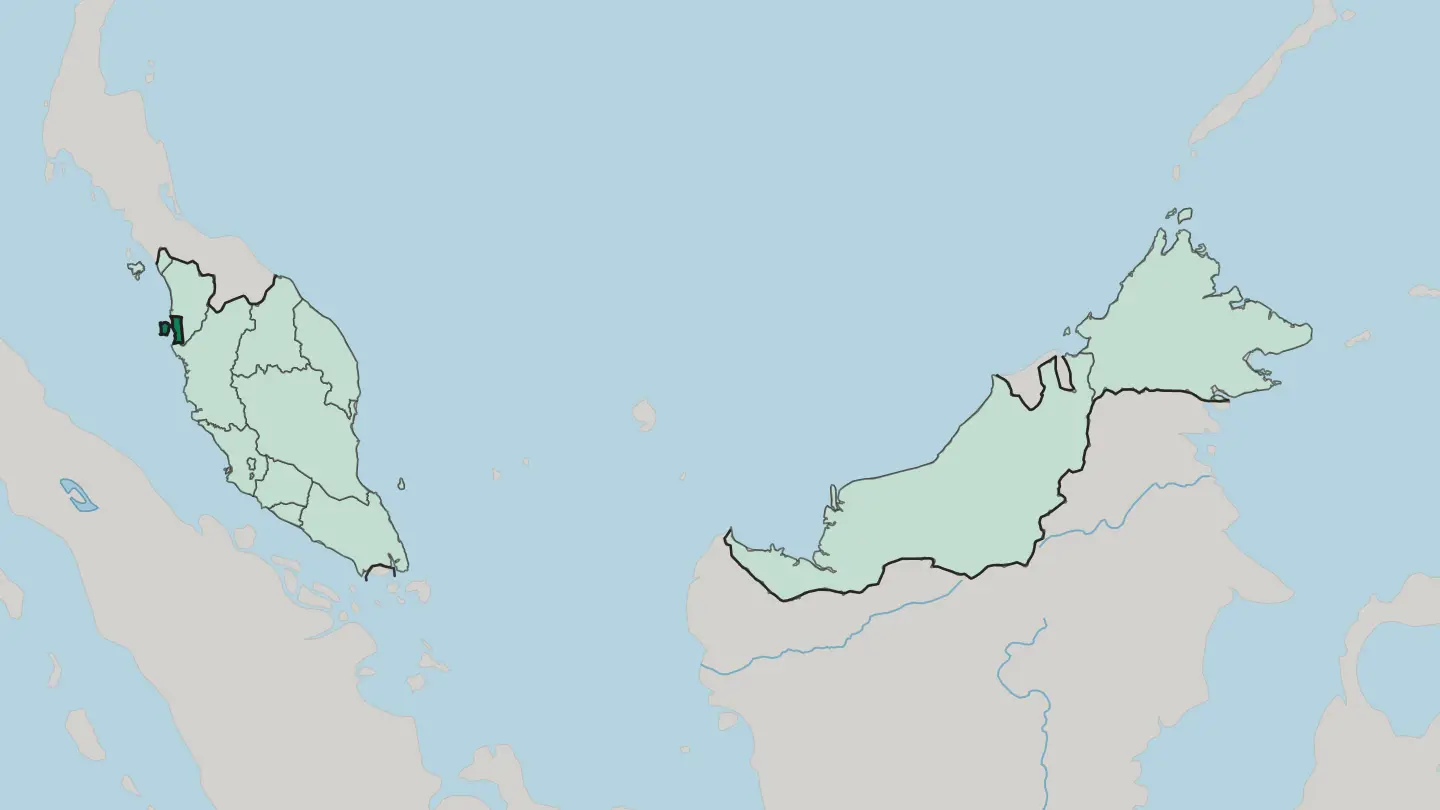 Malaysia
Putrajaya
Putrajaya is Malaysia's purpose-built administrative capital, a planned garden city on a lake south of Kuala Lumpur.Towns & cities →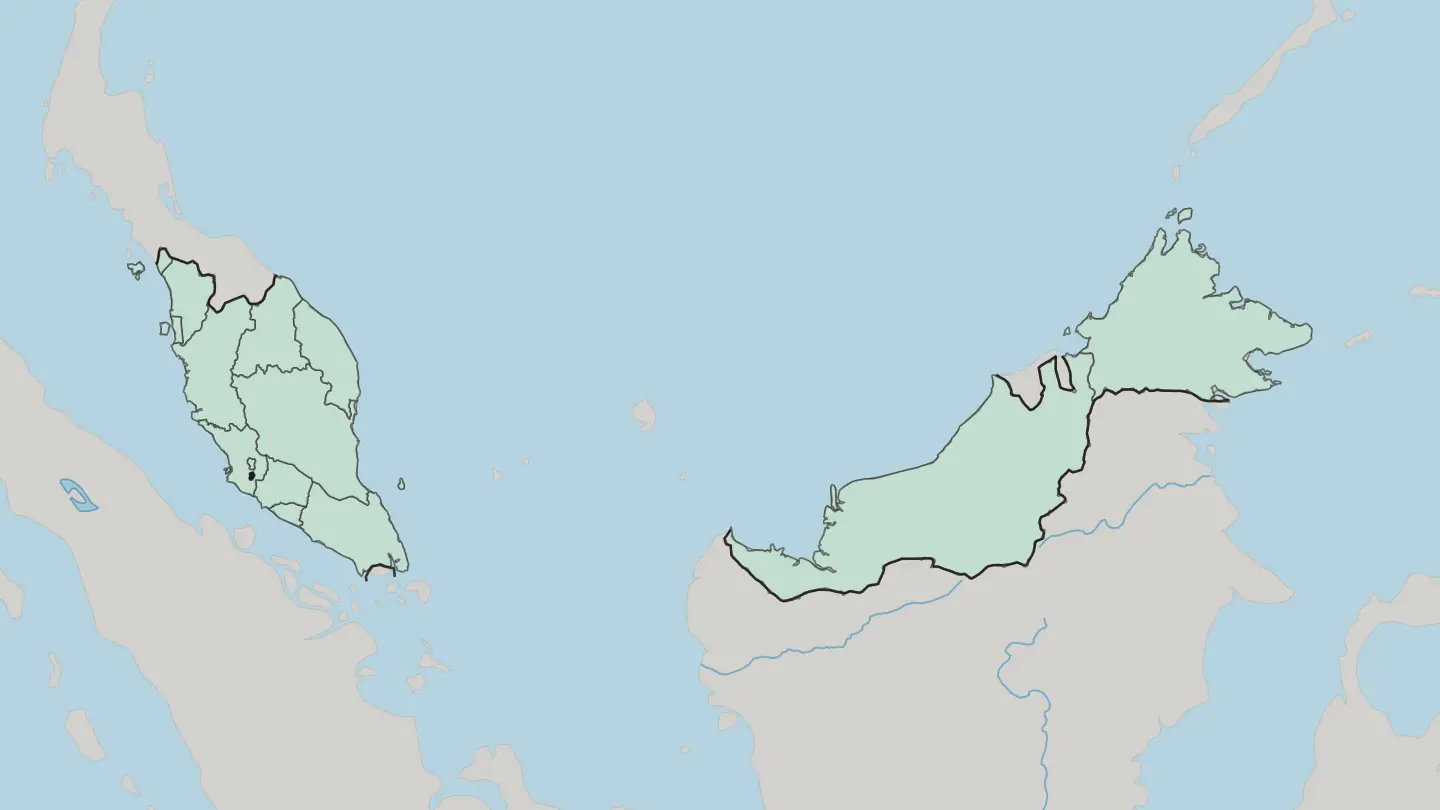 Malaysia
Sabah
Sabah is Malaysia's state on the northern tip of Borneo, where Mount Kinabalu rises above rainforest and the reefs of the Celebes Sea.Towns & cities →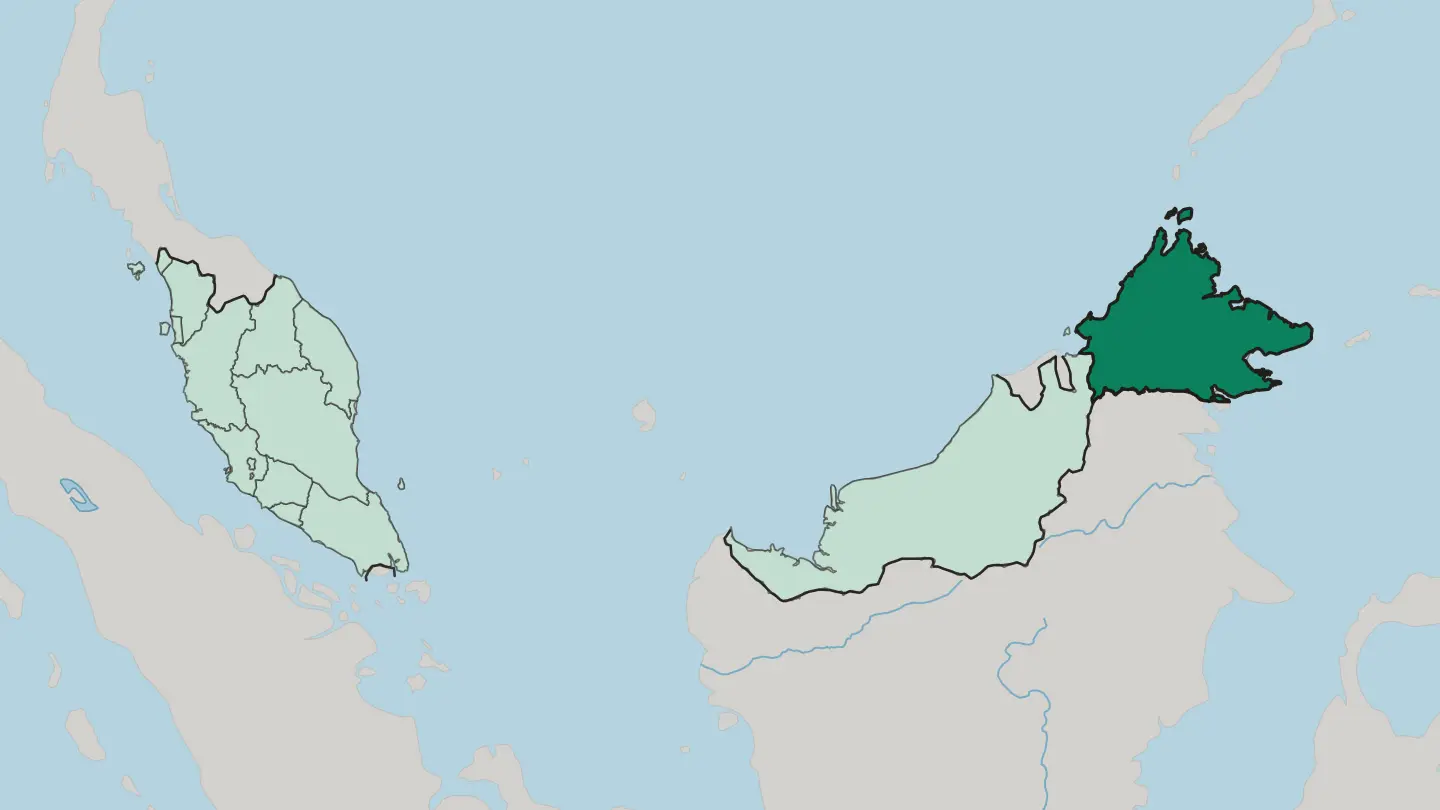 Malaysia
Sarawak
Sarawak is Malaysia's largest state, spread across the rainforests and rivers of northwest Borneo, with Kuching as its capital.Towns & cities →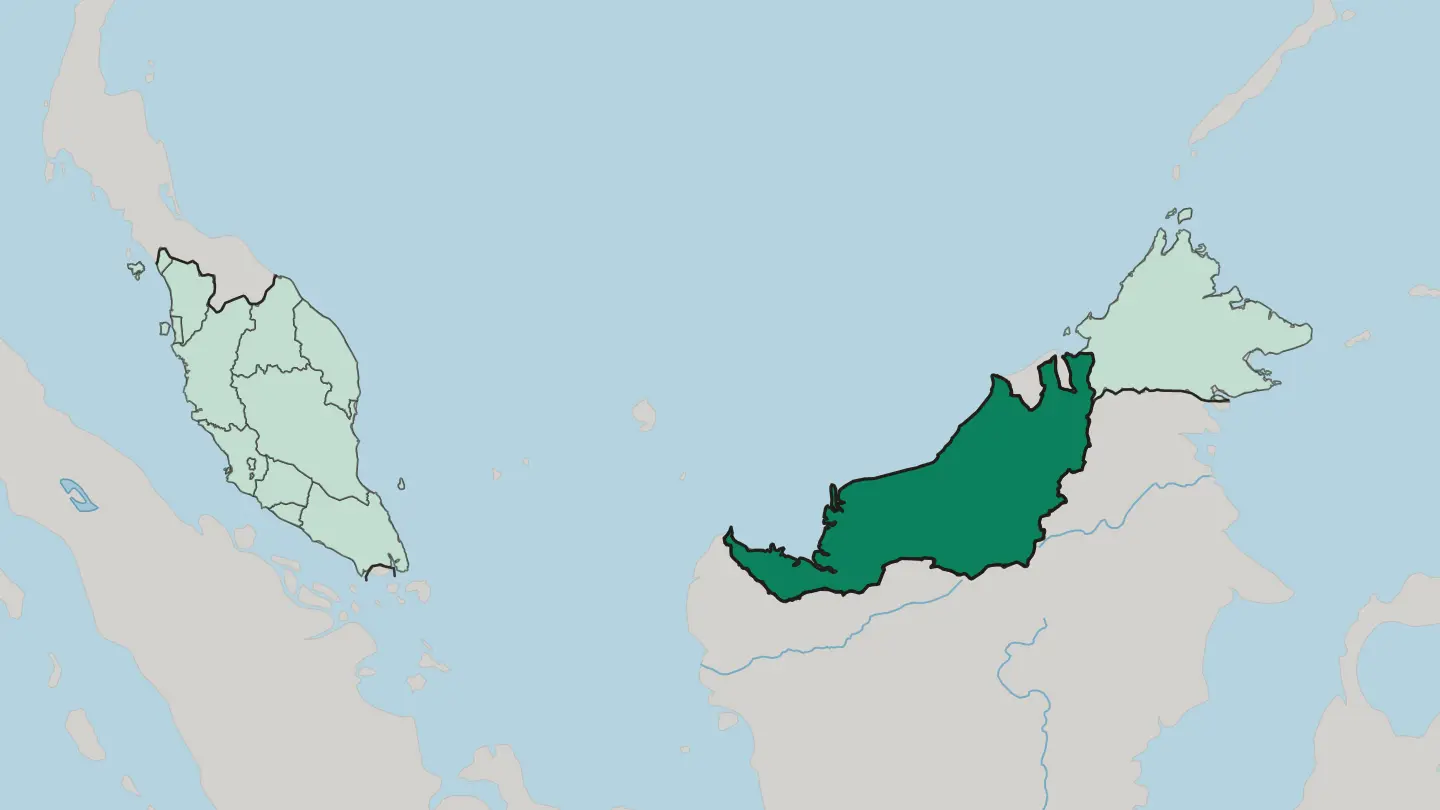
 Malaysia
Selangor
Selangor is Malaysia's most-developed state, wrapping the capital Kuala Lumpur along the Strait of Malacca coast.Towns & cities →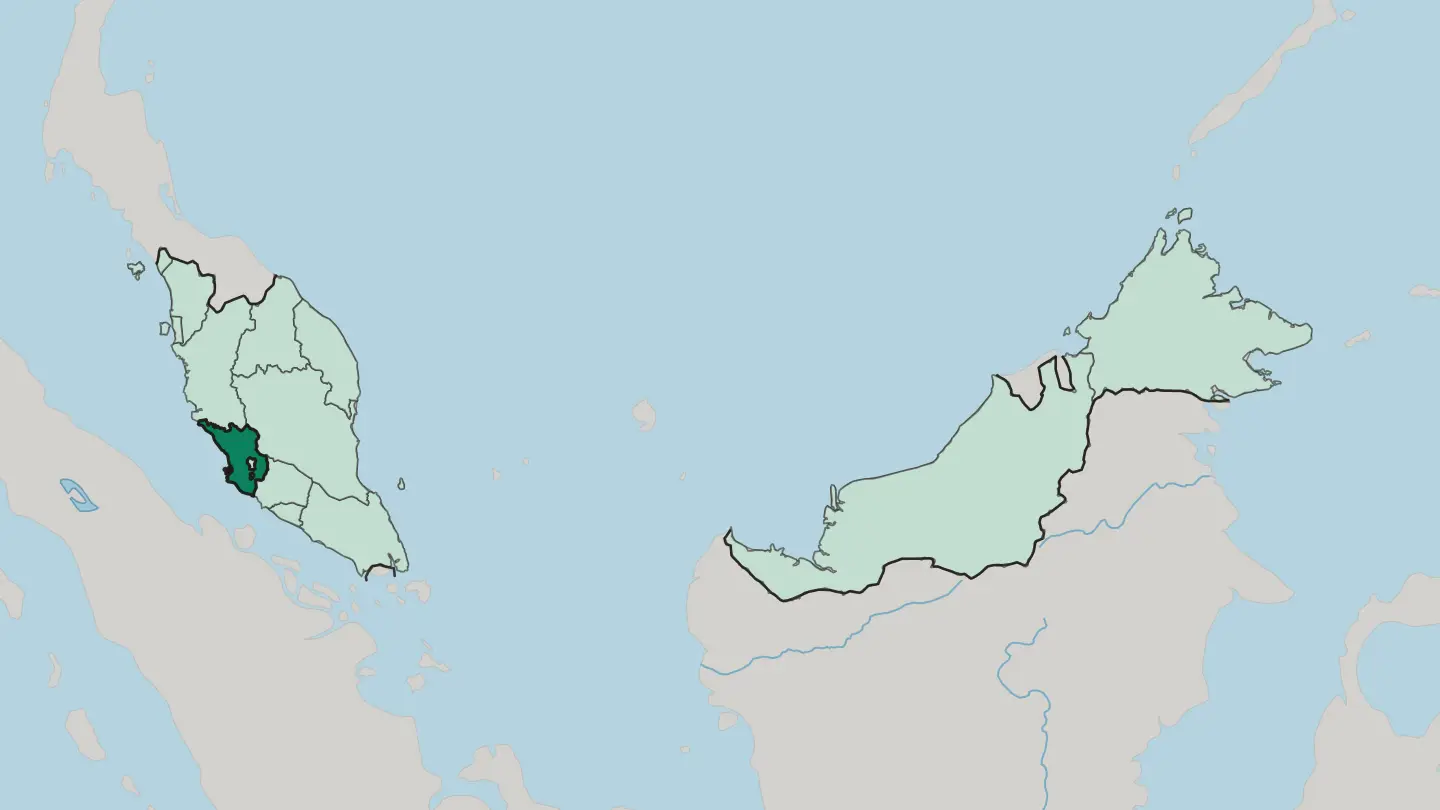
 Malaysia
Terengganu
Terengganu is a Malay-Muslim sultanate on Peninsular Malaysia's east coast, fronting the South China Sea and the Perhentian and Redang islands.Towns & cities →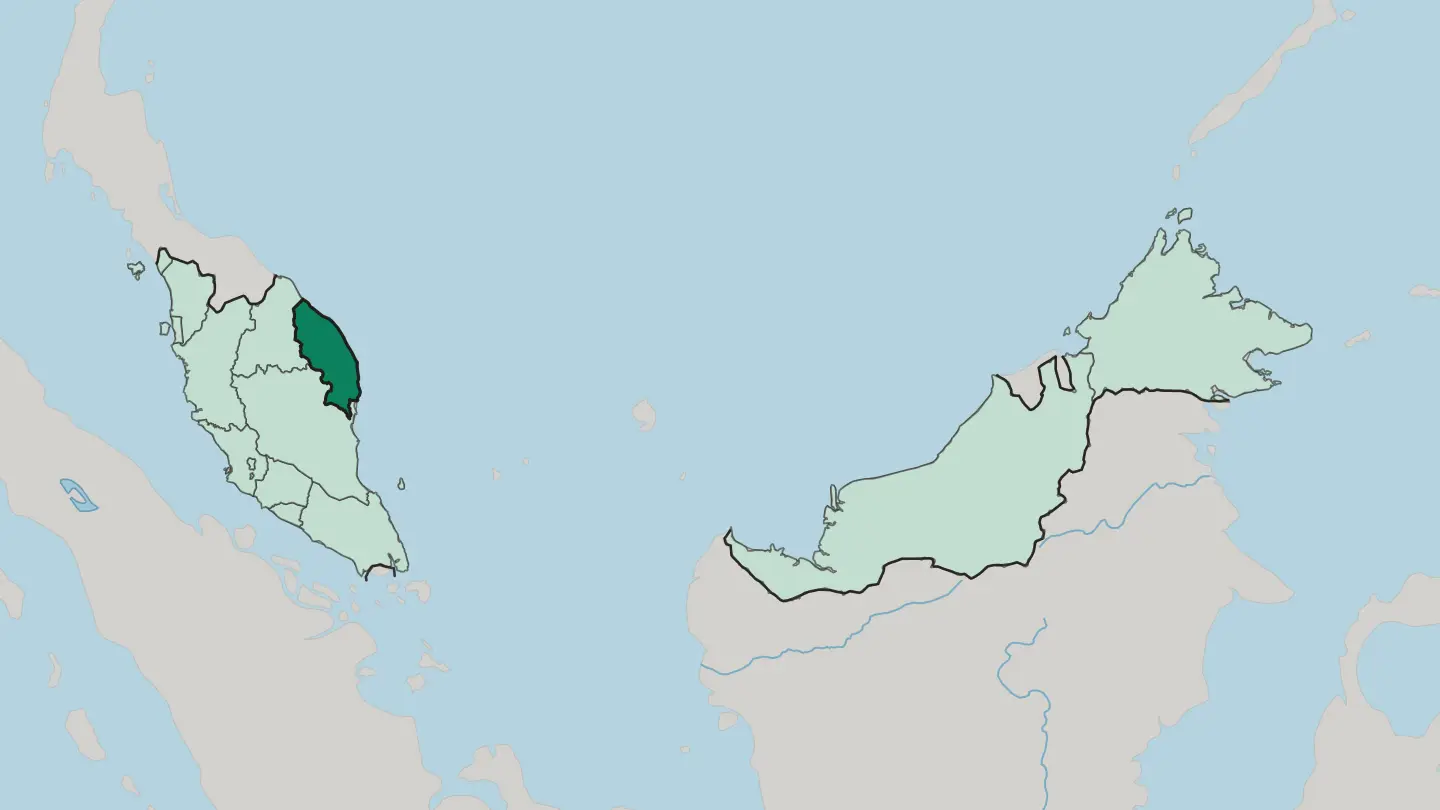
Explore by experience
Not sure which place? Start from how you want to travel.
About Malaysia
Malaysia is known for a land split in two.
What is Malaysia known for?
The South China Sea divides it between Peninsular Malaysia, holding the capital Kuala Lumpur along the Malay Peninsula, and East Malaysia across the jungles of northern Borneo. Offshore islands draw divers. Thirteen states and three federal territories make up the federation.
Food from its many communities is a draw of its own.
Where is Malaysia?
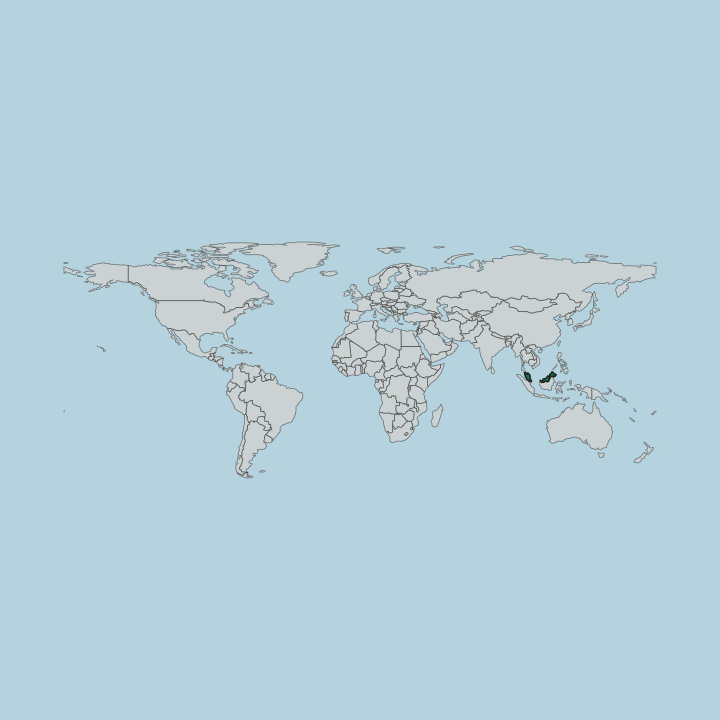
Malaysia lies in the heart of Southeast Asia, its territory broken into two by the South China Sea. Peninsular Malaysia occupies the southern end of the Malay Peninsula, on the Asian mainland. It shares a long land border with Thailand and looks across narrow water to Singapore, Indonesia and Vietnam.
Sea lies close on either hand. Down the peninsula, jungle-covered hills give way to coastal plains and the busy straits that carry much of the region's shipping. The capital, Kuala Lumpur, sits inland on the western side, with the administrative seat of Putrajaya close by.
Across the South China Sea, East Malaysia takes in the northern part of the island of Borneo. Here the land is wilder. Deep jungle, wide rivers and high ground fill the interior, while Brunei sits enclosed along the coast and Indonesia holds the rest of the island to the south.
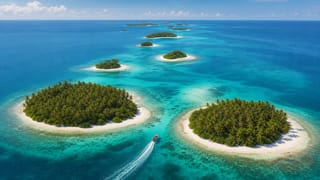
Offshore reefs and islands ring the shore, long prized for diving, and sea routes reach on toward the Philippines and Vietnam. Together the two halves stretch across a broad band of the tropics, from mainland plains to island jungle, with warm seas on every shore.
What is the history of Malaysia?
Malaysia took its modern shape in 1963, when lands on the Malay Peninsula and on northern Borneo were bound into one federation. Before that union the two sides had been governed apart, grown up under their own rulers and separated by the wide South China Sea. One crown drew them together.
It was built as a federal constitutional monarchy, a form it has kept ever since. Thirteen states and three federal territories were gathered into the whole. The federal territories, among them Kuala Lumpur, sit apart from the states.
The name Malaysia itself dates from that union. Kuala Lumpur became the national capital and the seat of the federal legislature, the political centre of the young country. It has stayed the largest city and the chief hub of the federation.
From there the union grew across both regions at once. Decades on, a second capital rose at Putrajaya to carry the administrative and judicial work of government, easing the load on Kuala Lumpur. Both halves answer to the one federal government.
That long balance between the peninsula and the island of Borneo still shapes the country.
What is Malaysia like?
Malaysia holds many peoples living side by side, and their mix shapes daily life across the federation. Malay is the national language, spoken from Peninsular Malaysia to the Borneo states, alongside many other tongues of the communities that settled here. Food is the common ground.
Markets and street stalls carry dishes drawn from every community, and the country is known across the region as a place to eat well. That reputation for food is part of what draws travellers from across Southeast Asia. Festivals fill the calendar.
The two halves keep their own character. On the peninsula, the older port towns and the capital blend the traditions of long-settled communities, while the Borneo states carry the customs of the island's many groups. Craft, dress and music vary from state to state.
Each state within the federation guards its own version of these traditions. What binds them is a shared federal identity and a common table. Malay ties the country together in speech, and the food of every community ties it together at the meal.
The result is varied, and unmistakably its own.
What is the climate of Malaysia?
Malaysia has a hot, wet equatorial climate with little change across the year. Days stay warm and humid from the Malay Peninsula to the Borneo states. Heavy afternoon rain is common.
Monsoon winds bring wetter spells to different coasts at different times, so one shore may pour while another stays dry. It is green the year round.
How do you get to Malaysia?
Getting into Malaysia takes little effort. Kuala Lumpur is the main entry point for the whole federation, and its international airport links the country to the rest of Asia and far beyond. Ferries and short flights cross the South China Sea to the Borneo states.
Road and rail run the length of Peninsular Malaysia, on toward Thailand and Singapore. The islands lie a boat ride offshore.
Common questions
What is the best area to stay in Malaysia?
Kuala Lumpur: a first stay with the widest transport links. The peninsula coast: beaches within reach of the capital. East Malaysia: jungle trekking and the best diving off Borneo.
Good for
Updated September 2026