Poland · Podkarpackie Voivodeship
Where to Stay in Tarnobrzeg, Podkarpackie Voivodeship
Tarnobrzeg stands on the east bank of the Vistula in the Sandomierz Basin, a market town chartered in 1593 that later grew on sulfur.
Hotel links are affiliate links: booking through them may earn us a commission, at no extra cost to you. It never affects how places are ranked. How this works


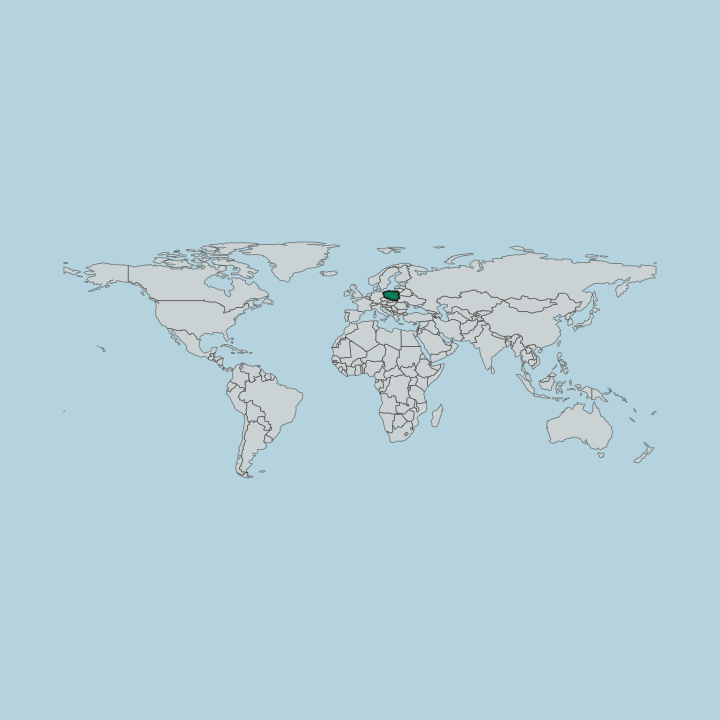
Where to stay in Tarnobrzeg
How the choice of base plays out on the ground.
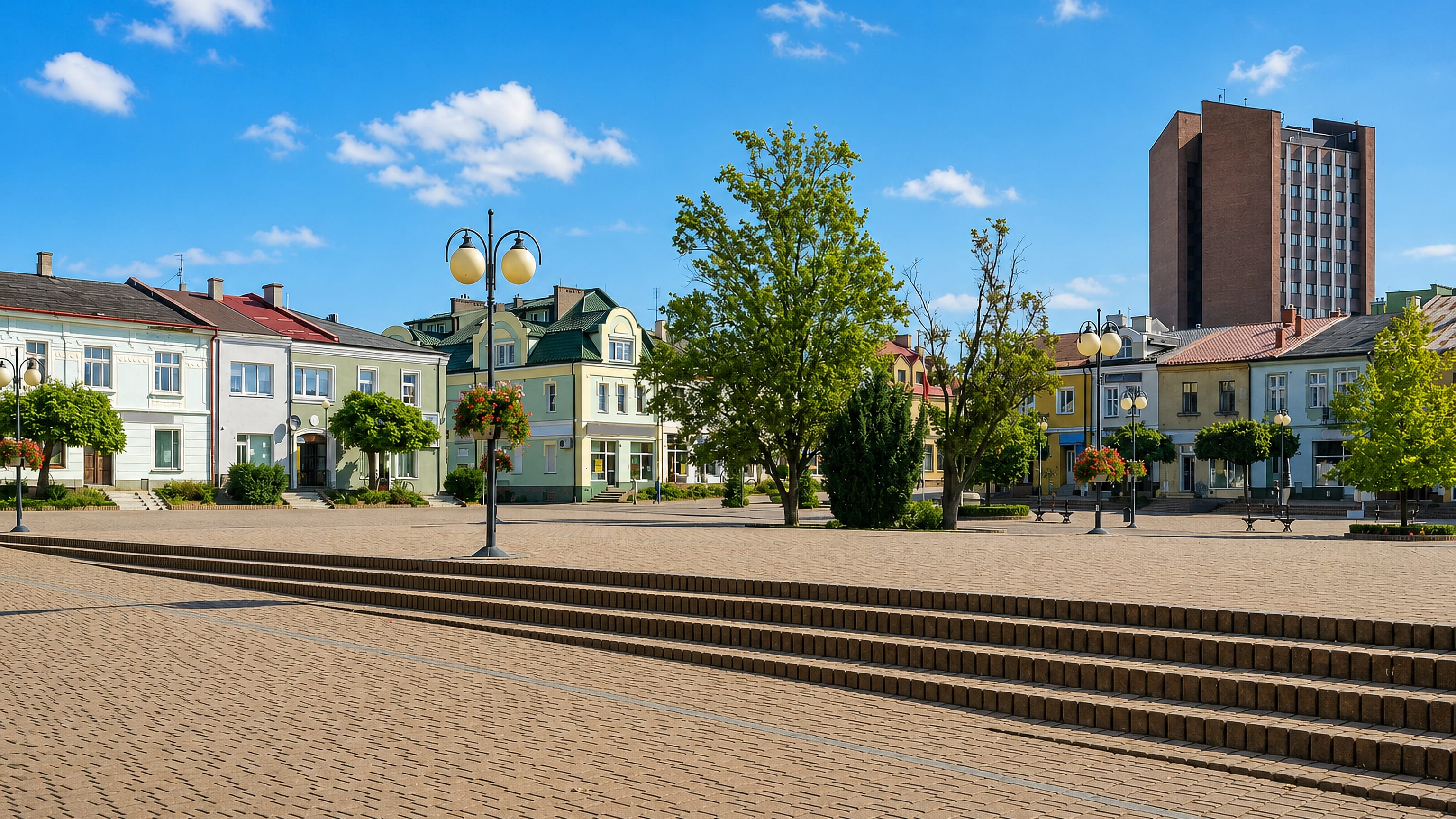
Głowacki Square is the natural base in Tarnobrzeg. Everything old is near it. The market frontage, Muzeum Historyczne Miasta Tarnobrzega, and the Church of Mary Magdalene stand within a few minutes of one another, and the evening life of the city collects along those same frontages rather than spreading out through the newer districts.
Rooms in the middle are modest in number and plain in style, which fits a town that has never worked as a resort. Dzików gives the alternative. A stay beside Dzików Castle and its grounds puts a visitor closer to the Tarnowski story and further from through traffic, and it suits anyone who has come for the castle rather than for the town itself.
Mokrzyszów is different again. If you are driving, the outer ground near Mokrzyszów Palace gives easier parking and a straight run back toward the sulfur-era quarters and Muzeum Polskiego Przemysłu Siarkowego w Tarnobrzegu. Beds thin out quickly beyond the centre.
Sandomierz lies immediately across the boundary in Świętokrzyskie Voivodeship, which widens the choice for anyone content to sleep in the neighbouring town and cross over each morning.
Find hotels in Tarnobrzeg
Direct booking searches for these neighbourhoods.
Głowacki Square
The market frontage puts Muzeum Historyczne Miasta Tarnobrzega and the Church of Mary Magdalene minutes apart.Find hotels in Głowacki Squarevisitors here mainly for Dzików Castle and the Tarnowski seatDzików
Quieter ground beside the castle and its grounds, off the through traffic of Głowacki Square. Few places to stay nearby — book ahead.Find hotels in Dzikówdrivers wanting the outer edge near Mokrzyszów PalaceMokrzyszów
Outlying district by Mokrzyszów Palace with room to park and a short run to the sulfur-era quarters. Rooms are few around here — worth securing early.Find hotels in MokrzyszówHotel links are affiliate links: booking through them may earn us a commission, at no extra cost to you. It never affects how places are ranked. How this works
Things to do in Tarnobrzeg
Ranked by global recognition; descriptions from Wikidata (CC0).
Museums & Galleries
1- Muzeum Historyczne Miasta Tarnobrzega
Churches & Religious Sites
3- Church of Mary Magdalene in Tarnobrzeg Heritage
- Kaplica Archanioła Gabriela w Tarnobrzegu Heritage
- Klasztor dominikanów w Tarnobrzegu Heritage
Castles & Historic Sites
3- Dzików Castle Heritage
- Mokrzyszów Palace Heritage
- Bartosz Głowacki monument in Tarnobrzeg
Landmarks & Notable Places
4- 50 Głowacki Square in Tarnobrzeg Heritage
- 41 Głowacki Square in Tarnobrzeg Heritage
- 53 Głowacki Square in Tarnobrzeg Heritage
- Dom Towarzystwa Kasynowego Heritage
worth knowingacross 4 categories in Tarnobrzeg
About Tarnobrzeg
Sulfur made the modern city.
What is Tarnobrzeg known for?
Mining of the deposits under the Sandomierz Basin turned a small Tarnowski market town into an industrial centre after the Second World War, and Muzeum Polskiego Przemysłu Siarkowego w Tarnobrzegu now records that trade. Dzików Castle predates all of it. The Church of Mary Magdalene and Klasztor dominikanów w Tarnobrzegu hold the older core, while Głowacki Square carries the civic face of the town.
What are the main landmarks in Tarnobrzeg?
Dzików Castle is the anchor. Muzeum Historyczne Miasta Tarnobrzega and Muzeum Polskiego Przemysłu Siarkowego w Tarnobrzegu cover two separate histories, the noble one and the industrial one, from separate buildings. Głowacki Square holds the Bartosz Głowacki monument and the older townhouses around it.
The Church of Our Lady of Perpetual Help, the Church of Mary Magdalene, and Kaplica Archanioła Gabriela w Tarnobrzegu account for most of the sacred fabric, and Mokrzyszów Palace sits well apart from the centre.
What is the history of Tarnobrzeg?
Magdeburg rights came to Tarnobrzeg in 1593, granted while the place belonged to the Tarnowski family. Dzików Castle was their seat. The town around it stayed small for centuries, a market settlement on the east bank of the Vistula with the Church of Mary Magdalene and Klasztor dominikanów w Tarnobrzegu at its heart, and little cause to grow past the trade of the Sandomierz Basin.
Mokrzyszów Palace and Dom Towarzystwa Kasynowego belong to that older order of estate and gentry society, and both survive. Sulfur changed the arithmetic after the Second World War. Deposits found beneath the basin made Tarnobrzeg the centre of a mining district, and the built area expanded further in three decades than it had in the three centuries before them.
It became a voivodeship capital in its own right. Tarnobrzeg Voivodeship ran from 1975 until 1998, after which the city passed into Subcarpathian Voivodeship. Memory of both eras crowds the streets: the Bartosz Głowacki monument on Głowacki Square, the Monument to Jerzy Popiełuszko, Na Piaskach cemetery, and a separate war cemetery for the dead of the twentieth century.
Muzeum Historyczne Miasta Tarnobrzega and Muzeum Polskiego Przemysłu Siarkowego w Tarnobrzegu divide the telling between them.
Where is Tarnobrzeg?
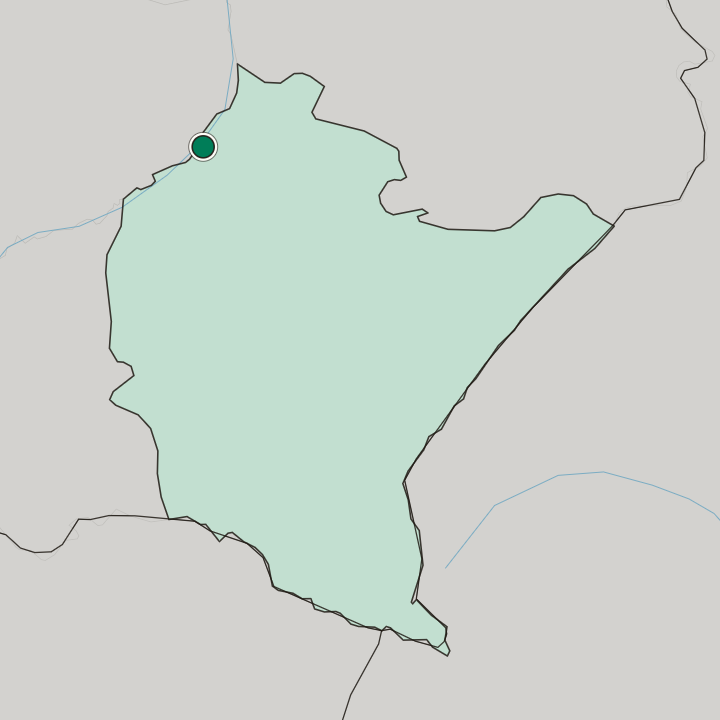
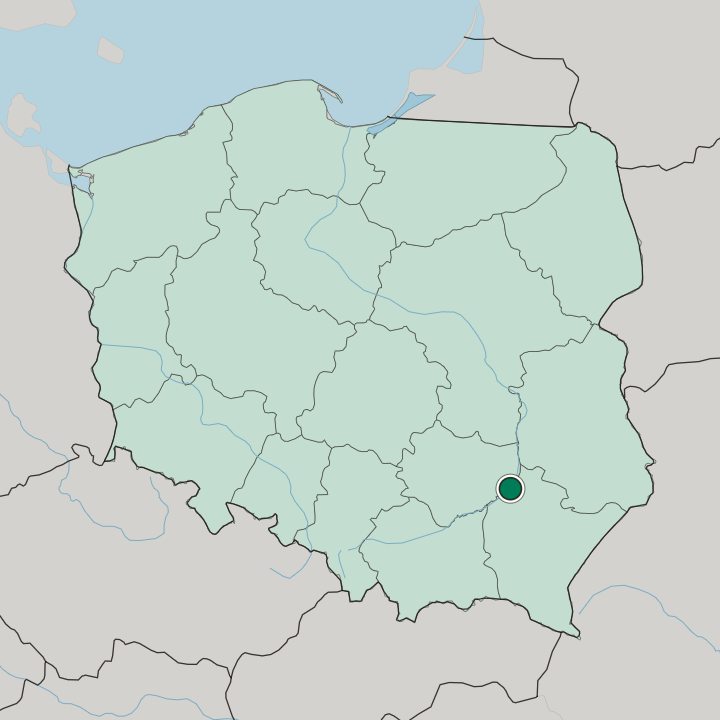
The Sandomierz Basin sets the ground here, flat and open along the east bank of the Vistula. Tarnobrzeg runs right up to Sandomierz, which sits across the boundary in Świętokrzyskie Voivodeship, so the two towns share an edge instead of a stretch of countryside between them. Sulfur lay beneath the fields.
What is the climate of Tarnobrzeg?
Cold air pools in the Sandomierz Basin through winter, and the flat ground beside the Vistula offers nothing to break the wind that crosses it from the open country. Come summer, that same flat ground bakes hard. Spring and autumn pass in a hurry.
The swing between the two extremes is wide, which is ordinary enough for the inland basins of Poland.
How do you get to Tarnobrzeg?
Roads come in along the Vistula. Tarnobrzeg borders Sandomierz directly, so arrivals from Świętokrzyskie Voivodeship cross into the city without any open country between the two, and traffic from the rest of Subcarpathian Voivodeship approaches over the flat floor of the Sandomierz Basin. The Vistula closes one side.
Głowacki Square sits at the centre of the street grid that these approaches feed.
Common questions
What is the best area to stay in Tarnobrzeg?
Głowacki Square: walking from the Bartosz Głowacki monument to both town museums. Dzików: visitors here mainly for Dzików Castle and the Tarnowski seat. Mokrzyszów: drivers wanting the outer edge near Mokrzyszów Palace.
Good for
More cities in Podkarpackie Voivodeship
Updated September 2026