Portugal
Madeira, Portugal — Towns & Travel Guide
Madeira is a sub-tropical Atlantic archipelago and an autonomous region of Portugal, made up of Madeira, Porto Santo, the Desertas and the Selvagens.
Hotel links are affiliate links: booking through them may earn us a commission, at no extra cost to you. It never affects how places are ranked. How this works


Towns & cities in Madeira
One town here has its own guide — it links to where to stay.

 Portugal
Funchal
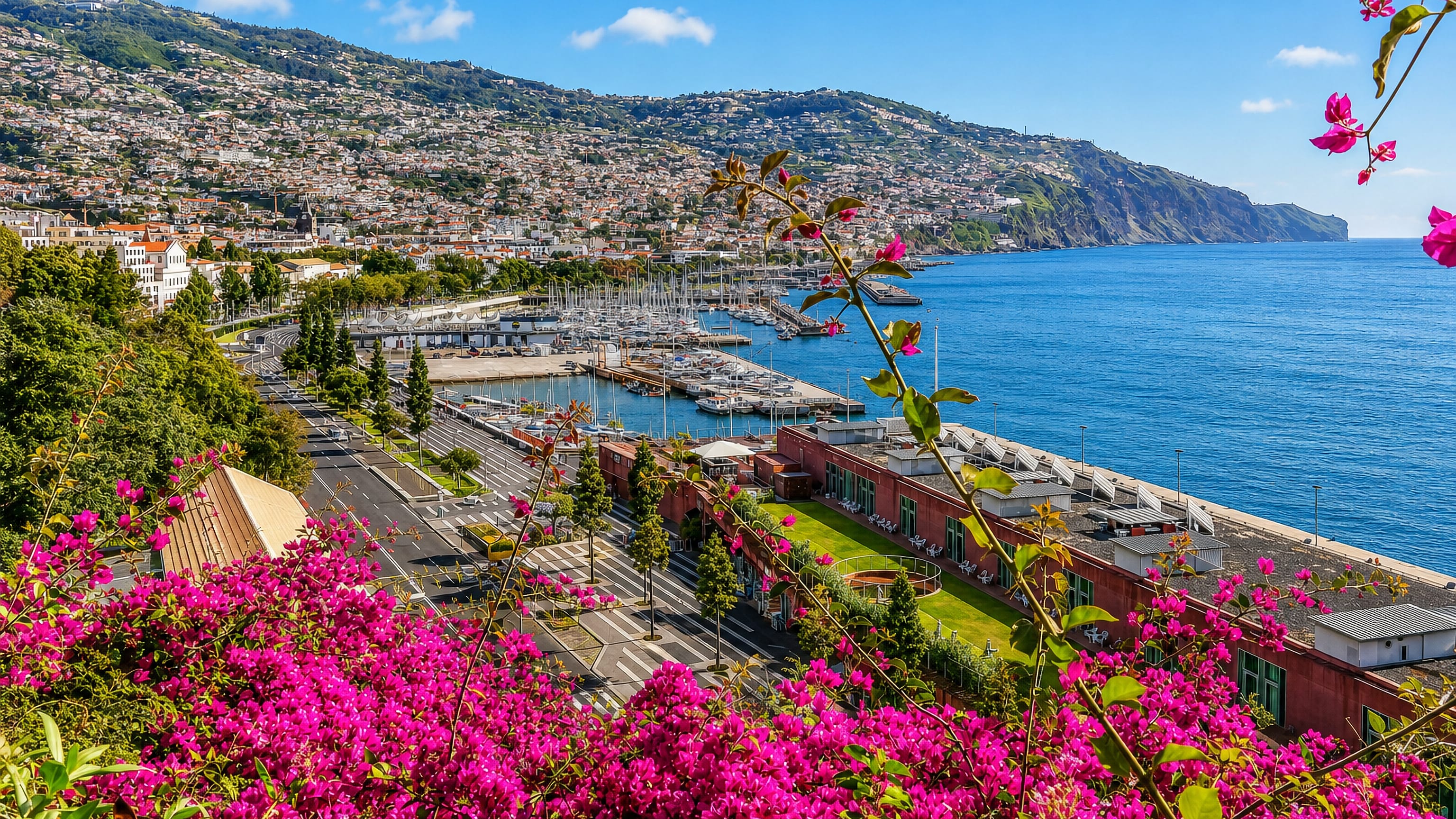
Funchal is Madeira's capital, an Atlantic city of cathedral streets, sugar-trade museums, and a working cruise port.Where to stay →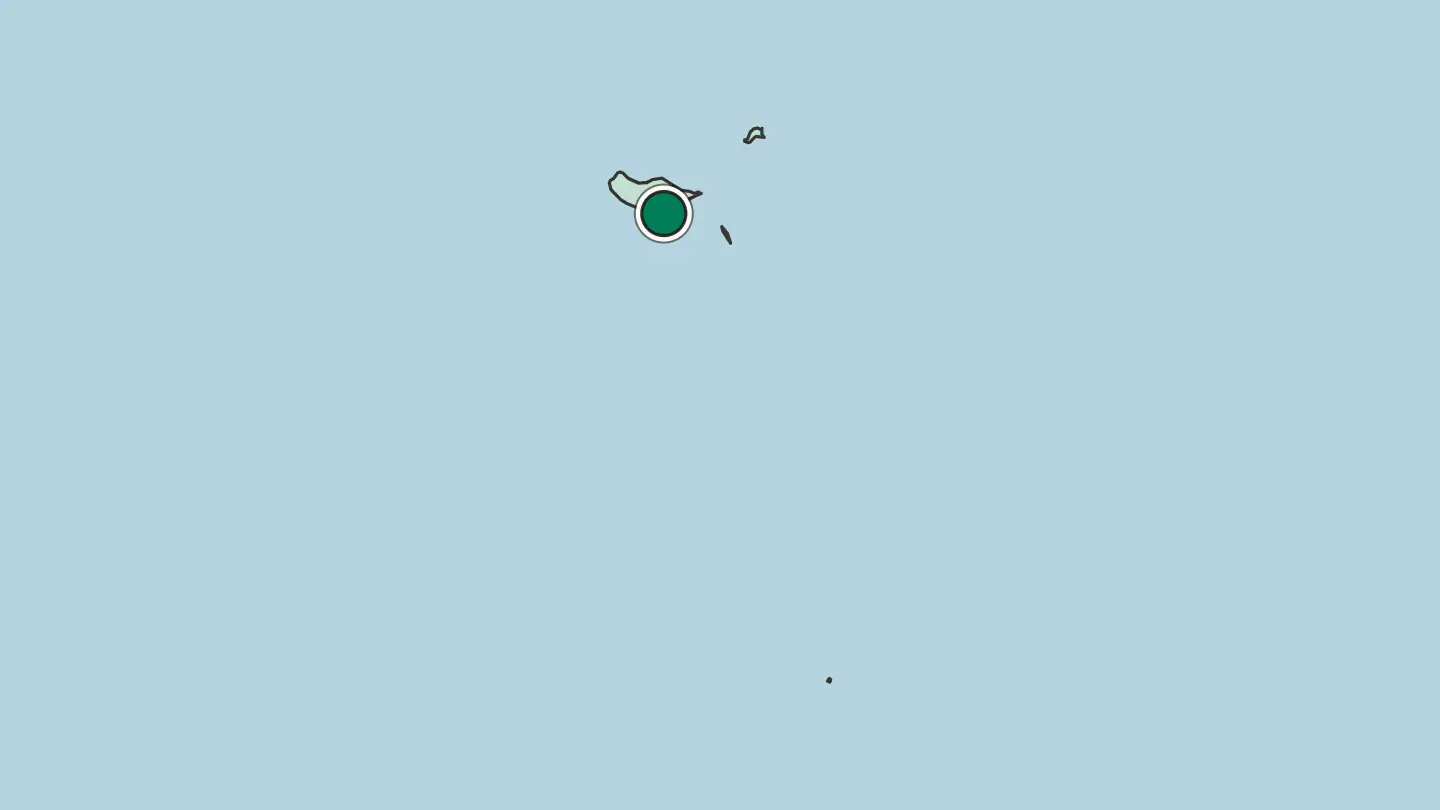
Hotel links are affiliate links: booking through them may earn us a commission, at no extra cost to you. It never affects how places are ranked. How this works
About Madeira
What is Madeira known for?
Cristiano Ronaldo grew up here, and for many that is the first thing they know about the archipelago. Its story runs deeper. Madeira and Porto Santo are the inhabited islands, while the Desertas and the Selvagens stay empty, two further groups set apart from the pair in the same Atlantic chain.
Portugal counts the region, with the Azores, as one of two autonomous regions. That status is the other half of the story.
Where is Madeira?
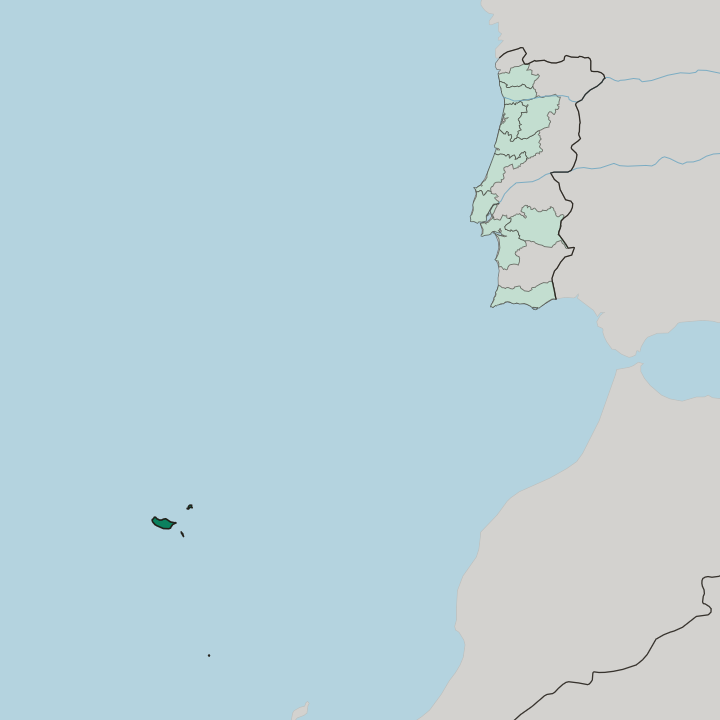
Madeira sits in the Atlantic Ocean, about 805 km southwest of mainland Portugal. Ocean surrounds it on every side. The archipelago gathers four separate island groups: Madeira and Porto Santo, which are inhabited, and the Desertas and the Selvagens, which are not.
Its land adds up to a little over 800 square kilometres. The Desertas and the Selvagens sit as two distinct groups rather than one, which is why the archipelago counts four members and not three. No part of Portugal reaches further south.
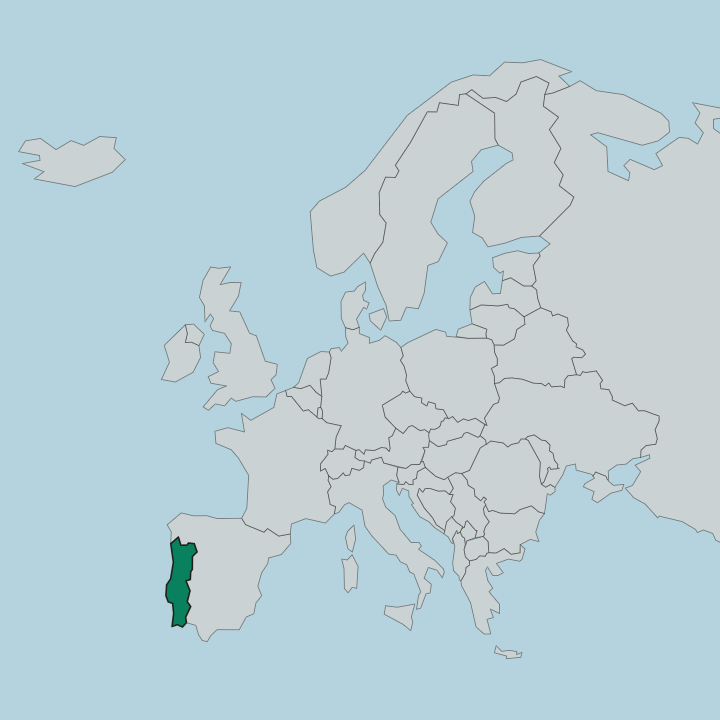
Geographically the chain belongs to Africa, though Portugal administers it and the European Union treats it as an ultra-peripheral region, a double position that follows the archipelago into every description of it. The setting is sub-tropical. Together with the Azores, Madeira forms one of the two autonomous regions of Portugal, and the pair of archipelagos share that footing while lying far apart in open Atlantic water.
Porto Santo is the second of the inhabited islands, counted with Madeira in the same region. The Desertas and the Selvagens carry no settlement, which leaves the region's habitable ground concentrated on those two islands alone.
What is Madeira like?
Portuguese is the language, on both inhabited islands. Football supplies the shorthand. Cristiano Ronaldo grew up in the archipelago, and for a great many people outside Portugal his name is the only thing attached to Madeira before they arrive, which says more about football than about the islands.
The place has an older identity than that. Its official name, Região Autónoma da Madeira, states the terms plainly: a region of Portugal that governs much of its own business. Distance shapes the culture as much as anything else does, because the archipelago sits far out in the Atlantic and lies within Africa geographically while answering to Portugal in law.
Both facts are lived, not abstract. The region sits inside Portugal and inside the European Union, yet the Union files Madeira as ultra-peripheral, a term that admits the gap between where the archipelago lies and which institutions it answers to. Porto Santo carries its own version of that.
It is the other inhabited island of the group and shares the region's institutions across open water. The Desertas and the Selvagens sit outside all of it, uninhabited.
What is the history of Madeira?
Autonomy is the dated fact here. In 1976 the archipelago became the Região Autónoma da Madeira, one of the two autonomous regions Portugal recognises, the other being the Azores, a separate archipelago in the same ocean. The date marks a change in how Portugal governs the islands, not the beginning of their history.
Special standing inside the European Union followed the same logic, with Madeira classed as an ultra-peripheral region rather than folded into mainland arrangements.
What is the climate of Madeira?
The Atlantic does the work. Water on every side keeps Madeira's air in the sub-tropical register the archipelago is filed under, and the ocean's slow response to the calendar softens the swing between the warm and cool halves of the year. Porto Santo sits in the same water.
Both inhabited islands take their weather from the ocean around them rather than from mainland Portugal, which lies about 805 km off across open sea.
How do you get to Madeira?
Everything arrives across the Atlantic. Roughly 805 km of open water separate the archipelago from mainland Portugal, so there is no road, no rail and no land approach of any kind to Madeira or Porto Santo. Both inhabited islands are reached by sea or by air.
The Desertas and the Selvagens carry no settlement, so an ordinary visit means Madeira or Porto Santo.
Common questions
What is the best area to stay in Madeira?
Madeira: Stays on the island that gives the Região Autónoma da Madeira its name. Porto Santo: A second inhabited island of the same Atlantic archipelago.
Good for
More regions in Portugal
Updated September 2026