
Paraguay: Regions, Cities & Travel Guide
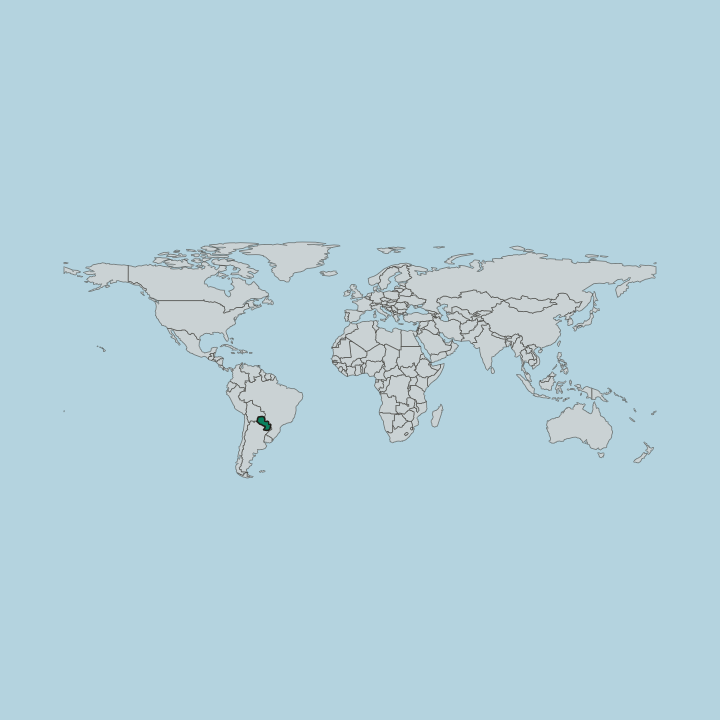
Paraguay is a landlocked country in central South America, split by the Paraguay River, with Asunción as its capital.
Hotel links are affiliate links: booking through them may earn us a commission, at no extra cost to you. It never affects how places are ranked. How this works


Top destinations in Paraguay
Cities to start from, then drill into areas and hotels.
 Paraguay
Asunción
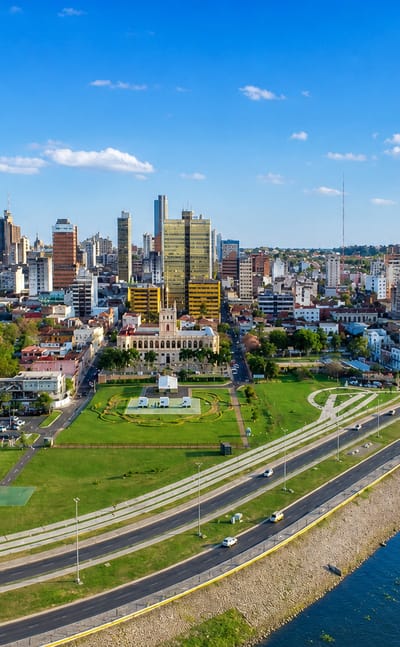
Asunción stands on the eastern bank of the Paraguay River, the capital of Paraguay, known for the National Pantheon of the Heroes and its colonial core.Where to stay →
 Paraguay
Ciudad del Este
Ciudad del Este is a city of eastern Paraguay on the Paraná river, a great border market where three countries touch, beside the vast Itaipú dam.Where to stay →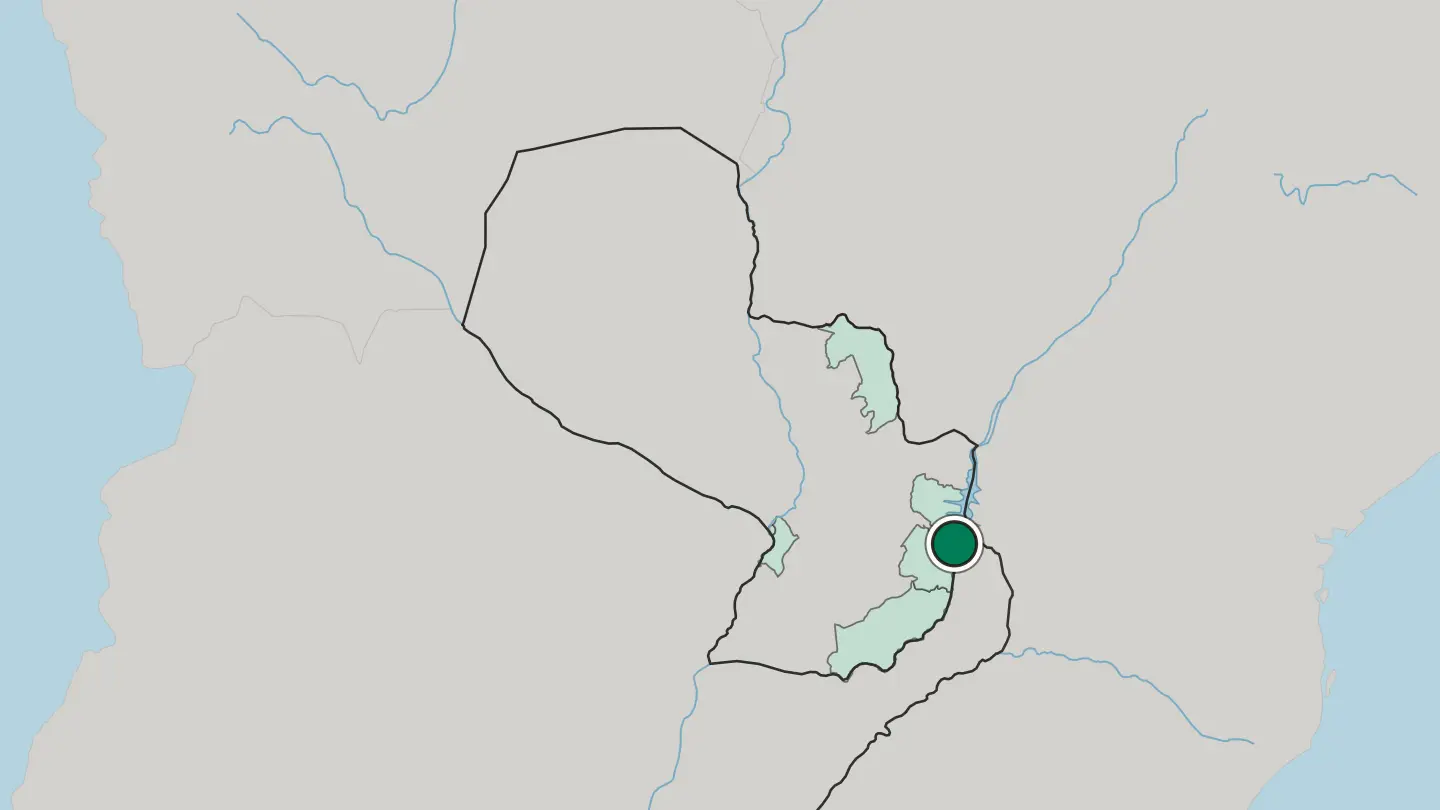 Paraguay
Encarnación
Encarnación is a river city of southern Paraguay on the Paraná across from Argentina, a Carnival town near the great ruins of the Jesuit missions.Where to stay →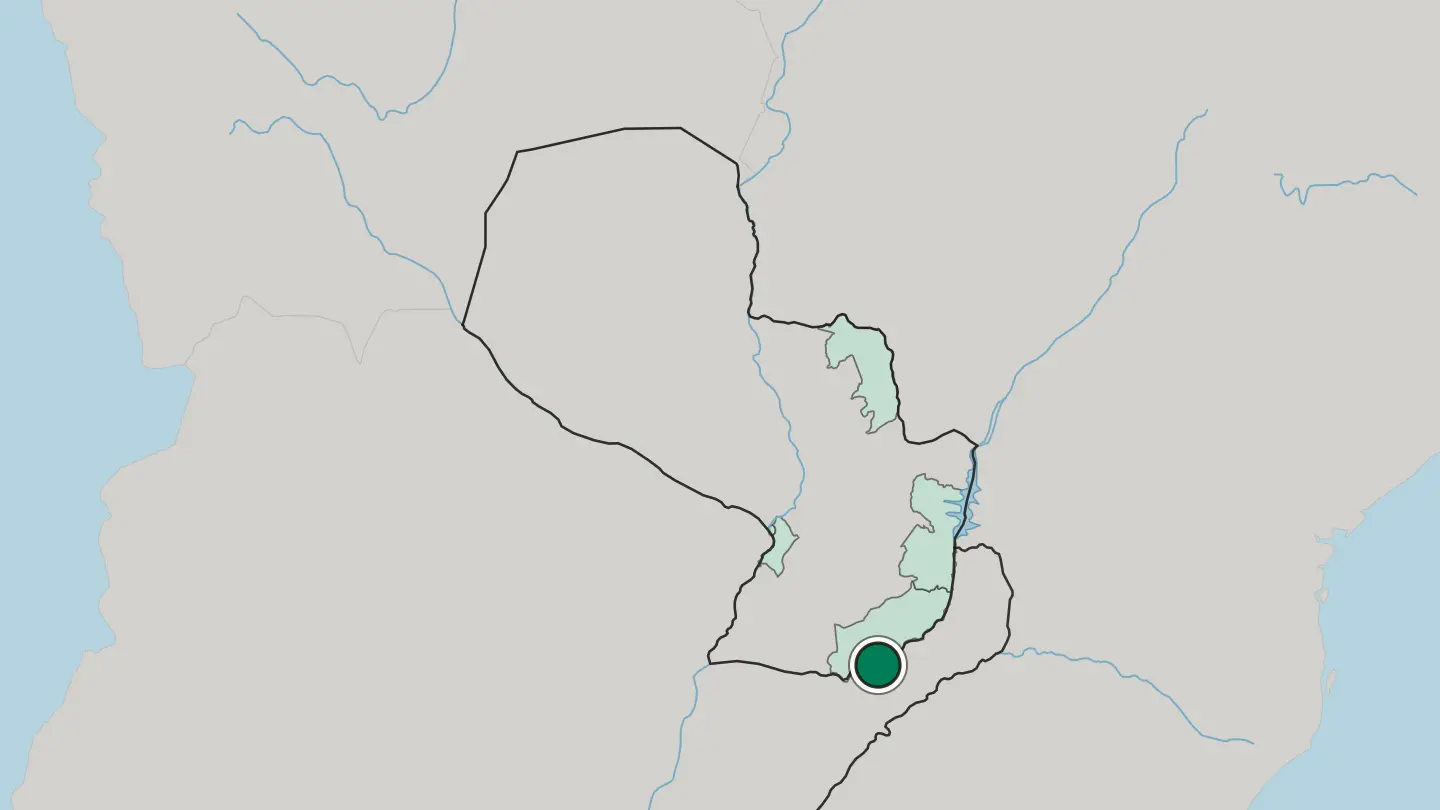
 Paraguay
Pedro Juan Caballero
Pedro Juan Caballero, capital of the Amambay Department, faces the Brazilian city of Ponta Porã across a border that stays open inside the town.Where to stay →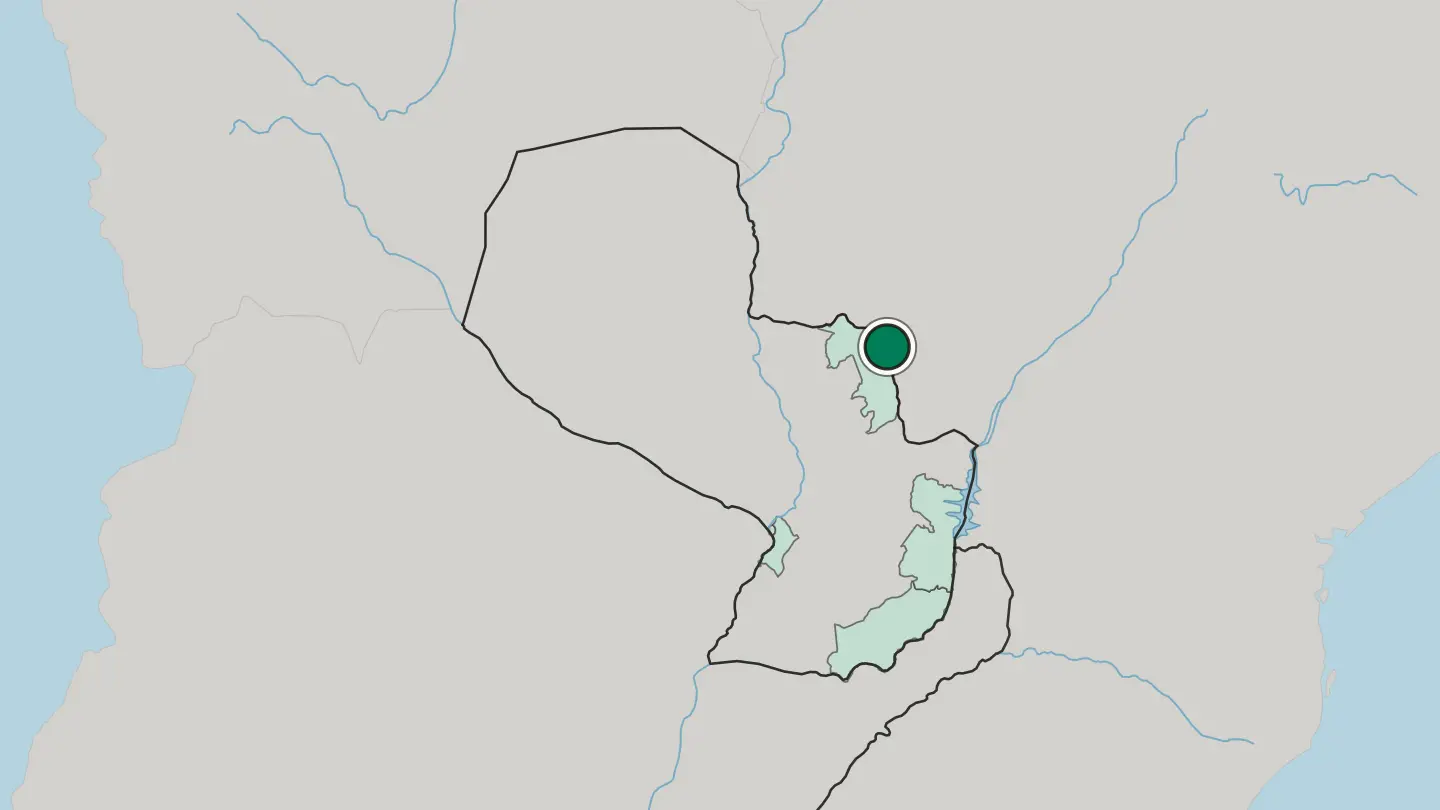 Paraguay
San Lorenzo
San Lorenzo adjoins Asunción in the Central Department of Paraguay, a university city founded in 1775 and seat of its own Catholic diocese.Where to stay →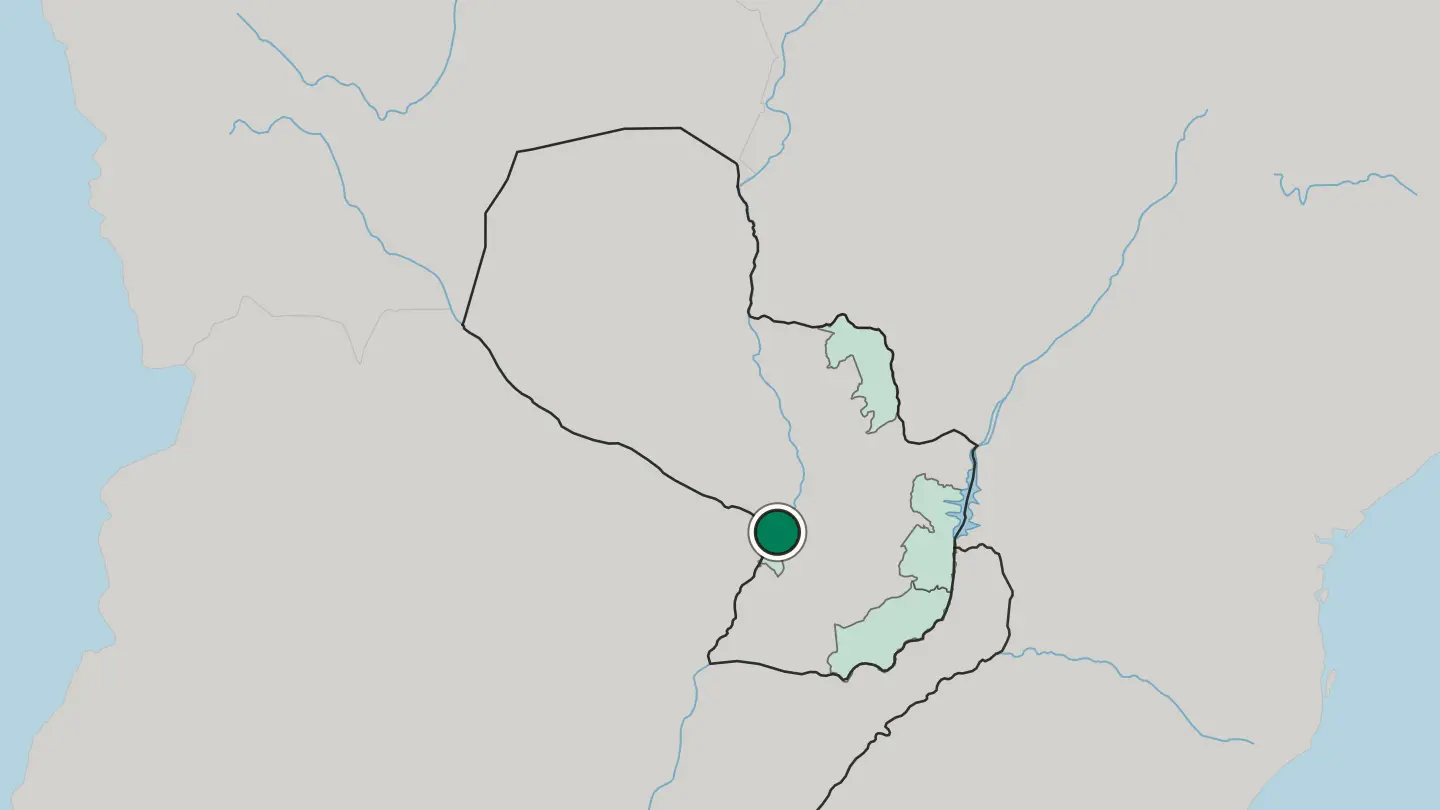 Paraguay
San Antonio
San Antonio is a city in Paraguay's Central Department, on the Paraguay River 25 km from Asunción, beside the colonial Royal Way to Villeta.Where to stay →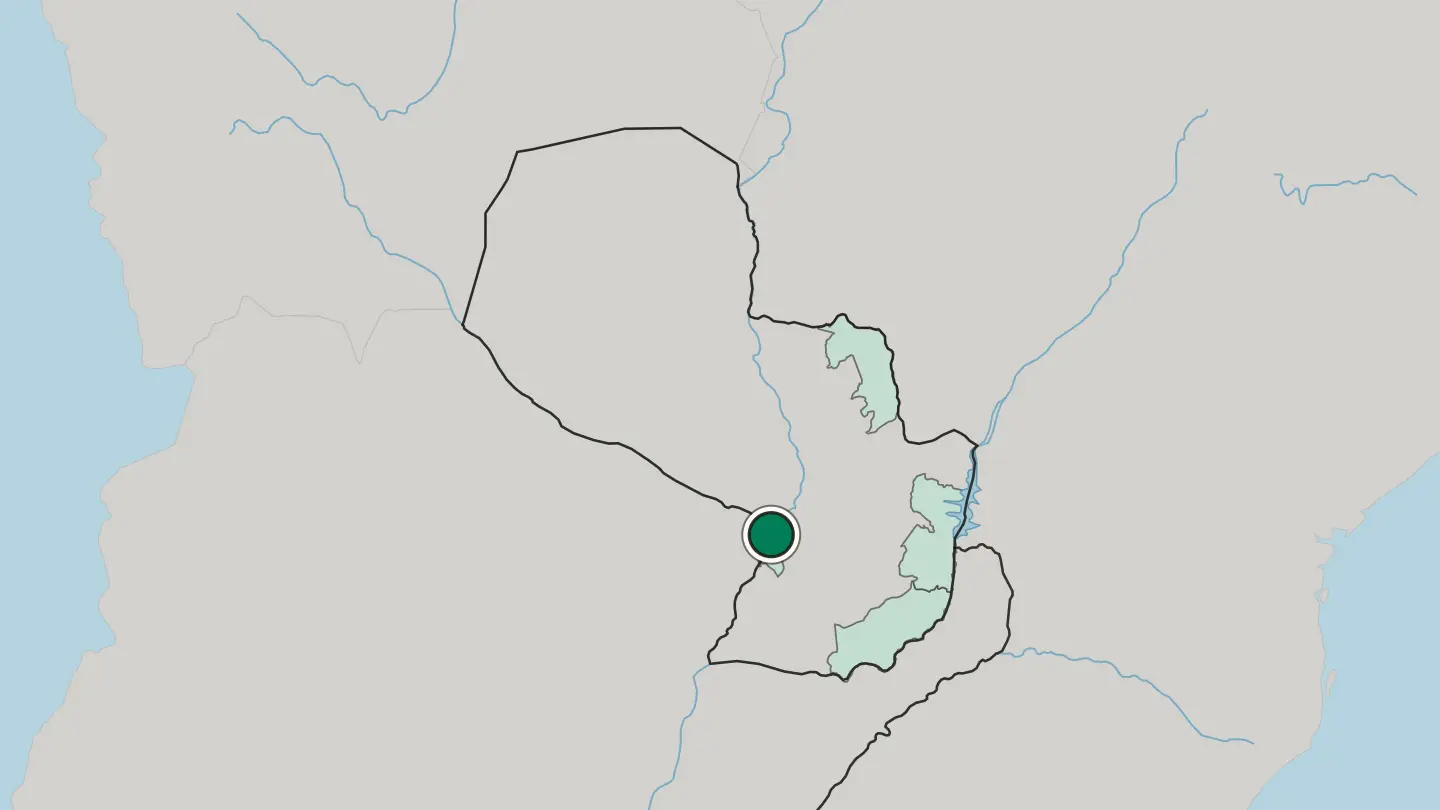
Hotel links are affiliate links: booking through them may earn us a commission, at no extra cost to you. It never affects how places are ranked. How this works
Regions of Paraguay
Paraguay
Asunción
Asunción is the capital district of Paraguay, a self-standing unit on the eastern bank of the Paraguay River that coincides with the capital city itself.Towns & cities →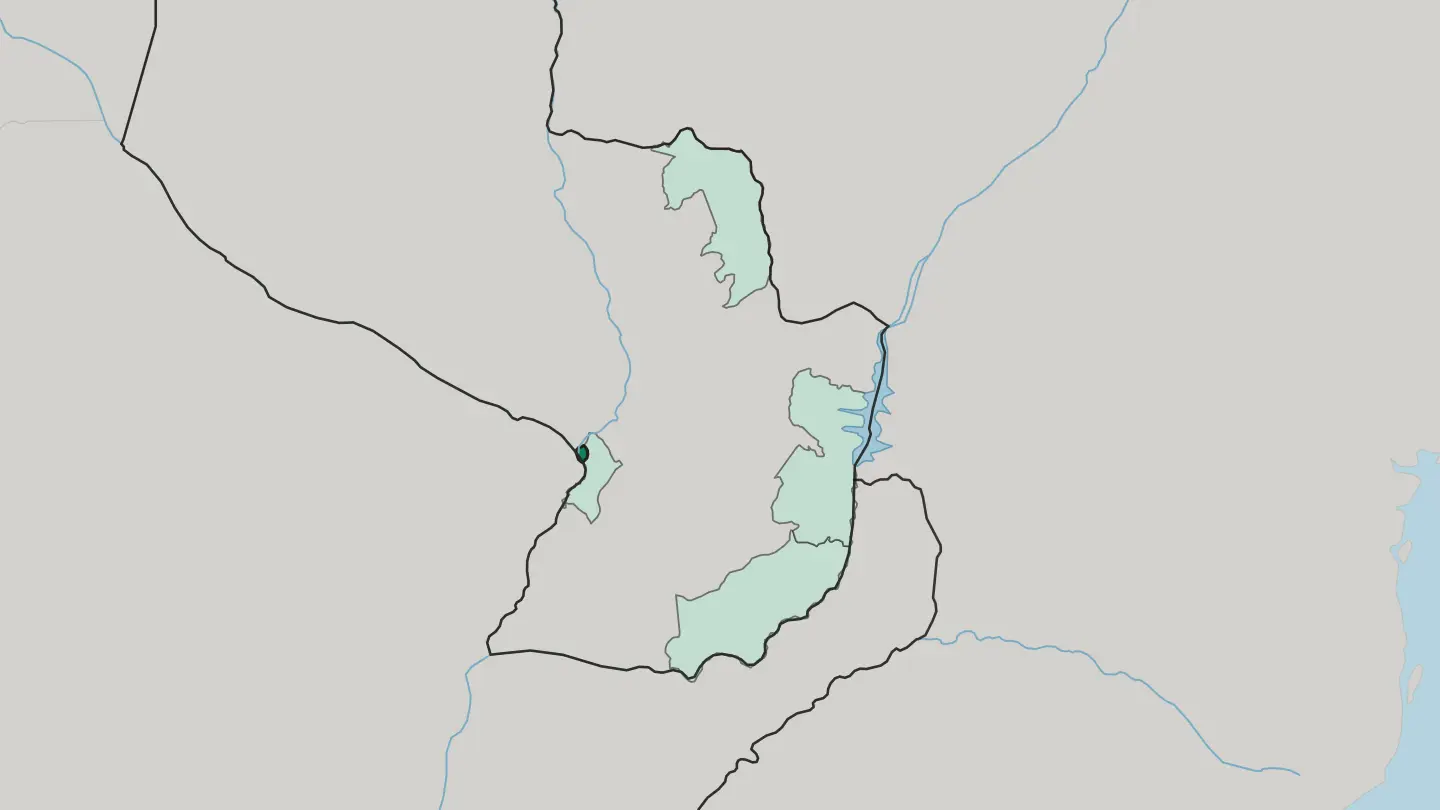 Paraguay
Departamento Central
Departamento Central is the smallest and most populated of Paraguay's 17 departments, with its capital at Areguá.Towns & cities →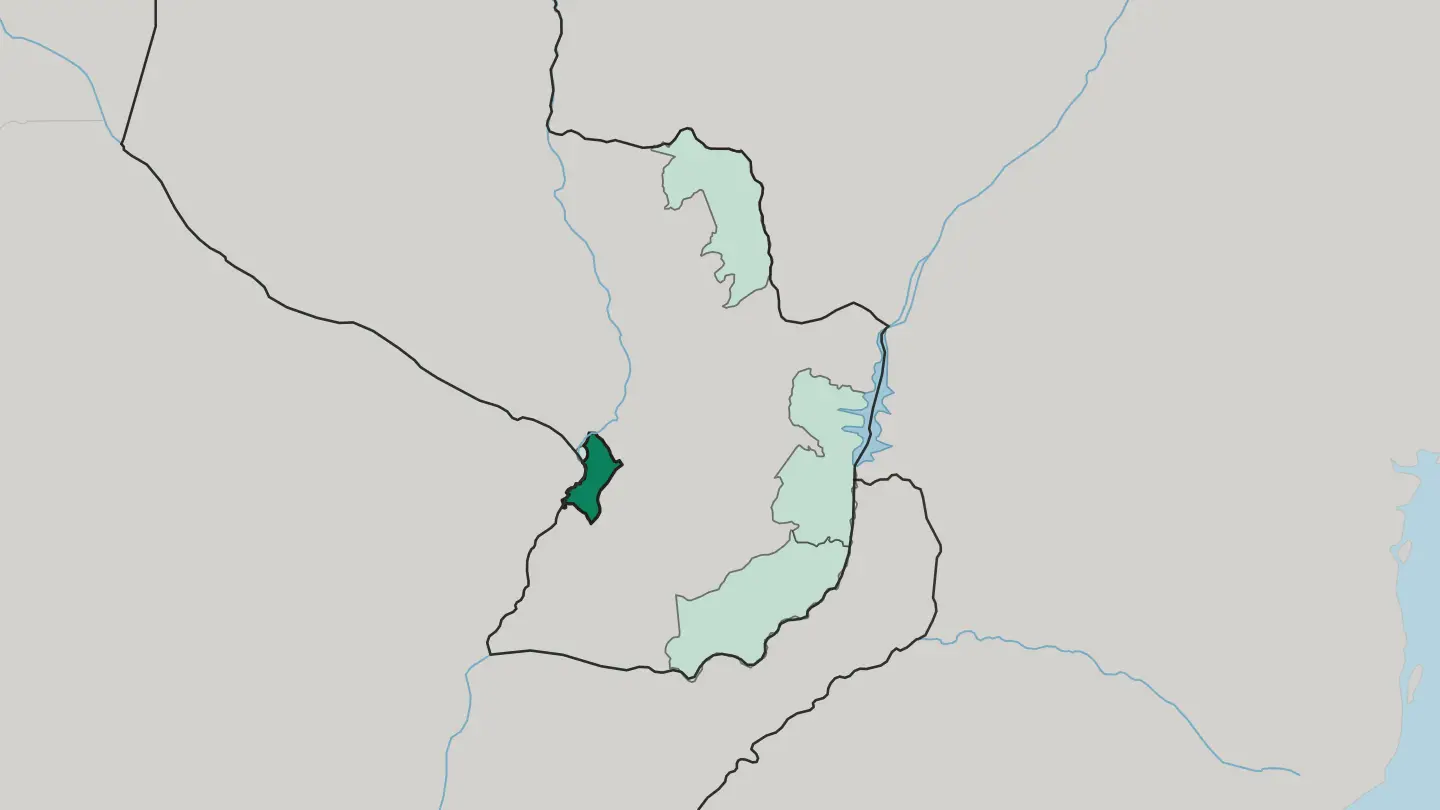 Paraguay
Departamento de Itapúa
Departamento de Itapúa lies in the southern region of Paraguay, split into 30 districts and administered from the city of Encarnación.Towns & cities →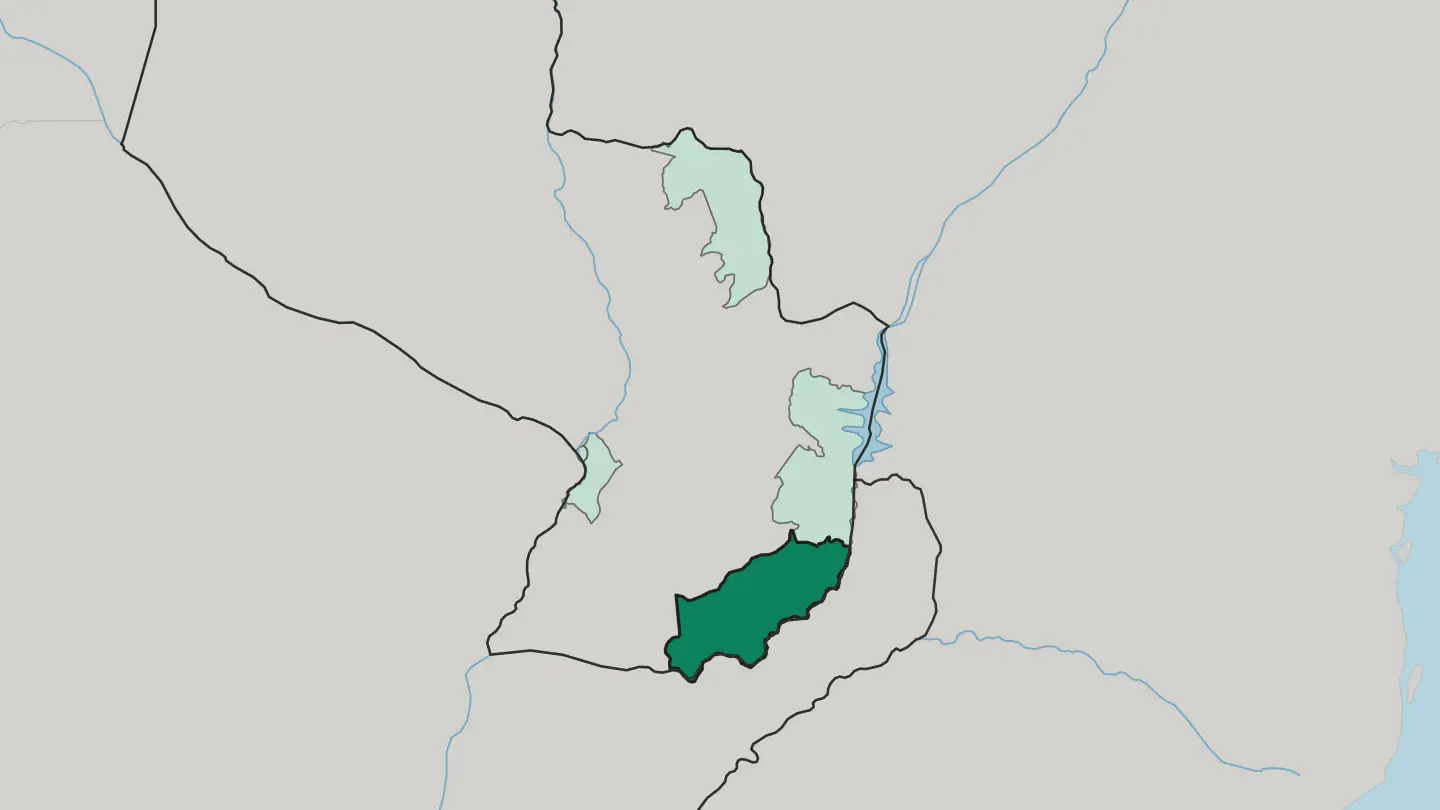 Paraguay
Departamento del Alto Paraná
Departamento del Alto Paraná is a department of Paraguay, formed in 1945 and administered from its capital, Ciudad del Este.Towns & cities →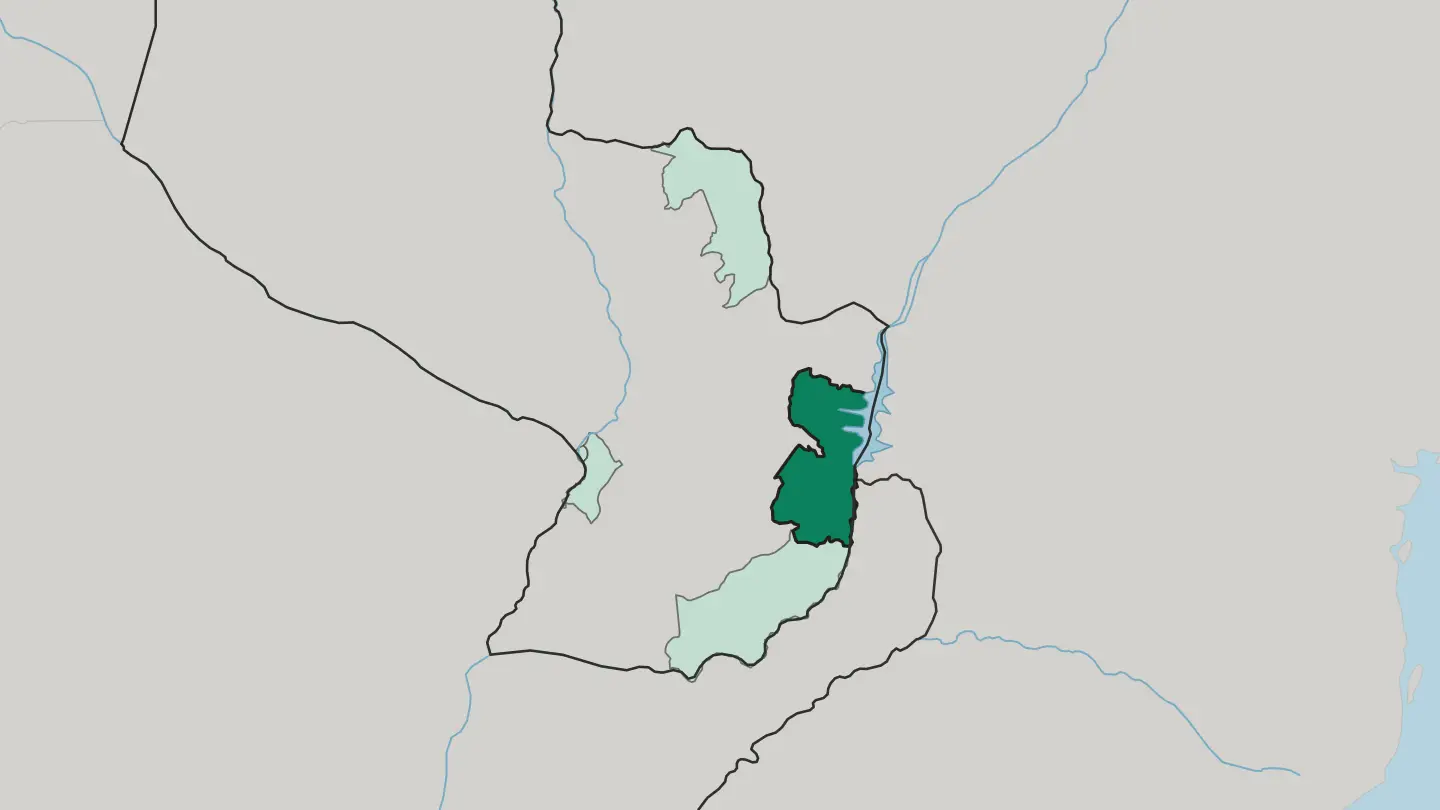 Paraguay
Departamento del Amambay
Departamento del Amambay is a department of Paraguay lying in the tropics, with Pedro Juan Caballero as its capital.Towns & cities →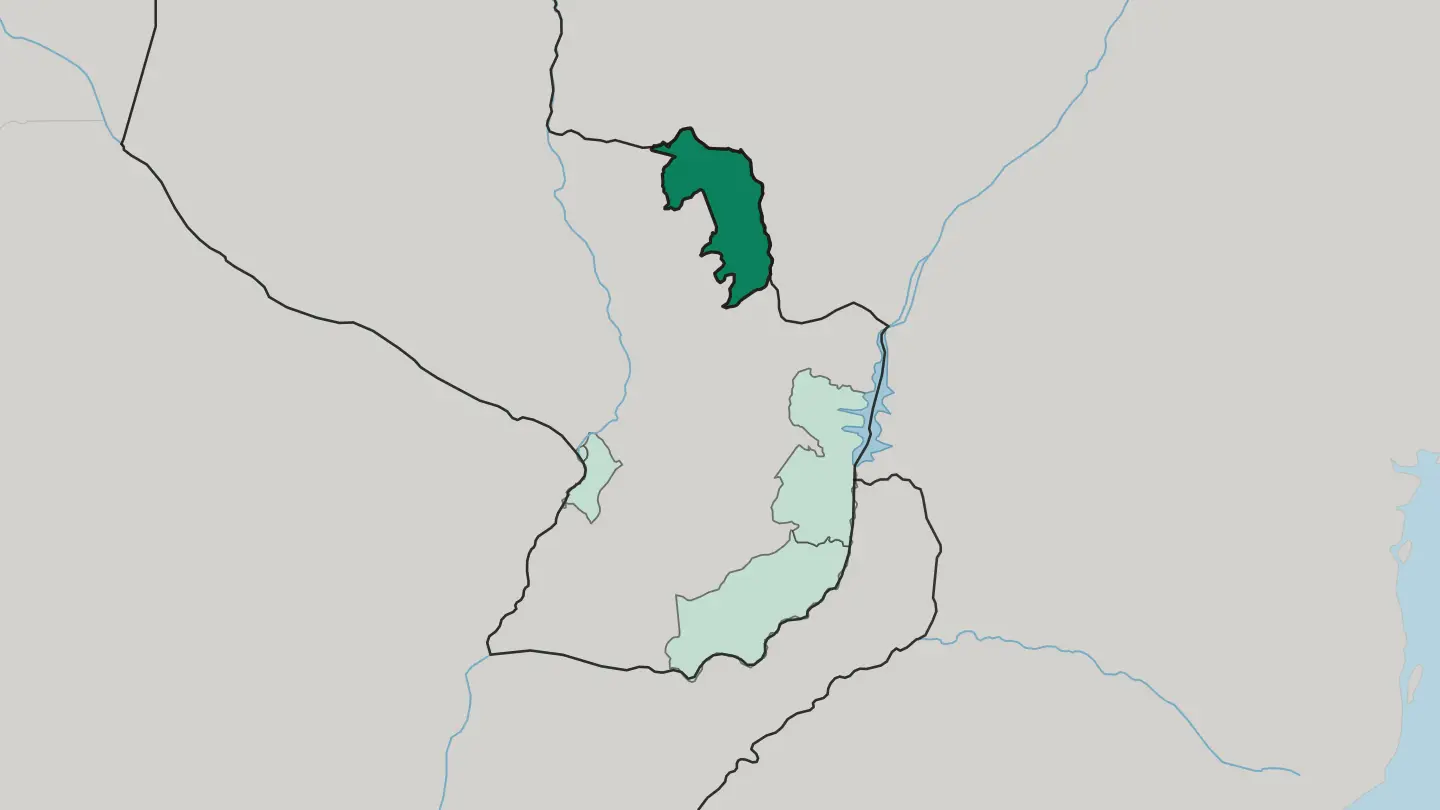
About Paraguay
What is Paraguay known for?
Two languages run through daily life here: Spanish and Guaraní. Paraguay is one of the few countries where an Indigenous tongue is spoken by nearly everyone, sitting beside chilled tereré, harp-and-guitar polka, and the fine ñandutí lace of Itauguá. The red-sandstone Jesuit ruins at Trinidad and Jesús draw the travellers who come.
Along the Paraná River, the Itaipú Dam supplies most of the country's power. Asunción anchors the whole.
Where is Paraguay?
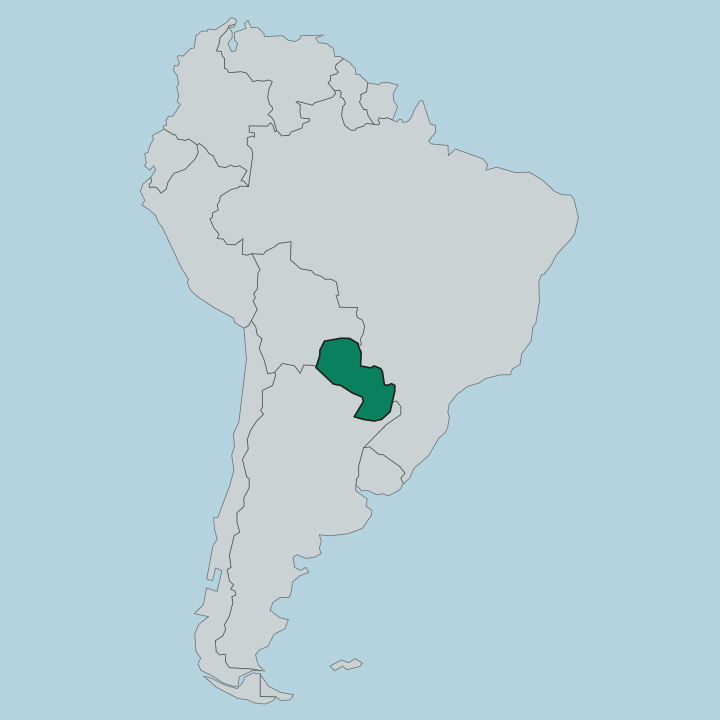
Paraguay is a landlocked country in central South America, roughly the size of Germany, with no coastline of its own. The Paraguay River runs from north to south down the middle and cleaves the country into two contrasting worlds. To the east lies the Eastern Region, or Región Oriental, a fertile belt of plateaus, rolling hills, and low ranges such as the Amambay and Cordillera de los Altos, threaded by rivers and holding almost the entire population.
The land here is green and worked. To the west spreads the Gran Chaco, a flat, thorn-scrub plain that covers close to two-thirds of the national territory yet holds only a small fraction of its people. The Chaco has two faces.
Near the Paraguay River it is the humid Bajo Chaco of marsh and palm savanna, while further toward the Bolivian border it dries into the hard, thorny Alto Chaco. Along the southern and eastern edge, the Paraná River marks the boundary with Argentina and Brazil and carries the country's outlet to the Atlantic through the Paraná-Paraguay waterway. Lake Ypacaraí sits in the hills east of Asunción.
Two great rivers, two landscapes, one country between them.
What is the history of Paraguay?
Paraguay declared independence from Spain in 1811, among the earliest South American states to break away, after captains deposed the Spanish governor in Asunción. Before that, the land between the Paraguay and Paraná rivers had been Guaraní country for millennia, and in the seventeenth century Jesuit missionaries gathered Guaraní communities into the mission towns whose ruins still stand at Trinidad. The early republic turned inward under a series of strong rulers.
Then came catastrophe. The War of the Triple Alliance, fought against Argentina, Brazil, and Uruguay from 1864 to 1870, is by some measures the bloodiest conflict in South American history and killed a huge share of the Paraguayan population. The country was left shattered and had to rebuild almost from nothing.
A second war followed in the twentieth century. The Chaco War against Bolivia, from 1932 to 1935, was fought over the arid Gran Chaco, and Paraguay held most of the disputed ground. Decades of authoritarian rule followed before a return to elected government.
The scars of those wars still shape how the country remembers itself.
What is Paraguay like?
Paraguayan culture is a genuine fusion of Guaraní and Spanish inheritance, carried above all in language. Guaraní is an official language spoken across the whole country, from Asunción to the smallest Chaco village, and most Paraguayans move easily between it and Spanish in the same conversation. That bilingual habit sets the nation apart in Latin America.
Daily life turns on tereré, a cold herbal mate sipped through a metal straw from a shared guampa and passed around a circle as a rite of hospitality. The table is just as distinctive. Chipa, a chewy cassava-and-cheese bread, and sopa paraguaya, a dense cornbread baked with cheese and onion despite the misleading name, appear at almost every gathering.
Music leans on the harp and guitar, in the swinging polka paraguaya and the slower guarania. Craftwork carries the same double heritage, above all the spidery ñandutí lace of Itauguá and the fine ao po'í embroidery. Faith, family, and the shared tereré circle hold it all together.
The result feels like one culture speaking two languages at once.
What is the climate of Paraguay?
Paraguay is warm the year round. The Eastern Region around Asunción has a humid subtropical climate that borders on tropical, with hot, wet summers and mild winters, and a short drier spell falls between May and September while the rest of the year brings the heavier rain. West of the Paraguay River the Gran Chaco turns markedly drier and hotter, and the Alto Chaco near Bolivia counts among the hottest places on the continent.
Across both regions the heat holds.
How do you get to Paraguay?
Most visitors arrive by air into Asunción. Silvio Pettirossi International Airport, just outside the capital, is the country's main gateway, with the busiest routes linking Buenos Aires, São Paulo, and Panama City. Overland crossings matter too.
Encarnación connects by bridge to Posadas in Argentina across the Paraná River, and Ciudad del Este joins Brazil at the Triple Frontier near the Itaipú Dam. From the capital, buses fan out to the rest of the country. Distances are long but the roads are straightforward.
Good for
Updated September 2026