Russia · Nizhny Novgorod Oblast
Where to Stay in Bor, Nizhny Novgorod Oblast
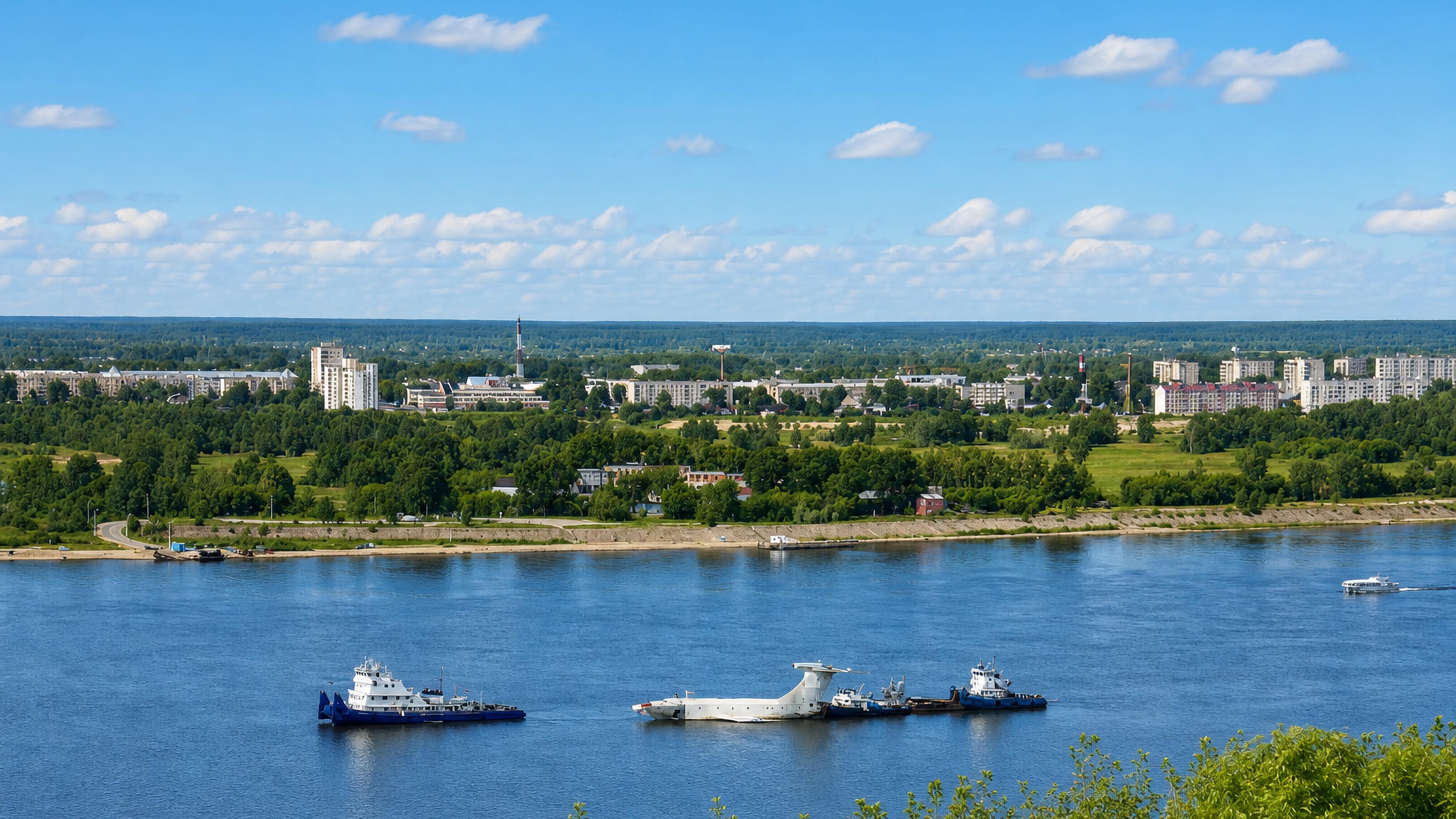
Bor stands on the left bank of the Volga opposite Nizhny Novgorod, a town of merchant houses and parish churches in Nizhny Novgorod Oblast.
Find your area →


Where to stay in Bor
Where the beds are, and what that means for the visit.
Bor has two useful addresses, and they are not equivalent. Lenin street and Lunacharsky street carry most of the town's named merchant houses, the Marychev houses, the Kovylkin house, the Gogolev house, so a room on that grid puts the whole walking circuit within reach of the door. Municipal Museum in Bor sits in the same fabric.
Rowing is elsewhere. Anyone here for the Grebnoy Kanal should check the distance before booking, because Bor covers roughly 42 square kilometres and the channel is not part of the old street plan. The other choice is the Volga itself.
Nizhny Novgorod lies directly across the water, joined by bridges finished in 1965 and in 2017 and by a ferry, so a bed in Bor keeps a large city within reach without being inside it, at the cost of a crossing each time. Mohovye Gory station is the third option, out at the river's edge, where the old station building still stands. It suits a quiet night.
Travellers who want the churches, the Church of the Dormition of the Theotokos, the Church of the Theotokos of the Sign, the Saint Sergius of Radonezh church, will find them spread through the town rather than gathered on one square, which makes the central streets the safer base.
Things to do in Bor
Ranked by global recognition; descriptions from Wikidata (CC0).
Churches & Religious Sites
3- Church of the Dormition of the Theotokos, Bor Heritage
- Church of the Theotokos of the Sign (Bor) Heritage
- Saint Sergius of Radonezh church (Bor) Heritage
Landmarks & Notable Places
8- Mohovye Gory station - old building Heritage
- Building complex in Bor Heritage
- Fire lookout tower, Bor Heritage
- Municipal Museum in Bor Heritage
- Gogolev house, Bor Heritage
Show 3 more →
- Moskovtsevy house, Bor Heritage
- Palace of culture of Teplokhod Factory, Bor Heritage
- Priest's house, Bor Heritage
worth knowingacross 2 categories in Bor
About Bor
What is Bor known for?
Bor's landmark list runs heavily to merchant houses, the Sherstnev house, the Moskovtsevy house, the Korolyov house, the Makurin house and two Marychev houses on Lenin street, with a Fire lookout tower among them. Municipal Museum in Bor keeps the rest. The museum's collection covers the working life of a Volga town that faces a much larger city across the water, and the Priest's house survives among the merchants' addresses as the one clerical entry on the list.
What are the main landmarks in Bor?
Three parish churches carry the religious fabric: the Church of the Dormition of the Theotokos, the Church of the Theotokos of the Sign and the Saint Sergius of Radonezh church. The Grebnoy Kanal is different in kind. Rowing water rather than architecture, it belongs to the Volga more than to the streets, and the Palace of culture of Teplokhod Factory and the Former cinema in Bor stand for a later century than the Kovylkin house or the Gogolev house on Lunacharsky street.
What is the history of Bor?
The settlement dates to 1400. For most of the centuries that followed it faced Nizhny Novgorod across the Volga without being joined to it, which is the single fact that explains the shape of the place, a left-bank town living off a river crossing. Merchants built accordingly.
The Sherstnev house, the Moskovtsevy house, the Korolyov house and the Makurin house are the surviving addresses of that trade, and the Marychev family left two on Lenin street alone. Ownership names most of what stands. The Kovylkin house on Lunacharsky street and the Gogolev house carry family names rather than dates, which is how the old town is read on the ground.
Industry arrived later and left its own buildings. The Kurbatov plant and the Teplokhod Factory put Bor into the manufacturing economy of Nizhny Novgorod Oblast, and the Palace of culture of Teplokhod Factory is the clearest surviving statement of what a works could build for its workforce. A Fire lookout tower still stands.
Bridges closed the gap the river had held open: the first in 1965, the second in 2017, with the ferry working through both eras and the Mohovye Gory station building older than either. Municipal Museum in Bor keeps the record of all of it.
Where is Bor?
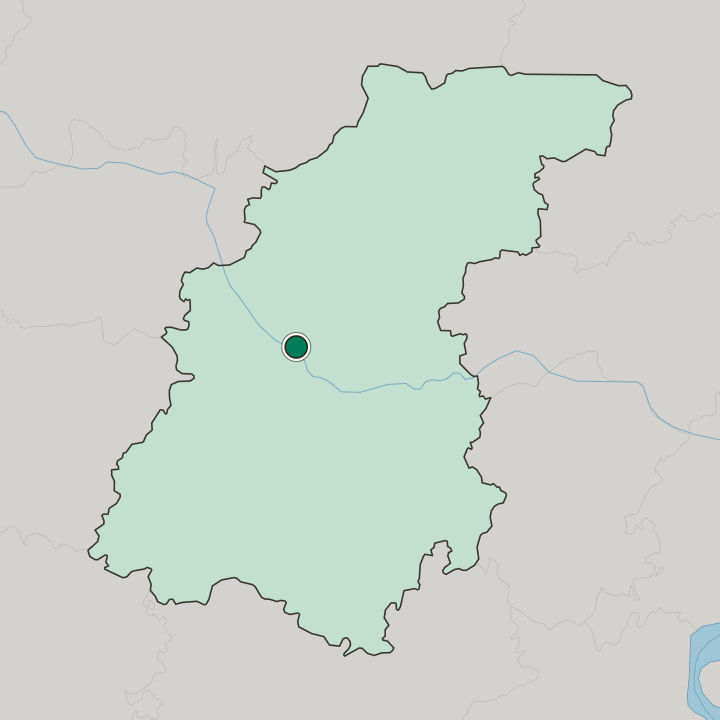
The Volga does the defining work here. Bor occupies the left, northern bank directly opposite Nizhny Novgorod, and its roughly 42 square kilometres run back from the water rather than along a single frontage. Mohovye Gory sits at the edge.
Past the built streets the ground still belongs to the river country of Nizhny Novgorod Oblast, and the crossing, not any distance overland, is what has always separated Bor from the city it faces.
What is the climate of Bor?
The Volga sets the terms. Bor lies in the temperate band of the northern hemisphere, on a river rather than a shoreline, so the seasons here run to the inland pattern of Nizhny Novgorod Oblast. The river is the local agent.
Warm months and cold ones both register along the bank first, and the ferry across to Nizhny Novgorod is the part of ordinary movement most exposed to whatever the season does.
How do you get to Bor?
Two bridges and a ferry, and that is the whole story. The first bridge across the Volga to Nizhny Novgorod opened in 1965 and the second in 2017, while the ferry has worked the same water throughout and still does. Rails came too.
The old Mohovye Gory station building still stands at that end of Bor, evidence that the town was reached by rail as well as across the water.
Good for
More cities in Nizhny Novgorod Oblast
Updated October 2026