Russia · Nizhny Novgorod Oblast
Where to Stay in Sarov, Nizhny Novgorod Oblast
Sarov is a closed town in Nizhny Novgorod Oblast, built around the Sarov Monastery of 1691 and called Arzamas-16 from 1946 to 1991.
Find your area →


Where to stay in Sarov
The practical side of choosing where to sleep.
Sarov is a closed town. That single fact governs the whole question of a stay, because access is regulated before any question of neighbourhood arises, and what remains is a choice between the monastery side and the newer streets that grew up around the research work. Both lie inside one boundary.
The municipal territory covers some 232 square kilometres. The monastery quarter is the historic core. Sarov Monastery, its bell tower, the Saint Seraphim of Sarov church and the Church of the Beheading of Saint John the Baptist stand together there, along with the Игуменский корпус that served as a royal lodging, and a visitor here for the religious buildings belongs inside that ring.
The Ансамбль «Новой гостиницы» sits on the same ground. Built as guest accommodation for the monks, it still marks the visitors' end of the complex, closest to the Восточные ворота. Саровское городище names the oldest layer. The fortified settlement site stands apart from both the religious quarter and the research town, which makes it the quieter point of reference for anyone wanting some distance from the working parts of Sarov.
Rooms are limited throughout. If you are here on business rather than pilgrimage, the newer streets away from Sarov Monastery are the practical choice, and the Здание Дворянской гостиницы shows where the older hospitality of the place once concentrated.
Things to do in Sarov
Ranked by global recognition; descriptions from Wikidata (CC0).
Churches & Religious Sites
5- Church of the Beheading of Saint John the Baptist, Sarov Monastery Heritage
- Antonius and Theodosius of Pechersk cave church, Sarov Monastery Heritage
- All Saints church, Sarov Monastery Heritage
- Saint Seraphim of Sarov church, Sarov Monastery Heritage
- Больничный корпус с церковью св. Пантелеймона (Саров) Heritage
Castles & Historic Sites
1- Саровское городище Heritage
Landmarks & Notable Places
8- Sarov Monastery Heritage
- Bell tower of Sarov Monastery Heritage
- Ансамбль «Новой гостиницы» (комплекс) (Саров) Heritage
- Архиерейский корпус (Саров) Heritage
- Богадельня (Саров) Heritage
Show 3 more →
- Восточные ворота (Саров) Heritage
- Восточный келейный корпус (Рухлядная) (Саров) Heritage
- Губернаторский корпус (Саров) Heritage
worth knowingacross 3 categories in Sarov
About Sarov
Two identities occupy one site.
What is Sarov known for?
Sarov is the Russian centre for nuclear research and a closed town for that reason, while the Sarov Monastery on the same ground carries a monastic history running back to 1691. The names changed repeatedly. Gorkiy-130, then Arzamas-16 after the nearby town of Arzamas, then Кремлёв, and finally Sarov again, each name belonging to a different period.
Saint Seraphim of Sarov church keeps the older one in view.
What are the main landmarks in Sarov?
Everything orbits the Sarov Monastery. Its bell tower, the All Saints church, the Antonius and Theodosius of Pechersk cave church and the Saint Seraphim of Sarov church make up the religious core, and the Church of the Beheading of Saint John the Baptist belongs to the same walled group. Towers mark the corners.
The Юго-западная башня and the Северо-западная (просфорная) башня survive from the enclosure, while the Архиерейский корпус, the Богадельня and the Больничный корпус с церковью св. Пантелеймона served the working life inside it. Саровское городище predates all of them.
What is the history of Sarov?
Саровское городище came first. A fortified settlement occupied this ground long before any monastery was raised on it, and the site survives as the oldest datable thing in a town whose later history was for decades not written down in public at all. Monks arrived at the end of the seventeenth century.
Sarov Monastery dates from 1691, and the complex it became reads as a small walled town in its own right: the bell tower, the Игуменский корпус that doubled as a royal lodging, the Губернаторский корпус, the cell blocks on the northern and southern sides, the Просфорный корпус and the Погребной и квасоваренный корпус for bread and drink. Saint Seraphim of Sarov gave the place its name in the wider church. The church that carries his name still stands inside the walls, beside the Antonius and Theodosius of Pechersk cave church and the All Saints church.
Then the maps stopped showing it. From 1946 the settlement was Gorkiy-130 and then Arzamas-16, borrowing the name of Arzamas some distance away, and it was Кремлёв until 1995 before the older name returned. Nuclear research is the reason.
Sarov became the Russian centre for that work and has been a closed town ever since, which is why the Ансамбль «Новой гостиницы», the Здание Дворянской гостиницы and the rest of the monastic estate spent half a century inside a boundary that most of Nizhny Novgorod Oblast could not cross.
Where is Sarov?
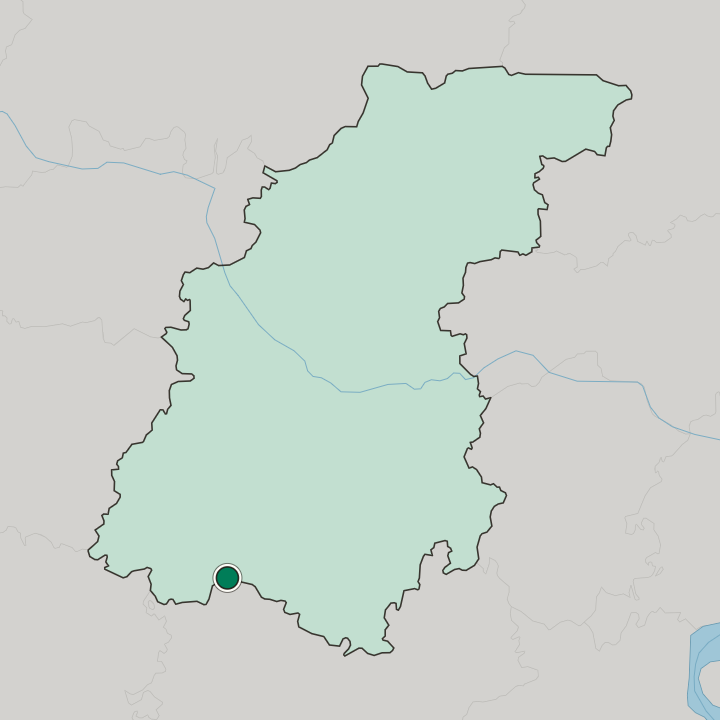
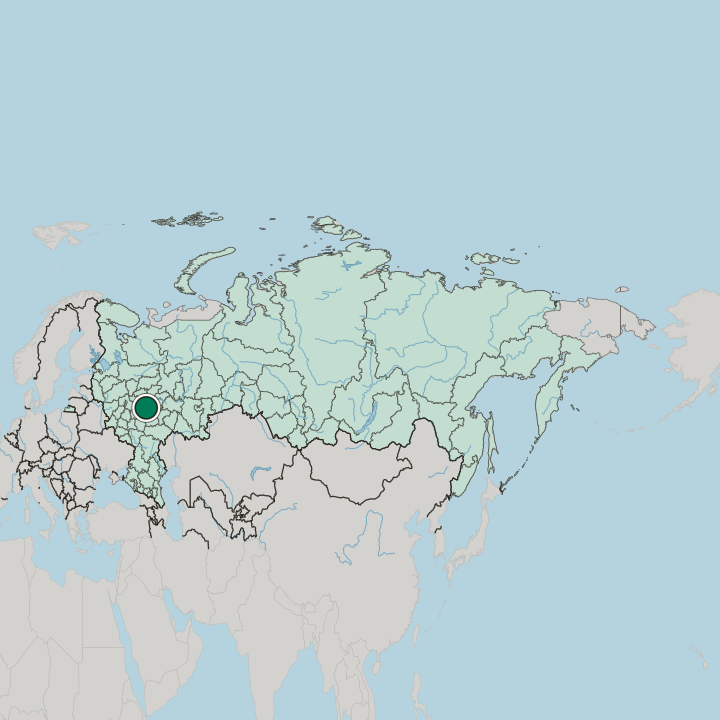
Territory here is generous. Sarov holds some 232 square kilometres of municipal land in Nizhny Novgorod Oblast, a good deal more ground than the walled compass of the Sarov Monastery suggests to anyone standing inside it. Arzamas lies off to one side.
The town borrowed that neighbour's name for its own between 1946 and 1991, and the two remain the usual pair of reference points in this corner of the oblast, with Саровское городище fixing the older centre of gravity.
What is the climate of Sarov?
The climate sits in the temperate band. Sarov lies inland in Nizhny Novgorod Oblast, well away from any coast, so the year moves through four marked seasons rather than the narrower swing that sea air produces. Arzamas is the nearest comparison.
Whatever crosses that part of the oblast reaches the courtyards of the Sarov Monastery and the streets of the closed town on much the same schedule.
How do you get to Sarov?
Arzamas is the reference point. Sarov carried the name Arzamas-16 after that town from 1946 to 1991, and the association still describes the approach better than anything else in Nizhny Novgorod Oblast. Access is the real question.
Sarov is a closed town, so arrival turns on clearance rather than on which road or service is chosen, and the condition applies to the Sarov Monastery and the Восточные ворота inside the boundary exactly as it does to everything else.
Good for
More cities in Nizhny Novgorod Oblast
Updated September 2026