Russia · Novgorod Oblast
Where to Stay in Velikiy Novgorod, Novgorod Oblast
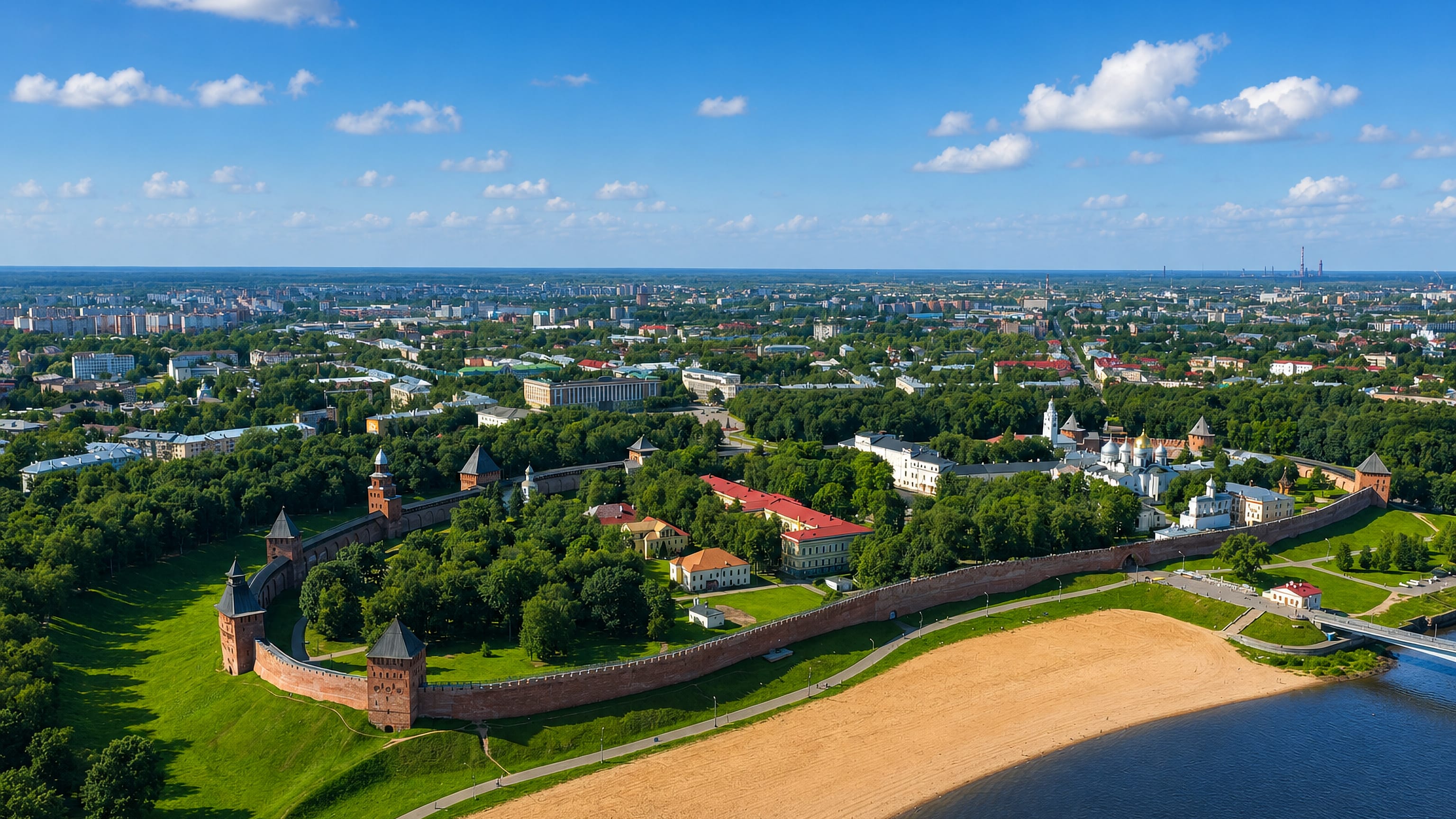
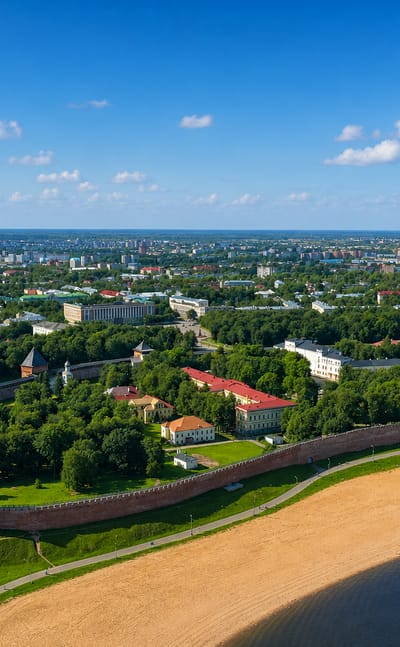
White walls rise over the Novgorod Kremlin in Velikiy Novgorod, in Novgorod Oblast, with Saint Sophia Cathedral and the Millennium of Russia monument.
Find your area →


Where to stay in Velikiy Novgorod
Where you base yourself shapes the visit — here's the character of each area.
 Velikiy NovgorodRussia
Sophia Side
Half-ring streets curve around the Novgorod Kremlin on Sophia Side, the western half of Velikiy Novgorod, named after the Saint Sophia Cathedral it holds.Where to stay →Velikiy NovgorodRussiaYaroslav's Court
Yaroslav's Court was the princely compound of Velikiy Novgorod, and its ground is the Trade Side quarter around Saint Nicholas Cathedral.Where to stay →Velikiy NovgorodRussiaTrade Side
Painted walls of 1378 survive on Ilyina Street in Trade Side, the right-bank half of Velikiy Novgorod that took its name from the Torg.Where to stay →Things to do in Velikiy Novgorod
Ranked by global recognition; descriptions from Wikidata (CC0).
Museums & Galleries
1- Vitoslavlicy Heritage
Churches & Religious Sites
8- Saint Sophia Cathedral Heritage
- Church of the Transfiguration on Ilyina Street Heritage
- Saviour Church on Nereditsa Heritage
- Saint Nicholas Cathedral, Novgorod Heritage
- Church of St. Paraskevi, Novgorod Heritage
Show 3 more →
- Katholikon of the Antoniev Monastery Heritage
- Antoniev Monastery Heritage
- Annunciation Church, Gorodishche Heritage
Castles & Historic Sites
4- Millennium of Russia Heritage
- Rurikovo Gorodische Heritage
- Vladychnaya (Granovitaya) Palata Heritage
- Victory monument, Veliky Novgorod Heritage
Landmarks & Notable Places
6- Novgorod Kremlin Heritage
- Yuriev Monastery Heritage
- Yaroslav's Court Heritage
- The cathedral of The Icon of Our Lady of the Sign in Veliky Novgorod Heritage
- Drama Theatre in Veliky Novgorod Heritage
Show 1 more →
- Dvortsovaya Tower of Veliky Novgorod Detinets Heritage
worth knowingacross 4 categories in Velikiy Novgorod
About Velikiy Novgorod
What is Velikiy Novgorod known for?
Velikiy Novgorod is known for one of the oldest recorded settlements in the Russian lands, a city whose founding is placed in 859. Within the Novgorod Kremlin stands Saint Sophia Cathedral, and beside it the Millennium of Russia monument gathers the figures of the nation's past around a single bronze mass. Stone endures here.
The Yuriev Monastery and the Saviour Church on Nereditsa carry the medieval builders' craft, while Yaroslav's Court marks the trading heart of the old town in Novgorod Oblast.
What are the main landmarks in Velikiy Novgorod?
The landmarks of Velikiy Novgorod centre on the Novgorod Kremlin, whose walls enclose Saint Sophia Cathedral and the Millennium of Russia monument. Bronze and whitewashed stone stand side by side. Beyond the walls rise the Yuriev Monastery, the Antoniev Monastery, and the Saviour Church on Nereditsa, while the Church of the Transfiguration on Ilyina Street and Yaroslav's Court carry the trade and faith of the medieval town across Novgorod Oblast.
What is the history of Velikiy Novgorod?
Velikiy Novgorod counts its founding from 859, among the earliest dates recorded for a settlement in the Russian lands. The old princely seat at Rurikovo Gorodische marks the beginnings, and from that river ground the town grew into a centre of trade and self-rule whose merchants and assembly governed a wide reach of the north through the medieval centuries. The Novgorod Kremlin rose as its heart.
Saint Sophia Cathedral crowned the walls. Church building carried the town's craft down the years. The Yuriev Monastery, the Antoniev Monastery, and the Saviour Church on Nereditsa preserve the work of medieval masters, while the Church of the Transfiguration on Ilyina Street held the frescoes of a later hand.
In the nineteenth century the Millennium of Russia monument was raised within the Kremlin to gather the figures of the nation's past. The old core still stands. Its churches and walls give Novgorod Oblast a settled medieval heritage carried unbroken from the founding centuries into the modern city.
Where is Velikiy Novgorod?
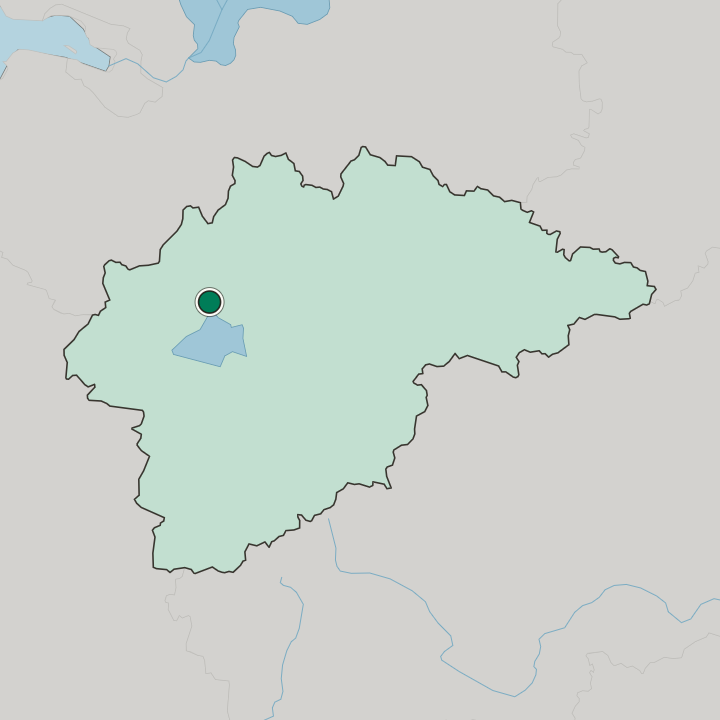
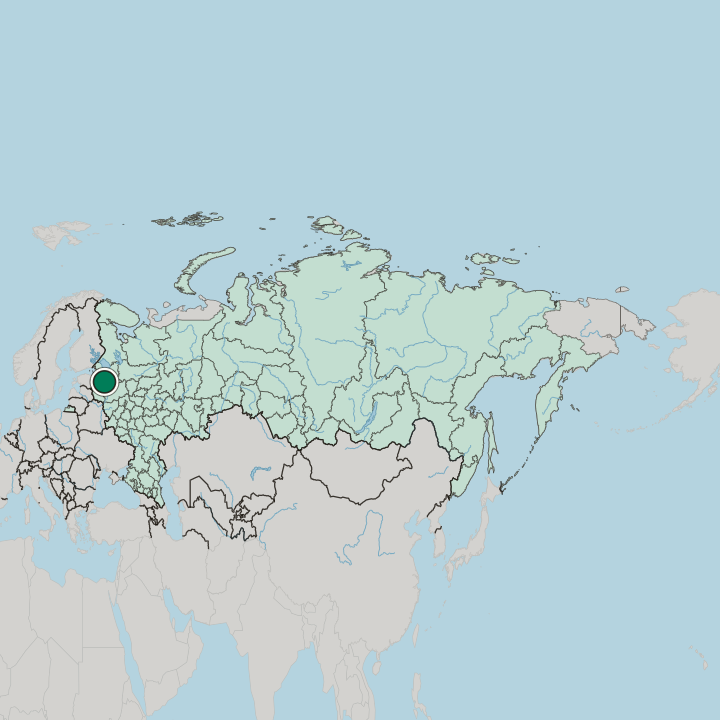
Velikiy Novgorod lies in Novgorod Oblast, its old core set on low river ground where the Novgorod Kremlin commands the crossing. The town spreads across level land, with the monasteries of Yuriev and Antoniev standing on the outer approaches and Rurikovo Gorodische marking the higher ground where the settlement began. Water shapes the setting.
The wider oblast opens into the wooded, low-lying country of the north, the churches and monasteries scattered across the flat ground around the medieval heart of the city.
What is the climate of Velikiy Novgorod?
Velikiy Novgorod has a cool temperate climate marked by long, snowy winters and short, mild summers. Snow lies across the low country around the Novgorod Kremlin through the cold months, and the frozen river ground stays white well into spring in this northern reach of Novgorod Oblast. Winters run long.
The warmest weeks of summer bring the busiest season for the medieval churches and monasteries, before the cold returns and the short days close in over the old town again.
How do you get to Velikiy Novgorod?
Velikiy Novgorod is reached by road and rail through Novgorod Oblast, the routes crossing the flat northern country to the old town. Trains and buses serve the city, setting travellers within reach of the Novgorod Kremlin and the churches of the medieval core. The station lies near the centre.
Many visitors arrive on the corridor between the larger northern cities, then walk the short way in to Saint Sophia Cathedral and the walled heart of the town.
Good for
Another city in Novgorod Oblast
Updated October 2026