Russia
Novgorod Oblast, Russia — Towns & Travel Guide
Novgorod Oblast wraps Lake Ilmen in north-western Russia, cradle of the medieval Novgorod Republic and its old Volkhov trading city.
Find your area →


Towns & cities in Novgorod Oblast
Pick a town or city — each links to where to stay.
 Russia
Velikiy Novgorod
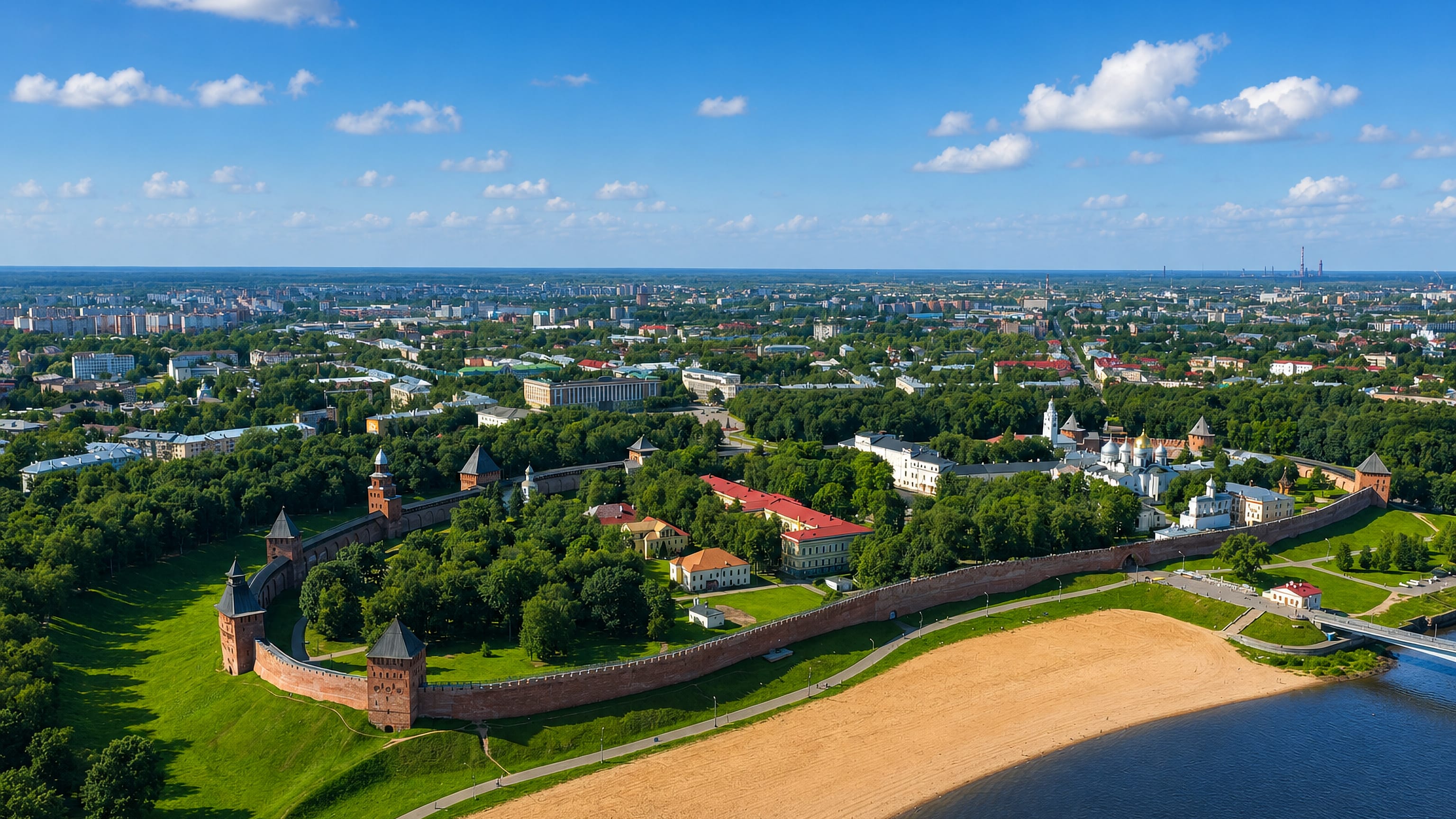
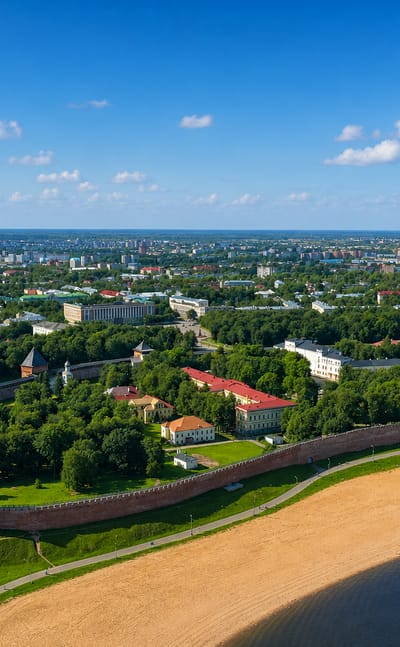
White walls rise over the Novgorod Kremlin in Velikiy Novgorod, in Novgorod Oblast, with Saint Sophia Cathedral and the Millennium of Russia monument.Where to stay →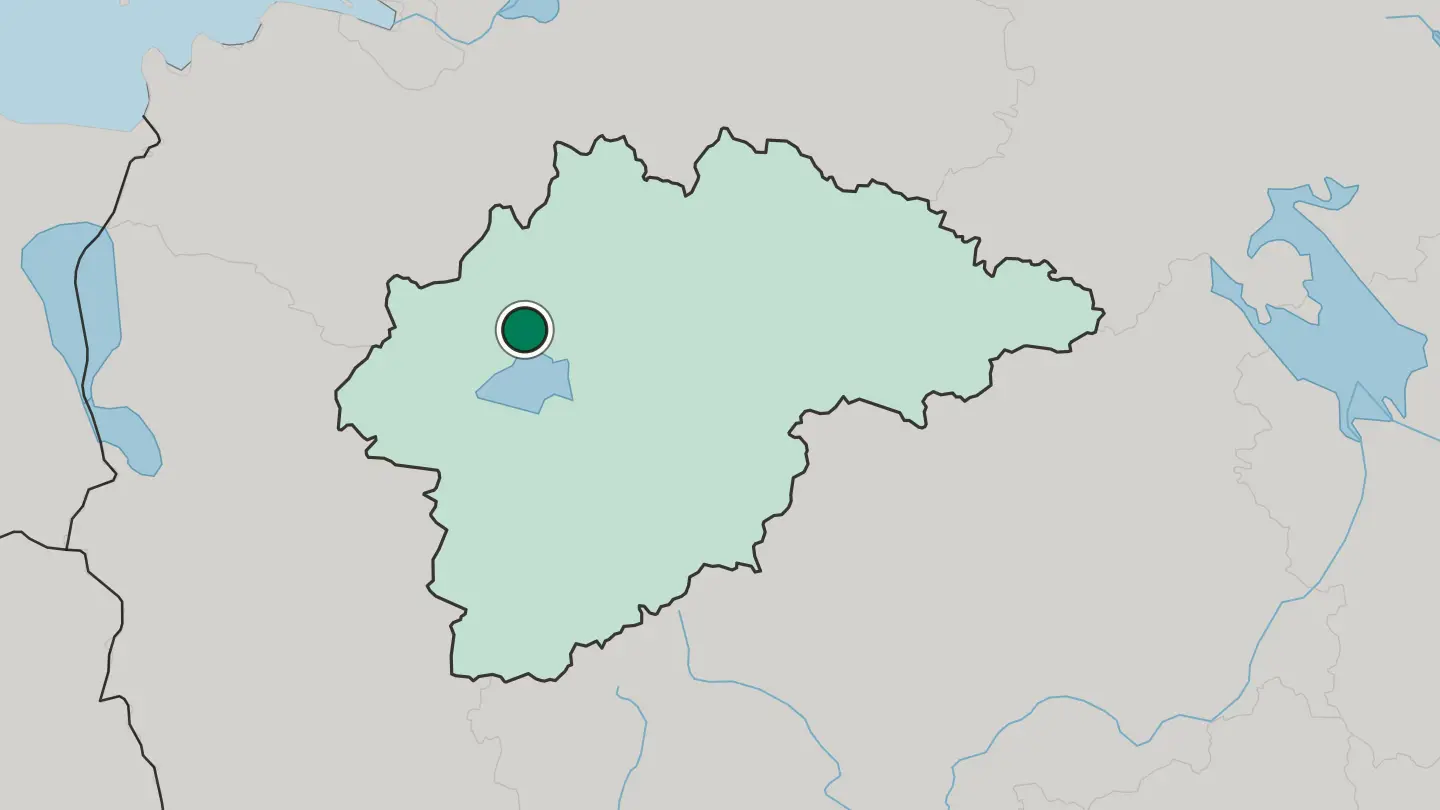
 Russia
Borovichi
Borovichi stands on the Msta River in the northern spurs of the Valdai Hills, the second largest town of Novgorod Oblast, east of Veliky Novgorod.Where to stay →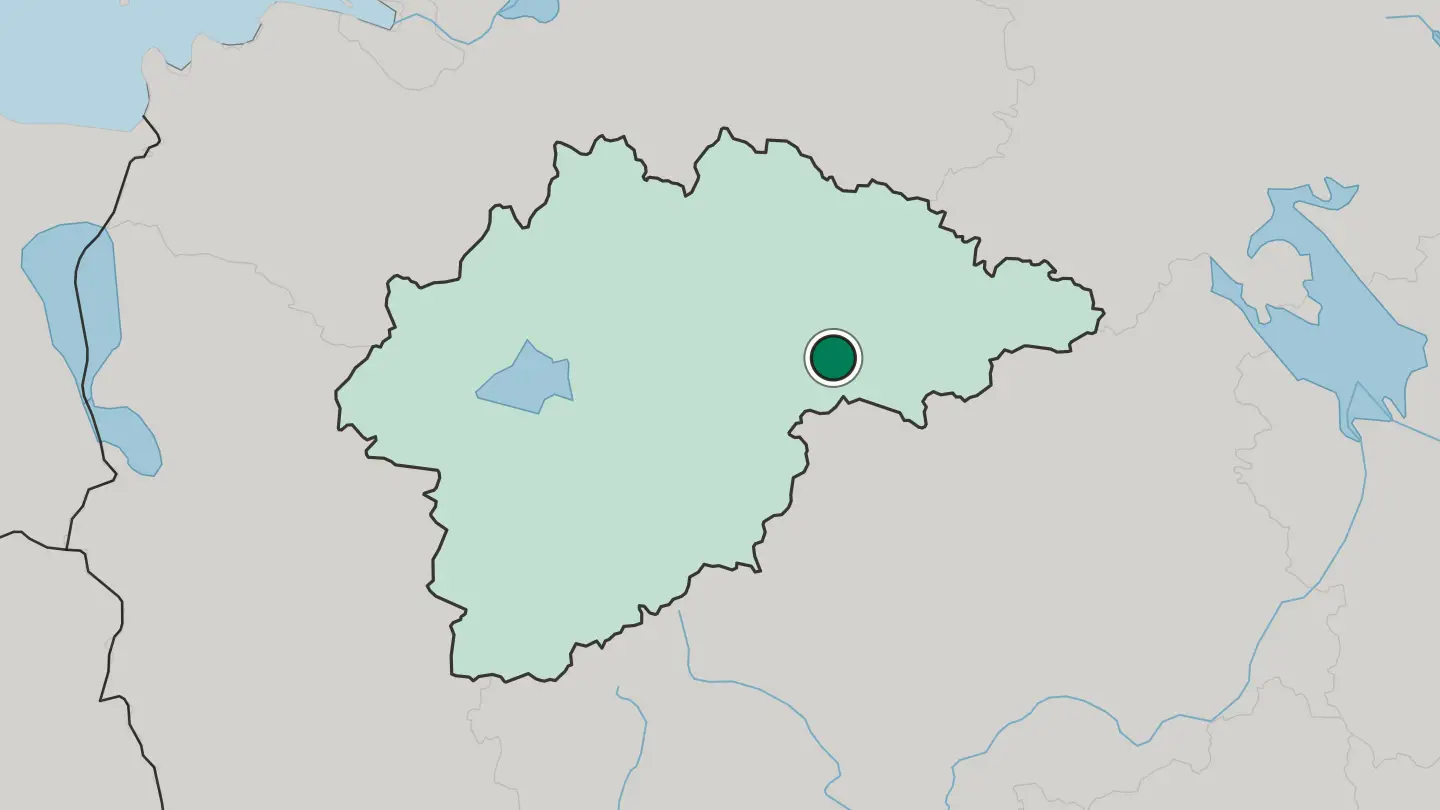
About Novgorod Oblast
Russia keeps its oldest stones here.
What is Novgorod Oblast known for?
Veliky Novgorod, the regional capital on the Volkhov River, holds the Saint Sophia Cathedral, raised between 1045 and 1050 and among the country's oldest surviving churches. For centuries the city ran itself as the Novgorod Republic, a merchant state trading north into the Baltic while a public assembly called the veche settled war, peace and law. Around it the land is water and forest, gathered on the shores of Lake Ilmen.
Travellers come for the medieval core and the lake country behind it.
Where is Novgorod Oblast?
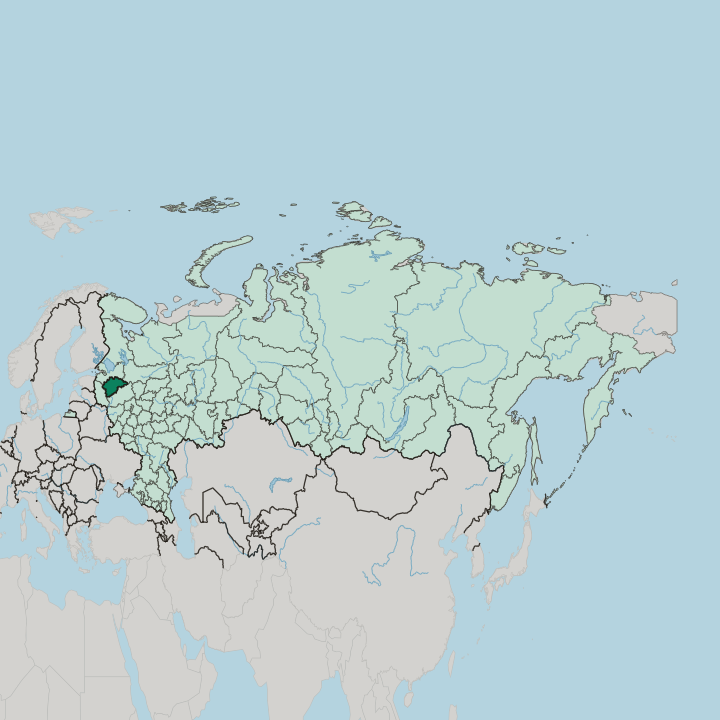
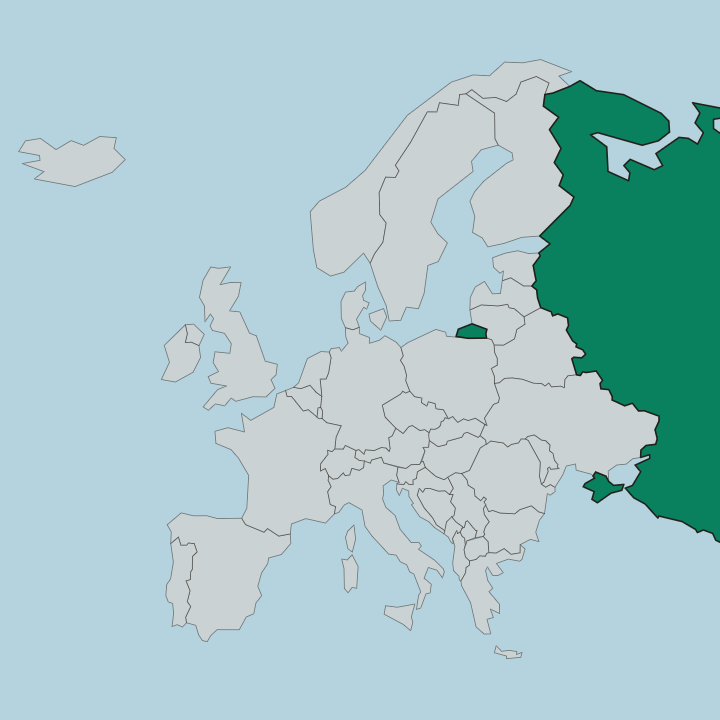
Novgorod Oblast lies on the East European Plain in north-western Russia, between Moscow and Saint Petersburg. Lake Ilmen sits at its heart. The lake spreads shallow and wide across the western lowland, fed from the south and east by the Msta, the Lovat, the Pola, the Polist and the Shelon, and drained at its northern end by a single outflow.
That outflow is the Volkhov, which carries Ilmen's water north toward Lake Ladoga and past the walls of Veliky Novgorod a few kilometres below the lake. East and south the ground climbs into the Valdai Hills, a moraine ridge of rolling forest and glacial lakes left by the ice, topping out at Mount Ryzhokha near 296 metres. Much of the rest is bog.
Peat marsh and reed fen fill the flats, stitched with small lakes and slow streams. The region borders Leningrad Oblast to the north, Vologda Oblast to the east, Tver Oblast to the south, and Pskov Oblast to the west. Water shapes almost everything here.
Where the land is not lake or river it is often swamp, and the dry ground between carries the roads and the towns.
What is Novgorod Oblast like?
The culture here reaches back to the founding of the Russian state. In the year 862, chronicles place the Varangian prince Rurik at Novgorod, and Russian tradition counts the city as the birthplace of its monarchy. What grew from that was unusual.
While much of medieval Rus answered to princes, the Novgorod Republic governed by veche, the open assembly that hired and dismissed its rulers and voted on trade and war. That habit of independence bred a distinct art. Novgorod's icon painters and its stone masons worked in their own idiom, and the churches they left still stand around Veliky Novgorod, several old enough to predate the Mongol arrival.
The most ordinary voices survive too. Hundreds of birch-bark letters pulled from the wet soil record debts, lessons and family quarrels in everyday medieval Russian. The common tongue across the region is Russian.
Away from the old city the character turns rural and quiet, a countryside of wooden villages, monastery islands and lake shores. Staraya Russa adds a literary layer, its streets tied to Fyodor Dostoevsky, who summered there and set part of his fiction among them. It is a region that carries its deep past lightly, in stone and script rather than spectacle.
What is the history of Novgorod Oblast?
Novgorod's story starts early. First named in the ninth century, the city rose as the trading hub of the Russian north, dealing with the Hanseatic League and holding much of the land between the Baltic and the upper Volga. From 1136 the Novgorod Republic ruled itself through the veche until Moscow broke that independence and annexed the city in 1478.
The modern administrative region is far younger, carved out and established as Novgorod Oblast in 1944 after the wartime front had passed through it. Old land, new borders.
What is the climate of Novgorod Oblast?
Novgorod Oblast has a humid continental climate, tempered a little by the marshes and lakes that hold water across the land. The cold bites early. Winters are long, with the Volkhov and Lake Ilmen freezing hard and snow lying on the flats for months on end.
Summers are short but mild, warm enough to swim in the Valday lakes and to paddle the Msta rapids before the freeze returns. Spring runoff swells the rivers feeding Ilmen and floods the low meadows around the lake.
How do you get to Novgorod Oblast?
The region sits astride the main line between Russia's two great cities. Its position is the whole point. The M10 highway runs from Moscow to Saint Petersburg straight through the oblast, passing Valday and Veliky Novgorod on the way north.
A parallel railway crosses it too, with stops at Chudovo and Okulovka that put the capital within easy reach by branch line. Most visitors come from Saint Petersburg. From the nearer capital the road and rail south deliver you to the lake and the kremlin in a couple of hours.
Good for
More regions in Russia
Updated September 2026