Russia · Orenburg Oblast
Where to Stay in Orenburg, Orenburg Oblast
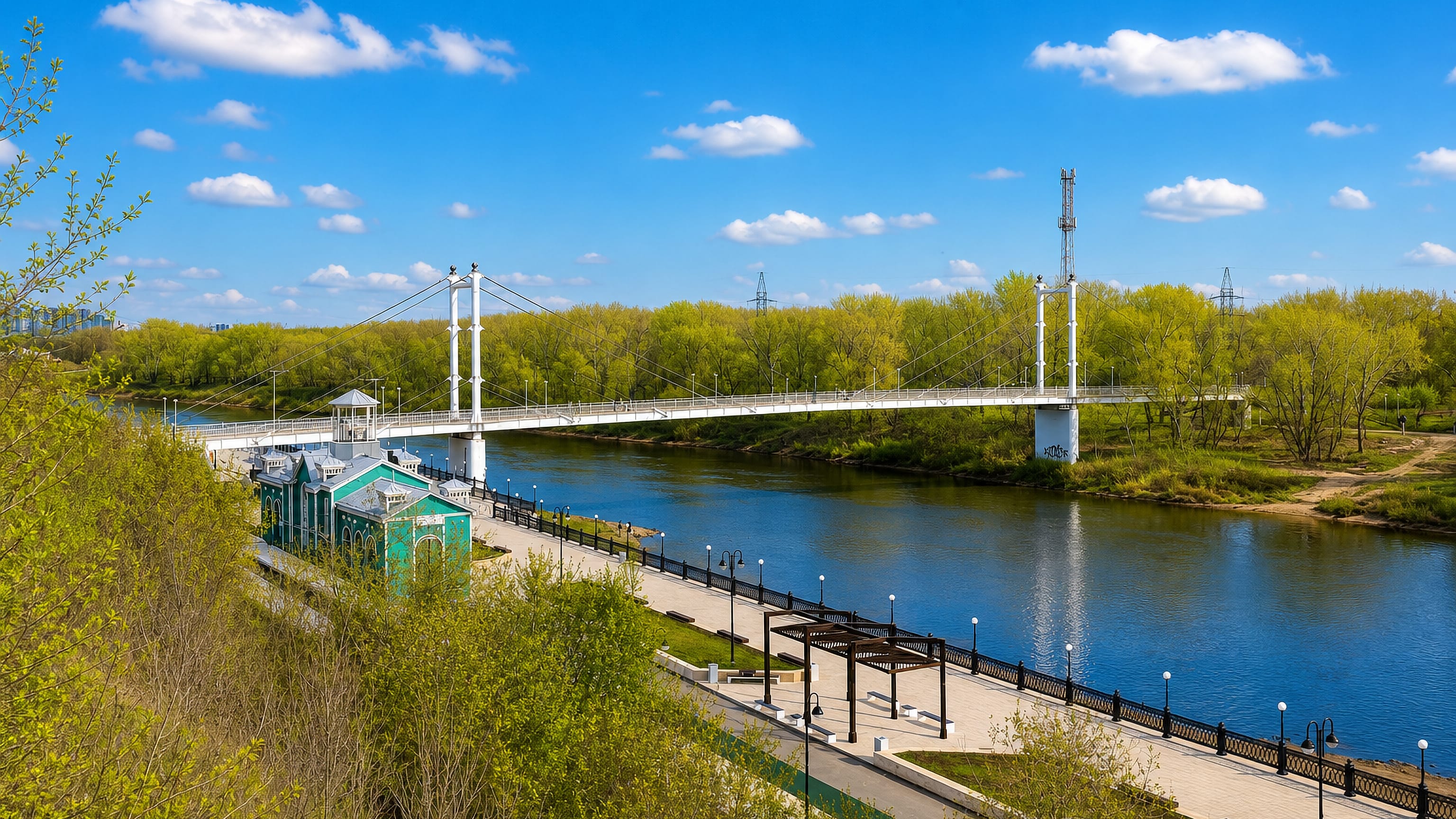
Mosque and cathedral share the skyline at Orenburg, a frontier city in Orenburg Oblast known for the Orenburg Caravanserai and Gostiny Dvor.
Find your area →


Where to stay in Orenburg
Where visitors usually base themselves, and why.
Where you stay in Orenburg turns on how close you want to be to the old merchant core, where Gostiny Dvor and the Orenburg Caravanserai stand among the frontier-era buildings. The central streets put the arcades, the Orenburg Museum of Fine Arts, and the Saint Nicholas Orthodox cathedral within a short walk, and most of the city's lodging clusters here. Begin in the old merchant core.
If you want ground among the faith landmarks, look toward the streets near the Central Orenburg cathedral mosque and the Husainia Mosque, where the older quarters keep their mixed character. Quieter districts spread back from the core. Near the Maxim Gorky State Drama Theatre and the House-museum of Leopold and Mstislav Rostropovichs, the setting turns to civic and cultural streets rather than trade.
Those coming for the city's museums and memorials, from the Memorial Museum of Taras Shevchenko to the «Salute, Victory!» museum complex, will find them scattered across the grid, each within easy reach of the old core that ties Orenburg together.
Things to do in Orenburg
Ranked by global recognition; descriptions from Wikidata (CC0).
Museums & Galleries
3- Orenburgskiĭ istoriko-kraevedcheskiĭ muzeĭ Heritage
- House-museum of Leopold and Mstislav Rostropovichs Heritage
- Orenburg Museum of Fine Arts Heritage
Churches & Religious Sites
5- Orenburg Caravanserai Heritage
- Saint Nicholas Orthodox cathedral in Orenburg Heritage
- Roman Catholic Church of Our Lady of Loreto Heritage
- Husainia Mosque, Orenburg Heritage
- Church of Saint John the Evangelist Heritage
Castles & Historic Sites
3- Gostiny Dvor (Orenburg) Heritage
- Памятник Пушкину и Далю
- Молодой рабочий
Landmarks & Notable Places
8- Maxim Gorky State Drama Theatre Heritage
- Orenburg Neplyuev Cadet Corps Heritage
- Military prison, Orenburg Heritage
- Orenburg railway station Heritage
- House of the Soviets Heritage
Show 3 more →
- Xösäyeniä madrasa Heritage
- House of the Congress of magistrates Heritage
- Здание Оренбургского высшего военного авиационного Краснознамённого училища лётчиков Heritage
worth knowingacross 4 categories in Orenburg
About Orenburg
What is Orenburg known for?
Orenburg is known as a meeting point of faiths and trades on the old steppe frontier. Caravans once ended here. The Orenburg Caravanserai and the merchant arcades of Gostiny Dvor recall a city built on the trade between the Russian towns and the steppe peoples, and its skyline still mixes the Central Orenburg cathedral mosque with the Saint Nicholas Orthodox cathedral.
Culture runs deep too, from the Maxim Gorky State Drama Theatre to the House-museum of Leopold and Mstislav Rostropovichs, all within the wider setting of Orenburg Oblast.
What are the main landmarks in Orenburg?
The main landmarks of Orenburg mix mosques, churches, and merchant halls along the old frontier streets. The Orenburg Caravanserai stands out, its domes rising above the trade quarter near the arcades of Gostiny Dvor. Faiths meet here.
The Central Orenburg cathedral mosque, the Saint Nicholas Orthodox cathedral, and the Roman Catholic Church of Our Lady of Loreto share the city with the Orenburg Museum of Fine Arts, the Maxim Gorky State Drama Theatre, and the «Salute, Victory!» museum complex.
What is the history of Orenburg?
Orenburg was founded in 1743 as a fortress and trading post on the steppe frontier of the Russian state. Its whole reason was exchange. Built to hold the border and to open commerce with the peoples of the steppe, the town became a great caravan market, and the Orenburg Caravanserai and the arcades of Gostiny Dvor grew from that traffic in cloth, hides, and grain.
The city drew settlers and traders of many faiths together, a mixing that raised mosques and churches side by side, among them the Husainia Mosque and the Saint Nicholas Orthodox cathedral. Schooling and culture followed. The Orenburg Neplyuev Cadet Corps trained the frontier's officers, while the poet Taras Shevchenko, exiled here, is remembered in the Memorial Museum of Taras Shevchenko.
War left its mark in the twentieth century, recorded now in the «Salute, Victory!» museum complex. Through revolution and renaming the layered heritage of the border town survived, so the mixed frontier story of Orenburg Oblast still shows plainly along its central streets.
Where is Orenburg?
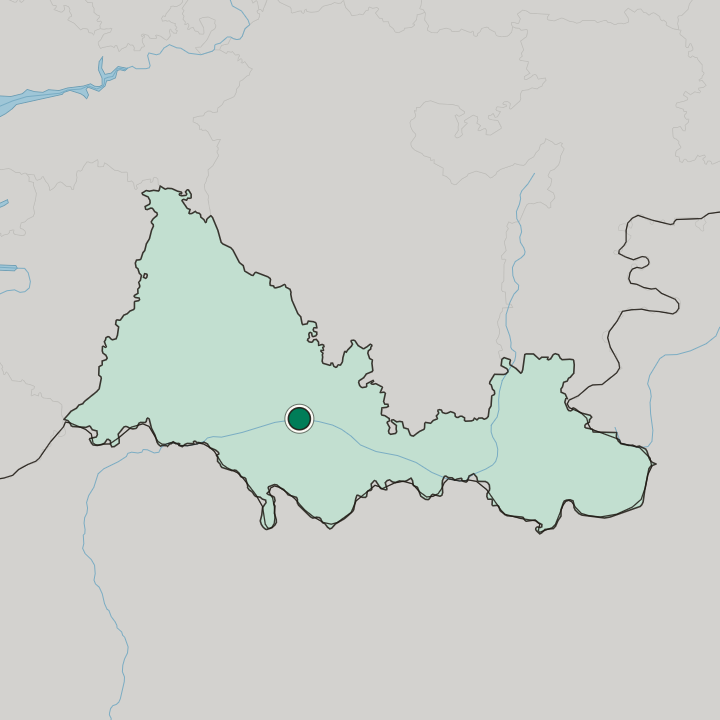
Orenburg sits on open steppe country along a river within Orenburg Oblast, where the plain runs flat toward the horizon. The land is broad and level. Its streets and the Orenburg Caravanserai spread across low ground near the water, with little relief to break the wide skyline.
Beyond the city the region of Orenburg Oblast opens into vast grassland reaching far to the south and east, a treeless plain that once carried the caravan routes into the town.
What is the climate of Orenburg?
Orenburg has a sharply continental steppe climate of hard winters and hot, dry summers. The extremes are severe. Bitter frost and dry wind sweep the open plain and the streets around Gostiny Dvor through the long winter, unbroken by any shelter of hills across Orenburg Oblast.
Summer swings into fierce heat and drought over the grassland, baking the town, before the brief autumn tips it quickly back toward another deep and windswept winter.
How do you get to Orenburg?
Getting to Orenburg runs mainly by rail and road across the steppe of Orenburg Oblast. Trains reach the centre directly. The historic Orenburg railway station links the city into the wider network, a main highway follows the old overland route, and an airport serves flights from farther afield.
From each arrival the frontier core, with the Orenburg Caravanserai and Gostiny Dvor, lies a short way in among the trading streets.
Good for
More cities in Orenburg Oblast
Updated October 2026