Russia · Perm Krai
Where to Stay in Kungur, Perm Krai
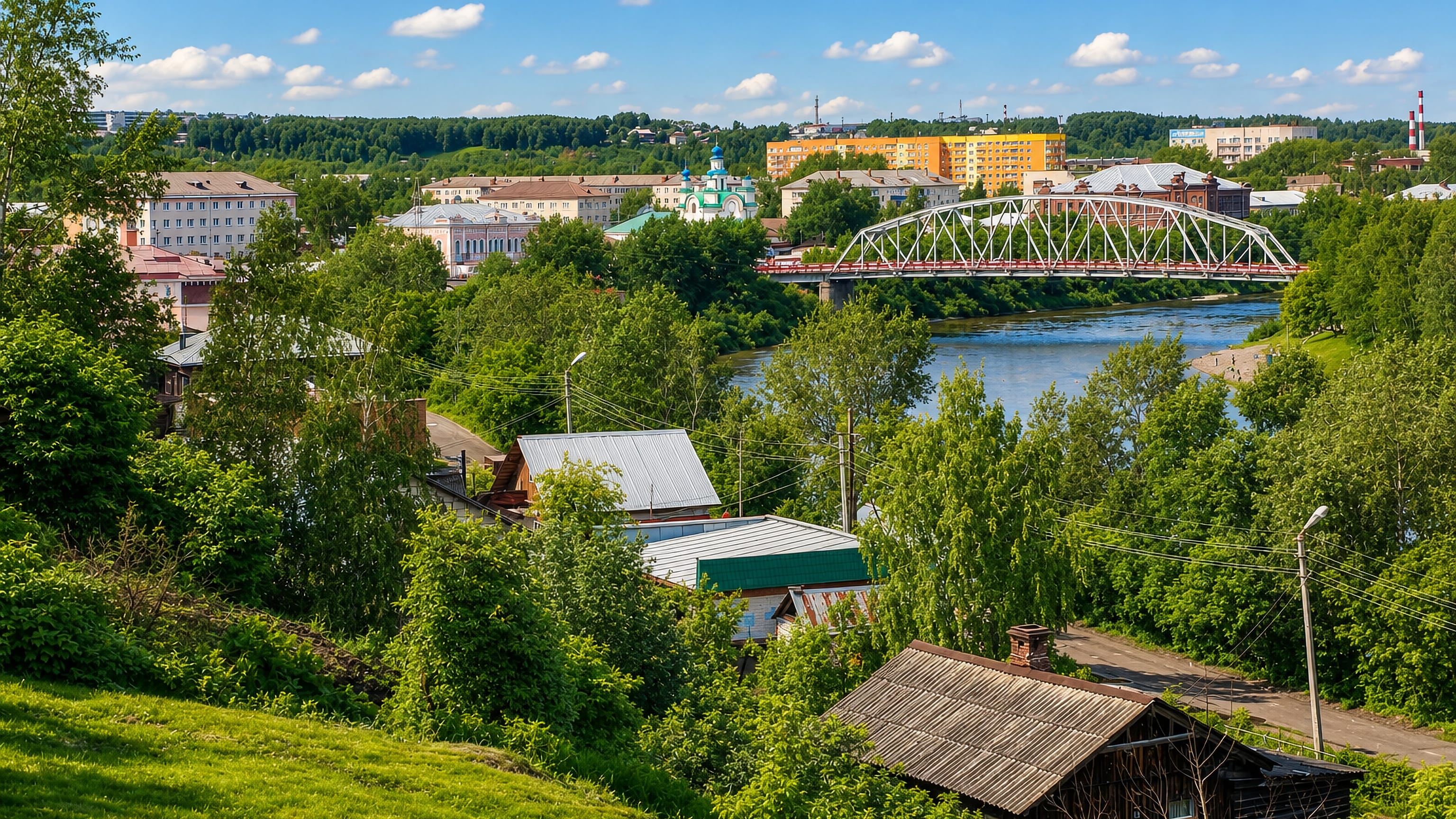
Kungur is a merchant town of Perm Krai in the Ural Mountains, founded in 1663 at the confluence of the Iren and Shakva with the Sylva.
Find your area →


Where to stay in Kungur
How the choice of base plays out on the ground.
Two addresses matter in Kungur, the merchant streets around Gostiny Dvor and the quieter ground out towards Дача Агеевых. The Gostiny Dvor side puts nearly everything inside one walk, the Old City Hall, Kungur Local Museum, the Художественный музей and the Church of the Transfiguration among them, which is the argument for a central room even when it turns out to be a plain one. Beds are not numerous.
Rooms come from converted older buildings and from small modern stock, and neither category is large, so a summer weekend can strip the town of anything comfortable well before arrival. You want the centre if the visit is about the architecture. The river side is the other option.
Ground near the Sylva and the confluence of the Iren and the Shakva offers quiet and water, though distances stretch out there, and a car becomes the sensible way to reach Saint Nicholas Church or Особняк Ковалева across the channels. Perm Krai supplies no closer alternative worth the drive. Treating Kungur itself as the base and going out for the day is the pattern that works here, with the Kungur Obelisk and the Navel of the World Monument serving as the two fixed points to navigate back towards. Small Gostiny Dvor marks the middle of it all.
Things to do in Kungur
Ranked by global recognition; descriptions from Wikidata (CC0).
Museums & Galleries
2- Kungur Local Museum Heritage
- Художественный музей
Churches & Religious Sites
6- Saint Nicholas Church (Kungur) Heritage
- Church of the Transfiguration Heritage
- All Saints Church Heritage
- Saint Alexius Church (Kungur) Heritage
- Храм Вознесения Господня Heritage
Show 1 more →
- Church of the Dormition Heritage
Castles & Historic Sites
3- Kungur Obelisk Heritage
- Navel of the World Monument in Kungur
- Памятник Губкину
Landmarks & Notable Places
8- Gostiny Dvor Heritage
- Дом Грибушина Heritage
- Kuznetsov Mansion Heritage
- Елизаветинская рукодельная школа Heritage
- Dubinin's estate Heritage
Show 3 more →
- Кунгурское городское четырёхклассное училище Heritage
- Кунгурское техническое училище Губкина Heritage
- Small Gostiny Dvor, Kungur Heritage
worth knowingacross 4 categories in Kungur
About Kungur
Merchant stone, mostly.
What is Kungur known for?
Kungur kept the trading rows of Gostiny Dvor and a run of mansions built for the families who used them, Kuznetsov Mansion and Дом Грибушина among them, which together give the centre a density of old building unusual for a town of this size in the Urals. Three rivers converge below it. The Navel of the World Monument makes a joke of that position, while Kungur Local Museum treats it as the serious subject it once was.
What are the main landmarks in Kungur?
Gostiny Dvor is the centre of gravity. The trading rows, the Old City Hall and the Kungur Obelisk make up the civic set, while Saint Alexius Church, All Saints Church and Храм Вознесения Господня carry the ecclesiastical one into separate quarters of the town. The Navel of the World Monument is the outlier.
Kungur Local Museum and the Художественный музей hold what is best seen indoors, and Особняк Софронова completes the run of merchant houses on the streets between them.
What is the history of Kungur?
The year is 1663. Kungur was founded then in the Ural Mountains, on ground where three rivers already gathered, and that position on the water and the overland routes is the whole reason a modest place accumulated so much stone over the following two centuries. Trade did the building.
Gostiny Dvor and Small Gostiny Dvor housed the merchants, the Old City Hall gave the town an administration to match, and the Kungur Obelisk went up as the civic marker of the same confident decades. Money left houses behind it. Дом Грибушина, Kuznetsov Mansion, Особняк Ковалева and Особняк Щербакова all belong to that merchant era, and the parishes were rebuilt on the same wealth, among them the Church of the Transfiguration, Saint Nicholas Church and the Church of the Dormition. Schooling followed the money. Кунгурское техническое училище Губкина carries the name of Губкин, whose statue, Памятник Губкину, still stands in the town, while Елизаветинская рукодельная школа was a handicraft school and Кунгурское городское четырёхклассное училище took the ordinary municipal pupils. Дом Ануфриевой and Дача Агеевых survive from the domestic side of the same period.
The record is kept indoors now. Kungur Local Museum holds the town history and the Художественный музей the art collection, so what began as a trading post on the Sylva can be read building by building along streets that have not been rearranged.
Where is Kungur?
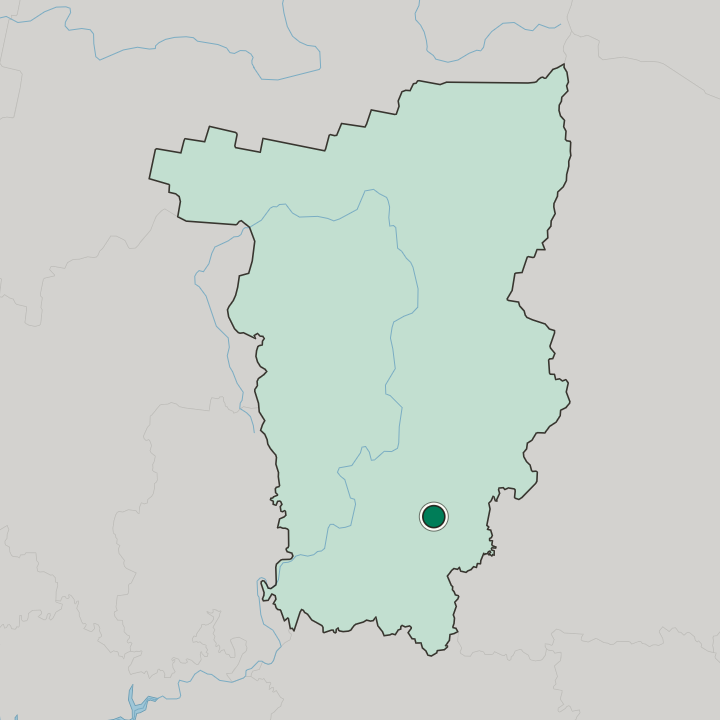
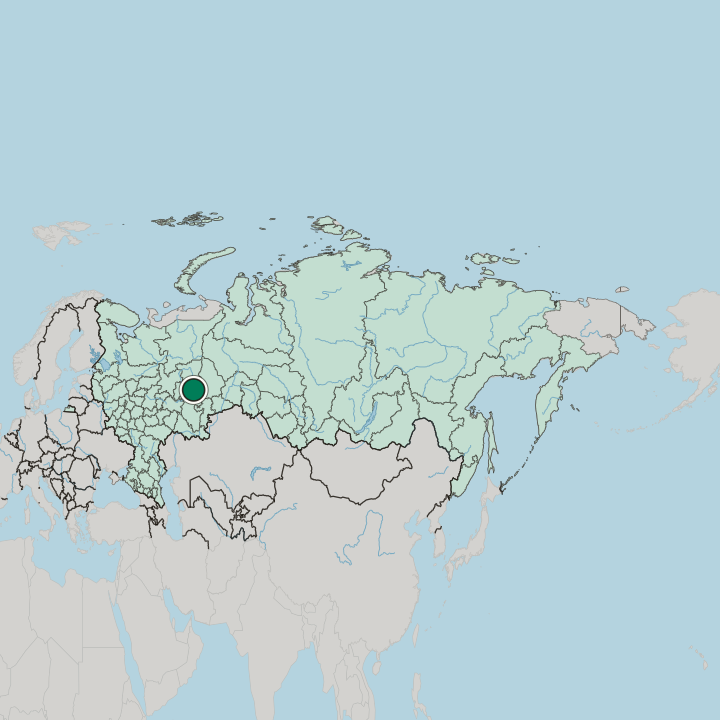
The Sylva organises everything. Kungur sits in the Ural Mountains at the confluence where the Iren and the Shakva deliver their water into it, so the built-up ground is divided by channels and by the low rises left between them. Hills close the view.
Beyond them the wider territory of Perm Krai carries on, and the valley floor holds the roads as well as the town.
What is the climate of Kungur?
The Urals keep it continental. Kungur lies inland behind that relief and far from any moderating water, so winter settles hard over the Sylva and the Iren while the warm season is short and quickly spent. Ice takes the rivers.
The thaw hands them back, and the confluence runs high and loud before the year steadies again.
How do you get to Kungur?
Every approach is overland. Kungur lies on the valley floor at the point the Iren and the Shakva come down to the Sylva, and that valley is the corridor traffic uses, since the alternative is a climb over the Ural relief on either side of it. A few blocks hold the whole centre.
Gostiny Dvor, the Old City Hall and Kungur Local Museum stand close enough together that nothing beyond walking is needed once a visitor has reached the middle of town.
Good for
More cities in Perm Krai
Updated September 2026