Russia · Vladimirskaya Oblast’
Where to Stay in Aleksandrov, Vladimirskaya Oblast’
A medieval princely residence made Aleksandrov, and its walled ground in Vladimir Oblast still outranks all the town has. Dated to 1301.
Find your area →


Where to stay in Aleksandrov
Where visitors usually base themselves, and why.
Aleksandrov holds few beds, and the ones it holds stand in the ordinary streets rather than beside the sight almost everyone comes for. The Alexandrov Kremlin is the anchor. Rooms within walking reach of its walls turn what is usually a day trip out of Moscow into an unhurried visit, which matters because the walled ground takes longer than the couple of hours a return schedule allows.
Take that side for one night. The far side of town reads differently. Around the Cathedral of the Nativity of Christ and Pervushin Manor the streets are residential, shops sit close, and the Museum of Marina and Anastasia Tsvetaeva is no more than a walk away.
Two nights suit that end better. Beds are scarce enough that turning up without a booking is a gamble in the warm months, when the convent complex draws visitors up from Moscow. Vladimir is the alternative. The oblast capital keeps the same clock and a great deal more stock, though staying there turns the Alexandrov Kremlin into a day's outing rather than the walk it should be, and that trade decides the choice for most people who weigh it.
Things to do in Aleksandrov
Ranked by global recognition; descriptions from Wikidata (CC0).
Museums & Galleries
1- Museum of Marina and Anastasia Tsvetaeva, Alexandrov Heritage
Churches & Religious Sites
8- Church of the Protection of the Theotokos Heritage
- Holy Trinity Church (Alexandrov, Vladimir Oblast) Heritage
- Cathedral of the Nativity of Christ (Alexandrov) Heritage
- Church of the Crucifixion Bell Tower Heritage
- Church of the Dormition of the Theotokos (Alexandrov) Heritage
Show 3 more →
- Church of the Theotokos of Bogolyubovo (Alexandrov) Heritage
- Saint Theodore Stratelates church Heritage
- Church of the Presentation of Jesus at the Temple (Alexandrov) Heritage
Castles & Historic Sites
3- Alexandrov Kremlin Heritage
- Памятник В.И. Ленину (Александров) Heritage
- Памятник борцам революции 1905-1907 гг. (Александров) Heritage
Landmarks & Notable Places
8- Alexandrov I Heritage
- Дом Растворовых Heritage
- Здание мужской гимназии (Александров) Heritage
- Alexandrov Kremlin, fortification Heritage
- Pervushin Manor, Alexandrov Heritage
Show 3 more →
- Mass grave of Leningrad citizens in Alexandrov Heritage
- Дом купеческий с лавкой (Александров) Heritage
- Казначейство (Александров) Heritage
worth knowingacross 4 categories in Aleksandrov
About Aleksandrov
What is Aleksandrov known for?
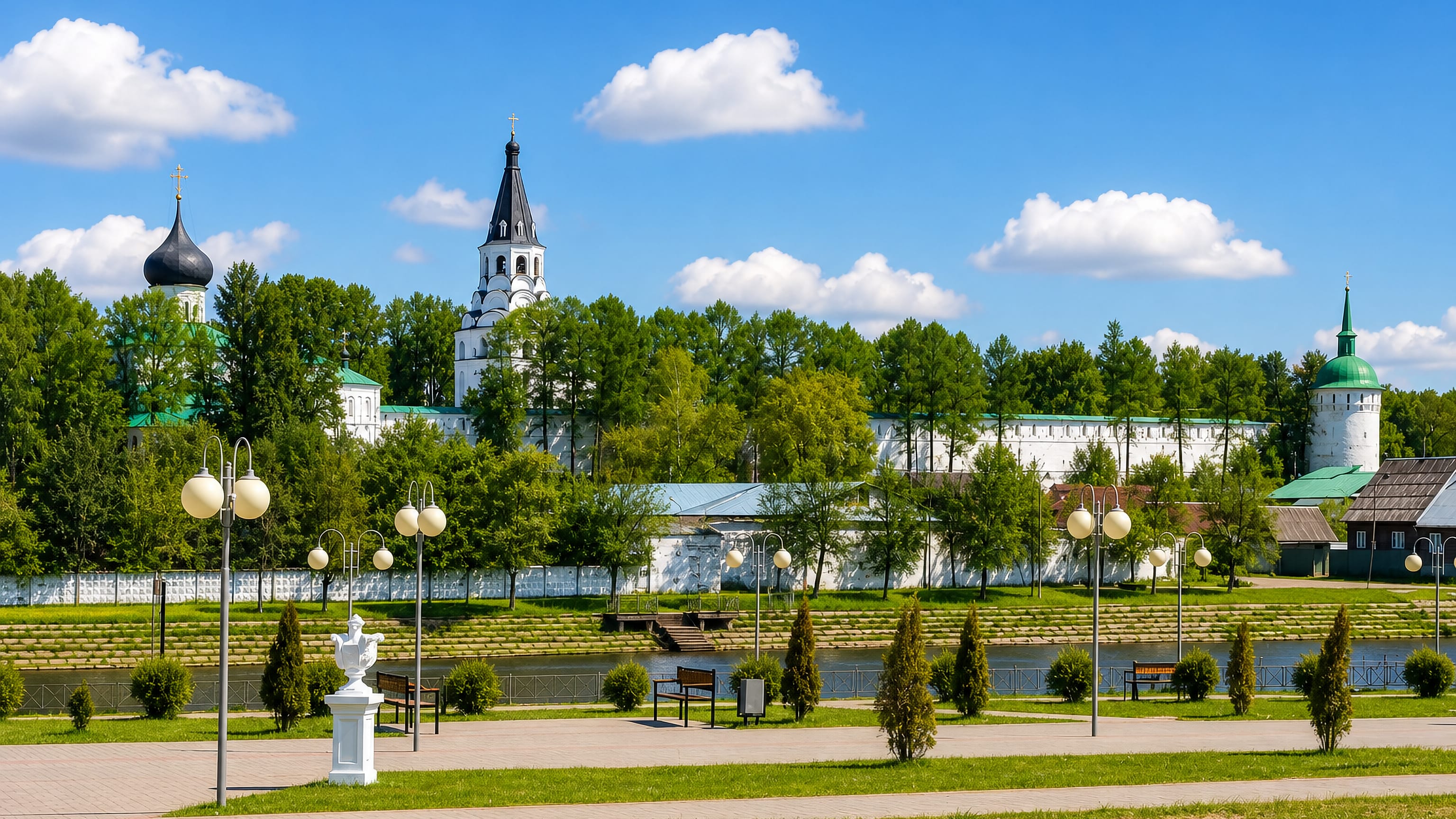
The Alexandrov Kremlin is the reason anyone stops, a walled residence used by Russian princes in the medieval period and afterwards turned into a convent that keeps the architecture in use. Everything else is ordinary. Aleksandrov works as the district town of Alexandrovsky District, with the Cathedral of the Nativity of Christ and a scatter of parish churches among plain streets.
Literature supplies the other draw. The Museum of Marina and Anastasia Tsvetaeva gives a second reason to break a journey here.
What are the main landmarks in Aleksandrov?
One complex outweighs the rest. The Alexandrov Kremlin is the walled residence turned convent, and the ground inside preserves the architecture that brings people to Aleksandrov at all. Churches account for much of what is left, among them Holy Trinity Church, the Church of the Protection of the Theotokos, Saint Theodore Stratelates church and the Church of the Crucifixion Bell Tower.
A pair of museums comes next. The Museum of Marina and Anastasia Tsvetaeva and Pervushin Manor carry the civil side, while the Mass grave of Leningrad citizens and the Memorial to Chernobyl liquidators mark the twentieth century in plainer terms.
What is the history of Aleksandrov?
The town dates to 1301. Under the name Alexandrovskaya Sloboda it served as a residence of Russian princes, and the court that sat here put a small place in Vladimir Oblast at the centre of events recorded across Russia. The walls survive.
What was a princely seat became a convent, so the ground kept its buildings rather than being cleared, and the Alexandrov Kremlin is what that continuity left behind. Ordinary town history took over afterwards. Aleksandrov became the administrative centre of Alexandrovsky District and gained the school, treasury and merchant houses that any district town of the period acquired.
Moscow lies about 120 kilometres to the south-west. Proximity of that order shaped the town more than anything happening inside Alexandrovsky District, and it still explains why most visitors arrive and leave on the same day. Markers of the twentieth century followed.
The Mass grave of Leningrad citizens and the Memorial to Chernobyl liquidators stand among the churches, two modern names in a place otherwise read through its medieval ground. A house away from the walls holds the Museum of Marina and Anastasia Tsvetaeva, carrying the sisters' name into the later record of Aleksandrov.
Where is Aleksandrov?
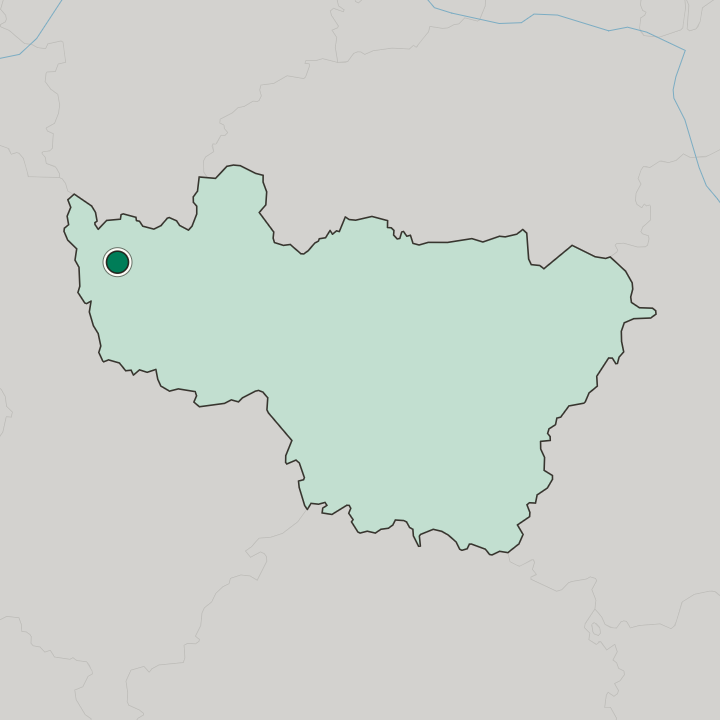
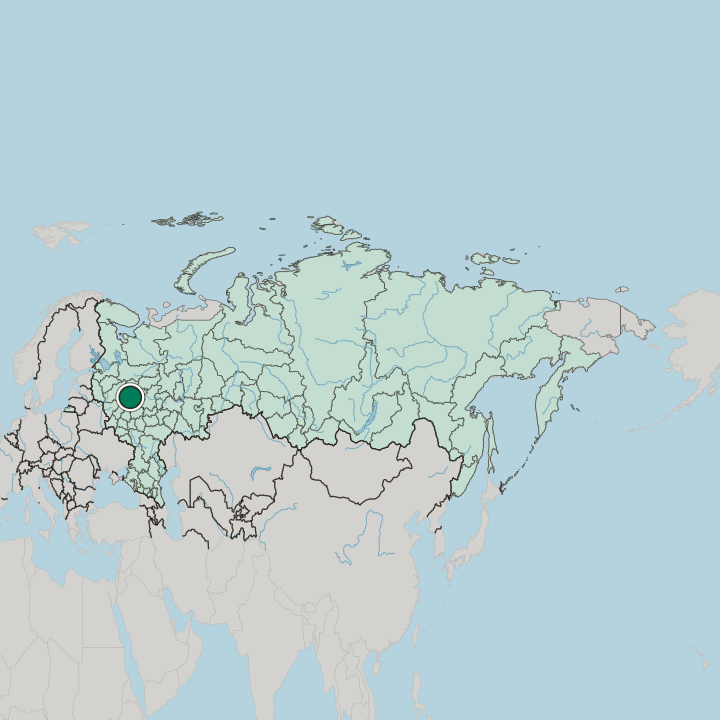
The town is small in extent. Aleksandrov occupies a compact area at the head of Alexandrovsky District, and district ground begins within a short distance of the last built-up streets in every direction. Moscow lies about 120 kilometres to the south-west.
Vladimir Oblast is administered from Vladimir, and both places keep the same clock as Aleksandrov, which is the practical measure of how the region hangs together.
What is the climate of Aleksandrov?
Winter runs long. The temperate band of the northern hemisphere governs the year, so the cold settles around the turn of it and the warm weeks arrive at midsummer, on much the same schedule as the country around Moscow. Daylight swings with it.
Midwinter afternoons are short at this distance north-east of Moscow, while midsummer holds the light long enough to walk the Alexandrov Kremlin grounds late in the evening.
How do you get to Aleksandrov?
Most arrivals come from Moscow. The town lies about 120 kilometres north-east of the capital, which puts it inside the range a visitor covers in one direction before lunch and returns from the same evening. Roads run in through Alexandrovsky District.
Aleksandrov is that district's administrative centre, so the local network converges on the town, and anyone continuing deeper into Vladimir Oblast tends to start the leg from here rather than from a smaller neighbour.
Good for
More cities in Vladimirskaya Oblast’
Updated October 2026