Russia · Vladimirskaya Oblast’
Where to Stay in Gus’-Khrustal’nyy, Vladimirskaya Oblast’
Gus'-Khrustal'nyy keeps to the Gus River in Vladimir Oblast and dates from 1756. Its cathedral holds a crystal museum.
Find your area →


Where to stay in Gus’-Khrustal’nyy
Where the beds are, and what that means for the visit.
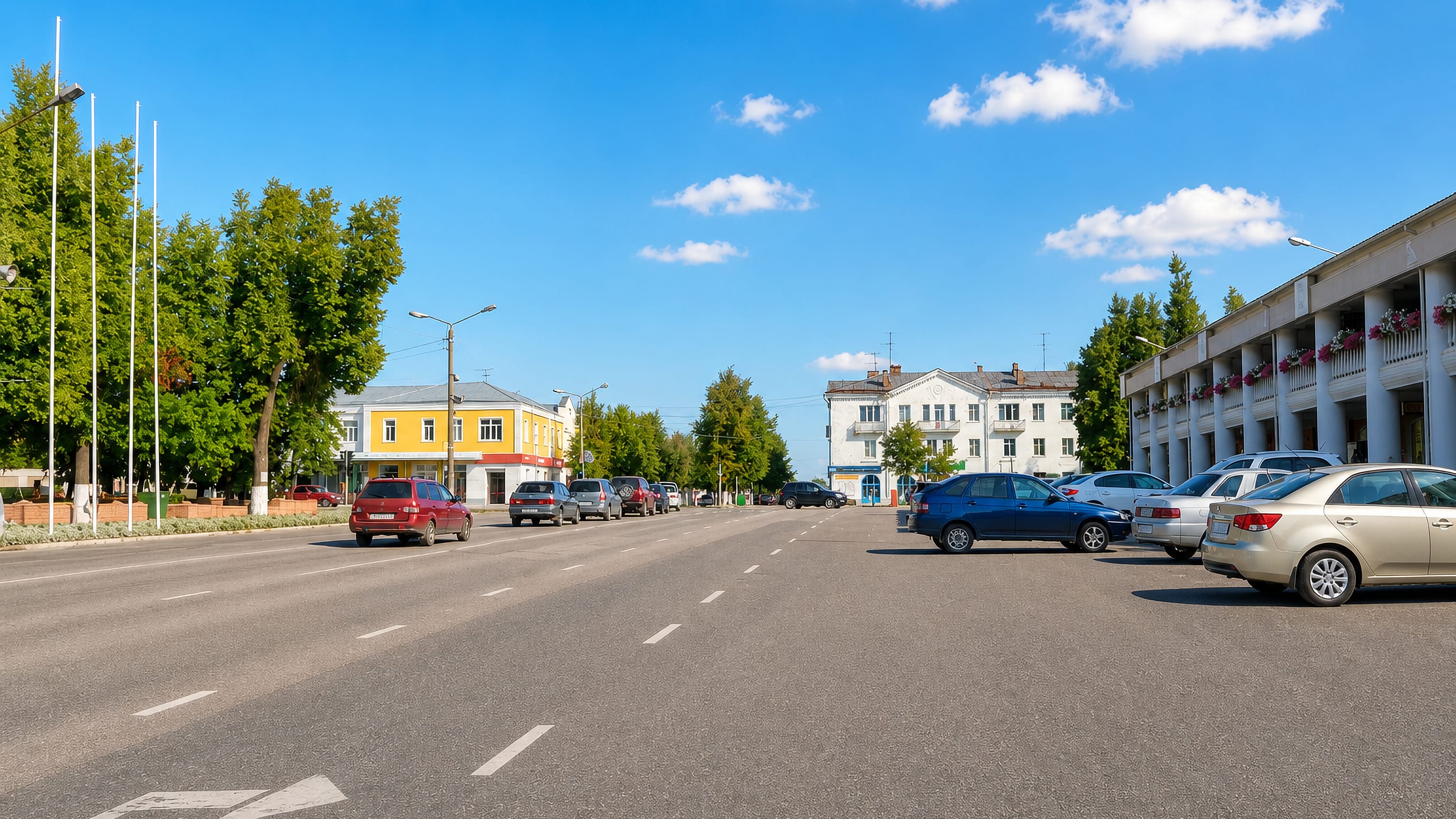
Bed stock is thin and concentrated. What exists sits in the central streets around Saint George Cathedral in Gus-Khrustalny, which is where the museums, the shops and the protected houses all are, so a stay there covers the whole visit on foot. Nothing in the centre is far apart.
That compactness is the argument for one night rather than two, since the Gus-Khrustalny Historical and Art Museum and the crystal collection can both be seen between a late morning arrival and an early evening departure. A second night only makes sense as a base for the wider oblast. The Gus River side is quieter.
Rooms towards the water trade the walk to the cathedral for an evening that has somewhere to go, and the bank gives Gus'-Khrustal'nyy its one walk that is not between buildings. Vladimir is the fallback. The oblast capital lies about 63 kilometres to the north and carries the stock a town of this size never had, at the cost of turning the crystal museum into a half-day excursion. Book well ahead for a weekend in summer.
Things to do in Gus’-Khrustal’nyy
Ranked by global recognition; descriptions from Wikidata (CC0).
Museums & Galleries
1- Gus-Khrustalny Historical and Art Museum Heritage
Churches & Religious Sites
2- Saint George Cathedral in Gus-Khrustalny Heritage
- Церковь Троицы Живоначальной (бывш. Иоакима и Анны) (Гусь-Хрустальный) Heritage
Landmarks & Notable Places
4- Собор Георгия Победоносца (Музей хрусталя, ансамбль) (Гусь-Хрустальный) Heritage
- Жилой дом (Гусь-Хрустальный) Heritage
- Типография (Гусь-Хрустальный) Heritage
- Училище мужское (Гусь-Хрустальный) Heritage
worth knowingacross 3 categories in Gus’-Khrustal’nyy
About Gus’-Khrustal’nyy
One collection carries the town.
What is Gus’-Khrustal’nyy known for?
Saint George Cathedral in Gus-Khrustalny doubles as the setting for a museum of crystal, an ensemble that is the largest piece of architecture in Gus'-Khrustal'nyy and the reason most visitors make the trip at all. The Gus-Khrustalny Historical and Art Museum covers the rest of the record. Beyond those two the draw is the town fabric itself, with rows of protected residential houses, a former boys' school and an old printing house standing from the same period of building.
What are the main landmarks in Gus’-Khrustal’nyy?
The cathedral does double duty. Saint George Cathedral in Gus-Khrustalny holds a museum of crystal within its ensemble, and the Gus-Khrustalny Historical and Art Museum handles everything the collection does not, from the founding of the town in 1756 onward. Two memorials belong to the same short list.
A monument and mass grave commemorate members of the Gusevsky Youth Union who died in 1918, while a second grave holds soldiers of the Soviet Army who died of wounds between 1941 and 1945. Church of the Life-Giving Trinity, a former boys' school and a printing house complete the protected fabric, alongside the rows of listed residential houses that give the centre its consistency.
What is the history of Gus’-Khrustal’nyy?
The town dates from 1756. It grew on the Gus River in what is now Vladimir Oblast, and the eighteenth-century start shows in a centre where rows of ordinary residential houses carry protection alongside the churches. Two dates mark the twentieth century.
A monument stands over the mass grave of the first members of the Gusevsky Youth Union, who died in 1918, and a second grave holds soldiers of the Soviet Army who died of their wounds between 1941 and 1945. Institutions came with the growth. A printing house, a boys' school and the Church of the Life-Giving Trinity are all listed, which is a fair summary of what a town of that period built once it had the means to build.
The record is kept in two places. Saint George Cathedral in Gus-Khrustalny was given over to a museum of crystal, and the Gus-Khrustalny Historical and Art Museum holds the wider town history, so the two collections divide the past between them. Vladimir governs from about 63 kilometres north.
That distance left Gus'-Khrustal'nyy a separate place with institutions of its own rather than a suburb of the oblast capital, and the separateness is still legible in the centre.
Where is Gus’-Khrustal’nyy?
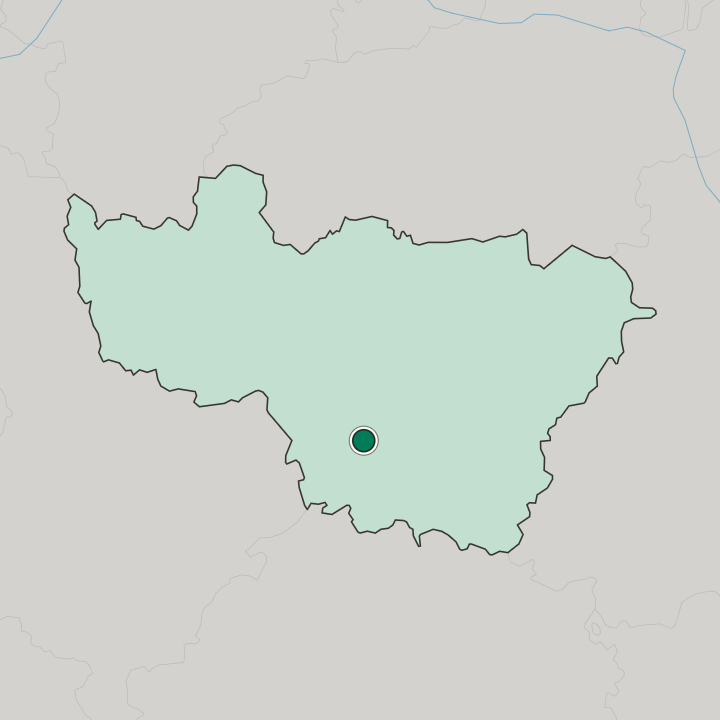
The Gus River runs through it. Gus'-Khrustal'nyy sits on that water about 63 kilometres south of Vladimir, inside Vladimir Oblast, and the built-up area is compact enough to cross on foot in well under an hour. A short walk covers most of it.
Vladimir, the administrative centre of the oblast, is the reference point for everything the town does not have itself, and the road north is the one most journeys use.
What is the climate of Gus’-Khrustal’nyy?
Seasons here are not subtle. The temperate band of the northern hemisphere sets the year, so the cold holds through the turn of it and the warm weeks come at midsummer, with the Gus River marking the change more plainly than the streets do. Daylight moves as much as the temperature.
Midwinter afternoons close early, while midsummer keeps the light late enough for a walk along the bank after dinner.
How do you get to Gus’-Khrustal’nyy?
Approaches come from Vladimir. The oblast capital lies about 63 kilometres to the north, and the road down from Vladimir is the route most arrivals use. Everything else is local.
Once inside Gus'-Khrustal'nyy the centre is walkable end to end, so a car earns its keep on the way in and very little of it afterwards, which is the usual pattern for a town of this size in Vladimir Oblast.
Good for
More cities in Vladimirskaya Oblast’
Updated October 2026