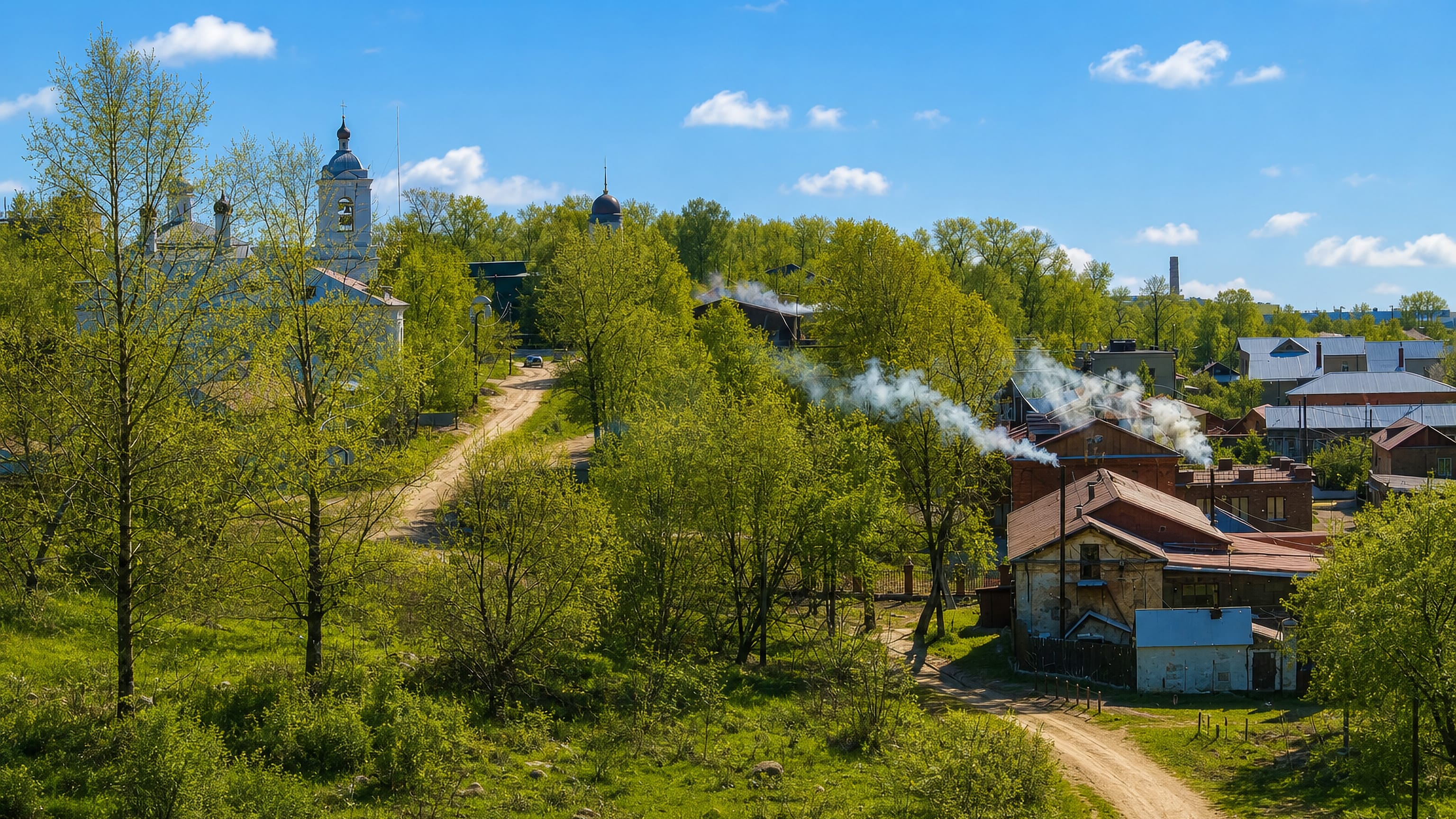
Russia · Vladimirskaya Oblast’
Where to Stay in Kovrov, Vladimirskaya Oblast’
Kovrov holds the right bank of the Klyazma River in Vladimir Oblast, dated to 1157. Only Vladimir outranks it.
Find your area →


Where to stay in Kovrov
The practical side of choosing where to sleep.
Kovrov is a working city, and its beds sit where work put them rather than where a visitor would choose. The centre is the safe pick. Streets around the Duma building in Kovrov and Transfiguration Cathedral in Kovrov keep the museums, the theatre and most of the listed merchant houses within a walk, which is the whole of what a short visit needs.
Evenings are quiet there. Most of the fabric worth seeing lies inside a few blocks, from the Fedorovsky estate to the Treumov House, so a room anywhere in that grid works about equally well. The Klyazma River side is the other option.
Rooms towards the bank trade the walk to the Cathedral of the Nativity of Christ for open water and the path along it, and in a city built back from its river that access is not automatic. Neither side costs much walking. Anyone using Kovrov as a base for Vladimir Oblast will find the centre more useful, since the roads and the local network converge there rather than at the water.
Vladimir remains the larger alternative, though a stay there turns the Kovrov museums into a day trip rather than a morning. A night is all the city asks.
Things to do in Kovrov
Ranked by global recognition; descriptions from Wikidata (CC0).
Museums & Galleries
1- Kovrovskiĭ istoriko-memorialʹnyĭ muzeĭ
Churches & Religious Sites
5- Saint John the Warrior Church, Kovrov Heritage
- Church of the Icon of Our Lady Feodorovskaya (Kovrov) Heritage
- Церковь Николая Чудотворца (Ковров) Heritage
- Церковь (Ковров) Heritage
- Часовня (Ковров) Heritage
Castles & Historic Sites
1- Стела «Город воинской славы» (Ковров)
Landmarks & Notable Places
8- Cathedral of the Nativity of Christ (Kovrov) Heritage
- Duma building in Kovrov Heritage
- Transfiguration Cathedral in Kovrov Heritage
- Депо пожарное (Ковров) Heritage
- Дворец культуры им. Дегтярёва (Ковров) Heritage
Show 3 more →
- Депо (Ковров) Heritage
- Дом Куренковых (Треумовых - по паспорту; заведен 22.11.06) (Ковров) Heritage
- Дом Треумовых (Ковров) Heritage
worth knowingacross 4 categories in Kovrov
About Kovrov
Industry and the river between them explain Kovrov.
What is Kovrov known for?
A stela marks its standing as a City of Military Glory, and the Degtyaryov Palace of Culture, the city theatre building and a row of merchant houses carry the civic record of the industrial century. Churches supply the older layer. Transfiguration Cathedral in Kovrov and the Cathedral of the Nativity of Christ are the two that shape the skyline above the Klyazma River.
What are the main landmarks in Kovrov?
Two cathedrals lead the list. Transfiguration Cathedral in Kovrov and the Cathedral of the Nativity of Christ are joined by Saint John the Warrior Church and the Church of the Icon of Our Lady Feodorovskaya, which together account for most of the older building still standing. Civic architecture follows.
The Duma building in Kovrov, the city theatre, the Degtyaryov Palace of Culture and the merchant Dokunin house show what the nineteenth and twentieth centuries added to a place first recorded in 1157. The Kovrov Historical and Memorial Museum holds the record indoors, and a stela naming the city a City of Military Glory stands with the mass grave of Soviet Army soldiers who died of wounds between 1941 and 1945.
What is the history of Kovrov?
The date on record is 1157. That places Kovrov among the older settlements of what became Vladimir Oblast, standing on the right bank of the Klyazma River, itself a tributary of the Oka. Merchants built the centre.
The Dokunin house, the Treumov House and the Fedorovsky estate survive from that period, along with a zemstvo administration and a boys' gymnasium that mark the point where the town acquired institutions of its own. Industry changed the scale. The Degtyaryov Palace of Culture, a communal housing block and a factory office are listed among the monuments, which is an unusual set for a city to protect and a fair indication of how much of Kovrov the industrial period built.
War left its own marks. A mass grave holds soldiers of the Soviet Army who died of their wounds between 1941 and 1945, and a stela stands for the title City of Military Glory. Kovrov is second in Vladimir Oblast only to Vladimir itself.
The Kovrov Historical and Memorial Museum keeps the whole sequence in one place, which is the shortest route into a past that the street fabric otherwise tells in pieces.
Where is Kovrov?
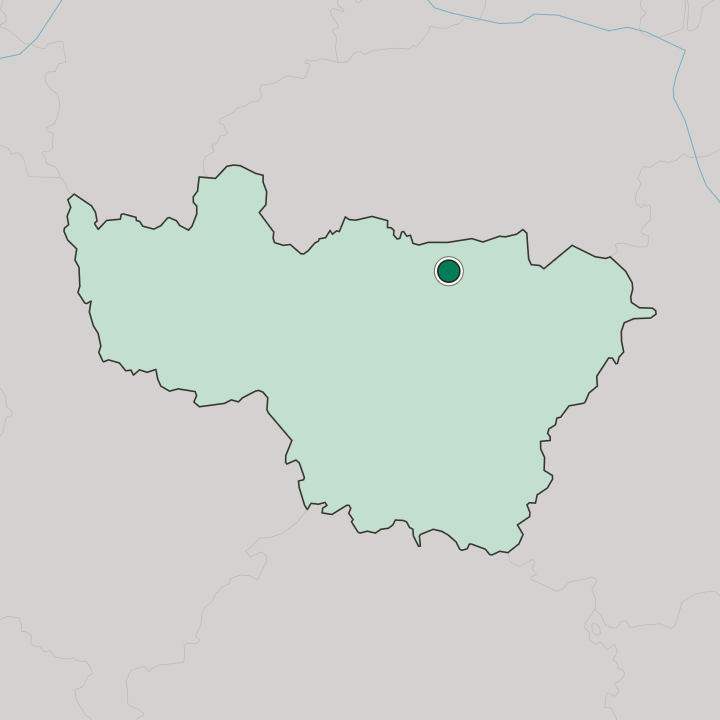
The Klyazma River sets the edge. Kovrov occupies the right bank, and the built-up area runs back from the water across ground that belongs to Vladimir Oblast in every direction beyond the city limits. The Klyazma joins the Oka downstream.
Vladimir, the oblast's administrative centre, is the larger of the two cities, and Kovrov is the only other one in Vladimir Oblast of comparable weight.
What is the climate of Kovrov?
Winter dominates the calendar. In the temperate band of the northern hemisphere the cold arrives well before the turn of the year and holds past it, while the warm weeks concentrate at midsummer over the Klyazma River. The bank changes with them.
A walk along the water in July and the same walk in January are different propositions, and that difference decides more about a visit to Kovrov than any question of which street to stay on.
How do you get to Kovrov?
Vladimir is the reference point. Kovrov lies within easy reach of the oblast's administrative centre, and most arrivals come through it, since the network of Vladimir Oblast is organised around the capital rather than around its second city. The rest is local road.
Inside Kovrov the centre is compact, the listed buildings stand within a few blocks of the Duma building in Kovrov, and the Klyazma River is close enough that reaching the bank costs nothing more than a short walk from most of the streets.
Good for
More cities in Vladimirskaya Oblast’
Updated October 2026