Russia · Yaroslavl Oblast · Yaroslavl
Korovniki, Yaroslavl — Area Guide & Where to Stay
Korovniki is a settlement in the south of Yaroslavl at the mouth of the Kotorosl, whose sloboda arose in the thirteenth century opposite the kremlin.
About Korovniki


Where to stay in Korovniki
The practical side of choosing where to sleep.
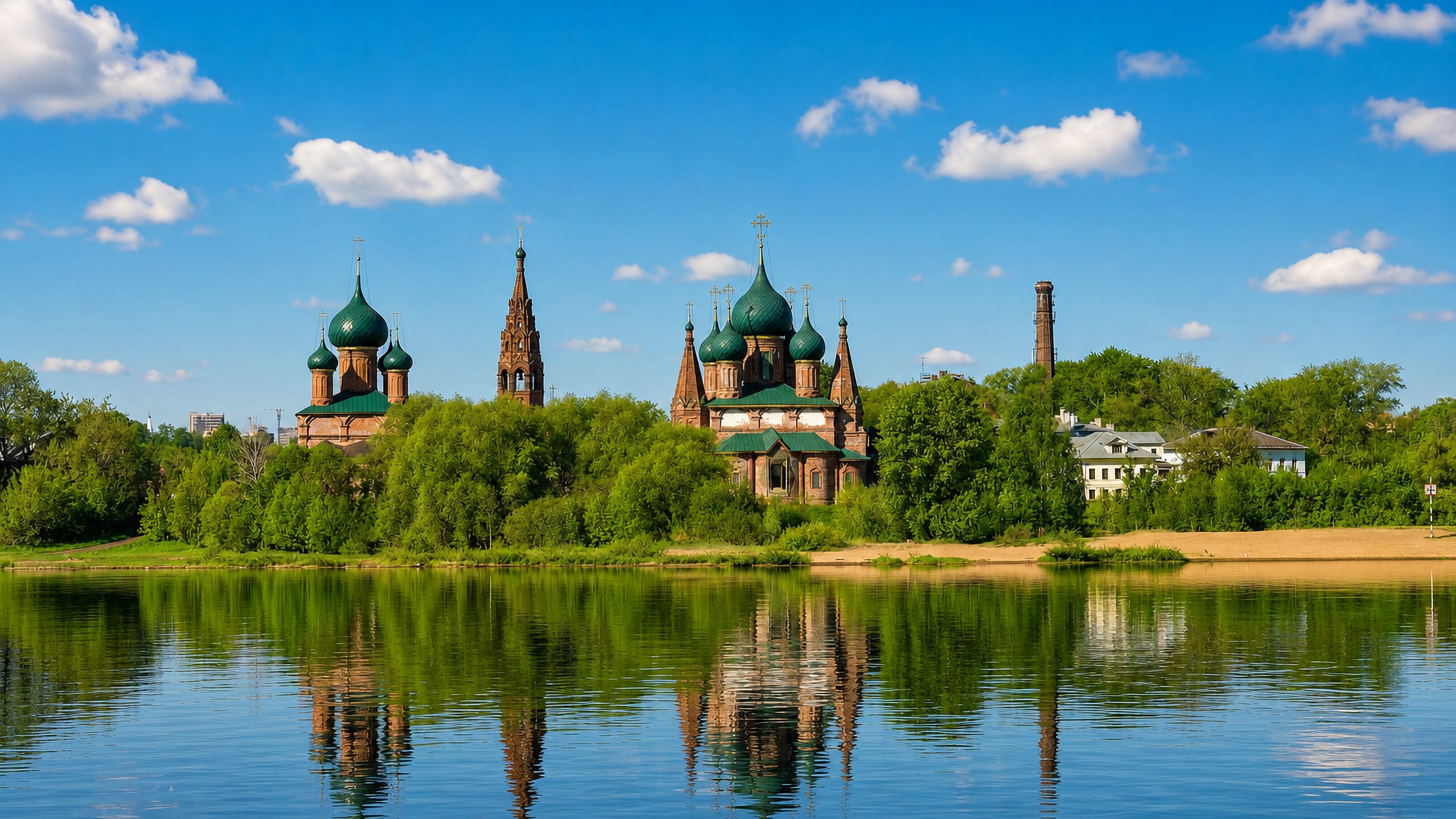
The churches are the reason to cross the river. The Korovniki parish stands at the confluence of the Kotorosl and the Volga, facing the old centre of Yaroslavl from the opposite bank. Two churches make the group.
John Chrysostom was the cold church and a second, warm one was built beside it in 1669. Yaroslavl proper holds the rooms.
Things to do in and around Yaroslavl
Ranked by global recognition; descriptions from Wikidata (CC0).
Churches & Religious Sites
5- St. John Chrysostom Church in Yaroslavl Heritage
- Church of St. Nicholas in Tropino Heritage
- Church of Sts. Peter and Paul Heritage
- Our Lady of Vladimir Church in Korovniki Heritage
- Tugova Hill Church Heritage
Castles & Historic Sites
1- Millennium of Yaroslavl Monument
Landmarks & Notable Places
8- Ensemble of churches in Korovniki Heritage
- Portovaya Embankment 4, Yaroslavl Heritage
- Арочный мост (Ярославль) Heritage
- Дом Градусовой (Ярославль) Heritage
- Дом Коченина (Ярославль) Heritage
Show 3 more →
- Жилой дом (Ярославль) Heritage
- Жилой дом Кузнецова (Ярославль) Heritage
- Жилой дом церкви Иоанна Златоуста (Ярославль) Heritage
worth knowingacross 3 categories in and around Yaroslavl
About Korovniki
What are the main landmarks in Korovniki?
John Chrysostom is among the best of seventeenth-century Yaroslavl building. It was raised between 1649 and 1654 at the expense of two parishioners, the Yaroslavl townsmen Ivan and Fyodor Fyodorovich Nezhdanovsky, and its tile decoration is the richest of any church in the city. Tiles were made here.
Good clays lay around the sloboda, so from the seventeenth century it became a centre of pottery, brick and tile production, and its work supplied the stone building then going up across Yaroslavl. A warm church followed in 1669. It was built beside the first, completing the group that stands at the mouth of the Kotorosl.
What is the history of Korovniki?
The sloboda took its name from cattle. It arose in the thirteenth century at the mouth of the Kotorosl on the bank opposite the Yaroslavl kremlin, and its people reared cattle, which is what the name records. Yaroslavl absorbed it in 1584.
The sloboda became part of the posad that year and belonged, with Tolchkovskaya, Shilovskaya and Tropinskaya, to the trans-Kotorosl Tolchkovskaya sotnya. Hides fed the town's main trade. Korovniki supplied raw material for the small-scale leather industry that led Yaroslavl in the sixteenth and seventeenth centuries, and the name may as easily record the preparing of cowhides as the rearing itself.
Fish were owed to the palace. The sloboda was one of the palace fishing settlements with a fish quota, and charters of 1645 and 1676 granted it with others to Prince Lvov-Yaroslavsky, then to the boyar Buturlin and the armourer Bogdan Khitrovo, though the fish rent still went to the palace. An inventory of 1631 lists the work.
Forty-two to forty-five households held two merchants trading with Arkhangelsk, six trading locally, five fish dealers, five fishermen, three hunters and fourteen craftsmen, of whom nine were potters.
Where is Korovniki?
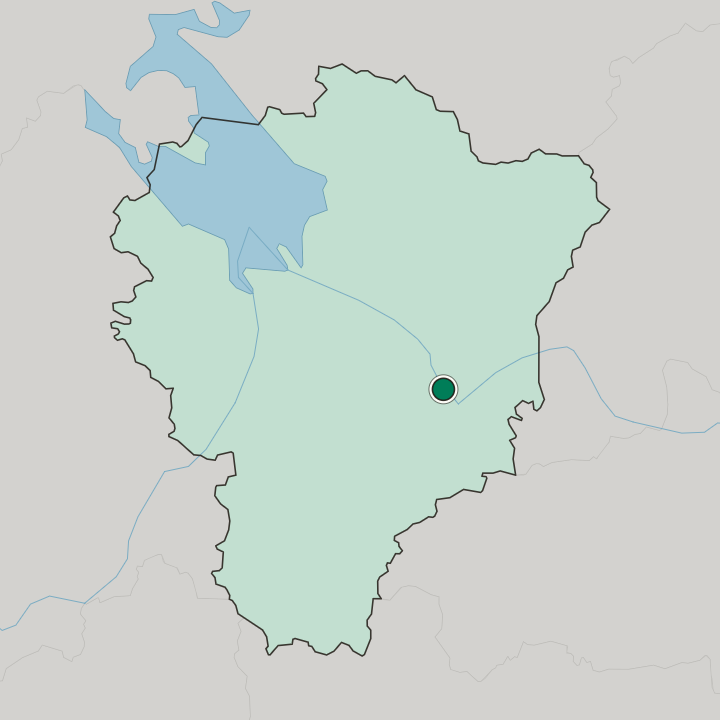
Korovniki lies south of the Kotorosl in Yaroslavl at its confluence with the Volga, opposite the kremlin on the far bank.
Good for
More areas in Yaroslavl
Updated October 2026