Rwanda: Regions, Cities & Travel Guide
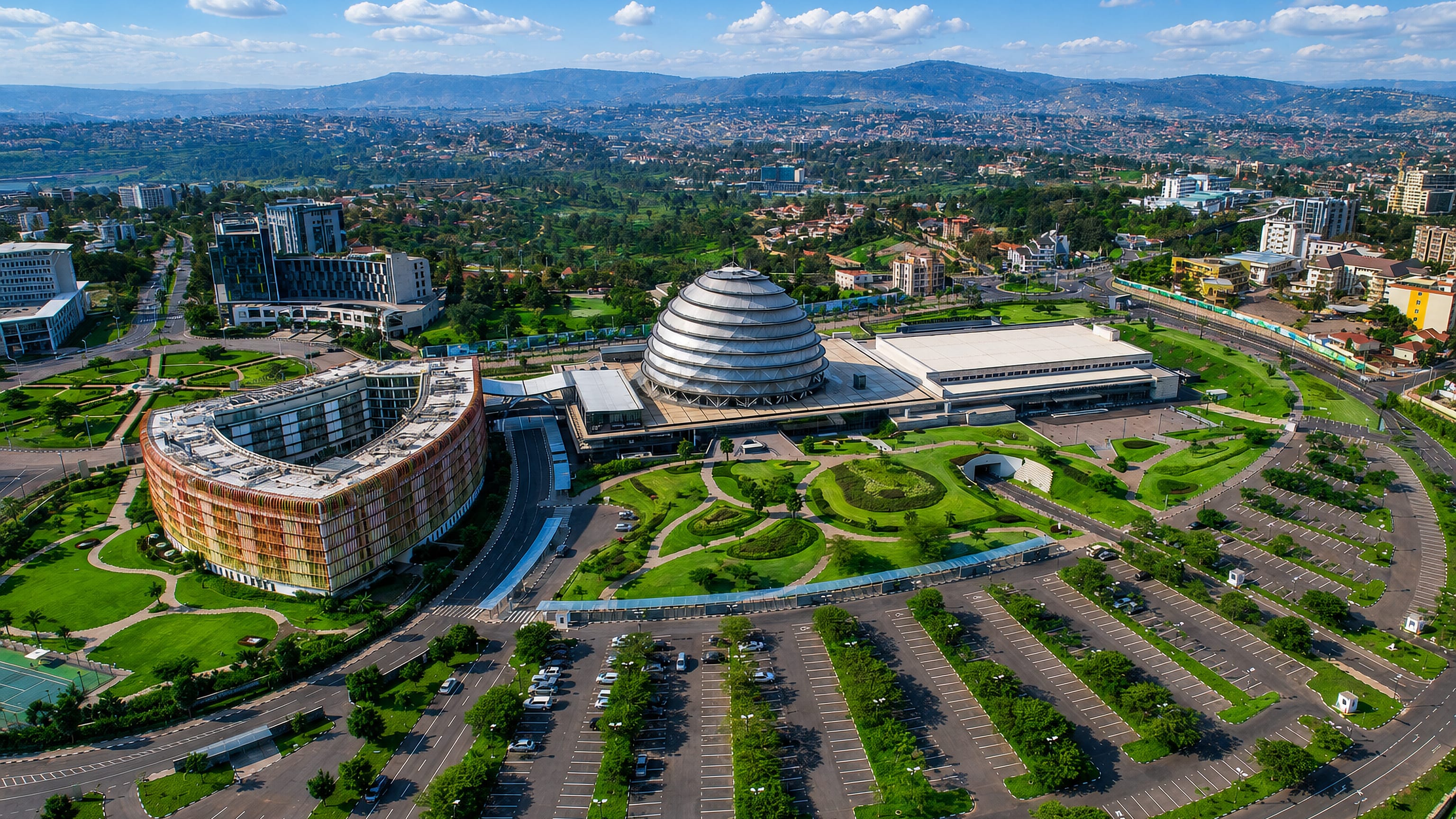
Rwanda is a landlocked country in East Africa, a land of a thousand hills rising to the Virunga volcanoes, with Kigali at its centre.
Hotel links are affiliate links: booking through them may earn us a commission, at no extra cost to you. It never affects how places are ranked. How this works


Top destinations in Rwanda
One city to start from, then drill into its areas and hotels.
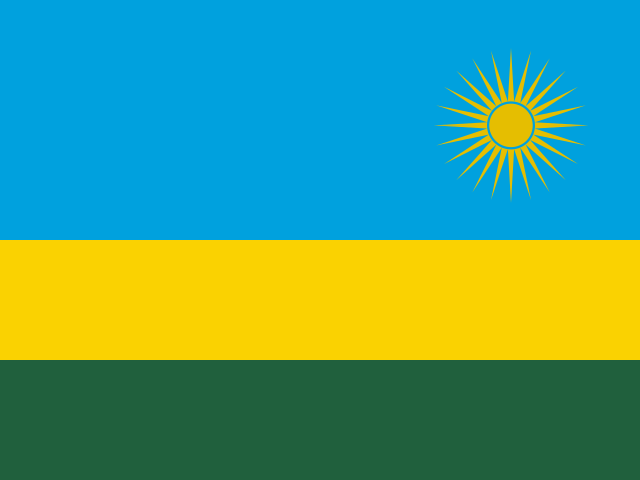 Rwanda
Kigali
Kigali is the capital and largest city of Rwanda, a young hill city near the country's geographic centre and the seat of Kigali Province.Where to stay →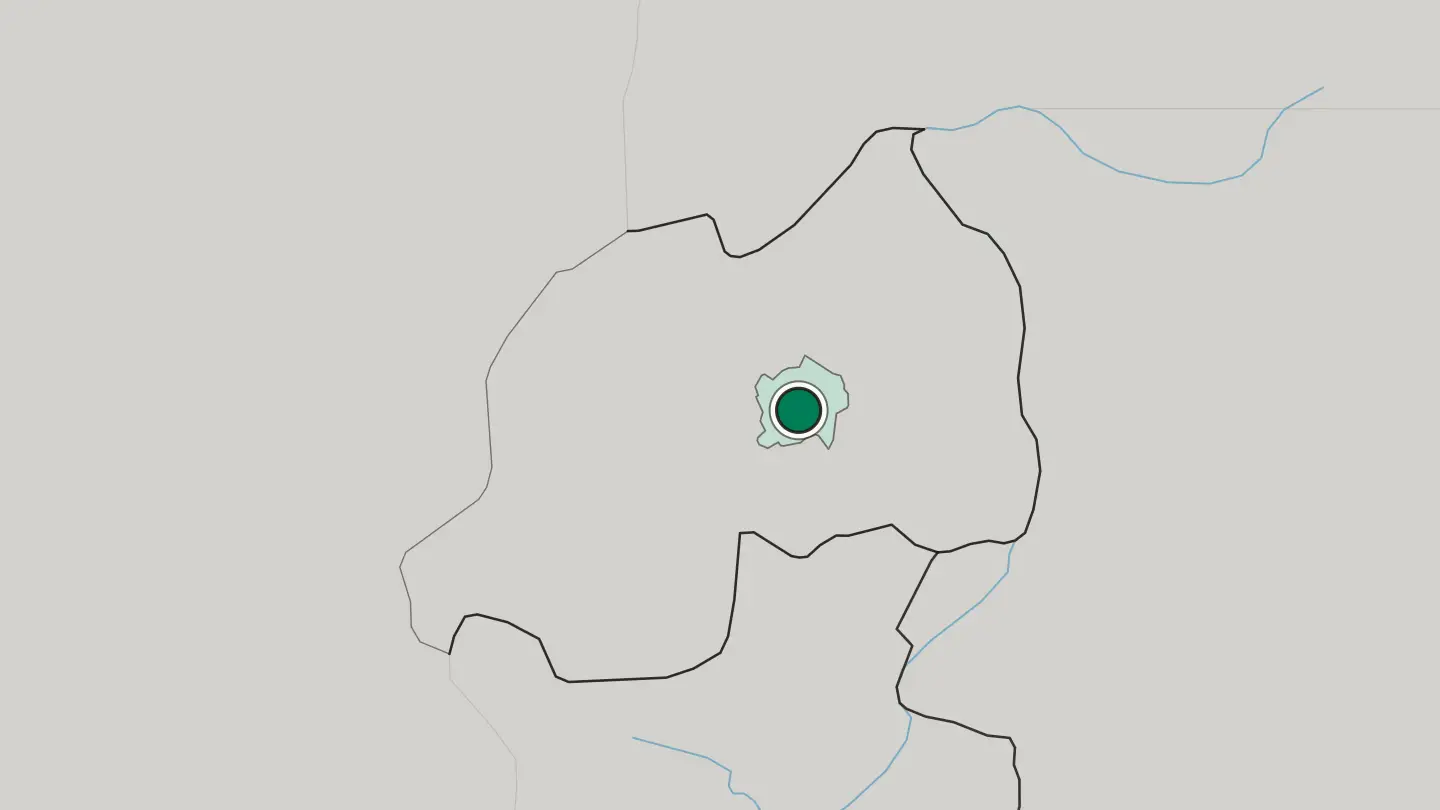
Hotel links are affiliate links: booking through them may earn us a commission, at no extra cost to you. It never affects how places are ranked. How this works
Browse by region
One region so far — open it to see its cities and towns.
About Rwanda
Mountain gorillas made Rwanda famous.
What is Rwanda known for?
Trackers lead small groups up the bamboo slopes of Volcanoes National Park, in the north-west, to spend an hour beside a habituated family. The rest of the country repays the visit just as well. Nyungwe Forest shelters chimpanzees under a canopy walkway strung between the trees, Akagera National Park runs its game drives across savanna in the east, and Lake Kivu edges the western border with beaches at Gisenyi.
Kigali ties it together.
Where is Rwanda?
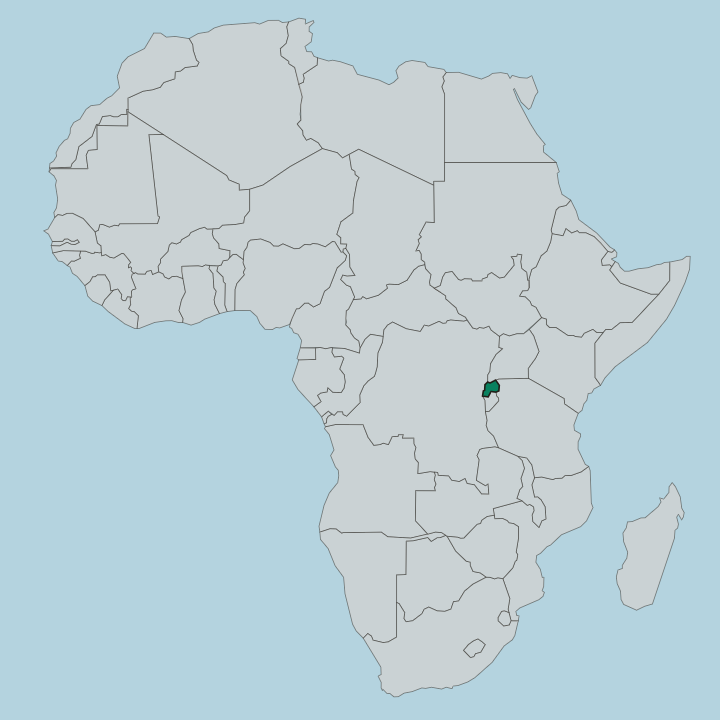
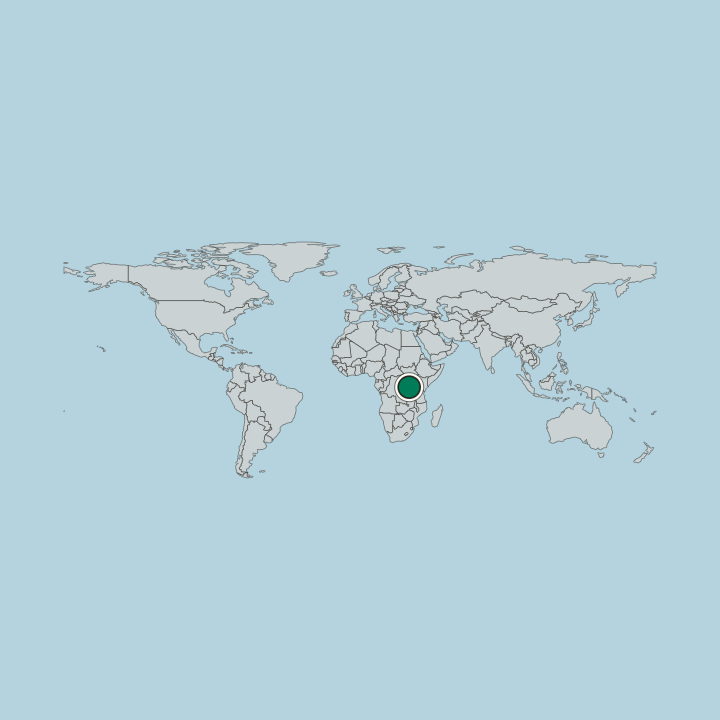
Rwanda is a landlocked country in East Africa, wedged between the great lakes and the highlands south of the equator. The terrain earns its nickname. Steep grassy hills fold across almost the whole country, terraced field above terraced field, so that even the roads climb and drop in long ribbons rather than running flat.
The land tilts from west to east. Along the western edge the ground rises to the Virunga Mountains, a chain of volcanoes shared with the Democratic Republic of the Congo, where Mount Karisimbi crowns the country as its highest point at 4,507 metres. Below them lies Lake Kivu, one of the deep rift lakes, filling a trench of the Albertine Rift that marks the western border.
From that high spine the hills step down eastward toward the savanna and marshes of Akagera National Park, drier and flatter than anywhere else in the country. A watershed runs through these highlands. Rain falling on the western slopes drains toward the Congo, while the eastern side feeds the Nile, so a single ridge parts the two greatest river systems in Africa.
Small crater lakes and papyrus swamps dot the valleys between the hills. Compact and green, the country packs mountains, lakes, forest, and plain into a space you can cross in a day.
What is the history of Rwanda?
Rwanda was a kingdom long before it was a colony. For centuries a monarchy under the mwami ruled these hills, its court eventually settling at Nyanza in the south, where the reconstructed royal palace and its long-horned Inyambo cattle still stand. European rule arrived late and second-hand.
The territory fell first to Germany, then passed to Belgium after the First World War, governed as part of Ruanda-Urundi under a colonial administration that hardened the divisions between Hutu and Tutsi. Independence came in 1962, splitting the joint territory into Rwanda and Burundi and ending the monarchy. The decades that followed were turbulent.
Cycles of ethnic violence culminated in the 1994 genocide against the Tutsi, in which hundreds of thousands were killed in roughly a hundred days, a catastrophe recorded now at the Kigali Genocide Memorial. Recovery reshaped the country. The years since have brought a deliberate rebuilding of the state, a national language shift toward English, and a reputation for order and cleanliness unusual on the continent, symbolised by the monthly community-work morning known as umuganda.
The past is neither hidden nor dwelt upon. It is taught, memorialised, and carried into a country determined to be defined by more than its worst days.
What is Rwanda like?
Rwandan culture turns on cattle, dance, and a strong sense of the collective. The old warrior dance, the intore, is the country's signature performance, its dancers crowned with flowing manes of dried grass and leaping to drum patterns that once celebrated returning fighters and prized herds. You can watch it at the King's Palace in Nyanza and at the ethnographic museum in Huye.
Craft carries the same deep roots. Imigongo, the bold black-and-white geometric art built up from cow dung and natural pigment, comes from the Kakira country in the east, while agaseke peace baskets with their tight woven cones appear on shelves across the country and in stylised form on the national coat of arms. Language and manners bind daily life.
Kinyarwanda is spoken by nearly everyone, alongside French, English, and Swahili, and a culture of respect and restraint runs through greetings, gatherings, and the shared umuganda work mornings. Food is unshowy and filling. Brochettes of goat, grilled tilapia from Lake Kivu, plantain, beans, and the starchy staple ubugali anchor most meals.
Music, from traditional drumming to Kigali's studios, threads through all of it.
What is the climate of Rwanda?
Rwanda sits close to the equator, but its altitude keeps the heat off. Most of the country is a temperate tropical highland where daytime temperatures hover around the low twenties in Kigali all year, cooling sharply after dark and colder still up in the Virunga volcanoes. The calendar splits into wet and dry.
Two rainy seasons, the long rains from roughly March to May and the short rains around October to December, bracket the drier windows favoured for gorilla trekking and game drives. High and green, Rwanda rarely feels tropical in the sticky sense.
How do you get to Rwanda?
Most travellers arrive by air into Kigali. Kigali International Airport sits in the Kanombe sector on the eastern edge of the capital, a short drive from the centre, and the national carrier links it to hubs across Africa, Europe, and the Gulf. Overland routes matter too.
The country is easily reached by road from Uganda and Kenya to the north-east, and border crossings connect it to its neighbours around Lake Kivu. Once inside, distances are short. Good tarmac roads and the compact map make it simple to reach the parks and the lake in a few hours' drive.
Good for
Updated September 2026