Ukraine · Donetska Oblast
Where to Stay in Chystyakove, Donetska Oblast
Chystyakove, also known as Torez, is a Donbas coal city founded in 1778, its streets set around Lenina Square and the memorials of the mines.
Find your area →


Where to stay in Chystyakove
How the choice of base plays out on the ground.
Lenina Square is the closest thing Chystyakove has to a centre, and rooms near it put the train station building, the Civil War and Second World War memorial and Saint Michael's church within reach on foot. The rest is spread out. It suits you if the errand is in the city itself, because the mining districts run for a long way and walking between them is not practical.
Lenina Street carries the same name. Beyond the centre the city thins into mining quarters, and the graves on Gagarin Avenue, Myru Street, Obrucheva Street and Teatralna Street mark how far the built-up ground reaches. Rooms are few in any quarter.
Chystyakove is a working coal city rather than a visitor destination, and its status is disputed, so anyone planning a stay should treat local accommodation as uncertain and check conditions before travelling. Donetska Oblast offers little more. The city cemetery, the Church of the Reigning Icon of the Mother of God and the Church of the Moscow Hierarchs sit away from whatever central rooms exist, so a car matters more here than a map. Piatnytskoho Street lies among them.
Aleksey Stakhanov's grave and the monument to the miners who tested the Donbas coal cutter-loader are the two stops most visitors to Chystyakove come for.
Things to do in Chystyakove
Ranked by global recognition; descriptions from Wikidata (CC0).
Churches & Religious Sites
3- Свято-Михайлівський храм (Торез)
- Храм святителів Московських
- Перший Храм святителів Московських (Торез)
Castles & Historic Sites
4- Lenina Square, Chystiakove Heritage
- Monument to Vladimir Lenin in Chystiakove Heritage
- Monument to the miners-test drivers of Donbas coal cutter-loader Heritage
- Monument to Vladimir Mayakovsky in Chystiakove Heritage
Landmarks & Notable Places
1- Main building of Chystiakove train station Heritage
worth knowingacross 3 categories in Chystyakove
About Chystyakove
Coal is the whole story.
What is Chystyakove known for?
Chystyakove sits at the centre of a regional coal industry, and its monuments show it, from the memorial to the miners who tested the Donbas coal cutter-loader to the common grave of miners and the grave of Aleksey Stakhanov. Lenina Square and Lenina Street carry the same name. Four churches, a train station building and a long list of war graves fill out what the mines did not build.
The city carries a second name.
What are the main landmarks in Chystyakove?
Graves outnumber everything else. Mass graves of Southern Front soldiers lie on Gagarin Avenue, Myru Street, Obrucheva Street and Teatralna Street, at the city cemetery and on Lenina Street. Four churches stand here.
Saint Michael's church, the Church of the Moscow Hierarchs and the Church of the Reigning Icon of the Mother of God carry the religious side, while monuments name Vladimir Lenin, Vladimir Mayakovsky and Aleksey Stakhanov. The train station building survives, and a memorial marks the Civil War and the Second World War.
What is the history of Chystyakove?
The settlement dates from 1778. Coal changed it entirely, and the pits of the Donbas turned a small place on the steppe into a city that measured itself by output rather than by age. Mining made its heroes.
Aleksey Stakhanov is buried in Chystyakove, and a monument stands to the miners who tested the Donbas coal cutter-loader, so the industry's records and its dead share the same streets. A common grave holds miners. War came twice within a generation.
A memorial marks the Civil War and the Second World War together, mass graves of Southern Front soldiers are scattered across Gagarin Avenue, Myru Street, Obrucheva Street, Teatralna Street and the city cemetery, and separate graves hold victims of National Socialism. Later wars added more. Three soldiers who served in Afghanistan are buried here, their graves set among the older ones.
The Soviet decades left their names on the map. Lenina Square and Lenina Street still carry them, a monument to Vladimir Lenin stands in the city, another honours Vladimir Mayakovsky, and the train station building survives from the same era. The city is also called Torez.
Its status is disputed between Ukraine and Russia. Saint Michael's church, the Church of the Moscow Hierarchs and the Church of the Reigning Icon of the Mother of God stand through all of it.
Where is Chystyakove?
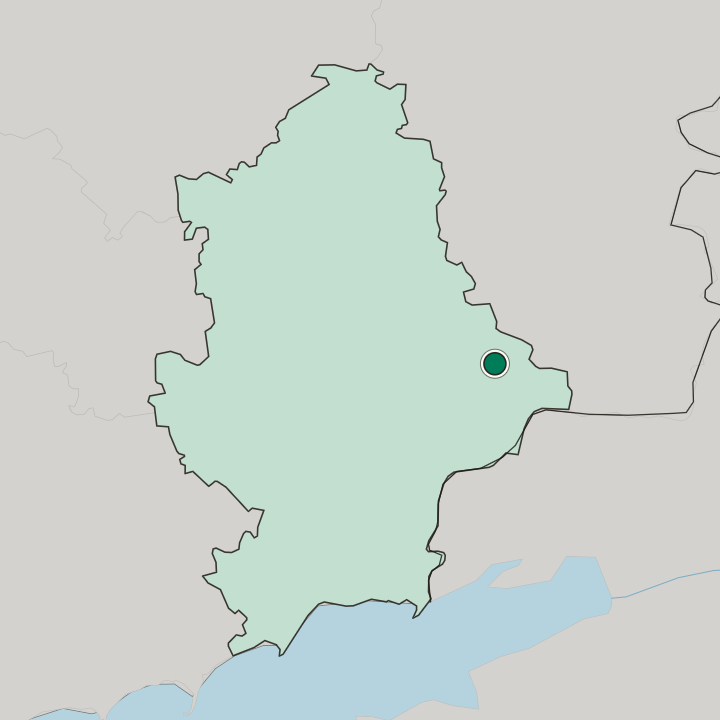
Chystyakove lies on the Donbas coalfield within Donetska Oblast, a wide city spread over mining ground rather than gathered around a river or a harbour. The city covers a lot of ground. Streets carry the older names, Lenina Street and Piatnytskoho Street among them, and Gagarin Avenue, Myru Street, Obrucheva Street and Teatralna Street each hold a mass grave of Southern Front soldiers.
The city cemetery lies on the outskirts.
What is the climate of Chystyakove?
The open Donbas country decides it. Nothing shelters Chystyakove from the wind that crosses the steppe of Donetska Oblast, so winters bite hard and summers run hot and dry over the mining ground and the streets alike. Rain is never abundant.
Snow comes with the cold months, and the flat ground of the coalfield gives the weather a clear run at the city from every side.
How do you get to Chystyakove?
The train station building still stands. Rail once served Chystyakove directly, and the main building of the station survives as a landmark whether or not trains call there, while roads across Donetska Oblast carry the rest of the traffic. Access depends on conditions.
The city's status is disputed, so travel arrangements to Chystyakove cannot be treated as routine and should be checked against local advice before any journey is planned.
Good for
More cities in Donetska Oblast
Updated September 2026