Ukraine · Luhanska Oblast
Where to Stay in Siverskodonetsk, Luhanska Oblast
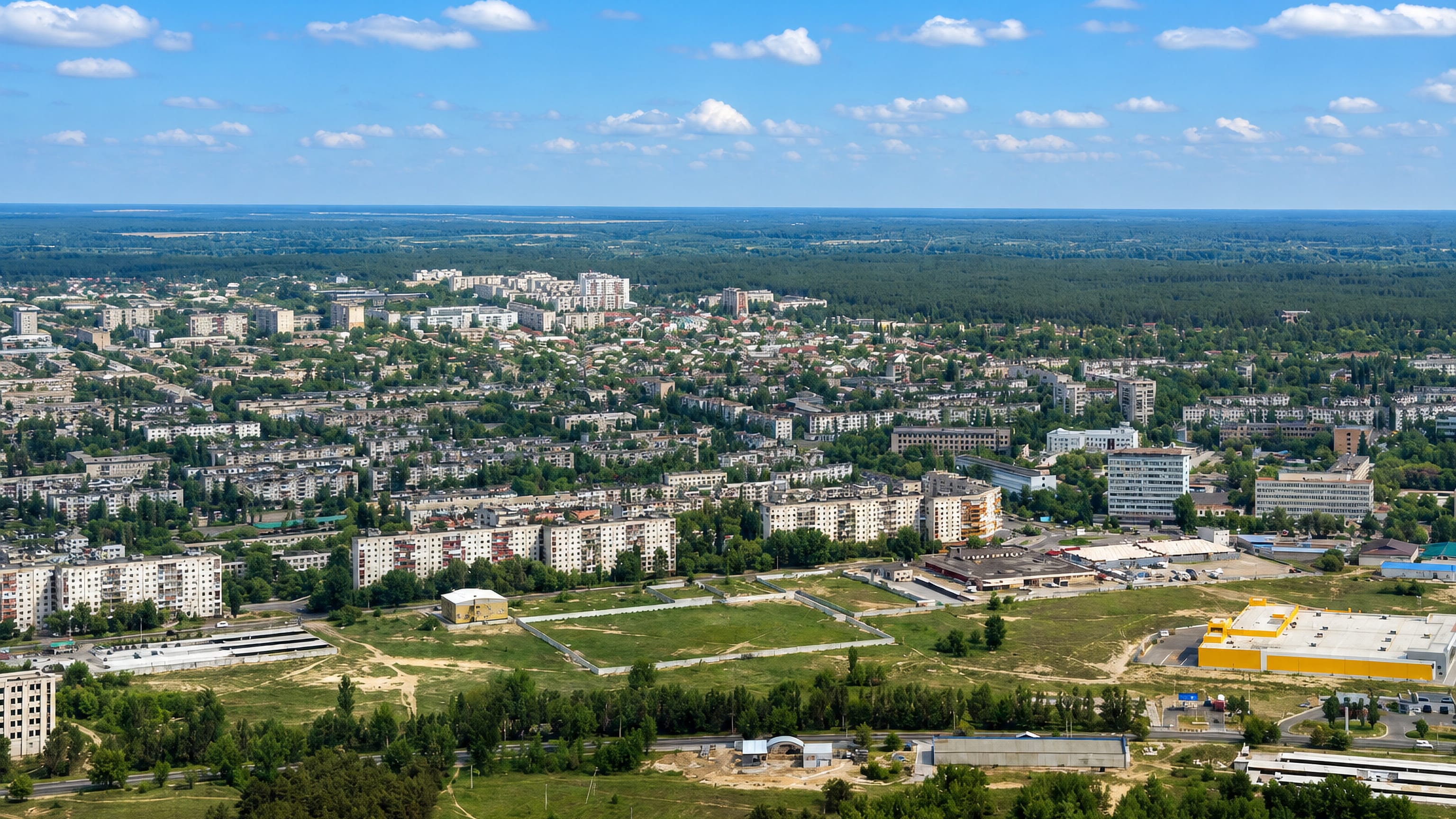
Siverskodonetsk, long written Sievierodonetsk, was laid out from 1934 near the left bank of the Donets River, facing Lysychansk across the water.
Find your area →


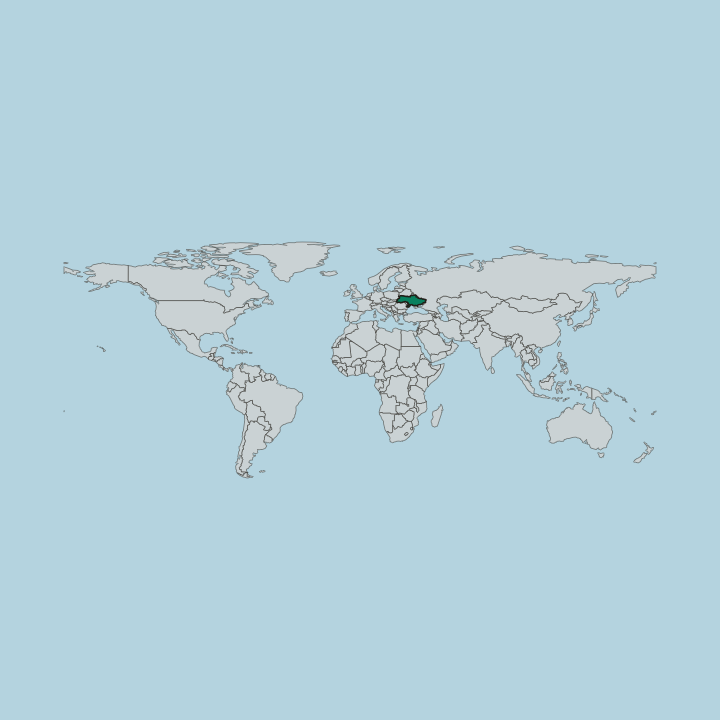
Where to stay in Siverskodonetsk
The practical side of choosing where to sleep.
Siverskodonetsk keeps its monuments close together, and a room near Хресто-Воздвиженський храм puts Ivan Franko monument, Taras Shevchenko monument and Пам'ятник Дмитру Менделєєву inside one walk. The city is young and regular. Streets drawn from 1934 make orientation simple, which counts for more here than in the older towns of Luhansk Oblast, where the street pattern grew instead of being planned in one go, and a visitor with an address rarely gets lost.
Beds cannot be taken for granted. The city has been under Russian military administration since 2022, so any stay wants confirming directly, and nothing about local accommodation should be assumed from a distance. It suits you if the reason for the trip is family, work, or the monuments the city has collected.
Lysychansk is the obvious alternative, on the far bank of the Donets River and close enough to stand in, while Luhansk lies roughly 110 kilometres off and serves no purpose as a base for a visit here. Храм ікони Божої Матері «Розчулення» sits away from the central cluster, far enough that reaching it makes a separate outing rather than an evening walk, and Пам'ятник героям Чорнобиля is out that way as well.
Things to do in Siverskodonetsk
Ranked by global recognition; descriptions from Wikidata (CC0).
Churches & Religious Sites
2- Хресто-Воздвиженський храм (Сіверськодонецьк)
- Храм ікони Божої Матері «Розчулення» (Сєвєродонецьк)
Castles & Historic Sites
3- Пам'ятник козакам (Сєвєродонецьк)
- Ivan Franko monument
- Taras Shevchenko monument
worth knowingacross 2 categories in Siverskodonetsk
About Siverskodonetsk
Monuments do the talking here.
What is Siverskodonetsk known for?
Ivan Franko monument, Taras Shevchenko monument, Maxim Gorky monument and Nikolai Gogol monument put four literary names on the streets of a city that only dates from 1934. Пам'ятник Дмитру Менделєєву joins them. Хресто-Воздвиженський храм and Храм ікони Божої Матері «Розчулення» are the two churches, and Пам'ятник козакам reaches back well beyond the city's own beginnings.
What are the main landmarks in Siverskodonetsk?
Two churches anchor the list. Хресто-Воздвиженський храм and Храм ікони Божої Матері «Розчулення» stand among a set of monuments running from Пам'ятник козакам to Пам'ятник героям Чорнобиля, with little in between that belongs to the city's own short past. Writers take four places. Ivan Franko monument, Taras Shevchenko monument, Maxim Gorky monument and Nikolai Gogol monument are matched by Пам'ятник-стела переможцям у Великій Вітчизняній війні and Пам'ятник воїнам-інтернаціоналістам on the military side.
What is the history of Siverskodonetsk?
The city dates from 1934, which makes it young for this part of Luhansk Oblast. Its name came from the Donets River rather than from any older settlement, and every monument on the city's list was put there after the town itself existed. Пам'ятник козакам is the exception. It commemorates a Cossack past belonging to the ground rather than to the city, and it stands among memorials that are otherwise the work of the last hundred years.
Loss is recorded twice over. Two separate memorials name the victims of the Holodomor, one a monument and one a cross, and Пам'ятник-стела переможцям у Великій Вітчизняній війні names the victors of the war it commemorates. Later griefs took their own stone. Пам'ятник воїнам-інтернаціоналістам stands for soldiers sent abroad, Пам'ятник героям Чорнобиля for those its inscription calls the heroes of Chornobyl, and the two churches, Хресто-Воздвиженський храм and Храм ікони Божої Матері «Розчулення», hold the religious end of a list dominated by public statuary.
The name has moved more than once. Sievierodonetsk and Severodonetsk both belong to the record, and Siverskodonetsk became the official form in 2024. Control moved as well.
Since 2022 the city has been under Russian military occupation and administration, and it continues to face Lysychansk across the Donets River, roughly 110 kilometres from Luhansk at the head of the oblast.
Where is Siverskodonetsk?
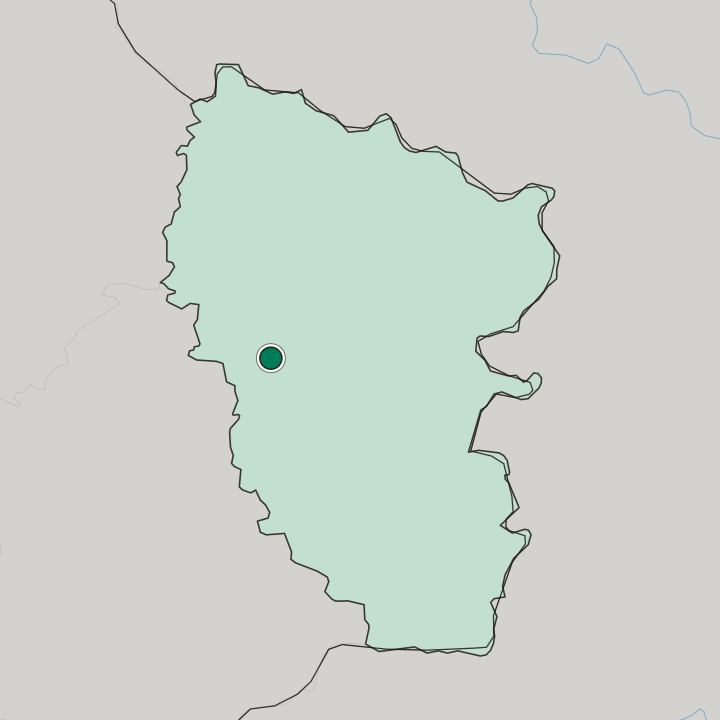
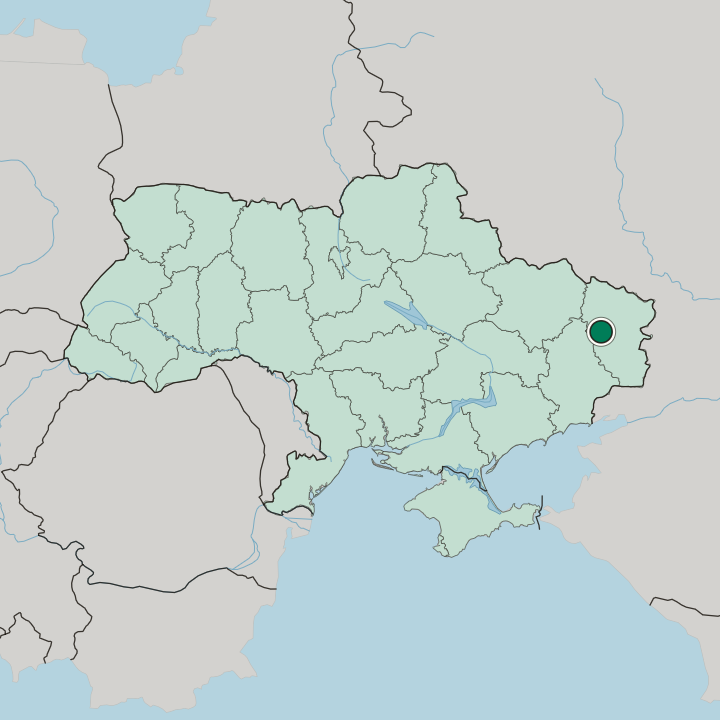
The river supplies the name. Siverskodonetsk sits to the north-east of the left bank of the Donets River, roughly 110 kilometres north-west of Luhansk, and Lysychansk faces it from the opposite bank. The two cities read as a pair, separated by the water and joined by everything else in this corner of Luhansk Oblast.
What is the climate of Siverskodonetsk?
Wind comes off the open left bank, and the Donets River does little to blunt it, so Siverskodonetsk spends the cold half of the year exposed to whatever crosses Luhansk Oblast. Summer is dry and hot. The temperate band sets both ends of the year, and the open ground on either side of the water gives neither season much to break against.
How do you get to Siverskodonetsk?
Everything arrives on the left bank. Roads across Luhansk Oblast come in from the Luhansk side, roughly 110 kilometres off, and Lysychansk sits directly opposite with only the Donets River between the two. Access is not routine.
The city has been under Russian military control since 2022, so travel arrangements want checking against conditions rather than planning in the usual way.
Good for
More cities in Luhanska Oblast
Updated September 2026