United States · Arkansas
Where to Stay in Little Rock, Arkansas
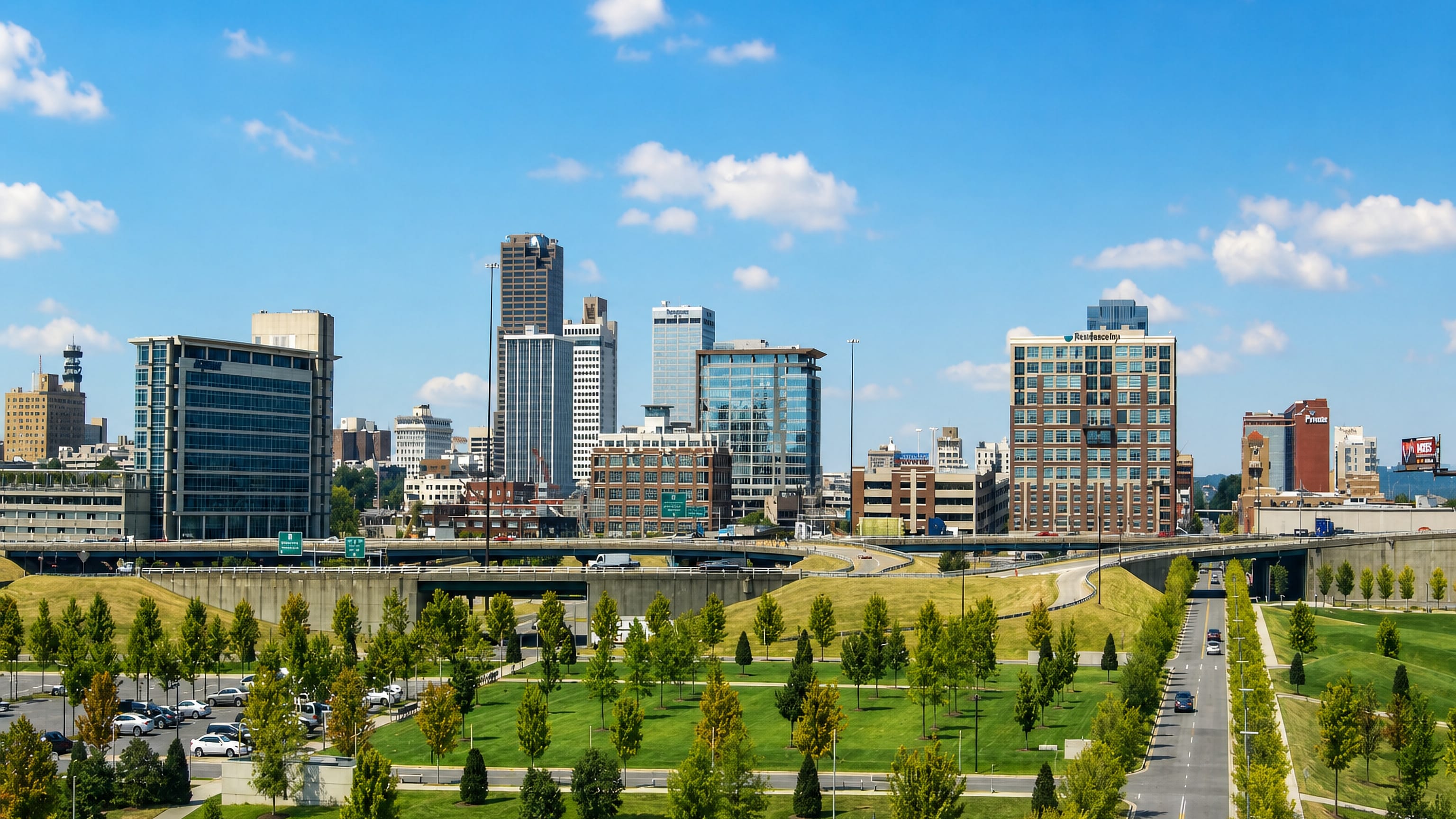
Little Rock is the capital of Arkansas, a river city settled in 1821 whose downtown carries the Clinton Presidential Center and the domed Old State House.
Hotel links are affiliate links: booking through them may earn us a commission, at no extra cost to you. It never affects how places are ranked. How this works


Where to stay in Little Rock
Where the beds are, and what that means for the visit.
Where you stay in Little Rock turns on how close you want to be to the river and the capital's core. Downtown, along the water near the Clinton Presidential Center and the Old State House, gives the most central footing, with museums and government buildings within a short walk. Pick this ground if you want the Arkansas Museum of Fine Arts and the riverside path close at hand.
The area around the Arkansas Governor's Mansion holds the older residential blocks, a quieter base of preserved homes a little back from the centre. Baseball crowds gather across the river near Dickey-Stephens Park on game nights, and rooms there suit visitors headed to a match. Each pocket sits a short drive from the next.
The city spreads along both banks.
Find hotels in Little Rock
Direct booking searches for these neighbourhoods.
Riverfront downtown
Central water-side blocks by the Clinton Presidential Center and the Old State House, museums within a short walk.Find hotels in Riverfront downtownQuiet among preserved homesGovernor's Mansion district
Older residential streets around the Arkansas Governor's Mansion, a calmer base back from the centre.Find hotels in Governor's Mansion districtGame-night staysBallpark riverside
Rooms near Dickey-Stephens Park across the water for evenings at a match.Find hotels in Ballpark riversideHotel links are affiliate links: booking through them may earn us a commission, at no extra cost to you. It never affects how places are ranked. How this works
Things to do in Little Rock
Ranked by global recognition; descriptions from Wikidata (CC0).
Museums & Galleries
3- Old State House Heritage
- Clinton Presidential Center
- Arkansas Inland Maritime Museum
Churches & Religious Sites
2- Cathedral of St. Andrew Heritage
- St. Edwards Church Heritage
Castles & Historic Sites
1- Monument to Confederate Women Heritage
Stadiums & Sports
1- Dickey-Stephens Park
Landmarks & Notable Places
8- Arkansas Governor's Mansion Heritage
- Baker House Heritage
- Scipio A. Jones House Heritage
- Curran Hall Heritage
- Thornton House Heritage
Show 3 more →
- Chisum House Heritage
- Reichardt House Heritage
- Bush-Dubisson House Heritage
worth knowingacross 5 categories in Little Rock
About Little Rock
What is Little Rock known for?
Little Rock is known as Arkansas's capital and a centre of its government and civic life. The Clinton Presidential Center anchors the riverside, and the Old State House keeps the domed statehouse of the early republic. School groups visit the Little Rock Central High School National Historic Site Visitor Center for its civil-rights history.
Government runs deep here.
What are the main landmarks in Little Rock?
Landmarks in Little Rock run from the riverfront to the old residential streets. The Clinton Presidential Center and the Arkansas Museum of Fine Arts hold the city's modern collections, while the Old State House and the Tower Building of the Little Rock Arsenal survive from the early state. Little Rock's Cathedral of St. Andrew and the Arkansas Governor's Mansion round out the roster.
Central High tells a harder story. Stone and brick endure.
What is the history of Little Rock?
Little Rock was settled in 1821 at a rock landing on the river and made the seat of the Arkansas territory soon after. Its name marks the small stone outcrop that gave boatmen a place to land. The town grew as a river port, and the Old State House rose as the capitol of the young state.
The Tower Building of the Little Rock Arsenal dates from those decades, a military post on the frontier. Trade and government carried the early years. The Civil War and Reconstruction left their marks, and monuments from the era still stand in the city's parks.
In 1957 the town drew the world's attention when the desegregation of Central High School was met with resistance, a turning point now told at the Little Rock Central High School National Historic Site Visitor Center. Little Rock's Cathedral of St. Andrew and homes like the Curran Hall survive from the older city. Decades later the Clinton Presidential Center rose on the riverbank.
The past runs through it.
Where is Little Rock?
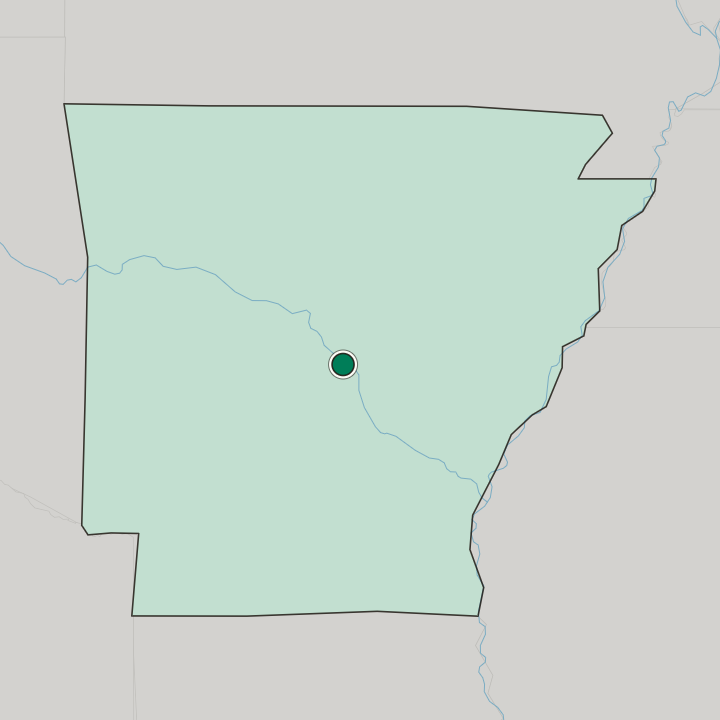
Little Rock stands on the Arkansas River where the plains meet the low hills of the state. The land rises west of the water into wooded ridges, while the downtown blocks near the Old State House sit on the flatter riverbank. Bluffs and bottomland flank the channel.
The Arkansas River cuts the city in two, carrying barge traffic down toward the Mississippi lowlands well beyond the state line. Wooded hills close the view.
What is the climate of Little Rock?
Little Rock has a humid subtropical climate set by its place in the American South. Summers turn long, hot, and sticky along the Arkansas River, while winters stay mild with only rare snow. Spring brings heavy rain and the threat of severe storms.
Autumn runs warm and dry. The river keeps the air heavy.
How do you get to Little Rock?
Little Rock sits where major interstates cross near the Arkansas River, and most travellers arrive by car. The city's airport handles flights across the region and beyond. Trains still stop on the line through the river valley.
Buses connect the surrounding towns of Arkansas. The riverfront centre is easy to reach.
Common questions
What is the best area to stay in Little Rock?
Riverfront downtown: The capital's core on foot. Governor's Mansion district: Quiet among preserved homes. Ballpark riverside: Game-night stays.
Good for
More cities in Arkansas
Updated October 2026