United States · Connecticut
Where to Stay in Bridgeport, Connecticut
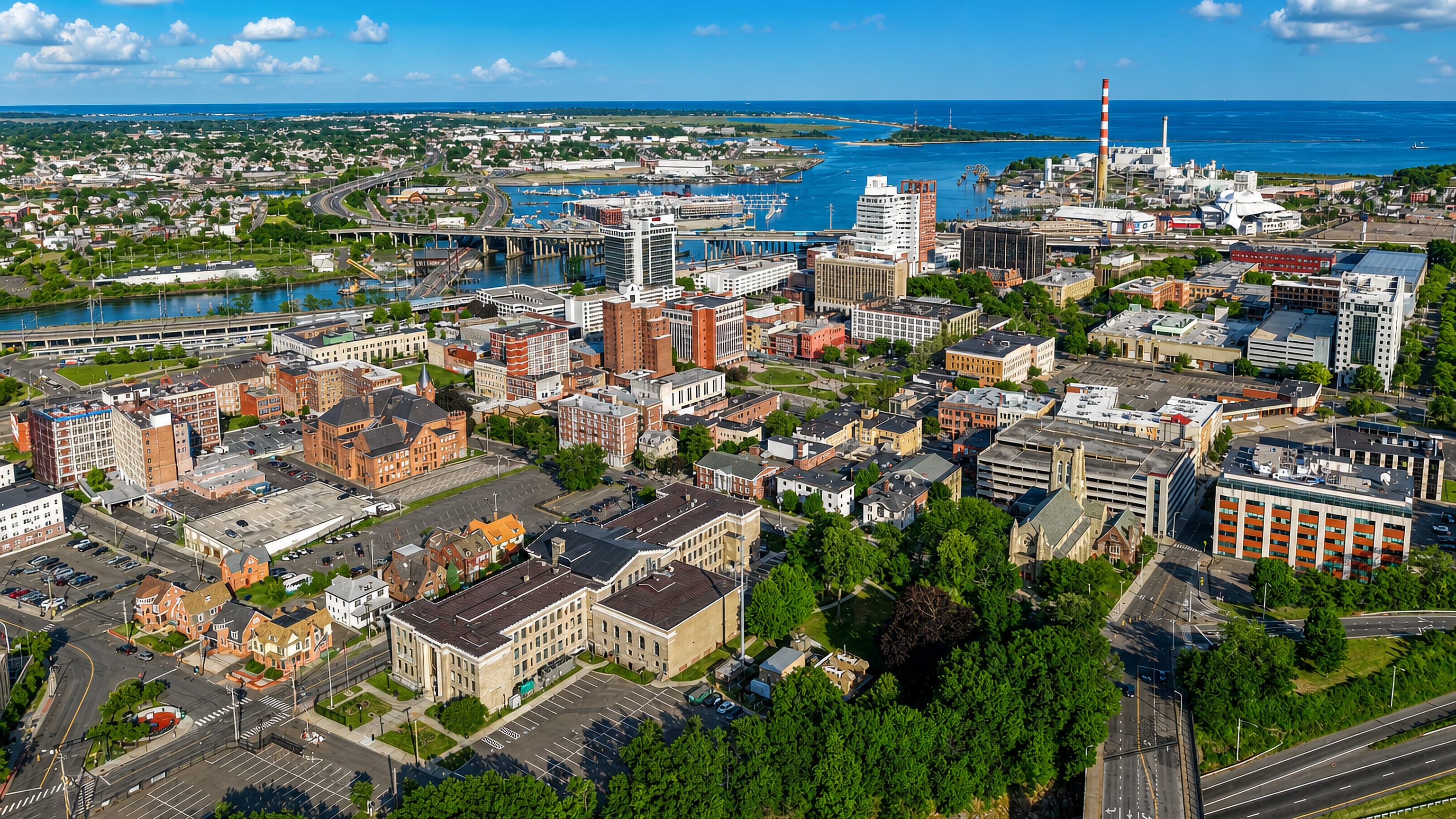
Bridgeport is Connecticut's largest city, at the mouth of the Pequonnock River on Long Island Sound, with the Barnum Museum anchoring downtown.
Hotel links are affiliate links: booking through them may earn us a commission, at no extra cost to you. It never affects how places are ranked. How this works


Where to stay in Bridgeport
How the choice of base plays out on the ground.
Downtown puts the Barnum Museum at the door. Beds in those blocks sit within reach of the Klein Memorial Auditorium and St. John's Episcopal Church, which counts for something on an evening when a performance ends late and the alternative to a short walk is Fairfield County traffic. Harbour blocks are the other pick.
The Ballpark at Harbor Yard fills on summer nights, and the mouth of the Pequonnock River lies close enough that Long Island Sound decides how the evening feels. Quieter ground lies inland. Connecticut's Beardsley Zoo pulls families toward the parkland away from the water, where the streets run residential and a car becomes the sensible way back to the Housatonic Museum of Art or the Mary and Eliza Freeman Houses. Arrivals shape the choice.
Anyone using Bridgeport as a base for Fairfield County, or for the sixty-mile run toward Manhattan, will find the downtown blocks the least trouble, because the rest of the city spreads across ground that rewards a car more than a timetable. Beach stays and harbour stays are not the same thing here, and the difference shows up in what is walkable after dark.
Find hotels in Bridgeport
Direct booking searches for these neighbourhoods.
Downtown Bridgeport
The Barnum Museum and St. John's Episcopal Church stand a few blocks apart on the old grid.Find hotels in Downtown BridgeportSummer games at The Ballpark at Harbor YardHarbor Yard waterfront
The Pequonnock River reaches Long Island Sound at the end of these streets.Find hotels in Harbor Yard waterfrontFamilies heading for Connecticut's Beardsley ZooBeardsley parkland
Newfield Park and the zoo grounds put green space within a short drive of the harbour.Find hotels in Beardsley parklandHotel links are affiliate links: booking through them may earn us a commission, at no extra cost to you. It never affects how places are ranked. How this works
Things to do in Bridgeport
Ranked by global recognition; descriptions from Wikidata (CC0).
Museums & Galleries
2- Barnum Museum Heritage
- Housatonic Museum of Art
Churches & Religious Sites
3- United Congregational Church Heritage
- St. John's Episcopal Church Heritage
- First Baptist Church Heritage
Castles & Historic Sites
3- Connecticut's Beardsley Zoo Heritage
- Elmer S. Dailey
- Priscilla Dailey
Stadiums & Sports
2- The Ballpark at Harbor Yard
- Newfield Park
Landmarks & Notable Places
4- Mary and Eliza Freeman Houses Heritage
- Cassidy House Heritage
- David Perry House Heritage
- Peyton Randolph Bishop House Heritage
worth knowingacross 5 categories in Bridgeport
About Bridgeport
What is Bridgeport known for?
Connecticut's Beardsley Zoo draws the family traffic. The Klein Memorial Auditorium carries the performing arts programme that most visitors put first, while the Barnum Museum keeps the showman's record downtown and the Housatonic Museum of Art hangs its collection a short way off. Beaches sit on the Sound.
Baseball fills The Ballpark at Harbor Yard through the summer, and Newfield Park is one of several open spaces the city keeps between the shoreline and the inland streets.
What are the main landmarks in Bridgeport?
Churches mark the older grid. St. Patrick's Church, First Baptist Church, St. John's Episcopal Church and United Congregational Church stand within the streets that grew up around the harbour, and the Mary and Eliza Freeman Houses survive nearby. Museums carry the rest of Bridgeport's story.
The Barnum Museum and the Housatonic Museum of Art hold the collections, the Cassidy House, the David Perry House and the Peyton Randolph Bishop House keep domestic architecture in the record, and the Bridgeport Police Memorial holds its own ground.
What is the history of Bridgeport?
Bridgeport was established in 1821. A harbour at the mouth of the Pequonnock River gave the place its reason, since Long Island Sound carried trade toward Manhattan and The Bronx, both of them a short run down the coast from Fairfield County. Congregations built early.
St. Patrick's Church, First Baptist Church, St. John's Episcopal Church and United Congregational Church still mark the streets they chose, and their spires remain the readable part of the nineteenth-century plan. Not every survival is grand. The Mary and Eliza Freeman Houses, the Cassidy House, the David Perry House and the Peyton Randolph Bishop House record ordinary building across the years when Bridgeport became the largest city in Connecticut and the fifth most populous in New England.
Institutions arrived in turn. Kolbe Cathedral High School, the Housatonic Museum of Art and the Barnum Museum each hold a piece of that century, while Connecticut's Beardsley Zoo turned parkland into an attraction that families still cross Fairfield County to reach. The region eventually took the city's name.
Both the Greater Bridgeport Planning Region and the Bridgeport-Stamford-Norwalk-Danbury metropolitan statistical area fix Bridgeport at the middle of a shoreline corridor, and the Bridgeport Police Memorial belongs to the later civic layer of the same story.
Where is Bridgeport?
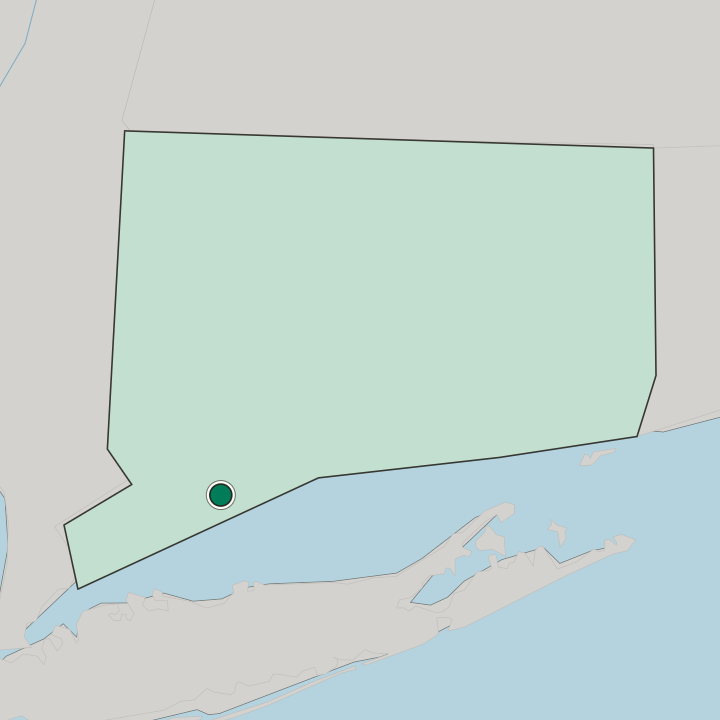
Long Island Sound sets the edge. The Pequonnock River reaches salt water at Bridgeport, and the harbour that forms there accounts for the shape of this stretch of Fairfield County shoreline, where beaches give way to working waterfront and back again. Parks interrupt the grid.
Newfield Park and the grounds of Connecticut's Beardsley Zoo hold the inland green, while Manhattan lies about sixty miles along the coast.
What is the climate of Bridgeport?
Long Island Sound moderates the year. Water on the doorstep takes the sharpest edge off both ends of the calendar, so winter settles more slowly on the shore than it does on the inland towns of Fairfield County. The same water delivers the storms.
Snow and salt spray both belong to a Bridgeport year, and the Pequonnock River carries the runoff of each of them out past the harbour.
How do you get to Bridgeport?
Manhattan is about sixty miles off. The shoreline corridor named in the Bridgeport-Stamford-Norwalk-Danbury metropolitan statistical area carries most arrivals, and the same string of Fairfield County towns puts the wider New York region within an ordinary day's travel. The Bronx is nearer still.
Once here, The Ballpark at Harbor Yard and the Barnum Museum sit close to the harbour, while Connecticut's Beardsley Zoo asks for a drive inland.
Common questions
What is the best area to stay in Bridgeport?
Downtown Bridgeport: Evenings at the Klein Memorial Auditorium. Harbor Yard waterfront: Summer games at The Ballpark at Harbor Yard. Beardsley parkland: Families heading for Connecticut's Beardsley Zoo.
Good for
More cities in Connecticut
Updated October 2026