United States · District of Columbia
Where to Stay in Washington, District of Columbia
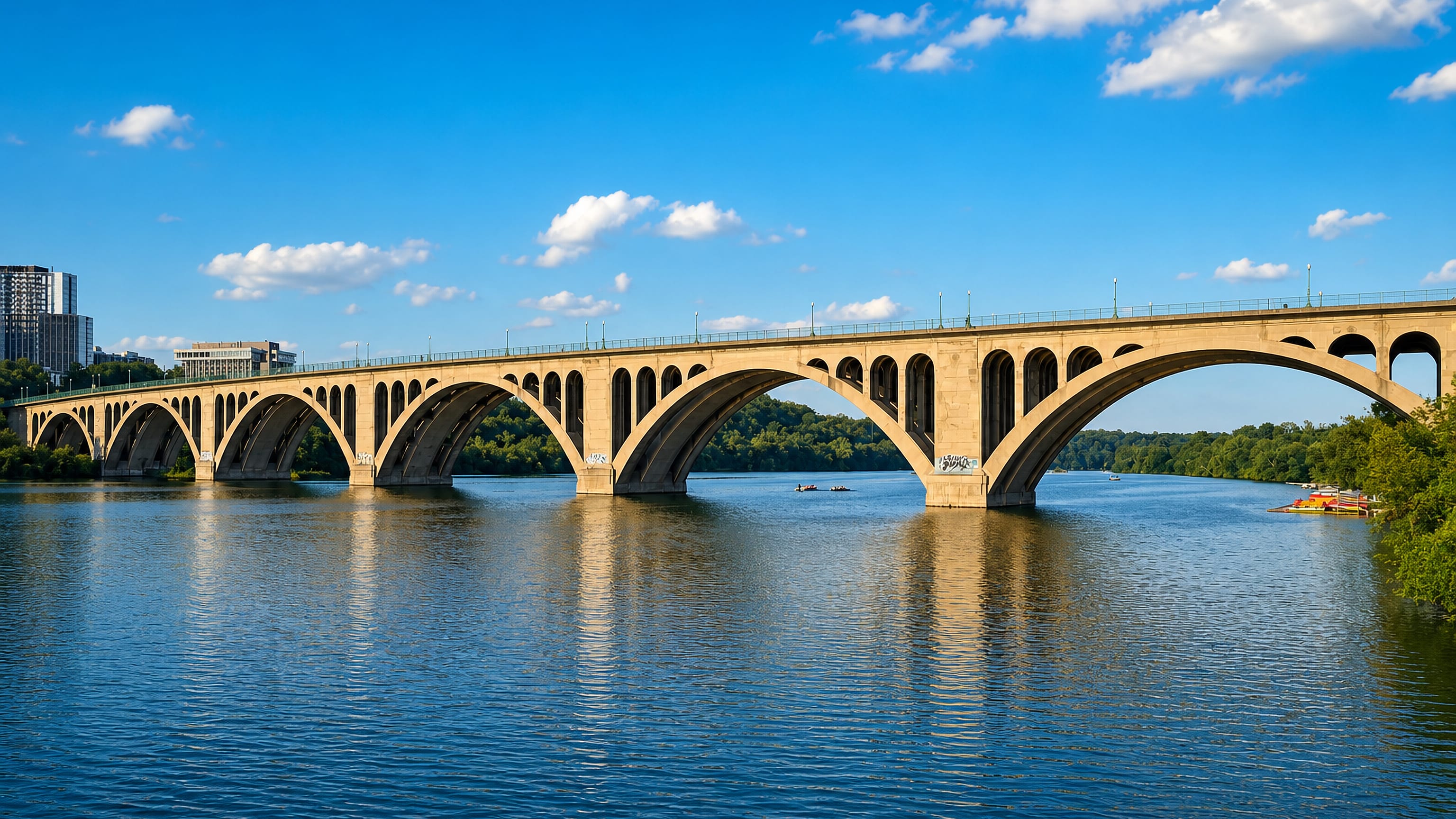
Marble monuments line the Mall at Washington, the capital in the District of Columbia known for the Lincoln Memorial and the Smithsonian Institution.
Hotel links are affiliate links: booking through them may earn us a commission, at no extra cost to you. It never affects how places are ranked. How this works


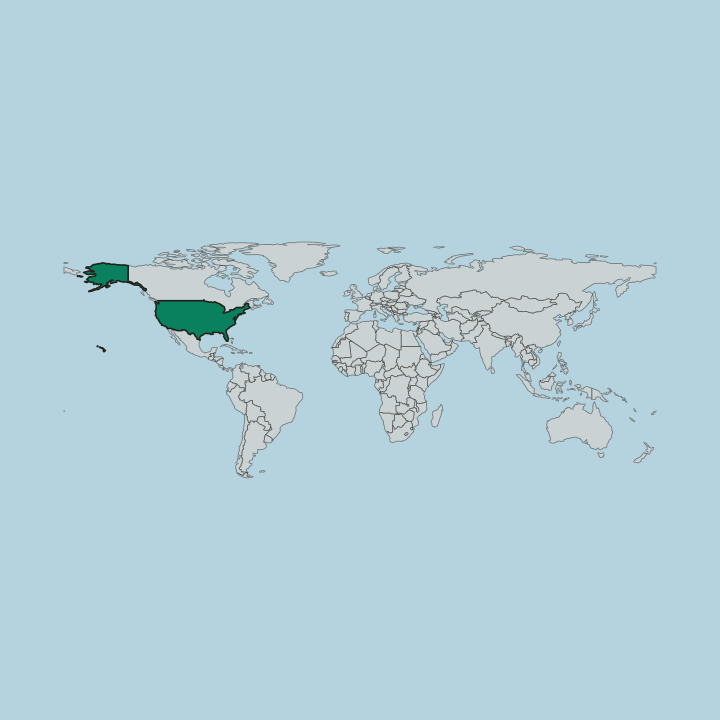
Where to stay in Washington
The right area depends on your trip — here's what each neighbourhood is best for.

 WashingtonUnited States
Federal Triangle
Federal Triangle is a wedge of Washington government offices at Pennsylvania Avenue and Constitution Avenue. It fronts the National Mall and Smithsonian.Where to stay → WashingtonUnited States
Foggy Bottom
Foggy Bottom runs from the White House to the Potomac River in Washington, between the National Mall and West End. George Washington University sits here.Where to stay →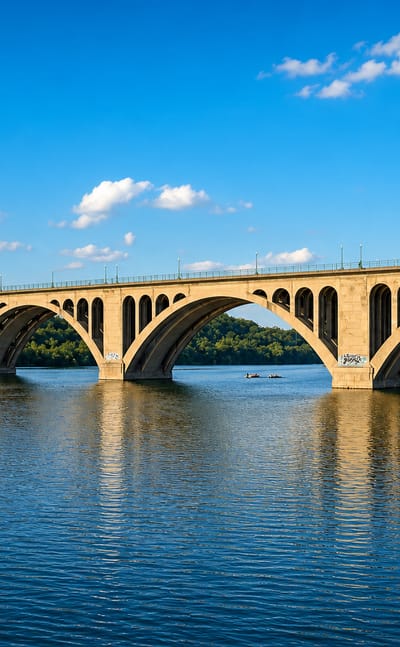 WashingtonUnited States
Chinatown
Chinatown is a Chinese ethnic enclave in downtown Washington, District of Columbia, edging Penn Quarter near the National Mall. It dates to 1931.Where to stay → WashingtonUnited States
Dupont Circle
Dupont Circle is a neighborhood in Northwest Washington around the circle, Embassy Row up Massachusetts Avenue and the shops up Connecticut Avenue.Where to stay →WashingtonUnited StatesWest End
West End is a Northwest Washington neighborhood between Georgetown, Dupont Circle and Foggy Bottom on Pennsylvania Avenue. Rock Creek edges it west.Where to stay → WashingtonUnited States
Georgetown
Georgetown, founded in 1751 and forty years older than the capital itself, is a historic neighbourhood and commercial district of Washington, D.C.Where to stay → WashingtonUnited States
NoMa
NoMa is a northeast Washington neighborhood north of Massachusetts Avenue, Ward 6 above Union Station: Swampoodle, Eckington, Near Northeast, Sursum Corda.Where to stay → WashingtonUnited States
Adams Morgan
Adams Morgan is a neighborhood in Northwest Washington, its commercial heart along 18th Street and Columbia Road. Nightlife pulls the visitors.Where to stay → WashingtonUnited States
Capitol Hill
Capitol Hill is a large historic neighborhood of Washington, District of Columbia, on the rise carrying the United States Capitol, toward Union Station.Where to stay →WashingtonUnited StatesColumbia Heights
Columbia Heights lies north of the U Street corridor, its core the Columbia Heights Metro station on 14th Street. Mount Pleasant and Petworth adjoin.Where to stay → WashingtonUnited States
Embassy Row
Embassy Row is the stretch of Northwest Washington where embassies line Massachusetts Avenue, from Scott Circle to the United States Naval Observatory.Where to stay → WashingtonUnited States
Anacostia
Anacostia is a historic neighborhood of Southeast Washington on high ground east of the Anacostia River, where Frederick Douglass lived.Where to stay →Hotel links are affiliate links: booking through them may earn us a commission, at no extra cost to you. It never affects how places are ranked. How this works
Find hotels in Washington
Direct booking searches for these neighbourhoods.
The Mall
The National Air and Space Museum and the National Museum of Natural History line one green lawn beside the Smithsonian Institution.Find hotels in The MallA leafy base beyond the monumentsNorthwest gardens
Dumbarton Oaks and the National Zoological Park sit among the wooded streets of the District of Columbia northwest of the Mall.Find hotels in Northwest gardensHotel links are affiliate links: booking through them may earn us a commission, at no extra cost to you. It never affects how places are ranked. How this works
Things to do in Washington
Ranked by global recognition; descriptions from Wikidata (CC0).
Museums & Galleries
7- House of the Temple Heritage
- Freer Gallery of Art Heritage
- National Building Museum Heritage
- Corcoran Gallery of Art Heritage
- Renwick Gallery Heritage
Show 2 more →
- Arts and Industries Building Heritage
- Tudor Place Heritage
Churches & Religious Sites
2- Christ Church Heritage
- St. Mark's Episcopal Church Heritage
Castles & Historic Sites
5- Emancipation Memorial Heritage
- Peace Monument Heritage
- Major General John A. Logan Heritage
- Nuns of the Battlefield Heritage
- Admiral David G. Farragut Heritage
Landmarks & Notable Places
6- Old Stone House Heritage
- Tingey House Heritage
- The L. Ron Hubbard House Heritage
- Townsend House Heritage
- Cutts-Madison House Heritage
Show 1 more →
- Friendship House Heritage
worth knowingacross 4 categories in Washington
About Washington
What is Washington known for?
Washington is known as the capital of the United States, laid out across the District of Columbia. Its monuments line the open Mall. The Lincoln Memorial stands at one end, the Vietnam Veterans Memorial and the Korean War Veterans Memorial nearby, and the museums of the Smithsonian Institution range along the green.
The National Air and Space Museum and the National Museum of Natural History draw the largest crowds. Art fills the National Portrait Gallery and the Smithsonian American Art Museum. The city was built to govern.
What are the main landmarks in Washington?
Washington's landmarks gather along and around the open Mall. The Lincoln Memorial closes its western end, and the Vietnam Veterans Memorial and Korean War Veterans Memorial stand among the trees nearby. The Smithsonian Institution runs its museums down both sides of the green, among them the National Air and Space Museum, the National Museum of Natural History, and much more besides.
Newer halls tell harder stories. The National Museum of African American History and Culture and the United States Holocaust Memorial Museum stand among them, and art hangs in the National Portrait Gallery.
What is the history of Washington?
Washington was founded in 1790 as a planned federal capital, a new city cut from open ground to seat the government of the United States. It answered to no existing state. The District of Columbia was laid out for the purpose, its avenues drawn in long diagonals across a gridded plan around a central axis.
That axis became the Mall. Along it the young republic raised its monuments and its museums over the following century, and the Smithsonian Institution grew from a single hall into a chain of galleries down the green. In memory of the president who held the union together through its civil war, the Lincoln Memorial rose at the western end.
Later years filled the capital with memory. The Vietnam Veterans Memorial and the Korean War Veterans Memorial were cut into the ground near the older monuments, and afterward the National Museum of African American History and Culture and the United States Holocaust Memorial Museum brought harder histories onto the Mall. Green quarters spread beyond the core, and the National Zoological Park and Dumbarton Oaks filled the wooded northwest.
From a planned capital on empty ground to a city of monuments and museums, Washington has grown as the seat of the nation across the District of Columbia.
Where is Washington?
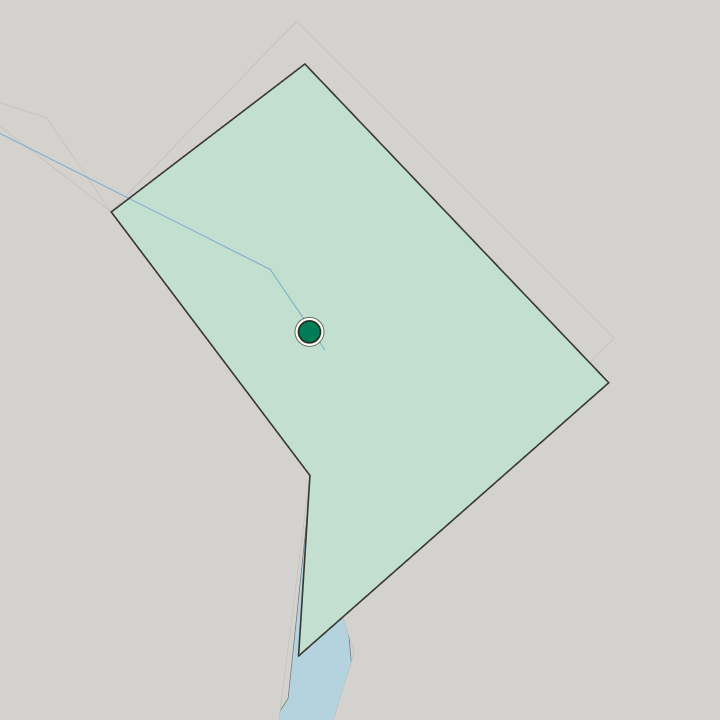
Washington lies on low ground within the District of Columbia, where a broad tidal basin spreads below the plain. The land sits close to the water. The Mall runs flat along the river flats, its long reflecting pools set below the Lincoln Memorial at the western edge of the green.
Wooded hills climb gently to the northwest, where Dumbarton Oaks and the National Zoological Park spread across the higher ground above the basin. Water and terrace shape the whole of Washington across the District of Columbia.
What is the climate of Washington?
Washington has a warm humid climate over the low ground of the District of Columbia. Summers turn hot and heavy. Thick humid air settles over the Mall through the long summer months, and afternoon thunderstorms build and break across the river basin.
Washington's winters keep to the mild side. Snow falls only lightly most years, and spring brings the cherry blossom and the gentlest weather to the streets of Washington.
How do you get to Washington?
Most travellers reach Washington by air or rail. Airports serve the capital from across the river and beyond. Interstate highways and mainline railways converge on the District of Columbia, tying the city into the corridor that runs the length of the eastern seaboard, and a rail network threads the centre underground.
The trains run frequently. The routes of government and travel alike lead into the heart of Washington.
Common questions
What is the best area to stay in Washington?
The Mall: Smithsonian museums on foot. Northwest gardens: A leafy base beyond the monuments.
Good for
Updated October 2026