United States · Idaho
Where to Stay in Idaho Falls, Idaho
Idaho Falls is the seat of Bonneville County, the working centre of Eastern Idaho and the usual bed before Yellowstone.
Hotel links are affiliate links: booking through them may earn us a commission, at no extra cost to you. It never affects how places are ranked. How this works


Where to stay in Idaho Falls
The practical side of choosing where to sleep.
The Museum of Idaho fixes the choice. Rooms near it stand in the older downtown blocks within walking reach of Trinity Methodist Church and the shops, and that is the part of Idaho Falls that reads as a city in its own right rather than as a stop on the way to somewhere larger. Most stays here are not about the city at all.
Yellowstone and Grand Teton National Parks take the mornings, Jackson Hole takes a full day of its own, and a bed chosen for an early departure will serve a visitor better than a bed chosen for its street. Bonneville County spreads flat around it. Away from the centre the pattern changes.
Holy Rosary Church and First Presbyterian Church stand among residential blocks where the nights are quiet and the walk back into town runs longer than it looks on a map, which suits anyone driving anyway and suits nobody arriving without a car. Funland answers the family question. Fishing on the Snake River sets its own hours, early and cold, so parking and an unobstructed exit are worth more to an angler than any view from the window.
Rooms tighten across the months when the national parks are open and Idaho Falls absorbs demand from a wide stretch of Eastern Idaho, which is the practical argument for booking well before arriving rather than after.
Find hotels in Idaho Falls
Direct booking searches for these neighbourhoods.
Downtown by the Museum of Idaho
The Museum of Idaho and Trinity Methodist Church anchor the older downtown blocks that can be walked end to endFind hotels in Downtown by the Museum of IdahoQuiet nights within a short walk of Holy Rosary ChurchThe Holy Rosary Church streets
Holy Rosary Church and First Presbyterian Church mark the residential ground where Idaho Falls goes early to bed. Few places to stay nearby — book ahead.Find hotels in The Holy Rosary Church streetsFamilies breaking the drive to Grand Teton National Parks with an afternoon at FunlandOut by Funland
Funland gives children a reason to like Idaho Falls itself before the national parks take over the trip. Beds are limited here, so book early.Find hotels in Out by FunlandHotel links are affiliate links: booking through them may earn us a commission, at no extra cost to you. It never affects how places are ranked. How this works
Things to do in Idaho Falls
Ranked by global recognition; descriptions from Wikidata (CC0).
Museums & Galleries
1- Museum of Idaho
Churches & Religious Sites
3- Holy Rosary Church Heritage
- Trinity Methodist Church (Idaho Falls, Idaho) Heritage
- First Presbyterian Church Heritage
Parks & Gardens
1- Funland
worth knowingacross 3 categories in Idaho Falls
About Idaho Falls
Eastern Idaho runs its business here.
What is Idaho Falls known for?
The city carries the commercial, cultural, and healthcare load for that part of the state, and the Museum of Idaho supplies the one indoor fixture that reliably holds an afternoon when the parks are further off than the day allows. Fishing on the Snake River draws separate traffic. Yellowstone and Grand Teton National Parks lie within reach along with Jackson Hole, which is why National Geographic named Idaho Falls to a list of a hundred adventure towns in 2009.
What are the main landmarks in Idaho Falls?
Five names make the register. Holy Rosary Church and Trinity Methodist Church carry the older parish record, First Presbyterian Church stands beside them, and none of the three competes with the Museum of Idaho for a visitor's first free afternoon. Funland is the outlier.
Nothing on the list is monumental, and the register reads as the working inventory of a county seat in Eastern Idaho rather than the highlight reel of a resort, which is fair to what Idaho Falls actually is.
What is the history of Idaho Falls?
The register gives 1864. Everything the city says about its own beginnings sits behind that one date, and the visible record picks up later, in the church buildings still standing and in the administrative work that made the place the seat of Bonneville County. Three congregations hold the oldest fabric.
Holy Rosary Church, Trinity Methodist Church and First Presbyterian Church are the names Idaho Falls puts forward when the subject is age rather than access, and between them they cover the decades in which the settlement stopped being provisional. The Museum of Idaho took on the rest. It gathers what the buildings cannot say for themselves, and it remains the one address where the story of Eastern Idaho is told on purpose instead of by accident, which counts for something in a city that grew into a commercial and healthcare role rather than into a monumental one.
Reach came before fame. Yellowstone and Grand Teton National Parks had made the city a base long before National Geographic listed Idaho Falls among a hundred adventure towns in 2009, and fishing on the Snake River had been doing the same quietly for far longer. Funland belongs to a later and lighter chapter.
Only the Boise metropolitan area holds a larger Idaho city, which is the plainest measure of what the last century and a half built here.
Where is Idaho Falls?
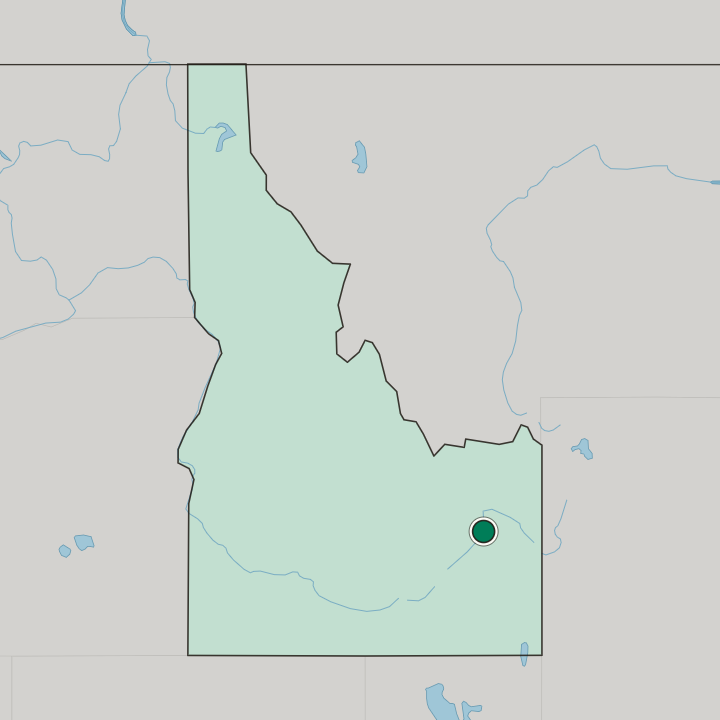
Bonneville County sets the frame. Idaho Falls occupies an open stretch of Eastern Idaho with the Snake River close at hand and the high park country of Yellowstone and Grand Teton National Parks standing beyond it, so the horizon does more work here than any rise inside the city ever will. Distances are long in every direction.
Jackson Hole falls within the same day's reach, and the drive out to it is the ordinary local measure of how far apart things sit in this part of the country.
What is the climate of Idaho Falls?
Winter arrives in earnest. The temperate band this far north hands the city a long cold half-year and a dry warm one, while the park country around Yellowstone and Grand Teton National Parks keeps the shoulder months unsettled enough that a visitor can meet two seasons before lunch. Layers beat optimism.
Fishing on the Snake River runs cold and early through much of the year, which is the form the weather takes for the people who come to Idaho Falls specifically for it.
How do you get to Idaho Falls?
Cars do the work here. Idaho Falls sits at the practical sleeping distance from Yellowstone and Grand Teton National Parks, so most visitors arrive holding keys rather than tickets and have already worked out the next morning's mileage before they check in. Jackson Hole is a drive of its own.
The Boise metropolitan area lies further off again, which is part of why the commercial and healthcare business of Eastern Idaho is settled in Bonneville County instead of being sent across the state.
Common questions
What is the best area to stay in Idaho Falls?
Downtown by the Museum of Idaho: Visitors pairing the Museum of Idaho with an early start for Yellowstone. The Holy Rosary Church streets: Quiet nights within a short walk of Holy Rosary Church. Out by Funland: Families breaking the drive to Grand Teton National Parks with an afternoon at Funland.
Good for
More cities in Idaho
Updated September 2026