United States · Kentucky
Where to Stay in Bowling Green, Kentucky
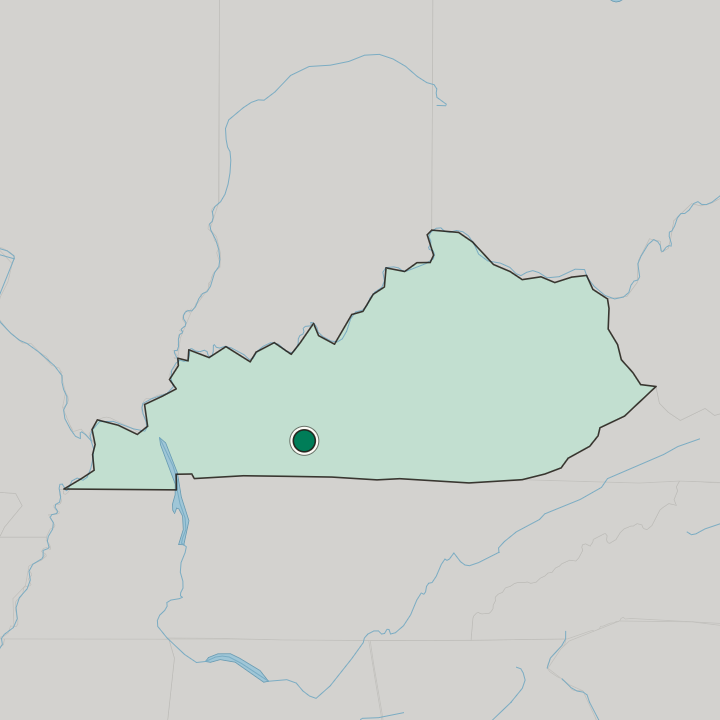
Bowling Green is the county seat of Warren County and the third-largest city in Kentucky, at the centre of the Caves and Lakes region.
Hotel links are affiliate links: booking through them may earn us a commission, at no extra cost to you. It never affects how places are ranked. How this works


Where to stay in Bowling Green
Where visitors usually base themselves, and why.
The Kentucky Museum anchors one side. Beds near it put a visitor on the institutional edge of Bowling Green, within reach of the President's Home and the older grid where Hines House, Grider House, and Hall House stand. Downtown is the other candidate.
The Historic Railpark and Train Museum and Bowling Green Ballpark are the two draws that fill an evening, and a room between them removes the drive at the end of a game. Houses define the older streets. Maria Moore House, the Underwood-Jones House, the Newton-Kemp Houses, and Nine Hearths belong to a listed residential fabric that runs deeper here than the public buildings do, and a stay among them is a stay in the part of town that survived.
Cecilia Memorial Christian Church stands with them. Warren County spreads out beyond, and rooms on that side suit a traveller heading for the caves and lakes rather than for the city. Louisville and Lexington are both larger. Anyone comparing them will find Bowling Green quieter and considerably easier to cross, which is the argument for basing a Caves and Lakes trip here rather than driving in from one of the bigger cities each morning.
A car remains necessary. The Kentucky Museum, Bowling Green Ballpark, and The Historic Railpark and Train Museum sit close enough to combine, but the region's caves and lakes do not.
Find hotels in Bowling Green
Direct booking searches for these neighbourhoods.
Around the Kentucky Museum
The Kentucky Museum and the President's Home give this side of Bowling Green its institutional weight.Find hotels in Around the Kentucky MuseumEvenings at Bowling Green Ballpark with a short walk back.Downtown by the Railpark
The Historic Railpark and Train Museum and the ballpark bracket the downtown blocks between them.Find hotels in Downtown by the RailparkWalkers here for Nine Hearths and the Newton-Kemp Houses.The listed house streets
Maria Moore House, the Underwood-Jones House, and Hines House stand along the same surviving residential grid. Few places to stay nearby — book ahead.Find hotels in The listed house streetsDrivers making the caves and lakes the point of the trip.Out toward the Warren County roads
Rooms beyond the Bowling Green grid put the Warren County roads first and the city second. Lodging is scarce in this area; reserve in advance.Find hotels in Out toward the Warren County roadsHotel links are affiliate links: booking through them may earn us a commission, at no extra cost to you. It never affects how places are ranked. How this works
Things to do in Bowling Green
Ranked by global recognition; descriptions from Wikidata (CC0).
Museums & Galleries
1- Kentucky Museum
Churches & Religious Sites
1- Cecilia Memorial Christian Church Heritage
Stadiums & Sports
1- Bowling Green Ballpark
Landmarks & Notable Places
8- Hines House Heritage
- W.H. Everhardt House Heritage
- Edward B. Seeley House Heritage
- Grider House Heritage
- Hall House Heritage
Show 3 more →
- J.C. Givens House Heritage
- J.D. Dodson House Heritage
- James F. Ewing House Heritage
worth knowingacross 4 categories in Bowling Green
About Bowling Green
Caves and lakes bring people in.
What is Bowling Green known for?
Bowling Green works as the hub of that region, and the Kentucky Museum and The Historic Railpark and Train Museum give the city itself two fixed reasons to stop rather than to drive through. Baseball fills the summer evenings. Bowling Green Ballpark sits among a downtown whose other listings are almost all houses, which says something about how the place grew.
What are the main landmarks in Bowling Green?
Private homes crowd the list. Hines House, Grider House, Hall House, Maria Moore House, the Underwood-Jones House, and the Newton-Kemp Houses all carry listings, and Nine Hearths and the President's Home extend the same domestic run further. Three public buildings break it.
The Kentucky Museum, The Historic Railpark and Train Museum, and Cecilia Memorial Christian Church stand for everything that is not a dwelling, with Bowling Green Ballpark added as the one place built for a crowd.
What is the history of Bowling Green?
The city dates from 1798. Warren County took it as the seat, and the houses now on the register, Hines House, Grider House, and Hall House among them, belong to the generations that built after that date rather than to the founding itself. Growth came steadily.
Bowling Green passed most Kentucky towns without ever catching Louisville or Lexington, and it stands third in the state as a result. Rail changed the scale of it. The Historic Railpark and Train Museum keeps that part of the record, and its name alone indicates how much the railway came to matter here.
Houses followed the trade. Maria Moore House, the Underwood-Jones House, the Newton-Kemp Houses, and Nine Hearths belong to that same listed residential fabric, and their names still read as a roll of the families who built them. Institutions arrived in their turn.
The Kentucky Museum and Cecilia Memorial Christian Church carry the civic and religious side of the same period, while the President's Home stands for a later chapter again. Baseball is newer still. Bowling Green Ballpark belongs to the modern city, and the Caves and Lakes region around it has done more to shape what visitors come for than anything the town itself built after 1798.
Where is Bowling Green?
The Caves and Lakes region surrounds it. Bowling Green sits at the hub of that country in Warren County, and the caves and the water that give the region its name lie out beyond the built-up ground rather than within it. The grid itself stays compact.
Its listed houses, the Kentucky Museum, and Bowling Green Ballpark fall within a short span, which leaves the drives out to the caves and lakes as the longer part of any day.
What is the climate of Bowling Green?
Kentucky's interior sets the pattern. Bowling Green lies well inland on the temperate band, so the year runs to a warm, humid middle and a cool end without the moderation a coast would bring, and the Caves and Lakes region shares the same swing. Underground it changes.
The caves hold their own conditions whatever the surface does, which is why they carry visitors through the months when Bowling Green Ballpark and the walking streets do not.
How do you get to Bowling Green?
Nearly every visitor arrives behind a wheel. Bowling Green stands third in Kentucky behind Louisville and Lexington, so a drive from either is a common approach, and the Caves and Lakes region opens up around the traveller on the way in. Warren County takes over from there.
The Historic Railpark and Train Museum keeps the memory of the other way people once came, while a car is what makes the Kentucky Museum, Bowling Green Ballpark, and the caves workable in a single visit.
Common questions
What is the best area to stay in Bowling Green?
Around the Kentucky Museum: Visits pairing the Kentucky Museum with the President's Home.. Downtown by the Railpark: Evenings at Bowling Green Ballpark with a short walk back.. The listed house streets: Walkers here for Nine Hearths and the Newton-Kemp Houses.. Out toward the Warren County roads: Drivers making the caves and lakes the point of the trip..
Good for
More cities in Kentucky
Updated September 2026