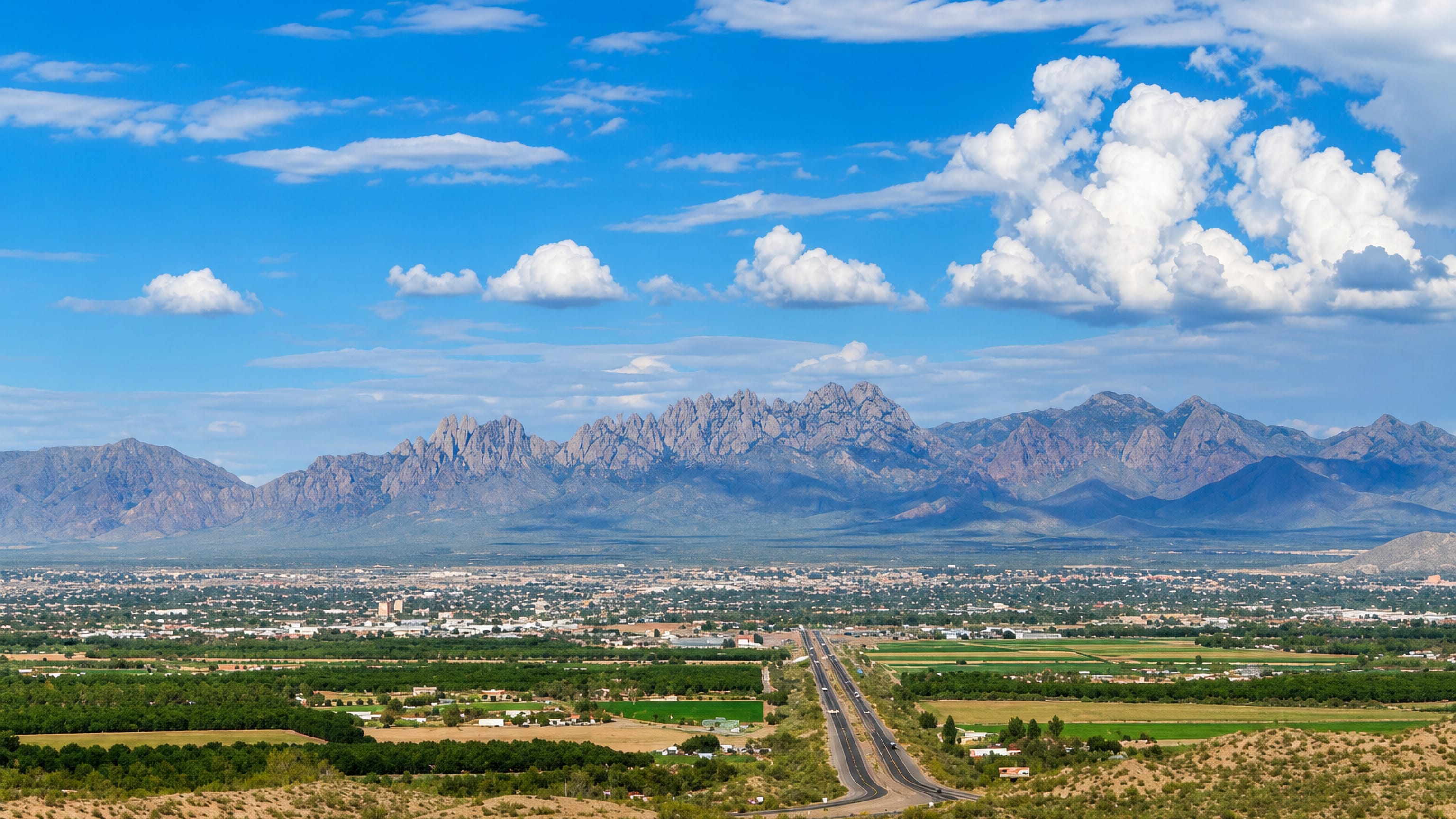
United States · New Mexico
Where to Stay in Las Cruces, New Mexico
The name means the crosses in Spanish: Las Cruces is the seat of Doña Ana County and the site of New Mexico State University.
Hotel links are affiliate links: booking through them may earn us a commission, at no extra cost to you. It never affects how places are ranked. How this works


Where to stay in Las Cruces
How the choice of base plays out on the ground.
Downtown holds the Rio Grande Theatre and the Branigan Cultural Center, and a room near either one leaves the older commercial frontages and the Alameda-Depot Historic District within an easy walk. That is the walkable end of Las Cruces. Nestor Armijo House and Hadley-Ludwick House belong to the same older stock, which makes this end of the city the obvious base for anyone working through its architecture.
Mesilla Park is the other choice. The Mesilla Park Historic District and Mesilla Park Elementary School sit within it, and a bed at that end suits anyone who would rather sleep among older residential streets than beside the downtown blocks. Goddard Hall, Foster Hall, and the University Art Museum at New Mexico State University give the campus edge its own reasons to stay.
El Paso is the other option entirely. The El Paso-Las Cruces combined statistical area ties the two together, so a traveller with a car can sleep in either and still reach Doña Ana County in the morning. Phillips Chapel CME Church and Presley Askew Field are the sort of stops a short visit adds once the base is chosen.
Find hotels in Las Cruces
Direct booking searches for these neighbourhoods.
Downtown Las Cruces
The Alameda-Depot Historic District and the older commercial frontages sit within a walk of both the theatre and the cultural center.Find hotels in Downtown Las CrucesQuieter nights inside the Mesilla Park Historic District.Mesilla Park
Older residential streets around Mesilla Park Elementary School, set apart from the downtown blocks and their traffic.Find hotels in Mesilla ParkCampus trips taking in Goddard Hall and Foster Hall.The New Mexico State University edge
Beds near the University Art Museum at New Mexico State University and the Presley Askew Field side of the campus.Find hotels in The New Mexico State University edgeHotel links are affiliate links: booking through them may earn us a commission, at no extra cost to you. It never affects how places are ranked. How this works
Things to do in Las Cruces
Ranked by global recognition; descriptions from Wikidata (CC0).
Museums & Galleries
1- University Art Museum at New Mexico State University
Churches & Religious Sites
1- Phillips Chapel CME Church Heritage
Castles & Historic Sites
2- Mesilla Park Historic District Heritage
- Alameda-Depot Historic District Heritage
Stadiums & Sports
1- Presley Askew Field
Landmarks & Notable Places
2- Nestor Armijo House Heritage
- Hadley-Ludwick House Heritage
worth knowingacross 5 categories in Las Cruces
About Las Cruces
Crosses gave the city its name.
What is Las Cruces known for?
New Mexico State University sets the tone, its campus carrying the Goddard Hall and Foster Hall names that stand among the city's older buildings alongside the Rio Grande Theatre. Las Cruces is the second largest city in New Mexico and the seat of Doña Ana County. Mesilla Park Historic District and Alameda-Depot Historic District keep the older street patterns, two named quarters that predate most of what surrounds them.
What are the main landmarks in Las Cruces?
Two historic districts carry most of it: Mesilla Park Historic District and Alameda-Depot Historic District. Downtown answers with the Rio Grande Theatre and the Branigan Cultural Center, while Nestor Armijo House and Hadley-Ludwick House stand for the domestic architecture that survived alongside them. Phillips Chapel CME Church belongs to that older group.
The campus supplies the rest. Goddard Hall, Foster Hall, Presley Askew Field, and the University Art Museum at New Mexico State University all belong to the university, while Mesilla Park Elementary School carries a name from the district around it.
What is the history of Las Cruces?
Las Cruces begins in 1849. The name is Spanish for the crosses, a plain description that the city has carried unchanged since its founding years. Doña Ana County took it as county seat, and that role fixed the city as the centre of business for the whole county rather than one settlement among several.
Buildings from those decades survive. Nestor Armijo House, Hadley-Ludwick House, and Phillips Chapel CME Church belong to that older stock, and the Mesilla Park Historic District and Alameda-Depot Historic District exist to keep it legible. New Mexico State University changed the scale.
The campus brought Goddard Hall, Foster Hall, and Presley Askew Field into the city's list of named places, and it made Las Cruces a university town as much as a county seat. El Paso sits within reach. The El Paso-Las Cruces combined statistical area takes in both, while the Las Cruces metropolitan statistical area covers the whole of Doña Ana County.
Only one New Mexico city is larger. The Branigan Cultural Center and the University Art Museum at New Mexico State University hold the public collections, and the Rio Grande Theatre stands on the downtown blocks.
Where is Las Cruces?
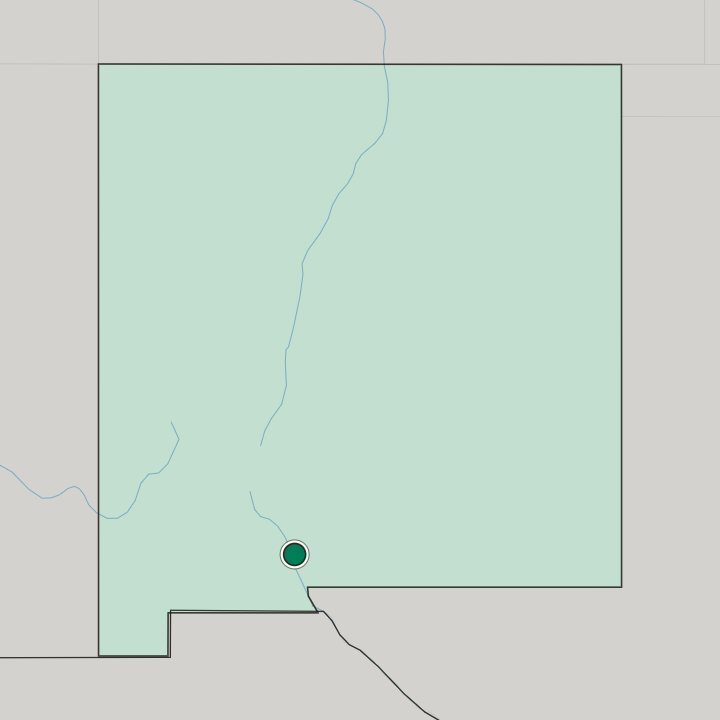
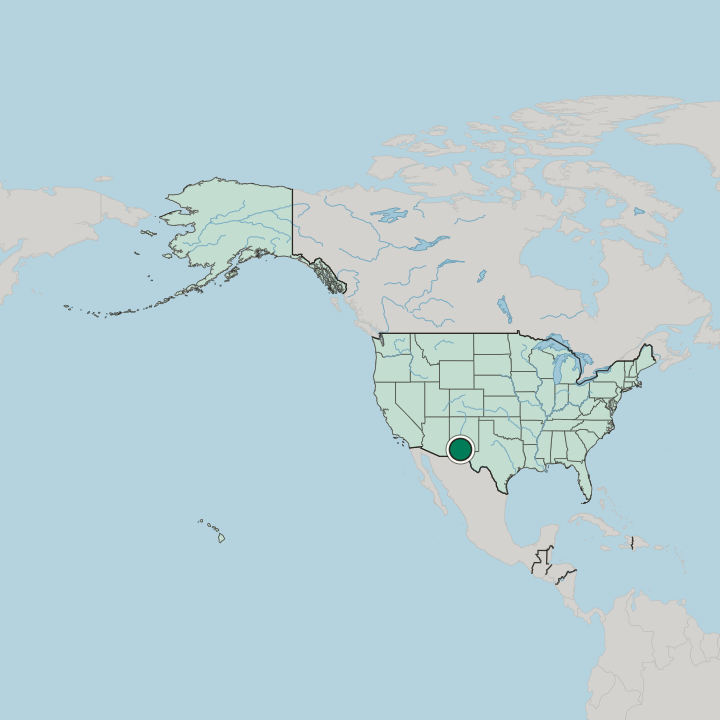
Doña Ana County frames everything. Las Cruces stands as its largest settlement and its seat, spread across enough ground that the Mesilla Park end and the New Mexico State University end feel like separate errands. The subtropical band runs through here.
El Paso lies close enough that the two cities share a combined statistical area, an unusual arrangement for a city that also anchors a metropolitan area of its own.
What is the climate of Las Cruces?
The subtropical band sets the year here. Warmth arrives early and stays late across Doña Ana County, and the calendar that suits walking the Mesilla Park Historic District is not the one that suits the middle of the afternoon. Here the hour of day matters more than the month.
Indoor stops carry the hottest hours, which is what the Branigan Cultural Center, the Rio Grande Theatre, and the University Art Museum at New Mexico State University are useful for.
How do you get to Las Cruces?
El Paso is the practical door. The El Paso-Las Cruces combined statistical area pairs the two cities, so a journey that starts at either one finishes at the other within a single drive. Doña Ana County spreads out from the city, and the Las Cruces metropolitan statistical area covers all of it, which means everything counted as local is a drive rather than a walk.
Downtown is the exception. The Rio Grande Theatre, the Branigan Cultural Center, and the Alameda-Depot Historic District sit close enough together to be covered on foot once a car is parked.
Common questions
What is the best area to stay in Las Cruces?
Downtown Las Cruces: Evenings at the Rio Grande Theatre and the Branigan Cultural Center.. Mesilla Park: Quieter nights inside the Mesilla Park Historic District.. The New Mexico State University edge: Campus trips taking in Goddard Hall and Foster Hall..
More cities in New Mexico
Updated September 2026