United States · New Mexico
Where to Stay in Santa Fe, New Mexico
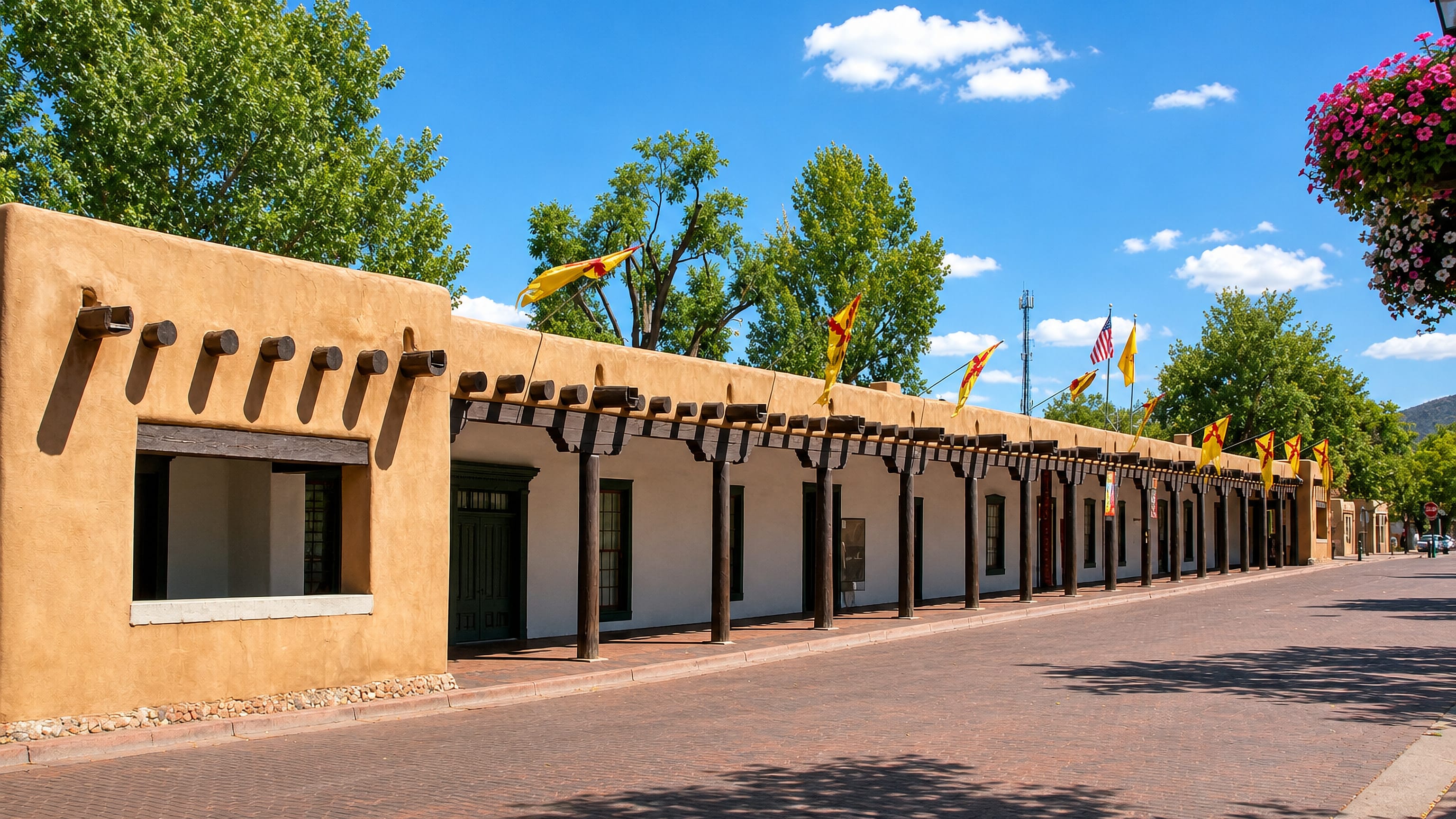
Low earthen walls and a plaza-centered grid mark Santa Fe, the capital of New Mexico, a city laid out in 1610 and shaped by generations of painters.
Hotel links are affiliate links: booking through them may earn us a commission, at no extra cost to you. It never affects how places are ranked. How this works


Where to stay in Santa Fe
Where the beds are, and what that means for the visit.
Where to stay in Santa Fe turns on how close you want to be to the old plaza and its galleries. The core around the plaza puts the Georgia O'Keeffe Museum, the New Mexico Museum of Art, and the New Mexico History Museum within a short walk. The Soldiers' Monument marks the square.
For a first trip to Santa Fe, the plaza core is the easy choice. Rooms here fill fastest, and the earthen streets keep a slow, pedestrian pace after the day trippers leave. South and east of the plaza the ground rises toward quieter residential lanes.
Along the old acequia, the Acequia Madre House and El Zaguan hold the historic character without the plaza crowds, and the Church of the Holy Faith anchors a leafier pocket. The museum hill farther out gathers the Wheelwright Museum of the American Indian and the Museum of Indian Arts and Culture, a good base if native art is the reason for the trip. Each area leans on its own landmarks, so the choice is between plaza galleries, acequia lanes, or the museum quarter above town.
Find hotels in Santa Fe
Direct booking searches for these neighbourhoods.
The Plaza
The square holds the Georgia O'Keeffe Museum, the New Mexico Museum of Art, and the Soldiers' Monument within a short walk.Find hotels in The PlazaRepeat visitors seeking quiet historic lanes off the plazaAcequia Madre
The old irrigation lane strings together the Acequia Madre House and El Zaguan below the Church of the Holy Faith.Find hotels in Acequia MadreHotel links are affiliate links: booking through them may earn us a commission, at no extra cost to you. It never affects how places are ranked. How this works
Things to do in Santa Fe
Ranked by global recognition; descriptions from Wikidata (CC0).
Museums & Galleries
3- Wheelwright Museum of the American Indian Heritage
- Museum of Contemporary Native Arts Heritage
- Georgia O'Keeffe Museum
Churches & Religious Sites
2- Church of the Holy Faith
- St. Juliana of Lazarevo
Castles & Historic Sites
2- Soldiers' Monument
- Kit Carson obelisk
Landmarks & Notable Places
8- Acequia Madre House Heritage
- El Zaguan Heritage
- Donaciano Vigil House Heritage
- Gustave Baumann House Heritage
- Gregorio Crespin House Heritage
Show 3 more →
- Ricardo Alarid House Heritage
- Digneo-Valdes House Heritage
- Laboratory of Anthropology Director’s Residence Heritage
worth knowingacross 4 categories in Santa Fe
About Santa Fe
What is Santa Fe known for?
Santa Fe is known above all for art and for the density of museums packed around its old plaza. Painters made the name. The Georgia O'Keeffe Museum holds the largest body of that artist's work, the New Mexico Museum of Art gathers the wider regional school, and native art fills the Wheelwright Museum of the American Indian, the Museum of Indian Arts and Culture, and the Museum of Contemporary Native Arts.
What are the main landmarks in Santa Fe?
The main landmarks in Santa Fe cluster tightly around the plaza and the museum hill. The Georgia O'Keeffe Museum leads. Native collections fill the Wheelwright Museum of the American Indian and the Museum of Contemporary Native Arts, while the New Mexico History Museum reads the state's long past.
On the square itself the Soldiers' Monument stands beside historic adobes such as El Zaguan and the Acequia Madre House, and the Church of the Holy Faith marks an early parish east of the center.
What is the history of Santa Fe?
Santa Fe was established in 1610 as the seat of Spanish colonial government in New Mexico, and it has held the capital's role ever since. The town grew around a central plaza, the pattern the Spanish crown prescribed for a colonial villa. Adobe set the look.
Government, trade, and the church clustered on the square, and the acequia that gives the Acequia Madre House its name carried water down to the fields below. The long overland trade route ended at the plaza, and the Soldiers' Monument on the square records the conflicts of the frontier era. In the last century painters remade the town's reputation, and their legacy is fixed in the Georgia O'Keeffe Museum and the New Mexico Museum of Art.
Historic adobes such as El Zaguan and the Church of the Holy Faith survive as records of the older town, so the plaza still reads as the layered center of a settlement that has kept its shape for four centuries.
Where is Santa Fe?
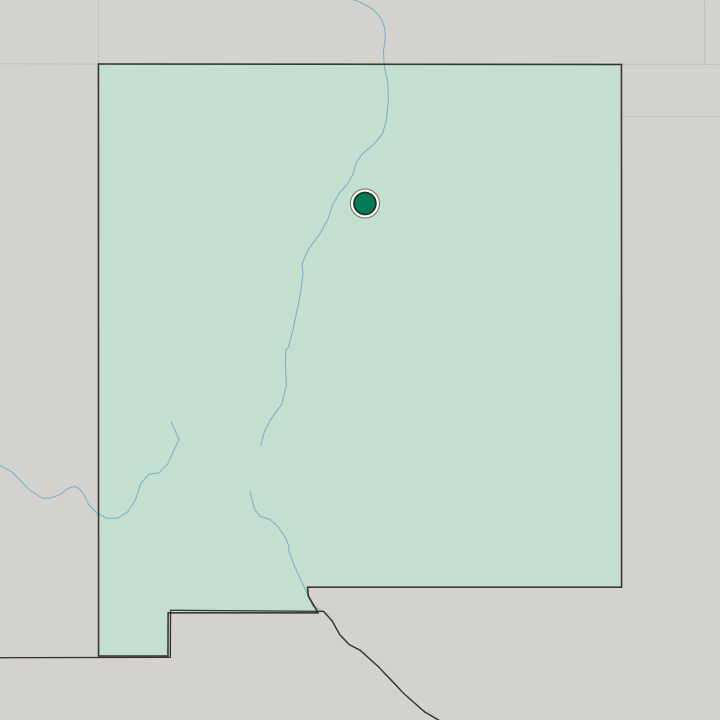
Santa Fe stands on a high plateau in northern New Mexico, where mountain foothills give way to dry, pinyon-dotted upland. The old plaza occupies a shelf above a small river valley, and the acequia recorded in the Acequia Madre House once watered fields on the slope below. Peaks rise east of town.
Thin air and a hard, clear light define the setting, which is exactly why the painters gathered here and left the Georgia O'Keeffe Museum as their lasting mark on the place.
What is the climate of Santa Fe?
Santa Fe has a cool, dry highland climate. Its elevation on the New Mexico plateau keeps the air thin, so days run sunny and clear through most of the year while nights turn sharply colder than the valleys below. Summers stay warm rather than hot.
Afternoon storms build over the mountains before the light returns, and winters bring cold nights with regular snow, heavier on the peaks than on the plaza. The dry, luminous air drew the painters.
How do you get to Santa Fe?
Santa Fe sits north of the main highway corridor of New Mexico, reached by a spur road that climbs onto the plateau. A commuter rail line connects the town to the wider valley to the south. Most visitors drive in.
The small local airport handles limited service, so many arrive through the larger hub down the valley and finish the trip by road, landing near the plaza and its ring of museums around the Georgia O'Keeffe Museum.
Common questions
What is the best area to stay in Santa Fe?
The Plaza: First-time visitors who want the Georgia O'Keeffe Museum and galleries on foot. Acequia Madre: Repeat visitors seeking quiet historic lanes off the plaza.
Good for
More cities in New Mexico
Updated September 2026