United States
New Mexico, United States — Towns & Travel Guide
New Mexico is a landlocked state in the Southwestern United States, high desert cut through the middle by the Rio Grande.
Hotel links are affiliate links: booking through them may earn us a commission, at no extra cost to you. It never affects how places are ranked. How this works


Towns & cities in New Mexico
Pick a town or city — each links to where to stay.
 United States
Albuquerque
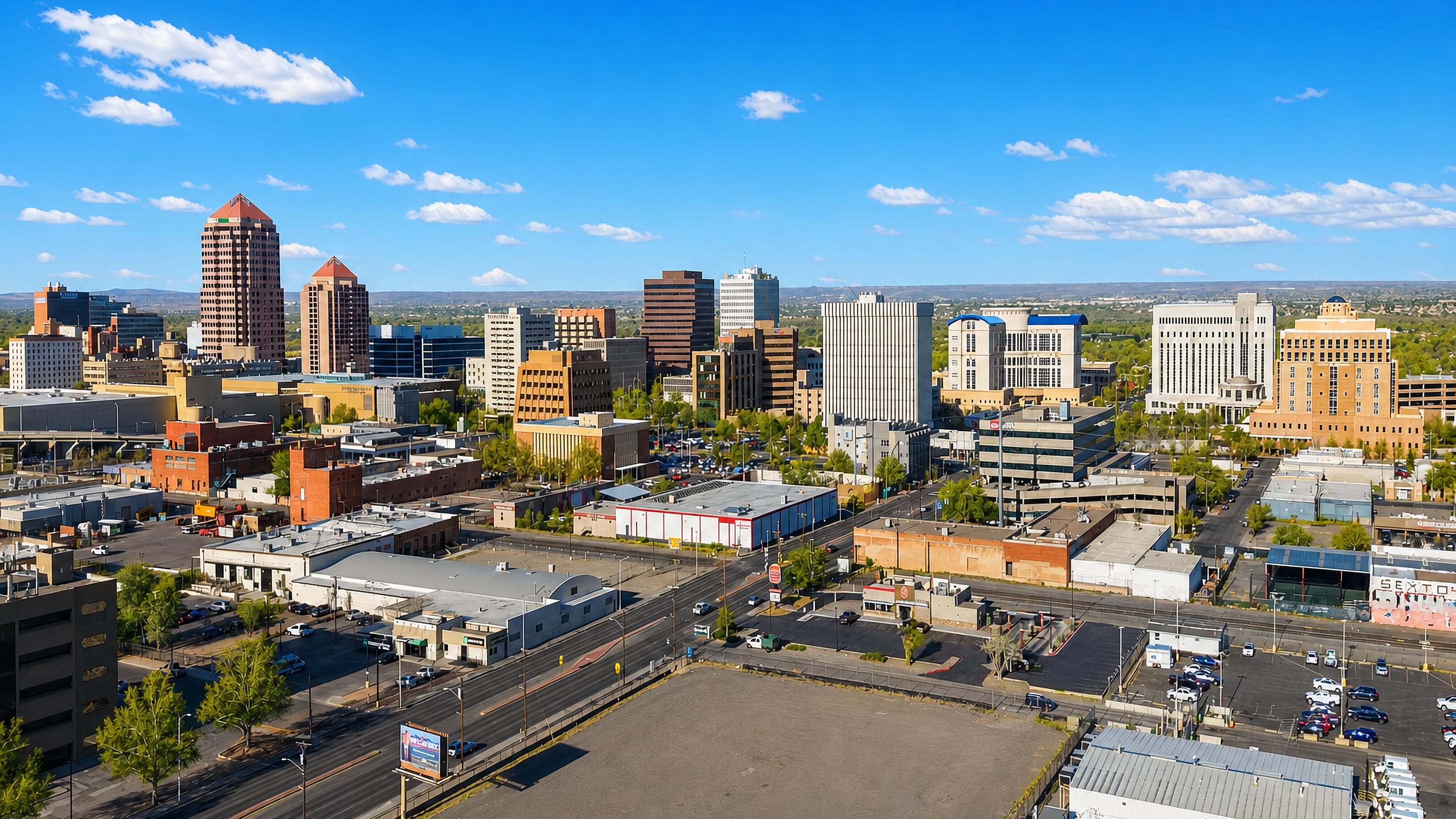
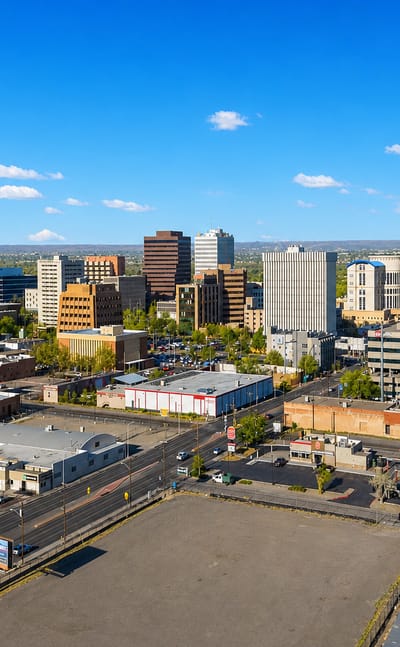
Adobe walls and cottonwood shade frame Old Town around San Felipe de Neri Church, in Albuquerque, a city in New Mexico settled in 1706.Where to stay →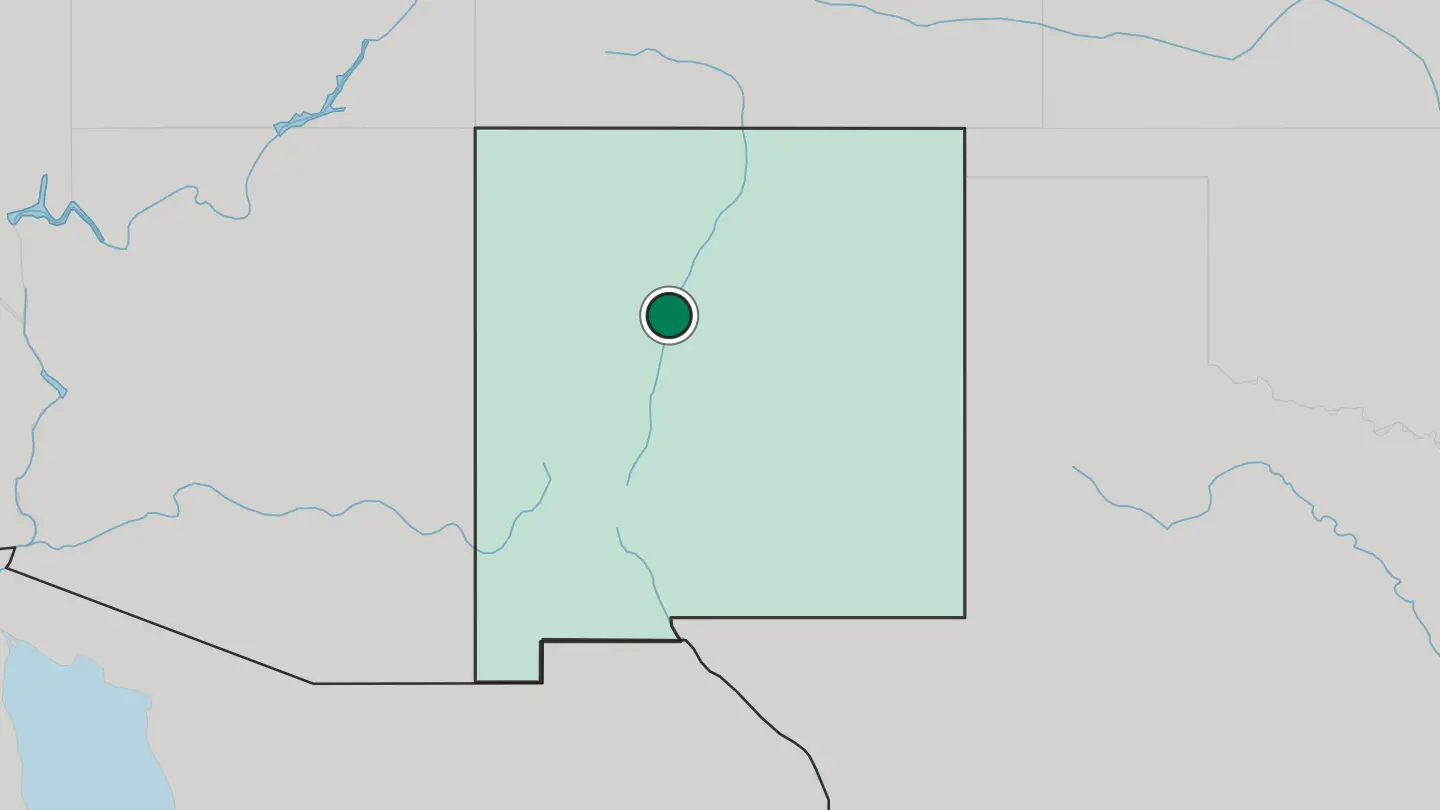
 United States
Las Cruces
The name means the crosses in Spanish: Las Cruces is the seat of Doña Ana County and the site of New Mexico State University.Where to stay →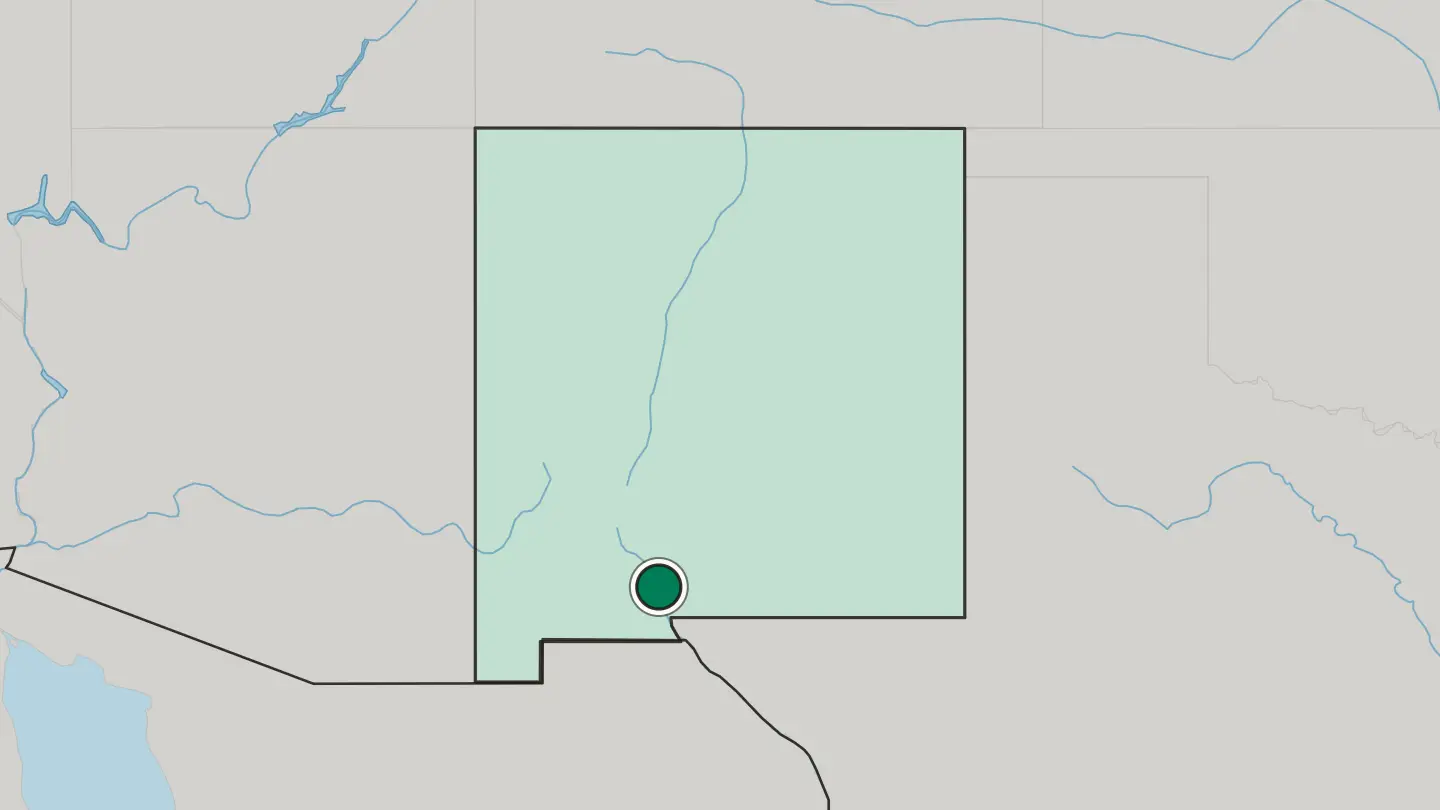 United States
Rio Rancho
Rio Rancho is the largest city of Sandoval County in New Mexico, named for the Spanish colonial ranches once strung along the Rio Grande.Where to stay →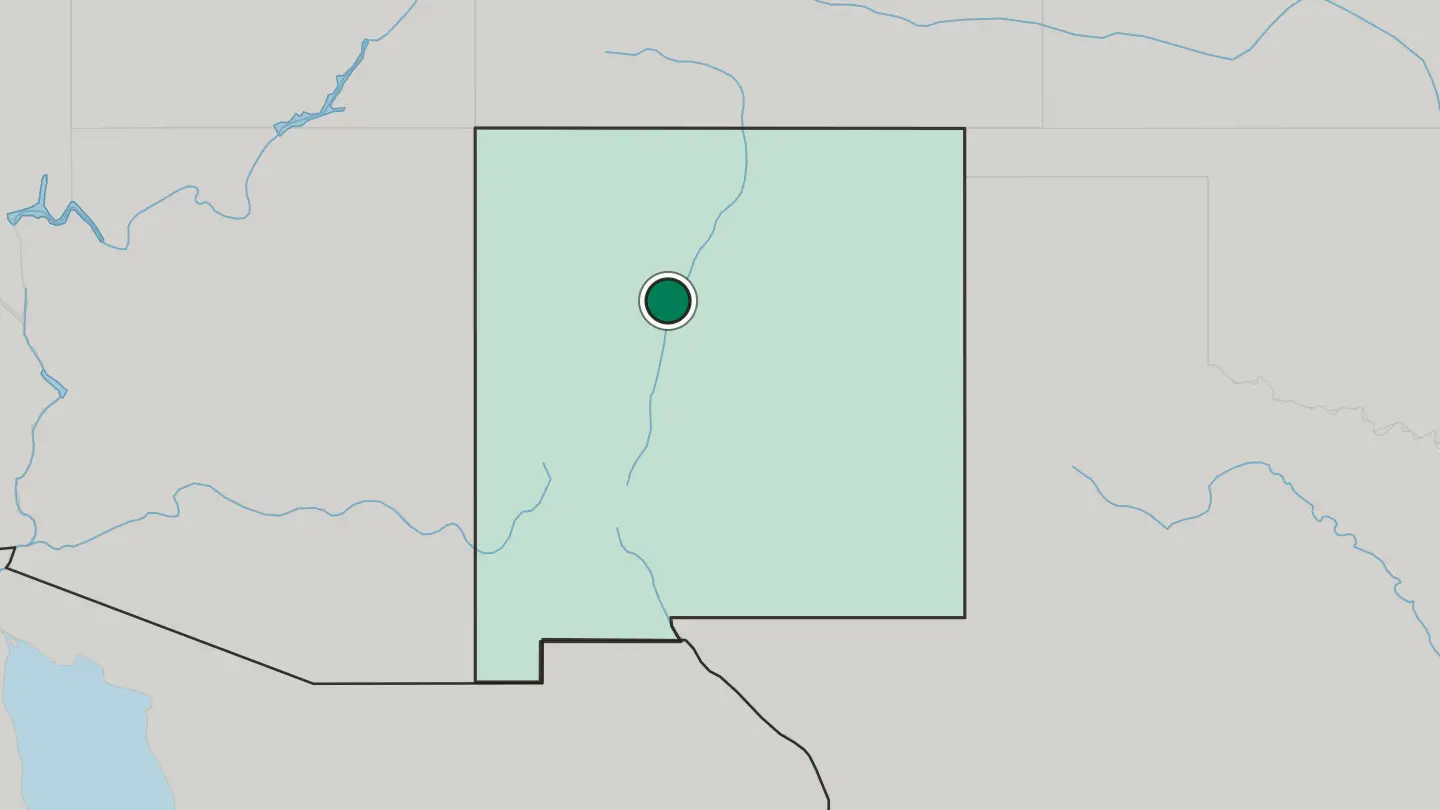
 United States
Santa Fe
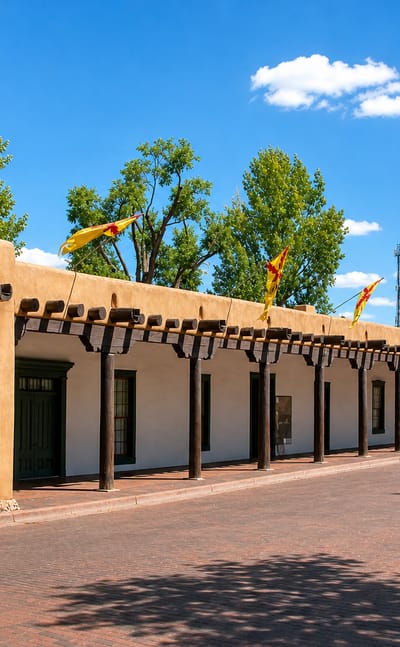
Low earthen walls and a plaza-centered grid mark Santa Fe, the capital of New Mexico, a city laid out in 1610 and shaped by generations of painters.Where to stay →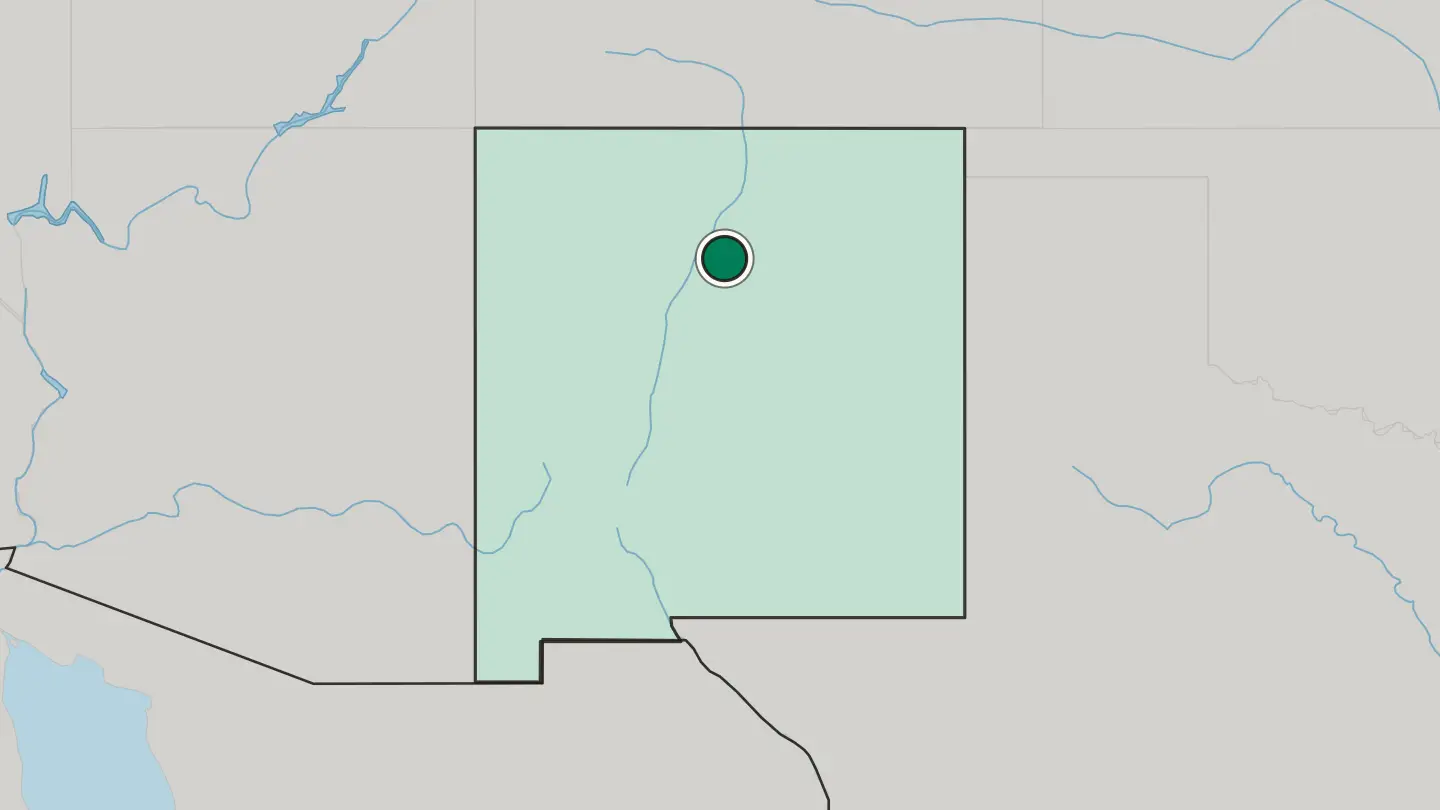
Hotel links are affiliate links: booking through them may earn us a commission, at no extra cost to you. It never affects how places are ranked. How this works
About New Mexico
What is New Mexico known for?
New Mexico is known for the tri-cultural country of the American Southwest, where Pueblo, Hispano, and Anglo traditions have shared the same ground for centuries. Santa Fe anchors that identity. Spanish colonists founded it, and it stands as the oldest capital city in the United States, below the Sangre de Cristo Mountains.
The state meets Arizona, Colorado, and Utah at the Four Corners, the only point in the country where four states touch. Down south, the Chihuahuan Desert runs to an international line with the Mexican states of Chihuahua and Sonora. Albuquerque is the largest city.
Where is New Mexico?
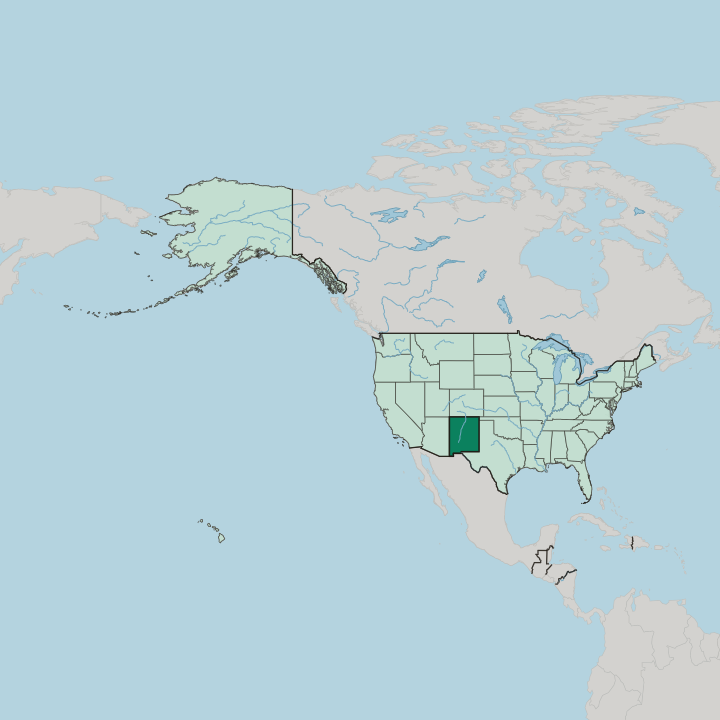
New Mexico sits inland in the Southwestern United States, a landlocked state that reaches no sea. Its northwestern corner is its most exact edge. There the state meets Arizona, Colorado, and Utah at the Four Corners, the single point in the country where four states come together.
Colorado runs the north; Oklahoma clips the northeast. Texas takes the long eastern side and much of the south, and the rest of the southern line is an international border with the Mexican states of Chihuahua and Sonora. Arizona closes the frame to the west. No coast touches any of it.
Inside those borders the land climbs and falls hard. The Rio Grande is the state's spine, running down from the north through Albuquerque and Las Cruces on its way toward the sea in Texas. A southern tail of the Rocky Mountains reaches into the north as the Sangre de Cristo Mountains, which hold Wheeler Peak, the highest ground in the state.
The Colorado Plateau spreads across the northwest in mesa and canyon. Eastward the country flattens into the Great Plains, high and dry. In the south the Chihuahuan Desert takes over, the largest desert in North America, its floor broken by the gypsum dunes of White Sands.
Five river systems drain the state, among them the Pecos River and the San Juan. Elevation, not the sea, governs everything here.
What is New Mexico like?
New Mexico carries three cultural strands at once, and it wears the mix openly. Pueblo peoples came first and never left. Taos Pueblo, its multistorey adobe still lived in, counts among the oldest continuously inhabited places in the country, alongside Navajo and Apache nations across the wider state.
Spanish colonists arrived from New Spain four centuries ago, and their descendants, the Nuevomexicanos, kept an old form of Spanish alive here long before the United States existed. Anglo-American settlers came last, over the plains and the railroads. All three still share the ground.
That layering shows up in the plainest things. Adobe walls, flat roofs, and earth-brown towns run from Santa Fe to the smallest village. The food splits along one question, red or green, the chile that goes on nearly everything.
Santa Fe and Taos drew painters and writers for the desert light, and their galleries and museums still anchor the state's art. Spanish and English both do public business here, a balance few other states keep. New Mexico only joined the Union in 1912, one of the last of the contiguous states, yet its deepest roots run back centuries before that.
The name for itself says the rest: the Land of Enchantment.
What is the history of New Mexico?
Spain claimed this country in 1598, one of the farthest provinces of New Spain, and named it Santa Fe de Nuevo México. Santa Fe followed in 1610. Pueblo peoples drove the Spanish out entirely in the Pueblo Revolt of 1680, then lost the ground again twelve years on.
The province passed to independent Mexico in 1821, and then to the United States at the close of the war of 1846 to 1848. Statehood came in 1912, the 47th star on the flag. Later the mesa town of Los Alamos built the world's first atomic bomb in secret.
What is the climate of New Mexico?
Elevation writes the weather in New Mexico, not the missing sea. Most of the state stands high and dry, thin clear air under a great deal of sun. The southern deserts around the Chihuahuan Desert run hot through long dry summers, while the northern high country cools quickly the moment the land gains height.
Snow settles on the Sangre de Cristo Mountains and feeds the ski runs above Taos. Days can swing hard into cold nights. Late-summer storms, the monsoon, break the dryness with sudden rain over the mesas.
How do you get to New Mexico?
Every route in runs overland. No coast means no seaport, so travellers come in by road, rail, or air across its borders. The Albuquerque International Sunport is the main airport and the usual point of arrival.
Two interstate highways cross at Albuquerque, one running north toward Colorado, the other reaching east and west clear across the state. From the south, road crossings from Chihuahua bring people over the international line. Santa Fe lies a short hop north of the hub.
Common questions
What is the best area to stay in New Mexico?
Albuquerque: a first base on the Rio Grande. Santa Fe: adobe galleries at the state capital. Taos: Taos Pueblo and the northern ski slopes. Las Cruces: the Chihuahuan Desert and Mesilla.
Good for
More regions in United States
Updated September 2026