United States · Oklahoma
Where to Stay in Tulsa, Oklahoma
Tulsa is a city in Oklahoma known for the Philbrook Museum of Art and a downtown lined with Art Deco towers from its early oil years.
Hotel links are affiliate links: booking through them may earn us a commission, at no extra cost to you. It never affects how places are ranked. How this works


Where to stay in Tulsa
Where the beds are, and what that means for the visit.
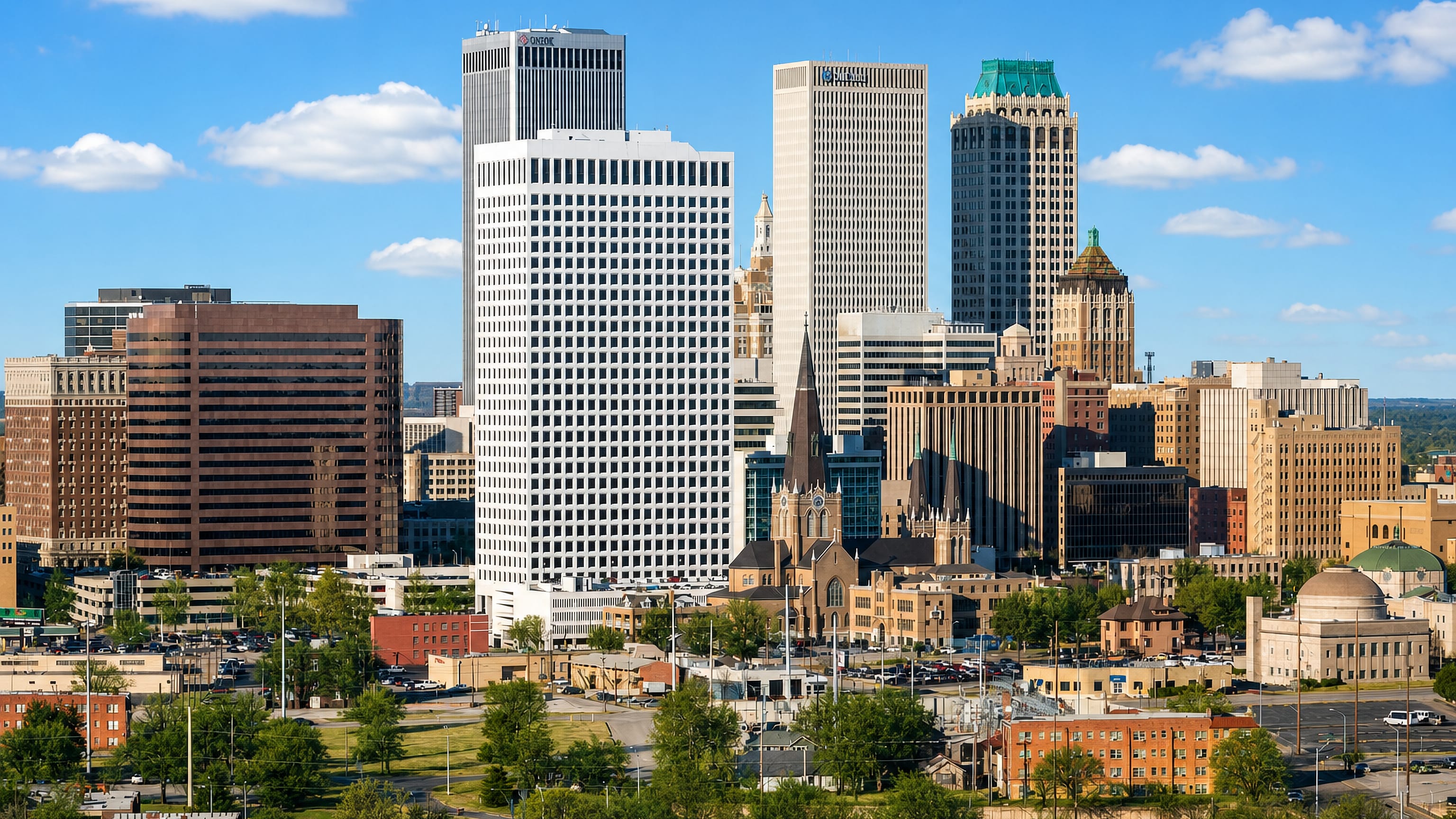
Where to stay in Tulsa centers on the downtown core and the leafy museum district to its south. Downtown is the natural first base. The old oil-money towers cluster here, walkable and close to the William G. Skelly House and the sanctuary of All Souls Unitarian Church, so first-time visitors who want architecture on foot settle in the core.
The blocks quiet down after office hours, which suits travelers who prefer calm evenings over crowds. South of the center, the district around the Philbrook Museum of Art trades towers for gardens and grand houses. Stays here sit near the museum's villa grounds and the Church of the Madalene, a good choice if you want green streets and art over nightlife.
Families sometimes look toward the parkland once tied to Bell's Amusement Park. Choose downtown for the Art Deco skyline and easy walking, and the Philbrook district for museums, gardens, and a quieter night across Oklahoma's second city.
Find hotels in Tulsa
Direct booking searches for these neighbourhoods.
Downtown Tulsa
The oil-era skyline and the William G. Skelly House cluster in Tulsa's walkable downtown core, quiet after office hours.Find hotels in Downtown TulsaGarden stays by the Philbrook Museum of ArtPhilbrook district
The Philbrook Museum of Art villa and the Church of the Madalene anchor a green residential strip south of downtown Tulsa.Find hotels in Philbrook districtHotel links are affiliate links: booking through them may earn us a commission, at no extra cost to you. It never affects how places are ranked. How this works
Things to do in Tulsa
Ranked by global recognition; descriptions from Wikidata (CC0).
Museums & Galleries
1- Philbrook Museum of Art Heritage
Churches & Religious Sites
2- All Souls Unitarian Church
- Church of the Madalene
Stadiums & Sports
1- Michael D. Case Tennis Center
Parks & Gardens
1- Bell's Amusement Park
Landmarks & Notable Places
2- William G. Skelly House Heritage
- Foster B. Parriott House Heritage
worth knowingacross 5 categories in Tulsa
About Tulsa
What is Tulsa known for?
Tulsa is known as a city in Oklahoma that grew rich on oil and spent the money on art and architecture. The Philbrook Museum of Art fills a former oil baron's villa with galleries and gardens. Downtown carries the same era in stone, from the William G. Skelly House to the sanctuaries of All Souls Unitarian Church and the Church of the Madalene.
Bell's Amusement Park added a lighter note. The Foster B. Parriott House rounds out the roll of grand early houses.
What are the main landmarks in Tulsa?
Museums, churches, and grand houses fill the roll of Tulsa landmarks. The Philbrook Museum of Art crowns the list, an Italianate villa turned gallery whose formal terraced gardens step down toward the wooded slopes south of the city center. All Souls Unitarian Church and the Church of the Madalene mark the city's places of worship.
Two boom-era mansions survive nearby. The William G. Skelly House and the Foster B. Parriott House still stand from the oil years, and Bell's Amusement Park long recalled the lighter side of local life.
What is the history of Tulsa?
Tulsa traces its founding to 1836, when Lochapoka Creek settlers arrived on the removal trail and gathered around a council tree. It stayed small for decades. Everything changed with oil in the early twentieth century, when nearby strikes turned Tulsa into a boom city and drew the fortunes that built its downtown.
Grand houses rose across the ridges, among them the William G. Skelly House and the Foster B. Parriott House. The money endowed institutions as well as mansions, and one oil family's villa became the Philbrook Museum of Art. Churches from the same decades, including All Souls Unitarian Church and the Church of the Madalene, mark the confident architecture of the era.
Tulsa's growth slowed as the oil trade shifted, but the city kept the dense Art Deco core that the boom left behind, a rival in scale to the state capital at Oklahoma City.
Where is Tulsa?
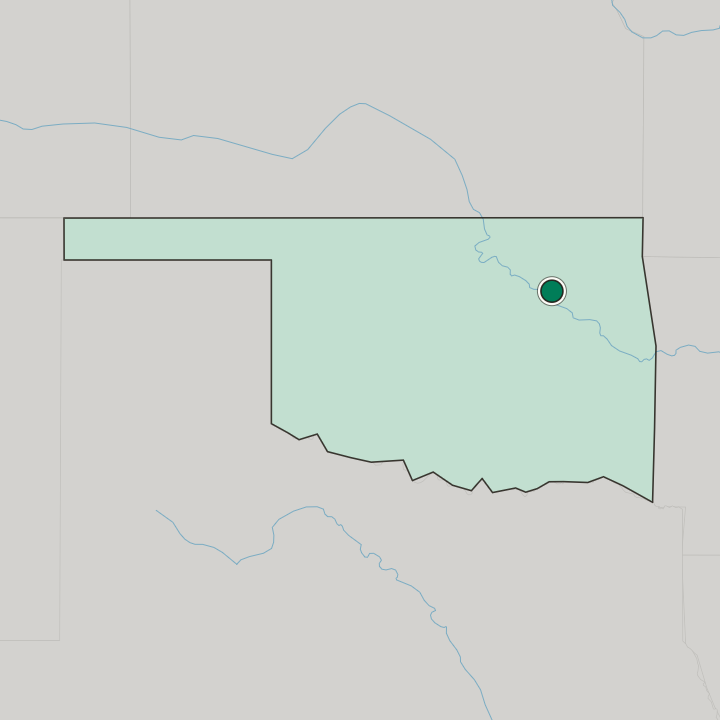
Tulsa sits on rolling ground in the state of Oklahoma, its neighborhoods spread over low ridges and river terraces. The land rises and falls in gentle folds. Downtown holds the high ground with its Art Deco towers, while the museum district around the Philbrook Museum of Art occupies the wooded slopes to the south.
Open plains and cross-timbers woodland stretch beyond the city limits, giving Tulsa a greener setting than the flat prairie farther west across Oklahoma.
What is the climate of Tulsa?
Tulsa has a warm, humid climate on the eastern edge of the southern plains. Summers turn long and hot. Spring is the stormy season, when the city stands in the reach of Great Plains supercells and the tornadoes that follow them.
Winters are short and generally mild, broken by cold snaps and the odd ice storm sweeping down across Oklahoma from the north. Rain falls more freely here than farther west.
How do you get to Tulsa?
Tulsa sits on Interstate 44, the turnpike corridor that links it across Oklahoma toward Oklahoma City and beyond into Missouri and the Ozarks. Tulsa International Airport lies on the northeast side. Driving is the usual way in.
Once downtown, the Art Deco core and the Philbrook Museum of Art are easy to reach, and the highway ring makes short work of the wider metro spread across the ridges.
Common questions
What is the best area to stay in Tulsa?
Downtown Tulsa: Art Deco towers near the William G. Skelly House. Philbrook district: Garden stays by the Philbrook Museum of Art.
Good for
More cities in Oklahoma
Updated September 2026