United States · South Carolina
Where to Stay in Charleston, South Carolina
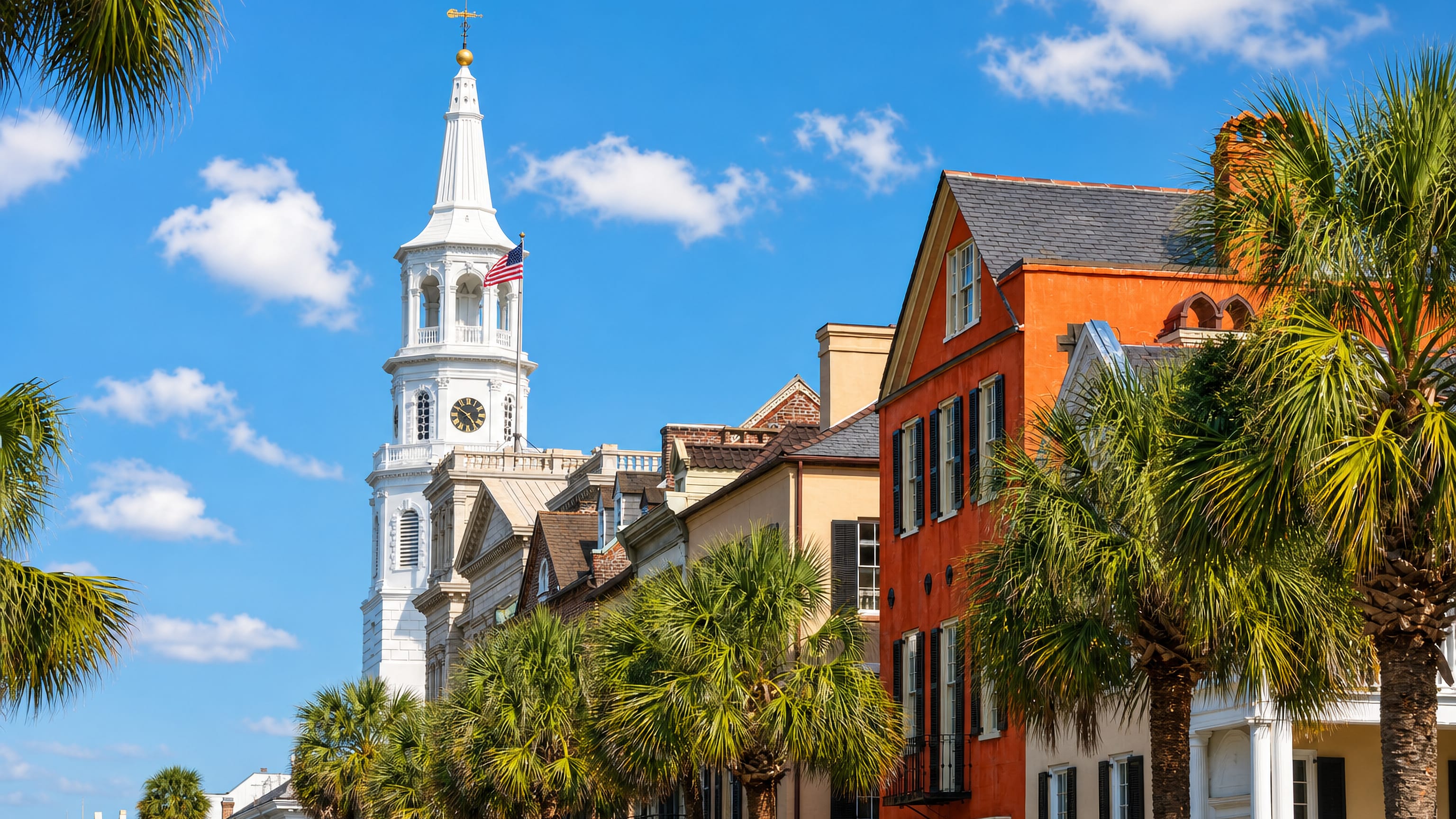
Charleston is a historic port city in South Carolina, known for the Huguenot Church, its cobbled peninsula streets, and a harbor guarded by old forts.
Hotel links are affiliate links: booking through them may earn us a commission, at no extra cost to you. It never affects how places are ranked. How this works




Where to stay in Charleston
Where visitors usually base themselves, and why.
Where to stay in Charleston centers on the historic peninsula and the waterfront across the harbor. The lower peninsula is the classic base. Preserved townhouses line the streets around St. Philip's Episcopal Church and the Huguenot Church, all within a short walk of the Charleston Museum and the Gibbes Museum of Art, so first-time visitors who want to explore on foot settle here.
The district can fill up, and beds near the John Rutledge House run at a premium. Farther up the peninsula, the quarter around the Old Slave Mart and the International African American Museum sits closer to the water and the newer galleries. Across the harbor at Mount Pleasant, stays near Patriots Point and the moored USS Yorktown trade cobbles for marsh views and easier parking, a good pick if you are touring the carrier and the forts.
Choose the lower peninsula for history on foot, the market quarter for museums, and Patriots Point for the harbor and the ships.
Find hotels in Charleston
Direct booking searches for these neighbourhoods.
Lower peninsula
Preserved townhouses ring St. Philip's Episcopal Church and the John Rutledge House on Charleston's lower peninsula. Lodging is scarce in this area; reserve in advance.Find hotels in Lower peninsulaMuseum stays by the Old Slave MartMarket quarter
The Old Slave Mart and the International African American Museum anchor the upper-peninsula quarter near the Charleston waterfront.Find hotels in Market quarterHarbor views by the USS YorktownPatriots Point
Across the harbor at Mount Pleasant, Patriots Point and the moored USS Yorktown offer marsh views and easier parking.Find hotels in Patriots PointHotel links are affiliate links: booking through them may earn us a commission, at no extra cost to you. It never affects how places are ranked. How this works
Things to do in Charleston
Ranked by global recognition; descriptions from Wikidata (CC0).
Museums & Galleries
3- Exchange and Provost Building Heritage
- Charleston Museum
- Gibbes Museum of Art
Churches & Religious Sites
8- Emanuel African Methodist Episcopal Church Heritage
- Huguenot Church Heritage
- St. Philip's Episcopal Church Heritage
- Circular Congregational Church Heritage
- Bethel Methodist Church (Charleston, South Carolina) Heritage
Show 3 more →
- Old Bethel United Methodist Church Heritage
- Greek Orthodox Church of the Holy Trinity Heritage
- Central Baptist Church Heritage
Castles & Historic Sites
3- Confederate Defenders of Charleston
- Denmark Vesey Monument
- The Defenders of Fort Moultrie
Landmarks & Notable Places
3- Gov. William Aiken House Heritage
- John Rutledge House Heritage
- William Gibbes House Heritage
worth knowingacross 4 categories in Charleston
About Charleston
What is Charleston known for?
Charleston is known as one of South Carolina's oldest port cities, a peninsula of church steeples and preserved houses. Steeples set the skyline. St. Philip's Episcopal Church and the Huguenot Church rise above the historic district, while the Gibbes Museum of Art and the Charleston Museum hold the city's collections.
The harbor tells a heavier story too, from the Old Slave Mart to the International African American Museum, and the retired carrier USS Yorktown moored across the water at Patriots Point.
What are the main landmarks in Charleston?
Charleston's landmarks gather churches, museums, and harbor monuments. St. Philip's Episcopal Church, the Huguenot Church, and the Circular Congregational Church raise the historic steeples. Emanuel African Methodist Episcopal Church and the Denmark Vesey Monument mark the city's African American history, alongside the Old Slave Mart and the International African American Museum.
The Gibbes Museum of Art and the Charleston Museum hold the art and archives. Out in the harbor, Patriots Point keeps the USS Yorktown and the USS Laffey.
What is the history of Charleston?
Charleston was founded in 1670 as one of the earliest English settlements on the southern Atlantic coast. It grew fast as a port. Rice and indigo made the peninsula wealthy through the colonial era, and that wealth rested on enslaved labor, a history recorded at the Old Slave Mart and the International African American Museum.
From those decades survive the Exchange and Provost Building and the John Rutledge House. A planned 1822 uprising is marked by the Denmark Vesey Monument. Charleston stood at the center of the events that opened the Civil War, when the guns of the harbor forts began the conflict.
Siege, fire, and later hurricanes battered the city, yet it kept an extraordinary stock of colonial and antebellum buildings. Emanuel African Methodist Episcopal Church carries a long congregational history forward. The Charleston Museum, founded in the eighteenth century, and the preserved churches of the peninsula together hold the record of one of the oldest cities in South Carolina.
Where is Charleston?
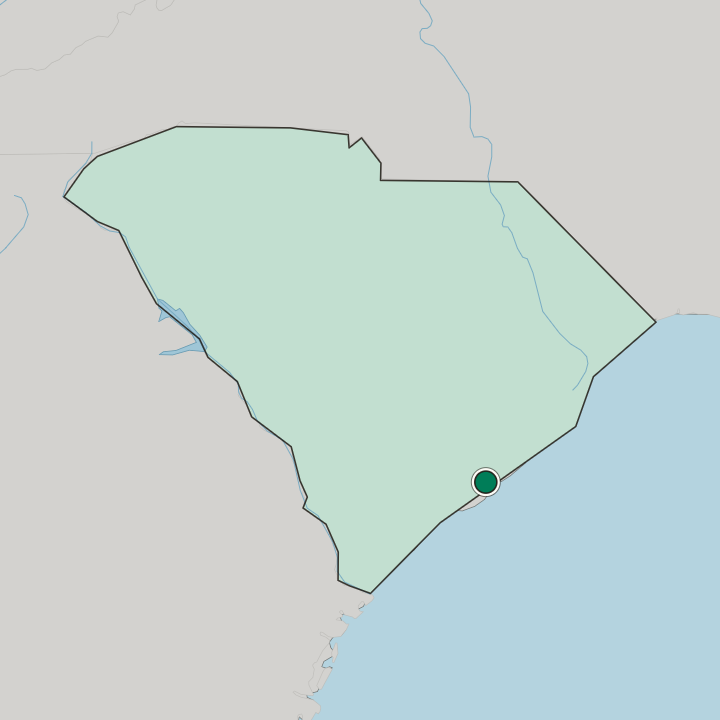
Charleston occupies a low peninsula on the South Carolina coast, wrapped by two tidal rivers where they meet a broad harbor. The land sits barely above the water. Marsh, creek, and barrier island surround the city, and the flat, sandy ground shapes both its street grid and its flood risk.
Beyond the peninsula, suburbs spread inland and across the harbor toward Mount Pleasant and Patriots Point, while the Atlantic opens past the harbor mouth and its old defensive forts.
What is the climate of Charleston?
Charleston has a warm, humid subtropical climate shaped by the Atlantic coast. Summers are long, hot, and sticky. The city lies within the Atlantic hurricane belt, and late-summer storms drive rain and surge up the harbor and tidal rivers.
Winters stay short and mild, with frost uncommon on the low coastal ground. Sea breezes off the harbor temper the worst of the heat across the peninsula through much of the year.
How do you get to Charleston?
Charleston sits off Interstate 26, which runs inland across South Carolina to link the port with the interstate network. Charleston International Airport lies northwest of the peninsula. Trains and buses also call at the city.
From the airport it is a short drive down to the historic district, St. Philip's Episcopal Church, and the harbor, though the narrow peninsula streets reward walking once you arrive at the old town core.
Common questions
What is the best area to stay in Charleston?
Lower peninsula: History on foot around St. Philip's Episcopal Church. Market quarter: Museum stays by the Old Slave Mart. Patriots Point: Harbor views by the USS Yorktown.
Good for
More cities in South Carolina
Updated October 2026